
This was going to be part 5 of 7, but I’d written so much here (despite not having the text to compare for the two short stories) that I’m going to split this into two, and make it an eight part series. But to still be finished by Christmas, I’ll post both of the two parts this week. Clear as mud? Good. Let’s get on.
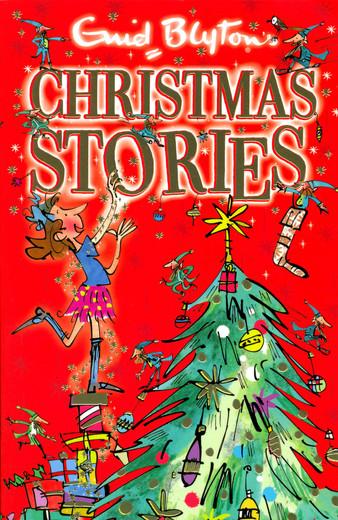
A Family Christmas Part Seven: Bringing in the Yule Log
As the title suggests, this chapter is about bringing in the Yule Log. Now, in my family’s Christmases, the yule log is a Swiss roll covered in chocolate butter cream, dusted with icing sugar, and decorated with little plastic figures and holly. Looks good sitting out and tastes even better.
But that’s obviously not what we’re talking about here, and so I learned a few things reading this book.
A Yule Log is a, well, a log. Susan points out that she doesn’t know anyone else who brings one in anymore, and Benny reminds her that not everyone has a great big fireplace anymore. This almost sounds like the updated version as it’s certainly very true of today! John the gardener who has cut down the log for them also takes one in.
Obviously in Susan’s eyes he isn’t anyone. Or rather, he’s not anyone they’ve noticed doing it, as he’s just the gardener.

But he does get to tell the children some things, which is a nice change. He tells them of the tradition of keeping a piece of the yule log, and lighting the next year’s log from it, which the children immediately plan to do themselves.
However he doesn’t know why it’s called a yule log.
“You ask your father that,” said John. “I’ve got no learning like that. All I know is that in days gone by bringing in the Yule log was a proper ceremony—you know, singing and merry-making and all. Seems like we’ve got no time for things like that nowadays.”
He brings us mumming, though, where people dress up and perform on doorsteps. Then Benny mentions wassailing which is drinking to people’s health out of a special bowl.
After the log has been dragged in (the whole house needs to help for good luck, so cook and the maid come along) Daddy explains the tradition.
“Well, the old Norsemen… used to burn a log each year to the great god Thor, who also dwelt in Asgard. [Yule] probably comes from the name that the old Norsemen used to give Odin, the father of the gods. He was called ‘Jul-Vatter’ or ‘Yule-Father’.
They revisit the topic of mumming with Daddy, who tells them that pantomime used to be a silent performance – I mean, it makes sense, pantomime.
The quote at the start of the chapter is from Robert Herrick this time, and is the opening of a short poem titled Ceremonies for Christmas.
Come bring with a noise,
My merry, merry boys,
The Christmas log to the firing.
– Robert Herrick
So far I think this must be the most edited chapter (though I know the next one is even worse). As always with editing, making one small change leads to others having to be made.
First up John no longer cuts down the tree, but Daddy does it. Which leads to the question, that if Daddy cut it down why do they have to now wait for Daddy to come home and bring it in? Did he do it early in the morning before going off to work?
When they go out to see it it’s not John the gardener was nearby but John, their next-door neighbour was looking over the fence.
While admittedly few people in the UK have maids/cooks/staff, many people do still pay a gardener, though they generally come from a local business and do jobs for many people, rather than it being their full-time job for one family. There’s no reason why John couldn’t still be gardener who they pay for his services.
Sticking with John, some of his dialogue is changed. Over yonder becomes over there. “You ask your father that,” said John. “I’ve got no learning like that.” is now “I don’t know, I’m afraid.” It’s perhaps nice that John isn’t portrayed as an uneducated labourer, but there was no need to change as much as they have.
Oddly John still talks about his grandad going mumming. We don’t know how old John is in either version, but if we’re only going two generations back that’s probably not as far back as we need to go for mumming to be common.
As before Cook and Jane the maid are cut out. So we lose this nice custom that I mentioned above:
Cook called out to them as they went out of the garden-door. “Can Jane and I come and help? It’s supposed to be bad luck if everyone doesn’t help to bring in the Yule log.”
“Yes, come along,” cried the children. “Come along Cook, come along Jane.”
The whole fireplace thing also demands a host of edits.
Benny had said that people need a big enough fire-place to put it in he now specifies that they need an open fire-place where you can have a real fire. It kind of goes without saying that you need a real fire place to have a real fire!
The next line is cut for no apparent reason, other than they’re talking about having a fire-place at all, and not just a big one, but it’s an interesting fact nonetheless.
Daddy said last year that in the old days whole small trees were sometimes brought in and laid on the hearth, because in those days they had such enormous fire-places.
It is replaced with the bland Not many people have those these days.
Then Susan’s dialogue changes from I forgot that most people have small fire-places now to I forgot that most people don’t have real fires now. And I’m glad we’ve got one big enough to bring in a proper Yule log to the unnecessarily detailed explanation I’m glad we live in the country in an old house so we can bring in a proper Yule log. Why can’t she just be glad that they have a big fireplace?
Then we get all tied up with mumming.
Daddy originally says that Mumming is a very old custom still in use in some parts of the country, but rapidly dying out now. He now says that Mumming is a very old custom of the country, but I don’t think it happens anymore these days. For some reason they have tried to retain the word country, but it’s now unclear if he means England/the UK/the countryside.
In addition to all that there are a few small changes elsewhere.
It’s no longer he [Benny] and Daddy who get the log onto the sledge but they all. I’m in two minds about this. I prefer it when the women and girls aren’t automatically excused from physical efforts, but as everyone helps pull the sledge back, it doesn’t seem a big deal for Daddy and Benny to do the lifting initially.


Daddy no longer refers to pantomime as dumb show, but instead a silent show, in silence, or just it.
Mother becomes Mum twice and Mummy twice (but is Mother an awful lot more times than that), and their lounge becomes a living room. There’s a few words for that room, and surely people still say lounge as well as living room, sitting room, front room, family room, TV room etc. It’s not as if it was a parlour or drawing room.
Almost there – italics are removed once, and then added twice for the titles of pantomimes, where the original had them in single quote marks.
The Little Reindeer Bell
The only other time this story has been printed was in Enid Blyton’s Magazine No 24 Vol 4, in 1956. There are only four magazines I don’t have (out of 162) and this unfortunately is one of them, and I still can’t find a copy of it to buy.
This is a curious tale, combining elements from various other Christmas stories.
Santa takes his reindeer out for a test run before Christmas, as a new one has replaced a seasoned one who has a cough. The new reindeer drops his bell, and three children find it. They think it will be lucky, but they have a run of back luck including presents not being delivered, Mother’s purse being stolen and Dilys catching a bad cold.
They leave the bell on the roof on Christmas Eve, and when Santa finds it he knocks on the door. Mother, who was previously quite firm that the bell couldn’t possibly belong to Santa, opens the door and has a very calm conversation about all the things their Christmas lacks, culminating in Santa sending her to bed and sorting it all out himself.
Interestingly tells her that the bells are neither lucky or unlucky, so their bad luck had nothing to do with the bell. But he might be lucky, he says.
A couple of things I noted – Firstly, the reindeer who are named, are called Quickfoot and Quick-as-the-wind. Blyton, as far as I remember, never uses the famous Dasher and Dancer etc names. They come from the 1823 poem by Clement Clarke Moore, so had been around a long time by 1956. Moore died in 1863, so there shouldn’t have been any copyright issues by the 1950s. However, the 1939 book by Montgomery Ward, and the 1949 song by Gene Autry – both titled Rudolph the Red-Nosed Reindeer – also used those names, plus Rudolph, of course. Perhaps Blyton didn’t want to be seen to be copying from popular media of the time. I’m also looking at this as someone who grew up in the 80s and 90s, where those names were inextricably linked to Santa’s reindeer – perhaps in the 1950s it was still very common for reindeer to have different names in different stories.
The other was just me wondering about Daddy who was 1,000 miles away. Some possible places he could be are Portugal, Spain, Italy, Croatia, Bosnia and Herzegovina, Hungary, Slovenia, Poland, Belarus, Lithuania, Latvia, Estonia, Finland, Sweden, and Norway – though of course the names and borders of many of these would have been different at the time. I had thought of the Suez crisis, but that’s over 2,000 miles from London. Of course I’m thinking he’s in the military, navy or RAF, but he could be a commercial pilot or a salesman or anything, really. But many children in the 50s would still be familiar with Daddy being away – through National Service or continued service in the armed forces.
I can’t comment on the updates, not having the original – though I’d love to know if the original said 2,000 miles and I was right about Suez. The children’s names are Peter, Thomas and Dilys so probably not updated.


 Fiona
Fiona pippastef
 worldofblyton

 World of Blyton