Monday #565

After a spotty January in terms of posting, I don’t think there will be anything this week either as Stef will be up visiting me. I have read all the suggestions for future content though, and have taken them on board. Of course I know that I can’t please all the people all the time, but I can at least try to write things that people want to read!

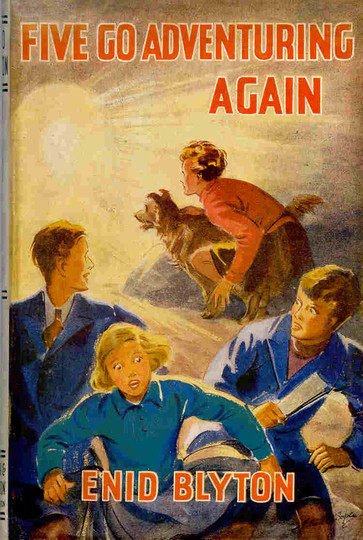
Henry, or Henrietta as George would say, is someone we don’t get to know very well unfortunately. We know that’s she’s tall and wiry and is able to trick Julian and Dick into thinking that she’s a boy. She’s also very boastful, to the point that few people believe half of what she says. Of course George hates her on sight – she likes to think she’s the only girl who can pull of dressing as a boy. It’s not clear if Henry feels the same, but she certainly rises and responds to George’s teasing and name-calling with equal fervour.

Henry’s coming to the rescue at the end of Five Go to Mystery Moor means that, like with Jo, George has to grudgingly admit she’s not all bad. But unlike Jo, Henry doesn’t get to appear again to continue a friendship with George.


Posted in Blog talk | Tagged , , | 2 Comments

January 2024 round up

The first round up of 2024 already. January seems to have simultaneously dragged and rushed by!


What I have read

I read quite a bit this month, and finished on 12/100. When I wasn’t well I did some comfort listening by going back to Jodi Taylor yet again, this is my fifth time reading the early St Mary’s books.

What I have read:

  • The Nightingale Daughters (Nightingales #12) – Donna Douglas
  • The Ghost Woods – C J Cooke
  • The Secret Library: A Book-Lovers’ Journey Through Curiosities of History – Oliver Tearle
  • Five on a Hike Together
  • The Bookshop of Second Chances – Jackie Fraser
  • Why Mummy Drinks at Christmas (Why Mummy #5) – Gill Sims
  • Five Have a Wonderful Time
  • The Something Girl (Frogmorton Farm #2) – Jodi Taylor
  • Just One Damned Thing After Another (Chronicles of St Mary’s #1) – Jodi Taylor
  • The Little Bookshop by the Sea – Eliza J Scott
  • A Symphony of Echoes (Chronicles of St Mary’s #2) – Jodi Taylor
  • The Actress Unscripted (Heather Bay Romance #5) – Amber Eve

And I’m still working on:

  • Five Go Down to the Sea
  • We Are the Baby-Sitters Club: Essays and Artwork from Grown Up Readers – Marisa Crawford
  • Tilly and the Map of Stories (Pages & Co #3) – Anna James
  • A Demon’s Guide to Wooing a Witch (Glimmer Falls #2) – Sarah Hawley
  • The Secret Book Club – Shauna Robinson
  • A Second Chance (Chronicles of St Mary’s #3) – Jodi Taylor

What I have watched

  • A few Christmas things crept into early January. Brodie and I watched The Muppets Christmas Carol before he went back to school, as we hadn’t managed to fit it in in December, and I caught up on Call the Midwife’s Christmas special. There was also the Taskmaster New Year Special.
  • I’ve been watching Call the Midwife Series 13 since, as well as ER season 3 and 4, and some of the TV show of Time Traveller’s Wife. Disappointingly this was cancelled after one season so it hasn’t really encouraged me to finish it, yet.
  • Tuesday night we have been watching season two of And Just Like That (the Sex and the City sequel) and it’s just as bad as the first season.
  • We’ve managed a few family movies this month – Jurassic World Dominion which none of us had seen before, then we went right back to the original Jurassic Park which I’ve seen dozens of times but Brodie hadn’t. He also begged for the next Harry Potter, which was Order of the Phoenix. Which he then asked questions all the way through as it’s a bit more complicated than the earlier ones. I also watched The Railway Children Return which wasn’t as good as either of the earlier films, despite still having Jenny Agutter in it.
  • We also decided to put Gladiators on one weekend, and after Brodie being adamant that he didn’t want to watch it he was transfixed by it. We’ve now gone back to catch up on the first episode and had many Gladiator-style reenactments in the house.

What I have done

  • It has been rather a quiet month with a lot of staying at home, partly due to all the storms and partly because of not being well.
  • We made it out for walks twice, once was foggy and once was bitterly cold.
  • I managed to complete two jigsaws both combining other interests I have – one a tricky Lego jigsaw and the other a very tricky Jaws one (all that blue!)
  • I also had two Lego builds, both Harry Potter ones. The Gryffindor common room I got for my Christmas, then I treated myself to the Charms Classroom as it has been discontinued. (The common room build was accompanied by a bowl of trifle and Call the Midwife). Brodie then helped me create a giant Hogwarts with all my sets on my new jigsawing table.

What I bought

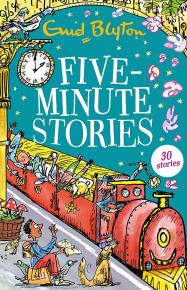
I saw the newish Hodder collection of Five Minute Stories on Kindle for 99p and thought I’d get it. I had sort of assumed that this might be a new version of Five Minute Tales, and I suppose it is, but it’s not the same stories. But I’m sure I can review it or compare it to at least some of the original stories anyway.


How was your January?

Posted in Personal Experiences | Tagged , , , , , | 2 Comments

Enid Blyton references in other works of fiction part 3

I’ve done two of these posts already, but here I am with enough material for a third post. Books about bookshops, libraries, booklovers and so on are always full of literary references. However, most of them are references to works in the public domain – lots of Jane Austin, the Brontës, Shakespeare, Lewis Carroll, and so on. It’s not exactly rare, but it’s less common for copyright protected works to be mentioned – there’s probably a risk (however small) of complaints coming in about it. And yet – Blyton is quite often.

Of the 150 books I read this year, 9 mentioned Blyton – that’s 6%. (One was non-fiction and so will be included in a non-fiction post). Some of them are perhaps expected, Children’s books set in a bookshop, for example. Others perhaps less so. I think it says a lot that Blyton is still referenced so often, by all sorts of different authors.


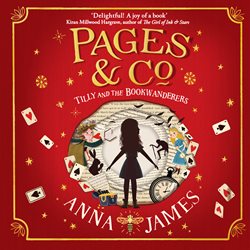
Tilly and the Bookwanderers – Anna James

This is the first in a series of books about Tilly, who lives above her family’s bookshop and who can wander into books. She never wanders into an Enid Blyton book as that’s pretty risky copyright infringement-wise. But she does still get a couple of mentions.

Jack, the bookshop 19 year old café cook is always trying to recreate cakes from books.

“He’s trying to make pop cakes, like the ones in the Enid Blyton books Tilly explained. “But he’s run out of vanilla.”

“Why do you have honey on your forehead?”
“I’m experimenting with pop cakes,” he said, holding up an ice cube tray filled with sticky honey. Remember in the Faraway Tree books by Enid Blyton, they eat those cakes that explode with honey when you bite into them? I’m going to freeze the honey so that I can bake it in the middle of the cupcakes. At least, that’s the plan. The honey is proving… well, a little uncooperative.”


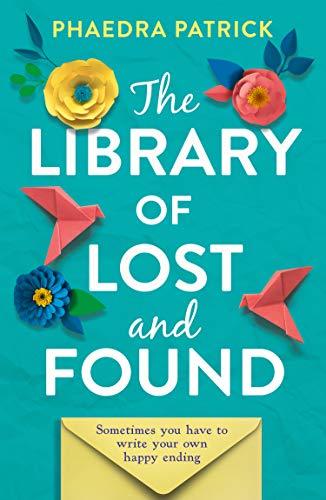
The Library of Lost and Found – Phaedra Patrick

This is quite an interesting story about Martha, a librarian whose life is almost being overtaken by all the things she does to help other people. Then she finds a mysterious book of fairytales with a dedication from her late grandmother (Zelda) and starts to delve into her difficult family’s past.

She has some help from Owen, a second-hand bookshop owner as she tries to work out where the book came from.

She was pleased to find that her and Owen’s conversation wasn’t stilted at all, as they resumed their discussion about books. This time they talked about ones from their childhoods.

Martha chose Enid Blyton’s The Magic Faraway Tree because she loved the idea that creatures lived in a tree, in an everyday forest. Owen preferred Treasure Island. It offers true escapism, buccaneers and buried gold,’ he said. ‘What more could a boy want from a book?’

She peered in through the window at the display, at a vintage edition of The Hobbit, old train magazines and a full series of Famous Fives piled haphazardly. The sight of Anne and Timmy on the covers made her heart flip. They were her favourite characters, though Zelda said they were too middle class and that she preferred the tomboy, George.


Something New at the Borrow A Bookshop – Kiley Dunbar

Joy is staying at the Borrow a Bookshop to set up a computerised till system and online presence, and she has her daughter Radia with her. Radia is almost six and hasn’t ever been to school or nursery, and has only just discovered that children her age usually have started school.

She’d been outraged at the discovery, and after watching every episode of Mallory Towers and The Worst Witch on iPlayer (shows she wasn’t really old enough for but she’d insisted she was), she’d developed a deeply romantic notion of what school would be like if only they stayed somewhere long enough for her to actually go.

A nice reference despite the misspelling – and not the first time I’ve seen Malory misspelled in a professional publication.


A Ration Book Childhood – Jean Fullerton

This is set during WW2 and is the third book in a series following the Brogan family.

The ack-ack gun on the Isle of Dogs sent the ground trembling as they let off another round skyward. Mattie sighed and rolled onto her side. In the mute glow of Alicia’s Noddy night-light she gazed through the wire lattice at the twelve-by twelve basement space that was the McCarthy’s nightly shelter.

This reference is anachronistic, however, as Noddy first appeared in 1949, and the events of this book take place in 1941.


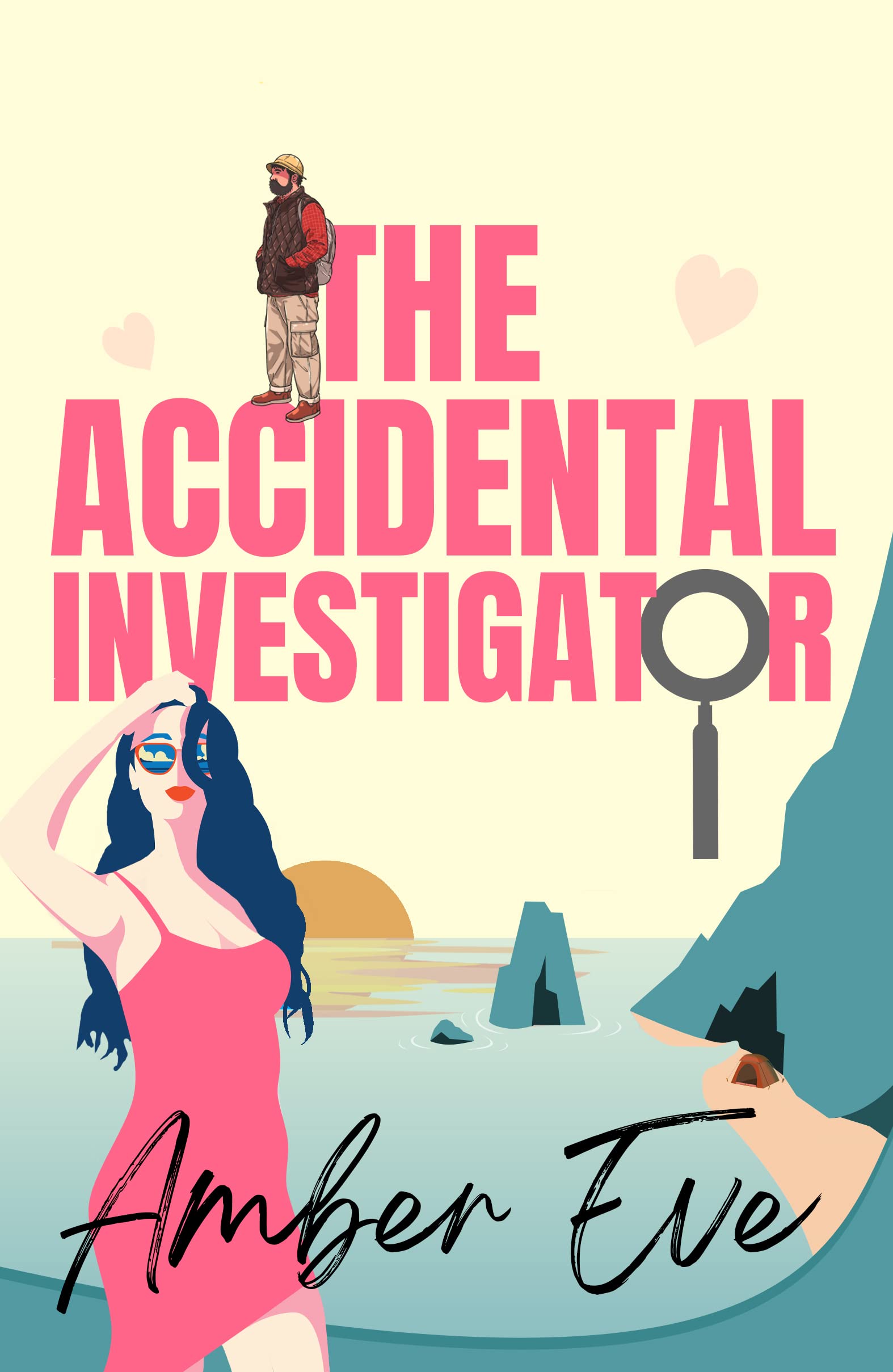
The Accidental Investigator – Amber Eve

This book is chock-full of references. I often see Noddy  the Famous Five and the Enchanted Wood mentioned but this time there’s the Five Find-Outers too. It’s not much of a surprise, the author has a personal blog and has previously written about her love for Blyton.

This is her third book set in the Scottish village of Heather Bay, and sees Scarlett, a journalist, trying to track down an influencer that she’s convinced is not only in the local area but is also in trouble.

First she likens Dylan, the village’s only policeman to Mr Goon.

another awkward encounter with Heather Bay’s answer to Mr. Goon, the unfriendly policeman from Enid Blyton’s Five Find-Outers series

“He’s like a modern-day Mr. Goon.” I’m about to explain to the perplexed Katie that Mr. Goon was the bungling policeman from one of my favourite children’s books when that blasted doorbell starts clamouring for attention yet again.

Scarlet, I think rather channels the author at times:

I wanted to be a detective, like Nancy Drew, or Frederick “Fatty” Trotteville of The Five Find-Outers. I wanted to solve mysteries, and have adventures, and eat lots of barley sugar, which I would always just happen to have in my pocket, along with a torch and a box of matches.

A few of the references are more vague, but clearly Blyton-inspired:

No local scandals to uncover. No mysterious lights shining from the windows of a supposedly abandoned house. Not even a smuggler or anything. I mean, what do you have to do to find a smuggler in this town, I ask you?

I’m out here in the dark. Alone. Without so much as a faithful animal companion or a potted meat sandwich to keep me company, let alone a convenient farmhouse with a cheerful farmer’s wife who insists on putting me up for the night, before sending me on my way in the morning after a lavish breakfast.

Looks like the adventure books I used to love so much were lying to me the whole time. Trust me to have to risk life and limb on the side of a mountain to find that out.

Scarlet lamenting how life is not like Blyton’s books becomes a common theme:

Ada and her Instagram account, which, okay, might not be anything like as interesting as that time the Famous Five stumbled across a ghost train on the moors (It turned out to be smugglers, naturally .It always turned out to be smugglers for the Five.).

I think the main thing I’ve learned from this little impromptu adventure is that adventuring is only fun in books, when you have a mug of steaming coffee in front of you — or if you’re in the Famous Five, say ,and the smugglers are mostly harmless.

I know the Famous Five always took things like ginger beer and bags of barley sugar with them when they went camping, but my fridge contains only Prosecco and cheese, while the cupboards are a testament to my take-away habit .

And half-a-dozen other miscellaneous references:

Tonight I toss and turn for half the night, before drifting into a restless dream in which PC Goon from the Five Find-Outers is helping me.

When I was talking to Ruby, I felt like Nancy Drew, or one of the Famous Five, teetering on the edge of some thrilling mystery.

I give him my best George-from-the-Famous-Five scowl.

Sitting by the loch, looking out to the little island in the middle — the one with the ruined castle that I always think looks like Kirrin Castle in The Famous Five.

“We could steal a boat,” I suggest hopefully. “That’s what The Five would do.”

“The Five would end up having to get arrested by the coastguard,” he says, grinning at me.

And you better believe I’m not coming this far, just to be left behind at the last minute, like George and Anne in the Famous Five, left to make supper while the boys went out to investigate the light in the old tower at midnight.

I really enjoyed this book on its own merits, all the Blyton references just made it extra fun.


A Change of Heart for the Cornish Midwife – Jo Bartlett

Gwen, one of the midwives is organising her older cousin’s funeral, and is discussing the difficulties in writing the eulogy as her cousin lived such a quiet life.

She spent all her spare time reading the same sort of books we read when we were kids and, after she retired, she just doubled down on that. I think she must have read all the Enid Blytons about a hundred times each.

She also makes a few more “mature” comments!

I like to think that maybe she read the odd racy story in between the Enid Blytons and got her kicks like that.

It can’t all have been lashings of ginger beer, can it? I’m sure she must have discovered Fifty Shades of Grey at some point and read about some lashings of an entirely different sort.

There’s that famous but (as far as the books go) non-existent phrase about lashings of ginger beer again. Blyton did use lashings, but never for ginger beer.

Lashings of tomatoes

Lashings of ginger beer X


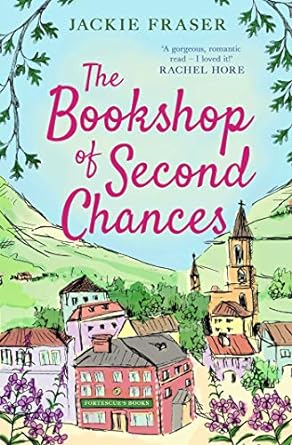
The Bookshop of Second Chances – Jackie Fraser

Another bookshop-themed book.

Thea visits a private Scottish beach and thinks to herself that:

It’s pretty much perfect, like something from the Famous Five.

Later, in the titular shop:

Next there’s an older couple buying some Noddy books in hardback.


Why Mummy Drinks at Christmas – Gill Sims

Gill Sims must be a Blyton fan as this isn’t the first time that she has mentioned the Famous Five in this series. Ellen, the Mummy of the story, regularly laments how her children do not behave in the way that the Famous Five did.

Summers were one thing, despite Famous Five efforts at japes and frolics. Why would my children never frolic satisfactorily in a seasonally appropriate way.

“This is an adventure,” I said. “Think of it like camping.”

“I hate camping,” wailed Jane.

In fairness to her, I also loathe camping. “Well not camping then, definitely an adventure, poppet. Like the Famous Five.”

“Are there going to be smugglers?” whimpered Jane.
“No, of course not. All right, not the Famous Five. Err, like, the Railway Children.”


And that’s all I have, for now. But with another hundred or so books still to read this year I’m sure I’ll find more!

Posted in General bookishness, Other Authors | Tagged , , , , , , | 3 Comments

Monday #564

I’m back, having mostly recovered from my first lurgy of the year. Another one so kindly brought home from school and shared around. How I longed for someone to suggest I needed some fresh country air and a week (or two) of rest somewhere peaceful and idyllic, and to make it a reality. But no such luck!

Enid Blyton references in other fiction, part 3

and

January round up

This has been rumoured for a long time and may still never come about, but the proposed film adaptation of the Magic Faraway Tree has made progress! There’s a script, a director, casting is apparently underway, so we will see.

‘The Magic Faraway Tree’ Adaptation Heads Towards Production With Neal Street, Elysian, Ashland Hill & ‘Wonka’ Scribe Simon Farnaby — EFM


Posted in Blog talk | Tagged , , | 4 Comments

My 2023 in books and Blyton

This is my fifth full-year round up, so I think you’ll know what to expect from it.

I’ve seen a lot of debate online recently about reading goals – many people can’t understand why anyone would make a goal as they find it takes the fun out of reading. I like goals, though, as they motivate me to read instead of scrolling on my phone and they encourage me to pick different things to read. If it wasn’t fun, I wouldn’t do it!


Goal: read at least 100 books

As always I set my initial goal at 100 books. By late December I was on something like 146 and had mentally made up my mind to reach for 150, so to motivate myself to really go for it I changed the goal online.

And… I made it – just. I finished book #150 on Hogmanay.

Aside from 2020 when I was off work for a huge chunk of the year this is my best result since having Brodie.


Goal: read more new books than rereads

I always caveat this goal by saying I LOVE rereading books and think that rereads can be just as beneficial as reading a new book. But, for me, I know it’s too easy to stick with books I know (and have often read many, many times) and not challenge myself with something new.

I did well with 111 new books and 39 rereads.

Amongst those were 53 new authors (and 82 different ones in total). Perhaps this goal could become more new books and new authors?

Some of them were responsible for my favourite reads this year – Lea Booth, Amber Eve, Bonnie Garmus, Casey McQuiston, AJ Pearce and Rainbow Rowell.

Amongst my reread books are some familiar author names to the blog.

Jodi Taylor (11 books), Donna Douglas (10 books), Roald Dahl (2 books) and of course Enid Blyton (12 books), but more on her later.


Goal: read some books I’ve always meant to

This one covers quite a few goals really. To read at least one grown-up classic (children’s classics are a bonus), to tick off books I’ve had on my list for a long time, to read books I’ve seen adapted for film or TV, and this year to read more of my favourite kind of book – books about bookshops or libraries!

I’ll start with the classics.

My grown-up classic was Wuthering Heights. I did not like it any more than I liked Jane Eyre. But at least I now know what it’s about and have an opinion if it comes up in conversation.

I also read a few children’s ones – Treasure Island (this also counts for the movie adaptations, as I watched The Muppets Treasure Island and the 1950 Disney movie shortly after reading the book), Anne of Green Gables, T H White’s Sword in the Stone ( another movie adaptation as it was the main inspiration for the Disney movie, which I adore), and a modern classic Because of Winn-Dixie.

Aside from the above books there wasn’t really anything I ticked off this year – certainly no big blockbuster reads like Jaws, Jurassic Park or the Dan Brown books. Similarly while there are other books I read which have movie or TV adaptations I haven’t seen them and didn’t read them for that reason.

That’s probably because I focussed pretty heavily on books about bookshops and libraries. In 2022 I read 14. In 2023 I read 33! I also found another bookish genre I love – books about writing, recording or publishing books and read 6 of those.


Goal: Find a good balance between books for children and books for grown ups

This is similar to the previous goal, in that I love children’s books and think they have great value no matter your age. But they are usually easier to read and I can find myself sticking with them too much instead of reaching for something more complex and challenging.

In 2023 I read 110 books for adults, 7 for teens/young adults and 33 for children. I’m pleased that I ended up exceeding my original goal of 100 books with adult books alone.


Read more non-fiction

This is one goal I probably achieved, but didn’t exactly smash. Looking back I did do better than last year, though, but not a good as some previous years.

Included in this goal is to specifically read books on feminism and race, and I didn’t do very well on those.

I read 14 non fiction books which isn’t bad at all, I think I just ended up feeling like I hadn’t read many that were particularly thought-provoking.

Four of my non fic reads were memoirs/autobiographies I’ve read before – James Herriot and Roald Dahl, and three were new – Tom Felton (Draco Malfoy), Sarah Henshaw and Chris Paling.

My feminist books were A Room of One’s Own by Virginia Woolf (she raised many excellent points and was really ahead of her time, but this was a bit of a slog to get through) and Gender Rebels by Anneka Harry (despite the wonderful array of women this featured, and the interesting nuggets of information it contained the zany writing style made this truly awful and I can scarcely believe that I tortured myself by finishing it).

My only book about racial issues was Hidden Figures by Margot Lee Shetterly. Fantastic topic, but written in a very dull way which meant I found myself unmotivated to keep picking it up.


Other reading stats

Those were all my goals, but since 2020 I’ve noted the number of physical books vs ebooks vs audiobooks that I’ve read. They’re all equally valid ways to read so this is just me liking statistics.

I took out a Kindle Unlimited subscription in April so I was expecting this years ebook total to be quite high – but perhaps not as high as they actually are!

I read 62 physical books, 59 ebooks and 29 audiobooks. If I’d had Kindle Unlimited for the full year I’d no doubt have read more ebooks than physical ones.

I checked and I read 31 books on KU in 8 months, so around 3-4 books a month at a cost of £2.50 a book. Not everything I’d want to read is on KU but there’s a pretty good catalogue and I’ve always found something to read.

A new stat I decided to record this year was how many books I borrowed from the library, which turned out to be 43 books. Of those 9 were actually ebooks, including most of the classics I mentioned earlier.

The Wake Up Call - Beth O'Leary / Hex and the City - Kate Johnson / The Burnout - Sophie Kinsella

Library reservations are like buses. You wait for them to come in for ages then three turn up at once.

Which got me to thinking, I wonder how many books of the 150 I read that I actually bought this year. Without spending ages trawling through my past online orders I can’t be totally sure.

Obviously I pay for my Audible and Kindle Unlimited subscriptions so those books are not free – but they sort of feel free as I don’t spend money per title. I pay £69.99 up front for Audible (£5.80 a month) for which I can choose 12 books a year (though I do get a lot of buy-one-get-one-free offers, and there’s a lot of books free in the plus catalogue) and Kindle Unlimited is £9.49 a month. I’ve definitely bought a couple of Audible books on sale (usually £2.99), and I know that I’ve bought 4 Kindle books. I’ve got a couple of Audible books in my library that I haven’t listened to yet, though, and probably Kindle ones too.

I was going to say that I absolutely only bought two physical books (for myself) this year – Silver and Gold and a Nancy Drew, but then I remembered that I bought around 6 or 7 Angel novels. This was quite good of me as there were 12 that I didn’t have. Though it is also possibly quite bad of me as I haven’t read any of them yet. And then there were the two Collin’s Seagull Library titles I also bought but did not read… but does money spent on books you didn’t read even count? I read a few books in 2023 that I bought in 2022 or earlier, so they were pretty much free books. Right?


The Blytons

Blyton was my second most-read author of the year which is kind of surprising. I’ve actually read very few in the five years that I’ve been doing this round up.

2019 – 5
2020 – 5
2021 – 6
2022 – 6

And 2023? 13!

I feel like I’ve been taken back to my childhood a bit, as I read Five Are Together Again early in the year, and then went on to start at the beginning again. I read the first nine Famous Fives to Brodie – the fastest I’ve read them in goodness knows how long.


The other books I read were The Secret Island, Holiday Stories and Silver and Gold.

I really should have counted The Christmas Book and Enid Blyton’s Christmas Stories but I didn’t think to at the time and it’s too late now! If I had, Blyton would be my most-read author as I read 14 Jodi Taylor books.

Blyton-adjacent books I read were:

First Class Murder by Robin Stevens and King’s Ransom by Helen Moss, both authors recommended by me if you like Blyton.


That turned out to be a more thorough examination of last year’s reading than I had intended.

I’ve made more or less the same goals for this year, but I’ve started using a couple of new apps to track my reading (Bookmory and Storygraph) so I’ll hopefully have some new and interesting images and stats to share next year.

Did you set a reading goal for last year, if so, how did you get on? Have you set one for 2024?

Posted in Personal Experiences | Tagged , | Leave a comment

Monday #562

We are heading into an extremely cold week where I am, consistently below freezing and feeling as low as -10. If I can thaw myself out enough to type, here’s what I have planned for this week. (I have made a note of your requests from last week’s post, don’t worry.)

My 2023 in books and in Blyton

and

Enid Blyton references in other fiction, part 3

Can you believe that it has been ten years (and a week) since we posted our interview with Jemima Rooper? I’m not sure we’ve done anything quite so exciting since.

I told Brodie that I had met Jemima Rooper and he didn’t believe me…

World of Blyton Exclusive Interview with JEMIMA ROOPER


Posted in Blog talk | Tagged , | Leave a comment

Enid Blyton’s Christmas Stories then and now, part 9

This is unseasonably late, but I really didn’t want to leave it until Christmas 2024!


Santa Claus Gets Busy

This was first published in the Sunday Graphic in 1947, and the illustrations were uncredited. It was then reprinted in Enid Blyton’s Bright Story Book in 1952 with illustrations by Eileen Soper. It has also appeared in Enid Blyton’s Ruby Storybook (1980), and two editions of The Little Brown Bear and Other Stories (1985 and 2004).

There is another short story with the same title, first found in Sunny Stories and reprinted in the Tenth Holiday Book and the Purnell Holiday Book, and also a Wheaton musical play from 1939.

Unlike in The Little Reindeer Bell, all of Santa’s reindeer are ill, not just one. They are sneezing their heads off. Santa is, naturally, dismissive of the suggestion that he should use a helicopter, and instead telephones London Zoo to ask about borrowing some reindeer for the night. The zoo keeper is understandably suspicious until Santa looks up his name in his book (conveniently there is only one John Robins in the world) and can tell him what he got for Christmas 25 years ago.

As the zoos reindeer are of the hooves-firmly-on-the-ground kind he asks the zoo keeper to whisper annimaloolipatahmakaroo in their ears and to put fly-paint on their hooves. Problem solved!

Not much to say about the changes as there are barely any.

A correction is made as Zoo is always capitalised in the original, but it doesn’t need to be.

Oddly a hyphen is inserted into the magic word (annimal-oolipatahmakaroo), but only the first time it is used. I can only imagine that the word had been wrapped across two lines with a hyphen inserted, but the page was reformatted, moving the word onto one line but leaving the hyphen.


A Family Christmas Part Eleven: Christmas Day

This is a very short chapter, barely three pages.

Despite their late night the children are awake at 7am – isn’t that always the way, though? They are not expecting anything in their stockings as they saw Santa Claus fly off without filling them. But to their delight they are full of lovely things.

Blyton more lists than describes the day – Mother takes a piece of the Yule log for next year. Daddy lights the brandy pudding on fire and Ann gets the silver thimble, while the other children get threepenny bits. They light the Christmas tree candles in the evening.

It ends with Blyton’s common tactic of speaking directly to the reader. Ann declares she loves Christmas even more now she’s learned so much about it, and wishes someone would put it all into a book.

So I have—and here it is. And now we must leave Ann and her family with the lighted Christmas tree. The candles are almost burnt down. Christmas is nearly over. But it will come again with all its love and kindliness, the birthday of the little Jesus born so many hundreds of years ago, and we will say once more, with the angels,
“GLORY TO GOD IN THE HIGHEST; AND ON EARTH PEACE, GOODWILL TOWARDS MEN!”

As it is a short chapter there was not much to change.

The opening quote was

So now is come our joyfullest feast;
Let every man be jolly.
– George Wither

These are the opening lines of his poem A Christmas Carol.

Two expected changes first, queer to strange and Mother twice to Mummy (still inconsistently, though.)

Instead of threepenny bits the children find silver coins in the Christmas pudding.

Dreamt is changed to dreamed, and the fairy who looked down smilingly now looked down smiling.

I think it’s slightly odd, actually, that they didn’t use this as the last chapter of the book Blyton’s message to the reader has a certain air of finality to it.


The Christmas Tree Fairy

This one was a bit of a mystery to me. The acknowledgements credit this story as coming from The Enid Blyton Holiday Book, information which is repeated in the Cave. However, when I finally picked that up it’s not the same story at all. The story in The Holiday Book is about Dame Trit-Trot who gives a real-life fairy to her granddaughter Jane, but everyone else thinks it’s just a doll.

The story in the new collection is quite different. It is about a tiny tree which worries it will never be bought (so similar to The Tiny Christmas Tree from earlier in the book). This one’s not bought, but instead taken home by the woodman and decorated for his children, then planted in their garden for the next year. It does not mention fairies at any point, leading me to believe that they’ve put the wrong name and acknowledgement in the book.

I have found the story in the Cave of Books after a lot of searching. It was titled The Little Christmas Tree Brought Joy (or The Little Christmas Tree) and appeared in The Sunday Mail on December 24, 1944. It was illustrated by Frank McKenna and later appeared in The Big Bedtime Book (1951).

Very sloppy work, Hodder.


And just like that, I’m finally done with this series.

Posted in Book reviews, Updating Blyton's Books | Tagged , , , | Leave a comment

December 2023 round up

We are a whole week into January so it is definitely time for me to jot down what I got up to in December. Naturally this will be rather Christmas-heavy.


What I have read

I embraced the Christmas romance novel this month, mostly thanks to Kindle unlimited, and decided to up my reading goal to 150, which I made, just.

What I have read:

  • The Ordeal of the Haunted Room (The Chronicles of St Mary’s #11.5) – Jodi Taylor
  • A Bookshop Christmas – Rachel Burton
  • Christmas at Corner Cottage – Sarah Hope
  • Thank You for Listening – Julia Whelan
  • Five Get Into Trouble 
  • The Perfect Christmas Village – Bella Osborne
  • A Witch’s Guide to Fake Dating a Demon (Glimmer Falls #1) – Sarah Hawley
  • The Oddest Little Cornish Christmas Shop – Beth Good
  • Adrift: The Curious Case of the Lego Lost at Sea – Tracey Williams
  • Christmas Pie (The Chronicles of St Mary’s #14.5) – Jodi Taylor
  • Christmas Secrets in the Scottish Highlands – Donna Ashcroft
  • A Child is Born (Nightingales #3.5) – Donna Douglas
  • Five Fall Into Adventure
  • Gender Rebels – Anneka Harry

And I’m still working on:

  • Why Mummy Drinks at Christmas (Why Mummy #5) – Gill Sims

What I have watched

  • I carried on with The Simpsons season 12, and we also watched ER series 1 and 2 and Only Connect (including the Christmas specials)
  • Our Tuesday night movies were Love Hard, Last Christmas and Best Christmas Ever!
  • As we were off work and school we had time for plenty of movies, many of them Christmas-themed. Brodie chose Home Alone 1 & 2 and The Grinch, all of which he has seen before. We also watched the first three Harry Potter films and Chicken Run 2.
  • On Christmas Day we watched the classic Wallace and Grommet episodes, A Grand Day Out, The Wrong Trousers and A Close Shave.
  • I also managed to watch both episodes of the Malory Towers Christmas special and review them – part one and part two.

What I have done

  • We kept up our annual traditions – visiting a local country park for Christmas crafts, a walk to find the hidden reindeer, visiting Santa and having hot chocolate – visiting a nearby cafe and Christmas tree farm to have more hot chocolate and look at all the ornaments and lights, and to post Brodie’s letter to Santa.
  • Elf made his daily visit to check on Brodie
  • We had a couple of days of snow over the first weekend of December so we decided to take Brodie sledging instead of ice-skating, and I took along a hot chocolate in my travel mug to keep me warm as I watched.
  • For my birthday I decided on a trip to an antique centre for a wander and lunch – I did not buy anything though, not even the Noddy things I found. But lunch was very nice! I also got tickets for The Little Mermaid on Ice at our local ice arena. It was a mix of competitive and amateur skaters, including some pretty young kids but it was very entertaining and there was some incredible skating.
  • We checked out the Christmas activities in the city centre, though they were pretty poor. Brodie did some colouring and had a ride on a little carousel.
  • I went to see Brodie’s school’s Christmas concert, held at a local church as the school can’t hold a big enough audience (it was built in the 1870s), and there was a Christmas party at the library that evening too.
  • Between my birthday and my Christmas I got five Harry Potter Lego sets so I built four of them in December, and also did one of my new jigsaws.
  • We also got together with family over Christmas and the week after, lots of food, lots of card and board games, lots of fun.

How was your December?

Posted in Personal Experiences | Tagged , , , , , | 3 Comments

Monday #561

Happy New Year to all my readers! I hope everyone had a good festive period and the return to work hasn’t been too arduous. (Assuming you were off, that is. I remember working Christmas in retail only too well…)

I hadn’t really planned to take a blogging break over Christmas – I had in fact been intending to finish the Christmas stories series before the New Year. But there were jigsaws to do, and Lego to build… so I ended up taking rather a long break. You’ll have to put up with a tiny bit more Christmas content now, just so I can get that series complete.

December round up

and

Enid Blyton’s Christmas Stories then and now, part 9

I rarely use this heading, and when I have it has been to answer a question that has come in from a reader.

This week the question is – what do I have planned for the blog this year?

As usual, the answer is that I don’t really know!

But I have a few ideas for some content, such as:

  • Watching and reviewing the new Famous Five TV episode (and the other two which I think come out this year) and series 3 and 4 of Malory Towers.
  • Putting together Brodie’s comments and questions on the Famous Five books
  • Finally reading and reviewing books on my shelves like Andrew Maunder’s Literary Life, the Malory Towers TV novel, and Sheila Ray’s Blyton Phenomenon,
  • Something about Enid Blyton Jigsaws
  • Reviewing the Naughtiest Girl books and the Secret Series (maybe Malory Towers and St Clares)

Some of these have been on my list of ideas for a very long time, though!

What would you like to see me write? Let me know in the comments below.

Posted in Blog talk | Tagged , | 12 Comments

Enid Blyton’s Christmas Stories then and now, part 8

I was so close to finishing this in time for Christmas, like I intended to. But we’ve all been feeling ill this week, so that on top of the wrapping and other last-minute Christmas preparations was too much. That means there’ll be one more post between Christmas and New Year (hopefully).


The Christmas-Tree Party

This was first published in Sunny Stories #50 in 1937, with uncredited illustrations. I then have the first reprinting of it, which was in the 1950 story collection Tricky the Goblin and Other Stories, with illustrations by Eileen Soper. It was also in Enid Blyton Readers 12 in 1950, with Soper’s illustrations (from what I can make out the same book was printed with a different title, one for the public and one for educators to use). Aside from those it has appeared in two editions of The Brave Toy Soldier and Other Stories, in 1996 and 2015.

This is a simple but sweet story. Janey excitedly watches the neighbours across the street preparing for a Christmas party. Although she would dearly love to go, she makes the best of just watching, while her brother scoffs and huffs jealously in the background.

As she is watching so intently, she notices the Christmas tree is about to fall on the table which is laid with all the party food. She is then rewarded for rushing over to warn them, by being invited to the party. Her brother – who said serves them right – and didn’t go over to warn them, isn’t invited, another of Blyton’s little morals there.

This has a surprising number of updates, starting with the title. The Christmas-Tree party is now The Christmas Tree party. Normally, Christmas tree needs no hyphen. But we do often hyphenate two words when they describe another, and we want to make it clear. So it’s a Christmas-tree party, not a Christmas tree-party. I’m not sure I’ve explained that well – but this site does it better.

Plenty of modernising in the story – green-grocers, bakers and maids are out, and things are mysteriously done by nobody or just somebody. There are so many changes in the chapter I’m often just going to quote the two pieces without too much context – the original will always come first.

She had seen the green-grocer leave an enormous Christmas tree there / She had seen an enormous Christmas tree arriving there.

She had seen the baker deliver a most beautiful Christmas cake too / She had seen a most beautiful Christmas cake being taken in.

Bakers still bake and deliver cakes, however.

The maid is just someone, then The Maid who put out dishes of sandwiches is cut entirely, and it just becomes a list of things on the table, starting with Plates of Sandwiches. Lists are fine, but it just doesn’t fit with the previous sentence where Janey counts how many chairs are at the table. Additionally, changing dishes to plates is petty and pointless. In In the middle of the table she put [the cake] – the she put refers to the maid and is also cut, and replaced with In the middle of the table was [the cake].

Nurses are also out.

And when they went for a walk in the park they had their nurse with them and she wouldn’t let them talk to children they didn’t know / And their mother wouldn’t let them play with children they didn’t know.

That seems an unnecessary amount of chances. Why not just replace nurse with mother – or indeed, nanny, as many children do have nannies today and they are the modern equivalent of the nurse mentioned. Later children arriving at the party are with their nurse which is changed to their mother.

Despite the main family story having a Christmas tree with candles on it, this tree is updated to having lights.

The tree had unlighted candles, now lights. This leads to a strange change later. Janey notes that the tea is ready and the Christmas tree was only to have its candles lighted. For some reason now the Christmas tree was waiting with its lights twinkling. The tree  was waiting to be lit, like a table waiting to be laid. Now the tree is waiting for the children. Why not have the tree just waiting for its lights to be switched on?

Talking of lighting (candles on the cake), lighted is changed to lit.

Phew OK, more modernising.

Blanc-manges become trifles. A real motor-car is just a car – but the motor-car on the tree is still a motor-car. The girls’ blue silk frocks become blue party frocks, and their cloaks become capes. Do children never wear silk to parties now? Do children not know what silk is? Would the world silk throw them into a wild confusion about the cost of clothing? Are cloaks and capes not pretty similar? Do children today know enough about the differences between cloaks and capes to care which word is used a single time in a story? I have way more questions than answers.

The boys no longer arrive with their party shoes in a bag, but with their father instead.

Some common changes are queer to peculiar, two uses of italics are removed. Mother is changed to Mummy on one occasion.

A couple of very petty and pointless changes are made:

The children are arriving / They’re arriving

Here is another car / Here’s another car

Thank you so much, little girl / Thank you so much.

Two mistakes crop up:

the mother / the other

minutes / ninutes

A little correction is made twice:

the Mother / the mother

the Daddy / the father (but this could have been left as a lowercase daddy.)


A Family Christmas Part Ten: The Story of Santa Claus The Christmas Book

This chapter is fairly straightforward, if a bit odd. Santa Claus sits back and tells the children the story of how he began to give presents, presumably while still a human and before he became a saint. It’s obviously set very far in the past and is therefore a bit awkward with women needing to marry to be taken care of, and being commodities owned by their father and able to be sold, but Santa Claus gives them money each and thus begins his gifting ways.

Then there’s a brief discussion about celebrating Christmas.

The opening quote is from The Night Before Christmas again.

He sprang to his sleigh, to his team gave a whistle,
And away they all flew like the down of a thistle.
But I heard him exclaim, ere they drove out of sight,
“Happy Christmas to all, and to all a Good-night!”

Clement Moore

Despite some uncomfortable old-fashioned notions about women, not a lot is changed here.

The father doesn’t just think to sell his daughters, but to sell his daughters as slaves. 

It’s no longer What a disgrace to be sold, but How terrible to be sold.

Santa says I could not go to the father and offer him money, an explanation is added – for I knew he would not accept a gift like that.

There are a few small changes – the reindeer no longer get restive but restless, queer is strange twice, the Britains are the Britons.

And oddly the church did not keep Christmas at all is changed to the church did not celebrate Christmas at all, but it’s still Cousin Jeanie doesn’t keep Christmas. That’s annoying for two reasons – one, the inconsistency. Either keep is an acceptable word for celebrate or not, why change it in some sentences but not others?

Secondly, it wasn’t correct that Scottish people didn’t keep Christmas when the book was written, let alone now. Christmas was quieter, due to the Church disapproving, but it was still celebrated by many – if not Jeannie’s family! It still seems to be ‘fact’ online that Scots didn’t celebrate Christmas until it became a public holiday in 1958 but there are plenty of people sharing memories of 1940s and early 1950s Christmases – such as Bob from Glasgow, and Patricia, also from Glasgow.

It’s true that Hogmanay and New Years was, for many, a bigger celebration as this wasn’t frowned upon by the church, and New Years is still a bigger deal in Scotland than it is in England – we get the 1st and the 2nd as public holidays, and you’ll find very, very few shops and businesses open on the 1st in Scotland.

By 2015 the statement becomes absolutely laughable, so if they were changing so many other things why not finally make that correct?


Posted in Blog talk | Tagged , , , | 1 Comment

Malory Towers on TV – The Christmas specials part 2

Last time I made a few predictions as to what I thought might happen in part two. Let’s see how well I did.


Christmas lights SOS

Episode two starts right where we left off last time, with the girls huddled together in the dining room.

Mary-Lou thinks the noises are a ghost while Gwen, somehow practical for now, thinks it’s an intruder.

Darrell doesn’t pick a side, but wants to tell the grown-ups. But how, without a phone?

Smarty pants Ellen drifts over to the Christmas tree and looks at the lights…

One point to me as Ellen rigs up a way to make the lights flash in morse code (without her having to turn them on/off either, all automatic. Very impressive). I liked the girls’ different reactions to this. Mary-Lou just thought it was pretty, Gwen, derisive as ever, asked what good it was, while sensible Sally identified not only morse code but the letters it was spelling too.


The ghost/intruder and a fight

I was glad to have watched this in the early evening while Ewan was in the kitchen cooking. I’m also glad that a few others have said they found it very spooky watching and it isn’t just me. Anyway, the girls and the viewer see a figure crossing the hall. Looks like a little old lady to me, am I heading for a second point?

Having barricaded themselves in the dining room, their attention turns back to food, but Gwen doesn’t want them to touch anything in her hamper.

I’m not entirely sure about her motivation here. Is she just being sentimental, not wanting anyone to share the last gift she gets from her parents when they were together, practical, and not wanting to share what might be the last generous gift she gets if her parents are to split (does she think her father won’t provide for them any more?) or is she thinking that she will need to keep the food for running away?

Darrell and Gwen have a row over it – and I think Darrell’s behaviour is some of the closest to the book we’ve seen from her. She’s angry and impulsive, and although she doesn’t slap anyone, she really lets rip.

No wonder your parents don’t want you for Christmas with your mean spirit. If that’s how you’re going to be then we don’t want you either.

It’s just a shame that instead of doling out a sharp shock to Gwen when she really deserves it, she’s just sounding mean as she doesn’t have the full picture.

In her favour, she retains book-Darrell’s sense of right and wrong and (somewhat pigheadedly) insists that she is the only person who can put things right. This means going off alone to search for Gwen later, when they can’t find her in the school.


Christmas stockings, missing school girls and lassie the horse

In a sweet moment we see Mary-Lou hanging some brown school socks by the fire – it is Christmas eve, after all. Darrell says Mary-Lou, never change! and I have to agree with that sentiment.

Sadly come morning the socks are still empty, and Gwen is gone. Given that the girls are sleeping uncomfortably on the floor with just a few cushions and blankets, and there was a big heavy table in front of the door I wonder just how Gwen got out without waking anyone. But perhaps we are supposed to assume it is a ghostly kidnapping.

In our second scene at Bill’s we see Thunder whinnying and rearing, almost breaking his rope, seemingly in response to the SOS coming from Malory Towers. The lights are phenomenally and unrealistically bright, seeing as it’s now daylight.

The girls conversation sort of mimics the one that took place in the dining room, with Bill noting that the lights are flashing, Irene pointing out that they are making a tune (or a pattern), and Jean recognising the SOS code.

Two points to me as Bill and Thunder find Matron and Miss Grayling still asleep in the car – must be very comfortable for them! However I did not predict that Miss Grayling would commandeer Thunder and ride off to Malory Towers.

Bill rode ahead for speed while supposedly Irene and Jean are coming behind on other horses, but we don’t get to see that. Either they can’t ride or the budget didn’t stretch to three horses. We don’t actually see Bill riding either, actually, but we do see her on Thunder’s back and then dismounting – I assume we see her (or her double?) riding him in series 3. So not quite the dramatic ride to the rescue I was picturing, but it did happen, just off screen.

We also see Miss Grayling ride off – though only from the back so I assume a double was used here. We do see her sitting on Thunder after she arrives at the school, at least.


Tying up loose ends

In a true horror-movie moment the girls find Mary-Lou’s socks have been filled with toys, most noticeably a creepy doll. I am convinced by this point that it’s great granny Mary, particularly as the girls notice the names on the stockings are those of Miss Grayling’s family.

Continuing the horror theme with a moment that reminded me of The Others, the girls turn to see a figure standing by the window shrouded in a tartan blanket, just like Gwen earlier. They think it’s Gwen. I’m shouting IT’S NOT HER at the screen.

Spoilers!!

It’s great granny Mary! Perhaps even scarier than the supposed haunting is that Mary clearly has some form of dementia and thinks she is back working at the big house. She has followed her old routine, opening windows in the nursery and school room, putting presents in the empty stockings, and so on.

Everyone reunites after this. Ron and his brother turn up looking for their great granny. Matron, Bill, Jean and Irene arrive – with the food of course.

Darrell brings back Gwen, having found her waiting for a bus that was never going to arrive seeing as it’s Christmas day.

And lastly, poor Mary-Lou who, bless her, has been locked out since Darrell left earlier, manages to climb in a window and join them too.

The girls, kind as ever, try to make Gwen feel better by pointing out that they don’t all come from conventional families either. Ellen doesn’t see her parents and lives with her aunt, Irene only has her Papa, Sally’s mother has remarried.

And to bookmark these specials, we end on a song – We Wish You A Merry Christmas.


Other thoughts

Mary-Lou getting locked out was quite funny and rather on-character. Nobody noticed she was missing. I knew she had been locked out but as the scenes changed between Darrell and Gwen/Sally, Ellen and Mary/Miss Grayling arriving and so on, even I didn’t notice she wasn’t amongst them later. Her understated “Oh bother” when she realises the door was locked was very funny, as was her climbing in the window later.

We see a new bit of Malory Towers (though it may well have been in series 3 of course) a sort courtyard area where Mary-Lou gets locked out and Miss Grayling arrives on Thunder.

Mr Lacey comes off even worse by the end of this episode, despite not appearing again. Miss Grayling reveals that he’d implied that he’d already told Gwen about the divorce, when he’d done no such thing and was planning to let her find out from her mother’s letter.

One nitpick – great granny Mary is in the dining room (I picture it as being on the ground floor, first left as you come in) with Sally and Ellen, but when Miss Grayling arrives she is sitting on the ledge of an open window on the first floor (the one in the screencap above). It’s obviously not the same room, as the dining room window is a very large bay window covered in lights, the other is a smaller arched window with snowflakes on it. In the next scene at the school they are all in the dining room again, but the establishing shot beforehand is of the outside of what could be the dining room window, only without any lights on it.


Final thoughts

I enjoyed these Christmas specials more than I thought I might. As I said in my review of part one, the fact that there is no canon to deviate from helps. I couldn’t even find much in the way of nitpicks. There are a few contrivances and conveniences to ensure the girls are left alone (the car breaking down, the phone lines going down, the wind stopping the grown-ups making their way back on foot etc), but these are necessary for the story, and not too unbelievable.

I noticed that they are not the most Christmassy episodes, as the main plot is the ‘ghost’ and Gwen’s turmoil, but there are festive touches here and there. This probably makes them more watchable at other times of year.

The acting, as always, was superb, and the sets, props and costumes looked great.

I did find them very spooky, even going back to grab screencaps and only skimming through to find the moments I wanted to share.

I’m pleased that I predicted so much right as I’m normally not good at that (I know it’s a children’s programme, but still.) I’m not sure how many children would have worked out who the ghost was, so they might have had more of a shock when it wasn’t Gwen under the blanket.


Posted in Blyton on TV | Tagged , , , | 2 Comments

Monday #558

Last Monday before Christmas. I’m thinking about all the blogging I have planned for this week, but also all the wrapping that I have to do, and wondering if there are enough hours in the day(s).

Malory Towers: The Christmas specials, part 2

and

Enid Blyton’s Christmas Stories then and now, part 8

You are going to help me fix this car. Do you have a belt or braces on?

Without context this might sound like an odd question for Matron to ask Bill in part two of the Christmas special!

Posted in Blog talk | Tagged , , , , | Leave a comment

Enid Blyton’s Christmas Stories then and now, part 7

We are at part 7 of 8, which means there’s only one blogging week until Christmas! I ran out of time this week, though, so only managed three stories instead of four. That means I have to try to squeeze in five stories next week…


In Santa Claus’s Castle

This is slightly different from the other short stories, as it is actually an extract from a longer short story. Enid Blyton’s Omnibus was published in 1952 with five stories all based on existing series, long enough to have chapters, but not long enough to be a full novel in their own right. One of those is titled The Faraway Tree, and like the others was originally serialised in Sunny Stories earlier in 1952. In Santa Claus’s Castle is the fourth, and final, chapter of the Faraway Tree story. Dorothy M Wheeler’s illustrations from Sunny Stories were (I assume) reused for the omnibus, and there have been no other printings of this title.

The Faraway Tree books are quite episodic, with adventures which take a chapter, or a few chapters, and many could be read as stand-alone stories. Chapter four of this story doesn’t quite work so well as it is the culmination in a four-chapter arc. Because of this the new version has had to include a summary of what came before:

In this adventure from The Enchanted wood [yes, wood with a small w], Joe, Beth and Frannie are stuck in the Land of Toys with Moon-Face, Saucepan Silky the Fairy. They have been turned into toys themselves, and Silky is nearly captured by Mr Oom-Boom-Boom, a spell-maker they go to for help. Joe has tied the man to a table with his own beard, and the six of them are making their escape…

Helpful as it saves me having to read and summarise three extra chapters for you!

With Mr Oom-Boom-Boom in pursuit the children dive into a friendly Golliwog’s car, and he suggests that they go to the Land of Santa Claus, as he may be able to turn them back into real children/fairies/whatever Moonface is. It makes sense, I suppose. Who knows toys better than Santa Claus?

Apparently there’s a train which runs to the Land of Santa Claus, though I cannot picture how that could possibly work… and perhaps to avoid having to describe the journey, Blyton has them all fall asleep so that they don’t witness it.

At Santa Claus’ castle there are imps and goblins adding finishing touches to real toys, and they mistake the new arrivals for toys. But luckily Santa Claus can tell straight away they they’re not toys made in his castle. What’s more, in an astonishingly meta conversation, he tells them that he’s heard of the famous Moonface with his slippery-slip, Silky and Saucepan Man too. Children write to him to ask for more books about them, which he has also read!

Santa’s sleigh is easier to imagine flying from his land to the tree, and Santa Claus enchants the slippery-slip to turn them back to their usual selves.

The first change is that the children’s names are changed in line with the main series – Jo, Fanny and Bessie are Joe, Frannie and Beth.

Given that the many of the stories in this book have been reprinted before, it’s difficult to know what changes were made previously, and which were made for this specific print. For this story, though, we know that the changes were made for this collection… and boy did they really go to town!

This seems to have had the most modernising of the language of all the chapters so far. The two queers are of course changed, one to peculiar and the other to strange, but that’s happened all through the book. Wakened becomes woke.

In addition, ought (which appears several times in other chapters) becomes should. I say! is changed too, twice to Goodness! and once, tragically, to Wow! 

Fine is changed, to lovely, and to nice, while darling is also changed to lovely.

Santa Claus is called sir on several occasions and these are all removed.

It’s rather odd, having read quite a lot of old fashioned phrases in the previous 17 chapters, for it to then be modernised so much.

Other changes I can’t really ascribe to modernising, so they just seem petty and pointless.

None more so than:

WhoooooOOOOOsh! becoming WhoooooOOOOOOsh!

Yep – they stuck an extra capital O in there. I mean, who does that? Who looks at a made-up spelling of a sound and goes, no, can’t have five lowercase os and five uppercase. We’ll have to add another uppercase one… You could also ask who’s counting the os!? and the answer would be me – because I know this is the kind of thing they change sometimes! Interestingly, my spell-checker has underlined the spelling with the extra o, but not the original spelling!

Of course it could just have been a typo, but that’s less fun to rant about.

The imps are changed to pixies – I’m unaware of any negative connotations of imps, so if there are any let me know!

Being what you aren’t becomes being what you’re not. They both mean the same…

A bear was dressed just like a footman, now he’s dressed like a footman. 

How do you know about us? becomes How do you know us?

And a bit of Santa Claus’ dialogue is cut from this sentence:

They keep asking me for books about you, to go into their stockings – let’s see, there are three books about you – and they all looked so exciting that I read them all.

The cut text is everything between the dashes, as I suppose there are more than three books about those characters now.

A few changes could be called corrections. Moonface is changed to Moon-Face, which is how his name was written in The Enchanted Wood. Blyton was not very consistent when it came to capitalising and hyphenating names like Moon-Face and Mr Pink-Whistle.

“What!” asked Jo is changed to “What?”,  while the castle of the toy soldiers is changed to the fort of the toy soldiers. This ties in with it being called a fort in the earlier chapters, but as these chapters do not appear in the collection, the correction is hardly needed.

A couple of style changes that match the rest of the book – Christmas Tree vs Christmas tree, and my Land vs my land. Two uses of italics are removed, but far more remain.

And lastly, the golliwog problem. Of course they edit out the golliwogs, that’s absolutely standard and expected. So what I’m looking at really, is how they do it.

The golliwog in the car becomes a toy rabbit, or sometimes just rabbit.

Saucepan has become a golliwog too. The first reference to this is removed entirely, so at first I couldn’t remember what he had changed into instead:

“Is your face black enough?” cried another imp, running up with a large brush and a pot of black paint, and looking up at Saucepan’s black face. “Another dab or two, sir?”

“Go away” said Saucepan. “I’m not a golliwog. Don’t you DARE to dab me with that paint.”

After that it’s mentioned that he’s also a toy rabbit. I think it might have been better for him to have been something else, something where he did have a painted face, then the interaction about could have been retained, simply changing black to whatever colour. Or even if only his cheeks or ears were painted, that’d mean only changing two words.

Him being a rabbit also means other changes at the end when he becomes himself again:

Hurrah, his face isn’t black! (that’s such an unfortunate sentence I actually hate that I’ve had to type it out) is now Hurrah he’s back to normal! Again, we could have had wording closer to the original had they left his face painted a different colour. Or they could have had Hurrah, his face isn’t furry!

As a golliwog he had a mop of hair so instead of lamenting that he’s not got his mop of hair they say he’s lost his floppy ears. It annoys me to no end when they not only change the “necessary” things, but the rest of the wording too. What’s wrong with he’s not got his floppy ears?

And lastly I liked him with all that hair becomes I liked him with those long ears. Makes you wonder how he wore his Saucepan hat over those long ears, doesn’t it?


A Family Christmas Part Nine: A Visitor in the Night

Given that it is Christmas Eve, the visitor can only be one person!

The chapter begins with them hanging their stockings, and Ann planning to stay up to ask Santa Claus his story.

Mother isn’t sure on the exact origins of stockings, but tells them that French and Dutch children used to put out their wooden shoes—their sabots—on Christmas Eve for presents to be put into them. 

Although Ann does try to sleep she’s still awake after midnight, so she hears the jingle of bells as their visitor arrives. Bravely she creeps downstairs, thinking he’ll come down the biggest chimney into the large fireplace where they burned the yule log.

Santa emerges from the chimney, bringing his sack of toys, and Ann is so overcome with a desire to give him a gift that she gets out some sweets she had bought and frightens the life of of the poor old man. (The whole thing puts paid to the idea that Santa only comes if you’re asleep, of course!)

Suddenly wondering if she’s dreaming she fetches her sister and brothers down too, and they all have biscuits and cocoa with their visitor. And then the interrogation begins:

“Santa Claus, we’ve often wondered who you really are,” said Peter shyly. “How did you get your name? Is it really Claus? And what does Santa mean? And why do you come so secretly into people’s houses? How was it you began to give presents?”

The answers begin with his real name being Saint Nicolas, or San Nicolaas in Dutch, which, in an American accent, sounded like Santa Claus. (A bit like saying Space Ghettos in an American accent sounds like a Scot saying Spice Girls.)

He was a bishop, away in Lycia, and I was tortured and put into prison because I believed in Jesus Christ, and His teaching. Then he was made a saint, even though doesn’t believe in saints, which seems rather odd. But he’s the patron saint of travellers, sailors and children.

His full story has to wait for another chapter, though.

The quote at the start of the chapter is one most people will recognise – the beginning of the 1823 Clement (C or Clarke) Moore poem A Visit from St. Nicholas (though it’s often titled The Night Before Christmas, and wasn’t attributed to Moore until 1837)

’Twas the night before Christmas, when all through the house,
Not a creature was stirring, not even a mouse,
The stockings were hung by the chimney with care
In the hope that St. Nicholas soon would be there.

Nothing of real significance is changed here.

The boys’ football stockings become football socks, though Ann still borrows one of Daddy’s stockings.

Mother is no longer carrying a candle when she comes into the room.

Also cut is jingle bells like the ones Ann and Peter had on their reins. I have to admit I’m confused by that anyway, because it seems like Ann and Peter are at least five or six, and surely too old for reins!

Ann has bought sweets for her aunt instead of Cook – though they’re still in a bottle rather than a jar.

Waked up is changed to woken up. 

Mother is changed to Mummy a few times.

Santa says before I come down the chimney instead of the original down a chimney – but he’s talking about in general, how he puts blankets on their reindeer before going down chimneys. A chimney was fine! Likewise originally he called softly up the chimney. Now he called up the chimney. It’s the middle of the night and he doesn’t want to wake the parents, so he’s not going to be shouting. If we’re talking about it being unrealistic that flying reindeer on a roof would hear a soft call up a chimney from Santa Claus, I think we’re looking at it too deeply.


What They Did at Miss Brown’s School

This is also a little different from the majority of the short stories in the collection. It is one part of a serialised story, originally printed in Enid Blyton’s Book of the Year in 1941. The Book of the Year is more of a teaching aid than a “normal” book, containing nature-themed stories, poems, plays and puzzles for each week of the year. Many of them came from Teachers World, while others were specially written. There is a specially written chapter about Miss Brown’s school for each month, with this one coming from December. It had illustrations by Harry Rountree, and has never been reprinted anywhere else.

This is a second story about making a little Christmas tree for birds, and I think it should have been left for a different Christmas collection. There are some similarities between other stories – Santa always has a reindeer and a sleigh, he often gets ‘caught’ by children who should be asleep, but somehow two Christmas trees for birds seems more similar somehow.

Anyway, the children at Miss Brown’s School are asking what they are doing to mark December, and that is to gift the birds with Christmas cake and a Christmas tree, just like the children have had.

The cake is more of a traybake with seeds and nuts suspended in melted fat, no cooking required. Then the tree is much the same as the previous one, with sprays of millet seed, chunks of coconut and pieces of bacon-rind.

It’s more educational than The Tiny Christmas Tree as they talk about which birds like which foods, other foods they’ll like – and how children should never eat bird food.

In a complete U-turn, this chapter has barely been touched.

Coco-nuts and pea-nuts lose their hyphens, gay is wonderful and one use of italics is removed. And that’s it.

The Christmas tree still costs ninepence, the millet sprays twopence each and Susan gets sixpence to buy them. There’s a fire in the school room, Miss Brown has a tray of dripping on the fire.

I mean how can you justify all the modernising in the previous chapter, yet have Christmas trees costing ninepence?


Posted in Book reviews, Updating Blyton's Books | Tagged , , , , , | Leave a comment

Malory Towers on TV – The Christmas specials

I normally avoid watching or reading things out of order, but as I’m way behind on the Malory Towers on TV reviews I figured it couldn’t hurt to watch the Christmas specials while it’s seasonally appropriate.

Having seen it was specials, plural, I had thought there was one in between series 2 and 3, and another between 3 and 4, but it turns out there are two between 3 and 4. I’ve only watched series 1 and 2 so far, so I’m hoping these Christmas specials are stand-alone enough not to spoil too much of series 3 for me.

Anyway, the two episodes are The Ghost of Christmas Present and The Ghost of Christmas Past, each running for 25 minutes.


Christmas at Malory Towers?

Without having even seen a trailer for this I can say that it’s not going to be based on anything Blyton wrote. We never had a Christmas at Malory Towers, for the obvious reason that the school is closed for the holiday.

Christmas is mentioned twice in Second Form – the girls are looking forward to the holidays but have to get through the two French plays first, and Gwen is disappointed not to have an invitation to spend the holidays with Daphne.

It is mentioned ten times in In the Fifth, as the girls are putting on the Christmas entertainment in the form of the pantomime.

Though neither year is there any mention of decorations, gifts etc. The holidays are four weeks long, however, so could start quite early in December, perhaps too early for such things.

I’m willing to let this slide, however, as I suppose it is kind of fanfictiony in a way. A “What if some of the girls had to stay at school for the Christmas holidays.” And you know how much I like a bit of fanfiction.


The end of term, for some

Episode one opens with some of the girls singing a sort of parody of Twelve Days of Christmas. It’s the end of term and there’s a small party before the girls go home, attended by parents as well as Ron the garden boy and his gran.

The girls’ song is amusing so I have included it below:

On the twelfth day of Christmas my true love sent to me
12 lost lacrosse balls
11 full tuck boxes
10 topping team-mates
9 sleepy dormers
8 ginger beers
7 school girls swimming
6 staff a-teaching
5 perfect pranks
4 tall towers
3 French preps
2 midnight feasts
and 1 matron snoring in the san

I noticed straight away the while we had five of our main cast there (Darrell, Ellen, Irene (playing the piano) Gwen and Jean) plus the new girl Bill, there were 6 other girls behind as opposed to just making it up of the main cast. I know that Alicia left after second form, but we still have Sally and Mary-Lou.

So for one we actually have a number of extras! Not only the six other girls singing, but several relatives too – possibly the most extras we’ve seen at one time. This may have been possible as for the remainder of the episode the cast is very limited.

So the first question is – how do some of the girls end up not going home for the holidays?

First up – Gwen. Gwen’s father is there (It’s the first time that I’ve seen him, though he is in series 3). Gwen is dismayed to hear that her mother couldn’t come as things are a little complicated. Apparently it’s all explained in a letter from Mrs Lacey, which he gives Gwen. Unfortunately she doesn’t read it. Perhaps Mrs Lacey broke the news more sensitively than her husband. Gwen’s parents are – oh the scandal! – getting divorced. If that’s not bad enough, she’s to stay at Malory Towers for the holidays. I was cursing at him at this point – imaging driving all the way to your child’s school at the end of term and then leaving them there, especially after that bombshell.

Mr Lacey is obviously one of those stiff upper lip fellows, though you can see there’s at least a spark of something in his eyes. He apologises – stiffly – but also says:

Come now, don’t make a scene. Stiff upper lip and all that, what?

His parting words are Ahem. Carry on. Ahem.

Next – Darrell. Her parents are supposed to have been at the party, but are not. She discovers that they have been held up on a journey back from France, due to the weather, and Darrell, too is to stay at Malory Towers. Bill invites her to her house, as Jean and Irene are going to her anyway, but Mr Rivers has asked that she stay at school so Miss Grayling can’t go against his wishes.

As a side note Miss Grayling is back to being played by Jennifer Wigmore as opposed to Birgitte Solem, who played her in series 2 and 3.

Anyway, we now have two girls who have to stay at school for the hols, though Gwen tells Darrell that she is mistaken, and that she (Gwen) is going home after all.

The other girls go off to the station and Miss Grayling and Matron go off to collect the Christmas food (I hope they’ve budgeted for enough for two unexpected girls!) Matron’s face at the thought of all that food is a hoot. There are no staff left – presumably they’ve all gone off to see their own families.

Two girls aren’t enough to carry a whole episode so the train has left Porthmallory without three girls… Ellen, Sally and Mary-Lou. Ellen, feeling bad for Darrell having to stay (and not really looking forward to the hols with her aunt) decided to head back. Sally and Mary-Lou go looking for her and accidentally miss the train. There are no more trains before Christmas (implying this is more like the 23rd or 24th of December), but it’s only an hour’s walk back to the school, no big deal. (Of course I was thinking that there’d be a panic at the other end when the three of them weren’t there to be collected).

This isn’t what I was imagining, I has though that bad weather would have prevented the last few girls leaving on the bus for the station, or the bus would have broken down, stopping them catching the train (the last few of course being Darrell and some of her classmates.)


Ghostly happenings

Now we’ve got rid of most of the girls and all the adults it’s time for the promised ghost.

Darrell thinks she’s in the building alone (she doesn’t know that Gwen is around too) and a door opens seemingly by itself. I know this is for children but I honestly found it quite  spooky and maybe not something I should have watched at night when everyone else was in bed. (I don’t do horror movies for obvious reasons.)

Darrell, being Darrell, grabs a broom and wields it defensively. We see Gwen, alone, up in the attic room, so she can’t have opened the door downstairs. (I’m not sure what Gwen’s plan was – to hide in the attic and live off the hampers hidden up there, in order to save face? Doesn’t she know that Matron and Miss Grayling would kick up a fuss if she disappeared?)

Up in the dorm Darrell (still wielding her broom) finds the window wide open – again, not Gwen. (I’m getting spooked rewatching this at 7pm as I’m home alone… and I KNOW what’s about to happen).

The dorm door bursts open and… in spills Ellen, Sally and Mary-Lou (who somehow managed to silently climb the stairs and come along the hallway). Darrell’s very glad to see them.

They head back downstairs for a little music and fun, which Gwen discovers. Briefly, Gwen IS the ghost as she turns out the lights on the girls then hides, not very well.

As Matron and Miss Graying have not yet returned (more on them later) the girls go in search of food. Foolishly (by horror movie standards anyway) they split up. Mary-Lou chooses to stay in the study by the phone, and jams a chair under the door handle.

Darrell and Sally find their dorm-room window is open, again. But Darrell securely shut it earlier. Seems like we have a ghost who enjoys a bit of fresh air.

Meanwhile, Mary-Lou remembers Gwen’s hamper and ventures out, too late to catch up with the others. Bravely she heads upstairs and gets a fright when she discovers Gwen. Her scream brings the others running. Darrell still has her broom, though what good a broom is against the supernatural, I don’t know. Mind you, her previous experience of a ‘ghost’ at Malory Towers was flesh-and-blood fellow first former Emily, and I think that we can safely assume that this ghost is similarly alive, though probably not a first former. So the broom is actually rather sensible.

Quote of the episode has to go to Gwen for:

You’re such a hooligan, Darrell.

Though it was Sally who threw the blanket over her and drove her to the ground, and Darrell didn’t hit her with the broom at all.

Gwen continues the lies, telling them that there was a flood at her parents’ house and she will be joining them soon. She even lets the others believe that she was hiding so she could be greedy and didn’t have to share her hamper. Mary-Lou saw the letter, though she didn’t have time to read much of it so I’m not sure how much of the truth she knows.

She at least admits to turning the lights off, but she didn’t open the windows or do any of the humming that Darrell has heard. There’s a brief ‘why should we believe you’ moment, but a far-off clatter and singing proves there’s someone else around. Darrell says it’ll be OK as they are all together.

But as Ellen says, most ominously:

Someone, or something is in here with us…

Dun dun dun.


Miss Grayling and Matron

So what has kept these two away from the school? Only a broken-down car.

They’re on their way back with the food – Miss Grayling driving – when the engine goes.

Impressively Matron knows her way round a broken fan belt as she drove ambulances in the war. She always carries a stocking substitute (I assume primarily for her legs, as she probably doesn’t have much use for fan belts on the average day at work) and they are good to go again.

Until the stocking also breaks – Matron must buy cheap ones. By now the wind has picked up as a storm blows in and it’s too dangerous to walk the cliff path back to the school. All they can do is call from the phone box and give half a message before the line goes dead.


Bill and the others

We also get one tiny scene at Bill’s stable. They look across the cliffs and see Malory Towers, its Christmas lights ablaze. She says that the school is only an hour away on horseback.

I was wondering about the purpose of this scene, but later I had the sudden image of the girls spelling out SOS or flashing morse code with the lights, and Bill riding to the rescue on Thunder. How likely is that, though?


What do I think is going on?

Usually I have no clue, but this time I think I might have worked it out. I could be very wrong of course.

I think it’s Ron’s great granny Mary.

Who, you ask?

Well, at the beginning, in what seemed like an unimportant one-minute scene, we see Ron, his little brother, and his great granny at the party.

My reasonings are as follows:

  1. There must be a reason to have included two new characters.
  2. She is established as being confused – she doesn’t recognise that the girls were parodying the Twelve Days song, and thought they were just getting the words wrong.
  3. The ghost is humming and singing the Twelve Days song
  4. When Ron leaves the party he says that his great granny and brother must have already left but we don’t see them go
  5. Great granny used to live at Malory Towers as Miss Grayling’s nursemaid – so she would know her way around. And she might even open the upstairs windows if that had been her quarters or the nursery.

But we’ll see! Those could all be red herrings.


A few last points

Although I wasn’t sure, upon checking, Mrs Lacey’s voice (as she reads the start of her letter out) was provided by Naomi Sheldon, and she is back again in series 4 as Mrs Lacey. I was worried that by getting Mr Lacey instead that either the character was finished with, or the actress wasn’t coming back.

There was a reference to Ellen having moved up a class, which must have happened during series 3.

The mince pies Darrell is handing out at the party are are huge.

And lastly, I found it funny how ominous Darrell sounded when she said

We’ll have to be each other’s family tonight.

Ok, one more lastly:

What exactly this ornament??


My thoughts

I actually thought this was pretty good! I think not having it based on any book material is actually a good thing as then there’s no room for complaint about them straying from the plots.

If I had to nitpick:

The girls being stranded at the school without the staff is a little contrived – but at least they mostly had different reasons to be there. And these things are necessary to have the story at all.

The ghost plot has been done before with Emily, but this is much spookier. With Emily there was the legend of Lady Malory, which was clearly Alicia stuffing up the girls, and at all times the school was full of other people. The girls being alone with a storm raging outside is actually very atmospheric.

Over all this was intriguing and spooky, with just enough Christmas to make it festive and I’m looking forward to part 2 to see if I’m right about the ghost.

Posted in Blog talk | Tagged , , | 7 Comments

Monday #557

Just two weeks until Christmas now, and I’ve still got plenty of Christmassy content to go!

Malory Towers on TV: The Christmas Specials

and

Enid Blyton’s Christmas Stories then and now part 7

Probably not news to anyone who’s read a TV guide recently, but the first new Famous Five episode – The Curse of Kirrin Island – aired at the weekend. I didn’t watch it myself, but I plan to soon. So far the reviews and comments I have seen have been moderately positive, but most have said that while it was a reasonably enjoyable children’s show, it had little in common with any Famous Five story. I haven’t seen any outright scathing reviews, so perhaps those who have watched it so far have been the kind to go in with an open mind.


Posted in Blog talk | Tagged , | 2 Comments

Enid Blyton’s Christmas Stories then and now, part 6

This is the second half of what was originally going to be part 5, and is now part 6.


A Family Christmas Part Eight: Christmas Carols

Daddy tells them about carols which means a ring-dance, a dance in a circle. But then dancing was banned in churches, and it came to mean a merry song suggestive of dancing, a happy song, bringing in such things as the Nativity, or the shepherds or angels. I have to admit that I’m rather partial to a good carol and in the past have gone to the carol service in my former parish church on Christmas Eve, even though I’m not at all religious.

We then segue into what Boxing Day means – which is, that once, collecting boxes were put into churches for money which was then distributed the day after Christmas Day. After that apprentices would take boxes to their master’s customers begging for money. The children mention that the postman and the dustman still come around for their ‘boxes’ which are really money, on Boxing Day.

And Mother makes this very intelligent and apt comment, which hits very close to home reading it in in the present day –

“Even when the whole custom has completely died out, we shall still call the day after Christmas ‘Boxing Day,’ ” said Mother. “Always there are fingers of the past reaching out to us who live in the present.”

Then, conveniently, some carol singers arrive and sing Good King Wenceslas – the full lyrics of which are printed. I gave this one a good go as I do know the tune.

Then the family sing Hark the Herald Angels SingI Saw Three Ships Come Sailing In (I don’t know this one so well so I think I gave up after three or four verses), and The First Nowell the Angel did say (I’ve only seen it as Noel, and again I did a few verses before moving on – Brodie can’t read so he has no idea which line I’m reading, or not reading!),

Then the mummers turn up – what a coincidence! They perform a play, which is all typed out complete with stage directions. The play is acknowledged as coming from The English Folk Play, edited by Sir E. K. Chambers. By kind permission of the Clarendon Press.

Another quote from Old Christmastide by Walter Scott begins this chapter.

Then came the merry maskers in
And carols roared with blythesome din.
– Walter Scott

This is another chapter which gets bogged down with changes made to make it appear more up-to-date.

As above, boxing day is about boxes, sort of. But the postman etc no longer come round for the boxes/money on Boxing day but they used to come round.

Yet Ann (whose name has inexplicably been given an E here) still says But we don’t give them boxes, we give them money. I thought you didn’t give them anything?

Benny then pointed out that Our postman doesn’t bring a box, though. He just brings a bag for the money, and a book to put down the names of givers and the amount they give. He now says that Our Postman doesn’t bring a box, though. And he doesn’t come on Boxing Day. This makes very little sense. Does the postman still come for money another day?

To compound this, mother’s next line still begins Yes, before she then talks about the name being the same even when the custom dies out. Saying Yes to Benny’s previous lines makes no sense. Her wise words also seem out of place, as she talks about when the custom has completely died out but it already has, according to them.

The carols are no longer printed in full. Good King Wenceslas gets its first four lines, Hark the Herald Angels Sing two, and the others none. Ann no longer calls the third carol I saw Three Ships come sailing in, On Christmas Day, on Christmas Day, but just I saw Three Ships Come Sailing in (with added capitals).

To explain what I said earlier – by this point I’d gotten out the original to have at bedtime so that Brodie could see the illustrations. He wouldn’t let me read from it though, he wanted to hold it himself and look at the pictures. However, for this chapter, I noticed that stuff had been cut and foolishly insisted on reading the original – hence suffering through the singing.

More modernising to come.

The carol singers originally collect for the poor old people in this parish, to give them food and coals this winter – sounds perfectly reasonable even today, except perhaps the coal. They now collect for Age Concern. I thought it unusual for them to name a charity, usually books shy away from naming real charities, TV programmes, brands etc in case it becomes an issue.

Mother gives them some money rather than a shilling, and the singers are now singing carols for charity instead of for alms, despite the fact that the original clarified this straight after with getting money for charity. 

The family no longer sing lustily but heartily. 

As there’s no Cook and Jane the following line is cut – Cook and Jane in the kitchen joined in too, pleased to hear all the old carols.

Also completely cut is the mummers – seeing as Daddy said they don’t do it any more.

Then suddenly there came a loud knock at the door, and a voice cried, “The mummers are here!”
“Well!” said Daddy, getting up, “it’s a long time since any mummers came! Shall we let them in and see them do their play? It will be rather amusing, I expect.”
In excitement the children crowded to the front door, whilst Daddy asked the mummers in.
They were children from the village, all dressed up.
“Come into the big lounge and do your mumming there,” said Daddy, and the children trooped in, giggling. They began their play. Here it is.

As I said above the whole play – running to probably two pages had been printed.

The children all clapped loudly when the queer little play was finished, and the Slasher had fallen heavily to the ground with a most realistic groan.
“That was fine!” cried Ann. “I wish you could do it all over again!”
“No,” said Mother, firmly. “There isn’t time. Look, here is Jane bringing cocoa and biscuits for the mummers. We will share it with them.”
The mummers gulped down their cocoa, ate their biscuits, said their thanks and went off to do their mumming play to the neighbours.

All that is skipped and we go straight to mother looking at the clock (or indeed Mummy), before she agrees to tell the Christmas story.

And here we lose the most text I’ve ever seen – or rather, not seen. An entire chapter has been skipped.

Originally this chapter ended with So Mother began the old story, in her low, clear voice, and all the family listened, and then the next chapter is The Christmas Story, and is mother’s telling of the birth of Jesus and the nativity.

Instead, the carol chapter is extended. What had been the last line now reads So Mother began the old story, about the birth of Jesus, in her low, clear voice, and all the family listened.

It then skips all the way to There was a silence after Mother had finished telling the story. It’s just such a bizarre decision to not include the Christmas Story, in a book about Christmas traditions and their origins. If it was a matter of space/book length one of the short stories could easily have been omitted, as there are sometimes one and sometimes two in between each Family Christmas chapter. Needless to say, I read the full chapter from my original copy, then went back to the new version.

Anyway, the carols chapter finishes with the discussion that is found at the end of the Christmas story chapter.

And a last few small changes –

The Christ-Child is now Jesus (though he was the Christ-Child in the earlier story) and this time they retain the His and Him, whereas last time they were not capitalised.

Mother ringing the bell for supper is removed.

An exclamation mark is put at the end of a question isnstead of the surely correct question mark – “Did people dance in the churches in olden days then!”

One use italics is removed, and diaeresis (the two dots, I had to look up the name) are added to the e in Noel.

And Mother becomes Mummy 5 times, and Mum 3, seemingly at random.


The Very Full Stocking

This was first published in Sunny Stories #206 in 1940, illustrations uncredited. This has been reprinted five times (not including the collection I’m looking at today) but in only two titles… It has appeared in three versions of Jolly Tales (1948, 1952 and 1961) and two prints of The Donkey on the Sands (1996 and 2015). I don’t have any of the Jolly Tales versions, nor can I find one for sale – only a different book called Jolly Tales (Little Book No 3) which doesn’t have this story in it.

This is a story built entirely around the riddle ‘what can you put in a bucket to make it lighter.’ Or in this case, what can you add to a very full stocking.

This is a story about a cat – not a regular cat who happens to be able to talk (like in Smokey and the Seagull) but a cat called Fluffy who lives in a house with his cat parents, sleeps in a bed and hangs a stocking up at Christmas.

It just so happens to also be a story about a mouse that lives in their house, which comes out at night hoping for crumbs. He smells the delicious things in Fluffy’s stocking, but gets caught as he tries to get at them.

The stocking is Very Full, as per the title, and Fluffy decides to tease the mouse by agreeing to let him live if he can add anything to the stocking. Now, I’d be trying to add a hair, or a grain of sand, or something equally tiny as I refuse to believe that a stocking could be too full for those, but the mouse has other ideas. He’s obviously heard the riddle what can you add to a bucket to make it lighter? 

Seeing as he’s been let loose to make his attempt he can easily run off home again, only to come back out later to catch the things as they fall through the hole (a bit of kipper, a sardine and a bit of cream cheese – hopefully all wrapped, but probably not!) and then pack his things to move to a safer house.

I can’t see anything that has obviously been updated, but it could well have been snoek in the stocking originally for all I know.


Posted in Book reviews, Updating Blyton's Books | Tagged , , | 2 Comments

Enid Blyton’s Christmas Stories then and now, part 5

This was going to be part 5 of 7, but I’d written so much here (despite not having the text to compare for the two short stories) that I’m going to split this into two, and make it an eight part series. But to still be finished by Christmas, I’ll post both of the two parts this week. Clear as mud? Good. Let’s get on.


A Family Christmas Part Seven: Bringing in the Yule Log

As the title suggests, this chapter is about bringing in the Yule Log. Now, in my family’s Christmases, the yule log is a Swiss roll covered in chocolate butter cream, dusted with icing sugar, and decorated with little plastic figures and holly. Looks good sitting out and tastes even better.

But that’s obviously not what we’re talking about here, and so I learned a few things reading this book.

A Yule Log is a, well, a log. Susan points out that she doesn’t know anyone else who brings one in anymore, and Benny reminds her that not everyone has a great big fireplace anymore. This almost sounds like the updated version as it’s certainly very true of today! John the gardener who has cut down the log for them also takes one in.

Obviously in Susan’s eyes he isn’t anyone. Or rather, he’s not anyone they’ve noticed doing it, as he’s just the gardener.

But he does get to tell the children some things, which is a nice change. He tells them of the tradition of keeping a piece of the yule log, and lighting the next year’s log from it, which the children immediately plan to do themselves.

However he doesn’t know why it’s called a yule log.

“You ask your father that,” said John. “I’ve got no learning like that. All I know is that in days gone by bringing in the Yule log was a proper ceremony—you know, singing and merry-making and all. Seems like we’ve got no time for things like that nowadays.”

He brings us mumming, though, where people dress up and perform on doorsteps. Then Benny mentions wassailing which is drinking to people’s health out of a special bowl.

After the log has been dragged in (the whole house needs to help for good luck, so cook and the maid come along) Daddy explains the tradition.

“Well, the old Norsemen… used to burn a log each year to the great god Thor, who also dwelt in Asgard. [Yule] probably comes from the name that the old Norsemen used to give Odin, the father of the gods. He was called ‘Jul-Vatter’ or ‘Yule-Father’.

They revisit the topic of mumming with Daddy, who tells them that pantomime used to be a silent performance – I mean, it makes sense, pantomime. 

The quote at the start of the chapter is from Robert Herrick this time, and is the opening of a short poem titled Ceremonies for Christmas.

Come bring with a noise,
My merry, merry boys,
The Christmas log to the firing.
– Robert Herrick

So far I think this must be the most edited chapter (though I know the next one is even worse). As always with editing, making one small change leads to others having to be made.

First up John no longer cuts down the tree, but Daddy does it. Which leads to the question, that if Daddy cut it down why do they have to now wait for Daddy to come home and bring it in? Did he do it early in the morning before going off to work?

When they go out to see it it’s not John the gardener was nearby but John, their next-door neighbour was looking over the fence.

While admittedly few people in the UK have maids/cooks/staff, many people do still pay a gardener, though they generally come from a local business and do jobs for many people, rather than it being their full-time job for one family. There’s no reason why John couldn’t still be gardener who they pay for his services.

Sticking with John, some of his dialogue is changed. Over yonder becomes over there. “You ask your father that,” said John. “I’ve got no learning like that.” is now “I don’t know, I’m afraid.” It’s perhaps nice that John isn’t portrayed as an uneducated labourer, but there was no need to change as much as they have.

Oddly John still talks about his grandad going mumming. We don’t know how old John is in either version, but if we’re only going two generations back that’s probably not as far back as we need to go for mumming to be common.

As before Cook and Jane the maid are cut out. So we lose this nice custom that I mentioned above:

Cook called out to them as they went out of the garden-door. “Can Jane and I come and help? It’s supposed to be bad luck if everyone doesn’t help to bring in the Yule log.”
“Yes, come along,” cried the children. “Come along Cook, come along Jane.”

The whole fireplace thing also demands a host of edits.

Benny had said that people need a big enough fire-place to put it in he now specifies that they need an open fire-place where you can have a real fire. It kind of goes without saying that you need a real fire place to have a real fire!

The next line is cut for no apparent reason, other than they’re talking about having a fire-place at all, and not just a big one, but it’s an interesting fact nonetheless.

Daddy said last year that in the old days whole small trees were sometimes brought in and laid on the hearth, because in those days they had such enormous fire-places.

It is replaced with the bland Not many people have those these days.

Then Susan’s dialogue changes from I forgot that most people have small fire-places now to I forgot that most people don’t have real fires now. And I’m glad we’ve got one big enough to bring in a proper Yule log to the unnecessarily detailed explanation I’m glad we live in the country in an old house so we can bring in a proper Yule log. Why can’t she just be glad that they have a big fireplace?

Then we get all tied up with mumming.

Daddy originally says that Mumming is a very old custom still in use in some parts of the country, but rapidly dying out now. He now says that Mumming is a very old custom of the country, but I don’t think it happens anymore these days. For some reason they have tried to retain the word country, but it’s now unclear if he means England/the UK/the countryside.

In addition to all that there are a few small changes elsewhere.

It’s no longer he [Benny] and Daddy who get the log onto the sledge but they all. I’m in two minds about this. I prefer it when the women and girls aren’t automatically excused from physical efforts, but as everyone helps pull the sledge back, it doesn’t seem a big deal for Daddy and Benny to do the lifting initially.


Daddy no longer refers to pantomime as dumb show, but instead a silent show, in silence, or just it.

Mother becomes Mum twice and Mummy twice (but is Mother an awful lot more times than that), and their lounge becomes a living room. There’s a few words for that room, and surely people still say lounge as well as living room, sitting room, front room, family room, TV room etc. It’s not as if it was a parlour or drawing room.

Almost there – italics are removed once, and then added twice for the titles of pantomimes, where the original had them in single quote marks.


The Little Reindeer Bell

The only other time this story has been printed was in Enid Blyton’s Magazine No 24 Vol 4, in 1956. There are only four magazines I don’t have (out of 162) and this unfortunately is one of them, and I still can’t find a copy of it to buy.

This is a curious tale, combining elements from various other Christmas stories.

Santa takes his reindeer out for a test run before Christmas, as a new one has replaced a seasoned one who has a cough. The new reindeer drops his bell, and three children find it. They think it will be lucky, but they have a run of back luck including presents not being delivered, Mother’s purse being stolen and Dilys catching a bad cold.

They leave the bell on the roof on Christmas Eve, and when Santa finds it he knocks on the door. Mother, who was previously quite firm that the bell couldn’t possibly belong to Santa, opens the door and has a very calm conversation about all the things their Christmas lacks, culminating in Santa sending her to bed and sorting it all out himself.

Interestingly tells her that the bells are neither lucky or unlucky, so their bad luck had nothing to do with the bell. But he might be lucky, he says.

A couple of things I noted – Firstly, the reindeer who are named, are called Quickfoot and Quick-as-the-wind. Blyton, as far as I remember, never uses the famous Dasher and Dancer etc names. They come from the 1823 poem by Clement Clarke Moore, so had been around a long time by 1956. Moore died in 1863, so there shouldn’t have been any copyright issues by the 1950s. However, the 1939 book by Montgomery Ward, and the 1949 song by Gene Autry – both titled Rudolph the Red-Nosed Reindeer – also used those names, plus Rudolph, of course. Perhaps Blyton didn’t want to be seen to be copying from popular media of the time. I’m also looking at this as someone who grew up in the 80s and 90s, where those names were inextricably linked to Santa’s reindeer – perhaps in the 1950s it was still very common for reindeer to have different names in different stories.

The other was just me wondering about Daddy who was 1,000 miles away. Some possible places he could be are Portugal, Spain, Italy, Croatia, Bosnia and Herzegovina, Hungary, Slovenia, Poland, Belarus, Lithuania, Latvia, Estonia, Finland, Sweden, and Norway – though of course the names and borders of many of these would have been different at the time. I had thought of the Suez crisis, but that’s over 2,000 miles from London. Of course I’m thinking he’s in the military, navy or RAF, but he could be a commercial pilot or a salesman or anything, really. But many children in the 50s would still be familiar with Daddy being away – through National Service or continued service in the armed forces.

I can’t comment on the updates, not having the original – though I’d love to know if the original said 2,000 miles and I was right about Suez. The children’s names are Peter, Thomas and Dilys so probably not updated.


Posted in Book reviews, Updating Blyton's Books | Tagged , , | Leave a comment

November 2023 round up

It’s December so it’s time for me to write up what I did in the penultimate month of 2023.


What I have read

I carried on with a few witchy-themed titles I had left over from Halloween, and then decided to start with the first of the Christmas-themed books.

What I have read:

  • The Wake-Up Call – Beth O’Leary
  • The Secret Island – review parts one, two, three, four, five, six and seven.
  • The Burnout – Sophie Kinsella
  • Sorcery & Stories (Library Witch Mystery #3) Elle Adams
  • Hex and the City – Kate Johnson
  • Big Witch Energy (Starfall Point #2) – Molly Harper
  • The Marlow Murder Club (Marlow Murder Club #1) – Robert Thorogood
  • Five on Kirrin Island Again
  • Little Donkey (Frogmorton Farm #1.5) – Jodi Taylor
  • Proof of Murder (Beyond the Page Bookstore Mystery #4) – Lauren Elliott
  • Carry On (Simon Snow #1) – Rainbow Rowell
  • Five Go Off to Camp
  • Midnight at the Christmas Bookshop (Christmas Bookshop #2) – Jenny Colgan
  • No-one Ever Has Sex on Christmas Day (No-one Ever Has Sex #3) – Tracy Bloom

And I’m still working on:

  • Thank You for Listening – Julia Whelan
  • Five Get Into Trouble 

What I have watched

  • We have continued watching The Simpsons (we’ve reached season 12 now), but we’ve also started ER from the beginning again.
  • We decided it was time to start with the Christmas movies on Tuesday nights so we watched Christmas With You (it has Freddie Prinze Jr in it) and Holidate, which turned out to not be that Christmassy at all.
  • Brodie had another sleepover, at his grandparents’ this time, so we were able to watch Lord of the Rings: The Return of the King extended edition, which comes in at four hours not including the credits.
  • We also managed to watch Only Connect and Taskmaster weekly.

What I have done

  • Ewan, Brodie and I went back over to St Andrews to collect as many of the Scottie dogs as we could, I think we ended up only having 4 we didn’t see, and one of those had been taken away for repair. While there we visited the Christmas Shop and Brodie persuaded us that we needed another decoration for our tree, a red caravan.
  • Brodie and I went with my parents and sister into town after school one afternoon to visit the Waterstone’s Wishing Tree, where local young carers are able to leave wishes for shoppers to fulfil. We’ve done it most years lately but this was Brodie’s first time choosing something, after a hot chocolate and cake, of course. The five of us also had an after school trip to a local garden centre to visit their Christmas Shop – they always go all out on decorating it. There was also hot chocolate and cake on this trip too.
  • We took Brodie ice skating a couple of times – for lessons, there’s no way I’d be getting on the ice! The second time we went to McDonald’s for breakfast first.
  • I had a buffet breakfast another morning, when I met a friend for a catch-up. Definitely took a little too much, but it was very good.
  • Brodie and I went into town with my sister for the Hooley – a celebration for St Andrew’s day – and watched the parade go past before having tea at Toni Macaroni.
  • We put up our Christmas tree the last weekend of November.


How was your November?

Posted in Personal Experiences | Tagged , , , , , | 1 Comment

Monday #556

We are firmly in December now, and have just had a decent snowfall. Our weekends have been filled with Christmas activities, though I am yet to finish my Christmas shopping.

November round up

and

Enid Blyton’s Christmas stories then and now, part 5


The Famous Five’s Favourite Christmas Songs Answers

No of the week this week, I thought it was time to share the answers from my quiz/fanfic from a few years ago. It’s not too late to have a go – I’ll put the answers below the link.

Spot the Famous Five’s favourite Christmas songs

Bearing in mind I wrote this in 2020 and never made a note of the answers, I can’t guarantee that these are the 22 answers I intended. It’s possible that there are more than 22 if I inadvertently used wording that matches a Christmas song title. But anyway, here are 22 songs that do appear in it and who they are by. (Some have been covered many times so the artist listed is just the version I know best).

I’ll Be Home for Christmas – Bing Crosby
Driving Home for Christmas – Chris Rea
Sleigh Ride – The Ronettes
White Christmas – Bing Crosby
Let It Snow! Let It Snow! Let It Snow! – Dean Martin
Winter Wonderland – Bing Crosby
Last Christmas – Wham
The Holly and the Ivy – traditional carol
It’s Beginning to Look a Lot Like Christmas – Perry Como
Home for the Holidays – Perry Como
What Christmas Means to Me – Stevie Wonder
One More Sleep – Leona Lewis
Father Christmas – The Kinks
I Believe in Father Christmas – Greg Lake
All I Want for Christmas is You – Mariah Carey
Underneath the Tree – Kelly Clarkson
Christmas Wrapping – The Waitresses
Pretty Paper – Dolly Parton
I Wish it Could be Christmas Every Day – Wizzard
It’s the Most Wonderful Time of the Year – Andy Williams
Wonderful Christmastime – Paul McCartney.

I’ve added all these songs to a Spotify playlist if you want to have a listen.

Posted in Blog talk | Tagged , | Leave a comment

Enid Blyton’s Christmas Stories, then and now part 4

I’m working very hard at staying on track with this series of posts. This is part 4 of what should be a 7 part series.


A Family Christmas Part Five: The Christmas Tree

Chapter five of the Christmas book and we finally get to the decorating of the tree. It’s pretty common for people to put their trees up around the beginning of advent, or the 1st of December depending on how advent falls, and many people even have them up through November. So it perhaps seems quaint and old-fashioned (even with a real tree) to wait until a couple of days before Christmas to put up your tree.

The children begin to decorate the tree with items common today – baubles and bells and so on – and some more uncommon things like cotton wool, strips of tinfoil (though angel hair tinsel can be bought most places these days) and real candles. They are safety conscious in not putting cotton wool too near the candles, but a bit rude about artificial coloured lights that some people have. We had coloured lights almost identical to these on our tree when I was a child (but not LEDs!) and every year I think about buying a new set because I was so disappointed when they finally broke and my mum replaced them with boring white lights. (Though I also have boring white lights on my tree as I didn’t see any coloured ones when we were buying the tree).

Anyway, this prompts the children to ask about the first Christmas tree. Mother doesn’t know (of course) but she does know a story about a Christmas tree so she gets a turn to tell a story.

A forester, long ago, takes in a frozen child who appears on their doorstep in the evening. In the morning the child is revealed to be the Christ-Child and he plants a fir branch in the ground, telling the family that it will grow into a tree which will bear fruit every Christmas so that they will always have abundance. Peter points out that fir trees have no fruit, and Susan says it has pine cones.

So I’m not very clear on what that all means. Did the family’s tree produce something other than pine cones – a true miracle? Or just pine cones which, apart from as fuel for a fire, are fairly useless?

I found a couple of other versions of the story – one which ends – The Christ Child went into the front garden of the cottage and broke a branch off a Fir tree and gave it to the family as a present to say thank you for looking after him. So ever since them, people have remembered that night by bringing a Christmas Tree into their homes!”

A bit of a lousy present if you ask me – here’s a branch from your own tree… not even magically planted for you.

But another has He then broke a branch from a small fir tree and planted it, while telling them: “From this day on, this tree shall bear fruit at Christmas and you shall have plenty even in the cold winter.”
As they stood listening, the branch grew into a beautify tree covered with golden apples and silver nuts, and that poor family was in need never again.

Which sounds much better, and perhaps more like what Blyton intended us to understand.

Religious confusion aside, the talk of pine cones allows Blyton to impart some nature-knowledge via the children about different kinds of evergreen trees and the cones that grow on them, and also what uses the wood from the trees has.

Then it’s back to decorating with the star at the top – representing the Star of Bethlehem, and Mother is able to tell the children that Christmas trees have only been in England for around a hundred years –  since 1841 when Prince Albert set one up at Windsor.

There are also presents on the tree which Mother points out have to be proper presents, ones for joy, not to be useful. Putting actual wrapped presents on the tree is another old-fashioned idea which I had to explain to Brodie, though I swear that I read about someone doing it recently (I suspect in a fiction book) having kept up that old custom.

The quote at the beginning of this chapter is from Eugene Hamilton.

And now the fir tree…
Acclaimed by eager, blue-eyed girls and boys,
Bursts into tinsel fruit and glittering toys,
And turns into a pyramid of light.

This took some finding as he seems to be known as Eugene Lee-Hamilton (a largely forgotten poet it would seem), but I tracked down this quote as coming from King Christmas, which you can read in full here.

Now for the changes.

The artificial coloured lights referred to above are now electric lights. The other modernisations include removing a couple of lines –

The gong sounded for lunch, and the maid looked in admiration at the tree. What a beauty.

Though this makes Peter talking about what’s for lunch seem a bit of a non sequitur, and

up in the nursery

As perhaps modern children would be confused why they have a nursery for children who are all over the age of 5.

When the children suggest uses for fir tree wood, they originally had three – Masts of ships, telegraph poles and scaffolding polesScaffolding poles has been removed, and so mother now says both those things are correct rather than all those things. It’s funny, that while scaffolding poles are definitely not wooden any more, very few trees are cut down to make masts for ships either. (No doubt there will be some, as various historic ships will need maintenance, but it’s not a common use any more).

Dressed (as in the tree was to be dressed the next day is changed to decorated, but the next sentence still reads the tree always looked so pretty when it was dressed in ornaments, and Ann still says Now we’ll dress you.

Gay on one occasion is bright, on the other – the gay candles, it’s just removed.

An interesting paradox appears when mother says the first Christmas trees came to England a hundred and fifty years or so ago, and later puts the date as 1841. Originally it was a hundred years or so ago. 1841 + 100 = 1941, and with The Christmas book being published in 1944, that is very close to 100 years ago. However, 1841+150 = 1991. Even allowing the or so to account for ten or fifteen years, we are still ten years off when this collection was published. Either way, it makes no sense. This is very obviously set much further back – it could perhaps be 1950s or even 60s, but it’s absolutely not the 90s. Even with the little modernisations children of the 90s didn’t talk like that, put real candles on their trees and so on. (Ok, a few very posh boarding school ones might have, but on the whole, no).

The capitalising of holy child, he, and him when talking about the Christ-Child is removed, but he is still The Christ Child Himself. On one occasion Blyton capitalised Tree as in Christmas Tree – the royal one, so perhaps deliberate? but this has been removed. As as the capital S in the Star.

Randomly the bushy top of the tree has become the bush top, and Mother is once referred to as Mum and once as Mummy.


The Tiny Christmas Tree

This was first published in Sunny Stories 256, in 1941, with illustrations by Dorothy M. Wheeler. Apart from this 2015 collection it has only appeared in Tales After Supper with illustrations by Eileen Soper.

This is one of the shorter stories in the collection. There’s a tiny tree on the Christmas tree lot and it is teased by other trees for being so small. After all the bigger trees are bought for houses and schools the tiny one is finally bought by two children. The house it goes to already has a big tree, and the little one finds itself hung with odd things like coconut and seeds as it is to be an outdoor Christmas tree for the birds.

Only a few changes as it’s a short tale –

Coco-nut is now just coconut, which makes sense.

When passers-by admire the tree and say let’s have one ourselves next winter this has been changed to let’s do one ourselves. Why can’t they just have one? Someone will have to do it, maybe them, or perhaps their children/grandchildren/nieces and nephews/neighbour’s children… it doesn’t matter, the point is they like it and want one.

Interestingly the family still have a drawing-room.


A Family Christmas Part Six: A Christmassy Afternoon

There’s a bit of everything in this chapter. Making Christmas cards and crackers, and Mother talking about their history (yay for Mother knowing something else!). Then Father comes home and imparts his knowledge about feasts and mince-pies.

The opening quote is again from Old Christmastide by Walter Scott –

Then the grim boar’s head frowned on high,
Crested with bays and rosemary.
. . . . .
There the huge sirloin reeked hard by,
Plum-porridge stood, and Christmas pie.

Quite a bit is done to try to modernise this chapter. Another reference to a hundred years ago is changed to a hundred and fifty years. Yet Mother still refers to the beginning of the last century. As before, is this 1991, in which case she’s still (correctly) talking about the early 1800s, or is it 2015 and she’s talking (incorrectly) about the early 1900s?

At this point I started thinking about other editions of The Christmas book and upon checking, yes, there’s one published in exactly 1991. (It was split into two, with the family parts in 1991, and the historical/nativity tales in 1993). So it actually makes a lot of sense that various edits were made for the 90s editions and this 2015 book has just lifted that text. Without consulting the 90s editions it’s impossible to say if further changes have been made, but this just highlights the futility of making updates. They go out of date so quickly!

The children’s grandfather’s firm was one of the first to print Christmas cards, this is now your great-grandfather’s firm. Interesting that we’ve added fifty years but only one generation!

The original text is not very clear on the grandfather thing, actually. It’s first as above, the children’s grandfather who had a card printing firm. Mother then says that grandfather gave me when talking about her box of Christmas cards. Initially you’d assume that’s still the children’s grandfather, but she then says your great grandfather when talking about sending some of the cards. It’s very possible that the card-printing firm owner’s father sent Christmas cards, but it somehow makes it less clear. Anyway, the reprint has all references as great-grandfather.

Mother also talks about the differences with crackers when my mother was a child rather than when I was a child. 

A reference to the King and what he has on his table at Christmas is changed to the Queen – though of course it’ll need changed back to King now.

Mother’s reference to celluloid cards – “Then we had cards of coloured celluloid,” said Mother. “You can still see them sometimes.” is cut completely, though I can’t see why. If they had to update it, they could easily have changed we to there were, and the second line to you don’t see them now or similar.

Also cut is a reference to in the nursery, while another reference to the the nursery is changed to the living-room.

References to cooks and maids are removed – originally Mother said Cook is out and she left the pudding boiling now she says just I left it boiling. 

When talking of mince-pies it originally read “Well, how funny – here comes one for you!” said Mother, as the door opened, and the maid came in carrying a tea-tray. Sure enough, on a dish, were piled the first mince pies. Without the maid it is “Well how funny – because we’re having them for tea!” said Mummy. Sure enough, at tea time on a dish were piled the first mince-pies. 

Not the change of Mother to Mummy above, this happens a few times in this chapter, as well as a couple changed to Mum, and one Mother to their Mother.

Three-penny bits (for inside the Christmas pudding) are now just money. 

The children no longer print in their cards but write, likewise the printed cards are written. They don’t paste things into their cards but glue them instead.

For some reason the family are no longer allowed to hang their cards in separate areas – originally The mantel-piece was full of cards that had come for the children. Downstairs Mother’s mantel-piece and book-cases were covered in them too. Now The mantel-piece was full of cards that had come for the family. 

I’ve gone on for ages it seems, but there’s more! We are into the small and petty now.

Of course gay is changed, this time to pretty.

But nowadays is changed to Nowadays – I’m sure that I did learn at school that you shouldn’t start a sentence with a conjunction (or was it a preposition?) like but or and, though a quick internet search tells me that that’s not really a rule at all. But (see what I did there?) perhaps the 1990s editors had also been taught that.

Mother says that the King always has a baron of beef at Christmas, the new version has her add I’ve heard at the end, so perhaps the Queen (as it is in the new version) doesn’t and this is their way of making it no longer a fact?

Sirloin of mutton is changed to lamb.

Interestingly the story told is that sirloin comes from a king knighting the loin as he liked it so much. This sounded highly improbable and the internet tells me it is actually from French surlonge, literally “upper part of the loin,” from sur “over, above” + longe “loin,” from Old French loigne. 

Therefore, Daddy now adds they say before he tells that story, which hints that it may not be true. However, as Peter still says Oh, is that really how the sirloin got its name?, and nobody corrects him, it’s not a very effective way of saying it’s an old wives’ tale

The hogs’ head which was wreathed with bay is now wreathed with bay leaves.

And lastly with is added to this line It was nice sitting there in the nursery, [with] the big fire glowing, and the holly round the walls, its berries shining red.


What Happened on Christmas Eve

This was first published in Sunny Stories 419 (1947) with illustrations by Jessie Land. I have it in The Eighth Holiday Book (1953) with illustrations by Robert MacGillivray. It can also be found in Enid Blyton’s Bedtime Stories (1970) and two prints of The Little Brownie House and Other Stories (1993 and 2015).

Santa Claus has another mishap in this tale, it has a few similarities to Santa Claus Gets a Shock.

Santa is out delivering presents, but misses out Jonathan and Elizabeth as they have not been good. Just as he takes off for the next house an aeroplane causes the reindeer to take evasive action and Santa’s sack falls overboard.

Inside, Jonathan and Elizabeth hear and see the toys falling, and go outside. Having gathered them up for Santa, they then see Santa return and he rewards them for their help.

I think this is the first story in the collection to change any names. This is disappointing as they were doing so well! In this Sybil becomes Sara and Arthur becomes Ben (what, there are no modern A names now?).

The only good thing about this is I’ve had an excuse to create more graphs on the popularity of names!

While Sara is definitely more popular than Sybil has ever been (Sybil is that single dot at about 98 or 99th place in about 1924) it’s not a hugely relevant name in 2015.

Similarly, while Arthur did disappear from the top 100 in the late 50s, it has made a huge resurgence since around 2008. Meanwhile Ben peaked in the early 2000s and disappeared ten years later.

Unsurprisingly the golliwogs are changed to teddies as they fall out of the sack. However this means that when they spot three golliwogs/teddies in a row, and then two fat teddies, the two fat teddies have to be changed to two fat toy pandas. It would have been easier to change the golliwogs to pandas, perhaps, rather than making two changes?

The reindeer hoofs are now hooves. While hoofs is still correct it is less common than hooves now.

Weirdly when the toys fall with a Bumpity-bump! Clitter-clat! Rilloby-roll! the last hyphen is removed, but when that sentence is repeated (when we see the children’s POV) it is back.

Mother is no longer capitalised when in dialogue as their mother and your mother.

And lastly, when Blyton speaks to the reader at the end to say we can all tell you that! there has now been a for certain added.

But despite all those changes the new aeroplanes are still just for the boys.


Posted in Book reviews, Updating Blyton's Books | Tagged , , , , , | 5 Comments