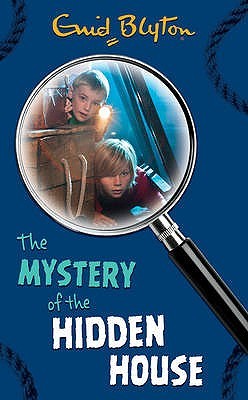
Monday #221

Well it’s Monday again, and this one marks 3 weeks until I come off work and 7 weeks until my baby is due (eek!). I’m going to try to finish my reviews of The Castle of Adventure on TV, reviewing The Zoo Book and my comparisons on The Saucy Jane Family before I go.

Posted in Blog talk | Tagged , | 1 Comment

Famous Five 90s Style: Five on a Treasure Island, part 1

treasureislandFor me, where it all began

For many, Enid Blyton’s books were the beginning of their journey into the world of Blyton’s Famous Five, Secret Seven, Five Find-Outers and Adventure series and, yes, I did read Five Go to Mystery Moor before I even realised as a five year old that there was a TV series, and a brand new one being filmed.

Naturally when I was informed that there was a TV series being aired – I think on CITV (channel three) because I remember adverts – I was desperate to watch it. A lot of the time it was videoed from the telly for me to watch it, as I was usually at my childminders after school so had no chance to watch them live.

However Five on a Treasure Island  was the first one I watched and I fell in love with the series, actors and stories. I must admit a lot of the details went over my head. Re-visiting it in my late teens and now, as an adult, the details are what makes this particular series so good. For a start it begins with the right story for a start, so shall we take a look at it properly this time?

The story

We start with a bit more of a back story to the Kirrin history, the story to the ship wreck and seeing the box being hidden in the captain’s cabin and then the ship going down. Then we are shown what life at Kirrin cottage is like before Julian, Dick and Anne arrive. It’s a little different from the book, because in the book we start off with Julian Dick and Anne and their parents talking about what they’re going to do for the holidays.

We have a glimpse of life at the three-way dynamic between Aunt Frances, Uncle Quentin, and George, not to mention Timmy. We are shown Uncle Quentin banishing him because he almost trips over Timmy in the house, when it’s really not Timmy’s fault.

The story is split up into two parts, probably to cover all the relevant details included in the book. The first part establishes the relationships between the Five, the secret of Timmy and the wreck being raised from the seabed and being thrown onto the beach on Kirrin Island.

It’s rather a slow beginning, I suppose, the action really doesn’t take off at all, with the exception of the wreck being lifted from the seabed and the box being found. We do not even get an introduction to the villains in this part of the story. So by all means its a slow starter, but given that its set in the ‘correct’ time frame it makes all the difference to the 70s version.

The fun bits

While the 90s version keeps closely to the book, the attention to detail is fantastic. We even have added extras, bits that make this series so hilarious, and maybe outdated now-a-days. The joshing between the siblings, the poking fun at Dick when he’s hungry, teasing Anne about her teddy bears. This quote below, is one of my all favourites, something that endears me to the young girl.

treasureisland90s1

This exchange between Anne and her mother, not only makes an instant humorous situation, but also endears her to the audience. She’s instantly recognisable as the youngest, in the same way the Julian is recognised as the eldest.

Having been utterly devoted to this cast, and really believed that their portrayals were the definitive Famous Five, I can see now where others came from when they say they were a bit tongue in cheek. I honestly do not think its so bad with the first series when the actors were younger and suited their roles more, but in the second series we can absolutely see the more grownup side of things coming out of them and the writing got sillier and sillier.

Nevertheless, in this episode when we’re sitting comfortably on a bed of nostalgia, the wondering interweaving of light-hearted childish joking and teasing, accompanied by the strong emotions from all parties at one point or another really really make this episode one of the best. I forget how good Five on a Treasure Island is on TV, because it’s not one of my favourite books, but it’s pure. That’s what this adaptation seemingly started off as, it was pure, trying to move Blyton away from the Five Go Mad series that took Blyton’s work and made it into a very tongue in cheek thing to like, something to laugh at more like.

Actors

Once more with the 90’s series it’s our actors who really make the show. Christopher Good as Uncle Quentin, serious, brainy and stormy with his temper is quite the show stealer, and his interactions with Jemima Rooper as George are simply quite amazing. Even at the age she was during filming you could tell that Rooper was going on to amazing things!

Mary Waterhouse as Aunt Frances as well, is particularly gentle and contrasts the two strong characters of George and Quentin well. She does however, we later discover, have quite an amusing side, long eye rolls at her husband when he’s not listening to what she’s saying and revealing a temper of her own. Its a nice side of Aunt Fanny to see because she can somewhat fade into the background.

Paul Child, Marco Williamson and Laura Petela all work well as that functioning family unit, at least to begin with. The boys bicker, as boys should but most of all, they both look out for Anne. It doesn’t matter what they’re doing to each as long as she’s safe. I think many of you will agree that when they got older, Child and Williamson out grew their roles quite significantly and had to make their roles more grown up than was needed for a children’s show. However in this first episode they encapture the youth, liveliness and joy of the children to their best ability.

Conclusion

So do we like this episode? You can bet we do! Even though I had forgotten how brilliant it was, I can see it now, and it might also inspire me to watch all the others again. It has the added bonus of actually being the first Famous Five that Blyton wrote so the meeting of the Five is more natural. Yes there are a few iffy moments, that can’t really be explained, like the editing and where George is suddenly best buddies with her cousins, but in a 25 minute slot you can’t really go into the time and depth that it takes to have that sort of relationship.

That aside, the episode truly does work well and if you haven’t watched, I suggest you do!

Posted in Blyton on TV | Tagged , , , , , , , , , | 5 Comments

The Adventure Series on TV: The Castle of Adventure, part 3

The previous episode ended on a cliff-hanger (almost literally) as Dinah plunged from a tree into the enormous moat around the castle. I’m fairly confident that she will be OK, however, given that she is unlikely to disappear from the rest of the episodes due to injury or death.


WHERE’S DINAH? WHERE’S DINAH?

Kiki is the first to react to Dinah’s fall, squawking the above before the two boys race to shimmy themselves across the tree too. Thankfully they don’t lunge off, and Dinah has not plummeted very far, she’s just hanging from a tree branch below.

Don’t just sit there grinning, get me out of here!


LYING IS NOT VERY BLYTONISH

Blyton’s children have always had that strange moral that as long as they don’t outright tell a lie then it’s ok. If asked are you going to the castle? they couldn’t lie and say no, but if asked where are you going? they could say out for a walk, and leave out the castle part quite easily.

We don’t always tell our mum what we do (Dinah)

You mean you tell her lies? (Tassie)

We don’t lie we just don’t tell her everything (Philip)

But later, they do tell what I think are actual lies. Lucy-Ann starts telling Mrs Mannering they are going for a walk because Jack thinks there are eagles nesting up in the ca. She is cut off by Dinah saying copse before she can finish saying castle. So that’s one outright lie!

Dinah then adds that they need rope for climbing trees which is not quite the full truth – they need it to help in getting from a tree into the castle.

I think it’s also Dinah who says we’re just going for a walk. Going for a walk is true but they’re not just, only or purely going for a walk are they?

Philip then lies that Tassie won’t be with them as her mother’s told her not to go… and they make a huge production of scrambling away from further questioning when all Allie wanted to know was if she had to make more sandwiches. But Philip has already seen Tassie and knows full well she is coming!


TALKING OF TASSIE

I don’t really like how the kids treat Tassie in this version. It seems like they are using her just to get near the castle against her wishes. There’s not really any play or chat between them to imply friendship. Somehow it seems nicer in the book, even though there Tassie is totally awestruck and follows them around! On TV they’re not even concerned when she disappears again at the castle, but later they say they looked for her for ages (which may be another untruth as it wasn’t shown to the audience).

Even Lucy-Ann gets in on the Tassie-bashing when she says Oh come on, Tassie, you’re so boring when it’s clear that Tassie isn’t comfortable going to the castle.

Jack’s a bit nicer to Tassie at least, he tries to get to the bottom of her fears about the castle in a considerate way.

The mystery around her does deepen in this episode, though.

There’s more gypsy magic as Tassie says her mum has ‘second sight’ and knows what’s about to happen. Philip says this must also be true for Tassie who must be able to “see” a way into the castle. (Another example of them being a bit mean to her).

And then there’s her relationship with Sam. She does declare that he’s not her father, she doesn’t have a father, but…


SECRETS AND LIES AND THREATS

Sam shows his true colours in this episode when he comes to ask Tassie’s mum where Tassie is. He is very aggressive and threatening towards her – I just knew he was up to no good. He goes on for quite a while about how Tassie shouldn’t be wandering about, espeically near the castle and how she is hanging out with those kids. Makes you think he’s putting on that friendly visitor face just to keep an eye on what the Mannering/Trents are doing.

Coincidence or not but Philip had started behaving more suspiciously of Sam earlier in the episode. He certainly didn’t want Sam to see him and Jack taking a plank and rope out of the shed at Spring Cottage but that might have been in case he told Mrs Mannering about it.


NOW FOR THE MAIN EVENTS OF THE EPISODE

This episode focuses on the challenge of getting inside the castle (finally!). Tassie uses her ‘second sight’ and finds another log across the moat behind a wall of ivy.

The castle doors have been recently oiled and there’s an apple core been dropped outside too. This is a bit of a shame as in book they’ve no idea other people are around until it’s too late. This lot seem to be willingly walking into danger.

Tassie finds a possible way in – up a small tree near a window, but disappears without a word while the other children were looking the other way.

Dinah and Philip argue about how to get in etc, meanwhile Sam is coming closer in his horse and carriage… and looking very suspicious though it’s not clear how close he gets to the castle.  Though it’s decided they’ll come back the next day with equipment.

They do come back and manage to get in at the window with a plank and rope, so fairly similar to the book really, and Dinah gets covered in cobwebs inside (but it’s Lucy-Ann who screams).

The girls then go to set up a picnic on the rather well manicured lawns, while Jack and Philip keep hunting for the nest.

And the inevitable cliffhanger: Jack is climbing up the ivy covered tower to see if there’s a nest at the top and is attacked by the eagle.


PADDING, EXTRAS AND COMEDY

This series has been slowed down by ‘going to look at castle’, ‘coming back the next day and walking up to castle’ ‘returning next day to get into castle’. It might have worked better as 6 episodes and a bit more pace, I think.

Then there’s the daft slap-stick moments. Philip sees Sam and thrusts the plank back into shed and – by the sound of it – knocks Jack flying. On their second attempt Sam comes along again and Philip pushes Jack back, Jack then pushes and pushes leaving Philip jerking back and forward at the door, to which Sam does a little dance. After lugging the plank up to ‘the witching tree’ Jack pretends to faint/collapse so he can then jump up and scare Philip.

And there’s another scene where the henchmen talk on their radios about whether or not it’s lunch time.

Of course not every part of Blyton’s books were high-action but the in-between bits here fall a bit flat. They certainly lack the charm of the original!


EXTREME CLUMSINESS

Then there’s the problem of the extremely clumsy children who seem lucky to be alive mostly. We had Lucy-Ann falling down a slope in the last episode, and here it is Jack’s turn. Yes it’s muddy and his foot slips but there was no reason for him to tumble all the way to the bottom.

And then their otherwise perfectly good version of  ‘plank through window’ access to the castle is spoiled by Philip half-falling off.

I wouldn’t say Jack being attacked by the eagle is exactly clumsy – but it’s a bit stupid to climb an exposed wall to a nesting bird surely?

They seem determined to add as much drama as possible to each episode anyway and unfortunately that seems to mostly involve people falling over for no good reason!


MODERN TIMES?

They are playing videogames at Spring Cottage! But interestingly it’s the girls who are playing, and Lucy-Ann is brandishing one of those gun-controllers.

But later there’s very much a boy/girl divide as the girls are at home making sandwiches while the boys get the equipment ready.


So there we go, third episode of eight and we’re finally in the castle. Some elements are good – I’m glad they’ve kept in the plank into the window for example and some good arguments between Dinah and Philip.

Saying that there’s a bit too much padding and delaying through all the episodes. The source material is so good so it is a shame to waste so much time on Sam and other nonsense.

Posted in Blyton on TV | Tagged , , , | 1 Comment

Monday #220

Gosh we aren’t half getting through these Mondays! Can’t believe we’ve posted 220 Monday posts to-date!

We have a bit of a TV week for you this week once again, hope you don’t mind!

Posted in Blog talk | Tagged , | 2 Comments

May 2017 round up

We are into June now (how?) and so it is time to recap what we have been up to in May.


WHAT I READ IN MAY

I’ve had a lot going on this month so it hasn’t been a great one for books again.

  • Harry Potter and the Half-Blood Prince – audiobook narrated  by Stephen Fry
  • A Death in the Dales (Kate Shackleton #7) – Frances Brody
  • Harry Potter and the Deathly Hallows – audiobook narrated  by Stephen Fry
  • The Clothes-Horse and Other Stories – Janet and Allan Ahlberg
  • The Witches – Roald Dahl audiobook narrated by Miranda Richardson
  • Maisie Comes to Morningside (Maisie #1) – Aileen Paterson
  • Maisie Meets her Match (Maisie #4) – Aileen Paterson
  • What Maisie Did Next (Maisie #14) – Aileen Paterson
  • The Dragon in the Cupboard (Usborne Young Puzzle Adventure) – Karen Dolby
  • Harry Potter and the Philosopher’s Stone – audiobook narrated  by Stephen Fry
  • Harry Potter and the Chamber of Secrets – audiobook narrated  by Stephen Fry

A lot of audiobooks (around 100 hours worth in fact) which gives an insight into how badly I’ve slept this month as most of that has been night-time listening (some is afternoon napping to make up for lack of night-time sleep).

And I still have a few things on the go:

  • The Book of Fours (Buffy TV tie in) – Nancy Holder
  • Hey, Seymour! – Walter Wick
  • The Wonderful Story of Henry Sugar and Other Stories – Roald Dahl audiobook narrated by
  • The Saucy Jane Family – which I have been comparing the text in, here and here.
  • Harry Potter and the Prisoner of Azkaban – audiobook narrated by Stephen Fry
  • Mindful Birthing: Training the Mind, Body, and Heart for Childbirth and Beyond – Nancy Bardacke

I still have some library books to start:

  • Why Is This Night Different From all Other Nights? (All the Wrong Questions #4) – Lemony Snicket
  • Death at the Seaside – (Kate Shackleton #8) – Frances Brody
  • Blotto, Twinks and the dead Dowager Duchess – (Blotto & Twinks #2) – Simon Brett
  • Cream Buns and Crime (Wells and Wong Detective Agency) – Robin Stevens

WHAT I’VE WATCHED

  • More One Born Every Minute. I was very annoyed when it wasn’t on one week thanks to The Trial!
  • Hollyoaks, as usual
  • Taskmaster
  • Murder She Wrote. I have every episode (264 to be precise plus four TV movies…) and have started watching them from the start again.
  • The Fifteen Billion Pound Railway – about a new train line being built in central London

WHAT I’VE DONE IN MAY

  • Spent far too much time in hospital! I had an overnight stay at the start of the month and have had weekly (sometimes twice weekly) visits since then. Thankfully everything seems to be OK after an initial panic but it has caused a lot of stress and taken up a lot of time. And on the plus side it has meant extra scans so we’ve been able to see our little boy more often!

  • Been on holiday (and had to come back mid-week for my hospital check-up) near Aviemore. We had nice weather almost all week and managed some nice day trips.
  • Picked out the pram I want and a blind for the nursery (we will be prepared eventually!)
  • Bought some new books (I can always find a bookshop or two when I’m away!) I picked up two more of the Animals of Farthing Woods books for 50p each in a second-hand bookshop in Kingussie, and I also went up to Leakey’s in Inverness. I spent a good while browsing their big children’s section (full of things like Biggles, Rupert annuals, A.A. Milne, Elsie J Oxenham and of course Blyton. I had most of the Blytons they had but I got The Zoo Book (which I wrote about earlier this week) and also The Princess and the Goblin by George MacDonald. Avid Blytonites may recognise that title as it was one of Blyton’s most favourites when she was a little girl. I also bought The Troublesome Three (an unusual colour picture story book) on eBay.

WHAT STEF HAS READ


WHAT STEF HAS WATCHED

  • Death in Paradise – I’ve been rewatching the DVDs. Its very clever and I recommend it to anyone.
  • One Born Every Minute – Fiona and I have been watching this when its been on the telly. I swear she just wants to scare herself before she has her baby boy!
  • The Famous Five (1970s) –  As you know I had to go back and review the first episodes, so they go on my watching list for sure.

WHAT STEF HAS DONE

  • First of all, the most thrilling thing, I’ve been helping my parents sort out the kitchen so that our new one can be installed next month. Sounds amazing doesn’t it? Haha.
  • I started my new job. I’m now an assistant clerk for a local parish council as well as running my library. Its fun and something different, so it’s all good.
  • I’ve had a colleague’s retirement party, two colleagues in fact have left my library this month and I’ll miss both of them! So it was a sad fare well even though the sun was shining.
  • Me and my other half have been busy as well, we enjoyed an old fashioned steam fair which as always seems to defy health and safety regulations but always reminds me of what my favourite adventurers the Five would have experienced. Plus I loved looking at all the old fashioned caravans, even if they aren’t drawn by horses any more.
  • We also went for some lovely sunny walks along the River Thames, and enjoyed ourselves on a home made swing we found.
  • During the bank holiday we enjoyed a trip out to Longleat Safari park, about an hour and a half away. It was necessarily the sunniest of days but it was warm and we had a good time, even though we didn’t get to go into the house, the drive round safari was certainly a brilliant experience.
  • Last but not least we spend the rainy bank holiday (is there any other kind?!) in Winchester’s Science Centre and Planetarium. It was fun, but crowded. Worth a visit if you have children to take, but I warn you, it’ll be busy!

I think that’s all the notable moments from my month. Lets hope I have some more for June, but I can tell you one thing – I’ll probably be writing the June round up from Fiona’s house because I’m having a cheeky visit before her baby comes! I’m so so excited! I haven’t seen her in over a year and that’s really too long!

Posted in Personal Experiences | Tagged , , , , , | 2 Comments

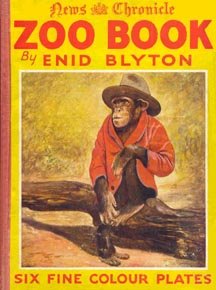
The Zoo Book

I was away on holiday last week, and just so happened to be just 45 minutes away from Inverness. So naturally that meant a trip to one of my favourite places – Leakey’s Second Hand Bookshop (second largest in Scotland).

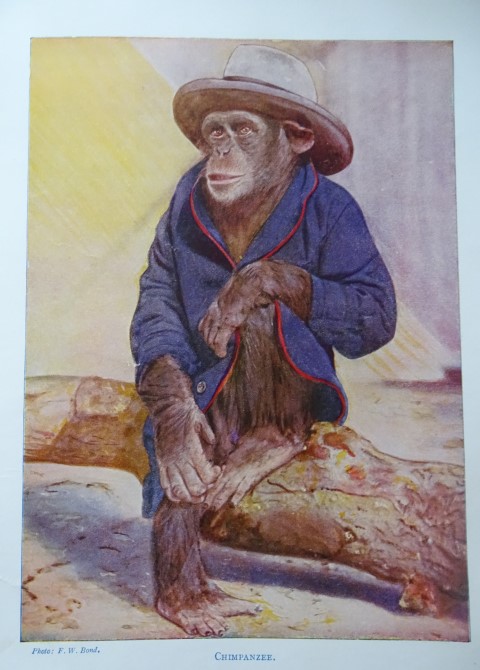
They have a great children’s section and as always some Blytons but I had most of them! I couldn’t resist The Zoo Book which was priced at £10. It’s a later reprint but it still has lots of black and white pictures plus six full colour plates (a big selling point in those days I bet!) Inside it reads profusely illustrated with six plates in full colour and forty-nine photo-reproductions in black and white. 

On the left is the first edition, George Newness 1924 – which didn’t have any colour pages. Then there’s two rather similar reprints. The middle one is from 1926, and I have the newer reprint (early 1930s) on the right.

So even though mine is the newest it is still at least eighty years old and one of the oldest books in my collection.


CHAPTER ONE: NOAK’S ARK IN LONDON

The animals aren’t quite in two by twos (hurrah) but there is a brief history of Londzon Zoo.

Far back in the nineteenth century, about a hundred years ago… people did not take nearly such interest in animals… often they were cruel to them because they did not understand them.

The zoo was already a hundred years old when this book was written, and it’s over a hundred and eighty now, so it’s interesting to see Blyton talking about old-fashioned attitudes etc, when the ‘current’ ones probably seem very out to date to us now.

A good example is this quote:

They [the ‘gardens’] are very different now from what they were when they were first opened. New ideas are always being thought of, and the animals are better cared for, better fed and better housed than they used to be.

and also, in particular this one:

Perhaps you sometimes think, when you see one or two animals pacing up and down their cages ‘how cruel to keep so many beasts caged up so that people may come and look at them!’ But you must remember that they are very well treated, are free from all danger of enemies, and have no fear of going hungry. Probably, most of them would say ‘We’d rather stay at the Zoo, thank you,’ if they were given the choice now, of staying to be looked after, or running wild again!

It shows a rather breath-taking amount of naivety and optimism! Certainly looking back at zoos in this time period (like Chester Zoo which was started in the garden of a large manor-house by a very conscientious and well-meaning family) modern eyes would be fairly horrified by the housing, feeding and care of the animals.

It’s not all positive remarks, though, and in fact a few are rather bizarrely negative and judgemental, written from Blyton’s perspective rather than a neutral one:

Some animals are disgusting to to watch when they are being fed, and some are not at all interesting to watch… The eagles are not very nice to watch, for they are so savage and fierce over their food… I think once or twice is enough to see the lions feed. The house is so crowded and hot, and the roaring is not a pleasant sound.

She  does say she prefers seeing the sea-lions and seals fed, and the description of that is instantly recognisable as something that really hasn’t changed in the intervening years. I’ve seen seals fed in that exact way very recently.

Other things are vastly different, for good reasons:

You can, of course, feed many of the animals yourself. Bananas, oranges, apples, bread, nuts, you will find most animals willing to take some of these… Some people feed the animals the wrong food and that makes them ill. And sometimes the animals get too much given them, and over-eat especially on bank holidays.

Could you imagine being allowed to feed zoo animals whatever you fancied these days? (OK my family may have fed otters cooked chicken on a few occasions… so I can’t claim to be entirely innocent here) It’s fairly shocking really, but I suppose it was less likely to be sausage rolls, crisps, donuts and pizzas back then. I can’t imagine sweets would have been very good for any animal, though.

And a last anecdote is presented as an amusing little tale but could have been disastrous – when a schoolboy fed an ostrich three whole oranges and they could be seen down his neck like giant beads on a string. Just as well he didn’t choke to death!


CHAPTER TWO: HOW ANIMALS ARE CAUGHT AND TAKEN TO THE ZOO

This chapter has some rather depressing facts – especially for a book for children.

  • Not one half of the animals caught live to be placed in a new home.
  • Rhinoceroses and elephants will fight for their young and usually the baby animals can be taken only after the old ones are killed.
  • After (reasonably humanely trapping baboons in a cage) : up come the hunters, and with forked sticks catch each baboon by the neck and pin him to the ground. Then the top of the cage is taken off, and the baboons are bound and muzzled. For a day or two they are terrified, but they soon recover, and get used to captivity. 
  • Holes are dug to catch baby hippos
  • Fires are set to flush out snakes into nets
  • Herds of goats taken along to feed the baby animals – and are fed to the meat eaters if they die.

There is also that same strain of ‘gosh, sounds awful but don’t worry they’re OK in the end’ which is patently not true if the first statement is true (and it probably is).

That fact is elaborated on later as well:

Many beasts die on the way. The heat kills a great many. Unsuitable food causes the death of others, and some die of fright and homesickness. But as the trader loses money on every animal that dies, every possible care is taken of them, and they are looked after and tended as if they were delicate babies!

What is interesting is how the animals are transported. I had pictures in my head of a long train like Indiana Jones encounters as a boy at the start of The Last Crusade.

But it’s more like:

Savage or small animals are carried in cages on the back of camels. Hippos are carried in cages slung on poles between two camels.

Also interesting is that a ‘ship’s butcher’ is in charge of the animals. To me that sounds a bit dodgy to say the least! ‘Whoops, this one died, it’s ostrich burgers for dinner, lads…”

Once on board the animals aren’t much safer though, despite best efforts:

  • Two cheetahs died from licking too much salt water from their fur.
  • The ship’s butcher lured an escaped bear back to his cage with a tin of treacle (a la Philip in The Circus of Adventure).
  • Giraffes can be valuable enough for the ship to dock and give them weeks on land to recover before resuming the journey should they become sick.

CHAPTER THREE: SECRETS OF THE KEEPERS

Some examples of ‘great innovations’ for the care and management of animals are given here – some are very clever but it’s a shame that many came too late to save animals from suffering or dying, and you get the impression that the keepers still didn’t understand their animals after it all.

  • Artificial sun (big lamps) for tropical birds to extend daylight hours and give them enough time to feed in the day, after a great many had died
  • A tin ruff for parrots to stop them pulling out their feathers (an unrecognised problem with stressed and unhappy parrots it would seem, but they are labelled as silly/daft in the book)
  • A bath for storks stained black by smoke and smog – not necessarily for the benefit of the birds but to appease the visitors who were disappointed in their grimy appearance.
  • Poles and irons – or a hose pipe – to separate fighting animals – though too late to save a female tiger being killed by her mate (the book really doesn’t shy away from death and disease!)
  • Animals with hoofs don’t get enough exercise in their small paddocks and need their hoofs filed… Well, that’s a solution I suppose. I wonder if it ever occurred to them to just give them bigger paddocks? (As an aside both hoofs and hooves are correct, but hoofs was more popular in the past while hooves is more prevalent today. Just another change in the last eighty years!)

I actually had to read this story out to my fiancé as it’s such a bizarre thing for a children’s book. I can see why Blyton didn’t want to gloss over the more negative happenings in a zoo but it’s told so blithely, as an amusing anecdote rather than a tragedy:

There was a polar bear who had a wife who sometimes irritated him dreadfully. She snarled at him and annoyed him, for she was a bad-tempered creature. He used to bear it as long as he could, and then he would suddenly turn on her and push her into the water. There he sat on her head until he thought she had been punished enough, when he would let her free again; but one day he sat too long on her head, and when he climbed out of the pond he found she did not follow him. She was drowned

He accidentally killed his mate! Isn’t that just awful? She is portrayed as ‘his wife’ in the story but I wonder if they were forced together as mates by zoo staff in hopes of bear cubs, or because they didn’t have space for two enclosures. Introductions of animals are handled so carefully these days it’s quite unthinkable for this sort of thing to happen.

Something I found very interesting is the back and forth changes in attitudes to the enclosures for monkeys and apes.

According to Blyton monkeys and apes were protected by glass to protect them from flu etc… but now it has been decided that it is really better for the animals to have fresh air and to be allowed to make friends with people.

So a big change there, and then now we are back to keeping the monkeys and people firmly apart (with glass, fencing, or large gaps between walls) for both parties’ safety. They certainly get the fresh air still, just not up close to people.

And lastly another ‘funny’ anecdote about the funniest sight in the world. Monkeys chasing each other around? Penguins falling clumsily into the water? No. It was a tapir with the mumps.


I’m really glad Blyton’s attitudes towards animals improved between this book and her ‘main canons’. It’s a very different world to the one she portrays in, for example, the Galliano’s Circus books. Could you imagine her casually having various circus animals die as ‘that’s what happened’?

It’s a very interesting piece of history, and I fully support zoos and wildlife parks today, but it does make for very uncomfortable reading. I just wish Blyton showed a little more humanity and distress or upset at so much suffering.

There are still another thirteen chapters to go, mind you, so she may redeem herself. I will leave those for another day (or several days).

Next post: The Zoo Book part 2

Posted in Book reviews | Tagged , , , | 1 Comment

The Seaside Family

9781405269056We’re  back with Mike, Belinda and Ann again for another Family adventure –  well as far as a young children can have an adventure with their parents around. However, it is a big adventure for the children. They’ve never been to the seaside before so let’s see how it pans out.

The Holiday

The children have just broken up from school and on their way home they seem to have planned on what they want to do before even consulting their mother and father. They want to go to the seaside, and why not? Even right now I want to be at the seaside, especially if we had the lovely hot weather that blessed us last week.

We’re told however, even before their father gets through the gate to their field that he hasn’t got the money to send them to a hotel at the seaside, but the children have come up with a solution to this! Why don’t they take the caravans? They are houses on wheels after all and provide everything they need in terms of accommodation.

Daddy takes them to stay somewhere where he visited as a child called Sea-Gull Bay which is about two days away in a horse-drawn caravan, but the children don’t mind. They’re just excited to be going on holiday to somewhere where they can swim and explore. As I’m sure you can remember from The Saucy Jane Family all the children learnt to swim in the canal and are swimming like fish now.

One thing that happens in The Seaside Family that hasn’t happened in other books is that the children are joined by another boy, Benjy, for the holidays. He is someone’s son from their father’s work, and his mother is very ill so he cannot be looked after properly in the summer holidays. We never quite find out what his mother’s illness is, but if you look back through our posts for Fiona’s marvellously researched blogs on the illnesses that were around at the time, you’ll be able to see what Benjy’s mother might have had.

Benjy adds another element to the story, mostly because he has to interact with the others and he’s one of those slightly spoilt children who is also very unhappy that his mother is unwell. At first he doesn’t pull his weight and the children dislike him, in fact Ann dislikes him so much that her mother has to tell her off for her manner towards him. I think this might be the first time I’ve witnessed a mother tell her child off for the manner in which they are speaking to a spoilt child.

I mean there have been other spoilt children before but the adults in Enid Blyton’s books tend to gloss over these spoilt children with no apparent reason. They don’t really get dealt with. Ann however takes almost an instant disliking to Benjy and is rude and mean to him which causes her mother to scold her and remind her that Benjy is probably worried and missing his mother.

The holiday continues however and Mike, Belinda and Ann all have masses of fun while Benjy feels left out and sidelined. Eventually he sees how happy the other children are, how brave and how resourceful and begins to change his ways. He learns how to swim, how to look after his bunk in the caravan and begins to be an all round happier child.

There is an awkward bit where it looks like his mother might not pull through, but we are treated to a nice happy ending. I swear this short story almost made me cry, especially when Ann and Benjy ended up being the best of friends.

My thoughts

I am really beginning to love these little stories about this caravan-based family, and I think that the addition of Benjy is a nice little dynamic to the group. He gives the children something else to think and learn about and in the end they all help each other for the better.

The fact that Mother and Daddy do not realise how worried Benjy is about his own mother is something I could relate to strongly because of the way my life has panned out. I know how easy it is for children to hide their true feelings from their parents and others around them, so my inkling that Benjy was worried and upset was probably down to experience more than Blyton’s writing but it’s there, even if it’s not obvious. I wonder if she was projecting some of her own childhood fears from the fighting between her own mother and father into the stories? Anyway that’s a totally different blog to work on, and not one I think I could even possibly give a satisfactory conclusion to. All I know is that these little stories seem to reach out to the child in me more than any of her others have. There is something about Mike, Belinda, and Ann that make me love the children and their little adventures. Maybe it’s because they are all of the age where I get on quite well with children, post baby and pre-teenage – most of the mum and dads who bring their children into my library comment on how well I get on with their children, interact with them and know their tastes in books.

Nevertheless this little story is charming and even though we have to deal with an upset and spoilt Benjy at the beginning, that doesn’t mean he ends up the same way as some of Blyton’s other creations, such as Junior from Five on Finniston Farm or Gwendoline from Malory Towers. He’s not exclusive in Blyton’s writing but he is a mark of how young children recognise their surroundings, loss of a parent and many other things.

Anyway, I recommend The Seaside Family, but this time not necessarily just for the younger members of your life. Have a read yourself, see if you can pick up on anything I’ve missed.

Happy Reading!

theseasidefamily

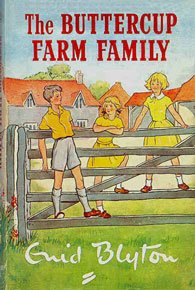
Next post: The Buttercup Farm Family

Posted in Book reviews | Tagged , , | 1 Comment

Monday #219

I’m back from my holiday now, and back to work as well (but only for five weeks before my maternity leave starts!).

And so here is what we are writing about this week:


Posted in Blog talk | Tagged , | 1 Comment

Famous Five 70s Style: Five Go to Kirrin Island part 2

wp-1486510903961.gifSo if you have managed to follow the title of this piece –  which if you’re not hugely up to speed with the 70’s Famous Five might take some explaining (however look back here for a bit more of an idea on whats going on). Once you’ve read that we had better get back to the actual story and what’s going on!

More Kirrin Island Again?

The second part of the first episode of the series seems to follow the lines of the sixth adventure of the Famous Five than the first book written by Enid Blyton, as the title of the episode suggests.

In this episode we move towards what’s going on at Kirrin Island a lot more. I suspect this is down to the fact that a lot of the story line was used up in the first episode, setting the scene, making the Five a compatible, workable unit, and establishing Uncle Quentin working on the island, not to mention the baddies.

The first episode worked well, it seemed to be able to make a go of changing the order of the stories to create a workable pilot, but did we really need a two-parter that just dragged on? Five on a Treasure Island, done 90s style (which coincidentally, needs to also be reviewed) seemed to work so much better as a two-parter because of everything going on, and being very much based on the children rather than around Uncle Quentin, which Five on Kirrin Island Again is.

In part two, we are treated to a lot more time with the captured Uncle Quentin and less about the children and them solving the mystery. By and large, Timmy did most of the work in carrying the notes back to Kirrin Cottage and then leading the boys through the tunnels to George and Uncle Q. Any actual exploration of the tunnel just wasn’t done, in a very similar way to the book now I come to think about it. In the book the tunnel is discovered by never really explored. So as far as I am concerned this is more about Uncle Quentin, his experiment and the chaps who are trying to steal the results for their own gain, the Five just happen to stop the island from blowing up, rescue Uncle Quentin and George, and capture the bad guys right at the very end of the episode.

Now don’t get me wrong I know this is a standard adventure novel but the fact that it feels like there wasn’t enough to make two episodes out of this and it should have just been the one. It is not very centred on the Five which is the whole reason for the series, I mean without the Five there would be no Famous Five and that doesn’t feel like it happens in this episode. I’m not sure what Enid Blyton would have actually thought about this all, but for me the second episode doesn’t seem to work.

Timmy

Up until now I’ve not really gone into the whole Timmy issue and that’s because it’s hard to work with. Most of Five on a Treasure Island centres around the fact that Timmy belongs to George but isn’t allowed at home and as you know, he eventually makes it back into the house, much to Uncle Quentin’s horror at points.  When we get to Five on Kirrin Island Again, Timmy is very much established in the house and even has to go to the Island with George’s father and act as a bodyguard when Quentin thinks he is not alone on Kirrin Island. Naturally this cannot happen because Uncle Quentin does not know that George still has Timmy so the idea that George knows something’s wrong because she does not see Timmy up in the tower with her father when he signals, has to be thrown out of the window. The idea, not Timmy, obviously.

Quentin is therefore totally lost when George says she gave his precious notebook to Timmy to get away for safe keeping. Despite the fact that they are possibly about to die, instead of saying “Oh by the way Dad, you remember that dog you wouldn’t let me keep? Well I still have him and he’s just saved your notebook,” she simply says, “Oh he’s just a friend” when she’s asked who Timmy is.

Julian then also covers up for her, by saying that Timmy belongs to him, Dick and Anne to save George’s bacon. At this point I think it’s quite obvious that the Five aren’t good liars and any regular parent would have realised this and known that Timmy was in fact George’s. Aunt Fanny does, luckily enough but  Uncle Quentin has to have it spelt out to him in words of one syllable. You wonder how he made it to the level of professor at this rate!

So yes, Timmy saves the day, but not only by saving the notebook, but by taking Dick and Julian to George and Uncle Quentin, getting them back out again and even then going back into the tunnel to help the lost crook, Johnson, find his way out of the tunnel so that he can be arrested.

As I said earlier, Timmy is the whole reason this episode works and gets finished, because he is the star of the adventure and wraps it all up nicely for them.

Conclusion

Did we really need a two-parter? In my humble opinion, no we didn’t, there wasn’t enough material to pad things out with, but also, they made the first episode very well that they were left with the more mundane parts of the story to tell.

It was interesting to look at how Johnson tries to negotiate with Uncle Quentin, as it is really quite ridiculous and basic. This man is supposed to be from the government and he can’t even come up with something better than “You’ll be a very rich man, professor.” Yes, he could, but Johnson clearly didn’t do his homework or he would know quite simply that Quentin isn’t a greedy man. In Five on a Treasure Island, it’s a different matter as the family are running out of money to pay the bills because he isn’t making enough from his inventions, but boy the sixth book things seem to run their course very well and clearly this is a project close to his heart. Johnson would have got somewhere with the money idea if this was the first book, but its a completely different Uncle Quentin he’s dealing with. Johnson clearly doesn’t know any other language than money which is silly because he has no back up negotiation apart from the desire to blow up the island.

The Five do, technically save the day, thanks to Timmy, and we end with laughter and a silly joke as always which is supposed to lighten the mood but, to me, seems to cheapen the adventure. For what its worth, we really could have just had one episode to start for this series as two episodes lacked content. I wonder what Blyton would have made of them!

Those are my thoughts on this 70s episode, tell me yours in the comments below!

Posted in Blyton on TV | Tagged , , , , , , | 2 Comments

The Saucy Jane Family: How has Blyton’s original text fared in a modern edition? part 2

There weren’t too many changes made in the first chapters, but then again the chapters are pretty short!

I am comparing the first edition (Lutterworth Press, 1947) to an omnibus edition containing four of the six books (Egmont, 2014).


CHAPTER THREE: WHAT FUN TO BE ON A HOUSEBOAT!

As with the previous chapters gay and queer are replaced/removed.

  • gay crockery hung in neat rows becomes mugs and cups hung in neat rows
  • I’ve never heard of such a queer thing becomes such a thing
  • their queer life becomes their unusual life

The first example is an odd one as they’ve changed more than necessary – something it seemed like they were avoiding doing before. Gay could easily have become colourful, bright or pretty – do they think modern children don’t know what crockery is? (Obviously not as they leave the word crockery alone in the next chapter.)

A reference to lack of schooling for canal-boat children is removed – They have hardly any schooling, you know, because they are always on the move. Instead the sentence just starts They are always on the move.

And lastly a possible mistake has crept in. The original text reads a great many of the canal people. In the omnibus this has become a great many of the canals-people. Blyton does hyphenate canal-people elsewhere – and the omnibus leaves those as canal-people – so I’m not sure where the S came from.

A few interesting things have been left in this chapter. First is the fact that they talk about tying Ann to the boat to stop her drowning, and then see two little girls tied up to their boat. This seems the sort of really old-fashioned and un-health-and-safety-conscious thing that would be updated – I rather expected them to say Ann would have to wear a life-jacket!

The other thing is that the passing boat with the tied up girls is carrying boxes to the next town, and it is pulling two coal barges. Neither of these things really seem realistic if the book is supposed to be set in modern times.


CHAPTER FOUR: SETTLING IN

Only one thing got changed in this chapter. The word trustable (which my browser’s spellchecker instantly underlines in red) is replaced with trustworthy. According to a few sources trustable is actually a word and means something slightly different from trustworthy.

Trustable means someone or something you are able to trust, while trustworthy means someone or something worthy of trust. A very slight distinction!

There are some further things I would have expected to have been changed in this chapter. One is how Belinda is the one to offer to make up the fold-out bed for her parents each evening, and is the one to lay the table for supper too. She doesn’t say anything as strong as “I’m the girl so these are my jobs” but Mike volunteers to fetch water from the well so the roles are fairly clear. I don’t have a problem with any of that I hasten to add – but several editors clearly do!

Also suddenly seeming very old-fashioned is Daddy riding lending Davey to a farmer and then riding Clopper to the Saucy Jane. Nowadays he would have hitched a horse-box to the car – well actually they would have owned a car I bet rather than hiring one – and transported the horse that way. Just shows how silly it is to try to make books seem up-to-date when they are full of quaint old-fashioned things.


Another four changes there then, that makes ten in total.

Posted in Updating Blyton's Books | Tagged , , , , , | 1 Comment

Monday #218

We’re a blog of part 2s this week as Fiona continues looking at the text changes in The Saucy Jane Family, and I look at the second part of the 70s Famous Five pilot episode. Also a bit of a change around this week, I’m bringing you a blog on Friday while Fiona’s bringing you hers on Wednesday! Hope you don’t mind too much!

Happy reading!


wedfriy45

Posted in Blog talk | Tagged , | Leave a comment

The Adventure Series on TV: The Castle of Adventure part 2

I have now watched the second episode of the eight. Previously we saw the children arrive at Spring Cottage which is beside some sort of military operation, and Jack and Philip have been spied on by a strange man.


PREVIOUSLY ON…

There is a voice over telling us a little of what happened in the last episode. It specifies that Allie has taken her children and their friends on holiday so she it seems like they are trying to keep things simple here and not get involved in the adoption story. It’s a bit of a shame though, as in the book it’s lovely to see how happy Lucy-Ann is being able to call Mrs Mannering Aunt Allie.

The voice-over also asks could there be a connection between the peaceful holiday and British military intelligence? Well, you’d have to hope so wouldn’t you?


YOU’RE A GIRL!

We pick up where we left off with Philip and Jack in the woods, and Philip makes an impressive dive into a bush to catch the person spying on them. Only he has leapt onto a teenage girl.

“You’re… you’re a girl!” he says cleverly. Clearly she isn’t the person that has been watching them though!

“I wasn’t following you, I live ere!” the girl says. The woods belong to her and her mother. Sudden attacks forgiven she introduces herself as Tassie, and quickly tries to dissuade them from going near the castle.

Tassie

She then shows them a “witching tree” and spouts some silly magic stuff. She and her mother are now gypsies who are suspicious of folk who live in houses, rather than country folk who have a cottage of their own. I suppose it “explains” her appearance and demeanour but it’s a bit odd all the same. Later she turns up with a fox on a leash, called Buttons (he is Button in the book) and it’s implied he’s a pet of hers rather than something she’s caught to please Philip.

Tassie and Buttons

Anyway, she’s not allowed near the castle and the boys encourage her to go anyway as she doesn’t have to tell her mother. There’s a strange tie between Tassie and Sam too. Her mother senses Tassie has been hiding, if not from her, then it must be from Sam.

Sam puts food on the table and shoes on your feet.

I’d rather go hungry and barefoot… No-one’s colder than him.

So that’s interesting. I wonder if he’s a sort of step-father to her? And if so, is he actually a baddie or is this just teenage angst talking.


BOYS VS GIRLS

The previous episode had the characters quite true to the book but this episode veers off somewhat.

Firstly the boys want to go off alone with Tassie to the castle, and Philip in particular is quite harsh about not letting the girls come. That’s seen on occasion in the books – mostly when it’s something potentially dangerous – but it seems rather out of place here.

More in-character, especially for Dinah, is the girls then following the boys to meet Tassie as they think they’re up to something.

For some reason Tassie trusts the boys, but upon seeing two girls isn’t at all happy.

Perhaps this is wise of her as Lucy-Ann – or Lucy as they keep calling her for no reason – is a rather annoying girl now. Firstly she is made out to be very silly (asking which part of your feet grow fastest, the toes or the other parts…) and also very useless. She nearly falls on a perfectly flat walk and laughs pretty gormlessly about it too. And then she does fall, part way down the edge of the moat. I mean was she just not looking where she was going? I don’t know why they’ve picked someone so young and made her so hopeless.

How many people does it take to help one girl three feet up a slope?

They’ve also messed with her and Jack’s relationship. In the books Jack loves Lucy-Ann, and Lucy-Ann rather hero worships him. She trails after him a great deal and true, he doesn’t always notice her, but he’s generally very considerate of her and would never speak to her the way Philip does to Dinah.

In this adaptation he couldn’t seem to care less if she’s hurt or upset after her fall. He dismisses her as being ‘fine’ as he wants to carry on to the castle. In a desperate attempt to stick to events from the book, Tassie gets very muddy helping Lucy-Ann when she falls, and is cajoled into coming back to Spring Cottage for fresh clothes and a wash. A bit different for the book where Tassie is always dirty (and barefoot) and is practically attacked with carbolic soap by Mrs Mannering, but you can see they’ve tried to shoe-horn the idea in anyway.


AND A SERIES OF PERHAPS UNFORTUNATE EVENTS

Lots of minor things then happen in the episode.

  • Allie gets a call from someone called Jane, saying that Allie’s mother is sick. This is setting up a situation where Allie will leave the children at the cottage.
  • Sam abruptly invites himself to breakfast at Spring Cottage. The more I see of him the less I like!
  • John from the MOD meeting in the fist episode ‘bumps’ into Allie in the village and asks rather a lot of questions about where they are staying. He also works in a warning about the castle being haunted. Very suspicious.
  • One of Jack’s photos shows a man by the castle walls, so they know it’s possible to get over there.
  • Tassie tells the story of the ‘old man’ in the castle who did away with all his enemies. It came off much creepier in the book, somehow.
  • All five children head back to the castle and confirm that the path is entirely blocked by a landslide (but we aren’t shown it).
  • Dinah decide to sit on and wriggle across a fallen tree over the huge moat and for no reason at all slides off half way…


And that is the dramatic ending of the episode! We know she can’t be badly hurt, of course, but what will happen next? They’ve set up quite a few things here.


MY THOUGHTS

A bit more happened in this episode, and you can see all the ways that they’ve tried to be true to the books. Saying that, they’ve spoiled the relationship between Jack and Lucy-Ann (and Lucy-Ann herself!) and been a bit clumsy in trying to force book elements into their production so actually I think the first episode was better.


Posted in Blyton on TV | Tagged , , , | 3 Comments

Famous Five 70s Style: Five Go to Kirrin Island part 1

wp-1486510903961.gifRight so, a long time ago at the beginning of time (for this blog) I had this crazy notion that I was going to compare these TV series like for like and side by side. I did give it a go, however it never really got off the ground because doing the first episode was far too complicated. I mean, the 1970’s Famous Five skipped Five on a Treasure Island all together and used Five on Kirrin Island Again as their first episode (something to do with the copyrights still being tied up with the Children’s Film Foundation who shot the black and white cinematic episodes in the 50s).

Regardless I failed to review them even on the second viewing of the series for the blog, and for that I should be told off and denied any of Joan’s lovely cakes and biscuits (that’s ok, cause I’m on a diet!) Anyway, I think we should start. Let’s see how the 1970s lot managed to make Five on Kirrin Island Again their first episode.


Can book 6 be the beginning?

The initial reaction to this question is one of pure puzzlement –  I mean why would anyone assume that the sixth book in the series could make a decent foray into a world we all love and adore.

Surprisingly Kirrin Island Again does lend itself to an introductory episode. It’s strange but if you take away the familiarity of the Five, any episode could be considered the first one. Richard Sparks was the writer on this one, and I think he managed to create a well balanced episode that introduces all the characters very clearly.

Elements of the first book are visible in this adaptation especially at the beginning where Aunt Fanny is trying to introduce Julian, Dick and Anne to George and the fact that Rodgers the gardener doesn’t know who they are when they arrive, just shows how each adventure could have been the first adventure for the Five.

I only watched the first episode of the two-parter just to be able to look at the episodes properly and deeply. The attention to detail is interesting because there is so much of Kirrin Island Again that can be used and adapted and strangely accurately. I would love to know if it was one of Richard Sparks favourite books while he was growing up, which would account for the accuracy of the details.


The details

There were added details however, back stories on the bad guys, and very much a product of their time. The chap playing Curton is seemingly known to the to the authorities and seems to be some form of double agent because, Johnson knows who is on the other end of the transmitter.

Johnson seems to come from some environmental government body which is why he knows about Uncle Quentin’s work, but turns rogue and decides to make his fortune by stealing the professor’s ideas. According to the books I think it’s something to do with renewable energy, which seems leaps and bounds ahead of the time that Blyton was writing these stories. It’s amazing really how forward thinking she could be!

Once the children start working together the whole episode very quickly falls into the familiar Famous Five format and they begin to work together well as a team. Little things like the adoration of Timmy cements the relationship, and the discovery of tunnels and lunch on the island with Uncle Quentin, all fit into the story very nicely.

We finish the episode on a cliffhanger however because it is in two parts and, as the first episode you do need to keep the audience glued to their seats. Johnson is parachuted onto Kirrin Island and surprises Uncle Quentin with a gun and a threat. We are left to wonder what will happen next as the credits starts to roll. It will be interesting to see with the next episode how much of the book is once again carried through, if George immediately realises that something is the matter, for example.

If you remember correctly with me, Timmy gets left on the island with Uncle Quentin at one point because he thinks he isn’t alone, but with this being the first episode of the series Timmy is still banned from being in George’s possession and thus is unable to guard his mistress’s father. I can’t remember how the next episode goes, which will be interesting for me because I clearly haven’t watched it enough to remember much about it. Please don’t spoil it for me – I want to be pleasantly surprised.


Conclusion

The long and the short of it all is that the transition to make Kirrin Island Again the starting episode worked really well, and Richard Sparks does very well in working all those details between story one and story six in together. I think this would have received the thumbs up from Enid Blyton herself!

To some extent the changes to the story are necessary, even if they are to just make the whole thing work, but its not as weak an episode as I would have once pegged it to be. Worth another look if you can, and see if there’s anything I’ve missed out!

Posted in Blyton on TV | Tagged , , , , , | 3 Comments

Monday #217

We are going to have another TV-themed week here on the blog:


Posted in Blog talk | Tagged , | Leave a comment

April 2017 round up

I can’t believe it’s May already – perhaps something to do with the snow and hail we’ve had lately.


WHAT I READ IN APRIL

I’ve been less motivated this month so it hasn’t been a lot:

  • Ramona the Brave (Ramona Quimby #3) – Beverly Cleary
  • Ramona and Her Father (Ramona Quimby #4) – Beverly Cleary
  • Time Train to the Blitz – Sophie McKenzie (audiobook)
  • Harry Potter and the Order of the Phoenix – Audiobook narrated by Stephen Fry
  • The Treasure Hunters – reviewed here
  • The Mystery of the Phantom Lights (Adventure Island #14) – Helen Moss, recommended here.
  • My Not So Perfect Life – Sophie Kinsella

Most of what we’ve read to the baby is the same as last month (they say that repeated stories will be remembered after birth) with the exception of:

  • Wanted, Ralphy Rabbit – Emily MacKenzie

And I do have a few things on the go currently as well:

  • The Book of Fours (Buffy TV tie in) – Nancy Holder
  • Hey, Seymour! – Walter Wick
  • Harry Potter and the Half-Blood Prince – Audiobook narrated by Stephen Fry
  • The Wonderful Story of Henry Sugar and Other Stories – Roald Dahl (audiobook)

I am reading the whole cannon of Buffy books in order this time and am rather slogging through this one as I remember not really liking it the first time. The Harry Potter is my bed-time listening every night and the Roald Dahl I have been listening to while decorating the bathroom.

I’ve just borrowed a pile of books from the library as well, so at the very top of my very large to-read list are:

  • Why Is This Night Different From all Other Nights? (All the Wrong Questions #4) – Lemony Snicket
  • A Death in the Dales – (Kate Shackleton #7) – Frances Brody
  • Death at the Seaside – (Kate Shackleton #8) – Frances Brody
  • Blotto, Twinks and the dead Dowager Duchess – (Blotto & Twinks #2) – Simon Brett

I had better get reading then as that brings me up to 14 books on my card. (Mere mortals are restricted to ten but as a staff member I can have thirty!)


WHAT I’VE WATCHED

  • One Born Every Minute is back and despite the number of people who have asked if it is wise, I’ve been watching.
  • Hollyoaks of course.
  • Masterchef – did you know that Greg and John aren’t friends in the real world? (Though John has backtracked on his comments a bit since!)
  • Robot Wars which isn’t the same without Craig Charles
  • Which leads me to Red Dwarf – we’re now on the later series which aren’t quite as good.
  • The new series of Taskmaster has started, with new participants. Some of the attempts they made are hilarious and it’s so fun trying to second-guess the participants to come up with the best technique for whatever they’re trying to do.
  • Matilda was trending on Netflix and was perfect for a Sunday evening after having been hard at work painting

WHAT I’VE DONE IN APRIL

  • A lot of stripping paint in the bathroom. We had hoped to just chuck a fresh coat of paint on the wooden panelling but when we sanded it to give some grip a lot of the paint just chipped off… clearly the previous owners didn’t sand the very shiny (pale avocado!) paint before they painted! So we have been covering it with paint-remover and scraping it off for a few weeks now.
  • Framed some Noddy pictures for the nursery. I have yet to paint the frames though – one each in red, yellow and blue.
  • Repainted the walls of the nursery
  • Celebrated Easter with cakes and pin the tail on the rabbit at my Aunt’s house on Easter Sunday

WHAT STEF HAS READ

  • Five Go On a Strategy Away Day – Bruno Vincent, reviewed here
  • Diamonds and Daggers (Marsh Road Mysteries #1) – Elen Caldecott, reviewed here
  • Five Go Parenting – Bruno Vincent, reviewed here

    And her current reads:

  • Animal: The Autobiography of a Female Body – Sara Pascoe
  • Everything, Everything – Nicola Yoon
  • Feel the Fear and Do it Anyway – Susan Jeffers


WHAT STEF HAS WATCHED

  • One Born Every Minute – Fiona’s encouraged me to watch this for the last couple of years as its one of her favourites and it was ‘good’ story research. She’s still watching as you know, and so am I. I am so glad I’m not the one having a baby.
  • Death in Paradise –  I have just finished re-watching the most recent series on DVD I had reverted to older ones, enjoying the transition of characters.

I haven’t been watching much telly recently, been busy and running around.


WHAT STEF HAS DONE

  • Helping to organise Dad’s birthday – My father turned 60 last month, so organising his birthday party, baking and tidying have all been essential.
  • Golf –  I’ve come to an agreement with my other half. I’ll try his hobby of golf as long as I don’t have to go fishing. So we’ve done mini golf, crazy golf and the driving range. I think I’ve been a very dedicated girlfriend if you ask me.
  • Picnic –  When we had that lovely weather at the beginning of the month, me and my other half took a picnic down to Bourne End, Blyton style. I did get a little burnt, but you know, it was worth it.
Posted in Personal Experiences | Tagged , , , , , | 1 Comment

The Saucy Jane Family: How has Blyton’s original text fared in a modern edition?

I’ve been looking for a new book to compare lately – as it has been a weekly scramble to come up with an idea otherwise – and then this rather fell into my lap. Or fell into my Whatsapp conversation, rather. Stef sent me a picture of the Caravan Family 4-in-1 collection which was selling for the princely sum of £2 in The Works. I managed to find a copy in my local store this week so I am all set. Well, almost.

I just have a nagging sense of ‘wrongness’ at doing a comparison of the second book in a series when I’ve always done the first! I know that realistically it is of no importance at all but it still bothers me… but as Stef pointed out in her review this book has books 2, 3, 4 and 6 for some unfathomable reason. So I’m just going to have to live with doing the second book.


THE OBVIOUS DIFFERENCES

The early edition I have of The Saucy Jane Family is actually the first edition published by Lutterworth Press in 1947. It’s a fairly slim book though it makes the omnibus edition look hard-pressed to contain four whole books. The omnibus (or bind-up as it is called on the back cover) is from 2014 and was published by Egmont.

The original is illustrated by Ruth Gervis, both externally and internally. The omnibus isn’t really illustrated – it just has little vignettes of seagulls above each chapter title, and a vignette of a different child looking through a port-hole at the start of each book. These, and the cover illustration, are done by Mark Beech who seems to strive so hard for his work to look like Quentin Blake’s that at a quick glance I am fooled into thinking they are by Quentin Blake. I like Quentin Blake’s work for Roald Dahl – in fact when I see earlier editions with other people’s illustrations I’m quite put out – but I don’t think his style, stolen or original, is really right for Blyton.

Mark Beech’s on the right, and Quentin Blake’s on the left.


CHAPTER ONE: A MOST EXCITING IDEA

Well, this is quite unexpected so far. It’s admittedly a short chapter – just 5-6 pages in fact – but there has been only ONE change made. I was actually beginning to wonder if it had been edited at all! And then finally I spotted a queer, which has now become odd. 

I mean I hate the updating but I was actually beginning to worry that I had wasted time and money here, if there was nothing to report!

Interestingly all the italics (and there are quite a lot of them, including every time Saucy Jane is mentioned) have been left alone – very unusual in my experience so far.


CHAPTER TWO: THE SAUCY JANE

Ahh, this is more like it. Some actual changes to comment on in this chapter!

Like with all the other books I’ve looked at the quaint hyphenation of to-day is done away with (and presumably the same will be said for to-morrow and so on.) Saying that, it seems that all other hyphens have been left alone. Exciting-looking, cabin-part, sitting-space and so on all retain their hyphens when in all the other updatings I have looked at they have done away with a majority of hyphens.

Then we have a question from Mike –

“Why did we build canals, when we have so many rivers?” 

And Daddy’s answer is changed – but at least in a reasonably sensitive and minor way. (Though the more I look at it now the more I think it’s a rather bad run-on sentence!)

“Well, many goods are sent by water, instead of by rail, which is very dear,” said Daddy. “In the old days, when goods had to be taken about all over the country, and the roads were bad, and the railways were only just beginning, to take them by water was a very good way.”

Has become:

“Well, many goods were sent by water in the old days, when goods had to be taken about all over the country, and the roads were bad, and the railways were only just beginning.”

But then Daddy promises to show them barges and so on working on the canals which is fairly unlikely on a modern canal! You’ll see boats on canals now certainly but they’ll all be pleasure-boats and not working ones! (If you like canals and things like that, by the way, I recommend Great Canal Journeys on Channel 4 with Prunella Scales and her husband.)

After that very gay indeed becomes very colourful indeed – I expected that as soon as I saw gay. 

And lastly Is that the Saucy Jane over yonder? is now Is that the Saucy Jane over there?


I’m not sure how many to count this as this time. Four are easy to count but if I go by my ‘rule’ of counting removal of sentences we have only truly lost one. Yet, what Daddy says is significantly different in the new edition. I think I’m going to count it as two as two phrases are clearly cut.

So that make six in total!

Posted in Updating Blyton's Books | Tagged , , , , , | 6 Comments

The Pole Star Family

polestarfamilyAs you know last week I got an omnibus of the Family series, tightly and newly bound in a Quentin Blake-esque illustrations, shoulder to shoulder with related stories. So I thought that this week I’d continue with the reviews from this book, and moved on from The Saucy Jane Family to The Pole Star Family. Shall we have a look at what its about?

The Pole Star Family – an overview

Once again we visit Mike, Belinda, Ann, Mummy and Daddy first of all in their caravans at the beginning of the summer holidays and we may have some idea of what’s to come given the title. I don’t think “Pole Star” could be anything part from a ship of some kind. How we get to the ship, at this point, is anyone’s guess, soon though we are told that Granny is ill, and mother goes off to look after her for a while.

Then a whole load of bad luck follows, the children develop whooping cough and don’t really have a summer holiday. Poor old Granny has to go into a nursing home to recover from her mystery illness (we never get told what she had) and the children are very gloomy. When they are getting better, and it’s coming up to going back to school, the children are thought to look very pale and pasty, and Mummy and Daddy want them to have some sun before they go back.

Conveniently Granny has been told to take a warm holiday to finish recuperating from her illness and that she wants to go on a cruise and take the family with her. There is massive excitement from the children as they can’t wait to be back on a boat in the water. Soon the children are trying to pack for cold weather but Mummy tells them that they won’t need lots of warm clothes but light summery ones. Ann and Belinda are amazed that they’ll be able to wear their summer clothes. We find out that they’ll be visiting Portugal, Spain, the Canary Islands and French Morocco, so they will definitely allaboardneed their summer clothes.

So they end up on The Pole Star at Southampton, and the children are so excited that Mike decides he has to be a sailor there and then. The have a lovely time exploring the ship and finding their sea legs. They begin to visit the different countries but the really interesting part is when they reach French Morocco and Daddy takes the family down to a local market and the children experience what its like not to be from England with the sanitation.

Ann immediately comments on and doesn’t like the smell around her and has to sniff Mummy’s smelling salts. The children all adore the market and the things they can get but they also notice that the meat is less than sanitary – there are flies around the raw meat, for example. Another thing that I suspsect may have been quite shocking for people back in the United Kingdom, who were reading Blyton’s book to know that this was happening in the world. Without really looking it up and getting very technical I can’t tell you off the top of my head how much of the population in the 1950s was still living in poverty, but I assume the scenes described would have still been shocking.

Leaving that to one side for the moment, the family do go back to the ship and catch the ship home. They are glad to be back and certainly can’t wait to go and tell everyone at school about their cruise.

An interesting point

After a bit of a think and research from Fiona, (who always comes to my rescue) I discovered that Enid Blyton had taken an almost identical cruise on a similiarly named ship. You can see a little about it on the Enid Blyton Society website in her Teacher’s World letters. Just so you can see, I’ve included an extract from the Society website below:

enidteachersworld

It is interesting to think that perhaps, Enid Blyton was writing about her own experiences on the cruise she was on and wanted to introduce children who wouldn’t get a chance to visit such a places, a look at what the wider world was like.

It’s not unheard of for the author of stories to work their real life experiences into their novels and this is just a brilliant example of how vividly Blyton could paint a picture for her readers of all these wonderful places she’s been and the hardship’s she’s seen. For someone writing for young children, at this time in history that would have been a bit of a break through. Whatever her personal life threw at her, how she behaved or what have you, Blyton could make the children who were reading her books aware of difficulties and morals within the world at her finger tips. The only other author I could readily say who has had that effect on children growing up, would be JK Rowling. Having so many children reading your words, you might as well try and teach them something, and give them something to grow and nuture which is what you get with the highlighted differences between cultures, and povety in The Pole Star Family.

The story

I’ve rabbited on a bit, so I’ll round up. Once again, even though the story is for younger children and nothing major really happens to the family, it has moral lessons and is a good little story. An easy read an almost like reading about Blyton’s own cruise.

Once again you’d probably benefit more from reading it to a young person, but if you want a nice little story to pass a quiet hour this is a good one, of a good series to read.

Let me know what you think below, I’d love to know if you’ve read The Pole Star Family and what you think of it!

Next post: The Seaside Family


Posted in Book reviews, Locations | Tagged , , , , , , | 2 Comments

Monday #216

Monday again and we’ve got a busy week for you here on World of Blyton. It’s a rather themed week this week, with exception of the April round up. Hope you don’t mind!

Monday#216

Posted in Blog talk | Tagged , | 1 Comment

The Adventure Series on TV: The Castle of Adventure

I have already watched and reviewed the 8 episodes of The Adventure Series made in New Zealand. You may have tried to repress this information (I know I have) but they couldn’t make The Castle of Adventure, as the rights weren’t available. Instead they made The Woods of Adventure… a truly awful episode with plots stolen straight from The Secret of Moon Castle and I wouldn’t recommend anyone watch it at all. You can read my review, if you can bear it.

So anyway, the reason the rights were not available in 1996 is that someone else had made their own adaptation of The Castle of Adventure in 1990. I assume they would have started with the first book, Island, but the rights to that were probably still held by the people that made the TV movie of it in 1982.

This series’ title, the original book and a shot from The Woods of Adventure.


THE SERIES IN SHORT

Filmed in Britain and made by TVS there are eight 25-minute episodes. I suspect there might be a fair bit of padding then, I just hope they don’t add things as ridiculous as the New Zealand lot did.

There are a couple of recognisable names in the cast list –

Gareth Hunt – Bill Cunningham 
Susan George – Allie Mannering (apparently she was extremely hard to work with!)
Richard Hanson – Philip 
Hugo Guthrie – Jack
Rosie Marcel – Dina(h)
Bethany Greenwood – Lucy-Ann 
Eileen Hawkes – Tassie 
Edward Peel – Mannheim 

Both Bill and Allie have been in a lot of things (but nothing I’ve really seen) and Dinah I recognise from Holby City.

As with all adaptations we have some new characters –

Colin Bruce – John Grogan (Mannheim’s co-baddie? One of Bill’s men?)
Richard Heffer – Colonel Yarmouth (Presumably Bill’s boss – Sir George was added to the New Zealand series).
Joan Blackman – School teacher
Terry Bamber – Ticket collector
Brian Blessed – Sam
Richard Ridings – Nico
Corrine Ransome – Rose
Isobel Black – Aunt Jane

These are all, apparently, in all 8 episodes (according to IMDb anyway) but I’m struggling to see who they could all be and how they will fit in. There are another nine characters that are only in one episode, a few officers, one of Bill’s men and some men with only first names.


SO LET’S WATCH THE FIRST EPISODE!

Knowing how long I can go on about these things I think it’s best if I do one episode at a time.


THE START, WITH ALLIE AND BILL

So, this adaptation does not have catchy but cheesy music, just an understated instrumental. What it does have though – is an eagle, flying over a nice big (real) ruined castle. It’s winning points already!

We are introduced to the ‘secret’ military element right away, with a short showing of some anti-tank weapons at a meeting. The speaker tells his audience that it is under testing at a secret location – which of course us Adventure Series experts will know is going to be very close to the castle.

Allie – strangely – is at this meeting and shows off her skill in speaking German before she bumps into Bill.

She seemed surprised to see him there! The two of them obviously know each other, so I can only assume the events of The Island of Adventure have already happened, just not on screen. Bill says it has been two years and asks about Philip and Dinah. I’m surprised at that, really, as you’d think given just how fast and loose various other Blyton adaptations have played with the material they’d have rewritten an introduction to Bill but there you are.

I have to add that Bill is the most un-Bill like you could imagine. Malcolm Jamieson admittedly looks nothing like Bill from the book but he did have a certain James Bondesque look to him (he put me in mind of a less polished Pierce Brosnan). Gareth Hunt, however… my first thought is how much he is like Nigel from Eastenders.

I mean separated at birth or what! Let’s just hope he’s less bumbling-fool and more secret agent when it comes down to it.


THE CHILDREN

They are all at boarding school, one for the boys and one for the girls. Jack and Kiki’s relationship is quickly established – and Jack’s general interest in birds. Philip seems to be portrayed as a bit of a clumsy scatter-brain though – he ‘loses’ their train tickets and accidentally tips a whole suitcase of stuff out. He does have a book on tracking animals though, and Dinah says to Lucy-Ann that Spring Cottage will be surrounded by woods full of animals for Philip.

“Crawling with all sorts of Philip’s furry friends”

“Philip’s good with animals.”

“He’s too good. Frogs in your pockets. Mice in your slippers. Caterpillars down your neck…”


WHAT HAPPENS IN THE EPISODE?

The children take the train from their respective schools and meet Aunt Allie at the station, and she drives them to Spring Cottage.

Philip immediately finds a hedgehog and pockets it, winding Dinah up by pretending it’s a rat. They row a bit and it turns into a physical fight – exactly the sort they would have in the books (well perhaps toned down every so slightly but she does lands a few kicks and smacks on him!).

The castle can be seen from Spring Cottage (doesn’t look quite as good here, but I don’t suppose they were able to get two filming locations within sight of each other) and we see a light flashing in a window – but the girls miss it.

In our first real “padding” Sam (Brian Blessed) turns up and declares himself to be the local rag-and-bone man. He sells them some eggs and stays for a cup of tea.

He tells the children that the castle is uninhabited, and true to Blyton form – that it’s a bad place.

Hangings. Beheadings. Treachery and betrayal. Deceit and devilry.

He strays rather into Robbie Coltrane’s territory at this point! As a gypsy, he had warned the Five about Strange comings and goings in this village. Secrets and signs and threats in Five Go Mad In Dorset back in 1982. 

The two are quite similar, in fact. The picture quality is poor so I apologise but here are some images to show you what I mean (you can just about make out that Sam is wearing a hat in one of them…)

After this the boys decide to explore the garden/woods in the general direction of the castle. They’re being watched by a man with binoculars and the episode ends with a tense few minutes of ‘are we being followed?’.


THE SIDE PLOT

Bill only features in the side-plot thus far – he bumped into Allie at the MOD meeting and she tells him where they’re going to be staying.

Next he’s talking to some military man about someone who’s just come into the country, a man of interest. Unfortunately they lost him. In a wash room.

How can you lose someone in a wash room?

It was the er… ladies.

So it’s now up to Bill and his colleagues to track down this chap, who they firmly believe is planning some funny business with this new secret anti-tank thing.

Of course this all ties in nicely because as we see at least twice, the MOD have a place right next to Spring Cottage and the Castle…


HOW DOES IT COMPARE?

I think I’ll end up comparing this to a) the books and b) the New Zealand adaptation. So far it comes out quite favourably on both counts.

Both Jack and Lucy-Ann have red hair (though Lucy-Ann seems just a shade too young in my opinion). I’ve always seen Philip and Dinah as dark-haired and of course they are blonde like Susan George in this but it isn’t an issue – they look alike even if there’s no tuft of hair to give them their nickname.

It’s certainly more modern than the books, it’s set in the early 90s when it was filmed but that isn’t too intrusive. The train’s modern, the car’s modern but there isn’t a silly palm-pilot cropping up everywhere or anything like that.

It stays truer to the book on characterisation than on plot – but they were bound to add things and chop them about given that they’ve made one book into nearly four hours and have started with the second book. Sam seems a bit of a desperate padding for the story but I will reserve judgement to see how they utilise him later. Bill showing up early makes sense, really, as if that stayed true to the book he’d turn up all of a surprise later and we’d not have a clue what was going on (assuming viewers haven’t read the first book). I suppose the actor was happier having more screen time too!

I’m glad Philip’s animals are going to play a bigger part in the story than they did in the New Zealand version, plus the row between him and Dinah was a nice touch. The ‘banter’ between the boys isn’t from the book but they both act quite naturally for Philip and Jack.

My only niggles so far are around the lack of explanations. So far the viewer has not had the relationship of Jack and Lucy-Ann to the Mannerings explained, what business Allie had at an MOD meeting, who Bill is and how they know him, or that they’ve had a previous adventure. I’m sure they’ll imagine that viewers will have read the book(s) but as a stand-alone adaptation some of that should have been taken into consideration.

Posted in Blyton on TV | Tagged , , , | 8 Comments

The Saucy Jane Family

A Bit of Background

allaboardAs some of you will know I reviewed The Queen Elizabeth Family last year, so the concept of Enid Blyton’s Family Series was not unknown to me. However I admit ignorance in the fact that I did not know, or at least comprehend which book started the series. I was aware on some level that The Queen Elizabeth Family book was somewhere towards the end of, what I like to call, a mini series, but I couldn’t tell you what order they came in, or even about the beginnings. So when I saw this omnibus edition of the Caravan Family stories in The Works, I thought “Bingo! I can read them all now!”

Alas, I was very wrong. The book contains four stories, The Saucy Jane Family, The Pole Star Family, The Seaside Family  and The Queen Elizabeth Family. I hadn’t realised there were six stories, so for £2, I purchased the book hoping to have a bit of a bargin. However, the first and fifth stories in the series, The Caravan Family and The Buttercup Farm Family  are not included in the bumper edition. How frustrating! I do, however have an early edition of The Buttercup Farm Family on my shelves.

So I started off reading The Saucy Jane Family I assumed it would go through all the introductions to the family and why they lived in a caravan. Gosh, how wrong was I?! And yes, that eye rolling and exasperated sighing you can hear is Fiona telling me I’m an idiot. (Until she reads this, she won’t know I did that either, so it’ll be very loud sighing!)

Anyway to spare you from the blunder I made, I’ve included a link to the series on the Enid Blyton Society Website so you can educate yourself on the titles you need to look for if you wish to take up this series to read for yourself or you children, grandchildren, or small humans in your lives. Which means that now, I’d better get on and tell you about the story itself! Tally ho and on we go!

The Saucy Jane Family

This is a relatively short read from Blyton, same as The Queen Elizabeth Family book, and the-saucy-jane-familycondensed into a book with three other stories, under 60 pages in length. I managed to read it quickly and without much brain power needed, which is why I think it’s better for younger readers to enjoy. Make no mistake, I’ll be reading and enjoying these with my little nephew (Fiona’s baby) when he’s old enough to sit and listen to Auntie Stef go on and on about Enid Blyton, like his Mummy does; however, as its been mentioned before looking at these stories with an adult’s eye does make them seem rather simplistic.

Nevertheless the Caravan Family stories do make for sweet reading. The children don’t necessarily have ‘adventures’ in the sense of the Famous Five, Secret Seven, or Five Find-Outers but they do have delightful experiences with different aspects of living quarters and different lives. I get the feeling that Blyton might have used these to highlight some of the different houses, experiences and lives that people had. A lot of children wouldn’t have been aware of how different some of the experiences of others could be, and it was a good way to show them that people had different kinds of lives.

Ann, Belinda and Mike are not much older from the first book, according to reviews I’ve read but about a year seems to have passed. From The Queen Elizabeth Family book and a leap back in time to this one, they don’t even seem to have changed at all, even in moving forward and ‘ageing’. Anyway, so we get told that the children, along with Mummy and Daddy will have to leave the caravans for the summer so that they can be cleaned, repainted and repaired. They try to book in to go down to the sea, but everywhere is fully booked. Mummy luckily then has a letter from ‘Auntie Mollie’ who is leaving her house boat for a while and asks if they would all like to come and live on it while she’s not there.

It’s never really explained where Mollie goes, she just does, and the family get on the bus and go and look at the house boat and decide that yes, they want to live on the boat for the summer. Once this has all been arranged, the move in is fairly quick, things are packed, the horses summer planned – one horse to work on a farm and the other to stay in a handy field in case the boat needs moving. At this point I would like to point out that Blyton seems to like using the name ‘Clopper’ for horses. I must have read that not only in the Famous Five, but also in some other book that’s written by her. The name crops up everywhere. Does anyone know if she ever had a horse called Clopper, or imagined one when she was living in London? If you do know, I’d love to hear from you! Or even if you just have your own opinion to give me – bung it in the comments below!

The short chapters make for easy reading, and there is always a little excitement per chapter. Things like getting to go on a canal boat, and through a hill; learning to swim, falling off the boat and needing to be rescued. All these little things are very interesting and, for someone who loves the proper adventures, a little dull, but good for keeping littler children interested.

Mike, Ann and Belinda are rather two dimentional characters, with not a lot to flesh out their personalities, or anything like that. There are some ‘normal’ emotions in there, fear, for example when Ann doesn’t want to learn how to swim, but mostly they are just there to tell the story. God makes one of his minor appearences in the story (I say appearence, he’s mentioned) when Ann prays to him to make her braver. It was a long time into my Blyton reading career that I realised that she had worked at a Sunday school when she was a teenager.

Unsurprisingly though, what I don’t know about Enid Blyton could probably fill several books without question. Now I know of this, and am a former theology student, I can see the links to religion and think more deeply about them when I come across them in her books and I wonder about the time she was writing them and the influence from the church during that time on her society around her. That’s probably not as interesting to you as it is to me, so I’ll move on, but it’s interesting to note how something like a belief in God can shine through so clearly in someone’s work, especially when you know that its there.

Summary

Anyway I’ve rambled – I’m sure Fiona will tell me off now, but its just something I tend to find interesting. The Saucy Jane Family is an interesting little story, with very few faults. The language doesn’t even seem to have been changed that much either, however without an original to compare it to, I can’t really comment. Maybe Fiona can? That aside, once I got rid of my ‘adult’ head while reading this for the first time, the story is just a nice little stroll down the memory lane of society and history. Probably perfect for inviting children to ask questions about different parts of life, and history, rather like Ann, Belinda and Mike. The fact that these questions are posed and answered allows some fact taking as well and learning, which given Blyton’s job as a teacher is possibly what she was aiming for.

Needless to say, its a lovely little story and I’ll try and bring you some more reviews. Lets hope I can keep my ‘childish’ head on for those! Let me know what you think in the comments, I’ve love to hear what you think!

Next post: The Pole Star Family

Posted in Book reviews | Tagged , | 5 Comments