Monday #523

That’s the Easter holidays over now, and Brodie is back to school today for his last term of primary one! Surely it’s not too soon to be looking forward to our week away in July? Maybe it’ll even be warm then as Easter was rather cold and wet!

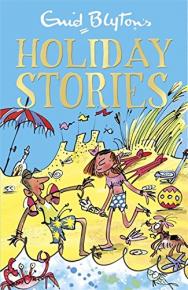
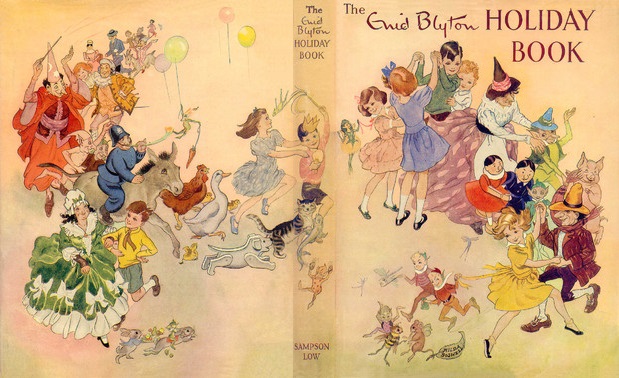
Enid Blyton’s Holiday Stories then and now part 5

and

Blyton’s best holiday locations

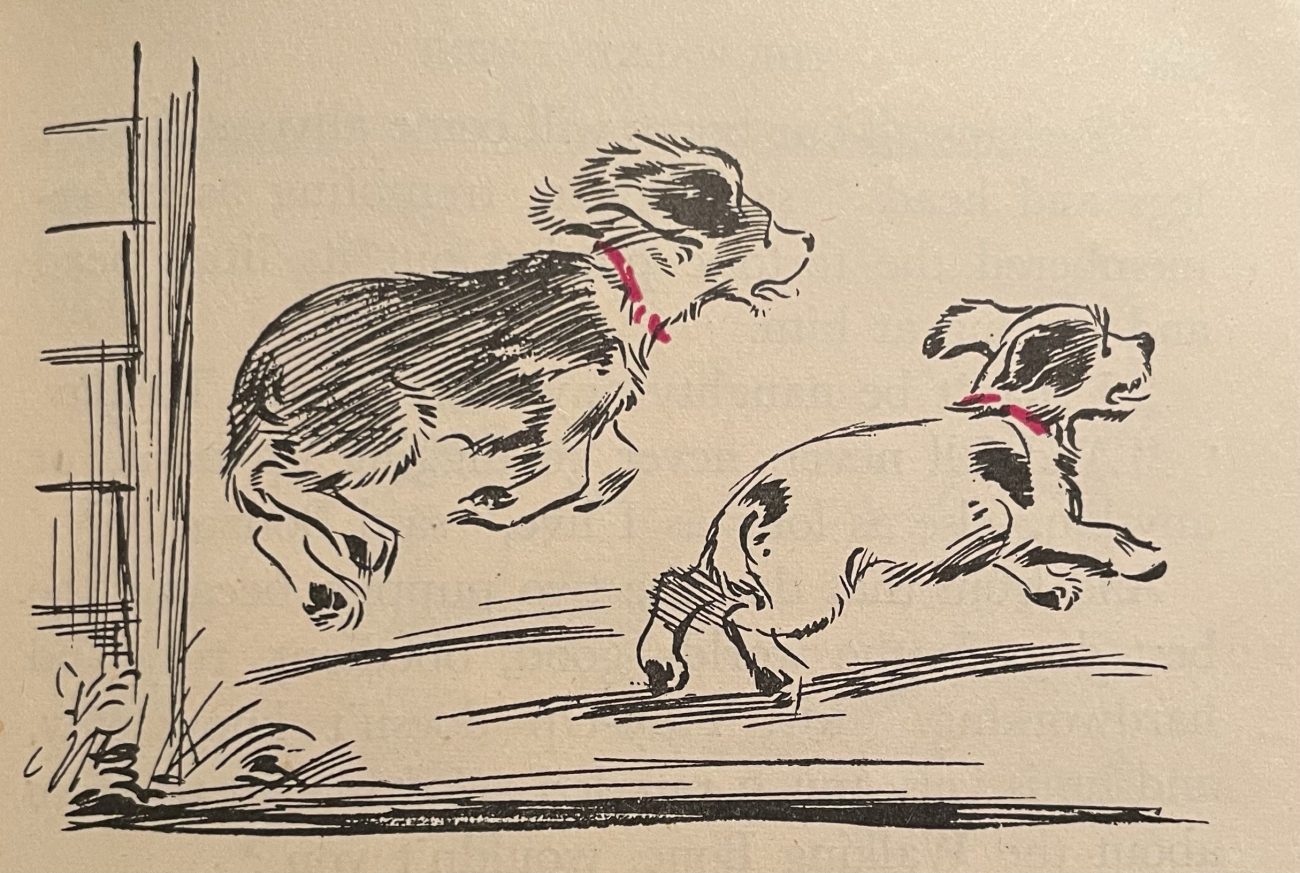
The dogs sprang up in fear. They yelped wildly and then, their tails between their legs, they fled out of the wood-shed yelping: “The bone’s after us! The bone’s after us.”

Now, bones not being known for chasing someone unless still inside a body, it makes more sense if you know that the dogs can’t tell a tortoise from a bone! The title of the story is The Walking Bone and I found it in The Astonishing Ladder and Other Stories.

Posted in Blog talk | Tagged , , , | Leave a comment

Enid Blyton’s Holiday Stories then and now, part 4

I would like to say that I am whizzing through these short stories but in reality it’s more of a steady plod. Which is fine! Reading each sentence of every story twice does take up quite a lot of time, as does having to put the books down every few paragraphs to make a note of the changes. I have tried using voice-to-text on my phone but it only gets about half of what I say right, which is useless when I’m needing to note exact word choices.

Anyway, I’ve reached story #6 (of 26, though as I don’t have them all I won’t be able to compare them all.)


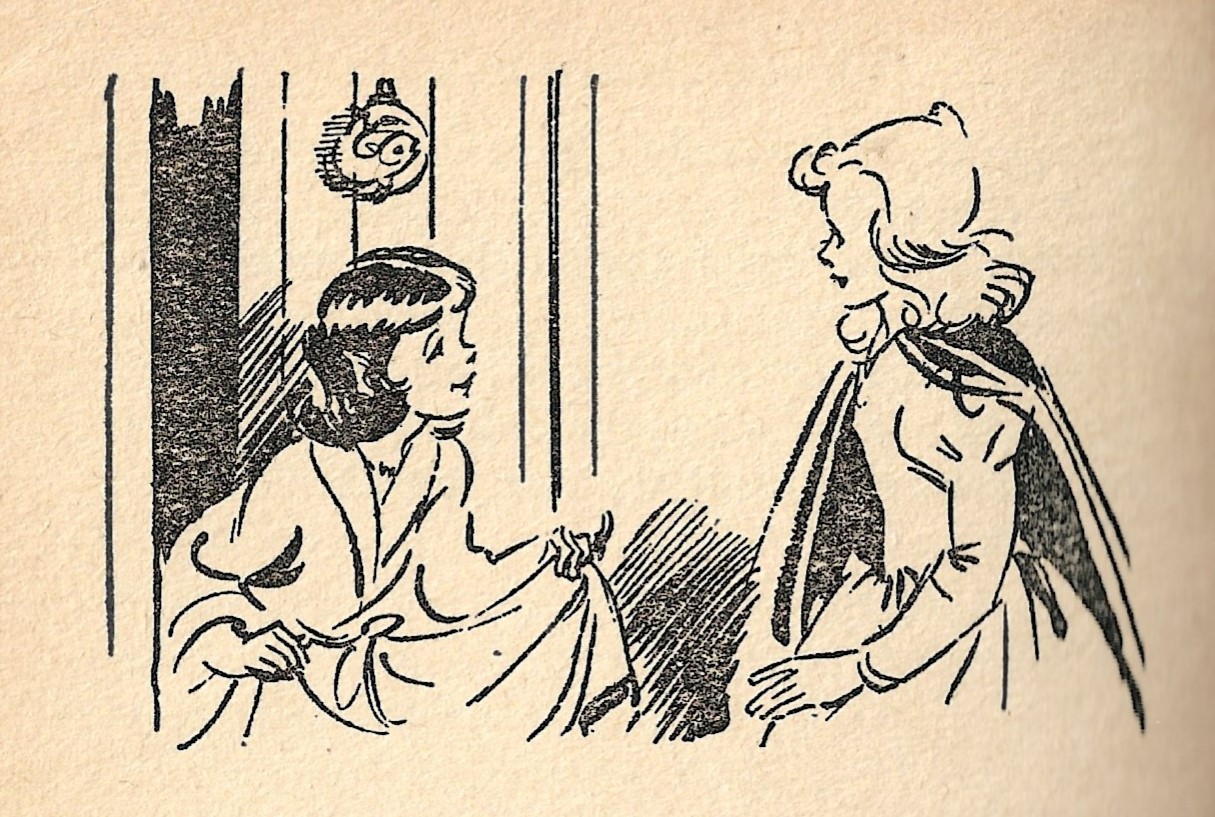
The Enchanted Cloak

First published in Sunny Stories #244 this was first reprinted in Tales After Tea in 1948. My copy of Tales after Tea is a Collins Seagull Library reprint from 1958. The story list is the same and it still has the Eileen Soper illustrations so I think it’s very likely that nothing else has changed since the first edition. The Seagull Library copy is, I assume, just a more cheaply printed one. The paper is of the thicker (and now yellower) cheaper paper and the illustrations are just in black-and-white. It’s possible that there are less illustrations as publishers often reduced them to save money, but the text probably isn’t altered.

The only other places to find this story are from collections published in 2002 onwards.

A brief review

This story is from one of my less-favourite Blyton genres – fantasy. There are works of hers under that umbrella that I enjoy, such as the Faraway Tree and Mr Meddle, but the short stories often don’t do a lot for me.

The Enchanted Cloak is about Princess Peronel (there are other Blyton stories about Peronel, female, Princess Peronel, and Peronel, male, so they can’t all the the same person, but are any of them the same I wonder?) who wants a special cloak made so she can wear it on Midsummer Night. She entrusts the job to Thimble the pixie, who gets the honour of being woken in the middle of the night to secretly receive the instructions.

Unfortunately Wizard Sly-One steals the cloak, and all its inherent magic (honestly, if Thimble can sew a cloak that grants wishes, why is she just a lowly seamstress?), and locks it away in a trunk in his house. Thimble and Peronel must work together to rescue the cloak – using actually a quite clever method.

What I dislike about this story is how it drags on a bit with repetition of the cloak, its spells and its powers. I also get unreasonably annoyed every time Blyton calls a wizard, gnome or brownie etc Sly-One as it’s not even a subtle nod to the fact they will be a baddie. It’s unnecessary and way over-used.

In addition to this, apart from the fact this cloak is to be worn on Midsummer Night, there’s no links to summer holidays at all, making this one feel more out of place than some of the others so far.

The updates

There are a few minor modernisations of language here but also a few rather pointless changes.

Thimble and Peronel have been discussing the cloak, and what the two spells do. Peronels describes what one spell will do as soon as I put it on – with the context making it obvious she means the cloak. This has been changed to as soon as I put the cloak on. 

After that Peronel says here are the two spells which has become here are the spells. The two was not strictly necessary as we know there are two, but neither is it a mistake or awkward phrasing that would require editing.

The Wizard Sly-One is just Wizard Sly-one, and when talking about Peronel she had been the Princess, now she is the princess. Technically, that’s probably correct but as a sign of respect for the Princess a capital is hardly a crime.

Do be careful of them is changed to do be careful with them – though I think that do in that sense is quite an old-fashioned (or just very posh) turn of phrase by itself.

And lastly, if the cloak hadn’t had those spells in it is modernised to didn’t have those spells in it.

The illustrations

We miss out on the Soper drawings (though I even find Soper’s fairyland illustrations less appealing than her every-day ones). In Sunny Stories it was illustrated by Dorothy M. Wheeler whose style is probably better suited to fantasy than Soper’s is.


Adventure Up a Tree

This one’s from Sunny Stories #486 (1950) and was first reprinted in The Twelfth Holiday Book in 1957. Its later reprints are all from 1971 and after.

A brief review

When Jack and Alan climb a tree and witness a couple of men hanging around, leaving a note for a third, they think it’s very odd. Having read the note, they think it’s even odder but can’t figure it all out. The next morning they read the news about a train robbery, and suddenly the note makes sense and they are able to take their information to the police and help them catch the culprits.

As the boys are off school this is obviously in the holidays, and as the tree is full of leaves it’s likely to be summer – so it counts as a summer holiday story. I suspect the problem often is not so much with the stories, but in the way the book is designed and marketed – the blurb and the cover highly suggest holidays on the beach or at least away from home.

The updates

Surprisingly few – given the very dated content of the story but they snuck in a few just to infuriate me.

First up they have – AGAIN – changed Jack to John. What on earth do they have against the name Jack? As I pointed out in my last post it’s a very, very popular name in the UK, and is certainly more common amongst children today than John is (or indeed Alan)! This also blows my very weak theory – about not wanting any names repeated – out of the water.

Queer is unsurprisingly changed to odd, but the only other change is turning the Coastguard cigarettes to Silk Cut ones. I can’t find any Coastguard cigarettes online, so I suspect Blyton made them up so she wasn’t advertising a real brand. However, Silk Cut is a real brand so it’s rather odd to have those in a modern book.

That brings me to all the things that they haven’t changed – I’m not complaining, but this is the sort of story I could imagine not ever being reprinted as it has so many old-fashioned elements. It sits oddly in this collection beside stories with a ton of random changes.

The boys wonder why the men are hanging around on a weekday when they ought to be working – in the 1950s this was probably a more reasonable question (though it has a judgemental air to it even then, as there were, of course, men who were unemployed) – as men would be expected to be working all day Monday-Friday and possibly beyond – Jack’s dad rushes off for the train after breakfast on Saturday suggesting he’s off to the city for work. Today it sounds a bit silly as plenty of men have days off during the week due to part time hours, shift work, annual leave…

The two main clues in the story are the cigarettes (and matches) and the flat cloth caps. Now some men do wear cloth caps these days, but all three of them? Including one with a rip in it? The cigarettes are an odd thing to leave as often the editors remove those (and pipes) as nobody wants to be seen as promoting smoking to children. The caps are just old-fashioned and I’m surprised they weren’t changed to the boys recognising their coats or hoodies!

The illustrations

These were done by L Davy who appears to only have done two stories in The Twelfth Holiday book for Blyton – and although the drawings are nice the choice of colours – bright yellow, green and red are rather garish when combined (they are brighter in real life than my scanner was able to pick up)! In Sunny Stories they were done by Marjorie Thorp.


Posted in Book reviews, Updating Blyton's Books | Tagged , , , , , , | 1 Comment

My favourite of Enid Blyton’s stand-alone books

The big series always get the most attention, even here at the WOB. But what about all the one-off books? Well, here are my favourites.


Those Dreadful Children

I grew up with the Armada paperback of Those Dreadful Children and it was one I read a lot of times.

The story revolves around two families. The prim, neat Carltons and their new neighbours, the noisy, grubby Taggarties. At first the Carlton children are pleased to have someone new to play with, but after a rather rough game of Indians, they decide to keep their distance.

As I child I definitely related to the Carltons more – meaning I labelled the Taggerties as the dreadful ones. Some of the stuff they do is pretty dreadful, like lying to get out of doing things, or to get away with doing things they shouldn’t have done. They are rude, they don’t help in any way at home even though their mother is obviously worn out, and they show little kindness to each other.

Meanwhile, the Carltons never lie, but between them they tell tales, have hissy fits and shy away from physical activities. As a child I did notice that some of their behaviours weren’t all that nice, but I know I’d have been much more at home in their house than the Taggerties.

As an adult reading it I can see that both sets of children are dreadful in their own way, and can better appreciate the way that they can all learn from each other. For example John Carlton is branded as cowardly as he doesn’t climb trees, yet it’s Patrick Taggerty that learns the true meaning of cowardly when he’s too afraid to own up to something he’s done.


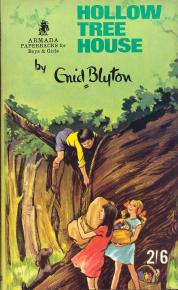
Hollow Tree House

Another one I had in Armada paperback was Hollow Tree House, and I also read this a whole lot of times.

It has a lot of similarities to The Secret Island – with orphaned children living with abusive relatives and then running away with the help of a friend. Susan and Peter are not as hardy as the Arnold children, and their friend Angela is no Jack (nor does she run away with them) but they do a pretty good job of turning a hollow tree into a liveable house and staying there for a time. As with The Secret Island my favourite parts of this book are the planning and execution of the whole running away idea, and any times that it looks like they might be found but aren’t.


The Treasure Hunters

Although I did have a copy of this as a child I never actually read it. It’s unusual for me to have a book I read for the first time as an adult as one of my favourites, but I really can’t find fault with anything in The Treasure Hunters.

It has a lot of recognisable Blytonian elements – a missing treasure, a family about to lose their home, an enemy looking to find the treasure for themselves, a treasure map, underground passages… but they are all put together so well.

The Greylings are soon to lose their ancestral home as they cannot afford it any more. If only they could find the long-lost Greyling treasure! Enter Jeffrey, Susan and John who are there to enjoy one last holiday with their grandparents. While cleaning up an old summer house to play in they find an old box and an old treasure map. If finding a long-lost treasure aided only by a very old and obscure map isn’t challenging enough, they find themselves up against the man who wants to buy up the house and lands.


The Family at Red-Roofs

This is another one I first read as an adult, but I still consider it one of Blyton’s strongest family stories. It is the story of the Jackson family who have just moved to their new home, Red-Roofs. Soon after Mr Jackson travels abroad for work and then the news comes in that his ship has sunk. With Mrs Jackson ill the children, Molly, Peter, Michael and Shirley must all pull together with the help of the wonderful Jenny Wren and keep the household afloat.

I love how each child manages to come up with some way of contributing to the household, no matter their age.


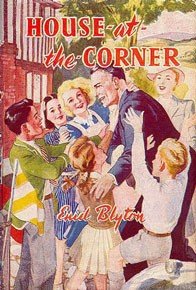
House-at-the-Corner

I tend to think about House-at-the-Corner and The Family at Red-Roofs as a sort of pair, even though they are entirely separate stories. There are some similarities in the plots – in House-at-the-Corner Mr Farrell is badly injured and may no longer be able to work as a surgeon and the children must pull together to support their parents.

The difference is that prior to this the Farrell children with the exception of quiet writer Lizzie are rather selfish and self absorbed. Pam has looks and brains but is vain and doesn’t apply herself. Tony also has looks and brains but plays the fool instead of working hard. The twins, although not lazy or making trouble are just very self-absorbed with their own activities. This means that when struck with adversity they have to really put a lot of work in to turn things around.

There’s no Jenny Wren to help, but instead they have Aunt Grace who clearly knows what the family needs and helps in her own rather sharp way.

This is another one I first read as an adult, but like The Family at Red-Roofs and The Treasure Hunters is holds up really well without requiring any influence from nostalgia.


Which are your favourite stand-alone titles?

Posted in Audio Books and Audio Dramatisations, Blog talk | Tagged , , , , | 5 Comments

Monday #522

Happy Easter Monday, everyone. I hope you all had a good Easter weekend. Ours was fun, if rather cold!

My favourite stand alone titles

and

Enid Blyton’s Holiday Stories part 4

20 short stories from the 1930s, and around 96 illustrations by Eileen Soper – what more could you ask for in a book?

Posted in Blog talk | Tagged , , , | 2 Comments

Enid Blyton’s Holiday Stories then and now, part 3

I have looked at the first three stories so far, and there were quite a lot of changes in the two I was able to compare. Let’s see what the next few stories bring.

enid-blytons-holiday-stories


A Surprise for Jimmy

This is from Sunny Stories For Little Folks #163 from 1933. Almost every story in this book is collected from one or other of the Sunny Stories magazines in fact. The first times it appears in a book are Macmillan’s The Astonishing Ladder and Other Stories in 1950, and Macmillan Reader #8 the same year. So it seems even the publishers of the time were reusing the same content, as the Reader is just the first 13 stories from The Astonishing Ladder! However, these two probably had different markets with the readers being aimed at schools rather than individuals.

A brief review

This is a story very of its time, which makes it an unusual selection for this modern collection. Jimmy is off to the shops when he sees an old lady drop her purse. He can’t find a policeman so he chases after her by bus, follows her onto a train, and ends up on a non-stop journey to the seaside. In Blyton’s typical fashion, Jimmy had woken up disappointed not to be going to the seaside that day as his mother couldn’t afford the money for the school trip.

He connects with the owner of the purse who then spends the day with him at the seaside before sending him home by train again. The old lady does at least send a telegram to his mother to let her know where he is.

Now Blyton was no stranger to writing about children going off without adults, but Jimmy can’t be more than seven or eight. Given the time this was written I’m not surprised he’s going off shopping by himself, or even getting the bus, but getting on a train (without a ticket) and then going off with a stranger? I had to check with Brodie that he knew that wasn’t OK!

As far as summer holidays go, at least this one has a trip to the seaside even if it is just a day trip and it takes up only a quarter of the story.

I just have to add that the bus chase – Jimmy gets on the next bus to follow the lady – makes no sense. The old lady boards a bus which Jimmy misses. He gets another bus which is a fast bus and follows the first bus closely enough for Jimmy to see the woman disembarking. Maybe I’m just used to a shocking bus service but what sort of bus operator runs one bus right after the other along the same route?

The updates

There were a surprising number of them in this story. Nothing was done to make it any less anachronistic in terms of Jimmy going off with a stranger but it is modernised in other ways, and has various other changes that have no obvious reasoning.

First up the straight-forward modernisations:

The school trip was four shillings and it is now five pounds. Not an unreasonable amount (for a presumably subsidised trip) today but with inflation the way it is it could look very silly soon.

Instead of sending a telegram to Jimmy’s mother, the old lady now telephones her (though telephones is a rather old-fashioned way of saying it!)

Hi! (not the more common hie of other books) is changed to Hey!.

Some possible corrections are made:

The train is described as a corridor train, with compartments entered from the corridor. Jimmy hears a noise from the next carriage which makes enough sense, though this becomes next compartment. He then looks into the carriage, and sees the old lady and a few other travellers looking on the floor for her purse. Again this becomes the compartment and that does make more sense. Otherwise he’d have to go into the next carriage and then to the first compartment. Unless carriage and compartment were interchangeable terms back when Blyton was writing this?

Initially I was baffled when instead of sharing her sandwiches with Jimmy on the train the old lady shared her biscuits. But then on the beach they have dinner – which becomes lunch – and later it’s tea-time. I can see the editor thinking it odd to have two lunches, but perhaps the old lady just had a very healthy appetite?

Now for the pointless:

Chocolate buns are now chocolate cakes.

It was very sunny somehow wasn’t enough for the editors, now it reads it was very sunny, with hardly a cloud in the sky. And later a lovely tea becomes a really lovely tea.

But it would be simply glorious at the seaside is shortened to it would be glorious at the seaside.

She clambered on the bus becomes she clambered onto the bus, and then off it rumbled down the street is changed to and away it went, rumbling down the street. These are such trifling changes that make no discernable difference to the modernity, the clarity or appropriateness of the sentences!

When Jimmy tells his story to the old lady he say she was running for your bus but this is now running for the bus. We know the bus doesn’t belong to the old lady but for goodness sake it’s perfectly common and understandable to say ‘your bus’ meaning ‘the bus you are about to get’.

Likewise the text had read she sent a telegram to his mother but when changed to she phoned it is also clarified with Jimmy’s mother as if we would think she was phoning anyone else’s mother!

Despite already being referred to as the sands, one instance is changed to the beach.

Some hyphens are taken out and the two – just two- uses of italics are also removed, so it can hardly be about over-use.

The old lady’s lament of oh dear, oh dear dear, oh dear becomes the more standard boring oh dear, oh dear, oh dear.

And lastly there are two that make no sense whatsoever.

Jimmy looks for a policeman to report the lost purse to, but there was no policeman there. This has been changed to there was no policemen, which is grammatically incorrect!

While on the bus it’s said that on they went until they came to the station which has become on they came to the station which as a sentence makes no sense.

The illustrations

We miss out on five lovely Eileen Soper illustrations, each with either red or green shading.


The Twins Get In a Fix

First published in Sunny Stories #138 in 1939, this story was first reprinted in The Tenth Holiday Book in 1955. After that it appears in four collections in 1971 and later.

A brief review

This is a true holiday tale – taking place entirely on the beach. It has one of Blyton’s common beach-plots where someone – the twins this time – get stranded out to sea and have to be rescued. This time it’s of the naughty characters getting rescued by the nice ones variety, as the twins have been awful to the other children then stolen their sandcastle only to be stranded on it when the tide comes in.

The updates

I got a few paragraphs in before I spotted the first change and was thinking this one might have little to say about it…

The twins were Jim and Joan, but they are now Jim and Suzie. There aren’t many little girls called Joan these days, it’s true. But honestly, are there all that many little Jims running around? Why change one and not the other?
Then we get to the names of the other children and my word did they do some inexplicable things here. I’m not in agreement with changing the names but I can at least understand the general logic of making the books either timeless or modern by using names that are in use at the moment – unfortunately their name choices continue to defy all logic as you will see.
(If lengthy debates about name popularities, including charts and statistics are not your thing, let me just sum it up now by saying common, popular names are replaced with out-of-date ones, some old-fashioned names are replaced with names that fell out of favour decades ago, and some old-fashioned names were left alone, and now you can skip to the illustrations at the end of the post.)

First up – Kenneth becomes Kevin. Kenneth is definitely old-fashioned, but Kevin is hardly modern.

Ronnie becomes Richard. I have actually heard of a couple of boys called Ronnie (sometimes paired with a sibling or twin called Reggie) but none called Richard.

Harry remains Harry, as that’s a timeless name it would seem.

And then Jack becomes John. Jack is regularly the most popular boys name in Scotland, and it was the second most popular in England and Wales in 2015!

Below is a handy Office of National Statistics chart of boys’ names popularities. Jack and Harry both went out of the top 100 for a long period but were pretty popular at the time the story was written, and particularly in the past 30 years. So why was Jack replaced with John, which has plummeted since the 1980s and dropped out of the top hundred after 2010? All I can think of is that there may be another Jack in the book, and the editors wanted all the names to be unique? I’ll have to test that theory when I reread the rest of the stories.

While the chart shows that Kenneth did drop out of the charts in the 70s, after a fairly swift decline, while Kevin just disappeared in the mid 1980s – so hardly a better choice!

And lastly for the boys, Ronnie actually charts between 2013 and 15 (along with Reggie which I included just for fun!), while Richard leaves the top 10 in the 90s and is out of the chart by the 2000s.

Normally being a diminutive of James, Jim doesn’t chart, while James is in the top twenty for the whole time period shown.

Now for the girls. Lily (perfectly normal, common name these days) becomes Sara, which is probably less common. Mary – surely not a name for anyone under about 40 these days remains Mary. Doris, ok, very old-fashioned, becomes the more popular Lucy and Freda becomes Fiona – which I can’t argue with too much, can I?

Lily goes out of fashion in the 30s but comes back in the 90s and soars into – and stays in – the top 20 in the 2000s. Meanwhile Sara, and even the more common Sarah, are still in the chart but in the lower regions in the past 20 years.

Mary, although extremely popular in the early 1900s (due to Queen Mary, no doubt), disappeared from the chart in the 1980s.

Doris, unsurprisingly disappears in the 1940s, while Lucy was popular pre 1930 and has a huge resurgence in the 1970s and onwards, making it the one name choice that actually makes sense.

Freda was perhaps even old-fashioned by the time the original story was written, while Fiona is only a very slight improvement as it charts between the 1950s and the 1980s. (In defense of my name it was probably slightly more popular in Scotland… you only need about 40 or 50 births in any given year to make the top 100, and there were 8 Fionas born in 2015, so not far off!)

And just so that nobody is left out of the statistical fun – Joan falls out of the chart in the 1950s, while Joanna and Joanne last a few decades longer. Neither Suzie or Susie chart but Susan has a brief popular period in the 60s-80s, making it a final odd choice.

Interestingly, nothing else is changed in this book except for tea-time becoming teatime. All other hyphens and italics are left alone. The poor editors must have exhausted themselves by poring through baby name books from the 70s and 80s…

The illustrations

And finally, we miss out on some great Cicely Steed illustrations which were in three (yes, three!) colours. As a point I’ve just thought of – often the Sunny Stories illustrations were uncredited and differed from the one used in the later collections. The illustrations I’ll be providing throughout these reviews are the ones from the collections.


So that’s two more stories done! Let’s hope they don’t change any names in the others or I’ll be here all year.

Posted in Book reviews, Updating Blyton's Books | Tagged , , , , , , | 2 Comments

March 2023 round up

It is Easter this weekend, which (this year at least) means it’s April and time for another round-up. The shifting of Easter always gets me, I never know when it’ll be without Googling it. I have a vague idea that it’s the something Sunday after the something else but I can’t remember that without Googling it either. I bet Blyton would have known it!


What I have read

Not the greatest month for reading, I had a bit of a slump after I finished the 1930s/40s books in the Nightingale series. There are two more, but they jump back to the first world war and so are about different characters.

What I have read:

  • Plan for the Worst (St Mary’s #11) – Jodi Taylor
  • Five Are Together Again – the review consists of parts one, two, three and four
  • A Nightingale Christmas Carol (Nightingales #8) – Donna Douglas
  • The Nightingales Christmas Show (Nightingales #9) – Donna Douglas
  • Practice Makes Perfect (Larkford #2) – Penny Parkes
  • A Bumpy Year – Olivia Spooner
  • The Very Secret Society of Irregular Witches – Sangu Mandanna
  • Nice Girls Don’t Bite Their Neighbours (Jane Jameson #4) – Molly Harper
  • Must Love Books – Shauna Robinson

And I’m still working on:

  • The Haunted Bookshop (Parnassus #2) – Christopher Morley
  • Tilly and the Bookwanderers (Pages & Co #1) – Anna James

What I have watched

  • I’ve carried on with Richard Osman’s House of Games, Only Connect, and George Clarke’s Amazing Spaces.
  • Although it turns out to not be quite what I expected I’ve watched more than three seasons of Good Witch this month. It’s very easy-going and genteel, so it’s easy to binge through.
  • We have continued watching iZombie at weekends, plus some terrible horror-style movies which were The Sand and Into the Grizzly Maze.
  • Tuesday nights films were He’s All That (the remake of She’s All That), Bring It On: Worldwide Showdown – something like #6 in a franchise that really should have stopped at #3 and She’s The Man.
  • I introduced Brodie to The Real Ghostbusters (the 90s cartoon from my childhood) and I caught about half of Jurassic World which he was watching and totally loved. 

What I have done

  • I held my first 3D printing demonstrations in March and had about 15 people across five sessions, which is a promising start.
  • I built the Lego Pirates Forbidden Island to join the Eldorado Fort, this has also been taken over by avengers. I had planned to build the Black Seas Barracuda too, but it has taken several afternoons of digging through all the Lego to find the 900-odd pieces I need and I still haven’t located them all.
  • We’ve gone on a few walks, sometimes with a home-made scavenger hunt to keep us occupied.
  • I bought a cassette story tape that was a childhood favourite and converted it to MP3 so my sister and I could listen to it for the first time in 25 years.
  • We visited Verdant Works for the first time (ever, I think) which is a jute mill museum. One of the volunteers was actually a mill worker back when she was a teenager!
  • I did an old favourite jigsaw – The Garden of Eden – which I just got back from having lent it to my mum and sister during lockdown. It’s only 850 pieces, well, 847 as I’ve managed to lose a few, and the box is falling apart but I can’t part with it.

What did your March look like?


Posted in Personal Experiences | Tagged , , , , , | 1 Comment

Monday #521

I am writing this from my new laptop! The old one isn’t quite dead yet, but it has been on its last legs for the past few years (obviously it had more legs than I thought, though). I’m now trying to get to grips with Windows 11 – which is making me look very fondly upon Windows 10, which is not something I thought I’d ever be saying.

I’ve still to transfer over all my files but that shouldn’t take long as most of them are already backed up on an external hard drive. Then I just have to do what I can to personalise it to suit me, probably a difficult task as with each successive version Windows seems to remove several settings for personalisation. I’m currently stewing over the inability to ungroup icons on the taskbar…

March round up

and

Enid Blyton’s Holiday Stories then and now, part 3

The Red Story Book is the second of Methuen’s Colour Story Books, the other colours being blue, green and yellow. It has 24 stories, all collected from Sunny Stories for Little Folk, and as a bonus illustrations by Eileen Soper. It’s a shame that there are not all that many illustrations but any Soper ones are always welcome.

Posted in Blog talk | Tagged , , | 3 Comments

Enid Blyton’s Holiday Stories then and now, part 2

In part one I briefly looked at At Seaside Cottage – the first story in the Hodder collection of Enid Blyton’s Holiday Stories.

I’m not sure how many stories I will get through in this post – I suppose it depends just how many updates there are to mention!

enid-blytons-holiday-stories


The Magic Ice-Cream

Originally published in Sunny Stories for Little Folk (#222, 1935) this was first collected into The Red Story Book in 1946. It is also in a collection titled The Magic Ice-Cream and Other Stories with one version published in 2000 by Award and another in 2015 by Bounty.

A brief review

This is one of the stories that can only be very loosely defined as being holiday-themed. There is no actual holiday but as they are eating ice-cream we can assume that it is a warm summer’s day. The book’s description reads From sandcastles at the beach to enchanted ice-creams, step into the summer with these delightful characters. Adventure, fun and magic can all be found on holiday with Enid Blyton. So there’s a suggestion that these stories should all take place during the summer holidays, rather than specifically on holiday. However – a book titled Holiday Stories, with a beach on the cover sort of implies actual holidaying should be taking place – to me anyway!

As with many of the stories in this book this one has a strong moral – as brownies Tick and Tock find themselves in possession of a magic ice-cream and instead of enjoying their wishes they are both rather selfish and end up with nothing.

The updates

There are more updates than I imagined – it’s very hard to spot them unless you are familiar with the original text or it’s something obvious like decimalised money.

The first one is that the ice-cream, including in the title, has lost its hyphen. In line with most recent reprints italics are also mostly lost – from things like my ice-cream, and so on, where it would be perfectly reasonably to have emphasis – emphasis I placed myself when reading it aloud.

The other style/grammar change is that various lines have been moved into, or out of, their paragraphs. At first I thought it was a space issue and a few lines had been joined to the paragraph above to make the text fit the pages, but there are also times when a new paragraph has been started – fairly baffling as there’s no issues with new speaker needing a new line or anything.

The ‘said’ tags have been changed in a few places – from shouted Tick, angrily to Tick shouted angrily, suddenly squealed Tock to Tock squealed, said Tock sulkily to Tock said sulkily. Neither of these is right or wrong, it’s just a style choice. Presumably Hodder prefer the name first, and that would be their right if editing a new manuscript but it seems like wasted effort to go changing instances in a previously published work.

The remaining changes are all equally as banal and pointless.

And Tick dug his spoon into one / and Tick started eating one – as we are talking ice-creams here why is there a problem with using a spoon?

hedgehogs who squealed / which squealed

in a rage / in rage

hit him bang on the nose / on the nose – this one is presumably to make the hit less violent – but later there’s a bleeding nose and bumped head anyway

ran at Tock / rushed at Tock – this makes for repetition as Tock has already rushed at Tick.

whilst /while

The illustrations

As the collection was printed without illustrations we miss out on this nice one from Eileen Soper.


Wagger Goes to the Show

This one’s from Sunny Stories #407 (a different publication to the one for little Folk as above) in 1947. Its first reprint is in the Eighth Holiday Book, though it has six further outings in other books between 1971 and 2018. Interestingly it is also in Summertime Stories – another Hodder short story collection published just three years after Holiday Stories. I think I’d be a bit annoyed if I was buying these collections for my child(ren) only to discover duplicated content.

A brief review

Again, this is a loosely summer holiday-themed story – it takes place at a garden party at a warm time of year. Wagger is a mongrel (his description sounds rather like Timmy actually – his tail is too long and so on) and Mummy says he’s ugly and so can’t enter into the dog show. However, he wanders in himself after the breed prizes have been given out and the judges are very impressed with how well-looked after he is, awarding him first prize in the best-kept and healthiest dog competition. There is an element of come-uppance as the neighbour (who it seems is not very kind to his dog) only gets a second prize in the breed competition.

The updates

In a baffling show of inconsistency the children’s ice-creams still have their hyphens, and many more of the italics have been kept.

Two lines are completely omitted There are classes for fox-terriers, and spaniels, and pekes and “Wagger isn’t any special kind of dog, I’m afraid,” said Mummy.

He has good warm straw in his kennel in the winter becomes a warm blanket in his basket. By today’s standards it’s probably cruel to make a pet dog sleep in a wooden kennel in the garden – but this is not a contemporary story and so does it really need to be changed?

Other modernisations are new shorts becoming new jeans, the little tin bath is a big plastic bowl (it had better be a very big bowl as they’re putting Wagger into it to wash him – wouldn’t the old baby bath or a plastic box be more practical?).

Their sixpences becomes just their money – I suppose that keeps it timeless and prevents it looking silly in ten or twenty years time, like some of the money updates I’ve seen in other titles.

Mayn’t becomes may not.

In an effort to avoid more potential animal abuse the children no longer ride the donkey at the garden party, but the change made to the text is weird. It originally read that they ran to have a ride on the little grey donkey. Wagger ran beside the donkey all the way round the garden and back. It now reads that they ran beside the donkey all the way round the garden and back. Why would they have an unridden donkey running around the garden, and why would two children randomly choose to run along side him? It would have been better to omit all the running altogether. However, the removal of donkey-riding seems even more bizarre if you then read the later story which is all about riding donkeys on the beach…

There are a few changes when the prizes are awarded – the ticket read Second now it reads SECOND, presumably to match the FIRST on the other ticket. Then they try to make things a bit more equitable – the judge originally asks the owner of the dog to come forward – will he please come forward and this has been changed to they. Instead of handing all the prizes to Terry, the judges give the ticket to him and then the collar to Alice. Lastly, the chocolates were for themselves and now they’re for both of them – which in the context means exactly the same thing.

What they didn’t change was their plan to share the chocolates with Wagger – which seems pretty dangerous as it can be toxic and make dogs very sick!

The illustrations

And of course we miss out on several great illustrations by Raymond Sheppard, which are even in two colours.


So, as it turns out, I could manage two stories this week!

Posted in Book reviews, Updating Blyton's Books | Tagged , , , , , , , | 1 Comment

The Five as you’ve never seen them before, part 4

With Eileen Soper being such a prolific illustrator for Blyton it’s not hard to find her work amongst the books on my shelves. So here are another few times she drew characters that look just like the Five, even though they are, according to the text, completely different children.


George protects Timmy

We all know that George is truly fierce about defending Timmy so it’s not surprising to see her about to wallop an attacking gull with her spade here.

According to the story – One Good Turn Deserves Another – this is actually Giles, and he’s about to hit a feral dog when the gull flies in to peck it.


Dick rescues George

Here we can see a young George getting into bother by the water’s edge, and Dick who is about to come to her rescue.

You might be wondering where Timmy is in this scenario, and as it turns out that the boy in the background is Timmy. The story is The Boy Who Was Shy, and Timmy is about to rescue Ian.


Angelic Julian

Everyone will agree, I’m sure, that Julian is an absolute angel who can do no wrong. He is never bossy or domineering! And here he is in all his angelic glory, wings and all.

Or it could be Dickie, being blown by the west wind. Which I’m sure is perfectly normal.

So far these illustrations have all come from the Red Story Book, a short story collection that is exclusively illustrated by Soper. Sadly, though, there are actually not that many illustrations in it. There’s less than one per story.


Dick is a good detective

Although Julian – angelic as he is – usually takes charge in the detecting and mystery-solving, Dick is no slouch either. Here he is, again younger than he is in the first Famous Five book, carefully measuring some foot-prints in order to solve a mystery.

These are just two of 11 illustrations in Colin is a Good Policeman from The Third Holiday Book. (The budget and therefore purchase price of the holiday books must have been much higher than that of the colour story books!)


George the farmer

I spotted this one ages ago and my accompanying note was ‘George keeps chickens before she discovers the joy of dog ownership’.

This is really Harry who has rescued one hen, and appears in The Little Lost Hen in The Third Holiday Book. This is a shorter tale but still got six lovely illustrations.

Posted in Illustrations and artwork | Tagged , , , | 2 Comments

Monday #520

Until around 3pm on Saturday I was blissfully unaware that the clocks were due to change that night. Normally I’m counting the weeks until the end of March so that it’s finally light when I finish work on my late evenings, but I hadn’t thought about it for a few weeks at least. And then this weekend we had a birthday party at 10am Sunday. With the clock change that put us in a soft-play centre at what should have been just 9am.

Brodie had a great time and I managed to read a bit of a book on my phone while he played so it wasn’t all bad. Plus I’m feeling ready for bed earlier than usual which isn’t bad either.

Enid Blyton’s Holiday Stories then and now, part 2

The Five as you’ve never seen them before, part 4

They both wanted to their own way always. If they played pirates, then both Billy and Joan wanted to be captain at once. If they played burglars, they each wanted to be the policeman. If they played aeroplanes they each shouted that they must drive the aeroplane.

While I hope most children don’t end up slapping each other like these two do in The Two Silly Children (from The Red Story Book), this bit pretty much sums up a lot of young children – including my own!


Posted in Blog talk | Tagged , , | Leave a comment

Enid Blyton’s Holiday Stories, then and now

In case you missed it, I’ve recently read Enid Blyton’s Holiday Stories – the 2015 Hodder collection – to Brodie at bedtimes.

This is the first in what will probably be a reasonably long series of posts as I half-review and half-compare the texts of the various stories in it.

I don’t have all the original stories but I expect I have a decent number of them – so I’ll begin by hauling all the potential sources off the shelves.


Holiday Stories

This is one of many recent Hodder collections which brings together around 30 stories with a particular theme.

This one has 26 stories, and below are the titles, where they were originally found and where my version comes from (if I have it). I tend not to collect anything published after Blyton stopped writing new material in the mid 60s, and most pre 1940s books are harder to find, so the bulk of my collection is from 1940-1964, which mostly explains why I’m missing the titles I am below.

At Seaside CottageAt Seaside Cottage – I don’t have this as it’s very hard (and also expensive) to find in the original form, though there’s one paperback reprint from 1969.

The Magic Ice CreamSunny Stories For Little Folks 222 – The Red Story Book

Wagger Goes to the ShowSunny Stories 407 – The Eighth Holiday Book

A Surprise for JimmySunny Stories For Little Folks 163 – The Astonishing Ladder and Other Stories

The Twins Get in a FixSunny Stories 138 – The Tenth Holiday Book

The Enchanted CloakSunny Stories 244 – Tales After Tea

Adventure Up a TreeSunny Stories 486 – The Twelfth Holiday Book

John’s HankyGood Housekeeping – I don’t have this (its only reprint pre 1975 was in The Big Bedtime Book 1951)

The Magic Watering Can Sunny Stories For Little Folks 227 – I don’t have this, it looks like pre 1997 it’s only in The Daily Mail Annual for Boys and Girls from 1946.

Peppermint RockSunny Stories 468 – The Eleventh Holiday Book

The Donkey on the SandsSunny Stories 192 –  I don’t have this but it was in three versions of Jolly Tales plus a few post 1960s collections.

In the Middle of the NightSunny Stories For Little Folks 245 – I thought I had this but it turns out that the stories by the same title in The Red Story Book and Tricky The Goblin and Other Stories are both entirely different tales.

A Bit of Blue SkySunny Stories 150 – The Happy Story Book

The Smuggler’s CavesSunny Stories 386 – The Sixth Holiday Book

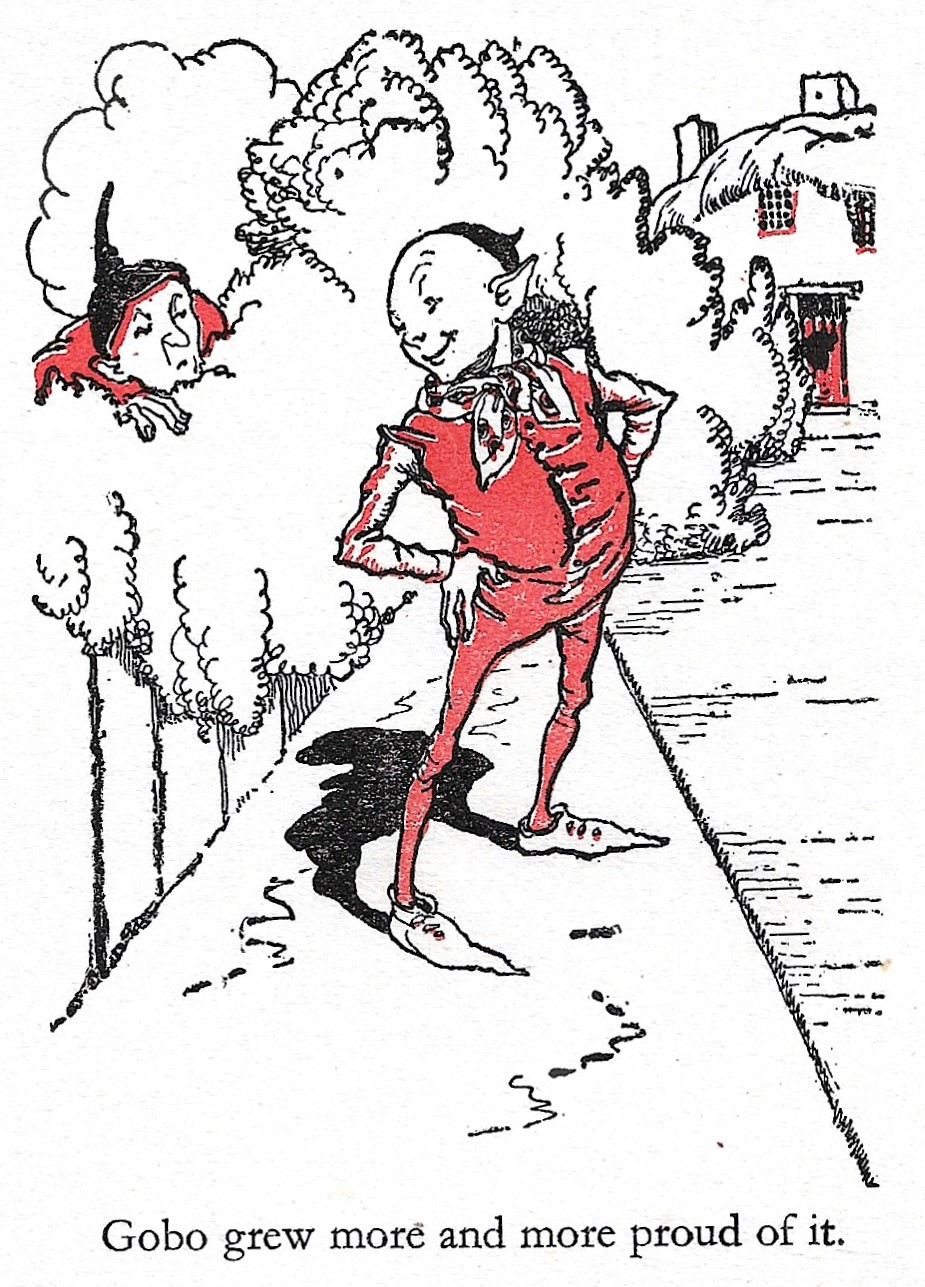
Mr Gobo’s Green GrassSunny Stories 179 – The Third Holiday Book

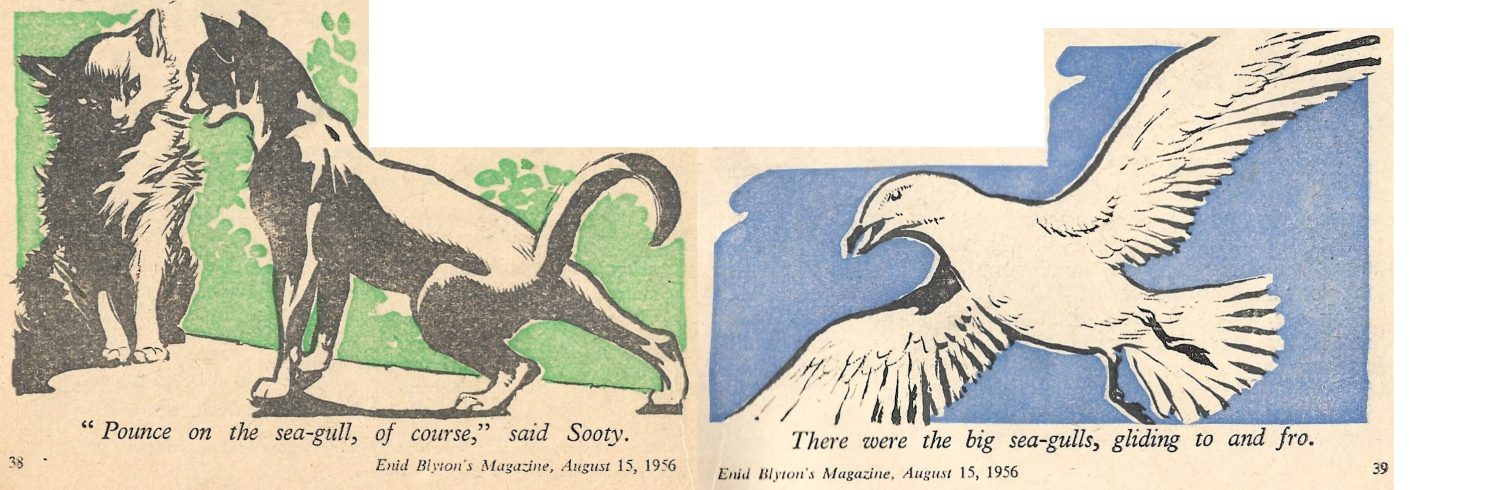
Smokey and the SeagullEnid Blyton’s Magazine 4.15 – Not reprinted until 1991

Adventures Under the SeaMerry Moments Annual – I discovered a Blyton book I’d never heard of when looking for this one – it’s only pre 1989 reprint was in Tarrydiddle Town and Other Stories!

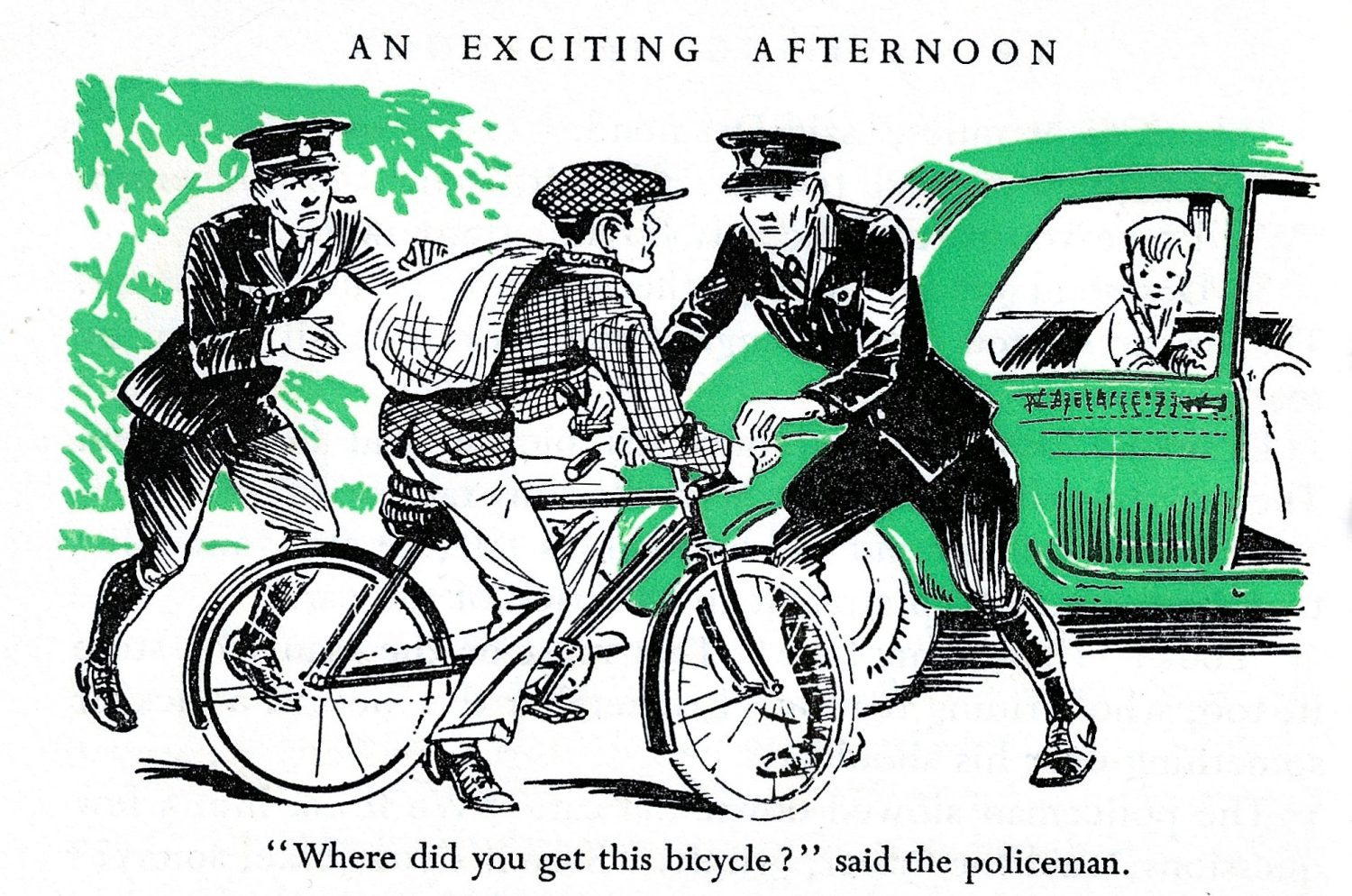
An Exciting AfternoonSunny Stories 417 – The Water-Lily Story Book

Lazy Lenny (originally titled Lazy Leonard) – Sunny Stories 310 – The Fifth Holiday Book

Pink Paint for a PixieSunny Stories 303 – A Story Party at Green Hedges

Shut the GateSunny Stories 424 – The Eleventh Holiday Book

Look Out for the Elephant!Sunny Stories 465 – The Tenth Holiday Book

Staying with Auntie Sue (Originally titled The Spoilt Little Girl) – Sunny Stories 399 – The Eleventh Holiday Book

A Puppy in Wonderland (Originally titled A Puppy in Fairyland) – Sunny Stories For Little Folks 95 – I don’t have this, it’s in the News Chronicle no4 and the Pitkin Pleasure Series which I haven’t collected

The Three SailorsSunny Stories 82 – The Gay Story Book

The Magic SeaweedSunny Stories for Little Folks 144 – The Little White Duck and Other Stories

That’s not bad – I have 18 of the stories out of 26.

How many books (and bookmarks) it takes to make up one new collection, and one series of blog posts.


At Seaside Cottage

This is an unusual inclusion for two reasons. First, it’s the only longer story in the collection and is actually split into three chapters. Perhaps if this hadn’t been included then there would have been 29 or 30 stories in total.

Secondly, this is the precursor to the Secret Seven, though that is not mentioned. Peter and Janet are a bit younger in this story, so they haven’t even thought up the Secret Seven yet. That comes in their second short book – The Secret of the Old Mill. Both of these are pretty scarce – the only copies I could see at the moment are going for £325 for Seaside Cottage and £98 for Old Mill.

Unlike in the later Secret Seven books there is no mystery in this short story, instead it’s a quintessential Blyton holiday tale, full of sand, sea, boats, ice-cream, rockpools, and of course beach caves. Granny’s cottage’s back garden has a gate that leads straight onto the beach, so close the winter tides sometimes splash up the garden path. I immediately wanted to go and stay right there (but perhaps not in the middle of winter).

Sadly the new collection is unillustrated and so we miss out on Eileen Soper’s beautiful work – but it’s all in the Cave.

Obviously without the original edition I can’t compare the text but this has probably been updated in places. They take the train to Granny’s and obviously at the time it would have been a steam train but there are none of the usual references to trains puffing into stations and so on.


Posted in Book reviews, Updating Blyton's Books | Tagged , , , | 9 Comments

Five Are Together Again part 4

Finally, I have reached the post with the promised nitpicks, of which there are many.


Random points

This one’s set at Easter, as was Mystery to Solve so it’s a full year later. It makes sense for them to have Spring and Summer adventures as that’s when the best weather likely is, but Blyton’s propensity to have sequential holidays or skipped seasons at either time means the progression of the Five’s ages makes little sense. If it alternated, at least, they could have two adventures a year! Out of interest I looked it up and there are nine summer adventures, eight spring/Easter, one autumn, two winter, and one at Whitsun in May/June which you could count as either spring or summer I suppose.

While it’s often nice to see occasional characters again (such as Jo), I rather wish Blyton had brought back anyone but Tinker for their final adventure. Well, perhaps anyone but Wilfrid or Tinker. I’d much rather have had them go stay with Jo at Joan’s sister’s cottage, to visit Jennifer Armstrong, Nobby, Jock, even Richard Kent or the Lawdler twins. But alas, no, it’s Tinker. At least he only does his car-noises briefly at the beginning and end of the book.

Likewise, of all the locations we could have had why a regular house with a field next door? Event the tower lacks interest – no secret passages anywhere. They’re so close to Kirrin but we barely see it which is infuriating. The picture of Kirrin on the spine is a particularly dishonest bit of advertising. They are within a bike ride of Kirrin so there was nothing stopping them from taking Tinker there for a visit.

There have obviously been changes to the school plans since the earlier books. Firstly, Timmy is no longer at school with George, and apparently hasn’t been for at least a few terms. Is that a nitpick? Nothing is ever said to explain it. In previous books the pony and trap has been used to convey the Five from the station to Kirrin Cottage. This time they walk as if that’s always been the plan – except George who takes a taxi as Timmy isn’t there to meet her – and their trunks go on the porter’s van.

The pony trap in Five on Kirrin Island Again

Obviously Fanny couldn’t collect them as she is in quarantine, but do they still have the pony and trap? I can’t see them having bought a car somehow, even if it is 1963! Saying that, the pony never gets mentioned in between journeys – the Five never go to feed it apples or sugar lumps!

As with the reminder of George not answering to Georgina Blyton also reminds us of how she came to own the island. Of course each book is designed to be read alone, but these two somehow seemed a little obvious in their explanations.

Joan’s last appearance in the series is her being carted off to an ambulance as she has scarlet fever. We don’t even get to find out how she’s doing by the end of the book! All the short stories predate this final book so we never see Joan again.

Our only view of Aunt Fanny is her head sticking out the window and we don’t see Uncle Quentin at all. I imagine that he is not severely affected by the quarantine has he spends most of his time holed up in his study anyway, while it’ll be down to Fanny to arrange for food and anything else they need to be delivered (unless they plan to survive on the tins in her bedroom cupboard!). She’ll also have to do all the cooking and cleaning with Joan away. I found it odd that the Five never wondered how everyone was. Presumably if they’d come down with scarlet fever they would have called Big Hollow to tell them, but they spare not a second to worry. Julian and Dick go to collect the tents and bikes but there’s no report of them speaking to their aunt or uncle.

five are together again quarantine

Julian’s memory seems to be failing as he says that Tinker is unforgettable then adds he’s the boy that owns that old lighthouse at demons rocks, isn’t he? I mean, how many boys with monkeys does he know? (Yes, I know this is an explanation for anyone who hasn’t read Demon’s Rocks, but it’s poorly done).

The local bus conductor knows the Five well, suggesting they use the bus regularly at Kirrin (but perhaps it doesn’t serve the train station, at least, not at the right times?). He also knows Professor Hayling as the bus goes past his house. Unfortunately he doesn’t tell any tales worthy of Old Great Grandad or Bill the Blacksmith etc, but he shares an amusing anecdote with them about Prof Hayling.

Prof Hayling’s house is called Big Hollow and is in the village of Big Hollow – making his address Big Hollow, (name of street?), Big Hollow… meanwhile Julian refers to Kirrin as home which makes me wonder does he consider the general area home as he lives near(er) by, or does he see Kirrin as home as he’s spent so much time there?

Interestingly the camping out idea is not the Five’s – or Tinker’s – rather it is Jenny’s as she has no mattresses for the spare beds (that’s a new excuse!)

When George suggests going back to Kirrin to get their own tents she says that Jim the carrier could fetch them. She says it as if everyone, including the reader should understand that, but I’m not sure who he is or what a carrier is! Is that like an odd-job postie? Anyway, I did wonder if they couldn’t just get the tents on the bus again – but they want to ride their bikes back as Blyton knew they’d be needed later in the story.

Mr Tapper is another animal charmer who is great with monkeys. Like Jo and Wilfrid before him he charms Mischief away from an unimpressed Tinker. Ironically he shares this skill with old Jeremiah Boogle, enemy of One-Ear Bill who’s ear was bitten off by a monkey. Mr Tapper is also missing an ear – but whether or not it was monkey related is never explained.

Two of Prof Hayling’s inventions are the sko-wheel and the electric trosymon. I wonder what on earth they were for!

The Five have the best of both worlds of camping out and having someone else cook them a hot dinner. As much as I like Jenny I wish they’d been off somewhere more rural and stopping in at inns and farms.

We know Big Hollow must be on the coast as it isn’t a long journey to go bathe in the sea. Is it on the way to Demon’s Rocks, or in the opposite direction?


Nitpicks

This has already been a rather long post but I couldn’t make everyone wait for part four for them.

  • Is George expecting Timmy at the station or not? She asks, seemingly genuinely, if the others think he will be there, yet she’s panicking when he doesn’t show. Likewise Dick jokes that Timmy can’t read train timetables, but George confirms Timmy was at the station the last few times.
  • Fanny says she will sort out alternative accommodation for the Five but then calls Professor Hayling to prevent him from also turning up. This is convenient as they then go stay with him, but leads me to wonder why Fanny has allowed these arrangements given that there wasn’t apparently room for them all at the beginning of Demon’s Rocks.
  • Kirrin, or the area around is, is suddenly referred to as Little Hollow. We’ve never heard of Big or Little Hollow before, nor was it suggested that Prof Hayling lived so close to Kirrin in Demon’s Rocks. If he’s a short bus-ride away then he could easily visit daily to work on scientific things, and wouldn’t have had to come stay overnight.
  • The Five’s luggage is still sat at the garden gate but there’s no mention of it being dropped off by the porter’s van.
  • Fanny says that the bus to Big Hollow will pass in ten minutes, and they’d better run for it. Yet it passes right outside the front gate (after about two minutes of dialogue at most) and stops where when Anne flags it down. She also says to ask the gardener across the way to help with their cases, which are also right outside the front gate.
  • The Kirrins have a cat – I can’t remember any mention of them having a cat before? Julian’s family also had a never-before-mentioned cat in Mystery To Solve.
  • George is said to have always been afraid of snakes in the spring, yet this is news to me. She does mention a neighbours dog who was bitten which would explain her worry, but funny it’s never come up before if she’s always been afraid.
  • The Five leave school, take a train, arrive at Kirrin Station, walk down to the cottage, get a bus, arrive at Tinker’s and are still in time for lunch – how early did they leave school?
  • The Five discuss going back to Kirrin to collect the tents and bikes. Julian says he will bring back Anne’s bike. George leaves the house with them, and Anne and Tinker stay. Yet shortly after Anne and Tinker find George in the house. Of course she could have changed her mind about going, and asked the boys to bring her bike back but it’s just odd.
  • There’s an illustration of them all watching Prof Hayling unroll the document detailing ownership of the field but this happens while the boys are off to Kirrin.

  • Another illustration shoes Dick and George inside the donkey skin yet the back leg(s) are categorically not human! Julian asks How could [Jeremy] have known George was inside? Now he may be referring to the first time Jeremy hit the donkey but Tinker had clearly told him that Dick and George we inside before he hit them again. Besides, Jeremy his hitting the donkey as he thinks whoever is inside isn’t supposed to be there – and with Tinker, Julian and Anne standing there it wouldn’t be difficult to guess who was inside.

  • Anne is horrified at circuses treating chimps like family –  and nobody mentions Pongo who they all loved. She is also completely fooled by the donkey performance despite having seen Clopper at Tremannon Farm (and two men in a donkey suit not really looking all that much like a real donkey…)
  • Prof Hayling suggests they are rather far away for the police to come out to, yet they aren’t far from Kirrin where they have no problems summoning the police.
  • I’m probably getting silly now but Timmy wonders why they’re out for a night-time run. George usually tells him everything as she believes he can understand her. Mind you, if she had told him he would probably be wondering if there wasn’t a better way to go about it as he’s a clever dog.
  • Kirrin island has a tiny creek by the landing beach where George hides her boat. This has never been mentioned before, in the past they have hidden their boat by draping seaweed over it.
  • George pushes Mr Wooh’s boat out to sea, but I wonder if it wouldn’t just get caught on the ring of rocks around the island. It’s clear from Five on a Treasure Island that there’s only one channel deep enough to allow access to the island even at higher tides. It’s said to be floating out to sea, but I suppose a definition of ‘out to see’ could fit if the rocky ring is further out than I imagine it.
  • I was annoyed by further repetition from Tinker about the stolen clock literally a paragraph apart and in the same conversation –

I found it hidden in the straw in Charlie’s cage this morning!… It was the loud ticking that told me it was there in the cage!’

….

Nobody would be likely to get into the chimp’s cage and sit there with him—but I did this morning, and that’s how I found it. I heard it ticking, you see.

  • Surrounding that conversation there is more repetitive conversations about how Charlie carried out the theft.

 ‘But there were, of course, too many for old Charlie in the tower room. He wouldn’t be able to carry them all in his front paws, for he needed all his paws to climb down that steep wall—so he must have crammed as many as he could into his mouth.’

‘Well, as Tinker told you—my guess is that old Charlie must have put the little clock in his mouth then, along with the papers,’ said Dick. ‘He needed all his four paws, climbing—or rather slithering down that wall.


While I enjoyed one last adventure with the Five I think it’s obvious that quality of the writing doesn’t match the earlier adventures, nor does the location or actual mystery. That’s the problem with Blyton sometimes – she sets such high standards with the majority of her books than anything less is then rather disappointing in comparison!

Posted in Book reviews | Tagged , , , | 11 Comments

Monday #519

So let’s try that again! Last week I promised the last part of my Five Are Together Again reviews – the one with the nitpicks no less. I even had it all written and ready to go with the exception of a few points I needed to check. And then another bug hit our house (I swear we have caught everything going in the past year or so) and I did not open my laptop the rest of the week.

Five Are Together Again part 4

and

Enid Blyton’s Holiday Stories then and now

An oldish man with a beard—shuffling along, head bent forward—glasses on his nose—and large feet! Nicky brightened at once. “Might quite well be Uncle Bob!” he thought, and fell in behind him at once.

Of the other two, one was a postman with a large bag. He too had large feet, and was bent under the weight of his heavy bag. He had a small moustache, and mopped his face with a handkerchief as he went, giving a large sneeze as he passed the boys. They nudged one another.

“Bet that’s him!” whispered Ken. “You follow him and I’ll follow the old chap—just in case! I don’t think that other person’s any good. Small feet!”

Nicky and Ken go to meet Uncle Bob at the station in The Mystery that Never Was – but like Fatty, Uncle Bob might be in disguise…


Posted in Blog talk | Tagged , , | Leave a comment

Monday #518

It’s ten pm on Monday as I write this, which is later than usual but at least it is still Monday.

Whether I get a Monday post written on Sunday as planned or not, I inevitably find myself trying to work out what I’m going to write that week. Having finished my reviews of the Famous Five (finally) I need to decide what my next series is as well.

Five Are Together Again part 4

and

Enid Blyton’s Holiday Stories then and now

“Right,” said Barney, finishing his breakfast. “That’s settled then. To-night about half-past nine. We’ll do the ‘This is the-House-that-Jack-Built’ business—move the picture that slides the panel that works the lever that frees the panel that opens the passage that lets us go down, that brings us to——”

“What?” cried the other three eagerly. But Barney shook his head. “That’s as far as I can get,” he said. “We’ll know the rest of our little story to-night, I hope.”

Reading about Ring O’ Bells Mystery in the latest Enid Blyton Society Journal reminded me just how good it is. I love all the fairy-tale elements woven into the adventure and of course there’s a secret passage!

ring o bells mystery


Posted in Blog talk | Tagged , , | 1 Comment

Five Are Together Again part 3

Between two posts I have managed to cover the bulk of the plot already. I had completely intended for this to be the final part and include the nitpicks but sadly you’ll have to wait until next week for those as the post was in danger of hitting 4,000 words and becoming too unwieldy for words.


George as a boy

I was thinking how this might be the last time that I write that heading, but maybe I should go on to actually review the short stories rather than just summarise them.

I found George (or perhaps Blyton) to have forgotten a bit about her preference for boyish over girlish but she returns more to form in this book.

Blyton reminds us that:

George had always longed to be a boy, but as she wasn’t, she made up for it by trying to speak and act like one, and would never answer to her full name of Georgina.

And Julian thinks

How much she looked like a restless boy just then, with her short, curly hair, and her determined expression.

Mind you – she has an uncharacteristic outburst of sobbing early in the book. While I don’t believe that boys/men don’t or shouldn’t cry George certainly does. She is also not terribly prone to tears naturally, unless they are tears of rage! Yet she is devastated when her mother and father are in quarantine for  scarlet fever and their holiday plans are thrown into chaos. Typical of George she’s not all that worried about her parents, just her plans!

Julian and Dick soon sort her out by playing up to her own prejudices.

“Well, REALLY, George!” he said. “You’re acting just like a weepy girl. Poor Georgina! Poor little old Georgina!”

Of course it works.

George stopped sniffing immediately and glared at Julian in fury. If there was one thing she really hated it was to be told she was acting like a silly girl! And how awful to be called by her real name, Georgina! She gave Julian a hefty punch, and he grinned at her, warding her off.

“That’s better,” he said. “Cheer up! Just look at Timmy staring at you in amazement. He’s hardly ever heard you crying before!”

“I’m NOT crying!” said George. “I’m – well, I’m upset about Joan. And it’s awful to have nowhere to go!”

Moving on from that, the Five chip in at Big Hollow – the boys carry the trays and the girls wash up, or everyone cleans up and the girls wash up. By now it seems that George has more or less accepted her role as washer-upper.

It’s only Anne, though that stays behind later to help Jenny.

There’s only one compliment for George (out loud, anyway) when Julian says

“George can help me – she’s as good as a boy any day!”

George grinned. She loved to hear anyone say that!

Mind you, later he also thinks (just we well he doesn’t say it out loud)

After all, she was only a girl!

Blyton even agrees with him to an extent –

Yes, Julian, she is—but, as you’ve often said, she’s just as brave as a boy. Don’t be too sure about tonight!

Unusually Mr Wooh knows that George is a girl, though I couldn’t see that said in front of him. His companion on the island is shocked she is a girl, even after Mr Wooh has said it to him twice.

‘It’s the girl who’s come—I shouldn’t have thought that the boys would have let her,’ said Mr Wooh, astonished. ‘I am . . .’

‘A very brave and determined young lady!’ said Mr Wooh, bowing solemnly to George.

‘Do you mean to tell me that’s a girl!’ said the other man, amazed.

Lastly, Julian thinks that

George should have been a boy not a girl – the things she does.

I’m sure George would have thought that a compliment if he’d said it to her – but all I can think is that she doesn’t have to be a boy as she proves that girls can do anything boys can!


Missed opportunities

I always like it when characters link things back to previous adventures, but they miss out on several references here.

One-Ear Bill and Jeremiah Boogle are not mentioned, despite Mr Tapper being a one-eared monkey charmer.

Clopper is never mentioned despite Dick and George donning a donkey costume – I’d have loved for Julian to say No, never again – don’t you remember what happened last time we dressed up as a farm animal?

Although built out of a different material and for a different purpose Prof Hayling’s tower is reminiscent of Uncle Quentin’s tower on Kirrin Island – as it has strange spindly tentacles coming out the top and makes a humming sound.

Despite having seen Jo scale a partially ivy-clad tower they don’t give more than a second’s thought to the possibility of anyone climbing this tower.


The food

Not the greatest selection but most meals were provided in a house rather than out camping or at inns.

Their first meal is dinner (lunch) A large and delicious stew with carrots, onions and peas swimming in the gravy, and plenty of potatoes and a big steamed pudding with plenty of raisins in it.

Jenny serves a cold supper – a meat pie – cold sausages – a cucumber and lettuce hearts and tomatoes from the garden, rolls – and apple and bananas.

This is the only full-length Five book that has bananas in it – poor Pongo obviously never had any. There were few (if any) bananas to be had between 1940 and 1945 due to the war amongst other factors, and even after that they were heavily rationed until 1952. Yet it took Blyton eight years years to introduce them back into the Five’s world as one appears in Five Have a Puzzling Time (1960, and eaten by a monkey, not even any of the Five!) despite them not suffering from rationing in any of their books.

They drink lemonade and orangeade. They do a bit of shopping for their camp but don’t appear to have any camp meals – tinned meats and fruits, fresh rolls, tomatoes and apples and bananas.

Lastly they have a tea of slices of ham, and salad, and fruit to end with.


Professor Hayling

Despite them being at his house for the entire story we don’t see much more of Prof Hayling than we did in Demon’s Rocks. And this time he doesn’t have Uncle Quentin amplifying his confusion and temper.

It is perhaps ironic given Blyton’s declining memory Prof Hayling has no idea who the five are when they arrive, denies inviting them and denies he’s ever stayed at Kirrin. Maybe it’s because he didn’t eat breakfast and now it’s nearly lunch time.

He tells the children they can camp out then two seconds later can’t fathom what they would want tents for. Tents he later trips over in the hall as he doesn’t think to ever look around in case his surroundings have changed.

Tinker knows his father well and urges him not to hide the remaining papers after the theft as he will forget where they are. The last time he hid them up the chimney and they nearly got burnt. But the prof knows better and goes to hide them in the coal cellar. Only he hides the day’s papers and leaves the real papers in the unlocked tower. I love that Tinker and Jenny just decide to buy new newspapers to fool him into not realising his mistake.

And that’s about it – apart from looking around the tower at night with Jenny, and getting out the old charter to confirm the circus has the right to stay I don’t think he appears at any other point in the book.


Blyton talking to the characters and the reader

There are several clear examples of this, and a few which are less obvious.

To Tinker –

Dull, Tinker! You needn’t worry! There is far too much excitement waiting for the Five—and you too! Just wait a bit, and see!

To Charlie? –

And off they all went to the great cage. CHARLIE! CHARLIE! Wake up, you’re wanted! CHARLIE!

The lack of quotation marks here presumably means Blyton is summoning the chimp, rather than the Five shouting that.

To the reader and then the characters –

There they go, over the fence, handing the food one to another. Take your paw out of that basket, Mischief! That’s right, Timmy, nibble his ear if he’s as mischievous as his name! You’re all going to have some fun tonight!

As above, she speaks to Julian about George, and then to Tinker again –

So there goes Tinker, with Mischief on his shoulder, to find his father, down the hall—up the stairs—along the landing—into his father’s bedroom . . . r-r-r-r-r-r-r-r-r-r-r-r! Tinker, you sound like a motor-scooter going up a steep hill! Parp-parp! Don’t hoot like that, you’ll make your father so angry that he won’t listen to a word you say!

But the Professor did listen—and soon Jenny heard him telephoning the police. They’re coming straight away, and that means that Mr Wooh the Magician is in for a most unpleasant time, and his magic won’t help him at all! He’ll have to give back the papers that he made Charlie steal—and plenty of other things, too! There he is, marooned on the island, quite unable to escape, waiting fearfully with his companion, for the police!

This one’s really bizarre and annoying – firstly it’s not even the end of a chapter which is where Blyton normally reserves for her direct speeches, but secondly it wraps up the whole story from a distanced position by saying it will happen in the future.

And lastly, the book ends with –

So did we, George. Hurry up and fall into another adventure. We are longing to hear what you and the others will be up to next. How we wish we could join you! Good-bye for now—and take care of yourselves, Five. Good luck!

This is particularly gutting as we know there will be no more adventures for the Five, not until we start back at book #1 of course.

I can’t be certain as I don’t think I have recorded each and every one of these little speeches all the way through, but they seem to have gotten more frequent in the latter books and particularly in the final two. I wonder if, with her mental faculties beginning to decline Blyton used this technique more to move the story on, not being able to think of anything else?


That’s enough for today – the nitpicks will come next week, I promise!

Posted in Book reviews | Tagged , | 2 Comments

Roald Dahl vs the Sensitivity Readers

Enid Blyton’s books have been being updated for decades now, and while there is often complaints amongst the fans it is generally a muttering on forums and in Facebook groups. After all, it has been happening for years and it’s no longer big news. However, the changes to Roald Dahl’s books have absolutely taken the world by storm.

Acclaimed authors, the Prime Minister and even Queen Camilla are weighing in with their opinions, and now it’s time for me to do the same.


What’s happened?

Just in case anyone’s managed to miss all the media coverage – Sensitivity Readers (I had no idea that was their title) have made edits to several of Dahl’s most famous and popular books on behalf of Puffin the publishers and Netflix the copyright holders.

The Twits, The Witches, Matilda, George’s Marvellous Medicine, James and the Giant Peach, Charlie and the Chocolate Factory, Fantastic Mr Fox, The BFG, The Enormous Crocodile and Esio Trot have all been named as updated but it’s not clear if any others have been changed, or if the other titles simply haven’t been reprinted yet.

In a similar vein to updates to Blyton’s books while the stories remain largely the same, the language has been changed to avoid any potential offense and to modernise some out-dated opinions.


The uproar

As usual as soon as anyone mentions new updates or modernisations people got pretty mad. There have been plenty of reasonably complaints and criticisms but sadly also a lot of people screaming censorship, slippery slope, snowflake, wokey cokey and so on.

Now – I don’t actually agree with the vast majority of the changes, and I’ll get on to some specifics shortly. But I have to say that as always, some of the more vociferous complaints makes nasty reading. Vehemently anti-woke people are out in force demanding their rights to say anything they want and calling everyone else snowflakes.

To be honest nobody comes out of this all looking good. In my opinion the sensitivity readers have gone too far and make a lot of unnecessary and downright odd changes, which unfortunately make those that are more left-leaning look overly easily offended. Meanwhile many who are towards the right (to overly simply matters) are making themselves appear rather racist.


Why I (mostly) disagree

As I said above, I disagree with the majority of the changes that I have seen – but not all, and not for necessarily the same reasons as those hammering their keyboards with the caps locks on.

I’ve been a big Dahl fan since a child. His books have been on my shelves for thirty years now, some bought new, others purchased for pennies from the library sales trolley. They were read to me by my parents, my teachers and then I read them by myself. I’ve now read them all to Brodie and he has been just as entranced as I always have been.

Reading them to Brodie has been a different experience, of course. Reading them aloud and reading them to a five year old means my brain is working differently and I did have a couple of issues with the writing – but the vast majority of it I read exactly as written.

One thing I changed is Dahl’s frequent use of ‘female’. To most people that’s interchangeable with woman, and that’s probably all that Dahl ever intended it to be. However female isn’t a great way to describe women and has increasingly been adopted as a deliberate derogatory way to refer to women, particularly by the self-declared incel community.  As an adjective female is usually fine, as is male – we use male or female to highlight when that gender is less common in a role for example male nurse or male midwife, or when important in identifying someone – a male or female suspect. But it’s unlikely someone would say  something like the males in the office wear suits yet you do see people using females in that manner.

So with that in mind am I upset that this is a change that has been made to Dahl’s books? No, I’m not. But equally I wouldn’t go campaigning for this change or boycotting his books over it as they were written in a different time.

The other issue is a few pages in Charlie and the Great Glass Elevator. The US President is trying to reach the premier of China on the phone, but gets various other Chinese homes and businesses first. The joke being about ‘winging the wong number’ as there are so many people with the names Wing and Wong. Is this horribly offensive? Probably not but combined with what else is on these pages it adds up to make a very uncomfortable read – and led me to hurriedly trying to make up my own wording as I read it to Brodie.

Firstly, there’s the stereotypical broken and mispronounced English spoken by the characters. The ten o’clock tlain no lunning today. People from various Asian counties can have difficulties differentiating between L and R depending on the sound they make and their position in words, but was it really necessary to highlight that by the spelling of the words? If we did that every time a character had an accent vast portions of their dialogue would have alternative spelling. An author makes a choice to include spellings that highlight accent and dialect – for flavour, authenticity, and generally it is very carefully done. The only reason for it here seems to be for poking fun at the Chinese. The assistant-premier calls himself the assistant-plemier and his name is Chu-On-Dat, while the premier is How-Yu-Bin. Again, names chosen to poke fun.

Comedy is subjective, and can often be quite mean. Someone, something or someplace has to be the butt of the joke, and as adults we can choose to engage with or ignore humour depending on whether we find it funny or not. However I think the line has to be drawn a lot more quickly when it comes to any content that’s made for children. I don’t think children should be reading jokes that deliberately make fun of things that people can’t change – particularly when it comes to race, gender and so on.

I think it’s relevant as well that in this book these jokes are not all made by characters, where you could argue then don’t reflect the author’s opinions but instead are in the narrative as well. So it’s strange that this hasn’t been a topic of conversation – has this (admittedly vastly inferior) sequel just been quietly dropped?

So far this section hasn’t done a very good job of showing why I disagree with most of the changes so let’s get on to that.

First up – a lot of them just make no sense at all.

Whilst I am used to Black people no longer being black in Enid Blyton books, I am baffled by the farmers’ black tractors (Fantastic Mr Fox) and the BFG’s black cloak losing their colours. Neither are symbolically linked to people of colour, or suggest that black objects have negative connotations in comparison to white objects, so this seems as if they ran a ‘search and delete’ function without looking at the context.

Various references to fatness have been removed (much like for Fatty in the FFO) but many of these characters are still described as enormous. To be honest I’d rather be called fat than enormous! By leaving enormous we are still commenting (negatively) on their size so removing ‘fat’ seems rather redundant.

Hag is changed to crow, and cow has been changed to shrew. As insults go they are all pretty much on a par with each other, surely?

Frumptious freaks – a wonderfully alliterative made-up phrase has been replaced with beastly Twits, words which have been used various other times across the book and thus add nothing new.

Attempts have been made to modernise attitudes towards women, the sort of thing I normally champion but they seem silly here. A witch is no longer likely to be working as a cashier in a supermarket or typing letters for a businessman she is instead working as a top scientist or running a business. In a book written today I’d probably have issues with the limiting job suggestions for women – but these were pretty average for the early 1980s. And besides, there is nothing wrong with being a cashier or a secretary. Likewise the chambermaid becoming the cleaner.

Some characters (like Mr Fox’s children) become girls instead of boys – again in modern books I’d expect to see a mix of genders unless important for plot reasons, but the Fox family having unnamed boy foxes is hardly offensive.

Random changes that serve no purpose include changing adorable to lovely (when describing a dress) – racking my brains I can only think that adorable could be construed as infantilising the woman wearing the dress, but that’s an reach of epic proportions.

A flock of ladies becomes a group – now I’m not a fan of calling women birds, but it’s an enormous reach to suggest we can’t use flock.

And on and on it goes. Some of them I can see a reason behind, even if I don’t agree with it. Yes, some of the descriptions are unkind but Dahl’s books are, as various articles have described them, spiky. They are dark, they are disgusting, and children delight in all that.

You can see a full list of changes here (if you’re not a subscriber you could try Googling ‘twelve foot ladder’ and then it’s up to you what you do with that).

Dahl wasn’t averse to changing his own books – he changed the Oompa Loompas from African Pygmies to characters from a made-up land – and I’d like to think he wouldn’t mind the odd change to the most offensive parts of his writing now.

However, I’m pretty sure he would not approve of hundreds of meaningless changes being made to his books – especially when the changes lose any shred of originality. The new phrases no longer have Dahl’s style or sense of linguistic fun and they also ignore the fact that these books were written up to seventy years ago when attitudes were different.


So to cut a long story short, I think that the odd update is usually fine but changing a ton of phrases in an illogical manner is definitely not. The exact same as I feel about updates to Blyton’s books, then!


Posted in Other Authors, Updating Blyton's Books | Tagged , , , | 9 Comments

Monday #517

As you can see I’m going to share my thoughts on the whole updating Roald Dahl’s books furore this week. I’m a bit late to the party (as usual) but I have many thoughts (also as usual) so I’m going to get them down before the whole thing is completely forgotten.

Roald Dahl vs the Sensitivity Readers

and

Five Are Together Again part 3

Jenny is not a character I’ve thought of much, I have to admit – but having just re-read Five Are Together Again I now hold her in rather high esteem. As housekeeper to Professor Hayling she must be a saint, having to put up with the number of idiotic things he does. Fanny puts up with Quentin, but he’s her husband. I can only hope that Jenny is well-paid.

To add to it she is absolutely right about there being a burglary, about someone climbing the tower, and is even bright enough to start investigating herself – but it doesn’t prevent her from ensuring the Five and Tinker are well-fed at every meal.

Posted in Blog talk | Tagged , , | Leave a comment

Five Are Together Again part 2

Last time we had 90 pages of nothingness before the tiniest sniff of a mystery.


Things finally kick off

After running his mouth off to Mr Wooh Tinker is upset at his telling off from Julian and goes to sleep in the house instead of camping out with the rest of them. This is completely irrelevant to the story, however.

The witness to the first exciting thing to happen is Jenny the housekeeper. It’s unusual (as far as I can recall) to have a POV from anyone but the Five, beyond the odd single line where Mrs Kirrin sighs and thinks how difficult George is, or suchlike.

We get at least a full page with Jenny, though, as she wakes in the night and sees a dark shadow on the wall of Prof Hayling’s tower, and hears whispering and a slithering sound.

She raises the alarm – most loudly  and enthusiastically though Tinker doesn’t wake. The Professor does and he is inclined to think she just dreamt it but she persuades him to go out to the courtyard with him to have a look as she is convinced the tower room has been burgled.

Their logic – or at least the explanation of it – is rather baffling. There are three locked doors – one to enter the tower, one to enter the room at the top and another in between and all should be locked. Prof Hayling still has the keys so it seems reasonable to believe that nobody can have gone through the doors. It would also be reasonable to believe that if Jenny saw someone on the wall, then they must have gone in via the window.

But they decide to check the doors and say that if the inner door(s) are locked then the thief can’t have gone in that way. But if the outer door is locked then either a) the thief didn’t go in that way and there’s no need to check any further doors or b) the thief had picked the locks and/or copied the keys and relocked the door(s) behind them.

The illustration above does show some other windows lower down in the tower so it’s possible a thief could have climbed into one of those, then gone up the stairs and through the two inner doors but nobody ever mentions these other windows.

So it’s a shock to them when Prof Hayling discovers that his room has been broken into and some of his papers – along with a little clock – have been taken, while other papers are left on the floor, perhaps missed if the thief dropped them, though the random pages ripped from notebooks aren’t really mentioned.


The FF are not the FFO

Now I love the FF and enjoy their books more than the FFO but the FFO would have made a much better job of solving this mystery.

The Five are adventurers and explorers rather than detectives and it shows. Despite their forays into copying footprints and tire treads they make a poor show of investigating this theft.

“Your father says nobody could have brought a long ladder into that courtyard. Not without us seeing it, anyway, or hearing some kind of noise when it was dragged in. But it might have been a sliding ladder, mightn’t it?”

Jenny begins the idea that a ladder was used, which is not unreasonable. But then everyone gets very hung-up on the idea that nobody could have used a ladder because it would have left marks. A small group of experiences thieves could surely carry a ladder quietly and put cloth around the top/bottom to avoid noise and marks.

Not to mention the idea of using ropes, acrobats, lock picks and so on.

Anyway, she and Tinker look for marks and find none, this beginning a further repetitive back-and-forths about ladders and marks.

See if we can find the marks where the ladder was dragged in… I didn’t hear any dragging noises… The slithery noise might have been made by the ladder when it was dragged along… I don’t believe there was a ladder, either! There would be marks on the paving-stones of the courtyard if there had been a ladder.

Meanwhile Prof Hayling wants to hide his remaining papers and Jenny surmises that he’ll be silly enough to hide them in his room where the thief will just climb his ladder and take them. The ladder that couldn’t possibly have been used.

Tinker lets the Five know about the theft later – they’ve been obliviously in their camp the whole time.

They do come up with a good idea to make some false papers to trick the thief should he come back, and it’s a shame they don’t follow through on them as Mr Wooh spots them inside their tent.

This is rather another case of them being right by accident rather than logic. They already assume Mr Wooh could be dodgy and when he has a funny look on his face after seeing the fake pages that cements the idea. In reality, he could well have been innocent and been thinking that the Five were the thieves!

Their other idea is far less clever. Tinker suggests they hide the papers on Kirrin Island, something that can only be done at night lest someone see them rowing over and realise what they’re up to.

I could sort of see George making that suggestion as she’s (understandably) obsessed with her island. But the rest of them? Surely there are dozens of better places to hide some papers. Assuming nobody knows that Tinker has them up his jumper he can wander into the house and secretly deposit them somewhere that his father isn’t going to accidentally discover them. They could be taken in the bottom of a shopping basket to the police station. The Five could keep them in their tents.

What’s worse is they fear they’ve been overheard and yet they stick with the plan!

But before that they go ladder hunting in the camp – ladders are mentioned more than thirty times in the story despite everyone being fairly convinced that it would have been impossible for a ladder to have been used in the first place.

George finds out who is responsible for the thefts by finding him on her island, while Tinkers finds out who did the thieving by complete accident.


George alone

I might be reading too much into it all but the fact that George goes off to her island alone does sort of nicely bookmark the series – she’s a loner in the first book and she and Timmy go off to her island all the time.

Julian is not impressed, however, and rather rages about it all. All I could think was that THEY’RE ALL CHILDREN and he’s being a bit arrogant to think that he was guaranteed to do a better job and be safer than George. Interestingly she goes such a good job that he pretty much forgives her for disobeying him.

Arriving at Kirrin George sees a light on the island and hides the papers in a fisherman’s boat. Yet she still goes across just to turf the trespassers off. That’s wild even by George’s standards – remember it’s the middle of the night and she knows it’s a thief or thieves who think she’s got the papers they want.

On the island she sees Mr Wooh and another man, who conveniently have a nice bit of expositionary conversation explaining everything but who did the actual thieving. I don’t really understand George’s actions as she them tells them to leave, knowing they can’t as she’s let their boat float away. She and Timmy push them into the water – so perhaps she had that plan in mind the whole time?


I have my long list of nitpicks and other points ready for next time, but sorry, Pete, there are no Maxey illustrations in the Cave for me to use!

Posted in Blog talk | Tagged , , | 4 Comments

February 2023 round up

Being a short month February has ended already!


What I have read

I have been reading like mad this month which is great for my reading goal, but as I have been devouring a series I have read before (a good ten years ago, so I barely remember a thing about it which is great) it’s not so great for my new-to-rereads ratio.

What I have read:

  • One Last Stop – Casey McQuiston
  • Better than Fiction – Alexa Martin
  • The Bookshop Sisters – Alice Hoffman
  • The Nightingale Girls (Nightingales #1) – Donna Douglas 
  • The Nightingale Sisters (Nightingales #2) – Donna Douglas 
  • The Nightingale Nurses (Nightingales #3) – Donna Douglas 
  • The Edinburgh Skating Club – Michelle Sloan
  • An Argumentation of Historians (St Mary’s #9) – Jodi Taylor
  • Nightingales on Call (Nightingales #4) – Donna Douglas 
  • Five Have Plenty of Character – Vanessa Tobin (reviewed here)
  • A Nightingale Christmas Wish (Nightingales #5) – Donna Douglas 
  • Enid Blyton’s Holiday Stories 
  • Hope for the Best (St Mary’s #10) – Jodi Taylor
  • Nightingales at War (Nightingales #6) – Donna Douglas 
  • Nightingales Under the Mistletoe (Nightingales #7) – Donna Douglas 

And I’m still working on:

  • Parnassus on Wheels (Parnassus #1) – Christopher Morley
  • The Death of Captain America – Larry Hama
  • Plan for the Worst (St Mary’s #11) – Jodi Taylor
  • Practice Makes Perfect (Larkford #2) – Penny Parkes
  • Five Are Together Againpart one of my review

What I have watched

  • I’ve carried on with Richard Osman’s House of Games, Only Connect, and George Clarke’s Amazing Spaces and Call the Midwife which has sadly just ended, and there’ll be no more until Christmas!
  • I finished Smack the Pony and so my new show is The Good Witch. It turns out that it follows on from a bunch of TV movies but it is the start of a new story arc so it’s not essential to have watched the movies. I picked it because I like witches and also James Denton, but I’ve only watched a few episodes because most nights I am picking up a book instead of switching the TV on. I squeezed in the new season of Dream House Makeover, though, but they are short episodes and a short season!
  • We have been watching iZombie at weekends, which while no Buffy, is still fun, plus The Lost Boys
  • Tuesday nights films were John Tucker Must Die (a new one for me) and 10 Things I Hate About You which I have seen before but could only recall about one scene. We had intended to watch the ‘seminal’ 90s version Little Women but it’s not on any of the streaming services we have. Plus She’s All That which I had watched just a few months ago but my sister wanted to revisit anyway.
  • Brodie and I watched Ice Age 2 together, and the hilarity at the poor squirrel continued.

What I have done

  • My mum gave me a big pile of jigsaws to donate to the library but of course I had to do them first, so my first was the vintage toy shop one.
  • Have been very busy at work organising and promoting Cyber Scotland week and also a 3D printing session I’m running for British Science Week. I also had my first experience of taking apart one section of the 3D printer to clear a massive blob of hardened plastic – only burnt one finger tip slightly so I think I can still count it as a success.
  • We went to Dundee Comic Con so Brodie could meet his heroes and make slime,  and visited the Botanic Gardens and the St Andrews Aquarium for the first time in a while.
  • We discovered a very unafraid fox in our back garden one evening, but we haven’t seen it back again. Something has been eating the dog snacks we’ve been leaving out but it could be anything!
  • We also went up to Carnoustie to do their Book Trail, some of the shops had really gone all-out in decorating their windows for it.
  • Built the Lego Eldorado Fortress that I’ve had for more than ten years but never put together. It took me more than twice as long to find all 500 odd pieces amongst the ton of Lego I have than it did to actually build it. And then Brodie immediately commandeered it for his Lego Avengers to play in.


Posted in Personal Experiences | Tagged , , , , , | 1 Comment

Monday #516

I find myself slightly less baffled by the passage of time, as I know that February is a short month and have been willing it to be over.

Before we know it, it’ll be March! The crocuses (croci?) are out in abundance around us – with Brodie pointing out (rather hopefully) – ‘the flowers are all coming out because it’s getting warmer!’. We did actually have a few unseasonably mild days – which I wasn’t ready for and didn’t dress accordingly – the past week but then it was back to being very cold again today.

I’m sure you’ll have seen that the Roald Dahl publishers have caved somewhat (or was it just a big marketing ploy all along?) and are going to publish the original books alongside their ‘sensitive’ versions. It would be excellent if the Blyton publishers would do the same but I think it is extremely unlikely. I have many thoughts on the Dahl saga – so may I didn’t even get them down on paper before the semi U-turn, but I may still post something about it all soon.

Anyway, for this week…

March round up

and

Five Are Together Again part 2

“Do you think Timmy will be on the station to meet us, barking madly?”

“Don’t be an ass,” said Dick. “He’s a clever dog, but not clever enough to read railway time-tables.”

One of the bits of banter between the Five that make reading the first half of Five Are Together Again more enjoyable than it might otherwise have been.


Posted in Blog talk | Tagged , , | Leave a comment