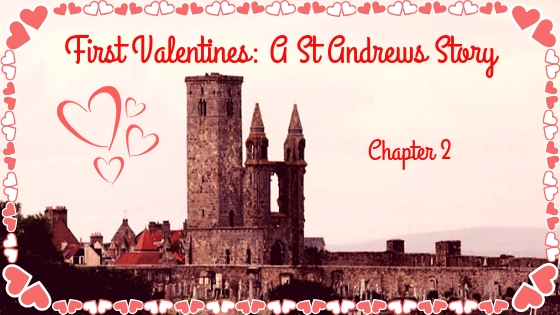
New Year’s Dip: A St Andrews Story, chapter 4

Last time the five headed out in the evening to the Llammas fair, where we find them now.


After wandering around a little Anatoly found one of their favourite fish and chip shops had opened a stall, and so he ordered two small fish suppers as the locals called them. He and Darrell ate them out of the newspaper, their fingers warm but greasy.

“Mmm, that was lovely Toly, thank you,” Darrell said shyly when she had finished. She looked up at him from under her long lashes and stood on tiptoe to press a kiss to his lips, tasting his own salt and vinegariness.

Anatoly had finished his supper first, and had disposed of the wrapper after wiping his fingers on it as best he could. He held Darrell’s face in his hands as he kissed her back, feeling her slip her arms around his waist.

Darrell smiled as he held her face close for the kiss. She pulled him closer by the waist and sighed happily. She wanted to tell him that she was falling in love with him, but she knew it was too soon. She laughed, looking up from their kiss as somewhere in the fair the bagpipes started playing.

Anatoly smiled a little as Darrell’s attention was drawn away and he kissed her cheek. “As nice as it would be to stand here and kiss you all night we have only ten minutes until we are to meet the others. Is there anything you can think of that you want to do in that time?”

Darrell looked up at him and then around her. “Teach me how to shoot?” she suggested with a smile.

Anatoly grinned at Darrell and led her back to the shooting range. The man looked mutinous as he approached again, but accepted the money when it became clear Darrell was going to be the one shooting.

Darrell took the gun gingerly and looked at Anatoly, clearly asking for help. She wasn’t sure what had made her suggest this, but here she was, ready to be taught how to shoot.

Continue reading

Posted in Fan fiction | Tagged , , , , , , | 3 Comments

The Adventurous Four reviewed by Chris

Apologies that this is a day late but there was a scheduling issue and I only realised very late on Wednesday night – I blame a)work and b) the Christmas decorations that needed putting up yesterday – F.

The Adventurous Four was first published in 1941, by George Newnes Ltd. I have the 5th edition published in 1946 by the same publisher. Illustrations (pen and ink, subtitled) are by E.H. Davie. My copy does not have its dust jacket, but the 1st edition dust jacket (illustration also by E.H Davie) is reproduced below. This image is interesting and is very similar in style to public information posters of the time.

520high+9478873

Unusually for a Blyton adventure, this is set very clearly in a then contemporary context, namely that of Britain at war. Mary, Jill (twins, of course – what was this Blyton obsession with twins about?) and their brother Tom, aged twelve – the girls appear to be younger – are on holiday ‘in a little fishing village on the north-east coast of Scotland’. Their father is serving in the RAF and their mother spends all day knitting (knitting e.g. socks and scarves for troops being commonplace during the war). The children befriend a local boy, Andy, who, at fourteen, is already working with his father as a fisherman. It’s agreed that Andy will take the children to a local island on his father’s boat.

Because they plan to stay overnight they take plenty of warm clothes, rugs, food (including tinned sausages – yummy!) and even a gramophone, which turns out to be important. The overnight stay was meant to be the adventure, but of course there is more than that to come. The children’s voyage runs into a storm, marooning them on an unknown island. With their ship unusable, Andy’s skills at fishing and creating shelter become vital to the children’s survival. Also, fortunately, there has been at some time a village on the island, and the deserted buildings are a source of building materials and even potatoes and beans which are still growing in abandoned gardens.

However, it soon becomes clear that there are people still in the vicinity, when the children find a store of tinned food in a cave (as always in Blyton adventures, a handy food supply is never far away) on a second nearby island and, soon after, they spot sea planes. These planes give us the first indication of what we are up against for “the sign of the crooked cross was painted on each wing – the sign of the enemy, the foes of half the world”. In fact, the children’s island is one of three and after some arduous exploration they find that on the third island there is natural harbour in which a fleet of Nazi submarines is concealed. Tom takes a series of photos, to have proof if and when they manage to escape, which they hope to do in a dinghy stolen from the enemy.

Unfortunately, the children’s dinghy is spotted by a seaplane and they decide to leave that night, under cover of darkness, to try to reach the mainland. But Tom discovers he has left his camera with its vital evidence in the food cave. Overwhelmed with guilt he takes the dinghy on his own to reclaim the camera, but is caught by the Nazis (the illustration shows some menacing but extraordinarily young soldiers) who imprison him in the cave. The other children realise what must have happened, and of course no longer have the dinghy to escape so as Andy says “we have to be brave now. We are British children, and so we have plenty of courage and heaps of ideas”.

520wide+4037793

Although Tom has pretended to the soldiers that he is alone, they are suspicious and arrive to search the children’s island. Using sand and seaweed they disguise themselves as rocks on the shore. This leads to tense moments, as one soldier stops and smokes a cigarette right next to Andy. But the camouflage is perfect – even fooling a seagull who pecks Andy, almost causing him to yell out. The soldiers depart and the children are safe for now. But what should they do?

That night Andy swims and wades over to the second island and makes contact with Tom. Together they form a plan of escape. Because Tom has been singing the tune on one of the gramophone records, Andy has the brainwave that they could use the gramophone to deceive the guards into thinking that Tom was still in the cave, even after he had escaped. The next night he returns to the cave, bringing the gramophone and record, and he and Tom dig their way out by enlarging an air hole. The trick with the gramophone works perfectly and the boys re-join the girls on the first island. Now, they set about a new plan of escape, this time trying to mend their wrecked ship but just as they have made it seaworthy the soldiers return and catch all four children. They take the ship but Andy is still defiant and as the soldiers leave he shakes his fist, crying “You think you can beat a Scots boy but you can’t. I’ll beat you yet!”

Andy’s strength of spirit rallies the other children and he formulates a new plan, to build a raft out of the wood and other remnants of the deserted village. This is a difficult undertaking in itself, but the more so as their work in progress must be hidden from the soldiers who arrive from time to time to check on the children and give them (thankfully) supplies of food. They complete the raft, but it is not big enough for all four of them, and the girls must stay on the island, feigning ignorance of the boys’ whereabouts when the soldiers arrive. The departure on the raft is what is depicted on the jacket illustration.

The boys set off, but conditions on the raft are very hard, especially when a storm comes, and then a seaplane appears overhead. The enemy? No, it has a British insignia and when it lands the pilot is none other than Tom, Mary and Jill’s father (this does seem a rather unlikely coincidence). Once rescued, the boys explain about the submarines and this is subsequently relayed to higher authority. Interestingly, they have no need of the photos to make themselves believed, so Tom’s disastrous mission to rescue the camera appears to have been unnecessary. Meanwhile, the girls dissimulate to the soldiers but when the British planes arrive to rescue them they take them to be the enemy and hide in the food cave. However, they are found by Tom and his father and rescued. As they leave in the seaplane, a fleet of British warships arrives to destroy the submarine base.

The children are reunited with their families and Mary’s father makes a rousing speech to her about the need to fight evil and the pride that the children should take in having done so. But Andy is desperately worried about what the loss of their fishing boat will mean for his family, who depend on it for their livelihood. Fortunately, in recognition of his valour the government present him with a fine new boat, called the Andy, and there the story ends.

This is probably my favourite Blyton adventure, for two reasons. Firstly, it has more realism than any other of her adventures that I am aware of in terms of a specific historical context, and there’s also a high degree of attention to practicalities (fishing, raft-building etc.) in a way unusual in Blyton. It is certainly more realistic than the Famous Five, or even the Adventure series. Even reading it as an adult it stands up as quite a tense thriller. The tone is also more sombre than her other books and it is worth recalling that in 1941 the way that German submarines were preying on British shipping was a major crisis, as anyone reading the book at the time would have known. There is no sense, for example, of this adventure being ‘jolly good fun’: they know and we know that it is serious. Secondly, Andy is one of her strongest characters and, unlike in many other cases, a regional, working-class child is treated not just with respect but is the hero. The successful routing of the enemy simply wouldn’t have been possible without his determination and skills. This is real ‘we’re all in it together’ stuff and with it Blyton made her own contribution to the war effort.

Posted in Book reviews | Tagged , | 2 Comments

Monday 1st December

So it’s here, the dreaded (or celebrated) D month, and we’re in the middle of winter now so time to cuddle up with some good books and a lovely hot drink- hopefully in front of a fire if you’re lucky enough to have one!

So this week we have another audio review from Fiona, she’s going to look at Five Go to Mystery Moor. Our contributor this week is Chris, with an Adventurous Four review; how thrilling!

This week I think I shall either be giving you a the next chapter of our “New Year’s Dip” story (if you haven’t been reading it- shame on you! Catch up here!) or a review of the next book in the Adventure series, the Sea of Adventure, one of my favourite Adventure stories!

In other news, we have passed 90,000 blog views, which is wonderful and just goes to show that Enid Blyton can still gain an audience.

The next thing on my list of news, is that you should head over to the Two Points of View blog from tomorrow to see our Christmas Photo challenge! I shall be working from a list, while Fiona is making up her own ideas as she goes along!

My final, and rather saddening news to all those who don’t know, is that the wonderful Old Thatch Gardens (Blyton’s second and most famous home with her first husband) will no longer be opening their gardens to members of the public. This sad news was relaid to us by email a few days ago through Tony Summerfield at the Enid Blyton Society. However, we were very lucky to have been in such wondeful gardens and I, for one, am forever grateful that I got to experience the gardens more than most over the last few years and that I was able to converse for long periods with Jacky Hawthorne and became one of their regular faces. The Summer just won’t be the same without Old Thatch to visit, however, I’m  sure you’ll all join me in thanking Jacky for opening her wonderful gardens and to let it become such a special place to so many people.

And with that said, I will share with you, some of my favourite Old Thatch pictures from the years I have been able to visit.

Posted in Blog talk | Tagged , , , , | 3 Comments

Second Form at St Clare’s

The Second Form at St Clare's, 2005 Egmont, cover by David Roberts

The Second Form at St Clare’s, 2005 Egmont, cover by David Roberts

As it stands Second Form at St Clare’s is probably my favourite one that I’ve read so far of the St Clare’s series. The funny thing is that again, like with Summer Term at St Clare’s, the twins do not seem to feature much in the story.

They are the basis for the story true enough, and each term seems to at least start with them but it never continues very far into the story with them as the central characters. In fact, I do forget that the twins are supposed to be the main characters with everyone else bustling about. I suppose it seems a bit odd to me, not having read the books before now and believing them to be all about the O’Sullivan twins, and in reality they’re not really. The St Clare’s books are more about the school and the other girls than the twins, after the first two books anyway.

This is the fourth book out of six that Blyton wrote, three books have been written my Pamela Cox subsequently to fill in the gaps (the third and sixth forms and one standalone.)

Anyway Second Form at St Clare’s sees the O’Sullivan twins and their friends head up to the second form from the first, without a few characters. For example spiteful Prudence from the last book has gone away and Pam, the quiet girl has stayed in the first form because she’s too young. Prudence was the source of all the mischeif in the second form, and fret not, the spiteful position has been filled by Elsie, a second former who has not gone up to the third form with her fellow classmates. She makes  up one of the “new” girls along with Anna, who is described as lazy and fat (though I have the idea that anyone in Blyton’s books is called fat if they were just on the little chubby side!)

These two are made heads of the second form, and Elsie is quite quick to think that she will rule the new second formers with a iron hand and make them do all she wants them to. Unfortunately she doesn’t reckon to quite a few strong personalities in the new second form and soon the girls take things into their own hands when Elsie’s spiteful nature gets the better of her when it comes to punishing one of the new new girls, Mirabel. The girls vote to only listen to Anna as head girl, and this galvanises the “lazy” Anna into action and makes her a jolly decent head girl.

Once again in the second form the two newest girls make up most of the story line. Mirabel arrives a week late to St Clare’s because she simply didn’t want to come, and Gladys starts off as a very withdrawn character who has a big secret to hide, and later on in the story reveals all and she begins to come out of her shell a bit.

These two new girls are very chalk and cheese, but they make for interesting reading. They’re almost the same as Margery Fenworthy and Lucy Oriell from the O’ Sullivan twins, one big, one small, but they become the closest of friends like Margery and Lucy do. However before they get to that point there is lots of drama.

There is another midnight  feast in this book as well, as it’s Carlotta’s birthday and her father and grandmother give her money for a feast. I must say there is a strange number of odd combinations of food that go on at these midnight feasts and there always seems to be enough food for each girl to get really full on, and then they go straight back to bed! I should hate to lie down after all that food.

I think Second form at St Clare’s may be one of my favourite St Clare’s book at the moment. It’s action packed and Gladys and Mirabel make good central characters, especially when they settle down a little into St Clare’s. However I think St Clare’s does show more age than Malory Towers, there are lots of little things that make me feel the story’s age, especially with how much the girls raise for their red cross concert, which seems a little on the low side at ten pounds and fifty pence. I would like to get my hands on an earlier edition to what the money was before it was changed. (I am reading the most up-to-date  volumes provided by my library as it was cheaper than buying them, but they lack the beauty of a wonderful earlier volume.) Note: Fiona has just told me the original value of the concert takings from her earlier edition and it was four pounds, three shillings and sixpence. So in a way the sum seems greatly smaller in my earlier edition than what it would have been at the original value.

I would recommend Second Form at St Clare’s quite highly, but I would warn against starting with it, if you haven’t read the three earlier books! (In my mind St Clare’s seems much more in need of being read in order that Malory Towers!)

So there you are, Second Form at St Clare’s, a jolly romp of a school term. I wonder what will happen next term!

Next review: Claudine at St Clare’s

Posted in Book reviews | Tagged , , | 6 Comments

The Island of Adventure – How has Blyton’s original text fared in a modern edition? part 3

We’re up to chapters five and six now, and as I was looking at my excel file I realised there was something I forgot to cover last time. Oops. It wasn’t changes to the text so it’s not too bad of me, but rather, it was what was left in the text that caught my eye.

As covered Jo-Jo is now Joe, a white man, yet he retains lots of stereotypical language (much like Sam from The Mountain of Adventure). For example he asks They coming to Craggy-Tops? rather than are they. He also says Miss Polly, she didn’t say nothing about any friends, no she didn’t. Neither of those lines sound right coming from an average white man. Perhaps if he was noted to be from Europe with an accent or some such, but he isn’t.

The other thing left alone is the fight in the car. Philip still bangs Dinah’s head off the door and they pummel each other – surprising considering how many references to violence have been removed in other books.

But anyway, on with the actual changes. The earlier posts can be found here and here.

My own copy of the book is a 1955 8th impression and the modern copy I’m comparing it to is a Macmillan one from 2001 (on loan from Stef).


CHAPTER FIVE: SETTLING IN AT CRAGGY TOPS

There’s actually nothing major changed here. I’m beginning to feel that Blyton did put too much emphasis on Jo-Jo’s colour and perhaps it would have been positive in modern editions if this had just been scaled back a little. As it is, of course there are no references to him being black in this edition as he isn’t. 

In this chapter the references are just cut instead of changed so Jo-Jo, the black man, frowned at the noise, becomes Joe frowned at the noise. I rather think they could have replaced the words with a description of their own. Likewise where the black man departed down the stairs he’s now just the man departed down the stairs. Perhaps He departed or Joe departed would have sounded better and a little less repetitive. At this point, as he’s departing his eyes are said to be rolling, or in the modern copy they are angry instead.

Jo-Jo is also referred to as a sullen man instead of a sullen servant.

And lastly house-work becomes housework.

Again there are some perhaps surprising things left in this chapter. It’s still telephoned to and Mr Roy is said to be at the other end of the wire. These sorts of things were changed in Five on a Treasure Island I remember. Then again with all the other old-fashioned things in this book maybe they thought it wasn’t worth altering these out-dated references.

In The Secret Island there are lots of small changes to make allocation of the chores less sexist – though that’s not the case in this book. Dinah still gets sent to clean out the boys’ tower room.

And actually lastly this time, Joe continues with his strange speech for a white man when he says no that she shouldn’t and I’ve telled her so.


CHAPTER SIX: THE DAYS GO BY

As if to prove my point from last week both instances of queer in this chapter are replaced with strange. 

Summer-time, oil-lamps and drinking-water  lose their hyphens and become two words while candle-sticks becomes one. However sea-birds, wind-driven and well-bottom stay as they are.

In the original text it is remarked that the water from the well was not salt. This has been altered to not salty. I feel that’s really dumbing things down. It’s obvious it means not salt water not that Jack is surprised that the water is not a solid mineral.

Some emphasis is lost when Jack is asking about Jo-Jo’s boat and Philip says we are not allowed to set foot in it instead of we are not allowed even to set foot in it. Perhaps the word order is a little odd but making it not allowed to even set foot would have kept the emphasis there.

I think I was right about Jo-Jo being the catalyst for an awful lot of editing. 

He’s no longer half mad, he’s just strange. As per the last chapter he’s not the black man, he’s just the man or the handyman. For once the editor has changed a description of him though, from the sullen black man to the unfriendly man. Perhaps they felt sullen had been used too many times already?

Also for the first time his speech is changed, from What you doing? to What are you doing? This is one of my issues with the updates – they’re so inconsistent! 

At one point his scowl is described as even blacker. Now that’s something Blyton has used lots of times – particularly for George. People have black looks, black tempers or black scowls and it has nothing to do with skin colour yet this is changed to even deeper. I wonder if Jo-Jo/Joe wore a black coat it would become a grey one…

In a similar change to the last chapter rolling eyes have become roving again but the wording around it has also been changed. From his dark eyes rolling and the whites showing plainly to his eyes roving so the whites showed plainly. I’m not certain why Joe can’t still have dark eyes or why the tense of the end of the sentence had to be changed there.

A few more things left in include you’d better go before I slap you and he’d [physically] beat you if you did (obviously not the same editor as did First Term at Malory Towers) as well as the girls were given household tasks to do (while the boys fetch the wood and water).


I think that’s another ten changes though it’s hard to decide what to count and what not to. I’m not counting Joe/Jo-Jo, straight removals of the word black or substitutes for queer, nor am I counting the hyphens after the first one or things like rolling to roving if it’s not the first instance.

That’s 26 reasonably unique changes altogether.


Posted in Updating Blyton's Books | Tagged , , | 7 Comments

Last Monday in November

And with that, the month is already gone. Before we know it it will be December! It’s certainly cold enough much of the time to be winter already, even if it’s not. I will have to start my Christmas shopping soon (oh how envious I am of all those people that announce they’re already done!)

The blog will stay a Christmas-free zone for another week though, apart from those brief mentions. On Wednesday I’m planning to use the nifty reblogging feature to share some different content with you (and showcase another blogger’s work), and then on Friday there I will be examining the text of The Island of Adventure Again. Stef is planning to read and review the next St Clare’s book for Sunday (Second Form at St Clare’s).

I’ll end with a few photos from the past week – some from my walks around Dundee and a few from Manchester where I was at the weekend, seeing a distinctly un-Blytony band.

Posted in Blog talk | Tagged , | 2 Comments

Location, Location, Location: 90’s Kirrin Cottage

A couple of weeks ago, I was on holiday in Somerset, and found myself quite close to a key filming location for the 90’s Famous Five TV series. Now as you know I am a BIG fan of this series and couldn’t resist pulling my poor Dad along to the location for a day out.

The place where they filmed Kirrin Cottage, Kirrin Village and a bridge into a wood during Five Fall Into Adventure, is called Bossington, and it is right on the edge of Exmoor national park, not far from the castle and medieval village of Dunster. We arrived rather late in the day, at an impromptu stop at Dunster for a look around and lunch in the charming “Victorian Tea Rooms” there.

Anyway these are some of the pictures I took of the Village and the cottage, and the coast a little further up! I hope you like them!

Posted in Blyton on Screen, Locations | Tagged , , , | 8 Comments

New Year’s Dip: A St Andrews Story, chapter 3

Here is the third chapter of New Year’s Dip, and the group are off to the Lammas Fair in St Andrews.

~~~~~~~~~~~~~~~~~~~~~~~~

At about six o’clock, Julian, Anatoly and David were standing outside the girls’ halls, waiting for them to come downstairs.

“If they’re not down in five minutes, I’m chucking something at their window,” David grumbled as he stamped his feet.

“You would probably miss,” Anatoly drawled, as his friends shivered.

“Let’s not start that again!” Julian said firmly. “No more snowballs tonight children.”

“Spoil sport,” David muttered, glancing at Anatoly, wondering if the other boy was thinking, like him, that it might be a funny idea to push some snow down Julian’s neck in retaliation for him telling them off.

Anatoly pulled a face at David, behind Julian’s back, letting him know he wasn’t impressed by being called a child either, especially when he was four years older than Julian.

Darrell and Sally hurried down the stairs after getting themselves dolled up, their coats open to show off their nice dresses. Darrell was in green, and Sally in blue, both sticking to the colours that suited them best.

Julian was watching the door as the girls appeared. His breath caught in his throat as he looked at Sally. Her blonde hair flowed over her shoulders and she was wearing a lovely dark blue dress that suited her beautifully, cinched at the waist with a black belt. “You look… so gorgeous,” he told her when she stood in front of him. He pressed a kiss to her cheek as Darrell slid her arm through Anatoly’s and smiled up at him.

“You look stunning dorogoy,” Anatoly said, dipping his head to kiss her as David looked away. “But should you not fasten up your coat? I would not want you catching a chill,” he added, running a fingertip over her exposed collarbone.

Darrell shivered slightly at his touch but rolled her eyes as David examined the stars, trying not to look at the two couples as Julian and Sally kissed. She did up her coat and raised a challenging look at Anatoly. “Shall we go?” she asked, reaching for David’s arm and tucking hers through his, winking at Anatoly.

Anatoly watched, not sure what to make of things as David gave him a slight shrug and let Darrell lead him away from the dorms, her arm still linked with his. He refused to meet Julian or Sally’s eyes as he followed a little way behind, hands shoved in his pockets.

Sally sighed as she took in Anatoly’s sulky walk, hoping he wasn’t going to sulk for long and spoil the night.

Julian gave Sally’s hand a squeeze and whispered to her, “Why don’t you go and cheer him up a bit?”

“Me?” she asked, wide-eyed, “what am I supposed to do?”

“Go and talk to him. Bat those blue eyes at him Sally. You know as well as I do that you can get him to talk almost as well as Darrell,” Julian said softly. “I’ll see if I can prise Darrell from David  if you like?”

Sally nodded. “He should know by now that he has nothing to worry about with Darrell, she’s never going to look twice at anyone while he’s in her life,” she said, giving his hand a squeeze, knowing she felt the same about him.

“Sally Hope,” Julian said fondly. “Dear one, do me a favour and stop crediting me and my friends with common sense?” he teased, pulling her up short a little and kissing her hotly. “For me if nothing else?” he whispered afterwards, his hands on her waist.

Sally’s heart did a little dance when Julian called her ‘dear one’ and then she felt like it was going to burst out of her chest at the way he kissed her. She had kissed him back eagerly, breathless after it ended. She looked up at him, knowing she was flushed, feeling a little dazed.

“For you, I’ll try,” she said, hoping she didn’t sound like an idiot, before slipping from his grasp and hurrying after Anatoly.

Anatoly glanced at Sally in bemusement as she suddenly slipped her arm through his and suddenly started chattering about the night’s festivities.

Julian smiled over Sally’s head at Anatoly, and shrugged at him as he raised a questioning eyebrow. Julian hurried up to David and Darrell. “I think you made him sulk,” he told Darrell when there was a lull in conversation. “Are you trying to prove a point or something?” He looked at David. “Sorry mate, not like we meant for you to be left out.”

“I’m getting used to it,” he said with a chuckle, waiting for Darrell’s answer.

“Is he really sulking?” Darrell asked in surprise, “just because I’m walking with David and not him?”

“I think so, not in a big way,” Julian said with a smile. “Had you not noticed that he’s very keen on keeping you close Darrell?”

“He’s oh so soppy when he’s waiting around for you,” David added, gently teasing. “He’s worse than Julian mooning over Sally, as he was doing last term.”

“Anatoly isn’t the soppy sort,” Darrell argued, though she knew he was genuinely fond of her. “Do you mind David?” she asked as she slipped her arm from his.

David shook his head and waved her away, “It was lovely while it lasted, thank you Darrell.” He kissed her cheek and rolled his eyes at Julian who laughed.

“Gracious in defeat,” Julian told him as Darrell stopped walking and waited for Anatoly and Sally to reach her.

She tucked her arm into Anatoly’s smiling at Sally on Anatoly’s other side. She rested her cheek against the rough wool of his long double-breasted coat, inhaling the crisp spicy smell of him, made more prominent by the cold air.

Anatoly had a nasty clenching feeling in his chest as Darrell kissed David on the cheek, but then she was slipping her arm into his, holding herself much closer to him than she had David and he relaxed a little.

Sally gave Anatoly’s arm a squeeze and then moved off to take Julian’s again, giving Anatoly and Darrell a little privacy as they wandered up towards Market Street.

Anatoly freed his arm from Darrell’s and wrapped it around her shoulders. “You are just the right height for that,” he said, as she fitted herself neatly in against his side.

Darrell smiled and wrapped her arm around his waist. “I like being the right height for that,” she told him as they reached the end of Market Street and their eyes needed to adjust to the bright lights of the funfair.

“Everyone meet by the fountain about quarter to twelve if we get separated?” Julian suggested loudly over the noise.

Anatoly pressed a kiss into Darrell’s hair, breathing in the apply smell of her shampoo before looking at Julian. “It is a plan,” he said, “what do we want to do first? We could try out some of the rides?”

“Let’s have a look at the stalls first, have a good look around,” David said with a smile.”Then we can see what rides look good. I can hear the dodgems from here!”

Continue reading

Posted in Fan fiction | Tagged , , , , , | Leave a comment

The Rosewood Mystery by Cathy, chapter 13

INSIDE THE OLD MANOR

“A library!” breathed Roger. “And old, old library!”

“And just look at all the books!” exclaimed Diana, in wonder, forgetting for a moment that she was afraid of the strange noises they had heard through the walls. “There must be hundreds – no, thousands! I wonder if anyone has ever read them?”

Snubby turned to look at the door through which they had stepped. He gave an exclamation.

“I say – look at this!”

They all turned. Snubby was standing next to the opening, and they could see that the door, which was attached to the wall with hinges, was in fact made to look like part of the bookshelves, with the spines of false books attached to it! In fact that whole part of the wall, about eight feet wide and six feet tall, was false, decorated with false books and shelves!

“It’s a secret door disguised to look like the bookshelves!” Snubby’s eyes gleamed. “I say – how super! I’ve read about these in books and they always sound so mysterious and exciting!”

He pushed the door gently with his hand, but the hinges were so well-oiled that the door actually swung completely shut with a click.

“Ass!” Barney said, striding over. “What did you do that for? What if we can’t open it again?”

Snubby looked rather anxious and embarrassed, and tried to pull the door open, but it had closed itself properly and was such an exact fit in with the rest of the wall that he couldn’t even find a join to try and get his fingers in. He looked round at Barney.

“We’ll open it somehow,” he said, trying to sound more cheerful than he felt.

“Why do you always have to cause trouble?” Diana scolded her cousin. “We’ve only just got here and there is obviously something strange going on, and we need to be able to get away down that passage! Why did you have to shut it?”

“I didn’t do it on purpose!” protested Snubby. “I…”

“Shh!” Roger, who was over by the large window, suddenly shushed them. “Shut up! I can hear something!”

Continue reading

Posted in Fan fiction | Tagged , , | 6 Comments

Middle of the Month Monday Post

So we’re part way through the month, and all that bit closer to Christmas, oh dear, say I! Just when I want to be curling up with good books, it’s time to get busy!

Anyway, this week, we have another chapter of Cathy’s smashing story on Wednesday and Fiona is treating us to Well Done, Noddy! on Friday. This week I shall either bring you a review of the next St Clare’s book or the pictures from my adventure to filming locations from the 1990’s Famous Five TV series.

So with that said, and I don’t think that there is any more news to tell, I shall leave you with some of my pictures from my holiday two weeks ago.


Posted in Blog talk | Tagged , , , | 2 Comments

The Valley of Adventure


valley of adventure

First edition dustjacket by Stuart Tresilian

Today I sat down to immerse myself in Blyton’s thrilling Valley of Adventure. I had forgotten exactly how enjoyable a read it was, and incredibly quickly the action starts.

The children are on school hols, possibly summer but more likely Easter, as Mrs Mannering makes them pack warm jerseys for the trip they’re about to make. The trip, is one suggested by Bill Smugs (a.k.a Bill Cunningham) in his aeroplane to spend a few days with him at his home, but it all goes wrong.

When they had been dropped off at the aerodrome to wait for Bill to fly them to his house (I know its thrilling, but surely Bill doesn’t live somewhere where there is a handy air strip to land the plane on?) they are told to go and sit in Bill’s plane. As it is quite dark you can imagine that it might be quite hard for them to find, and it is. As they’re waiting for Bill, some shooting breaks out and two men rush into the plane where the children are waiting and take off. Very quickly the children realise that neither of the men piloting the plane is Bill and that they are in trouble.

After a long night hiding behind some boxes in the plane, the children find themselves in a valley, a long way away as the bad guys land the plane. With only their suitcases and a picnic to sustain them, they creep out of the plane and start to explore. The first thing the see is a selection of deserted buildings, some damaged by fire, some in ruins. Now this passage, suggests to me that this is a village that was ravaged by the second world war (the book being published in 1947 being a clue to this) and I do believe that this is one of the first times I have come across a reference to the war (and later on in the book, the Nazis) in any Blyton novel I have read. Surprisingly enough, upon seeing the devastation of the village does not immediately lend itself to the children as being a result of war.

Anyway, brushing this minor point aside, the children find somewhere to shelter and do some exploring over the next couple of days. After stealing some food from the men (which is ok because they are the bad guys) and finding a nice cosy cave to live and sleep in, the real fun starts.

First of all there are two new additions to the men in the valley, one another brute  and the other, a frail old man called Otto who is a prisoner. The children want to help Otto but also want to know what the men are up to, so follow them the next day to see where Otto is leading them. It turns out they are being led to a rock fall, which disappoints the children as they thought it would take them to what the baddies are after.

Anyway, Jack manages to rescue Otto and for his kindness receives two maps, one showing them a way out of the valley and the other showing them where to find the treasure. After a disappointing day trying to get out of the valley the children decide to start looking for the treasure.

The book really has a fast paced narrative in this story, things don’t seem to stop happening, which is nice, but as all events are intertwined its hard for me to review every twist and turn without giving the whole plot away.

It’s a good book, and I do enjoy The Valley of Adventure. It’s definitely in my top three, which would be Circus, Sea and then Valley. There are some points where I do just think there are some overlooked areas, like the original pondering about why the village is half destroyed and deserted – after all the book is set three years after the war. Most of Europe was still recovering and if Blyton felt the need to mention it at all, then I feel the children and the readers deserve a little more credit for the truth.

The thing about Valley, apart from the stunning location and action packed narrative, is that this one part of the book, the lost treasures thanks to the war is something very much rooted firmly in reality, which is something you don’t find in many of Blyton’s story books.  Although the Famous Five, Five Find-Outers and various other series mention spies and things, I do think the mention of the war is a big step in Blyton’s world. Not to mention the fact that it would have made the situation for the children reading the book when it was first published, a more real affair. They would have really been able to believe that Jack, Dinah, Lucy-Ann and Philip really did exist, and that is what makes The Valley of Adventure such a wonderful read and I believe it showcases what a master of stories Enid Blyton really was.

Next review: The Sea of Adventure

Posted in Book reviews | Tagged , , , , , , , | 5 Comments

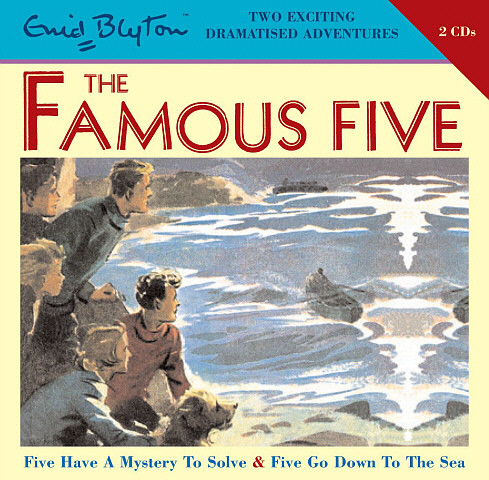
Five on a Treasure Island: An exciting dramatised adventure

No matter how hard I searched I could not find my Telegraph copy of Five on a Treasure Island, or Five Go Adventuring Again. I really can’t think where they’ve got to as I’d never have thrown them out. Stef has come to my rescue again though and sent me Treasure Island so I can listen and review. This is one I’ve heard before perhaps twice before I lost my own CD.

Five on a Treasure Island

Five on a Treasure Island

The story begins as the book does with the children discovering they can’t go to Polseath like usual. The first time I thought the narrator said Polesend and had to skip back and listen again before I realised it actually was Polseath. I’d always said it Pole-seeth in my head, which would seem to be wrong! I Googled it and there is a Polzeath in Cornwall which is presumably where Enid was talking about?

This book has quite a small cast compared to some later ones so there aren’t a huge number of voices – the Five, naturally, Mrs Kirrin/Barnard, Aunt Fanny and Uncle Quentin and the phony antique’s dealer and his crony. I don’t recall hearing Alf/James actually and he’s one of the few other characters to appear in the book (if indeed there are any others.)

Uncle Quentin’s voice I liked, I thought it was quite like Christopher Good from the 90s TV Series. George sounds quite petulant and very girly at first which isn’t quite how I imagine her but she gets better as the story goes on (perhaps as the character improves the actress changed her voicing?)

Dick on the other hand seems to get worse as it progresses. When they chop down the gorsE bush to free Timmy from the well (a purely narrated piece in the book after George says “we’ll have to chop down the gorse bush”) Dick behaves like an utter baby. “Oww it’s really prickly!” he cries. And later, when they’re hacking at the door to the ingot-cave he does the same.  “Oww something flew out of the door and his my cheek! A splinter or something!”  In the book he’s quite brave but on the CD he sounds completely whiny and not like any of the Five would act.

Obviously with it being purely audio there sometimes has to be explanations given that aren’t in the book but there were a few times I cringed at the obvious exposition lines. For example when they first meet Timmy Dick cries “It’s a big brown dog, he looks a bit of a mongrel to me!” This could have been better coming from the narrator as it’s very unconvincing dialogue! Like wise as they all climb onto the wreck Julian says “There, now we’re all aboard,” which in real-life would have been quite an unnecessary line. It’s strange as I haven’t really noticed any of these on the other CDs.

Timmy’s quite quiet throughout the story but when we do hear him it’s a decent enough sound and not at all like some of the dreadful ones we get on other CDs in the series. I don’t recall too many other sound effects but there are plenty of good storm sounds, waves, wind, thunder and rain which all add to the atmosphere.

All in all a good listen (if not the best of the bunch) and I admit I hadn’t really noticed any of my criticisms on earlier, casual listens.

Posted in Audio Books and Audio Dramatisations | Tagged , , | 1 Comment

The Secret of Moon Castle reviewed by Chris

This is the fifth and final book in Blyton’s ‘Secret’ series, and the only one of the series I have read. It was originally published in 1953 but the edition I have is the 1966 Armada paperback. Illustrations are by Dorothy Hall and are not particularly inspiring (and the print quality of both text and drawings is not great in this edition). The cover illustration (pictured) is by Mary Gernat and is quite pleasing.

the-secret-of-moon-castle-1

The children are in the familiar Blyton format: twins (of course, though nothing is subsequently made of that) Nora and Mike Arnold and their sister Peggy who is one year older, plus Jack who has been adopted (another recurring pattern) by Captain and Mrs Arnold. More unusually, the party is completed by Paul, the Prince of Baronia, who is at school with Mike and Jack. Paul’s age is not clear, but Jack would seem to be older than both boys as he, unlike them, considers himself too old to wear shorts trousers. Overall, it seems that the children are aged between about eleven and thirteen and we are told that they have already had plenty of adventures together.

The hols begin, as Blyton adventures often do, with the girls awaiting the boys’ arrival and bemoaning the fact that their school breaks up earlier. Once reunited, Mrs Arnold gives them the exciting news that Paul’s mother, the Queen of Baronia, wants the family to find a castle in which her Royal Household and the Arnolds may spend a month or two’s holiday. After perusing details of a surprisingly large number of castles available for immediate rental  they think that the remote Moon Castle might be just the place, so they decide to view it. Driven by Ranni, Paul’s manservant-cum-bodyguard, in his huge blue and silver car that simply ‘eats up the miles’, they arrive at Bolingblow, the nearest town to the castle albeit some twenty miles distant. Other than it being in England, there is no information on where we are, but the later reference to tin mines suggests it might be Cornwall. Luckily there is time for a splendid lunch at a hotel in Bolingblow, but the first hint that things might not go smoothly comes when the waitress tells of strange goings on at Moon Castle.

And, indeed, when they arrive things do seem rather strange. Three sisters are acting as caretakers and seem reluctant to see the castle tenanted. Guy Brimming, the son of one them, would not like it they explain, and when Guy appears on the scene he is certainly very hostile and threatening. Too bad, though, it is not his castle and after a tense standoff Ranni sends him packing. It’s agreed by Mrs Arnold that Paul’s mother will rent the castle, which is to be prepared for them by the caretakers, and Guy must take himself off. Oh, and the tower, which is mysteriously locked and the key supposedly lost, must be opened up. We already have a good idea that this is where Guy is up to whatever he is up to – scientific work according to his doting mother, loafing around according to the Arnolds, no good at all we readers suspect.

But now, in classic Blyton style, Things Go Wrong. Paul’s brothers have come down with measles and are in quarantine, so his family will be delayed. Nevertheless the Arnolds are to commence the rental of Moon Castle. Unfortunately Captain Arnold must test fly a secret new plane (presciently, for a book published in 1953, it seems to be a Vertical Take Off and Landing aircraft) and wants Mrs Arnold to go with him. So the children will go to the castle, but they won’t be alone since Ranni and Miss Dimity (Dimmy), a friend who helps Mrs Arnold with the children, will accompany them. So it’s back in the blue and silver car to Moon Castle, stopping only for lunch at Bolingblow and more dire warnings from the waitress.

This time, the reception from the caretakers is, if not welcoming, then at least acceptant and they assure Dimmy that Guy has left as instructed. On the other hand, the tower is still locked and it begins to look as if the hotel waitress was right, because queer things start to happen. First, it is repeated “TWANG! DONG!” noises, apparently from ancient musical instruments in one of the rooms. Still, perhaps it is just some sort of expansion and contraction process caused by the temperature. But that’s not the only thing. That night, Jack and Mike observe that there is a light in the supposedly empty and inaccessible tower. Could it be Guy? The boys think so, and so do we. So next day the children question Guy’s mother about the key to the tower, but she is very evasive. Unbeknown to her, Jack remains at the castle whilst the others go to Bolingblow and overhears Guy berating her for allowing the castle to be let and telling her that the tower must remain locked for some days more until something (what though?) is finished.

The tower is one source of curiosity, but there has also been mention on a nearby ruined village that the children are keen to explore. Not a good idea, according to the caretakers, since there are deserted tin mines which are dangerous. On the other hand, it might be sensible to get out of the castle where things are getting stranger, with the eyes of portraits glowing angrily and strange hissing noises being heard, and ornaments smashing for no apparent reason. Dimmy’s room is mysteriously re-arranged and a picture crashes off the wall.  A warning, according to Guy’s aunt, that the visitors should leave Moon Castle. But they are made of sterner stuff and the children head off the ruined village.

The village is just as exciting as we would hope, with broken down houses and rusting machinery all around. And then there are the tin mines to explore. Oddly enough, the ladder down a mineshaft is in very good order. It’s almost as if it’s still being used …! Once they have descended, the boys (Jack forbids the girls to come) find a maze of tunnels. Luckily they have brought torches and can have a good poke around, and as they do so they find a peculiar green fire, and glimpse a figure in overalls and a hood who pours something on the fire, which turns purple (this provides one of the few really good illustrations in the book). Then other hooded figures sweep up some strange material, glowing with a colour the boys had never seen before (rather like the unnameable colour produced by the machines in The Mountain of Adventure perhaps).  But it’s time to go home now, which may be just as well because the three boys are now suffering from pins and needles and, what’s more, their watches have stopped.

Back at the castle, the boys’ pins and needles become unbearable, and Guy’s mother surmises that they have been in the mines. Apparently, this was the affliction that had led to the village being abandoned and fortunately she has a lotion which will relieve it. Strange things are still happening at Moon castle, too. All the children’s rooms have been re-arranged whilst in the library books are jumping off the shelves all by themselves. One of them is a history of the castle and its lands, and on inspection it includes some old maps. These show what seems to be a secret passage running from Paul’s bedroom into the tower – the tower that remains so stubbornly locked.

That night the boys do not sleep well because of their pins and needles, and Paul is disturbed by a dark figure in his room, who he takes to be Ranni checking on him. Meanwhile, from their room, Jack and Mike see a shimmering glow above the ruined village, of the same mysterious colour as that which they had observed in the mine. We’ve already got there, but the next morning the children now declare, in classic Blyton fashion, that they are in the middle of an adventure. It’s a rainy day, so ignoring various further queer events the children start the search for the secret passage with no success and when the weather brightens Dimmy insists they go for a swim so the search has to be deferred until night time.

Night comes and after further searching Jack finds a knob in the panelling in Paul’s room (and by this time they have realised that his night time visitor had not been Ranni but a baddie, possibly Guy) which opens a secret door. The girls and Paul are now asleep so Mike and Jack explore by themselves. The door leads to a passage and, eventually, they emerge in the fireplace of one of the rooms in the tower. They leave the room and ascend the main stairway where they come to another room. Inside, angry voices are arguing in, of course, a foreign language. The door is ajar and they can see several men, half of whom are wearing the protective suits and hoods of the figures in the old tin mine. Others are wearing ordinary clothes and one of them is Guy. It seems the men are angry with Guy because he has told them that they have to leave before their work is finished – helpfully, they say this in English before reverting to various foreign languages. Guy says that it is just a matter of leaving temporarily whilst the castle is tenanted. But some of the men think that is just an excuse for him to go behind their backs and sell the results of their work. This work, it now emerges, is to produce a strange, valuable new metal called ‘Stellastepheny’, which is produced by the mysterious fire which is also the cause of the pins and needles illness (it is clear that the overalls and hoods are to protect the men from being affected by this, and Jack surmises that they are made of “some sort of mica”). Guy explains that he had hoped the visitors could be frightened away, but since this hadn’t been successful there is no choice but to suspend operations, and this is agreed.

Now the boys witness an extraordinary event, where the hooded men transfer what we take to be ‘Stellastepheny’ into a glass cylinder, blotting out the whole room in a shimmering radiance in (yes, that’s right) an unnameable colour. Guy exits the room, carrying the precious metal, and the boys follow him. He enters another room, and in a flash of inspiration Jack locks him in. There is some exciting chasing about as the rest of the men depart the tower and disappear into a secret trap door in the stone floor of the room at the base of the tower. The boys place a heavy chest over it, trapping the men and then, rather surprisingly one might have thought, simply go back to bed and have a good night’s sleep.

Even more surprising, the next morning breakfast is forgotten as Jack and Mike tell, first, the other children and, then, Dimmy and Ranni about the night’s events. Dimmy summons the caretakers. Guy’s mother is contrite and tearful, but one of the aunts is defiant, declaiming that Guy is a genius scientist and that, anyway, the owner of the castle has no interest in the mines. She admits that it was she who caused all the queer happenings, using devices invented by Guy. In the past, these had been enough to deter visitors. Ranni is dispatched to get the police who arrest Guy and then the men, who immediately betray Guy, believing that he has betrayed them. It is decided that the caretakers’ fate will be decided by the castle’s owner. Breakfast has been missed but no need to worry – they all depart to Bolingblow for lunch at the hotel. The adventure is over but as Jack says “it was GRAND FUN whilst it lasted”!

Overall, this is an excellent Blyton adventure which stands comparison with the best of her stories. It has many of the familiar elements, including a peculiar family set up and a relative absence of adults, but, unusually, there are no animals, birds or insects. Characterisation of the children is weak compared with the Five or the Adventures  – we really have no idea at all of their personalities or interests – as is the sense of place.  On the other hand, plotting is strong, and the story is genuinely atmospheric in terms of the castle, secret passages and mines. There is a sci-fi element, a little like The Mountain of Adventure, which contributes to quite a dramatic feel, and moments of real tension such as the initial encounter with Guy (who, although rarely present, is a good villain), the scenes in the old mines and the final chase. I like the contrast, evident in many Blyton stories, between the ordinary world of hotel dining rooms and waitresses and, just adjacent, an extraordinary world of adventure. I think this was part of what appealed to me as a child, and I can still feel it when re-reading this book some forty years after I first did so.

Posted in Book reviews | Tagged , , | 4 Comments

November Monday

It gets colder by the day it would seem – we’re now into full-on hats-gloves-and-scarves weather. Now’s the time for cosying up with a book if there ever was one.

We have a new writer on the blog this week – Chris (aka RereadingBlyton) has reviewed The Secret of Moon Castle for us. So that will be posted on Wednesday, and then on Friday I was planning to review another audio dramatisation except I can’t find any of my other ones. If I find them I’ll do one, if not it will be a review of Well Done, Noddy. Stef has two options to choose from for Sunday – either a review of The Valley of Adventure or sharing the photos she took when she visited Kirrin Cottage from the 90s TV series.

Wednesday night was bonfire night this week of course, and I went up the Law (the hill in the centre of Dundee which is actually a extinct volcano!) and saw the fireworks from across the city. My photos aren’t great unfortunately due to some technical issues like lack of lighting resulting in an overly long exposure which when added to a hand held camera makes for shaky pictures. But it created some interesting effects, or at least I think so!


Posted in Blog talk | Tagged , , , | Leave a comment

The Island of Adventure – How has Blyton’s original text fared in a modern edition? part 2

On to chapters three and four this week. We’ll meet Jo-Jo/Joe now that should be interesting! The previous instalment can be read here.

My own copy of the book is a 1955 8th impression and the modern copy I’m comparing it to is a Macmillan one from 2001 (on loan from Stef).


CHAPTER THREE: TWO LETTERS AND A PLAN

In her letter to Philip, Dinah mentions that Jo-Jo is even more stupid than before. This is changed to more strange. Why he can’t be stupid I don’t know.

Jo-Jo is also described as a half-mad servant, which becomes a strange handyman.


CHAPTER FOUR: CRAGGY TOPS

Our first sight of Jo-Jo, finally! In the original this happened when Jack and Lucy-Ann saw a coloured man coming towards them. His skin was black, his teeth were very white, and he rolled his eyes in a peculiar way. In the modern edition he has instead become a strange man, his skin is lined, and his eyes darted from side to side as he looked at them.

Now, we knew Jo-Jo had become a white man, and so obviously they have had to come up with something else to say about his looks. I think it will be interesting to see if I end up with a strong impression of how he looks as a white man as the book goes on.

All references to his colour so far have been cut. His black nose becomes just a nose, and the black fellow is now simply the man. I’m not sure if I will count every time black is removed from the text. Probably not unless the text is altered in some other way – such as fellow becoming man – but I may mention each removal as I’m interested in seeing just how many times Blyton did refer to his colour. Even huge Blyton fans have questioned her frequent use of black to describe Jo-Jo.

Philip’s way of speaking to Jo-Jo changes between editions. (I’m going to call him Jo-Jo despite the fact it takes longer to type than Joe as that is his name.) In the original text he says Jo-Jo, put that trunk in the car too. It’s a clear order, fitting with Jo-Jo’s status as a servant (though knowing his temperament I’m not sure I would be brave enough to boss him about). Philip now says Joe, that trunk should go in the car too. It’s no longer an order but a request. I’m glad they didn’t take it any further though. I don’t particularly think it was a necessary change but at least they didn’t make Philip say please. 

There are also a few other small changes in this chapter. Philip originally says of the many ruins along the coast; They were burnt in the battles I told you about. This, for some reason, becomes the battle. Earlier in the book when telling Jack and Lucy-Ann about Uncle Jocelyn he mentions battles, plural, having taken place along the cliffs around Craggy-Tops.

When Aunt Polly is talking about the sleeping arrangements she originally says that the girl can sleep tonight with Dinah. This gets changed to sleep with Dinah. While the first arrangement of words might be a little odd it’s clear what she means. Jack and Lucy-Ann are only to be allowed to stay one night so Lucy-Ann can spend one night in Dinah’s bed. 

And finally, queer is removed and becomes strange, leading me to a small rant. The line was Jack gazed at the strange house. It was a queer place. Changing queer to strange then makes it Jack gazed at the strange house. It was a strange place. Now Blyton gets criticized for her over-use of the same words and lacking variety, yet this modern book has made several word substitutions and added the word strange five times in four chapters, in addition to the several times Blyton has used it herself. That’s hardly encouraging a wide vocabulary in children, now is it?


I’m counting that as ten changes this time. I haven’t counted Jo-Jo to Joe or the removal of queer, but I have counted the removal of black as it’s the first instance. That makes it sixteen altogether so far.

I do wish the modern edition was illustrated (even if they were awful) as I would have liked to have seen a picture of a white Joe. That leads me to an interesting question about the use of Tresilian’s illustrations in the modern editions. I know that unlike other series, the Adventure Series hasn’t had many illustrators and that the Tresilian ones have been reused quite often, but if they show a black Jo-Jo those ones must be cut? 

Posted in Updating Blyton's Books | Tagged , , , | 7 Comments

New Year’s Dip: A St Andrews Story, chapter 2

They reached the town they all loved in good time, but in the darkness of the winter. The boys helped the girls with their luggage, and went up to their room to have a quick drink of whisky before heading to their own halls at the other end of North Street. They spent the evening in the common room, having lit the fire, enjoying more of the bottle of whisky Anatoly had had the presence of mind to bring with him and got reacquainted.

The next day they rose for breakfast, a little hung over, to be greeted with a world of white. It had clearly snowed over night.

“We can have a snowball fight. Do you think the girls would be game?” David asked as the other two joined him at the front door in thick coats, gloves, scarves, hats and heavy waterproof boots.

“We can ask them,” Julian agreed. “You game Toly?”

“Oh definitely,” Anatoly said, laughing at just how bundled up the other two boys were.

“What is so funny?” David asked as he tugged open the front door to reveal a world of white.

“You two look ridiculous, just how many layers do you have on?” he asked as they stepped out.

“Has it escaped your notice that it’s cold?” Julian asked him as he buried his hands in his pockets and followed David out into the snow. “I mean, its snowed, it’s pretty damn freezing.”

“It is a bit chilly,” he agreed, “but we will warm up once we are moving.”

“It’s because he’s Russian,” David muttered through his scarf as they started trudging down North Street towards the girls’ halls. “They must have a special gene that stops them feeling the cold so much. Am I right?”

“Trust me, you two have never felt real cold. This is a mild day by Russian standards,” he replied. Julian and David rolled their eyes as they walked quickly.

“It’s hardly our fault that we’re not built for snow and cold temperatures,” Julian said burying his face in his scarf, which had been a second Christmas present from Sally that she had sent with her letter. It was lovely and warm and he was glad of it in the cold air.

When they got to the girls’ dorms Anatoly led them around the side, digging through the snow with bare hands to find a few small stones which he threw up to hit the girls’ window.

Continue reading

Posted in Fan fiction | Tagged , , , , , , , | 2 Comments

An interview with Sue Welford – Author of the Just George Series

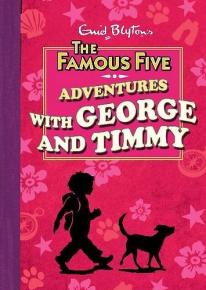
A while back Stef posted a partial review of The Adventures of George and Timmy. Although it doesn’t say on the cover (though some later editions have an addendum inside) it was written by Sue Welford. Sue actually visited the blog and commented a few times on that review and was lovely enough to agree to do a little interview with us.


WERE YOU A FAN OF ENID BLYTON AS A CHILD?

Yes, an enormous fan. I really identified with her characters who enabled me to disappear into another world where kids did the exciting things and parents never interfered.


WHICH OF HER BOOKS DID YOU READ?

I think I must have read any I could get my hot little hands on. I did read the F.F. but my favourite books were the Adventure Series. I also learned all my knowledge of nature from Enid Blyton’s Nature Book and managed to obtain a copy a couple of years ago. I loved Kiki ( is that right? must look it up) best of all and, of course, George who I saw as the first emancipated female (along with Jo in Little Women). I loved Timmy too, of course. I almost certainly liked animals more than people (especially grown-ups).


DID YOU HAVE A FAVOURITE BOOK?

Not sure… loved them all.


HOW DID YOUR COLLABORATION WITH HODDER COME ABOUT?

I was commissioned by Hodder Children’s books to write prequels to the Famous Five featuring George and Tim before she met the cousins. This was probably due to my work as Lucy Daniels on the Animal Ark series. I didn’t actually ask why – I was just honoured to be asked (and the pay was good!)

The six Just George Novels by Sue, featuring nine year old George and Timmy the puppy.

The six Just George novels by Sue, featuring nine year old George and Timmy the puppy.


WHAT SORT OF RESEARCH DID YOU DO FOR THE SERIES?

The request for synopses actually came through when I was on holiday in New Zealand (before I emigrated) so research entailed rummaging through second hand shops to find as many Famous Five books as I was able, to hurriedly re-read them and write six synopses before I returned to the UK. Obviously I read more of them before writing the actual books. They were as I remembered them but, of course, a child’s eyes do not see stories the same way that adults see them. I was horrified to learn that Anne only ever was allowed to make the tea! Why had I never noticed that before?


DID YOUR OWN DOGS INSPIRE YOU FOR TIMMY’S BEHAVIOUR?

My dogs inspire me the whole time and experiences with various Jack Russell and Labrador puppies have given me a vital insight into puppy behaviour.


HAVE THEY EVER HAD ANY ADVENTURES LIKE TIMMY?

The whole of life is an adventure to a dog!


HAVE YOU EVER STUMBLED UPON ANY ADVENTURES LIKE GEORGE?

Sadly, no, but I live in hope.


WHAT WAS YOUR FAVOURITE PART OF THE SERIES TO WRITE?

I actually loved writing all of them and of course, the best part, is when you actually see your book in print and realise that the illustrator is on the same wave length.  Lesley Harker was chosen from several illustrators including the artist who illustrated the original Harry Potter series. I still have some of the artwork from potential illustrators and none are as good as Lesley.


DO YOU HAVE ANY TIPS FOR ASPIRING AUTHORS?

People always ask me this and it’s really hard to answer. Publishing has changed unrecognisably over the years. I personally believe that you cannot be taught creative writing – it’s something inside of you that makes it easy to do… a gift I suppose. I ran summer workshops at Southampton University for some years and out of all the students attending the courses only one ever achieved publication (Judy Waite). However, if you are prepared to paper your walls with rejection slips then go ahead. Publishers almost never take unsolicited manuscripts, they look at scripts from literary agents but an agent will not take you on unless you have a book published – Catch 22. The main thing is to study the market and go for the latest trend – that way you may have some luck. I do believe that it is luck… remember how many times Harry Potter, Twilight and the Hunger Games were rejected?  (and Watership Down!) However, always write if you must… you never know..!


Adventures with George and Timmy containing the first three Just George stories.

Adventures with George and Timmy containing the first three Just George stories.

Posted in Other Authors | Tagged , , , | 1 Comment

Happy Birthday Us!

Yesterday saw our second birthday here on World of Blyton! Happy 2nd birthday to us! Thank you for all your support over the year, and we hope you have enjoyed all of our articles.

This week we have a nice range of posts for you, including a special interview by the Just George and Timmy Adventures author Sue Welford! How exciting is that?

Fiona will be doing another post with The Island of Adventure comparisons and I shall be posting the next chapter of New Year’s Dip, our St Andrews fiction.

We’re doing brilliantly on the stats this week, we’ve had a bumper week. Our stats are booming with over 85,000 views and more than 1,100 comments! So thank you!

This week is also Bonfire Night week, so I shall share with you some of the firework pictures I took when I went out to a fireworks show on Saturday night. Hope you like them!


Posted in Blog talk | Tagged , , , , | 5 Comments

Summer Term at St Clare’s

Summer Term at St Clares by Dave Roberts

Summer Term at St Clare’s by Dave Roberts

So I finally managed to finish reading Summer Term at St Clare’s for my review this week.

It’s a nice story, and has quite a few smaller stories that I recognise from the Malory Towers series. This is the third book in the St Clare’s series and it starts with the twins being on Easter Holidays (four whole weeks for Easter – jealous!) They go to play tennis with a friend, and find out that the girl who was playing with them has mumps! The twins are now in quarantine, and unable to go back to school until two weeks into the term, which is a great disappointment to these reformed twins.

When they get the all clear they head back to school, glad to be back with their friends and wanting to know who the new girls are. In fact there are quite a few this term; there is Bobby, a quick witted prankster, Pam, a hard working thirteen year old, Carlotta, a mysterious half Spanish girl, Sadie, a vain American girl and the sneaky, pious Prudence.

These girls provide much of the action in this story, with the twins and the older girls getting sidelined for the antics of the new girls. Prudence makes up quite a lot of the action in this book. She is a sneak and thinks that she is making herself liked by the teachers. She is jealous of Bobby and Carlotta who are easily accepted, and thinks herself much better than these two girls and goes out of her way to try and make life difficult for these two girls, but it always seems to backfire on her.

There are plenty of tricks going on in this book, mostly played by Bobby, ones that seem to get her into heaps and heaps of trouble, but all the girls like her. She makes firm friends with Janet and they get along fine. They remind me a bit of Irene and Belinda in Malory Towers because of the way that Irene takes Belinda under her wing, but in reality they are more like Alicia and Betty with all the tricks they play.

Sadie, the American is instantly recognisable as the prelude to Malory Tower’s Zerelda, but has none of Zerelda’s charm or likeability. She fades easily into the background of the story only for a short dramatic part towards the end of the novel, but I shan’t spoil it for you.

Carlotta seems to carry a lot of the story on her shoulders, and between her and Prudence they help the reader get through the book. There is something in the mystery of Carlotta that makes her fascinating; she’s quiet and clearly hiding something, good with horses and in gym.

Prudence is the ‘baddie’ of the book, and I think she’s one of the nastiest school girls I’ve come across in Blyton’s books. She’s sneaky, a liar, manipulative, weak, judgemental… and the list goes on! In parts she reminds me of Gwendoline in Malory Towers but even Gwen was never as bad as Prudence. Its a shame in a way that Miss Theobald doesn’t give Prudence the chances that Miss Grayling gives Gwendoline, but perhaps Blyton didn’t like Prudence either and didn’t want to write her any more! I don’t suppose we shall ever find out.

After the second book, The O’Sullivan Twins where part of the school caught fire, the Summer Term does seem rather tame. There is plenty going on, but none of it seems to last very long, lots of tiny ideas with potential squished into a chapter or two. It’s a shame because even though Malory Towers will always be a favourite of mine, it would be nice to feel a bit more connected to the St Clare’s books, and the stories just don’t do it for me. As I have mentioned before, I do keep seeing connections to Malory Towers and my belief is that MT carried the ideas off better; Blyton was more planned and in control.

Something else I have mentioned before, the twins seem to have very little to do in this book, their shining moment, dashed somewhat when Isobel sprains her ankle in a tennis match and they are unable to win. However, it is perhaps possible that there is a move away from the twins for a reason, as the book is not named after them in anyway, Blyton felt that it might be best that they rest for now.

At the end of the story we are told that a number of girls, including the twins will be moving up to the Second Form, and that is where we join them next time.

Next review: Second Form at St Clare’s

Posted in Book reviews | Tagged , , , , , , | 3 Comments

My ninth Noddy book: Here Comes Noddy Again

This is number four in the series of Noddy books, and one of the ones I picked up on eBay recently. Unfortunately the front board is completely detached from the rest of the book (which is more than just a damaged spine in my mind, which is what the listing said, but that’s neither here nor there), so I will be reading it with that set to one side.

This book is a little different from the others I have read so far as the first four chapters are each a separate story on their own and are pretty much unconnected to the others. Each is only about seven pages long (and full of illustrations) but each is very much complete in itself and has a conclusion. The remaining chapters form one longer story which isn’t connected to any of the earlier ones.

520wide+2069471


TOYLAND’S RULES

One thing I’m interested in when reading the Noddy books is the “rules” of Toyland and the societies within it. Much like in any fantasy work there are usually some sort of rule about what’s alive and what isn’t and how the world works. Though this is Blyton and that sort of attention to detail isn’t usually a big part of her stories.

I’ve made a note of some random things I’ve learnt about Toyland.

Trees are easily knocked over (presumably they are just wooden carvings?) yet Noddy can fall into a bush of sharp thorns.

Elephants (and I imagine other animals) are somehow employed by Noah to be part of the ark, as one of them ‘gets a day off for a holiday’ in the first story.

One thing I’m lost on is whether or not all the animals are living toys or not. I mean if you can believe that a wooden man can walk and talk it’s not too much of a stretch to believe that he can eat and drink. But can toy hens really lay eggs? This is the sort of thing that keeps me up at night.

Toy dogs chase toy cats though, so they at least imitate real life.

The bouncing balls in the second story have their own consciousness and personality, they talk to each other and get angry when Noddy bumps into one of them with his car and end up chasing him down the road. However, the clockwork clown ‘gets’ one for his own (I assume he bought it) and it follows him home like a dog and takes orders.

We get introduced to lots of new characters and locations with the different stories, like the clockwork clown and the Village of Bouncing Balls as well as Mr Straw and Toy Farm.


CAUTION: GOLLIWOGS!

We also properly meet our first golliwog who wants Noddy to take him to another new place called the Dark Wood. I think this is one of the more controversial stories as I’m already suspicious of this Golly. Why does he want to go to the Dark Wood at midnight? Well in the words of Admiral Ackbar – “It’s a trap!” The gollies steal Noddy’s car and clothes and leave him in the woods.

300wide+7366103

Now that’s pretty awful behaviour but nowhere do I get the impression that all gollies are bad, yet they have been changed to goblins in later editions. Anyway, it’s Big-Ears to the rescue and of course everything turns out fine in the end.


Just one last thing I thought I would mention, and I may be completely alone in this, but I’m not a fan of the little songs Noddy sings. There’s nothing wrong with them but I find myself skimming over them to get on with the story pretty much every time one pops up.

And that’s pretty much all I’ve got to say for this book. Another good read, and it was good to have Noddy fall into trouble without it being his own fault for being stupid.

Posted in Book reviews | Tagged , , , , , | 1 Comment