Winter and Christmas reads, part 2

I hope you all enjoyed my last book on the Blyton books you should be reading this winter. Here are five more titles in my list of winter and Christmas must reads by Blyton. If you missed my first post you can see it here.

Warning; May Contain Spoilers

Now for those wintry titles:

1. I’m going to start with maybe a not so obvious winter title: In the Fifth at Malory Towers. Published in 1950 and the penultimate book in the Malory Towers series it sees the girls in the beginning of the fifth year, the winter term. Over the course of the novel we have references to winter sports and to make the Fifth the most interesting book yet, the run up to the Christmas Pantomime that our heroine Darrell Rivers gets to write and the whole form performs. This book isn’t quite as wintry as some of the others on this list, but it certainly helps you get into that Christmas spirit!

In the Fifth at Malory Towers 1957 reprint by Lilian Buchanan

!In the Fifth at Malory Towers!, 1957 reprint, illustrated by Lilian Buchanan

2.  The Christmas Book is my second title – and in the run up to Christmas what could be a better book to curl up and read. It follows four children, Benny, Susan, Ann and Peter in the run up to Christmas, with the story ending on the big day itself. Its filled with interesting facts about traditions at Christmas. Its a good one for topping up your Christmas knowledge and makes you feel very Christmassy.

The Christmas book illustrated by Treyer Evans in 1944

“The Christmas book”, 1944, illustrated by Treyer Evans

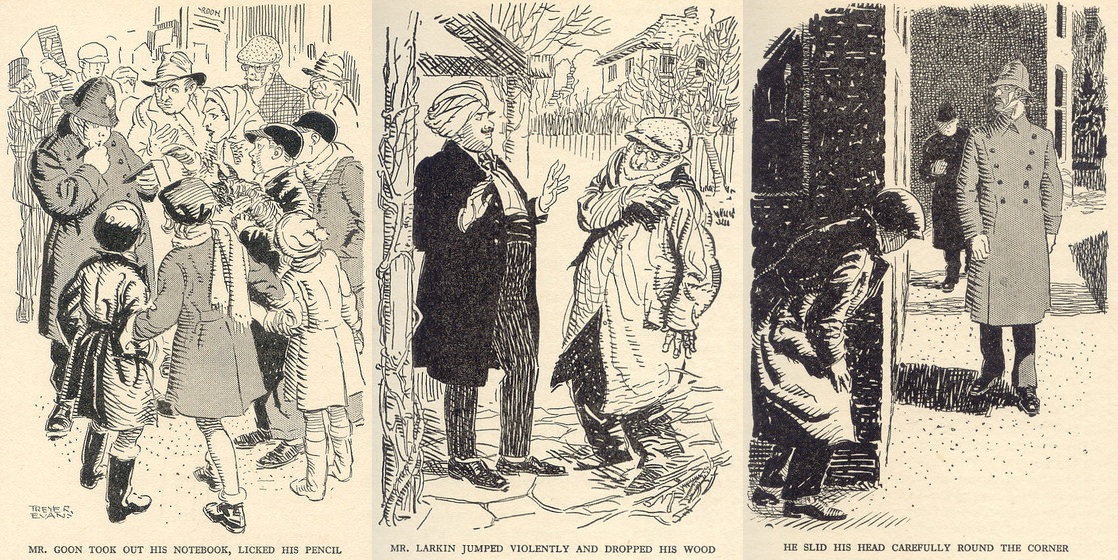
3. The Mystery of the Strange Bundle is the 10th book in the Five Find-Outers series, and even though we can call it a wintry book, we can’t go as far as to say that it’s a Christmas book. This mystery takes place after Christmas, when the children are just recovering from the flu that Bets gave them all when they came home from school. Most of the Five Find-Outers – Bets being the exception – have been in bed over Christmas (rather like Five Get Into a Fix). Anyway this mystery is rather a change for the Five Find- Outers as things become clear that they are dealing with a much more national problem. Not a particularly Christmassy read, but still good when you consider the children wrapped up warm against the cold and snow!

Mystery of the Strange Bundle 1952 illustrated by Treyer Evans

“The Mystery of the Strange Bundle”, 1952, illustrated by Treyer Evans

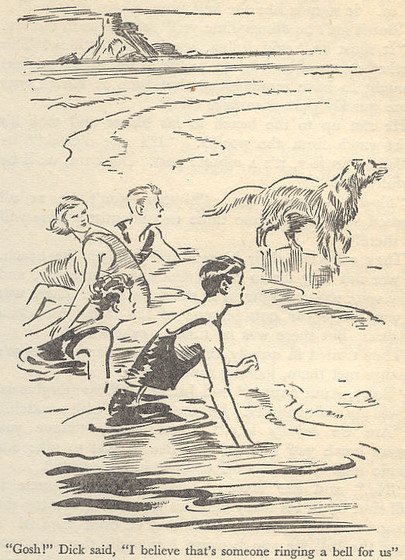
4. Five Get Into a Fix The 17th Famous Five novel is in a way is one of Blyton’s most blatant Christmas stories, being one of the two only Famous Fives to be set around Christmas. Like the Mystery of the Strange Bundle, the Five spend Christmas in bed with coughs and colds, but this time at the house of Julian, Dick and Anne’s parents.  We are treated to wonderful post Christmas snowy scenes as the Five are sent to Magga Glen in Wales to build their strength up again after their illness. Needless to say, they manage to find themselves in the middle of a rather thrilling adventure.

Five get into a Fix 1958 Illustated by Eileen Soper

“Five get into a Fix”, 1958, illustrated by Eileen Soper

5. Shock for the Secret Seven is the 13th Secret Seven novel. During the Christmas break, fights break out amongst the Seven because of Jack not being able to remember the secret password and his sister Susie always knowing it. For a while the Seven cease to exist, but then dogs start to go missing, including Scamper. We’re treated to scenes of the Seven sketching footprints in the snow and stomping about in Wellington boots in the cold. A proper winter tale!

Shock for the Secret Seven, 1962 Illustrator Unknown

“Shock for the Secret Seven”, 1962, illustrator unknown

So there you are! Another five wintry books for you to try out! Which one’s your favourite? Or have I missed any out? Let us know in the comments below!
All pictures taken from The Cave of Books.
Posted in Reading Recommendations | Tagged , , , , , , , , , , , | Leave a comment

Series Synopsis: The Famous Five Books 13-15

Welcome to post number 5. You know the drill – there might be spoilers here if you’ve not read (or can’t remember) these books. Again, we are extremely lucky that these books were even written. After succumbing to her readers’ requests to continue the series beyond the planned 6, Blyton then intended to finish the series with book 12 Five Go Down to the Sea. But as before, she was inundated with pleas from her readers and continued the series. Hurrah!

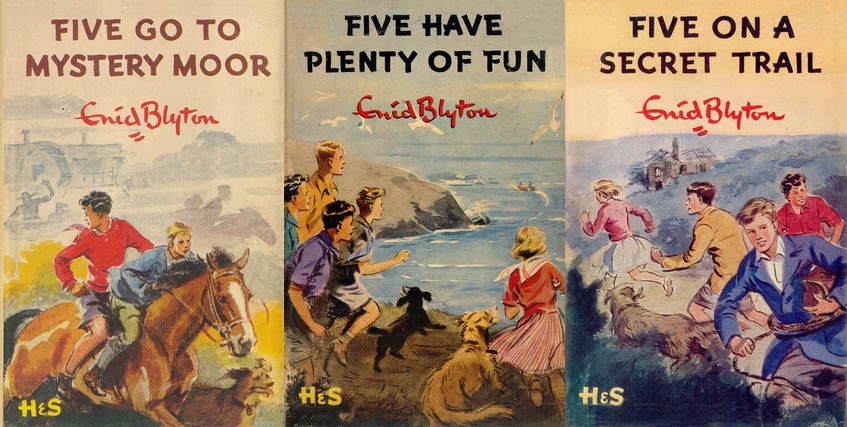
First edition dustjackets from “Five Go to Mystery Moor”, “Five Have Plenty of Fun” and “Five on a Secret Trail” illustrated by Eileen Soper.


FIVE GO TO MSYTERY MOOR, 1954

The Location: Captain Johnson’s horse riding school near Milling Green and the surrounding moor – once called Misty Moor, now known as Mystery Moor

The ‘Baddies’: A group of gypsies who travel to the moor regularly.

 Significant other characters: Sniffer, one of the gypsy kids, Henry(ietta) – a girl from the riding school who also likes to act like a boy

The Plot: The girls are staying at a riding school, and George is well and truly sick of a girl there who dresses and acts like boy. When the boys came back from a school trip and join them things get worse as they mistake Henry for a real boy. Due to overcrowding at the school, the Five decide to borrow tents and go camp on the moors. They follow ‘patrins’ laid out by Sniffer, a gypsy boy they met at the stables when he brought his injured horse for care. They camp out on the moor, near where the gypsies are – and they are shining some sort of light at night. A plane then starts dropping lots of small packages of money in the area. The Five gather them up – sure something funny is going on – and decide to head back to the stables. One of the mists the moor is famous for rolls up and the group gets separated. The girls are captured and it’s down to Timmy to get help.

My favourite parts: The tragic and slightly creepy tale of the Bartletts as told by the blacksmith, and he clever re-use of George’s bright idea from Five on a Treasure Island to trick the men.

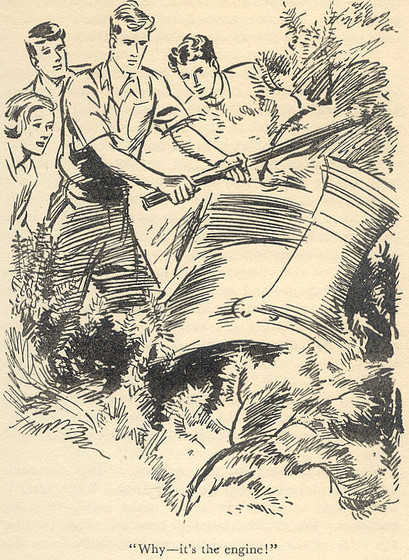
The five find the old train-engine in “Five Go to Mystery Moor” illustrated by Eileen Soper


FIVE HAVE PLENTY OF FUN, 1955

The Location: The Five are back at Kirrin for this adventure

The ‘Baddies’: Enemies of Elbur – an American scientist working with Uncle Quentin

 Significant other characters: Berta, Elbur’s daughter, Jo the gypsy girl who we’ve met twice before and her fair friend Spiky.

The Plot:  The daughter of Uncle Quentin’s friend is reportedly in danger – people have threatened to kidnap her it order to learn scientific secrets. Elbur has said he would give away all his secrets in order to have his daughter returned, and in exasperation Uncle Quentin arranges for Berta to come and stay with them at Kirrin. She arrives in the dead of night, and to George’s annoyance she has brought her pet poodle, Sally. Strange flashes – the sun glinting on field glasses perhaps – are seen from Kirrin Island, and the family suspect people may know where Berta is. She is then disguised as a boy, and when Aunt Fanny and Uncle Quentin leave for a few days, she sleeps in Joan’s room in the attic. George takes Sally out to the kennel at night to get some peace, and is taken by mistake. In her nightwear she apparently looks more like a girl, and after all she is carrying a poodle, so to the men she must be Berta. It’s then up to the rest of the Five to find out where George is (the police, though very attentive, are never very good at solving crimes) with the help of their old friend Jo. Meanwhile Berta goes back to being a girl, one with a new name, and is taken in Joan’s sister. They track George down to a fair in another village – but she’s already been moved on and they have to do a spot of breaking and entering to rescue her.

My favourite parts: Jo’s literal interpretation of Julian’s “do NOT take my bike”, which meant she simply took Dick’s instead, the scamp! Also, Uncle Quentin’s inability to get Berta’s name right, as he always seems to be one step behind. As soon as he remembers there’s a girl called Berta staying, she becomes a boy called Leslie. By the time he’s got that straight she’s a girl again this time called Jane.

Having a swim before the adventure starts in “Five Have Plenty of Fun” illustrated by Eileen Soper


Five on a Secret Trail 1956

The Location: A common near Carter’s Lane

The ‘Baddies’: Prisoner Paul’s cronies.

 Significant other characters: Guy and Harry Lawdler

The Plot: George goes off camping, in a huff, because people are laughing at Timmy wearing a collar to protect some stitches behind his ear. Anne soon joins her and they do a bit of exploring – running across a strange and slightly annoying boy a few times. That night Anne sees a light and hears noise coming from half ruined cottage near by but George doesn’t believe her. The next night it pours with rain and they shelter in the cottage – and they both see people standing outside, and a man looking in the window at them. They’re pretty scared – even tough old George, so they decide to pack up and head home. Before they get very far Julian and Dick show up, and feeling braver they all decide to stay, only to witness a spooky light and noise show clearly designed to scare them away. The five pretend to pack up and leave, hoping they will then catch the baddies in the act. Julian and Dick spy on a group of people who seem to be searching the cottage for a stone slab of a certain size, which is near water. They don’t find what they’re looking for, but the five now know what size of stone to look for. They find one of the strange boys at the archaeological site, and he tells them he has a twin and who has been kidnapped. Together they find the right stone slab and enter the secret passage and find some blue prints. They find the kidnapped twin and get caught by the bad guys but they are the Famous Five and that has never stopped them before.

My favourite parts: How they figure out the “friendly country woman” is not all she seems, the confusing appearances of a strange boy until they figure out it’s a pair of twins as well as a well-hidden secret passage. The end is quite amusing, too, as they discover the scientist hasn’t even noticed his blueprints have been stolen.


Discovering the way into a secret passage in “Five on a Secret Trail” illustrated by Eileen Soper

Next post: Books 16-18

Posted in Book reviews | Tagged , , , , | Leave a comment

Sunskriti’s Animal Character Exploration: Kiki from the Adventure Series

By Sunskriti, age 10.

Kiki has always been my favourite Blyton animal. She’s funny, adorable, and loyal. How? What made me say that? You might disagree. But funny, for example should be obvious. With her ready stream of talk, way of getting mixed up, and sometimes making noises at crucial points of the adventure to scare away the baddies she always amuses me. For example, in The Valley Of Adventure, when Juan goes to have another look in the shed, Kiki is sulking and is annoyed to see Juan again. “Wipe your feet! And how many times have I told you to shut the door?” This and a few other dialogues frighten the men to the point of fleeing from the shed! I would give anything to listen to her railway engine screech! She loves being the centre of attention, and seems to say quite the right things at times!

Kiki scares Juan and Pepi out of the cowshed in “The Valley of Adventure” illustrated by Stuart Tresilian.

Adorable. What tells you she is adorable? Well, I’d pay to have a pet like her! Don’t you find it adorable the way she always puts in her words, enters into the conversation, and most of all, nibbles Jack’s ears? And then what about Silly-Billy? That’s SO cute!

Now to the aspect of loyalty. Kiki is happy as long as she is with Jack, and loves to comfort him whenever he’s feeling afraid or sad. There are too many examples for this one! She will never run away from Jack, and her master gives her the love and affection he can.

But most of all, what I want to tell you regarding Kiki isn’t the above 3 aspects, but her feelings and emotions. Blyton has shown her in such a way that we think she is one of the children herself, because of her talking. But actually she DOESN’T know what she’s saying. But Kiki says doesn’t always make us share her emotions much. Blyton was a clever author as she tells us how Kiki is feeling, where Kiki wouldn’t be able to tell us herself. It is often written in the books that Kiki is sulky, sad, frightened, puzzled, etc. This shows her real emotions behind her talk. Here are a few examples:

Valley Of Adventure: Kiki is Sulky.

“Kiki was most interested in all the proceedings. When Jack hung the rope down the tree, she gave it such a tug with her beak that it was pulled from Jack’s hand and fell to the ground.”

Jack is angry with her when she does it 2 or 3 times, and she’s later shown as sulky.

River Of Adventure: Kiki is Afraid.

“Kiki hadn’t liked the continual drenching spray, and hadn’t seen anything of the waterfall at all. She had hidden herself in Jack’s cardigan, afraid of the noise and afraid of the spray.“

This shows she is afraid and doesn’t like it all much.

So you see, though she is only a parrot, she has a good many emotions, which is her most striking feature to me.

With her ready talk, this parrot will be the death of me! It has definitely made me like pets, and is a successful character in the Adventure Series for sure!

Kiki in “The Island of Adventure” illustrated by Stuart Tresilian.

Long live Kiki!

More of Sunskriti’s animal explorations can be found here, or posts about Blyton’s animals in general are here.

Posted in Characters | Tagged , , , , | Leave a comment

A Blyton childhood in New Zealand

by Corinna

I had a simply smashing childhood!  I loved to go for bike rides with my friends, explore the tiny pine forest behind our house, dig for treasure at the beach and have picnics of sandwiches, cakes and ginger beer.  And of course, I loved reading Enid Blyton books.

So how old do you think I am?  Would you think that I grew up in England in the 1950s?

I started reading Enid Blyton books independently when I was 6 or 7, which makes it the early 1990s.   I grew up around the other side of the world, in New Zealand.  It has been suggested (often as a case for modernising Blyton’s books) that modern children cannot relate to Blyton’s stories, and contain unfamiliar language and concepts that interfere with the storyline.  To which I say – nuts to that!

There are of course many differences between my childhood in suburban New Zealand in the 1990s and the adventurous lives of the Famous Five, the Five Find-Outers, and the Mannering/Trent clan but I would argue that they enhanced rather than hindered my enjoyment of the books.

A case in point is money – something rarely mentioned in the Famous Five but a pivotal part of the Find-Outers stories (they seem to do a lot of sleuthing over ice cream or cakes in the tea shop!)  Most of the Find-Outers books I have are first or early editions, and therefore the currency is pre-decimalisation, and has also not been adjusted for inflation.  Was I ever confused about this?  Probably – but when I asked Mum and Dad about it I learnt all about pre-decimal currency.  New Zealand had the New Zealand Pound which was divided into the same units as the GB Pound at the time until 1967 when it changed to a decimal currency and the New Zealand Dollar.   I remember my poor Dad trying to explain inflation to me when I asked how come they could purchase an icecream for only twopence!

Another key difference that I remember noticing as a child was the vocabulary: adjectives such as smashing, wizard, marvellous, brick (as in “you’re a brick, old thing!”) and phrases like “that’s a turn-up for the books” and “nineteen to the dozen” were not in common usage in the New Zealand of my childhood.  I always managed to either figure out the meaning from the context though, or by asking my parents, who were slightly more familiar with the language (some of my Blyton books are my parents’ 1960s editions).

My sister, who is a primary school teacher, has pointed out that children in New Zealand are probably more familiar with the unfamiliar in terms of children’s books.  As a small country with limited (but excellent) children’s authors, children in New Zealand read books from all round the world, particularly from Britain and the USA, and come across unfamiliar language and currencies all the time.  What do some of our British commenters think?

Another interesting comment from my sister regards how children in New Zealand are tested on their reading skills.  As part of the testing, they are given text to read with unfamiliar vocabulary in it, and have to work out the meaning from the context.  So not only are children extremely capable of handling unfamiliar language, but it is also an important part of learning to read and an ongoing skill.  Even as an adult with an Arts degree, I still come across words (in English) that I don’t know!

And finally, to tie in with a certain upcoming holiday, the seasons were of course all back-to-front for me.  Christmas in New Zealand (although loaded with colonial imagery of snow and reindeer and robins) is in mid-summer, and is during the long school holidays.  Blyton’s books provided an excellent example for  my parents to explain the shape and rotation of the earth and show me why this means that we have Christmas in summer and our coldest month in July.

Above all, though, I would suggest that the reason why I enjoyed her books so much was that I really could relate to the children – I too loved to solve puzzles and read and eat and ride my bike.  Although I never had the opportunity to apprehend smugglers or go on camping trips without my parents, I don’t think that many children in the 1940s and 50s did either!  After all, isn’t that the point of books – to escape into a fantasy world where such things are possible?

I firmly believe that Blyton books will still be relevant and entertaining to children in the future (and can even provide a painless lesson in historical currency, economic inflation, and even meteorology!) and I certainly plan to read them to my own children one day.  Even if this means I will have to explain what a bike is (they’ll have hover bikes) and cash and winter…..

Posted in Personal Experiences | Tagged , , | Leave a comment

Julian’s News, chapter 1

As you may have gathered from my last fan fiction post I like to think of myself as a bit of a writer. I received very positive feedback from those of you who read my last story and I’m truly grateful that you took the time to read it! It does mean a lot to me.

After this piece was published on the blog I was presented with an idea by someone on the Enid Blyton Society Forums for a short piece on what it would be like for Julian to tell the remaining members of the Famous Five about his ‘girlfriend’ (Side note: The piece before describes a meeting between Julian Kirrin and Sally Hope at St Andrews, which for all intents and purposes DOES NOT happen prior to my completed fan fiction novel. However, this piece takes the almost natural progression from the previous piece and assumes that in the end they do end up dating).

When this idea was suggested to me I pounced upon it immediately (figuratively, of course) and my imagination took control. I started to write down the conversations and the reactions relevant to Julian’s piece of news. Almost naturally I started by looking at how Julian would inform Dick of his relationship with Sally Hope, and what his brother’s reaction would be. So this is where I’ll start today.

In time I hope to complete the two interactions between Julian, George and Anne with the same piece of news. Dick’s however seemed the easiest to write.

I hope you enjoy this piece, please leave any feedback, and thank you very much for reading!


TELLING DICK

Julian Kirrin stood in front of the newspaper stand, his satchel on his back and his case by his feet. Tucked under his arm was the afternoon’s paper as he had his hands in his pockets to try and keep them warm while he waited for his brother’s train to come in.

Julian felt a little awkward about this meeting with his brother: it was the first proper time he had been away from his family for so long and he wasn’t entirely sure of how to greet him. A hearty slap on the back seemed like a good enough greeting for his younger brother.

Another reason for Julian’s hesitation was that he hadn’t been very good at keeping in touch with his family this term, what with one thing and another. The adventure he and his university friends had been on had taken up most of his time, as had the work load. It hadn’t just been the work and adventure that had kept him from writing more frequently to his brother and sister, but more importantly the introduction of Sally Hope into his life.

Sally had dominated his thoughts for most of the term, and it was only two days ago, standing outside in the ruins of St Andrews’ Cathedral when they had admitted their attraction to each other.  Julian smiled to himself at the memory as he heard the big clock strike eleven.

Yes, telling the others about Sally was setting Julian on edge. It wasn’t that he didn’t want to tell them and show Sally off, but he was unsure how his brother and cousin would take it.

Julian was almost certain that Anne would approve of the relationship. Sally was sensible and kind, like Anne. Julian smile wryly when he realised that both of them had a certain habit of asking him not to get involved in adventures.

Whereas Julian was sure Anne would approve of Sally he wasn’t so sure about his cousin, Georgina. George, as she liked to be called, had scorned Anne on plenty of occasions for not wanting to have an adventure and was in fact more like Darrell Rivers, Sally’s best friend. Julian wasn’t sure how George would take to Sally or the idea of Julian being grown up enough to be in a relationship. George did like having adventures.

Julian looked around as people started heading off the platforms, trying to spot his brother Dick. They had to make good time to get to Paddington to catch the train to Kirrin, so Dick needed to be punctual off the train.

Julian looked at his watch impatiently as the crowds began to thin out, before finally spotting Dick making his way towards him, a huge grin on his face.

“Hallo Julian,” Dick said, in his usual cheeky tone. Suddenly all of Julian’s awkwardness disappeared.

“You Fat-head. I honestly was beginning to think that you had missed the train,” Julian said in a teasing tone, picking up his suitcase and starting to walk. “What on earth possessed you to get off the train that slowly! We have to get across London yet.”

“Good to see you too Julian,” Dick said, a touch sarcastically as he followed his brother. “It wasn’t my fault I was sat at the end of the train, or that everyone managed to get ahead of me!”

Julian smiled at Dick over his shoulder as they headed down towards the tube.

“You should know by now that I dislike being kept waiting,” Julian said, easily as they started down the stairs to the platform.

“Oh I know,” Dick said, with a grin, ducking ahead of Julian.  “I am familiar with you, you know!” He called over his shoulder.

Julian gave his brother a playful shove on the shoulder and laughed.

“Get on will you! There’s a train due in a moment!”

Soon enough the boys were at Paddington, and on their train to Kirrin.

“So tell me about St Andrews? What was university like? Your letters were horribly vague,” Dick said, once their luggage had been stored in the racks above their heads.  Julian laughed.

“St Andrews is, well it’s really good. It’s such a magnificent place, Dick, you have no idea. It is so different from Oxford and Cambridge. It’s like Kirrin, gets under your skin,” Julian said with a laugh. “The university is grand as well, rambling buildings and it has a nice feel to it.”

“Well that’s all very well,” Dick said, with a gleam in his eyes. “But are you going to tell me about this adventure you had? I did think you were very mean in having an adventure without the rest of the five. I suspect George will be sulking with you because if it. And when I got your letter telling me, well I must say, it was a very poor account Ju.”

Julian laughed.

“ I’m not good at writing down our adventures, only good at telling them to the police,” Julian said with a wink. “Anyway, I shan’t fill you in on the details until we’re all together, that’s only fair, and I don’t want to tell the story half a dozen times!”

Dick laughed and glanced out of the window as the train sped out of London, heading towards the coast and Kirrin.

“You seemed to be having fun though,” Dick said, after a moment. “St Andrews certainly seems to agree with you. I wasn’t even sure it was you back at the station. You seem much older somehow.”

“Do I? Well I feel older,” Julian said with a grin. “It’s certainly different from school. In fact it is incredibly different if you take the girls studying there into account.”
Continue reading

Posted in Fan fiction | Tagged , , , , | 1 Comment

A song from “Santa Claus Gets Busy” by Enid Blyton

There’s just three weeks until Christmas so Santa must be getting all the toys ready to deliver to all the children around the world.

Here’s a song from “Santa Claus Gets Busy” a musical play for juniors in one act, written by Blyton.

The toys:
One by one now into the sack we go,
Soldier, sailor, rabbit and all in a row
Santa Claus is waiting for his sack to fill,
When we are inside we know we must keep still.

Then down the chimneys Santa Claus will climb,
Brining children toys at Christmas time;
In their stockings he will put us one and all,
Golliwog and Teddy Bear and Duckling small.

When they wake up, all the girls and boys
Will be glad to see so many toys,
How they’ll clap to see so many toys,
How they’ll clap their hands and shout “Hip-hip-hurray!”
What a lovely time we’ll have this Christmas Day!

Good-bye, good-bye, now we all must go
On our journey over ice and snow.
Close the sack and tie it up and make it fast,
Off we go with dear old Santa Claus at last!

Santa:
Gnomes and fairies, I must say goodbye,
Drive my reindeer up into the sky,
I’ll come back again another year to you,
But now I must depart and journey all night through!

First published 1939 by A. Wheaton.

1914 Santa Claus in japan

A 1914 depiction of Santa Claus in Japan

Posted in Poetry | Tagged , , | 1 Comment

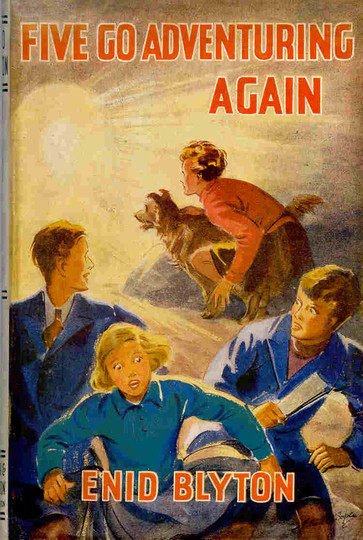
Poppy’s Book of the Month: Five Go Adventuring Again

By Poppy Hutchinson age 11

Title: Five Go Adventuring Again
Series: The Famous Five
Main Characters: George, Anne, Julian, Dick and Timmy
Published: 1943
First Published By: Hodder & Stoughton
Rating (Out of 5): 4/5

You will most probably all have have figured I have picked Five Go Adventuring Again for this month’s book review for a reason. That reason being the joyful season of Christmas approaching. Five Go Adventuring Again has a delicious Christmas feel to it unlike most of the other Famous Five novels where the five are described to be lazing in the glorious sun. This novel is the second in the fantastic Famous Five series and is quite a lot different I think, to the others. Basically, the book is about Uncle Quentin hiring a tutor for the children over the Christmas holidays. In the meantime Quentin’s large valuable notebook, where he writes all his formulas and experiments goes missing, apparently stolen. There are quite a few ups and downs in this book, and I found it rather depressing hearing about George’s sulks and strops. My liking of Uncle Quentin decreased when I heard he had hired a tutor for the children over Christmas — a rather harsh thing with it being the Christmas Holidays. I certainly wouldn’t like to have someone staying at my house over Christmas, never mind the work! Aunt Fanny was rather weak over this, I think. Poor George had a hard time those holidays, her cousins and her parents all against her. Then poor Tim is made to live outside. This will certainly have broken her heart. Kirrin Farmhouse is mentioned a lot in this book with the sliding panels and the last excitement all ending up there, but no doubt you will read about that yourself!

I have given this book a 4 star rating. I did not award the last star because it wasn’t my favourite Famous Five book, and also, like I said, it was a little depressing at times, hearing about George’s sulks and strops. I loved the story line but would have appreciated fewer arguments! I would recommend this book to 9+ girls and boys for anyone who wants a good Christmas read to get into the jolly festive mood. A very merry Christmas to everyone!

Dustjacket from the first edition of “Five Go Adventuring Again” illustrated by Eileen Soper

Image taken from the Cave of Books at http://www.enidblytonsociety.co.uk
Posted in Book reviews | Tagged , , , | 3 Comments

Monday Musings in the First Week of December

It’s Monday again, just where did the weekend go? Anyway, we’ve actually got quite a few things planned for the blog this week and for the coming weeks.

We have the next instalments of Poppy’s Book of the Month and Sunskriti’s Animal Explorations,  we’ve got two new contributors busily writing their début pieces plus the next parts of My Childhood Books and the Famous Five Synopsis by me. PippaStef will hopefully be putting together another set of recommendations for great winter reads, and we’ve also got a few Christmas themed Blyton poems and songs to share with you.

This weekend saw two milestones: the World of Blyton Blog turned one month old yesterday, and on Saturday I celebrated 5 years as a member of the Enid Blyton Society Forums.

As always, we will end our post by thanking everyone who’s reading the blog and we encourage you to comment, contribute and critique!

Have a great week everyone!

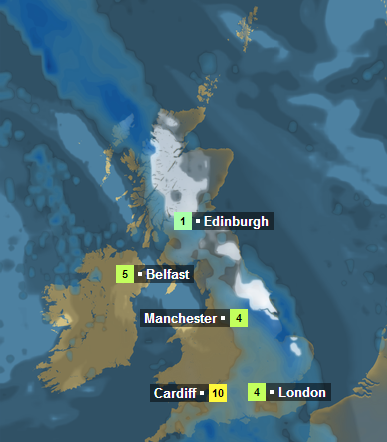
P.S. The forecast is for cold weather and maybe even snow in the UK so wrap up warm, won’t you?

Tomorrow's weather for the UK.

Tomorrow’s weather for the UK.

Posted in Blog talk | Tagged , , , , | Leave a comment

Winter and Christmas Reads, part 1

Yesterday we hit the twelfth month of the year – December and we all know what December means: Christmas!

Now I don’t know about a lot of you, but when I think of Enid Blyton my mind doesn’t automatically go to the winter/Christmas stories that she wrote. I know that when I think of Blyton my mind automatically goes to her books on the perfect summers and spring times with holidays in abundance; lots of picnics, walking, cycling and swimming.

I know that Blyton has a fairly strong Christmas repertoire and in this blog post I hope to highlight some of these works for you so you can spend your long December evenings curled up with a good Christmas story by Enid Blyton. And maybe this list will help with padding out your Christmas lists! 😉

I’m going to start with five Winter/Christmas books from Blyton for you to enjoy!

[Some suggestions taken from the Enid Blyton Society forums!]

1. Five go Adventuring Again

Cover from "Five Go Adventuring Again" illustrated by Eileen Soper

Cover from “Five Go Adventuring Again” illustrated by Eileen Soper

The second Famous Five adventure takes place in the run up to and the days after Christmas. Filled with good food and a mystery within Kirrin Cottage itself, and a great deal of snow, this thrilling book is worth a read on the run up to Christmas for sure.

Images from "Five Go Adventuring Again" illustrated by Eileen Soper

Images from “Five Go Adventuring Again” illustrated by Eileen Soper

2. The Mystery of Tally-Ho Cottage

Cover from "The Mystery of Tally-Ho Cottage" illustrated by Treyer Evans

Cover from “The Mystery of Tally-Ho Cottage” illustrated by Treyer Evans

The 12th book in the Five Find-Outers series, we have a nice winter mystery which includes hot drinks in the dairy as well as finding a stolen painting in the village of Peterswood.

Images from "The Mystery of Tally-Ho Cottage" illustrated by Treyer Evans

Images from “The Mystery of Tally-Ho Cottage” illustrated by Treyer Evans

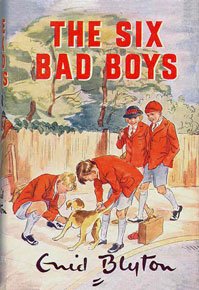
3. The Six Bad Boys

Cover from "The Six Bad Boys" illustrated by Mary Gernat

Cover from “The Six Bad Boys” illustrated by Mary Gernat

Bob, one of the six boys plans to spend Christmas down in the cellar of the ruined house where the group originally met. Rather emotional, so make sure you have plenty of tissues with you when you read this one!

Images from "The Six bad Boys" illustrated by Mary Gernat

Images from “The Six bad Boys” illustrated by Mary Gernat

4. The Rat-a-Tat Mystery

Cover from "The Rat-A-Tat Mystery" illustrated by Anyon Cook

Cover from “The Rat-A-Tat Mystery” illustrated by Anyon Cook

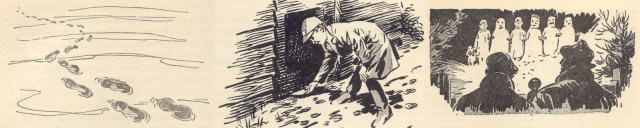
More of a January mystery for this book in the Barney series, but still one to read in the the depths of winter. The snowy landscape helps create a great atmosphere when the children are hot on the heels of another mystery.  Snowy footprints it a great image to take from this book . Something I always like when it snows – seeing all the footprints left.

edging (412x357)

Images from “The Rat-A-Tat Mystery” illustrated by Anyon Cook

5. The Secret Seven

Cover from "The Secret Seven" illustrated by George Brook

Cover from “The Secret Seven” illustrated by George Brook

The first book in the Secret Seven series set in a wonderful wintry scene where the boys pretend to be snowmen, and the seven have mugs of blackcurrant tea (actually quite yummy!)

footprints2

Images from “The Secret Seven” illustrated by George Brook

As you can see, snow features quite heavily in my first five books full of Blyton’s wintry wonderlands. Why don’t you look out and read a few yourself?

Let me know which one you prefer below and hopefully next week, I’ll have a few more suggestions for you to get your teeth into!

Enjoy 🙂

All images taken from the Cave of Books at http://www.enidblytonsociety.co.uk
Posted in Reading Recommendations | Tagged , , , , , , , , , , , , | 2 Comments

Series Synopsis: The Famous Five Books 10-12

This is part four of the series of Famous Five posts. If you’ve not yet read these three books you might find this gives away some things you didn’t want to know, so read on at your own peril.

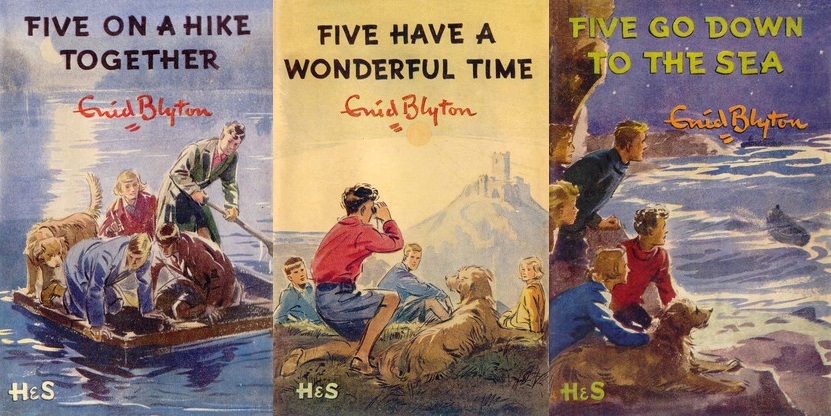
First edition dustjackets from “Five on a Hike Together”, “Five Have a Wonderful Time” and “Five Go Down to the Sea” all illustrated by Eileen Soper


FIVE ON A HIKE TOGETHER, 1951

The Location: Some un-named moors (though presumably not the moors from Off To Camp or Mystery Moor), the Taggarty’s cottage, Two Trees and Gloomy Water.

The ‘Baddies’: Dirty Dick (who’s as unpleasant as his name suggests) and his friend Maggie.

Significant other characters: Dirty Dick’s poor old deaf mother, an escaped convict by the name of Nailer, an extremely rude and unhelpful police man (a rare occurrence in Blyton books) and a helpful old postman.

The Plot: The Five set out for a few days of hiking at their Autumn half-term holiday. Timmy hurts his leg down a rabbit hole so George and Julian take him to Mr Gaston at Spiggy House (no known relation of Spiggy Holes) as Mr Gaston keeps horses and dogs, and there’s no vet for several miles. Dick and Anne carry on to find Blue Pond farmhouse following directions from an old fellow they meet – who only seems to know the word “ar” – and in the pouring rain they stumble across a cottage they assume is the farm. The deaf old lady there lets Anne sleep in a little attic room, and sends Dick out to sleep in an old barn. He is awoken in the night by a man with a wild-eyed face who rattles off a strange message and passes him a scrap of paper. Once the Five are reunited the next morning and have had an epic breakfast they take the note to the village policeman, convinced it had something to do with the escaped convict they’d heard about. Annoyingly the policeman completely disregards them, and sends them away. There’s nothing for it but to hike to Two Trees as mentioned in the mysterious message and try to figure it all out. Unfortunately the message has been delivered to Maggie as well so she and Dirty Dick turn up at Two Trees and are not pleased to see the five. The Five have to use all their brains to outwit the dastardly duo and find the loot before they do.

My favourite parts: The message “Two Trees. Gloomy Water. Saucy Jane. And he says Maggie knows”, and the treasure map marked “Chimney, Tock Hill, Steeple and Tall Stone” are both fixed in my memory. I still laugh at Maggie and Dick trying to watch for all the landmarks at once and then how the five outwit them at the end. I also like the atmosphere of the book, from the terror of the bells clanging at night to the sinister feeling of Gloomy Water.

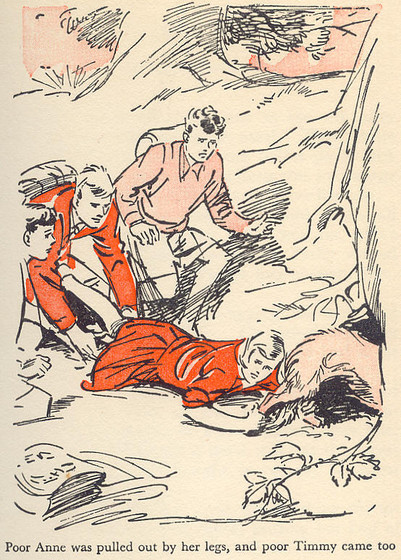
Timmy stuck down a rabbit hole and being rescued by Anne in “Five on a Hike Together” illustrated by Eileen Soper


FIVE HAVE A WONDERFUL TIME, 1952

The Location: Faynights Castle

The ‘Baddies’: Mr Pottersham, the scientist.

 Significant other characters:  The fair folk: Bufflo, Skippy, Alfredo, Mr India-Rubber and Mr Slither, Jo the gypsy girl, Beauty-the-snake, Mr Terry-Kane the other scientist.

The Plot: The Five are camping by Faynights Castle and struggling to get along with their campsite neighbours – some gypsy fair folks – until Jo turns up and bridges the gap between the two sides. It turns out she’s related to some of them. It has been in the newspapers that two of Uncle Quentin’s colleagues have gone missing, and rumour is that they have defected with some important secrets. Uncle Quentin is adamant his friend would never do such a thing, so when the Five look through their field glasses and see a familiar face at a window of the castle they are determined to get to the bottom of things. They set off at night to investigate and end up prisoners themselves, but Jo is able to escape and rally the fair-folk into embarking on a daring rescue.

My favourite parts: Another ruined castle, and more secret passages – some of my favourite things in real life as well as in books. I like how George is late to the holiday thanks to a cold caused by swimming in the sea in April, that sounds just like her, doesn’t it?

Dick spots someone at a castle window in “Five Have a Wonderful Time” illustrated by Eileen Soper


FIVE GO DOWN TO THE SEA, 1953

The Location: Down by the sea in Cornwall, the Five are staying at Tremannon Farm.

The ‘Baddies’: The Guv’nor

 Significant other characters: Mr and Mrs Penruthlan, Yan and his old grandad, the Barnies.

The Plot:  There is a history of wrecking on the Cornish coast and they are intrigued to hear from Yan and his grandad that there are still lights being shone on stormy nights. The Barnies, travelling performers, then arrive to set up for their annual performances in the Penruthlan’s barn. Julian and Dick sneak out a couple of times and become suspicious of Mr Penruthlan as they’ve seen him out when he’s told his wife he’d been in the stables. The five decide to explore the hillside ruin where the wrecker’s light is supposed to shine from, and find a secret way where they then get trapped. This being a Famous Five story though, of course they escape and are able to apprehend the wrong-doer at the last possible moment.

My favourite parts: Julian and Dick dressing up in Clopper’s costume and getting stuck in it makes me laugh every single time. I like the whole Barnies idea, travelling performers who can make everyone laugh and have a great time even if the singing is a little off, and the props are falling apart. Oh – and of course – there’s a secret passage, and by now you should know I love those.

Trapped down in the Wrecker’s Way in “Five Go Down to the Sea” illustrated by Eileen Soper

Next post: Books 13-15

Posted in Book reviews | Tagged , , , , | 3 Comments

Second Form at Malory Towers

Warning: Spoilers

Second Form at Malory Towers is (surprise, surprise) the second book in the Malory Towers series. First published in 1947, a year after First Term at Malory Towers. 

Once again we join Darrell Rivers on her way to Malory Towers down in Cornwall. The second journey however we are treated to the company of Sally Hope as Darrell’s best friend. The two girls are seen to be very close, a complete change from the first book. This gives us some insight to the past year of the girls’ lives at Malory Towers, but mostly in regards to Darrell’s famous temper.

Almost immediately we are treated to a different Sally – happy, carefree and such a lovely change from the first novel. Instantly she is seen to be a very good friend for Darrell and in her way a very charming character. Second Form at Malory Towers is not so much Darrell’s book as it is Sally’s. We get to see Sally as head girl of the second form, promoted over older girls because of her sensible and caring nature. Alicia Johns takes great offence to this.

The second book is where my dislike for Alicia’s character really grips me. In Blyton’s books the message that’s always relayed is that nasty people receive a comeuppance but Alicia’s always seem slight and never quite achieves the required effect on her. From the moment Sally is made head girl of the second form on the second day of term, Alicia decides that she will not follow Sally’s rules – beginning as an almost quiet protest. She calls Sally “such a bore” which seems unfair. Head girls are chosen for their qualities – good work and a calm nature – not for playing tricks on the mistresses! Alicia almost seems a little immature in the second form for her outbursts continue – culminating in an explosive confrontation with another girl in the form.

Three new girls grace the pages of Second Form: Belinda Morris, a scatter brained artist who draws caricatures like a political cartoonist for a newspaper, Ellen Wilson, a rather moody scholarship girl and Daphne Turner, a not-all-she-seems pretty girl who is instantly Gwendoline Lacey’s favourite.

The new girls at Malory Towers,                                  illustrated by Stanley Lloyd

The first fun of the term starts when Alicia and her friend Betty Hill are restless and decide to play a trick on their unsuspecting music master. The trick itself is genius, simple and quite a hoot. When I was little I always wanted to get my hands on some “invisible chalk”. It was clearly one of the safest tricks that is played in the Malory Tower’s series.

The first time the trick is played it comes off perfectly, with hilarious results, however when the trick is played a second time it’s not quite as successful. You’ll have to read the book to find out more specifically – but as a result Alicia becomes very cold towards Darrell, trying to wind up our heroine and make her lose her temper.

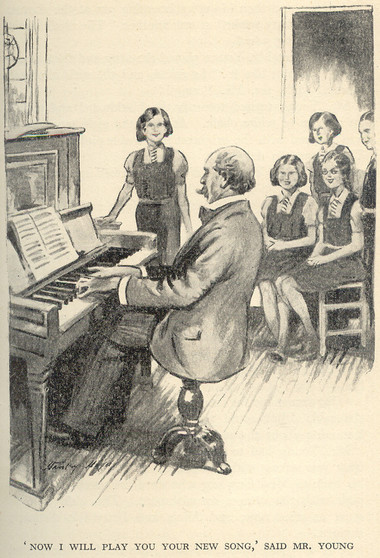
Mr Young sitting at his piano, illustrated by Stanley Lloyd

After the tricks, things really start to kick off for the second formers. Belinda’s artistic flare gets the better of her and she captures a feud between the two Mam’zelles. The fight is over the casting of the lead characters in the two French play that the girls will be doing. Mam’zelle Dupont wants Daphne – her current favourite – to take the parts while Mam’zelle Rougier would like anyone but Daphne to take the parts.  Needless to say that the mistresses come to blows, and the situation only comes to a close with the ‘help’ of Belinda’s drawings.

Mam’zelles Dupont and Rougier argue, illustrated by Stanley Lloyd

Once the problems with the Mam’zelles have been sorted out the term starts to move by quite quickly and as a reader you start getting more into the action and wondering what the girls will be up to next. Now is when the focus is brought back to one of our new girls, Ellen Wilson, who isn’t doing very well academically even though she should be as a scholarship girl. Problems arise and Sally asks Jean (the shrewd Scot’s girl) to befriend her in the hope that it will make Ellen less snappy.

Along the way we start to discover that girls’ personal belongings – money and jewellery – have gone missing. Oh golly – there’s a thief in the second form. Everyone begins to suspect Ellen, and Alicia even confronts her about it against Sally’s wishes. Poor Ellen. I do feel for her as a character – not at first maybe but certainly later on. I relate to her work wise as well. Ellen says quite a few times that she has to slog really hard to achieve her fine results: I too have to work hard to get good results in my work.

Without giving too much more away, I shall tell you that there is a twist to the plot in this story and it’s handled very well.

Overall, Second Form at Malory Towers is not one of my favourites, but I do still like it because we get to see more of people’s characters. Sally Hope isn’t in the background as much as in later books. Belinda and Irene simply make for the most astonishing situations, and the invisible chalk trick is really quite brilliant.

There is a point in the book where the headmistress, Miss Grayling, is talking about good and bad and one quote really stands out for me, so I thought I would share it.

“We all have good and bad in us, and we have to strive all the time to make the good cancel out the bad. We can never be perfect – we all of us do mean or wrong things at times – but we can at least make amends by trying to cancel out the wrong by doing something worthy later on”

This statement really gets me as it talks about how everyone has a choice,  how you can be whatever you want to be and that people can change. I think it’s an incredibly important lesson for us all to take on board.

It is a very readable book (aren’t they all?) and there is a darkness to this story, almost like a cloud that hangs over the plot, creating atmosphere. It really is a thrilling read. I love the way the characters interact and Sally come more to the forefront of the book than she has previously and ever will do again really. This is one thing that grieves me about Malory Towers is that Sally (particularly) starts off with the potential to be such an interesting character and all her flare is gone by the end of book two it feels.

Apart from my personal grievances about the characterisations after Second Form at Malory Towers, it really is a book to get your teeth into and enjoy! So I suggest you pick it up and give it a go, you won’t be disappointed!

Second Form at Malory Towers dust jacket 1957 reprint by Lilian Buchanan

“Second Form at Malory Towers” dust jacket 1957 reprint by Lilian Buchanan

Next review: Third Year at Malory Towers

Or read a review of the audio adaptation of Second Form here.

Posted in Book reviews | Tagged , | 3 Comments

My childhood books, part 1

This series of posts is inspired by a thread on the Enid Blyton Society Forums, where members are discussing which Blyton was the first they read or bought. Many of them have fond memories of a particular copy of the book(s) they first read, and often lament the loss of such copies due to clear outs or house moves.


MY COLLECTION, THEN AND NOW

As a child I had a rather eclectic Blyton collection. Very little of it matched – I had tatty hardbacks, a few neat hardbacks with dustjackets, varying styles of Armada and Knight paperbacks and some rather ugly shiny modern paperbacks (modern = from the 90s!) Most, if not all the older books were handed down from my mum, aunts, uncles and cousins. Despite all these different copies a lot of my ‘main’ series weren’t  complete and some series were missing altogether.

Now I have an awful lot of old hardbacks my paperbacks are relegated to a box in the loft, but seeing their covers often evokes a particular feeling about the stories they contain or where they came from. Using the wonderful Cave of Books, an amazing project by Tony Summerfield, I have pulled together as many images of my childhood Enid Blyton books as I could and I’m going to attempt to write about their origins and their effect on my childhood reading.

I’ll do this by series, so first up is what I think might be my first Enid Blyton books (I did ask my mum but she couldn’t remember)


AMELIA JANE

I adored the stories of Amelia Jane as a child, in fact I still have a soft spot for them. I remember being horrified at the things she did – especially her first story where she got scissors and cut holes in things like the carpet, the curtains even snipping off the pink rabbit’s tail. Funnily, my sister did something rather similar aged 5 or so (cutting holes in a half knitted jumper and my favourite home-made Sindy dress amongst other things) I wonder if Amelia Jane inspired her?

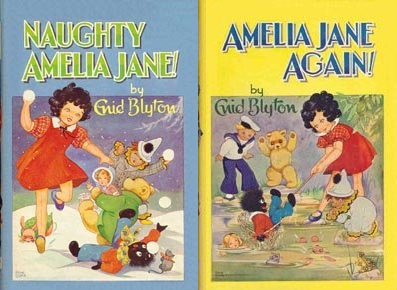
“Naughty Amelia Jane” and “Amelia Jane Again”, Dean impressions illustrated by Rene Cloke.

I had the first two books in the series, brightly coloured Dean & Son hardbacks. I’m usually quite disparaging of the Dean editions (been bitten once too many times by sellers describing them as firsts) but I rather like these two as they’re familiar and immediately put me in mind of the wonderful stories inside. I often turn my nose up at reprint illustrators (Rene Cloke included) but looking at the dustjacket for the first edition, I find myself preferring Cloke’s image of Amelia Jane, though it’s clear it’s closely based on Sylvia Venus’ work. Cloke’s internal images may not be better than Venus’ but I find their familiarity comforting, and her particular style takes me right into that nursery alongside the toys. I also think Cloke’s Amelia looks more doll-like, while Venus’ Amelia could be a real child.

Illustrations of the same scene from “Naughty Amelia Jane”, on the left by Sylvia Venus and the right by Rene Cloke.

I just love the cheeky smile on Amelia Jane’s face in Cloke’s illustrations.


THE FAMOUS FIVE

I had several versions of Famous Five books in my collection (I did have all 21 though). Several (Books 1-3: Treasure Island, Adventuring Again, Run Away Together, 5 and 6: Caravan and Kirrin Island Again, 9 and 10: Fall Into Adventure and Hike plus 14 and 15: Plenty of Fun and Secret Trail) were Hodder and Stoughton hardbacks with red boards. They’d all been owned by two or three family members before me, so were really rather tatty – several didn’t even have their spines any more. I only had book 4 Five Go to Smuggler’s Top and book 11 Five Have a Wonderful Time with dustjackets, (I’m ashamed to say I lost the one from Smuggler’s Top as I liked to display the lovely clean and bright boards underneath it).

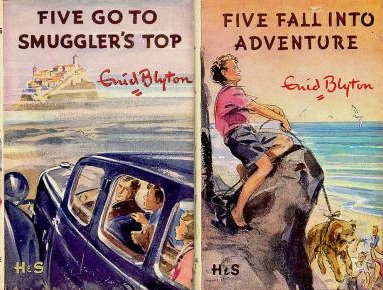
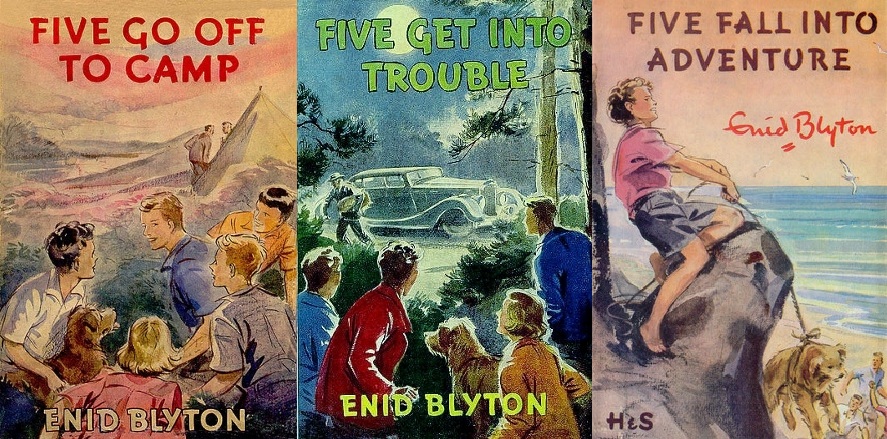
The second version dustjackets from “Five Go to Smuggler’s Top” and “Five Fall Into Adventure”.

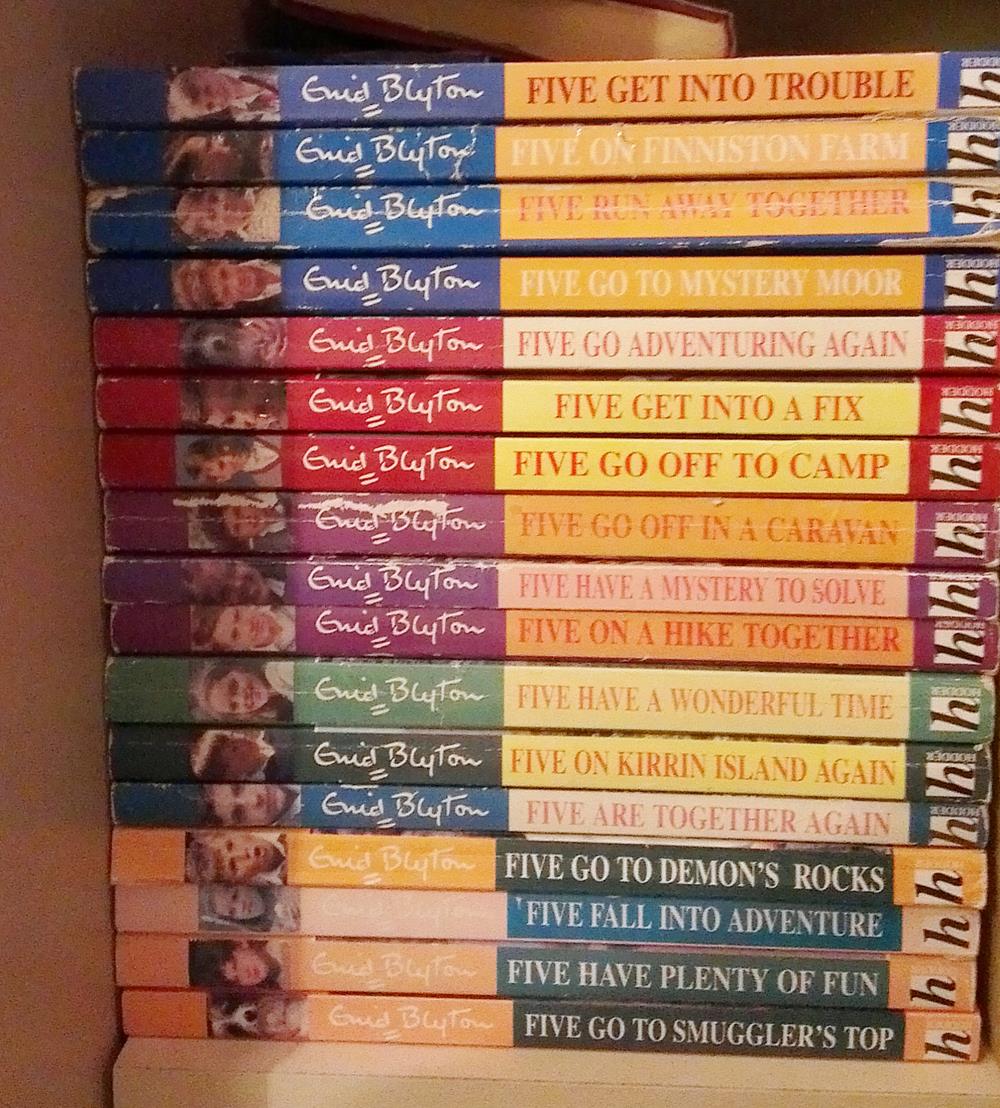
Book 8: Five Get into Trouble, as well as books 16-19 (Billycock Hill, Fix, Finniston Farm and Demon’s Rocks) were Knight paperbacks from the 70s, bought by my mum to fill the gaps in her collection.

Knight paperback covers from “Five Get Into Trouble”, “Five Go to Billycock Hill”, “Five Get Into a Fix”, “Five on Finniston Farm” and “Five Go to Demon’s Rocks”, by Betty Maxey

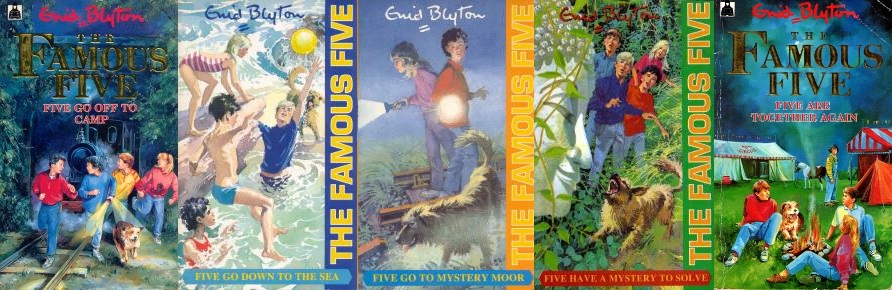
And lastly were the 90s paperbacks (in two different styles) bought by my parents so I could read all of the books. Those were Camp (book 14) Sea (12), Mystery Moor (13), Mystery to Solve (20) and Together Again (21).

90s paperbacks – “Five Go Off to Camp” (Knight, uncredited), “Five Go Down to the Sea” (Hodder, Barnett), “Five Go to Mystery Moor” (Hodder, David Barnett), “Five Have a Mystery to Solve” (Hodder, David Barnett), and “Five Are Together Again” (Knight, uncredited)

I loved my hardbacks – reading them felt more special somehow than picking up a paperback. I remember classifying the smell of old books as “the smell of adventure” as the two were so intrinsically linked for me. Saying that some of my hardbacks fell into what I’d consider my “least favourites” category while some of the paperbacks are amongst my favourites. I certainly much prefer Eileen Soper’s illustrations to those of Betty Maxey, and for me Soper’s depictions ARE the Five.

Depictions of the same scene from “Five on a Treasure Island”, on the left by Eileen Soper and the right by Betty Maxey. Soper captures George’s haughty walk but Maxey seems to have her sleepwalking past! Likewise, the others actually look surprised in Soper’s illustration and completely indifferent in Maxey’s. The less said about the flares the better.

Having said all that I’m not offended by Maxey’s covers for the paperbacks I had – but that may just be because they are familiar and remind me of the stories. Most of my 90s paperbacks are amongst my least favourites (Sea being the only real exception) I don’t know if that’s down to the stories themselves, the covers or the complete lack of illustrations.


Anyway, I think I’ve rambled enough for one post!

Did/do you have any of these editions? If so, do you love them or do you prefer another version?

Posted in Personal Experiences, Purchases | Tagged , , , , , , , , , , , , | 2 Comments

World of Blyton Blog has had 2,000 views!

After our excitement when we reached 1,000 views in 17 days, we’ve made another 1,000 in just 10 days. We really can’t believe it. (We’re not going to blog every thousand views… we’ll stop by the time we reach 10,000 or so, promise!)

We’re also proud of our world-wide reach – which of course is all our own work and has nothing to do with it being the World Wide Web or Blyton’s world-wide appeal 😉 – here is a map of our views, we’ve had visitors from every country that is coloured in.

Our visitor map

The ten countries where the most views come from are currently the UK, Australia, Malaysia, India, the US, South Africa, Germany, New Zealand, Thailand and Indonesia.

We’d like to thank everybody who’s ever read the blog (again), it makes all the hard work and late nights totally worth it.

What would you like to see on the blog in the future?

Posted in Blog talk | 2 Comments

Here’s to Enid Blyton on the 44th anniversary of her death

Forty-four years ago today, on 28 November 1968, Enid Blyton passed away peacefully in her sleep at the age of 71.

It is a testament to her that so many years later she is still read and loved by so many people, both modern children and adults who remember her from their childhood.

Let us raise a glass of ginger-beer and say three cheers for the wonderful and one-of-a-kind Enid Blyton, hip-hip-hurrah!

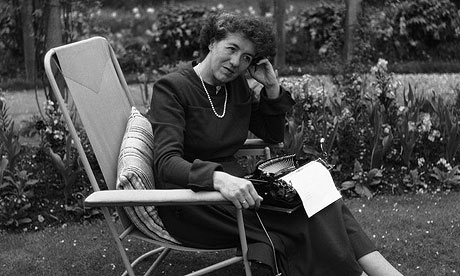
Blyton in her garden with her typewriter.


Posted in Enid Blyton, Personal Experiences | Tagged , | Leave a comment

Should we ever compare Julian and Fatty?

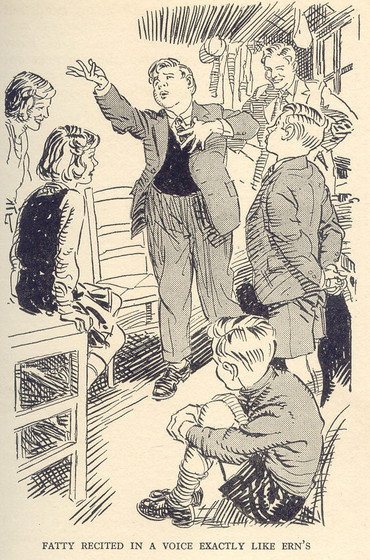
(L-R) Frederick Algernon Trotterville a.k.a Fatty and Julian Kirrin

By PippaStef

Inspired by several topics of conversation on the Enid Blyton Society Forums, “Fatty vs Julian”, I want to examine this comparison and why I believe it’s wrong to make it.

As a staunch fan of Julian Kirrin and not a fan of the ‘great’ Frederick Algernon Trotterville a.k.a Fatty, you might suspect that I will be biased towards Julian, but I will try not to be.

Now I hear you asking “Why can’t we compare Julian and Fatty?” To me the answer is quite simple in its way; they are too different.

When these comparisons come about, especially on the Enid Blyton Society Forums, Julian comes off rather worse. His character does not appear to be as popular as Fatty. For example in polls on the Enid Blyton Society Forums people were asked to select their favourite out of the two characters in 2006 and 2007.

In 2006, 90 votes were cast on the question “Who do you prefer? Julian or Fatty?”: Fatty won this poll with 57  votes (63%) leaving Julian trailing behind with 33 votes (37%).

A similar poll appeared in  2007,  with just 21 votes cast, Fatty received 13 votes (62%) and Julian just 8 votes (38%).

From these two polls it would seem the die has been cast: Fatty is more popular than Julian (at least on the Enid Blyton Society Forums as it yet to be tested on another sample of people to check its validity).  These statistics can give you a frame work to test the hypothesis that Fatty is more popular than Julian, but outside of Blyton forums, the story may be different. A reason why this might be is that in other circles, Enid Blyton is known more for her Famous Five than the Five Find-Outers which leads me to the point that universally, Julian may be considered the more popular character.

However, this isn’t the reason for this blog (unfortunately I don’t have the time or the resources to collect a representative sample of quantitative data on the more popular Enid Blyton male protagonist – anyway, there would be other characters to consider).

If you consider the popularity of these two characters within the Enid Blyton Society, the preference is clear BUT – and it is a big but in my mind – can you really, honestly and truly compare these two characters?

Fatty (The Mystery of Tally-Ho Cottage) by Treyer Evans

Some of the comments regarding these polls describe Fatty as one of a kind, a master of disguise, and a genius. Fatty naturally assumes the role of leader in the Five Find Outers, not because he is older than the other boys in the Five Find Outers (that would be Larry!) but because, as Fiona puts it:

“Fatty was deemed so clever and brilliant he was made leader.”

Whereas Julian assumed leadership of the Famous Five because he was the oldest member of the five and wouldn’t be one to take orders from his younger brother Dick. (In either series a female leader would never be considered.)

Fatty’s rare and somewhat unbelievable talents in disguise, ventriloquism, and as a linguist certainly put him miles apart from almost every Blyton character, not to mention Julian.  Even with his brilliance, Fatty is not without fault. He can be boastful and arrogant which usually doesn’t provoke a reaction greater than teasing from the rest of the Find-Outers.

So where does that leave us in regards to Julian? Julian Kirrin has always been a favourite character of mine: admittedly not so much through the books but the 1996/7 TV series at first, but later on I grew to love his character more and more.

Julian Kirrin is the kind of boy I had always wished I knew: caring, in charge, forthright. Fatty always reminded me of the show off boys at school. Julian is and tends to be my dream boy.

Julian Kirrin (Five Get into Trouble) by Eileen Soper

Anyway, back to facts. As already mentioned, Julian assumes leadership of the Famous Five because of his age and maturity, not because of any fantastical talents. However Julian proves to be an outstanding leader: admittedly he gets it wrong sometimes (Five go down to the Sea) but he leads the Five with common sense and a sense of duty. Well someone has to put George in her place!

Let me ask you this: How would Fatty fair against George Kirrin? I’d like to see him try!

I know that part of the problem with Julian as a character is that he is “of his time”. Nowadays those traits that make him appeal to the old fashioned girl inside of me are no longer desirable. No woman in the 21st Century really wants a man who would tell her what to do. Julian is part of a class of men who are slowly dying out. People in a relationship today expect that workloads around the house should be shared equally, and not that the woman was supposed to play house!

Another part of Julian’s personality that puts him at odds with people is that he can be quite pompous on occasion (Five on a Hike Together is a prime example!). George does try to push these boundaries on occasion by asserting her favourite phrase ‘as good as a boy’ (Five go off to Camp is a good example). Underneath all the pomp and circumstance, Julian means well and is charged with a great responsibility in looking after everyone, and I do like a man in authority. *fans self* 😉

The point I seem to be failing to make is that it is hard to compare the two characters and get a conclusive answer as to who is the better character. Many will disagree with me, I’m sure.

I do think that Fatty needs to be in a category of his own because of he is one of a kind and too different to Julian who is compared to him unfavourably which is not fair.

In my mind, characters that you could compare Julian to more fairly would be Larry Daykin (the original leader of the Five Find-Outers), Philip Mannering and Jack Trent from the Adventure series, and Barney from the Barney Mysteries. These characters would probably be a better comparison to Julian Kirrin, than constantly comparing him to Frederick Algernon Trotterville.

With that said, the question “Should we ever compare Julian Kirrin and Frederick Algernon Trotterville?” still needs to be answered. My answer?

My answer is that these two shouldn’t really be compared but when they are, the statistics available to me show that Julian often loses unfairly. Instead, Fatty should have his own category because none of Blyton’s other characters would be able to match him. However, Julian has contemporaries amongst her other characters, which would make the comparison fairer for him.

One last word: Fatty may have a category all to himself, but I’d take steady, masterful Julian over the  boastful and arrogant Frederick any day.

Images taken from the Cave of Books at http://www.enidblytonsociety.co.uk
Posted in Characters | Tagged , , , , | 25 Comments

Three irreplaceable books by Su

Over on the Enid Blyton Society forums, Poppy asked a question about what your top ten books would be to save. I did list ten, but of them all, only three books would be irreplaceable.  You may be thinking that they are pristine first edition books worth lots of money, but no, whilst one may be a first edition I doubt anyone would buy it and the other two are 70s reprints.  Why would I save these over all the others, including my lovely Banshee Towers mentioned in an earlier blog?  They are all very unique in different ways and could never be found again.

1. Hurrah for the Circus

This book I got for my 11thbirthday and it has an inscription inside written by my Mum. Although I now have an older Newnes edition, I couldn’t sell this copy.

Su’s copy of Hurrah for the Circus that was given to her by her mother.

2. The Mountain of Adventure

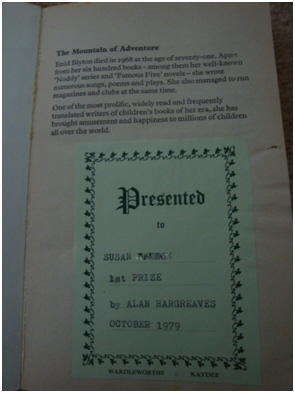
This book was bought because I won  a prize at the church for, I think, reading the most number of  books in a fortnight.   I still remember going to Wardleworths book shop in Accrington with the £1 book token and looking at the bookshelves full of lovely books.  I decided that I would buy an Enid Blyton book and couldn’t decide which one to pick.

The winning name plate!

The winning name plate!

The chosen book .


After looking at all the books on the shelf I chose The Mountain of
Adventure, as the cover showed pictures of animals.  There was some change from the book token and I also bought a pencil, but where that is I have no idea.  I couldn’t even tell you what colour it was.

 3. Mr. Pink-Whistle’s Party 1955

This book was originally my Mum’s and when I got hold of it the dust-wrapper was long gone and it was a little tatty.

Su’s 1955 copy of Mr Pink-Whistle’s Party

I wasn’t very impressed with Mr. Pink-Whistle and his ability to go into your bedroom unseen to check up on you and much preferred the Mr. Meddle stories.  My copy of Mr. Meddles’ Muddles remains uncoloured, proof that I had more respect for the book unlike Mr. Pink-Whistle’s Party, as you will see from the pictures.

Scribbles inside the book.

Not only have I written inside it but my Mum has written the correct spelling of my name in pen next to my very untidy scribble.  She obviously thought it was fine to scribble on books as well.  I have no idea who Carol is though who joined in with the book scribbling party that day.

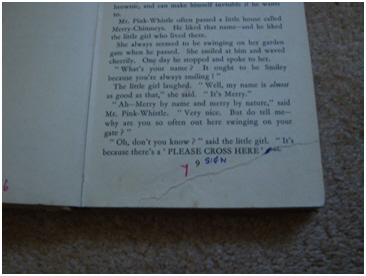
The book also has rips on more than one corner with some loss of text.  I remember the page ripping when I went to turn over the page.  The paper is very fragile in the book and I wasn’t being overly forceful with the page.  When I told my Mum what had happened she very kindly wrote the missing words on the bottom of the page.

A torn page

I always felt that books should have coloured pictures in them.  I had A Story Book of Jesus with some lovely coloured plates by Elsie Walker and this spoilt me a little.  Where were the lovely coloured illustrations in my other books? I chose to rectify this problem and coloured in the pictures myself.  I only managed to colour in the first two stories before becoming bored but it is quite neat!

Su’s careful colouring

There is also a page missing which I didn’t realise until a couple of years ago when I read the stories to my children.  When that page was ripped out I have no idea and I don’t remember it happening.  Maybe I could blame it on the forgotten Carol?  Oh and by the way this book is a 1955 first edition, it may be worth more if I hadn’t got hold of it but then it wouldn’t be able to bring back lots of happy memories.

Posted in Personal Experiences | Tagged , , , , , , | 4 Comments

Just another manic Monday

Monday has rolled around again, so welcome to a new week here at the World of Blyton Blog.

We’re a bit unprepared this week (a recurring theme behind the scenes here) but will be posting another piece from Su for you in the next few days, and hopefully between us, Stef and I will come up with some other posts of interest as well.

Thank you to everyone who’s been reading our blog whether you check in daily or just drop by when you get a moment.

As always we welcome any comments, criticisms and contributors to our blog.

Have a happy Monday and and lovely week everyone!

Posted in Blog talk | Tagged , | 3 Comments

Comic Strip Presents… Five Go to Rehab – A Review

I’ve just gotten around to watching Five Go to Rehab as I recorded it when it was originally on. I have to say I have mixed feelings about the programme now I’ve seen it. There were definitely some good things about it – some funny jokes and a surprisingly good ending – but a lot of it was pretty average. I suspect I might have gotten more out of it had I seen the original episode Five Go Mad in Dorset.

I typed some of my thoughts as I watched it so I will try and turn my disjointed ramblings into a sort of review.


WHAT I LIKED

I thought it started out nicely (I admit I missed the start – the recording started with the two baddies at their car, and the train streaming past. The actors names were still on-screen so I don’t think I missed much). The steam train, the music and the station porter all seemed very authentic and really put me in a Famous Five mood. I wish the station porter had a role in the episode though.

Then we had the four children getting off the train with their bikes, and cycling off laughing and chatting – much like the Famous Five would have done years before.

I liked how Dick described their idyllic holidays slipping in an extremely casual mention of catching criminals.

I honestly did think that was Julian though, because of the blond hair. If I’d seen the previous episodes I would have known it was Dick, and right enough when you see Julian the casting makes sense.

Left to right, Peter Richardson as Julian, Adrian Edmondson as Dick,
Jennifer Saunders as Anne and Dawn French as George.

They made good use of clips from the other Five Go Mad episode(s), and those have definitely encouraged me to watch them.

One of funniest jokes I thought was where Anne chastised Dick for standing on her newly dusted grass (though if I remember rightly that’s actually from an earlier episode clip).


FAMOUS FACES AND FUNNY LINES

I was impressed by the famous faces such as Robbie Coltrane as the woman running the B&B, (and later the gypsy) who had some of the best lines of the episode. After skating around the reasons Anne may never have  married he she says if you catch my homophobic way of thinking. He also got to say home grown marzipan, from our marzipan tree – a sly joke on how the Five would be fed at farms or people’s homes and everything seemed to be home grown and made. We also had Rik Mayall as one of the slightly sinister baddies who made a Silence of the Lambs reference, which was exactly what he had already put me in mind of. I recognised the poor police constable as Stephen Mangan (of Green Wing, Billy Elliot, and Episodes) pity it wasn’t his Green Wing co-star Julian Rhind-Tutt.

Another funny line was nothing like a cold ginger-beer, with lashings of vodka! a good play on the erroneous belief that the Five ever said “lashings of ginger-beer” (which I think was partly if not wholly caused by Five Go Mad in Dorset). I also laughed when George twisted her ankle – again a familiar plot device (think Five Go Off to Camp) and Julian just says “good luck with that” and disappears.


NODS TO THE BOOKS

I thought the electric gates we see at the entrance to the rehab centre were very reminiscent of Owl’s Dene, and I wonder if that was deliberate?

The rehab centre scene was quite clever, it’s a fairly traditional Blyton-y place. The Five (or FFOs, Secret Seven etc) get caught snooping around what’s supposed to be a legitimate business and see right through the criminals.

I enjoyed the telling of how Julian punched Toby Thurlow for following them around – up until I heard the name I thought it was rather like Richard Kent in Five Get Into Trouble. Again, if I’d seen the first episode I’d have not spent the time wondering if they were talking about Richard Kent, or Yan or any real Blyton character. Toby Thurlow seems to be an amalgamation of names used in the series, though. Toby is the boy from Five Go to Billycock Hill and Thurlow is actually Richard Kent’s father’s first name. More coincidences? Toby is a fairly common name, but I don’t think Thurlow is.

Anne got to have another ‘tiger moment’ (like in Five Have a Mystery to Solve) which was rather funny.


The scenery and locations used were beautiful – and having seen the short making of programme shown after the episode I’m amazed how sunny and lovely it all looked. It was apparently filmed during an extremely wet summer and most of the behind the scenes footage showed pouring rain and flooded fields.

The language used was sometimes reminiscent of the books – we had “queer” happenings and “lashings” of vodka, but it wasn’t over-done. There was also some swearing, which I have no problem with.

I didn’t realise how good the gypsy scene was until I saw the making of programme, where they showed a near-identical clip from the original episode. I wouldn’t be surprised if Robbie Coltrane was right when he said I think it was the same caravan, the same costume, and it was certainly the same lay-by and same castle on the hill above.

I had great amusement at the music played as they head to their campsite – Come on Eileen by Dexy’s Midnight Runners, but apart from Stef nobody else  will get the joke.

A classic picnic for a somewhat-less-than-classic five.

I think the ending was actually the best part of the episode, having felt fairly underwhelmed by much of it, the end was surprisingly good. I don’t want to give it away for anyone who hasn’t seen it, but when the Five have been captured by the mysterious bad guy (who turns out to be someone we already know) he drags his children along to see them. They’re the came children we saw at the start, and they’re rude to their father – eyes glued to their iPads or whatever it is they’re clutching – until they see the FF that is. I was feeling a bit depressed by that part – after all aren’t we just a bit too familiar with modern children who don’t share our love of Enid Blyton? The show hit just the right note, though, and we got to see a new generation of the Famous Five (a far superior one to the atrocious recent cartoon version).


WHAT I DIDN’T LIKE

As many people who watched it have said there is a big blooper where at least twice George is described as their sister, when we all know she is their cousin.

One thing I didn’t quite get was the time it’s set in. I realise it’s part of a joke running through the whole episode, the incongruity of the old fashioned things like the train, the car, their bikes and then their sat-nav and mobile phones, but it was confusing. I had thought if it was 30 years after the FF were last together it should only be the early 90s, but then I realised it was 30 years since the first Five Go Mad episode, and things made a little more sense.

Continue reading

Posted in Blyton on Screen | Tagged , , , , , , , , , | Leave a comment

Collecting Blyton

by PippaStef

I was inspired by Fiona and Su’s stories of how they came across a longed for book to complete their Enid Blyton collections, and ended up wondering  how you achieve a complete collection of books that don’t cost the earth?

You can make the cost manageable, but what do you sacrifice in the name of a complete collection? There are things such as; the dust jacket, any editions/versions you already have in your collection, condition, age and edition.

Which editions do you have?

If you’re anything like me (which I hope you aren’t!) I have at least three different editions of the Famous Five books. I have the Hodder editions, the Hodder colour illustrated editions (Millennium editions), The 90s TV series tie-in editions, and some older 20th century editions by Hodder and Stoughton.

My Famous Five TV Tie-ins. I have 17 out of the 21 Famous Fives in this collection.

More often than not I shall pick up a  Hodder copy as a reading copy rather than my older Hodder and Stoughtons, wishing to preserve their life. I do not have a complete collection of the Hodder and Stoughton copies because of my problem of space. I have the titles though, thanks to the two Hodder collections, and a near perfect set of the TV tie ins.

Back to our question: Which other editions have you got? When considering my collections, I have admittedly given up collecting the Hodder paperback editions because I do not have space. The two collections I focus on now are the earlier editions from the 1940s, 50s and 60s and the TV tie-ins.

Easy enough to decide on and know what I’m looking for. Shall we examine the next factor in our list?

The Price: I’ll focus on the Hodder and Stoughton editions for this part, (the TV tie-ins don’t leave much room for discussion!)

A selection of my Hodder and Stoughtons with and without dust jackets.

The Hodder and Stoughton editions of the Famous Five can be found with relative ease on eBay, where ones without a dust jacket and in a decent condition can go for as little as a fiver, but when you find that incredibly rare volume, with the near perfect dust jacket, and it’s a first edition etc, you think you’ve hit the jackpot, until you look at the price. That one little aspect of the book that you’ve waited on for so long can be devastating.

For example, leaving my search for the Famous Five for the moment, and looking at my almost complete collection of Malory Towers I am just missing First Term at Malory Towers with all pages and Upper Fourth at Malory Towers.

The two volumes that I don’t posses seem to be the hardest to get hold of in that series. It is very hard to find 1940s and 1950s editions of the Malory Towers books. The two copies I have found recently from this time start at £25 and one edition of Upper Fourth at Malory Towers was priced at £90!

I am tempted by the cheaper options for the first and fourth books, but I’m still not convinced. Do I wait for cheaper options to turn up or do I go for these, taking their merits into account? The merits would be that these two books come with dust jackets and are described as being in good condition. However is it justified?

Does a dust jacket – often rare items in their own right – mean that I should spend this extra money or do I let them sail by?

This leads me quite nicely to the first section of this case study:

Dust Jackets

How do you measure the price of a dust jacket? By the condition? Whether your other editions have them? The overall price?

For me I think the condition of the dust jacket is certainly a key factor, as well as my budget for the book. As well as what else is on offer. This might explain why I’m having so much trouble with making up my mind about the Malory Towers books. I like dust jackets; they add something special to the book for me but are they really worth the price they add on to the book?

4 out of the 6 Malory Towers books. You see my problem? two  with dust jackets, two without. How do I choose?

It is a hard one to call for me. I can never be sure if  a dust jacket is worth the price.

Condition and Age

I think these two need to be grouped together because sometimes age is part of the condition. For example; foxing on the pages is part of the condition of the book but is also part of ageing, especially with the older editions. Of course the general age of a book can certainly impact the condition of the book. If it’s an old book there is a chance that the binding is loose or there will be discolouration of the pages.

The condition of the book also depends on how ‘clean’ the book is. If the book has scribbling in if from a child, it is worth less than a pristine copy. Same goes for tatty and damaged pages. Possibly not so much of an issue with adults’ books, but with children’s books, they receive a lot of attention and aren’t always treated with the same care.

Edition

A book’s edition can have a huge impact on its price. The earlier the edition, the dearer the book. First editions are particularly sought-after, often priced into the hundreds or even thousands if they also have condition and dust jacket on their side or even more if they have an authentic signature!

A few of my Hodder reading editions mostly  75th editions and onwards

If you’re lucky enough to find a first edition without a dust jacket the price might also be considerably lower. Its all about what you’re looking for I’m afraid.

I have a lot of editions. My Hodder and Stoughton ones range from first editions to around 7th editions. My Hodder paperbacks are something like 75th editions. However for me, it’s more about having those early editions, the Hodder and Stroughton editions for the Famous Fives and the Methuen editions for Malory Towers. As long as I can match the publisher I’m fairly easy about what edition I get. Although, obviously I want as many firsts as I can get. Finding them is another matter. Part of my idea behind not minding which edition I collect means I have a wider field to choose from in regards to sourcing the books

I don’t think I have the right answer for anyone but myself; and that depends on the book and how much I want to own it.

Su managed to complete her Five Find-Outers collection with a wonderful copy of Banshee Towers with dust jacket for £45 while Fiona managed to get herself a very good copy of Banshee Towers without dust jacket for £10. So what do I do with my Malory Towers conundrum?

My mother always says that something is worth only what another person is willing to pay for it. So now I have to decide if it’s worth me spending a minimum of £50 on two books!

As for this case study, I think I would willingly forgo a dust jacket to get the book I wanted at a reasonable price, as long as there were enough options for me to choose from.

How about you? Which aspect would you forgo to complete your collection?

Posted in Personal Experiences, Purchases | Tagged , , , , , | 8 Comments

Series Synopsis: Famous Five Books 7-9

Welcome to the third in the series of Famous Five posts. As usual, there may be spoilers for the books you’ve not read yet (if so, shame on you, get reading!) Interestingly, Blyton had intended to finish the series with book 6 “Five on Kirrin Island Again” but carried on thanks to the volume of letters she got from her readers, begging for more Famous Five adventures. Thank goodness she listened to them!

Early edition dustjackets from “Five Go Off to Camp”, “Five Get Into Trouble” and “Five Fall Into Adventure”, all illustrated by Eileen Soper.


FIVE GO OFF TO CAMP, 1948

The Location:  A lonely, high-up stretch of moor-land with only a small farm and old railway nearby.

The ‘Baddies’: Mr Andrews and some of his farm-workers.

 Significant other characters: Mr Luffy, a genial but absent-minded teacher from the boys’ school who loves to study insect-life and (more interestingly) can waggle one of his ears. Jock, a boy from the local farm. Wooden-leg Sam, the scared watchman from the disused railway.

The Plot: Camping with Mr Luffy, the Five are intrigued by a disused railway tunnel especially when they hear tales of night-time “spook trains” from the railway’s watchman, and are warned away from it by Mr Andrews and the Shepherd. The three boys sneak off at night to watch for spook trains (much to George’s chagrin) and they’re not disappointed. Though thanks to an inopportune twisted ankle they’re unable to investigate further.

Armed with information about the tunnel from a helpful old porter the boys plan to walk through the tunnel and search for the spook train. The boys and Anne walk right through the tunnel and out the other side without seeing anything unusual. Scared, Anne decides to walk over the moors to the tunnel’s other end. Meanwhile, George has gone off on her own and poor Timmy manages to fall down a hole, leaving him and George stuck in the tunnel with the spook-train.

The boys retrace their steps in utter confusion but before they can figure it out Mr Andrews and his men are upon them and all is revealed. Thanks to George and Timmy being there, and Anne raising the alarm help is summoned so no harm comes to the boys.

My favourite parts: I used to have this on tape, so when I read it I can hear the voices from the recording. Dick-with-a-lisp saying “blow, I’ve twisted my ankle”, and Jock in his strong Scottish accent saying “aye, I’m a ninny” and “I’ve let the cat properly out of the bag”, as well as the scornful way he says “Cecil Dearlove”. From the story I love Anne’s “volcano”, and exploring the old tunnel is really exciting, even without the ‘spook’ train. Also, Mr Luffy’s life-long disappointment that he can only waggle his right ear, but not the left is an amusing little aside.

Mr Luffy drives a bit too fast in “Five Go Off to Camp” forgetting he’s pulling  a trailer full of camping supplies behind the car! Illustrated by Eileen Soper.


FIVE GET INTO TROUBLE, 1949

The Location: Owl’s Dene, a large house surrounded by a high wall with an electric gate.

The ‘Baddies’: Rooky, Perton and Hunchy.

 Significant other characters: Richard Kent, the son of a very rich business man. Aggie, an old lady who works at Owl’s Dene.

The Plot: The Five head off on a bicycling tour (well, Timmy’s not actually on a bicycle), and at their first camping spot meet a boy called Richard who claims they are trespassing on his father’s, land. He is appeased with a free breakfast courtesy of Anne, and rather insists on joining the five on the rest of their tour. After cycling with the five for the day, Richard abruptly heads home, only to return later claiming he’s being chased by an enemy. Julian, George and Timmy are off sourcing food from the nearest farm (facing an unusually surly man who’s not at all won over by Julian’s usual charm), so when the men find Dick at the campsite he is taken in Richard’s place, to somewhere called Owl’s Dene. Anne’s overheard this, so they all head to Owl’s Hill, where they guess Owl’s Dene will be. When they get there they find themselves shut in by electric gates and then when they sneak into the house, they are caught. The Fve plus Richard are allowed to spend their days in the grounds of Owl’s Dene and have to hatch a daring escape plan.

My favourite parts: Richard’s escape near the end of the story and Rooky’s secret hiding place. Also, Aggie’s kindness to the children despite her fear of Hunchy.

Five have a picnic in “Five Get Into Trouble” illustrated by Eileen Soper.


FIVE FALL INTO ADVENTURE, 1950

The Location: Kirrin Cottage, Raven’s Wood and Red Tower’s place.

The ‘Baddies’: Red Tower, Markhoff, Jake, and Jo’s father Simmy.

 Significant other characters: This is the first time we are introduced to Jo, the gypsy girl who’s tomboy enough to give even George a run for her money. Joan the cook is ‘in charge’ this time as Uncle Quentin and Aunt Fanny are away at a conference. Sid the paper-boy makes an important appearance too.

The Plot: The Five meet an irritating gypsy boy, who actually turns out to be a gypsy girl. Soon Kirrin Cottage is burgled, and it seems some of Uncle Quentin’s work has gone missing. George and Timmy then don’t return from their walk at night, and the next day Jo appears with a note, demanding another of Uncle Quentin’s notebooks for George’s safe return. The house is being watched, so a clever plan is hatched where Dick will swap places with the paper-boy and follow whoever collects the notebook. Unfortunately, or perhaps fortunately, the person Dick captures is Jo, and she promises to lead them to George. She is to take them to Raven’s Woods the next day, but is hauled away by Jake. The three find their way to a caravan deep in the woods, but it’s empty. George has been there as she’s written “Red Tower” on the wall. They then get hopelessly lost, and end up sleeping in the woods. Jo rescues them the next day and leads Julian and Dick to ‘Red Tower’ to rescue George.

My favourite parts: The scene with Sid is great, from his indignation at what’s going on to his utter joy at playing cards, I love the things he says like “I’m partial to chocolate mould”, and in a way he reminds me of Ern Goon. I always think Jo is a bit of a hero in the final scenes, climbing the tower, pretending to be George and using the larder key as a decoy. 

Jo lures Timmy away from a furious George in “Five Fall Into Adventure” illustrated by Eileen Soper.

Next post: Books 10-12

Posted in Book reviews | Tagged , , , , | Leave a comment