If You Like Blyton – Pea’s Book of Holidays by Susie Day

I was rather conflicted about this book before I even opened it. I got it way back in December and had stuck it on the blog schedule for May (after I had gotten through the annual and other new Blytons I had.) Although I read a fair bit of children’s fiction I picked this one out because the plot revolves around Enid Blyton.

Book of Holidays BlurbIt looked interesting, two children trying to have their own Blyton style adventure. It’s the fourth book in the Pea series but I decided to give it a go anyway, telling myself I was doing it for the sake of the blog.

And then I stumbled upon this. And therein lies the conflict. Do I want to read a book by a person who believes that It takes going back to reread as an adult to feel the weight of it. It’s not only the obvious things: Noddy’s infamous carjacking golliwogs; the multitude of ‘swarthy’, poor, poorly-spoken types her investigators can just tell, somehow, are up to no good; simpering Anne, so useless compared to George who is – phew! – ‘as good as a boy’ – and of course, the predictable prose, the repetitive plots. There’s a core of judgemental selfish nastiness running through them that sours the fun; a fundamental mistrust of anything other than four posh white people.

The author even asks if she should be promoting Blyton to her readers. She then goes on to praise Blyton because no other writer understands reading age and how to mediate her work across different age groups so well. There are also backhanded compliments about the simple writing and memorable rubbish.

She admits herself she is conflicted and sees her book as an opportunity to confront the problems in [Blyton’s] work, and to analyse how we deal with feeling ambivalent or critical about something we also love.

That I can relate to. I’m not blind to Blyton’s flaws – the biggest one being the era she was raised in and the attitudes she sometimes parrots. Don’t we all do that, though? She’s a product of her time just like we are a product of ours. That doesn’t make her a bad person or her work ‘nasty’ or ‘selfish’. I think a lot of people forget that. They perhaps don’t read any other works from that era, so Blyton may appear a Hitler like figure of hate or intolerance. Of course she isn’t, though. She was writing at a time between, during and after major world wars. Suspicion of foreigners was rampant. Class divides were much, much more clearly defined than they are now. People didn’t move up and down the social ladder as easily as we do today. She wrote about what she knew and how she knew it to be. And within that she created loyal, friendly, kind characters who so many of us love.

Anyway, I’ve rambled enough I think and I haven’t even started talking about the actual book. (I do summarise much of the plot in this review so if you may not want to continue if you don’t like that sort of thing.)


It starts with Clover (the eldest) leaving for her summer theatre camp. Pea (the middle child) and Tinkerbell (the youngest) are to be going off camping for the summer, with Tinkerbell’s dad Clem, while Bree (their mother) works on writing her new book. I wondered from the outset about their unusual names and later it is explained that Pea is actually short for Prudence and Tinkerbell was named by her older siblings.

This book manages to tick a lot of inclusive boxes along the way, perhaps in part to counteract the mostly white middle class cast of Blyton’s stories. We’ve got a single, working mum with three kids to three different dads. Tinkerbell is of mixed race (British Jamaican) and the next door family is made up of two mums and boy-girl twins. Later in the story the girls makes friends with two boys; one of whom has a physical disability, and they also have divorced parents. The boys only get to spend time with their father four times a year, like Clem only sees Tinkerbell and the other girls a limited amount.

I’m happy to see lesbian parents, non-nuclear families, disabled boys and mix raced children in books, even if I don’t relate to all of these under-represented characters. At the start though, I did worry that there may have been a few too many issues thrown into one book without space to really examine each of them. Some of the issues surrounding these topics are explored later in the book though. For example, Ryan (one of the boys they befriend) tells Pea that Tinkerbell can’t be your sister, presumably because of their different looks. This is something that Pea seems to be used to (I guess it has come up in earlier books) and she deals with it calmly. She and Tinkerbell also have a conversation with their mum, about Ryan’s weak arm and limp, uncertain about whether or not they should talk about it or pretend not to notice it. On her advice they do ask him questions about it, finding out about his condition and the effects it has on his life. The notion of children blaming themselves for their parents (or even step parents) divorce or break up also gets brought up in a touching chat between Pea and Ryan.

The realism is making me think of Jacqueline Wilson a little, in style and content. I’ve read a lot of criticism of Wilson’s work lately on the Society Forums. Mostly that her work is too ‘gritty’ or ‘dark’. While I love Blyton’s light, happy stories I don’t see a problem with realism in books. Kids benefit greatly from escapist reading, but also from being able to connect to children who have a home life like theirs. The Suitcase Kid is a great example – about a girl whose parents split up and each settle with a new partner and step children. All she wants is to go back home with both parents, instead she has to learn to live back and forth with two new families. It’s gritty (at a child’s level) it’s real, it can be dark and upsetting. But it’s a great book too. I think there’s room in the world for both (and many other) types of story for children. I think it’s harmful to say children shouldn’t read about divorces or single mums or same sex couples. Pea taking on a more grown-up role also makes me think of The Mum-Minder where a girl’s mum (a childminder) comes down with the flu. The daughter then has to help watch the children, do the cooking and cleaning and so on. There are enough differences to keep it all fresh, though, and I don’t think the styles are similar enough to be a  criticism at all.

Pea, it would seem, agrees with me. While she and Ryan are chatting about their respective parents having split up she thinks it would have been nice if those things had happened in a Blyton story. But then again, she thinks, sometimes it’s nice to have that escapism into a happy world where that doesn’t happen.


Moving on. Their plans are then thrown into chaos as Clem comes down with pneumonia and can’t take the girls on holiday. Is that a nod to the Blytonian plot device of plans being changed due to illness? (Think Five Are Together Again, The Sea of Adventure, Five Get into a Fix and Holiday House for starters.)

That leaves Mum to work out what she’s to do with the two girls, and at the end of chapter three she drops the bombshell that she hasn’t written a word of her new book yet. Pea’s brilliant plan is for them to go down to Corfe for inspiration and to inhale the ‘fumes’ that made Blyton such a prolific writer. (Pea also sort of thinks her mum is a lazy writer when you compare her output to Blyton’s, and if Blyton hadn’t used up so many ideas then maybe there would be more left for her mum!)

Pea and Tinkerbell are then left mostly to their own devices to explore and look for that all important mystery or adventure. They can’t get into the castle as – horror – they have to pay for tickets and there are loads of people milling about, so they just explore. Ginger-beer is bought and not enjoyed at all (I’m with the girls there, can’t stand the stuff which is so disappointing!) and before long they’ve run into Ryan and his brother Troy.

Ryan and Troy are a bit odd (and not just because they have never heard of Enid Blyton). They’re ghost hunters, complete with walkie talkies and their own website. They’re called PIE (Paranormal Investigations Edinburgh) and take it all rather seriously. Pea and Tinkerbell don’t believe in ghosts so unfortunately have to discount Ryan and Troy as candidates for their reinvention of the Famous Five. Nobody else seems likely either as they’re either too young, too nasty or don’t speak any English.

Fate seems determined to bring the two sets of siblings together, however, and they do start talking. The boys are hunting for the Grey Lady (not of Harry Potter fame, it is pointed out) who is supposed to headlessly haunt the village. They have a video on their iPad of a head floating in a window of the castle and Pea is amazed as it’s clearly the ghost of Enid Blyton!

It all goes a little Scooby Doo like then, (if the Scoobies took their mum along) and the girls solve the mystery, showing that it was nothing paranormal at all. I won’t give away what it was, but I will admit I didn’t work it out myself. Not at any point. Even though I had all the clues from the girls’ visit to the “Enid Blyton Shop”.

The Enid Blyton Shop is obviously The Ginger Pop Shop owned by Viv Endecott, and the description of it seem spot-on. Viv is a big believer in golliwogs and the book mentions that there are lots of them in the shop. This makes Pea uncomfortable as she’s been taught that gollies are offensive representations of black people, and she wishes that Blyton hadn’t written about them. Tinkerbell, however, admires the dolls and quite wants one for herself. Pea wonders, then, if Tinkerbell likes them, does it make gollies OK?

You can see there, how Day is using Pea to explore her own concerns about enjoying Blyton’s work. It’s very cleverly done and the idea is revisited a couple of times as Pea thinks about things from different angles. Pea is perhaps a tiny bit too aware and intelligent for her age in her wonderings sometimes, that would be my only criticism.

The real kick-start for Pea’s worries is Dr Skidelsky, one of the mums from next door. She says Blyton’s books are terrible, all the same and badly written. But she’s also had opposition from Miss Pond, the school librarian, who has tried to discourage her from borrowing the Malory Towers books.

There was a big poster in Miss Pond’s library which said LOVE READING! Pea did. But were there special rules about which bits of reading she was allowed to love?

I think there is a lot of snobbery about books and we’re perhaps all guilty of it. I know I turn my nose up at things like the Rainbow Magic books by Daisy Meadows. But maybe I shouldn’t? Maybe I’m as bad as the people who are mean about Pea’s mum’s mermaid books.

It’s like Tinkerbell and Dr Skidelsky are actually the two conflicting sides of Susie Day’s thoughts about Enid Blyton. Tinkerbell loves her and her books, pure and simple. Dr Skidelsky despises them for a list of reasons. Pea is stuck in the middle, trying to find where she fits in. She knows neither side is necessarily wrong but she needs to form her own opinions amongst her own conflicted views.


Anyway, the busting of another ghost story cements the girls’ friendship with the boys and their father Max agrees to let the girls tag along with them while Bree writes. So there’s more parental involvement in the book than in a Blyton, typically. Their mum’s preoccupation with writing and Max’s frequent and sudden naps keep them out of the way for the most part, though.

I feel there’s a bit of a similarity to the Adventure Island books by Helen Moss, actually. Both are Blyton-ish but set in modern times with adults around. Again, though, the similarities aren’t overwhelming.

One thing that I’ve loved about the book is the number of little references to Blyton that are woven through it. I always get excited to see her mentioned in books or on TV. I took pictures with my phone every time I saw something I wanted to come back to in the book (saves laborious note taking or damaging the book with dog ears) and by half-way through I had at least 50 pictures.

There are things like heather beds to camp on (otherwise it’s cheating), lots of references to which book(s) the girls are reading or have read, ropes tied around waists (at least in theory), notions of disappearing off with a travelling circus or into an old ruined cottage. They visit what might be the Enid Blyton Society website, or perhaps Enid Blyton.net, to do their research. (I do love to think of Pea leaving a message or either of those sites message boards, as if I may see it some day if I look hard enough.) There’s the aforementioned disliked gingerbeer, Wuffly (their dog) is rechristened Timmy though he doesn’t seem to understand his new name. They also name themselves the Thrilling Three, reminding me of Susie and her friends forming their club in opposition to the Secret Seven. (There’s also The Troublesome Three from 1955)

The girls try so hard to find a mystery, looking for faces at windows, footprints, coded notes, secret dens, even going as far as to advertise with a poster. Pea finally invents a mystery (something the FFOs have done more than once) though it doesn’t turn out very well.


We then go back to the Scooby plot line as the boys bring round a film of a ghost walking through the village and it isn’t Blyton this time. They set up camp to watch for her and Pea spots Clover – who’s supposed to be at theatre camp. There has been a background plot of conversations between Clover and Pea (by phone and letter) where Clover says she’s having a fantastic time at camp but clearly isn’t. So the next bit of excitement is trying to conceal Clover in the tent in the garden. She’s not a good camper but their mum is so busy writing she doesn’t notice anything.

The obvious solution is for all three girls plus the two boys to camp out by the castle secretly. That’ll a) keep Clover away from Mum and b) allow them to look for the Grey Lady. Clover’s not so keen at first but Tinkerbell so tactfully persuades her with you’ve already weed on a bush once, so doing it again won’t matter.

With some dishonesty (The Famous Five would never stand for it!), using Clover’s talent for voice acting, they arrange their camping plans.

The camping is all great fun until it gets pitch black and the Grey Lady appears again. Tinkerbell and Clover are terrified so it’s up to Troy, Pea and Ryan to get closer. It all goes very pear-shaped however. Troy slides down the hill on a sledge and crashes, leaving Pea and Ryan to go after him. In her attempt to find help Pea manages to fall down rather badly herself, then bumps right into the Grey Lady and the perpetrator of the hoax. She doesn’t get a chance to do anything about it though as up on the hill the tent has caught fire.

The fire service come to the rescue and Max and Bree round up their kids; Tinkerbell’s got a broken arm but nobody else is hurt too badly. Troy’s broken his glasses, leaving him using them like a monocle. Pea seems worst off in a way as she knows she’s in big trouble. She’s told lots of lies to her mum. About Clover. About camping. She’s supposed to have been the ‘Anne’ of the situation and it’s all her fault that everything went wrong.

Things do get resolved, though. Mum is surprised to hear how much responsibility Pea’s taken upon herself and tells Pea that she should have been enjoying her holiday instead. In the end they return to London (the idea of Blyton fumes suddenly seeming a bit silly) and get back to their more normal lives. I think that’s a bit of a shame as I would have liked to have seen them all having more fun in Corfe but perhaps they’d all had a bit too much of that.


Phew, a lot happens, doesn’t it! There’s plenty I haven’t mentioned though and so I hope I haven’t spoiled the story for anyone.

I found lots of things to laugh or smile at, such as the lines below;

“Are you sure they’re famous? What do they do?” asked Troy.

“Eating, mainly,” said Pea.

“And catching villains,”… Tinkerbell added casually.

I have thoroughly enjoyed reading this book. It genuinely kept me turning the pages, wanting to find out what happened next. There is enough explanations about characters and events so that you can follow everything if you haven’t read the first three books (though if you’re like me you’ll spend some time wondering about things before that information crops up).

I think Pea sums up my feelings about this book in one of her letters to Blyton;

I hope I’m allowed to like things when not all of them are perfect.

I disagree with some of Day’s comments made outside of the book, but it hasn’t spoiled my enjoyment of the book itself.

I’ll have to get the other books at some point and give them a read as well as I think I’d enjoy them even though they’re nothing to do with Blyton. I apologise for the length of this post, by the way. 3,000 words on a book that’s a little more than 300 pages. I have even more thoughts than I’ve written down, actually but I had to draw the line somewhere. I think this book will stay with me and I’ll have to revisit it again some day.

peas-book-of-holidays-susie-day

Posted in Other Authors, Reading Recommendations | Tagged , , , , , , , , , , , , | 4 Comments

May Bank Holiday Monday

Happy May Bank Holiday! You probably are aware by now that the Duke and Duchess of Cambridge, HRH Prince William and Catherine Middleton have a new addition to their family. The new princess was born on the 2nd May 2015.  The as yet nameless princess who is fourth in line to the throne. I’m sure you’ll join us in our congratulations to the Duke and Duchess on their new bundle of joy!

This week we should be back to normal, with Fiona posting on Friday and me on Sunday. Fiona will be reviewing something called Pea’s Holidays, which personally I have never heard of! So that should be a good read.

I am going to stick to my commitment of bringing you the next in the twins series, with a look at Guy and Harry Lawdler from Five on a Secret Trail so you’ve got all week to re-read the book to reacquaint yourself with the twins.

Our Wednesday post will be a reblog from Novelicious  about literary loves.

So with all that planned out for you, I’ll leave you with a picture of the Duke and Duchess of Cambridge and their new princess.  If you want to see some of my pictures from this last week, head over to our sister blog Two Points of View this week to see some pictures.

The Duke and Duchess of Cambridge with the newborn Princess on the 2nd May 2015 taken from the Daily Mail Website

The Duke and Duchess of Cambridge with the newborn princess on the 2nd May 2015 taken from the Daily Mail Website


Posted in Blog talk | Tagged , , , , , , , , , , , | 4 Comments

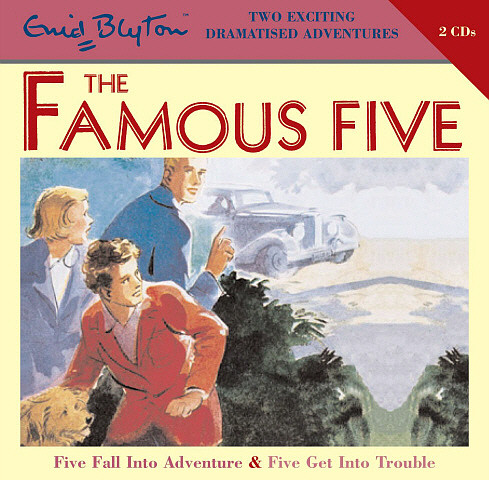
Five Get Into Trouble: An exciting dramatised adventure

Five Get Into Trouble is the second CD in the set, Five Fall Into Adventure being the first. I had a half-moment of hesitation before putting Trouble on, as I like to read/listen in order but I’ve been promising Trouble for weeks and that won out.

Trouble/Adventure Audio


The first minute of this recording takes us through the first three chapters of the book at double quick speed. We rush through the Five persuading George’s parents to let them go off on a cycling holiday – they have a glorious first day – they cycle off to a lake for a dip – they camp – and then wake up the next morning before we slow down and get some actual acting.

Presumably that’s the point – to get to the Five meeting Richard without wasting any time. It’s a shame though, as we don’t get to enjoy any of the relaxed fun holiday they have at first.

Anyway, Richard Kent arrives with his declaration that they are in fact tresspassing (something Julian comments on in the book the day before). Richard has an odd accent. It may be the same actor who voiced Jock in Five Go Off to Camp, as there’s a hint of Scottishness about it still. He gets to do a variety of acting throughout the audio as he goes from cocky and bold to frightened and tearful. It’s perhaps over done at times but given that we can’t see his fear then the sound has to do twice as much.

Timmy unfortunately has reverted back to his old, terrible sounding self. If you haven’t heard these recordings it’s hard to describe what he sounds like. Mostly like a person trying to sound like a dog, and not doing very well at it.

This story has a smaller cast to it, I think, than some others. There are no shop keepers or bus conductors or the like popping up for a line or two. (We don’t even get Aunt Fanny or Uncle Quentin!) We do hear from Aggie, Hunchy, Perton and Rookie at Owl’s Dene though, as well as the owls themselves. Then there’s the policemen at the end, and Mrs Kent too. However, in the book it’s Mr Kent that speaks (and rather less kindly than his wife does on the audio!)

Hunchy really loses the ability to speak when Julian puts him in his place, and produces a lot of strange noises (stranger even than Mr Penruthlan without his teeth).

Aggie says something I picked up on about how there’s no phone, no electricity or running water at Owl’s Dene;Just secrets and comings and goings and threats. That’s very much like what Robbie Coltrane says in Five Go Mad in DorsetStrange comings and goings in this village. Secrets and signs and threats (as the ice cream woman) and then No telephone. No eelecticity. No gas. No water laid on. Just secrets, and signs and THREATS as the gypsy.

In the book I can’t see Aggie saying anything like this. Julian however says This is a bad house – a house full of secrets, of queer comings and goings. 

Strange how both versions play up those phrasings. It doesn’t make sense though for Aggie to mention the water and electricity as it’s plain Owl’s Dene has both. At the very least there is electricity to open the gates and water (possibly pumped) into the sinks.

At any rate it sticks mostly close to the story; with some scenes skipped or shortened to allow it to fit into a one hour CD as is always the case. The book itself is somewhere in the middle of the series favourite wise for me, so listening to the audio was fine. I still recommend them to anyone.

Posted in Audio Books and Audio Dramatisations | Tagged , , | 1 Comment

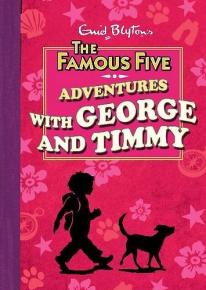
Adventures with George and Timmy 3: A Curious Treasure

Adventures with George and Timmy containing the first three Just George stories.

Adventures with George and Timmy containing the first three Just George stories.

So this is the second review of a full story from the Adventures of George and Timmy. This one was called A Curious Treasure and all starts with George begging her father to let her keep her newly found puppy Timothy.

She is allowed to keep the puppy on the proviso that Timmy doesn’t chew any more pairs of her father’s slippers. With this all agreed George is asked to clear out some of her old toys for the local jumble sale.

While she’s in the attic sorting out her toys she discovers a box of dolls she was given by her aunt, the mother of Julian, Dick and Anne. George thinks that her aunt assumed she would want dolls because Anne would be one of those “girlie girls”. Needless to say the dolls are headed to the jumble sale. George checks the attic for a box to put all the toys in, and when she finds an appropriate one discovers an article about detectives searching Kirrin for bones. The rest of the article is missing so George throws it away. George gets excited because she thinks that the detectives are policemen and the bones are human.

The next part of the book is about how George and Timmy go to the beach to have a picnic and Timmy starts digging up the sand at somewhere called Needle Point- which I’m sure never made it into the original books. Timmy then finds something in the sand. George goes over and finds that its a large bone!

Immediately she believes it goes with the article she read in the attic and that they’ve found a human bone. She takes it home and asks both parents if they should call the police, but that won’t need to happen. It turns out to be a dinosaur bone.

That’s right, dinosaurs have come to Kirrin!

Quentin calls in a doctor friend of his, who is a palaeontologist. Doctor Ward comes to stay at Kirrin Cottage with the Kirrins and brings his obnoxious, overweight son, Jack. George takes a dislike to him because Timmy likes him, and to start off she’s very stand offish.

Over the course of the book Jack becomes a better person and George begins to like him more when he starts getting over his cowardly inclinations. However Jack is the reason the secret of the dinosaur bones comes under threat when he mouths off to someone in the village. Its almost a parody of when Tinker boasts about his father’s work shop and secret papers to the circus people in Five are Together Again (which I should really re-read!) and then sets off a chain of events that culminate in the big adventure.

Now this adventure with the bones trying to be stolen from the beach is not as thrilling as what happens in Five Are Together Again. I don’t get the same thrill from reading A Curious Treasure as I do from a proper Famous Five book. Yes its nice to have a bit more time with George and Timmy, but I just feel there could have been so much more and George seems so very young. Younger than she does in the very first Famous Five book. I suppose part of my problem with connecting to these books is that I am too old for them; they are meant for the five to seven, possibly eight age group readers who are looking to start reading the Famous Five with their parents, but, there is still a problem.

This problem is simply that I’m not enthused by the writing as I am with Blyton’s original works. Yes the style and the language is there, but there is a lack of that involvement, that magic, that spark that when you pick up a Famous Five, young or old, you get. I’m not drawn into these adventures by Sue Welford and I’m sorry to say that because Sue has done a wonderful interview on the blog for us in the past.

I don’t think I would go back and re-read these stories like I re-read the Famous Fives, but I would certainly think its worth a go if I had a young one in my life I could read it to. Maybe their enthusiasm for the stories and the joy they got from them would help me enjoy them more.

Anyway, the adventure in the book really happens so quickly and so close to the end of the book that it feels rushed. There feels like there was a lot of faffing about in the beginning and now there’s not enough space to fit the ‘exciting’ bit in.

I think that A Curious Treasure flowed better than the first one Timmy, The Fearless Puppy. Sue Welford seemed to have found her rhythm by book two but I just can’t rate the series very highly. What do you think? Please let me know!

Adventures with George and Timmy part 4

Posted in Book reviews, Other Authors | Tagged , , , , , | 3 Comments

Five Go Down to the Sea reviewed by Chris

In my review of Five Go Adventuring Again I listed it as one of top three Famous Fives and I am now going to review the other two, starting with Five Go Down to the Sea which is the twelfth in the series. For other reviews see Keith Robinson’s on Enidblyton.net and Terry Gustafson’s on the Enid Blyton Society. It is actually some years since I have read it and to my delight I found that what I have is the 1953 first edition (albeit the 1954 second impression) published by Hodder & Stoughton, complete with a slightly battered dustjacket by the excellent Eileen Soper, exactly as illustrated here.

620wide+3885238

The book begins with another surprise for me. I have always had the idea that Kirrin was in Cornwall, but that is not so. In fact, on checking, I see that Blytonites have discussed the issue of Kirrin’s location at length. At all events, the Five begin this adventure by departing from Kirrin to Cornwall, involving a long and well-described train journey. There is no convoluted build-up of family illnesses or school break ups; we just get on with the hols, which are to be spent at Tremannon Farm.

Arriving at Tremannon village, the Five’s lack of Cornish credentials are apparent, since when they stop at the village shop for lemonade the shopkeeper describes them as “Furriners”. Ju rejects this label on the dubious basis that his “mother had a great-aunt who lived in Cornwall”. The scene set, we arrive at the farm to be greeted by Mrs Penruthlan with possibly the finest high tea in the entire Blyton oeuvre:

“A huge ham gleaming as pink as Timmy’s tongue; a salad fit for … several kings, it was so enormous … Lettuce. Tomatoes. Onions. Radishes. Mustard-and-cress. Carrot grated up …”

There are also, in one of the few approximations to the popular parody, “lashings of hard-boiled eggs”. Add “an enormous tureen of new potatoes, all gleaming with melted butter, scattered with parsley … a big bottle of home-made salad cream … cream cheese … fruit cake … drop scones … cherry tart … cream,” and we have  a quite extraordinary spread. Mrs Penruthlan is welcoming, but Mr Pentruthlan is more forbidding. A huge man “as dark as a sunburnt Spaniard”, which might make us wonder if he could be a baddy, he speaks in monosyllables or phrases so obscure that only his wife can understand them (later it emerges that this is only when he omits his false teeth; otherwise he can speak quite normally).

On this first day, we learn several important things. First, the impending visit of the Barnies, a travelling circus whose name derives from the fact that they perform in farm barns, including Tremannon. Second, we meet Yan – really, we are told, Jan, so why not spell it that way? A typical Blyton outsider character, of the sort I dislike, he is a dirty ragamuffin who can barely speak English and he lives with his grandfather (sometimes, inexplicably, described as his great-grandfather) who is a shepherd. This shepherd’s father was, apparently, a Wrecker: someone who used false lights to lure ships to be wrecked on the coast so that they could be stripped of their cargo.

The Five settle in, doing standard holiday things, and declaring themselves determined not to have an adventure (we readers are not convinced), which are marred only by Yan (if we must spell his name so) who is a constant pest but who also mentions a “Wreckers’ Way” which is a secret path from the coast. We get to Sunday, and the children go to church. This is unusual because so far as I know religion rarely features in the Famous Five. In the afternoon, after another fine meal, they go to meet Yan’s grandfather (or great-grandfather).

This is a classic FF encounter with an old man, giving a strong sense of history and acquired wisdom. He tells them how the wreckers used to show a light from what is now a ruined tower and adds that recently he has seen a light there again whenever there is a dark and stormy night. However, he refuses to tell them where to find the Wreckers’ Way. As they go back to the farm, they see the Barnies arrive in a convoy of wagons. They are a jolly bunch except for their leader – later identified only as “the Guv’nor” – and confirm that they will put on a show at Tremannon.

That night – wouldn’t you know it? – is dark and stormy and Dick and Julian go to see if there is a light showing in the wreckers’ tower. On their way they are attacked by a mysterious man, and instead of going to look for the light they follow him. He goes back to the farm and they realise it is Mr Penruthlan. It’s clear that an adventure has started and this is confirmed the next day when Yan tells them that the light had been showing in the tower the previous night. Now the Barnies arrive to set up their show and the children learn that part of the act is a two-man pantomime horse called Clopper. Moreover they learn that the “grim-faced” Guv’nor insists that the horse’s head must always be guarded.

The next night is stormy again, and the boys again go to look for the light and this time they see it (George and Anne don’t get much to do in this book). Could there be wreckers at work again? It’s a horrible possibility. Returning to the farm, they see that there is a light in the barn and find that Mr Penruthlan is going through the pockets of the Barnies’ costumes. The boys are shocked and Julian announces, in an odd turn of phrase, that Penruthlan has “got a kink”.

There follows an interlude in the adventure as the Barnies give their show, which everyone finds hilarious, especially when Clopper does his act, rendering Mr Penruthlan beside himself with mirth. The show is followed by one of the most splendid feasts ever, attended by the villagers and all the Barnies except the Guv’nor, who eats alone in the barn. Dick and Julian are sent with his food and they find that he has left a note saying he will be gone for an hour. Fascinated by Clopper, they try on the outfit but the Guv’nor returns so they run off, still in the horse costume which they can’t remove because the zips are stuck, with him in chase. Mr Penruthlan sees them and thinks that a stray horse has appeared. But when he realises that it is Clopper he helps the boys out of the costume and they return it to the barn, where the Guv’nor is waiting, furious.

560high+7811324

I have described this scene, which has no real significance for the plot, because it is really one of the most ridiculous in any Famous Five book. Why would the Guv’nor leave Clopper unguarded when earlier it had been stressed that he would never allow this to happen? Why, when he gave chase, would he not be able to capture two boys in a clumsy pantomime horse and just tamely return to the barn to fume? And why would Mr Penruthlan, who had just minutes earlier seen a pantomime horse performing and is an experienced farmer to boot, not realise from the outset that this was, er, not a real horse? All very unconvincing.

Never mind. The adventure gets going again the next day when the Five go to the Wreckers’ tower, very forcefully refusing Yan’s pleas to accompany them. The tower, which rises from a half-ruined house, proves to be a fantastic place to explore. These are really good scenes, of a classic Famous Five sort. There is a spiralling stone stairway and at the top a crumbling parapet with quite magnificent view of sea and countryside. As they take it in, they reconstruct the modus operandi of the old wreckers. Pay attention at the back, because it is crucial to what happens next. They surmise that there must have been a path from the tower to the coast, so that the wreckers could reach the ship they had bamboozled onto the rocks with their light, but that they would also have used the light to signal to their accomplices in the village to join them for the spoils. Thus there must be two paths, one from the tower to the coast, and one from the village to the coast. For some reason they decide that it is the latter path which is the Wreckers’ Way, and decide to try to find the former path, the one from the tower.

But they are on their guard, because they have found fresh paraffin splashes, showing that someone is still using the tower (which shouldn’t be such a surprise, as they have already seen the light). Who? Mr Penruthlan, surely (after all, he has a kink)? But, no, Julian for another unexplained reason asserts that he must be the watcher at the other end of the Wrecker’s Way. This is all very convoluted and doesn’t make much sense but who cares when there is a secret passage to be found? And find it they do, with Timmy’s help: he shifts to being bloodhound as they put him on the paraffin trail.

The underground passage leads them to a door, behind which there is a cave. But as they explore it they are locked in by an unseen man. Luckily, as so often, they have plenty of food in their knapsacks (another inexplicable event: earlier they complain how heavy their food packs are, so surely they would have taken them off when exploring the passage). Some hours later, the much-despised Yan saves the day (again the standard use of an outsider by Blyton). He had followed them, releases them, and takes them from the coast but this time using the Wreckers’ Way (I hope you are keeping up) which turns out to emerge in a shed at Tremannon Farm. On the way, down at the coast, they hear a motorboat and also see a big man. It is dark, but they are sure that it is Mr Penruthlan, up to no good. And they have by now also guessed that since there are no shipwrecks any more the no good he is up to is smuggling.

Back at the farm, Mrs Penruthlan is relieved to see them but when they tell her the whole story she is furious at the accusations against her husband and attacks Julian, boxing his ears. Anyone who has ever wanted to give Ju a good slap will relish this scene. Things are a bit awkward until Mr Penruthlan turns up and reveals that, far from being a baddy, he is “working with the police” – whatever that means – to catch the smugglers. Rather surprisingly for a Blyton, the contraband turns out to be illegal drugs. Now events move very quickly as it emerges that the Guv’nor, unbeknown to the rest of the Barnies, is the leader of the smugglers and Dick guesses that the booty is hidden in Clopper’s head (and that’s not a sentence you’ll often see written). The Guv’nor is locked in a shed and the police are sent for. With another fine meal the adventure is over.

On re-reading, there are several things I don’t like about Five Go Down to the Sea. There are far too many inconsistencies or gaps in the plot, and too many loose ends. The scene when the boys take Clopper is particularly irritating but, also, why would the light only be shone on dark and stormy nights? That makes sense if the crime is wrecking, but surely for landing smuggled goods this would be the last kind of weather they would choose? Why did Mr Penruthlan not tell his wife he was working with the police and wouldn’t she notice that he kept going out all night long? And what happens to the rest of the smugglers apart from the Guv’nor? Do they go free? I hope not but we aren’t told.

On the plus side, and in contrast to Five Go Adventuring Again when it is obvious from the outset that Mr Roland is the villain, Blyton creates a fantastic about turn with Mr Penruthlan emerging as a hero. There are great evocations of the countryside, a fine farm, a classic search for a secret passage and some absolutely iconic meals. So on those grounds I think it just about remains in my top three and the clincher is Julian’s hopelessly, or perhaps shamelessly, lame attempt to claim Cornish heritage.

Posted in Book reviews | Tagged , , | 2 Comments

Last Monday of April

We’ve had some glorious weather lately, for the most part. At times it feels like summer has come early and then all of a sudden there’s a sudden shower of hail! Or at least that’s how it’s been in Scotland.

We’re having a swap around of days again this week and you can see the schedule below (I decided to do it a little differently this week!).

Schedule for 27 April - 3 May

Schedule for 27 April – 3 May

I think that’s fairy self explanatory! I just need to knuckle down and listen to the CD before Saturday night. Easier said than done!

I’ve been out for masses of walks lately (thanks to the weather and my new Fitbit) so there are rather a lot of photos as well.


Posted in Blog talk | Tagged , | 1 Comment

The Island of Adventure – How has Blyton’s original text fared in a modern edition? part 8

Yet again I didn’t get a chance to listen to an audio drama for the blog. So we’re back to looking at the changes to The Island of Adventure. Chapters fifteen and sixteen this time, taking us just beyond the half-way point in the book. Earlier posts are here: parts one, two, three, four, five, six and seven.

My own copy of the book is an 8th impression from 1955 (my mum’s before it was mine) and the modern copy I’m comparing it to is a Macmillan one from 2001 (borrowed from Stef).


CHAPTER FIFTEEN: A QUEER HAPPENING AND A FINE TRIP

As noted in the first post this chapter title has had queer replaced with peculiar.

There are some very substantial changes made to this chapter – with entire lines being cut so I will start with the minor alterations first.

There are three instances of Jo-Jo being called a black man originally. Two are replaced with just man and one with handyman. 

The only queer becomes strange, and Joe says lord knows instead of lordy knows. He also says making a disturbance, rather than a-making a disturbance. So many of his strange phrases and pidgin English are left in so it’s a bit odd when bits are cut. Originally Jo-Jo also says ‘less you tell me, the apostrophe indicating that the un has been missed from unless. In the new copy he just he just says less you tell me. That’s not really an accepted shortening, as far as I know – not like telephone became ‘phone then just phone.

Bill’s wireless set is now his radio set, though  both copies call it a radio the second time – providing the perfect context for children to learn what a wireless was.

Instead of being safely out of reach of Jo-Jo, Jack is just safely out of reach. Also the idea of locking Jo-Jo up is no longer distinctly pleasing, it is amusing. 

I’m not sure whether or not this is supposed to be a correction, rather than an alteration as I can’t decide if the original line is ‘wrong’. Jack originally asks Lucy-Ann Why can’t you be like Dinah, and not worry me when I want to do something? That makes sense enough to me, if you take worry to mean bother. It has been changed to not worry about me. So it’s either an update to make Jack seem kinder, or the editor felt there was a word missing and ‘corrected’ it.

Now on to the first of the large alterations which occurs when the boys are planning their trip in Jo-Jo’s boat. Jack originally says I don’t mind risking myself – but I won’t risk anything with the girls. You can come of course, Philip. This becomes – but I won’t risk everyone. I’d better take you, Philip. I can see they’re trying to do away with the apparent sexism there, but it rather fails. By everyone he still clearly means the girls, as he still says he will take Philip and not them! If he didn’t want to risk everyone he could have taken Dinah or Lucy-Ann and left Philip and one girl as lookouts.

The next seven sentences get cut altogether, which has to be the biggest butchering I’ve come across in any book so far.

“I’m coming too,” said Lucy-Ann at once. She was not going to have Jack going off on a risky adventure without her by his side.

“Well you can’t come, so that’s that,” said Jack decidedly. “Don’t be an ass, Lucy-Ann. You’d spoil everything is you came. We’d have to be too careful if you or Dinah were on board. We wouldn’t dare to take any risks at all.”

The next line is Lucy-Ann tearfully saying that she doesn’t want Jack to take risks which at least makes sense whether or not the above paragraphs are included but it annoys me that so much text has just been snipped out. We lose Lucy-Ann’s bravery and strength when she stands up to Jack and demands to go.

While they are practising in Bill’s boat another piece of dialogue is cut. Jack tells Dinah to take the tiller, and when she doesn’t he orders her about.

“I’ll help old Tufty. Dinah! Did you hear me? Take the tiller and let me help Philip.”

For some reason he’s not allowed to repeat himself when he’s ignored now, and Dinah simply goes straight to rescuing Philip.

Lastly there are several edits to the children’s conversation with Bill when they’re discussing Jo-Jo. Philip had said Oh, he’s just a bit mad, and hates children, but he’s very stupid – and I don’t think he’d dare to do us much harm. This has become Oh, he’s just a bit grumpy, and hates children and their games, but I don’t think he’d really do us much harm.

So he’s no longer mad or stupid, but grumpy instead. I’m not sure why dare has been removed as well. Adding and their games is a bit strange as well. Philip then adds that we’ve had him for years. That’s possibly too servant-y so it becomes he’s been with us for years. That means Bill’s question have you really? had to become just really? 

Two things that haven’t been removed are the idea that Jo-Jo will half kill the boys, or the rope-end that he threatens Jack with. The rope-end has been edited out in earlier chapters, however.


CHAPTER SIXTEEN: STRANGE DISCOVERIES

There are five instances of queer in this chapter. We get one each of odd, strange and peculiar as replacements, and two queers are left alone (presumably by mistake). Another mistake has crept in whereby trees are now tress. Landing-place is now landing place, also.

Instead of having Jo-Jo’s black face turned suspiciously towards them we have his sharp eyes watching them suspiciously. I seem to recall his face being described as lined earlier, so we could have had the original sentence with that instead of black. I don’t see why they had to rewrite it.

Kiki no longer says god save the king, she says queen instead. I know that post 1953 the original texts read queen and also later reprints of earlier books were updated too, so this alteration probably crept in quite early. It makes me wonder what will happen when Charles or William become king. Will the books revert back?

Another line gets cut in this chapter, though at least it is just the one. Philip tells Jo-Jo that It will be pleasant without you for a change when he is heading off into town. He doesn’t say this in the newer copy, though, or anything else instead. It’s established that the children dislike Jo-Jo/Joe so I don’t see why they can’t be a bit rude to him.

It is recognised now that Blyton got a few facts wrong about copper mining. There was a bit of a discussion on the Enid Blyton Society Forums so I’d been keen to get this far and see what this copy had in it.

The stream is no longer coppery-red but bright bluey-green. Likewise the rocks are green, not reddish. Lastly the rocks also look like sandstone instead of granite. As far as we non-experts can ascertain you can find copper in areas of granite.

As Anita pointed out in the above discussion the rocks were a curious red colour back in chapter 14. From her post we can also see that the alterations to the colourings of copper appeared back as early as 1988.


It’s difficult to know how to tally this lot up. Great chunks of text have been removed, but is that one change, or a change for every sentence? I’ve gone with counting it as one change per sentence removed, as I feel that they are too substantial to not be added to the tally. There are twenty-four in chapter 15 in that case, and another seven in chapter 16. That’s thirty-one altogether, adding up to a total of ninety-two!

Posted in Updating Blyton's Books | Tagged , , | 2 Comments

Famous Five 90s Style: Five Go Off in a Caravan

Five go off in a Caravan

Five go off in a Caravan

In my humble opinion the 90s TV adaptation of Five Go Off in a Caravan is probably one of the worst one given that in our first glimpsed of the Five, we can clearly see that Julian is hobbling along on crutches.

Now if you were to watch this episode in the order in which it had been aired you would know that this broken leg had been worked into the story of Five Have a Wonderful  Time. In real life Marco Williamson did actually break his leg, playing football. I am reliably informed that the producers were not happy with him for this, as both boys had been told not to play football when they were home from filming.  This meant that certain episodes had to be altered to allow for the crutches to be incorporated into the story.

In some respects this gives the others, Dick (Paul Child), George (Jemima Rooper), Anne (Laura Petela) and many supporting members of the cast to flourish but at the same time, causes friction within the Five that goes beyond the three episodes that were changed to accommodate Williamson’s broken leg. The shift in dynamic does allow for the talent of the other actors to come out. Needless to say Jemima Rooper shines through as she brings a more mellow side to George Kirrin.

Given that the broken leg causes so many story issues can it be really surprising that there isn’t a lot about Caravan that still remains faithful to the book? Nobby is a lot older than he is in the book, possibly because they probably needed another older boy to take the lead. However Ben Brazier who plays Nobby is a very successful stand-in lead. He does throw himself into the adventure with the Five and gives a very emotional performance when the dog Barker is supposed to be poisoned.

Anyway I can’t come this far into the post without mentioning our villains, who are two of Blyton’s best and nastiest crooks. Lou the acrobat and Tiger Dan the clown. These two are parodies of themselves; they’re much too clumsy and stupid to be such skilled burglars. Lou is really slow and stupid which makes the whole thing farcical.

Once again the 25 minutes allowed for the episode don’t really let you get into the story, things aren’t explained. Plot points like the caravans being moved and the children going into town to clear the way for Tiger Dan and Lou stay the same, but many others become unrecognisable. Most importantly the chimpanzee, Pongo, in the book is replaced by a goat, Gertie. You can’t get two more different animals! Pongo is the saving grace in the book, coming to help the children and being a good friend to them, and even though the goat is a way for Nobby to join up with the children, it’s not the same.

This had the potential to be a really good episode, but unfortunately one broken leg, scuppered things. There is a nice little scene at the very end, the only thought towards violence perhaps, where Julian’s crutches come in handy as he and Dick use them to trip up the bad guys and then, Dick (you assume because the screen blacks out) wallops them over the head with one of the crutches to incapacitate them. Now that definitely isn’t in the book!

This has to be one of the worst episodes of the bunch and purely because so much had to be rewritten because of Williamson’s leg. It’s a shame because this is one of my favourite books. The notable points of the episode are mostly down to the skill of the actors Ben Brazier and our favourite Jemima Rooper. That broken leg had a lot to answer for, I’ll tell you that for free!

Posted in Blyton on Screen | Tagged , , , , , , , , , | 2 Comments

The Adventures of the Wishing Chair by Laura

I loved that Adventures of the Wishing Chair (published in 1937) was one of Enid Blyton’s books when I was younger; the idea of a magical chair that grew wings and took you off on amazing adventures was very appealing. It’s also another book that I was recently able to replace – turns out my husband had a copy when he was a kid, which now lives on my shelves – so I’ve been enjoying it all over again.

Adventures of the Wishing Chair

The story starts when Mollie and Peter go into a strange antiques shop looking for a birthday present for their mother. They’ve spotted a little vase with swans around the base in the window, but the strange little man behind the counter can’t find any paper to wrap it in and keeps letting peculiar things, like green smoke, a large black cat or butterflies, out of the boxes instead.

The children become frightened as they locked in while the strange man and the wizard who owns the shop try to recapture everything, but help comes when they sit down on a chair and it grows wings. “Go on, wishing chair, take us home!”

It always seemed funny to me that the chair just stayed with them after this – didn’t the wizard want it back? To be fair, Mollie and Peter do at least make an attempt to return the chair to the shop once it flies them home, but its wings have conveniently vanished.

These wings regrow again at random intervals, which means they have to keep a look out to make sure they can go on an adventure and don’t lose the chair out the door or the window! They also disappear at odd times, sometimes landing the children in a lot of trouble.

Their next flight takes them to a giant’s castle, where they meet and rescue the pixie Chinky from doing sums for the giant who lives there. Chinky decides to live in their playroom, which is conveniently located at the bottom of the garden so the grown-ups don’t notice anything strange going on. This means he can let them know if the chair grows its wings and goes with them on their adventures.

Most of their earlier adventures, such as visiting the nasty Grabbit Gnomes, helping Chinky’s cousin Gobo get the wizard Ho-ho out of his village and attending a party given by a magician, are over in just a chapter or two. There’s even a quick visit to the Land of Dreams, which featured in one of the Faraway Tree books and is still as bizarre as ever. Where else would the chair turn into a dog, a duck and then icecream, while Mollie and Chinky become balloons?

As the book goes on there are a few more serious ones that run over several chapters. Mollie and Peter also spend four (!) chapters trying to find and rescue Chinky after they have a fight and he is kidnapped, and get their mother’s ring back from Big Ears the Goblin and the ridiculous-looking Snoogle over the last three chapters.

Unlike the mother in the Faraway Tree books, Mollie and Peter’s mother never realises her children are having strange adventures and seems to think they’re in their playroom while they’re really going off on a flying chair to visit witches, enchanters and talking mice. This actually leads to a couple of adventures, when she tries to sell the chair to Mr Twisty. After the children and Chinky foil this idea, she then decides she’s glad it wasn’t sold and brings it up to the house!

The stories are very similar to those in the Faraway Tree, with the strange lands, the charming (or horrible!) people they meet on their travels and the sometimes-surprising solutions to their problems. There’s a lot more emphasis on keeping their strange friends and adventures secret, but if you like the Faraway Tree books, I’d definitely recommend reading this.

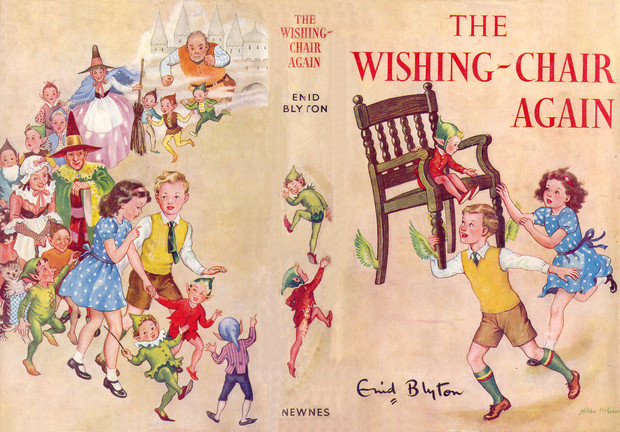
Next post: The Wishing Chair Again

Posted in Book reviews | Tagged , , | 3 Comments

Mix Up Monday

Here’s a tricky week for you, Fiona and I are having a planned change around this week, instead of our unplanned one last week!

I shall be providing you something interesting for our Friday post, and Fiona will be hopefully reviewing the audio book of Five Get Into Trouble for us. As Trouble is one of my favourites I hope that the outcome is good.

Our contributor this week is the lovely Laura with a review of The Adventures of the Wishing Chair for us. Looking forward to reading that!

In other news, we’ve reached 111,000 views on the blog this week. I can’t believe now this blog continues to go from strength to strength. So here’s to everyone who visits us, and thank you to all of you for your support and our lovely contributors!

This week I shall leave you with some of my spring shots from recent walks. Hope you’ve all been enjoying the sunshine too!

Posted in Blog talk | Tagged , | 2 Comments

My fourteenth Noddy book: Be Brave, Little Noddy

My fourteenth Noddy book is the thirteenth in the series (that isn’t confusing at all) and it’s one I only have in paperback. I’m not sure of dating it but I’m guessing around the 70s or 80s as it is priced at 35p.

The cover of the paperback

The cover of the paperback


THE STORY

This story starts with Noddy having had a very successful morning ferrying the residents of Toy Village around. He has earned a pocketful of sixpences and is feeling very happy with himself until disaster strikes. Someone’s parked their car much too close to a corner (in direct violation of the highway code) and he’s gone right into the back of the vehicle. He ends up in Sid Golly’s fruit barrow and his little car is badly damaged. So much so it reverts to saying poooooop, like it did after getting soaked at the beach, instead of its usual parp parp. 

DSCN2183

The driver of the other car is a wooden man who’s bigger than Noddy. He’s called Mr Honk and is from Toy-Car Town. Despite the fact Mr Honk’s car isn’t damaged at all (being much bigger and tougher than Noddy’s little car) he’s very angry at Noddy.

Mr Plod is a bit useless when he turns up as despite Mr Honk being in the wrong he tells Noddy off. It isn’t until Miss Fluffy Cat interjects that the policeman concludes that Mr Honk may have some blame for the incident. Mr Honk, realising he may well get into trouble, slyly backs down and tows Noddy’s car to Mr Golly’s garage for repairs then speeds off, laughing unkindly.

The whole scene there is probably has the most realism of any Noddy storyline I can think of. These things happen in real life. People park badly and sometimes the wrong person gets blamed for a car accident. Of course there’s no car insurance in Toyland (maybe there should be though!).

Anyway, poor Noddy has to do without his car for a while as it’s being repaired. He doesn’t feel at all brave about this but Big Ears makes him buck himself up with one of those songs that I tend to skip over when reading.

DSCN2184

Ever resourceful, Noddy borrows Big Ear’s bike to run errands and earn some more money. He’s quite happy with this until he sees Mr Honk ferrying his usual passengers about in his big car. He can take more passengers than Noddy can (though apparently  Noddy can squeeze two toys in his car at a time, which is shown later) so Noddy worries that he’ll have no business left when his car is running again.

DSCN2186

The toys of Toy Town are with Noddy, though, and say they will go back to him when his car is fixed. Mr Honk is apparently rather rude and doesn’t carry their luggage. On the first day of having his car back Noddy has a job lined up to collect Mr Tubby Bear’s brother from the train station. When he arrives, however, Mr Honk has beaten him to it. Mr Honk gloats after he drops off his passenger at the Tubby Bear house and Big Ears comes up with a unusually immoral plan. He steals the wind-up key for Mr Honk’s car and says he will hold it to ransom until Mr Honk agrees to leave Toy Village.

Mr Honk is rude and unkind but he isn’t doing anything wrong in working as a driver in Toy Village. If the toys exercised their right not to choose him as a driver because of his bad service that’s one thing, but I’m not sure I can justify Big Ears stealing from him to force him out of town. We don’t even get that full resolution from the tale as it ends when they see Mr Honk’s car has run down on his way back from dropping Mr Tubby Bear’s brother off.


MY THOUGHTS

All in all it’s a slightly disappointing ending. I think it would have been more pleasant had the Toy Village residents kept their dislike of Mr Honk to themselves until after Noddy had his car back and showed him their solidarity in choosing him over Mr Honk, forcing the bigger toy to admit defeat.

Noddy overloading his car

Noddy overloading his car

Posted in Book reviews | Tagged , | 2 Comments

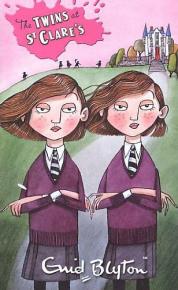
Fifth Formers of St Clare’s

Fifth Form at St Clare's, Egmont cover

Fifth Formers of St Clare’s, Egmont cover

Fifth Formers of St Clare’s is the final Blyton-written instalment of the series. Pamela Cox subsequently wrote three more books for the series. Third Form at St Clare’s Kitty at St Clare’s [also set in the third form] and Sixth form at St Clare’s to fill in the ‘gaps’. Blyton herself never returned to St Clare’s after the Fifth Form.

After 1941 St Clare’s was not part of her on going writing possibly because the second world war was in full swing and even Enid with her many different publishers had to ration her paper use. Or it’s possible that she moved onto bigger and better things, different series. The ending in the Fifth does make it seem like there will be another book, especially after the build up of who is going to be the head girl!

So anyway we start this term with more new characters, dropping some ones once more from the previous book. We also gain two old characters, Gladys and Mirabel  to be part of the Fifth form with the twins, Janet, Bobbie, Hillary, Carlotta and Claudine as well as Alison and the Honourable Angela.

Mirabel is made sports captain for the whole school and Gladys becomes her deputy. However the power goes to Mirabel’s head somewhat and she starts expecting the lower school to take as great an interest in games as she does, and begins to rub everyone up the wrong way. Meek little Gladys cannot seem to rein her in and eventually resigns her post in the process for a short while.

The new girls are Felicity Ray, up from the fourth form, Anne-Marie Longden and an old sixth former, Alma Pudden. I must say that the girls seem to chop and change forms a bit, I don’t really understand this whole thing of girls being left behind or moved up and down in the St Clare’s and Malory Towers novels. Its possibly because things were different in the school system back then to the way things are now? Can anyone shed any light on this for me?

Anyway, we don’t have a very happy bunch of girls really this year, but then the St Clare’s girls don’t usually seem to be very settled. Anne-Marie is supposed to be a gifted poet, at least she believes she is and is very put out when the other girls and then new English mistress don’t agree. Her poems are described as very dull and sad because she believes poems are supposed to be sad and moping.

Anne-Marie has to share a study with the musically gifted Felicity Ray as well, and she doesn’t like it. Felicity practices all the time and disturbs Anne-Marie’s concentration, and Anne-Marie feels hard done by. She also dislikes that Felicity’s genius with music gets recognised and goes about planning a way to get her own  thought of genius recognised and gives Mam’zelle a fright in the process.

Another big part of the fifth form is that Claudine’s little sister Antoinette joins the school and  becomes a bit of central character.She causes mischief such as setting off the fire bell during a games meeting, causing the Honourable Angela some distress as well as a good dose of her own medicine and helping her form organise a midnight feast which is discovered by Alma who cannot stop eating.

Overall this book in the series feels weaker than the rest. There are too many new characters to keep in mind as the plots weave in and out of each other. Too many factors to consider and none of the familiar faces to lighten the load. In fact Pat and Isabel, possibly considered the series protagonists, are barely seen. There are no jokes from Bobby or Janet and no interaction outside these new characters.

I must say that I am certainly not a fan of this book, or actually, of the series. Unlike the Malory Towers books which centre largely around Darrell, and characters you’ve grown to love, St Clare’s doesn’t even have the twins by the third book as the focus shifts. Could this possibly be why there was no sixth book? Did the publishers think that they weren’t working? I don’t know, and I wish I did just because I would have liked to see how Blyton finished her series. However if you are a fan of the series, don’t fret! Pamela Cox has written the final term for the O’Sullivan Twins.

I think that the St Clare’s series would be a good starting point for any parents who are looking to introduce their children to the Blyton world as they would be able to read a chapter a night as a bedtime story and the child wouldn’t feel cheated as the events in one chapter rarely carry over to the next. But I’m afraid, I don’t think I shall be reading St Clare’s again. I’ll stick with Malory Towers if no one minds!

Posted in Book reviews | Tagged , , , , | 8 Comments

Five Go Adventuring Again reviewed by Chris

This is the second of the Famous Five series, and makes it into my personal top three along with Five on Finniston Farm and Five Go Down to the Sea. I’ll come back to what might connect these three preferences. Five Go Adventuring Again was first published in 1943 by Hodder & Stoughton and I have the tenth impression of this edition, published in 1956. It is one of the red hardbacks, sadly with dustjacket missing. Illustrations are by the ever-excellent Eileen A. Soper. The cover shown here is that of the 1943 first edition and same illustration appears as a colour frontispiece in my volume so I would assume that this was also the dustjacket image. For other reviews, see Nigel Rowe’s on EnidBlyton.net and Terry Gustafson’s on The Enid Blyton Society. See also Fiona’s synopsis on this blog.

Five go adventuring again

First edition cover by Eileen A. Soper.


It is the Christmas hols and as so often things begin with misfortune when Anne, Julian and Dick’s mother gets scarlet fever and their father is in quarantine. Never mind, because the children are to stay at Kirrin with their cousin George, and of course Timmy, in Uncle Quentin and Aunt Fanny’s cottage. On the other hand there are to be lessons with a private tutor since Julian and Dick have had influenza twice in the term and have fallen behind with their work. It does strike me that there is an awful lot of illness in this family, and two bouts of flu in one term seems excessive. Their mother is even more unlucky as scarlet fever is rare in adults and, in the pre-antibiotic days when the book was first published, it could be fatal. By the way, at the time, there was what proved to be an ineffective vaccine, interestingly called the Dick vaccine (thanks, Wikipedia). By the way again, this blog has already covered the many illnesses that feature in Blyton including flu and scarlet fever.

Anyway, the stage is set for some winter fun and, who knows, an adventure (our hopes are high given the book’s title). The girls arrive first (it always seems to happen in Blyton that girls’ schools break up before boys’) and are met by Aunt Fanny who tells them that Uncle Quentin is working on a secret theory which will be used for the good of the country but she cannot tell them what it is since, of course, it is secret even from her. Next day, they meet Dick and Julian at the train station, beautifully illustrated by Soper, with Julian looking especially dashing and alarmingly mature, and enjoy a splendid welcoming tea at Kirrin Cottage. Uncle Quentin announces that he has hired a tutor – a late but superbly qualified applicant for the post, which begins to arouse our suspicions – by the name of Mr Roland. Apart from his qualities as a tutor it seems he is knowledgeable about Uncle Quentin and his work, which might also make us suspicious since this work is supposed to be secret, isn’t it? We are not alone in wondering if Mr Roland is too good to be true when he arrives. Timmy refuses to ‘shake hands’ with him, and even turns his back on the tutor, and for his part Mr Roland professes a dislike of dogs. This of course sets George against him from the outset.

five go adventuring again train

Meeting Julian and Dick by Eileen A. Soper.

Now the other main plot element is introduced. The children visit Kirrin Farm and meet Mr and Mrs Sanders, the old couple who live there, who mention that they will have tenants over Christmas: two artists “from London Town” no less. More suspicions form in the reader’s mind. Bohemian types and Londoners, eh? They need to have an eye kept on them. But they have yet to arrive and in the meantime the children learn that the farmhouse has a secret compartment behind a panel, and a cupboard with a false back. Exploring the compartment, Dick finds an old book of recipes and home remedies which he gives to Mrs Sanders, an old tobacco pouch which Mr Sanders keeps, and a curious old linen rag, with Latin writing on it and a strange diagram, which the children are allowed to take. The writing includes the words ‘via occulta’ which Julian translates as ‘secret way’. The cupboard’s false back appears to be a dead end, but more of that later.

In the run up to Christmas lessons begin, but they are overshadowed by the worsening relationship between Mr Roland on the one hand and George and Timmy on the other. The other children get on well with their tutor, however – despite his bristling black beard which only partly disguises his thin and cruel lips, and piercing eyes, which taken together might have given them pause for thought I can’t help feeling – opening up a rift with their cousin. Matters get worse when Timmy nips Mr Roland’s ankle and as a result is excluded from the lesson room. But it is not all lessons. There are jolly Christmas preparations to make, including decorating the house with the exception of Uncle Quentin’s study because it is full of the equipment he is using to discover a “secret formula” (Blyton needed to brush up on her science here – is it a secret theory or a secret formula that Uncle Quentin is working on? They’re not the same). Mr Roland plays a full part in the preparations leading the children to show him, to George’s disgust, the mysterious linen document. He is able to decipher from the Latin text that the diagram refers to eight wooden panels in a room with a stone floor and facing east, giving entrance to a secret way.

Christmas Day is a wonderful time for all, with splendid presents: a toy station, a doll with eyes that shut, books about dogs and aeroplanes a pocket knife with three blades and more. Add to that Christmas lunch, the tree, ornaments, candles, sweets and no lessons and it is no surprise that the children go to bed happy. But in the night things begin to go very wrong for George. Woken by Timmy’s growling, she goes downstairs to investigate and hears a noise that might be a burglar, only to find Mr Roland poking about in Uncle Quentin’s study. Timmy attacks him but he claims that he too had heard a noise and was investigating in case it was a thief. Uncle Quentin banishes Timmy to live outside.

On Boxing Day the children decide to search for the secret way which they assume is to be found at Kirrin Farm, but George refuses to accompany them because Mr Roland is also going, although first he goes alone to the village. At the farmhouse the children fail to find the secret way, but they do meet the two artists, Mr Wilton* and Mr Thomas (described, in their absence, as “queer folk” by Mrs Sanders, but whether this is because they are artists, Londoners or baddies is not clear). Later, Mr Roland arrives and is introduced to them, and responds as if they are complete strangers to him. But then there is a crucial plot turn because when the children meet up with George again it emerges that she had seen Mr Roland in the village talking to the artists, and was clearly well-acquainted with them. Why, then, had he pretended not to know them when he met them at the farm? From this point onwards all our suspicions about Mr Roland are confirmed, and what’s more we’re beginning to have doubts about those townie artists.

Poor old Timmy is still banned from the house by Uncle Quentin, with Mr Roland’s encouragement, and the cold weather makes him develop a cough. George smuggles him into the house at night and rubs liniment into his chest in front of the fire in Uncle Quentin’s study. But the next day it is discovered that some test tubes have been broken and some pages of the book Uncle Quentin is writing are missing. Another oddity is that a bottle of “camphorated oil” is found in the study, and of course it comes out that George had been in there with Timmy. She admits this, but assures her father that she had nothing to do with the broken test tubes and missing pages, and – in a rather touching scene – he knows that she is telling the truth. However, he refuses to believe her when she accuses Mr Roland of having stolen the pages.

After the encounter with her father, George remains in the study and notices that it has a stone floor, faces east and has eight wooden panels. Could this be the entrance to the secret way? George thinks so and so do we. But she is sent to bed in punishment for having brought Timmy into the house. Meanwhile, snow has begun to fall very heavily. George tells the other children of her suspicion that Mr Roland is a thief and suddenly the children realise that they have fallen into – yes – a “Big Adventure”. Now events start moving very quickly. Mr Roland goes out for a walk in the snow. Julian follows him and sees him hand over a sheaf of papers to the two artists. The stolen book pages? Who would doubt it? Mr Roland’s villainy is obvious, but the children realise that they will never be believed without more proof. By now Kirrin Cottage and farm are completely snowed up and in the night the children follow up on George’s theory about the secret way. They find a handle behind one of the panels which opens a flagstone which in turn gives access to a passage – the ‘via occulta’ itself!

The next day Mr Roland is in bed with what one can’t help but feel is a well-deserved cold (which prompts the questions as to why it’s never the baddies who succumb to scarlet fever, influenza and the like), and Uncle Quentin is clearing the snow. This allows the children to explore the secret passage, and when they do they find that it leads to Kirrin Farmhouse and emerges in the cupboard with the false back, which is in one of the artists’ bedrooms. The children know they are in danger but they also realise that Uncle Quentin’s work is of national importance. They lock the bedroom door and search for the stolen papers, but the artists force the door and the children have to return to the secret passage. As they go through the cupboard, George finds some papers in the pocket of a coat hanging there. Hearing the noise of the children, the artists pursue them down the passage but George sets Timmy on the men who retreat to the farmhouse. The children are able to get back safely to Uncle Quentin’s study and give him the papers which, of course, turn out to be the missing pages of his book. They tell the full story and Uncle Quentin feels very guilty for his treatment of George and Timmy, as well he might, although his daughter immediately forgives him.

All that remains is to catch the baddies. The snow means that they cannot escape and, for good measure, Mr Roland is locked in his bedroom whilst the family enjoy a cosy fireside lunch. At some point (it is not quite clear when: he seems remarkably blasé about it) Uncle Quentin calls the police but the snow means that there is no prospect of their arrival. In the meantime is anticipated that the artists will explore the secret passage and indeed they do, emerging in Uncle Quentin’s study in the middle of the night to be met by Timmy and locked in with Mr Roland. The next day the police arrive on skis (why couldn’t they have done this the day before?) and decide that for now the three villains can be left locked up until the snow melts. This happens two days later and the police return and take them away to meet, one hopes, justice.

In all, then, a superb adventure. The main negative is that it is predictable almost from the beginning that Mr Roland is a bad egg. So there is very little suspense, although the chase at the end is quite dramatic. The main appeal for me is the prominent role of secret panels and passages and it is this which links Five Go Adventuring Again with my other favourite Famous Fives, although of course it is not confined to these three. All three, though again not uniquely, feature farms. I particularly like the wealth of incidental detail, especially about Christmas preparations, and the atmosphere created by the snow. This isn’t the commonest season for a Five, although Five Get into a Fix comes to mind, and I think is the only time we are at Kirrin for Christmas. I’d like a bit more detail on the Christmas meal though, about which we are told only that the table is “loaded” and features “an enormous turkey”, which Mr Roland, rather presumptuously I felt, carves. It’s a missed opportunity to tell us about the roast potatoes, bread sauce, sprouts and stuffing which I feel sure that Joanna the cook prepared. Other than that, all the classic elements are present except for one, which is my least favourite anyway, namely the presence of a child-outsider to be patronised by the Five. I am thinking of, for example, Sniffer in Five Go to Mystery Moor or Aily in Fix. Plus there is a juicy role for Timmy, a lesson in humility for Uncle Quentin, a lesson in skiing for the Kirrin constabulary, and a lesson in Latin for the rest of us. Truly, something for everyone.

*In Fiona’s synopsis he is called ‘Mr Wilson’ but in my edition he is ‘Mr Wilton’. [Not any more as I’ve just gone and corrected my error – Fiona]

Posted in Book reviews | Tagged , , | 9 Comments

Monday

Spring is definitely here in Scotland – we’ve had sunshine most of the week and the daffodils and other spring flowers are out in force.

Some of our wonderful contributors have also come out of hibernation and that means we have some posts for this Wednesday and the next, too. This week we have Chris who has reviewed Five Go Adventuring Again.

I’m going to review my next Noddy which is Be Brave, Little Noddy. I was down for an audio review but given my track record with those lately and the fact I have the 4-8 shift at work on Thursday, I thought a Noddy was a safer bet.

Stef will probably have her latest St Clare’s review for you by Sunday (she’s been away staying with friends this weekend which was why she didn’t have it ready this week).

There has been some lovely news from our favourite George – Jemima Rooper – this Sunday evening.

Jemima Rooper at the Olivier Awards


Doesn’t she look wonderful? Huge congratulations to Jemima and her partner Ben. (And of course, she meant that it’s not a ginger-beer belly I’m sure.)

I’ll leave you with the evidence of spring in Scotland – Carnoustie in particular as that’s where I was walking on Sunday.


Posted in Blog talk | Tagged , , | 2 Comments

Fiona’s Blyton wishlist

I’ve got a lot of books, and a lot of those are Blytons. There are a great number I don’t have, though and I thought I would pull together a list of those for you this weekend. I couldn’t possibly list them all so I will stick to those I have as a ‘top priority’. Those would be titles I have in red in my spreadsheet, most of which are required to complete a series as otherwise I’d end up with more books from more series and collections than I could handle! Though, sometimes, when I see a bargain I end up starting a new series…

I’ve got complete collections of:

  • The Adventurous Four (2)
  • The Adventure Series (8)
  • Amelia Jane (3)
  • Barney Mysteries (6)
  • Enid Blyton’s Magazine Annuals (4)
  • Evan’s Days Stories (2)
  • The Famous Five (21)
  • The Farm Series  (3)
  • Five Find-Outers (15)
  • Hodder ‘Party’ Books (2)
  • Hodder Story Books (8)
  • Josie, Click and Bun (5)
  • Malory Towers (6)
  • Methuen ‘Colour’ Story Books (4)
  • Methuen Naughty Children (2)
  • Mr Galliano’s Circus (3)
  • Mr Meddle (3)
  • Mr Pink Whistle (3)
  • Mr Twiddle (3)
  • The Naughtiest Girl (3)
  • The Secret Series (6)
  • The Secret Seven (15)
  • Six Cousins (2)
  • St Clares (6)
  • Werner Laurie ‘Tales After’ Story Books (2)
  • The Wishing Chair (2)

So I think that covers a fair chunk of Blyton’s output! You might have noticed a few big omissions though so I’ll start with them first.


I only started collecting Noddy books in the past year and I don’t quite have them all yet. I’m missing two titles from the series of twenty-four – numbers 11 and 12 – Noddy Meets Father Christmas and Noddy and Tessie Bear. I’m still working my way through the series (and reviewing them as I go) so those two won’t be a pressing need until I’ve read the nine that remain.

Something else I’ve only started collecting more recently are the Famous Five Adventure Games from the 1980s. I still need four of the eight, though I found the others fairly cheaply in charity and second hand shops.

The other major series I haven’t completed is The Faraway Tree Series. I have the three primary works (The Enchanted Wood, The Magic Faraway Tree and The Folk of the Faraway Tree) and the ‘prequel’ The Queer Adventure (originally known as The Yellow Fairy Book) but I’m missing Up the Faraway Tree which is a picture-strip book. I must confess, though, that I haven’t ready any of those books yet!

The earliest edition and the one I'm least likely to be able to find.

The earliest edition and the one I’m least likely to be able to find.

I bought my first Brer Rabbit book late last year (My Brer Rabbit Book 4) and I haven’t even gotten around to logging a list of the rest of them, so I don’t know what I’m missing there. Maybe that’s best.

I don’t hold out hope of completing the Happy House Children Series as Benjy and the Others (the third title) is something I’ve never seen for sale even at an unaffordable price.

I’m lacking two of the Holiday Books (namely numbers 1 and 3). These are particularly hefty books so often the postage is quite high on top of the price of the book itself. I’m sure I’ll get them at some point,though.

Another problem with trying to complete a series (for me anyway) is when you have say, four of the eight (like I do with the Foyle Flower Story Books) but one’s a later edition lacking much of the original content. I can’t really count that book so I’m still looking for Daffodil, Poppy, Snowdrop, Water-Lily and Foxglove.

I need one Macmillan Story Reader The Magic Knitting Needles and Other Stories to go with the other seven I have. I don’t think I’ve seen this on eBay and it annoys me to be so close to having all the books but not being able to find the last one.

the-magic-knitting-needles-and-other-stories

Similarly I have three of the five Macmillan Nature Readers. I still need The Rabbit’s Party and Other Stories and Susan and the Birds and Other Stories to finish the series. I’ve seen Susan and the Birds for sale a fair few times but for some reason it’s always priced a lot higher than what I paid for the other titles I have. It’s not even a series I’ve read so I’m not keen to spend £15 or so on one more book.

I also have the first two Treasure Trove Readers which means I need three more.

I’ve also got several series where I’ve only got one title (see opening comment about bargains…). Those would be Twenty Minute Tales from the Methuen Minute Books (I have three more to get), the third My Enid Blyton Book from the Marks and Spencers BooksSanta Claus Gets Busy from the six Wheaton Musical Plays, Nature Reader Five (only 35 Enid Blyton Nature Readers to go!), The Magic Snow-Bird from the Pitkin Pleasure Series (13 to go but I’ve only seen one or two in poor condition at high prices) and finally Trouble for the Twins of the 18 Brockhampton Little Books Series.

Some (I think five of six) of the titles from those Brockhampton Little Books Series are also in the Brockhampton Picture Books Series. I have 4 of the 12 picture books and I’m really not sure whether I’ll aim to collect all 12 plus all 18 from the other series.

I don’t have any of the O’Clock Tales books actually. Not an intentional decision, but just by chance I haven’t spotted any bargains in that series to start me off.

Oh, and I can’t forget about the Enid Blyton Society Journals. I have 40 of 56 so far. I’m needing 1-3, 5-6, 8, 11, 14-18 23 and 27.

There are some stand-alone titles I’m missing too. The Birthday Kitten, The Adventures of Scamp, The Land of Far-Beyond and Tales of Green Hedges are the ones I’ve singled out to have on my list but I imagine there are others I’ve missed.

So a reasonably long shopping list there, but not an exhaustive one by any means. There are strip books like Bom, Clicky, and Mary Mouse, modern annuals and reprints, continuations, plays, song books and so so much more. I’ve also got a Pinterest board which has other titles on it (hopeless dreams, some of them.) It’s an impossible life-time’s work!

It would be interesting to know what you feel is missing from your collection, as I’m sure none of us realistically aim to collect everything with that familiar signature on it. If you did you’d end up with a lot of duplicated content (I’m sure I already have some stories multiple times across various collections) and you’d need a mansion not to mention a millionaire’s budget, so where do you draw the line?

Posted in Personal Experiences | Tagged , | 7 Comments

The Island of Adventure – How has Blyton’s original text fared in a modern edition? part 7

It’s been a little while since I last did a post on this. There was meant to be one roughly every four weeks but I chopped and changed a few weeks on the schedule so it didn’t work out that way. Never mind, I got to it eventually. This week is chapters 13 and 14 so we’re nearly half-way through the book. Previous parts are one, two, three, four, five and six.

A reminder: my copy of the book is an 8th impression from 1955 (handed down from my mum) and the modern copy I’m comparing it to is a Macmillan one from 2001 (borrowed from Stef).


CHAPTER THIRTEEN: JO-JO IS TRICKED AGAIN

This chapter starts and continues with the annoying trend of removing Joe’s name from the text. They ruin a nicely repetitive piece If they went down to the shore, Jo-Jo would be there, collecting driftwood. If they stayed in the house, Jo-Jo stayed too. If they went up on the cliff, Jo-Jo followed by changing the first two names to he and the last being left as Joe. On three further occasions the name is omitted and replaced with him/he. I really don’t know why as there aren’t any instances of this happening to any of the other characters, and their names don’t seem to appear any more frequently than Jo-Jo’s.

There’s two instances of the black man in the chapter which are both made to the man. (I’m remembering that I’m trying to keep a tally of how many times Blyton referred to Jo-Jo’s colour which is why I’m making a note of these repeatedly.)

There’s an attempt to make the girls seem less… girly? later on, too. When they go down the secret passage it’s noted that neither girl is keen, and they hate it. But then when they found that in one part it was difficult to breathe, they were afraid. Or as it’s updated they stopped instead of being afraid. I think stopping implies a certain fear, or at the very least reluctance anyway.

The boys attempt to get her moving again and Jack (I think) says Get on Dinah, and don’t be an idiot. This is changed to Get on Dinah, we’ll be out soon. This might be kinder and more encouraging but it’s out of character for either boy, and they throw idiot around as a friendly insult at other points in the book.

As with previous chapters dear Jo-Jo is not dear Joe, he’s just Joe.

More hyphens are removed (though not from every phrase) but from heat-haze which ends up as two words.

Next Bill’s words are played with. Originally he says he [Jo-Jo] mustn’t see you sailing off in my boat. The off is removed in the updated text, so it’s just see you sailing in my boat. The original makes more sense as they know Jo-Jo is on the beach, and could possibly see the boat heading off out to sea. He’s not going to be out at sea, so he’s not going to see them after they’ve sailed off. And even if he did, Bill’s line is perfectly fine!

Last, but not least, Aunt Polly’s speech gets butchered. She is telling Jo-Jo off for shirking his jobs. Don’t just stand there looking like a stuffed dummy. You make me very angry, are her original words. These become don’t just stand there. Get on with some of your work. I’m not sure why that needed altering as I can’t see that as being offensive, suggesting slavery or something not easily understood by modern children. If there’s a connotation to stuffed dummy that I’ve missed, please do enlighten me.

An added note – there is still a lot of pidgin English coming from Joe in both versions, the best example being him saying I seed [saw] them.


CHAPTER FOURTEEN: A GLIMPSE OF THE ISLE OF GLOOM

Thankfully for my blood pressure there’s a little less changed in this chapter.

Sea-sickness becomes sea sickness, dear is missed out in dear Jo-Jo and Jo-Jo is again replaced with him but at least it’s only once.

The only substantial change comes to some of Aunt Polly’s words. Of Jo-Jo she says He’s really getting impossible – so uncivil and lazy. Most of this is cut so that she just calls him lazy. 

I had a moment of triumph when I noticed the modern edition missed altering a queer – when Jack and Dinah look at the map in Uncle Jocelyn’s study and note the shape of the island. Also unaltered is the way the boys handle the boat and then pull it in, while the girls sit back.


Although a lot has been changed, much of it isn’t anything new so there’s only six countable alterations that I can see. That makes sixty-one altogether.

Posted in Updating Blyton's Books | Tagged , , | 2 Comments

First April Monday

I hope you all had a nice Easter. Did you see the April and Easter poems I posted yesterday? Make sure you check them out if you didn’t see them!

This week we have no contributor again, but Fiona will do another chapter analysis of the updates to The Island of Adventure and I will… well… I have a number of options to do this week. One is get on with the episode analysis that I skipped out on yesterday, the other is review The Fifth Form at St Clare’s, the other is look at some more of Blyton’s twins, and the last (if I could read it in time) is review the next Adventure series book which would be Ship of Adventure.

As I can’t really be more specific than that I can get onto blog news, of which there isn’t much but I’m going to put out another plea for some contributors! Please please please! As you may have noticed we’ve used up all our lovely contributors’ blogs and are in desperate need of some more. Please check our Want to Write for World of Blyton Page? for details on how to get in touch and what sort of things we’re looking for!

Anyway I shall leave you with some of my pictures from Oxford that I took last week, and I hope you enjoy them, and give serious consideration to writing for us! You can see some more, and some of my other pictures on my Flickr here.

Posted in Blog talk | Tagged , , | Leave a comment

A Happy Easter – A poem by Enid Blyton

I’ve got a wonderful April and equally thrilling Easter Poem for you all today from The Enid Blyton Poetry Book.

A happy Easter, birds and bees,
A happy Easter, laughing trees,
A  happy Easter, daffodils,
Whose golden cups the sunshine fills.
A happy Easter, lambkins white,
And little rabbits, skipping light,
A happy Easter, skylark gay,
And Cuckoo speeding on your way.
A happy Easter, one and all,
Whether you are big or small,
Little snail or mighty tree,
A happy Eastertide from me!

Isn’t that nice? I shall leave you with some spring flower pictures by Fiona and myself. And hopefully without being too cliché;

Happy Easter!


Posted in Poetry | Tagged , , | 2 Comments

What I nearly bought this week…

A blog staple these days seems to be a “haul” post, often by video, showing off the blogger’s latest purchases – mostly of clothes and make-up though I’ve seen supermarket ones and baby things ones as well. Any hauls on this site will be book related, naturally, and will be mostly typed with a few photos!

Anyway, this isn’t even a haul. As the title says this is what I nearly bought this week. A virtual haul, if you will.


Firstly, I had my eye on a selection of Five-Find Outers titles on eBay – all first editions with dust jackets which started at a very enticing 99p each. I put them all in my watch list and checked back on them a few times, seeing them start to creep up as the week went on. Even The Mystery of the Invisible Theif  was being bid on. Several went past my (admittedly cheapskatey) budget of £5-10 for a book, and of course, I already HAVE all of these titles in later impressions without the jackets. (I don’t buy books I already have unless it’s a serious improvement on what I already have. Even then I usually still don’t as I can’t justify the spend.)

I pretty much knew by then that I wasn’t going to be bidding but I steadfastly watched them as some titles hit the £20 mark and others approached £10. On the last day of the auction I thought to have a look at my Excel chart of books (yes, I have a chart that denotes which titles I have, their edition, illustrator, publisher and the price I paid if I knew it…) and it turned out I had most of those on offer in a first edition anyway.

The Find-Outers on eBay

The Find-Outers on eBay

Long story short – I didn’t bid, I didn’t win, and they all went for quite a lot of money in the end.


Putting that behind me was easy as I wasn’t all that disappointed to have missed out, and later in the week I ended up on the Green Meadow Books site, following a link from the Enid Blyton Society forums. I went through all 20 pages of Blytons and mostly marvelled at the rare and expensive items but I also spotted a few reasonably priced items that are missing from my collection.

Firstly I picked out the first and second in the My Enid Blyton Book set from the Marks and Spencer’s trio. (Yes Marks and Spencers aka M&S, Marks, Marks and Sparks or if you’re in Scotland Markies, published books once upon a time under the St Michaels name.) Those were just £5 each and would have gone nicely with the third book which I already have.

Then there were the Enid Blyton Society Journals. There have been 56 to date, and I started subscribing back in the mid 30s I think. I bought what back editions were available then and have sourced more from eBay and other forumites but still lack 14 of them. Green Meadows had four I didn’t have but at £6.50 each they were twice the price they originally were. Add those to the two other books and my casual browse was starting to get expensive.
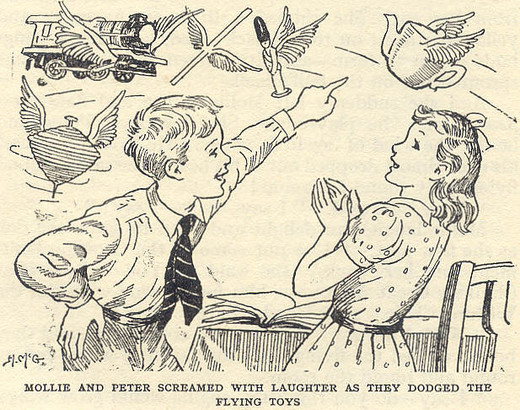
Journals 14, 15, 17 and 18

Journals 14, 15, 17 and 18

I also rather wanted the first Holiday Book (sans dust jacket) which was priced at £10, as I have all but the first and third of the twelve.

The Enid Blyton Holiday Book

The Enid Blyton Holiday Book

Forty-six pounds though, all in one go? I couldn’t justify it and hurriedly closed the tabs and stopped myself doing anything silly like ordering the whole lot. I hadn’t even checked to see what postage would have been on top so it could easily have been more than £50.

So that was what I nearly bought this week. Perhaps not as exciting as if I had actually bought something, but much better for my purse. Perhaps I’ll allow a small bargain at some point soon to reward myself for being so good. We’ll see!

Does anyone else fill a real or virtual basket with goodies only to back out when they see the cost? And does anyone else struggle to justify buying up so many books? (Clearly I justify it sometimes as I have… a LOT of books but still, I’d have way more if I didn’t stop myself.)

Posted in Personal Experiences | Tagged , , , , , | 2 Comments

Last Monday in March

Well March has flown by! We’ve had the odd sight of nice weather – brief spells of sunshine – so I’m hoping to see more of that once we get into April.

Wednesday is shaping up to be contributorless again unfortunately (I’m considering contacting Mr Barling to see if he can smuggle me some blogs, or better, some bloggers that I can lock up in an underground dungeon and force to write. Don’t worry – I’ll feed them well!) so it may be a reblog from some place – we shall have to see what I can come up with on Tuesday night.

I’m intending to listen to another audio this week – Five Get Into Trouble – and then review it so again we’ll see if that happens! And then Stef is going to watch and review another 90s series episode. Five Go to Smuggler’s Top if she can find it and something else if she can’t.

I’ve actually made it out and about lately thanks to the nicer weather and on one of my walks I spotted the remainders from some sort of children’s book event. No Blytons though!

It was lovely to see all those activities still sitting there on a Sunday afternoon – there was also a hammock and a tub of chalk. I’m sure the children had a ball!

Posted in Blog talk | Tagged , , , , , , , | 1 Comment