OFF TO ROSEWOOD!
Miss Pepper came to collect the children two days later. Mrs Lynton was pleased to see her old governess, and gave her a hug and kiss when she came up the front path.
“It’s so kind of you to invite the children to stay with you,” she said. “They’re all looking forward to it, I know.”
“They’ll enjoy it I think,” Miss Pepper smiled. “It’s a beautiful place, and there will be plenty for them to do.”
The two women then disappeared to have some tea and talk about the holiday.
“Mummy – shall we put the trunks into the car?” called Diana.
“Yes, you can do!” called back her mother.
The four children proceeded to load their cases and trunks into Miss Pepper’s car. Soon they were ready to go, and when Miss Pepper had finished having tea and cake with Mrs Lynton, everyone assembled in the drive to say their goodbyes.
“Goodbye Mummy, we’ll see you soon!” Diana called.
“Enjoy your peace and quiet!” called Roger.
“Goodbye Cookie, I’m going to miss your cakes!” Snubby grabbed Cook round the waist.
“Go on with you!” Cook pushed him away. “Shoo!”
“Goodbye Mrs Lynton.” Barney shook hands, and then gave Mrs Lynton an unexpected hug. She was surprised, and smiled.
“Bye Daddy!” Roger and Diana yelled.
“Goodbye Uncle Richard.” Snubby held out his hand most politely. Mr Lynton looked sharply at him, as if wondering what mischief he was planning now. He had learnt by now that the more innocent Snubby looked, the more likely it was that he had done, or was about to do, something he shouldn’t.
“Goodbye,” he shook Snubby’s hand. “Behave yourself for Miss Pepper.”
“Oh, Uncle Richard!” Snubby looked most put-out. “Of course we will!”
“I meant you,” Mr Lynton said, his eyes twinkling a little. “I know the others will. Go on – be off with you!”
It was a fun car journey to Rosewood. The countryside was beautiful, and they passed through many pretty little villages on their way. They stopped at one that had a couple of shops, and had ice creams.
“These are jolly good ices,” said Snubby approvingly. “Makes me want to order a second lot.”
“No you don’t!” said Miss Pepper, her eyes twinkling. “Back in the car with you all – we’ve got to get going.”
Barney had sat in front so far, but Miranda had been so fidgety that Miss Pepper insisted they go in the back and that Diana should sit in the front. So poor Roger was squashed in the middle of Barney and Miranda on one side, and Snubby and Loony on the other.
“What pretty names all the villages have!” said Diana, looking at the signposts as they drove along. “Little Finchley – makes me think of finches, Ashe-On-The-Water, Lower Honeywell and Upper Honeywell, and ours is called Rosewood!”
“It’s a very pretty part of the country,” Miss Pepper said. “Lower Honeywell is the closest village to us – about two or three miles away from Rosewood. It’s a pretty village, you could walk there if it’s a nice day.”
“Oh yes, we shall!” Diana said.
Eventually they reached Rosewood village.
“Here we are – Rosewood,” said Miss Pepper.
Everyone craned their necks to see out of the car windows as they drove through the pretty little main street. It was like a village from a picture on a chocolate box. It had a small main street with a post office and a general store. The houses were all either tiny whitewashed cottages or larger, thatched ones with timbers. There was a village green with a clear pond. Several small lanes led in various directions from the main street, some sloping hills, each one lined with more tiny, pretty cottages.
“Where’s your cottage, Miss Pepper?” asked Roger, trying to see out but having his view blocked by Snubby and Loony, and Miranda on the other side.
“Down this lane here,” Miss Pepper said, turning the car into a small quiet lane with one or two cottages here and there. “Look up there on the hill – that’s Rosewood Manor.”
The children looked up the lane to where it sloped into a hill. Perched on the hill was the most beautiful old manor house they had ever seen. It was a huge old place, built of soft grey stone, and was covered with little leaded windows, jutting gables, timbers, and large chimneys on the roof. Green plants climbed all over the walls and across some of the windows, giving it a very mysterious, romantic look.
“What an amazing place!” Diana exclaimed. “Is it very old, Miss Pepper?”
“It was built in the 1500s, so I’m told,” Miss Pepper said. “It has beautiful gardens too, lovely big lawns, a fountain, and there used to be some topiary, but I’m not sure if that is still there.”
“Topi…what?” asked Snubby.
“Topiary, ass!” Roger laughed. “You know – trees and hedges cut into the shapes of animals and other fancy designs.”
“Who owns the manor?” asked Barney.
“I don’t really know,” said Miss Pepper. “No-one has lived in it for over a hundred years. I have a feeling that it is still owned by the original family, but for some reason they don’t want to live there. There is someone employed to come and keep the gardens, though goodness knows why, if no-one ever goes there. Perhaps they intend to come and live here in the future, and are keeping the gardens in good order for when they eventually move in.”
“They should open it and let people see over it,” said Diana. “I bet it’s beautiful inside.”
Miss Pepper pulled in to the little drive of Rosewood Cottage and the children jumped out, thrilled. It was a beautiful little cottage, with a thatched roof. The walls were painted a very pale pink, the windows were leaded with a diamond pattern, and pretty window-boxes full of flowers adorned every windowledge. A gravel path led up to a strong-looking wooden door, and continued round the cottage to a very pretty garden with a small green lawn and numerous bright flower-beds.
“Oh, it’s beautiful!” said Diana, thrilled. “Oh Miss Pepper, what a lovelyl little cottage!”
“I thought you’d like it,” Miss Pepper said. “Come on – let’s get the trunks in and then I’ll make us some tea. I have no maid or help here yet, so you will have to help me with the cooking and things.”
“Of course we will!” said Diana. “It’ll be fun!”
The boys brought in all the luggage, while Diana helped Miss Pepper to prepare some scones and cake, and make a pot of tea.
“Shall we have tea in the garden?” asked Miss Pepper. “There’s a little table and chairs out there on the lawn, and it’s a lovely evening.”
“Oh, yes, let’s!” Diana said. “Wonderful!”
While they had tea Miss Pepper told them about the village. There were beautiful walks along the river, she said, and she knew of someone who kept horses, who might let the children take them out for rides.
“It’s not a proper riding stables,” she said. “But the lady is very nice and knows me quite well now, so I am sure she wouldn’t mind you taking the horses out for a ride sometime.”
There was also a man who lived down by the river who owned several small rowing boats, and who let people hire them to row down the gentle little river. The children couldn’t wait to do this.
“Where is the river?” asked Roger, munching his scone.
“It runs south from the other side of the village,” Miss Pepper explained. “Behind the village green is a row of cottages that back onto a kind-of field, or area of rough long grass, and the river runs through that field.”
“It sounds delightful.” said Barney, handing Miranda a small piece of cake. She began to eat it prettily. “I can’t wait to go out in a boat.”
“It’s very pretty down there,” Miss Pepper said. “The water flows quite slowly so it’s safe to row and even swim, and it’s the most beautiful clear green colour, you can see all the fish, and the stony river bed.”
“Well go there tomorrow!” said Diana at once. “If it’s as hot as today we’ll have a bathe. Can we take a picnic, Miss Pepper?”
“If you make it!” laughed Miss Pepper.

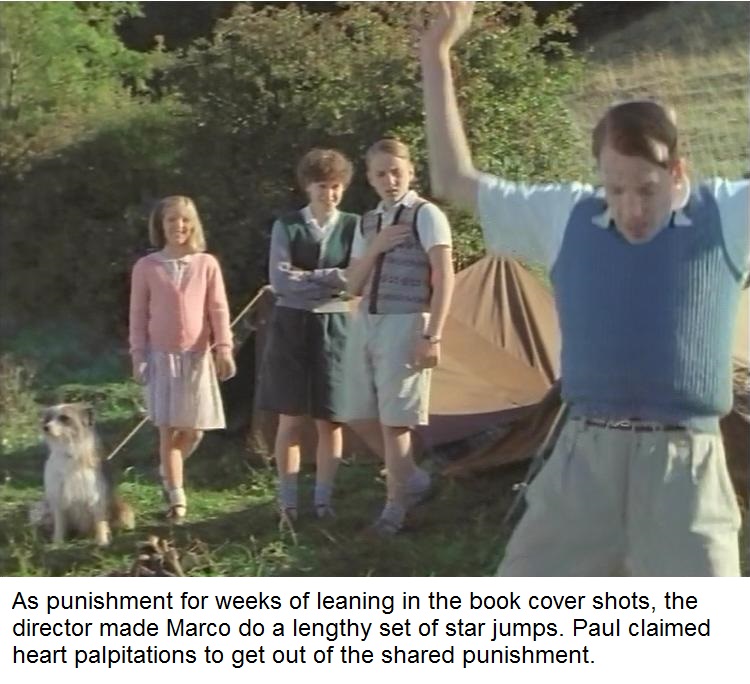 And also related to that awful, un-Julian-like moment:
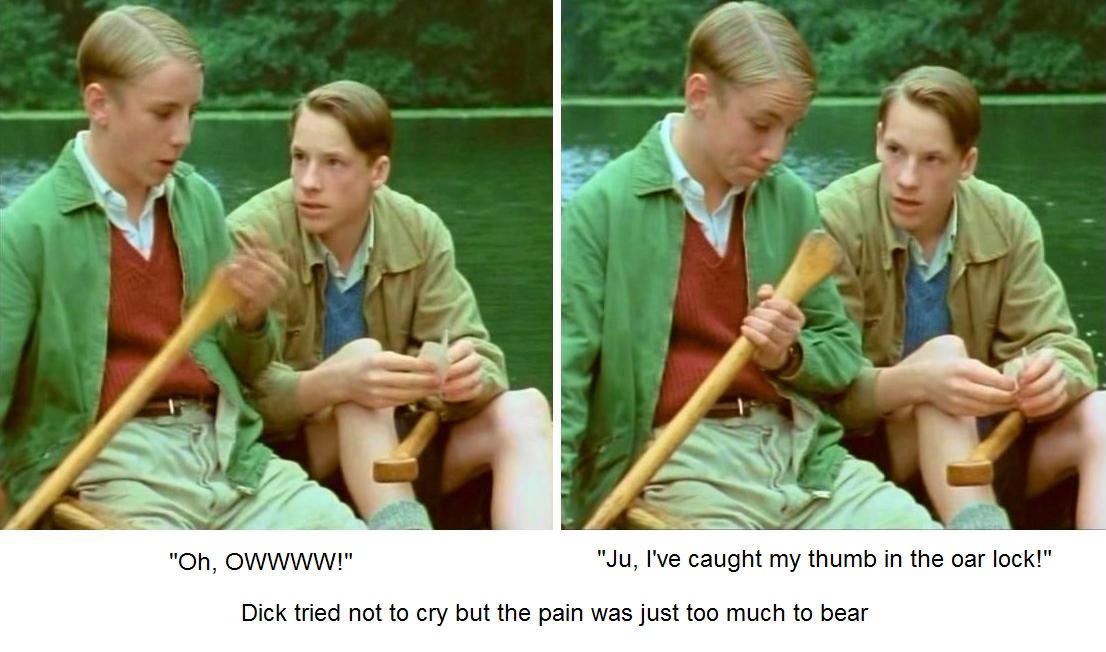

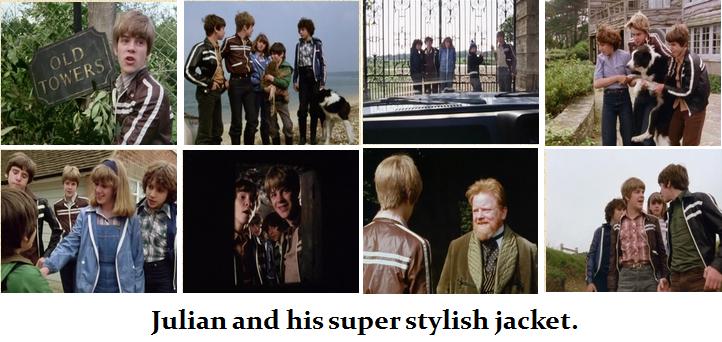 So, hope you liked these captions too (though I know I’ve drifted from true captions in a couple of place. And used far too many brackets probably. Sorry.) And maybe some day there will be more, as I have a host of screen shots just waiting to be made even funnier.
 Chapter fourteen:









 Fiona
Fiona pippastef
 worldofblyton


