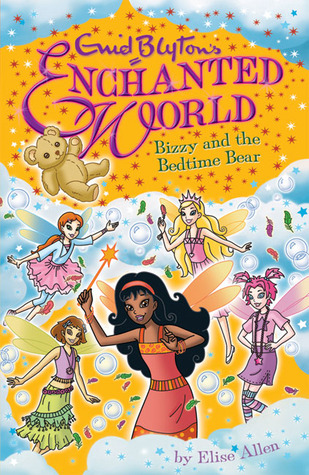
Bizzy and the Bedtime Bear

I borrowed this book from the library some time before the pandemic started, and it has been sitting behind the sofa in a pile of my ‘to reads’, along with some other Blyton continuation books I borrowed around the same time. I hasten to add that it isn’t technically overdue as I have just kept renewing it!

The reason I hadn’t read it was that I was sure it would be terrible. Was I right? Let’s see…


Enid Blyton’s Enchanted World

This is a whole new series, based loosely on the Enchanted Wood books. Bizzy and the Bedtime Bear is book 5 in the series so I have obviously missed some things along the way but it wasn’t too difficult to work out roughly what the overarching plot was.

I say loosely based as although the Faraway Tree and a few of the characters we know appear, the tree is only in the first chapter.

There is also a small matter of the characters. There are five fairies, Melody, Petal, Pinx, Bizzy and Silky. It’s not explicitly stated that Silky is the same Silky as from the original books, but it would be a bit of a coincidence otherwise. The problem with that is the continuity, though.

Silky in the original books has no wings and never flies. Silky in later reprints has wings in the illustrations, but still doesn’t fly. Silky in this new series has wings and flies.

Book five has a bit of an explanation at the beginning about the tree (and I assume that appears in all the book) ending with the paragraph:

Of course, not everyone explores the Lands for pleasure alone. Five fairies have been asked do so for the ultimate cause: to save the life of the Faraway Tree and make sure the doorway to the Enchanted World remains open.

And yes, that’s exactly as it appears in the book. I think the general meaning is clear despite the mistake, though.

The blurb on the back also says that:

When Talon the evil Troll tries to steal the Talismans that link the Lands to the Tree, the Enchanted World is suddenly in danger.

After the opening chapter which is a party designed to introduce us to the characters and the tree, a new land appears at the top of the tree.

The Land’s Talisman is the Bedtime Bear: the ultimate stuffed toy. Its embrace gives the gift of peaceful slumber to anyone who wishes for it. You should go now; we don’t know how long the Land will be at the top of the Tree…

I only hope that you remain focused and can return safely with the Talisman. And please be careful of Talon; I know you left him locked away in the Land of Giants, but he is strong and clever. If he has found a way out, he’ll be after the Bedtime Bear… and all of you.

Those few sentences more or less explain the plot of the series. It seems like the fairies have been tasked with collecting 7 talismans from different lands in order to save the tree and keep the door to it open. I assume the first book explains it all a bit more. I have only read 2 of the Faraway Tree books but I’m fairly sure that the idea of each land having a special talisman is a new device for these books, and I’d be interested to know how stealing talismans from the lands is a good thing (beyond keeping them out of Talon’s hands).


Sleepover Land

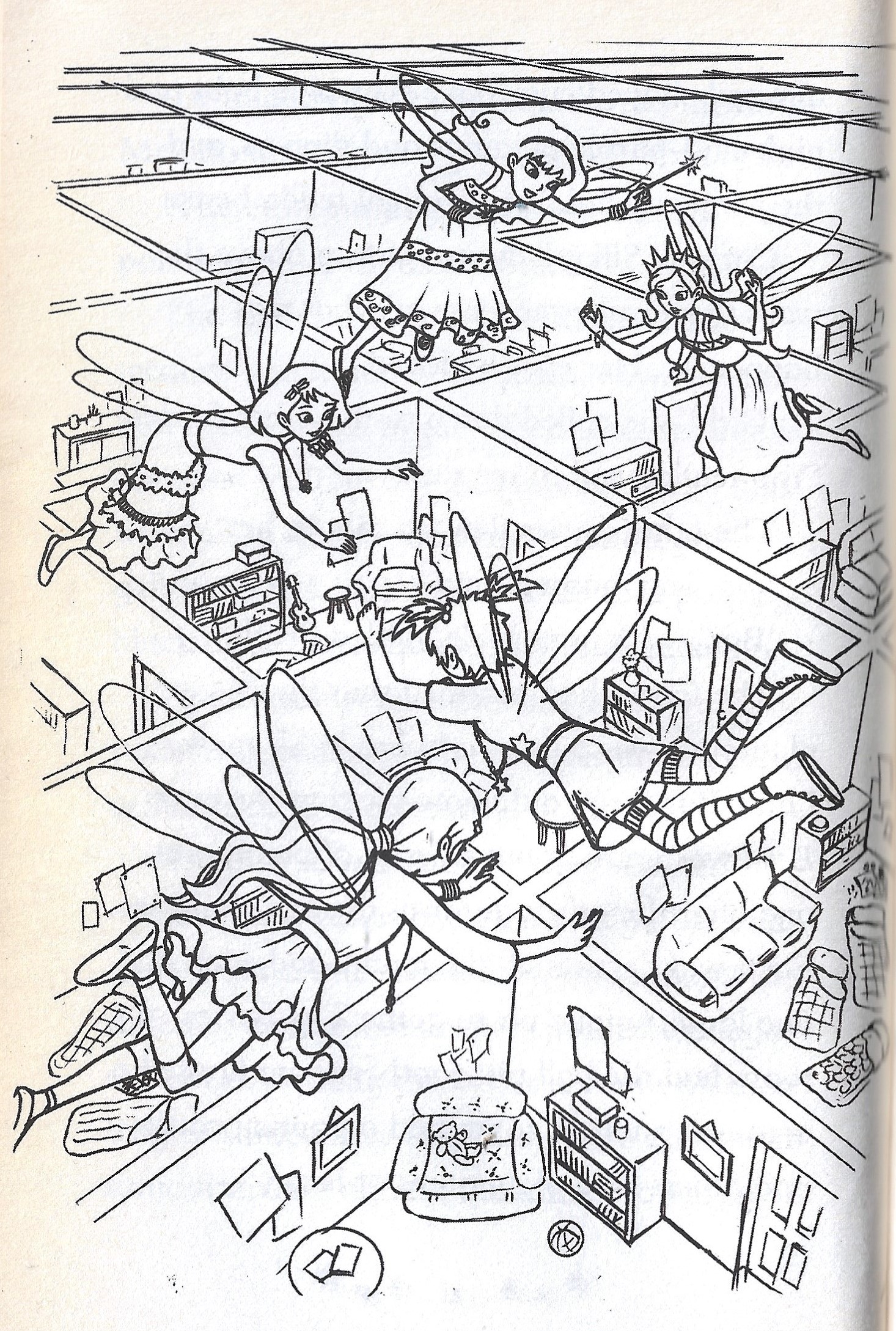
The land (no I won’t be capitalising land every time like the book does) the fairies go into is Sleepover Land, where hundreds of identical girls (the “sleepees”) are having sleepovers in groups of eight. The whole land is made up of room after room set up for sleepovers, and the day lasts just a few minutes, then a new sleepover begins. The goal is for the girls to have fun and stay up all night, then switch to a new room for a differently-themed sleepover.

Anyone who disrupts that fun is called a party-pooper and gets locked away in the first convenient place (naturally the fairies run into trouble here a couple of times).

The idea is interesting, but more sci-fi like than the whimsy of the lands Blyton had us visit. Why are all the girls identical? How can they survive without sleeping, ever? Is the land supposed to be less sinister but the talisman has changed it? None of these questions are quite answered, though at the end the talisman is returned to the vault so my theory holds some water.

The largest part of the book sees the fairies trying to find the Bedtime Bear and then persuade the girl who has it to give it up, then there are a few chapters at the end where Talon turns up to try to steal it himself and has to battle the fairies.

This is where the secondary plot comes in, that of Bizzy’s lack of confidence. The party at the start was a way of showing her messing up a few spells, so when it comes to the battle at the end she is not confident in casting any more but the other fairies convince her she can do it. I expect that as the books have a different main character each time (Silky and Melody have two books each) that there is a subplot about a personal struggle of theirs each time too.


The style

There is not a single thing about this book that says Blyton. If you changed the references to the tree to, say, taking a boat ride or climbing a hill to enter a portal to a different world then nobody would ever guess that it was based on a Blyton book.

Firstly there’s an irritating amount of capitalisation. I know the original books had Google Buns and Toffee Shocks, and sometimes capitalised the Tree (but not Land on its own) but that seems a style of the time, whereas in a book from 2009 it just seems like an affectation. What’s more is that it takes the trend to new ridiculousness by having phrases in capitals like Perfectly Prodigious Party Pastime, Zany Zonked-Out Zombie, Basic Bizzy Blunders and Spectacularly Splashy Sleepees Surprise.

The idea of girls having sleepovers with pillow fights, make overs, pink and black zebra-print rugs, funky-shaped lamps, ball pits full of lime green balls and so on is very 2006 (thus already a bit dated) and not at all in keeping with the original books. Being 2006 its also still full of girly stereotypes with the sleepees all wearing pink and purple pyjamas, doing makeovers, all but one fairy wears pink and they all have on makeup, jewellery and impractical dresses (not great for when you’re flying above people’s heads, I’m sure) except for the one wearing leggings underneath. The cover is sparkly and has bubbles and feathers on it, though they have no relation to the story. The talismans they collect are the teddy bear, a rainbow feather, a harp, candles, two kinds of jewellery and a flower. All sickeningly girly.

It’s a shame particularly as Blyton was so good at writing books that appealed to both boys and girls. Almost every book she wrote had a mix of boy and girl characters and even though the girls often took a back seat, due to societal expectations of the time, the books still appealed to all readers. I honestly don’t think that creating an all-female series of books is that great an achievement when you then try your hardest to make them super pink and girly so that they wouldn’t be read by a majority of boys.


Overall

I gave this one star on Goodreads. You can’t give a book no stars, but I think it has earned the one star as the general idea behind the story is good. The original books are episodic adventures, so I quite like the idea of a ‘big bad’ and seven talismans to collect across seven books. I just hope that the last book has a suitable ending to round off the story. It also has illustrations which seem exceedingly rare in post 2000 children’s book.

Unfortunately as it’s aimed at younger readers, the idea is not developed very well. Add to that five fairies who are pretty interchangeable, Annoying Alliteration And Avoidable Capitals plus the stereotypical girliness it’s just a big let down.

Posted in Book reviews, Other Authors | Tagged , , , | Leave a comment

Monday #471

I’m excited to say that there’s a copy of Zöe Billings’ next book sitting in my inbox, ready for me to proof-read. It’s the April holidays so I haven’t managed to open it yet because I want to wait for when I can get really stuck in. I can’t wait to see what the four kids get up to next. Unfortunately for you, I’ll leave my review until I’ve read the properly published version.

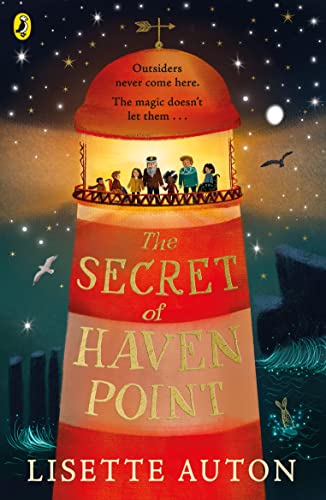
Enid Blyton’s Enchanted World: Bizzy and the Bedtime Bear by Elise Allen

and

The Dirty Dozen of search terms

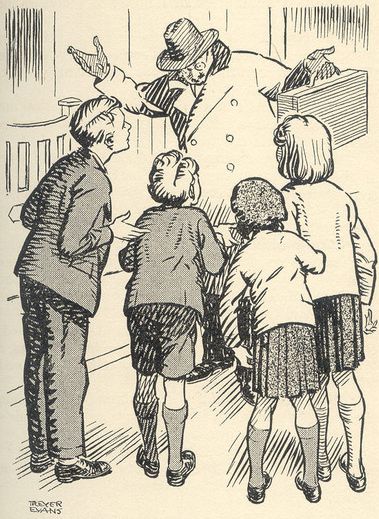
They all went up the road together, the man hunched up in his bulky coat. He pulled his scarf over his chin as they met the wind at a corner.

“We are soon at Grintriss?” he asked, anxiously. “This wind is too—too—”

“Too windy?” said Pip, obligingly. “That’s the worst of winds. They’re always so windy.”

Pip, thinking he is talking to Fatty in disguise, is a bit cheekier than he would have otherwise been.


Posted in Blog talk | Tagged , , , | Leave a comment

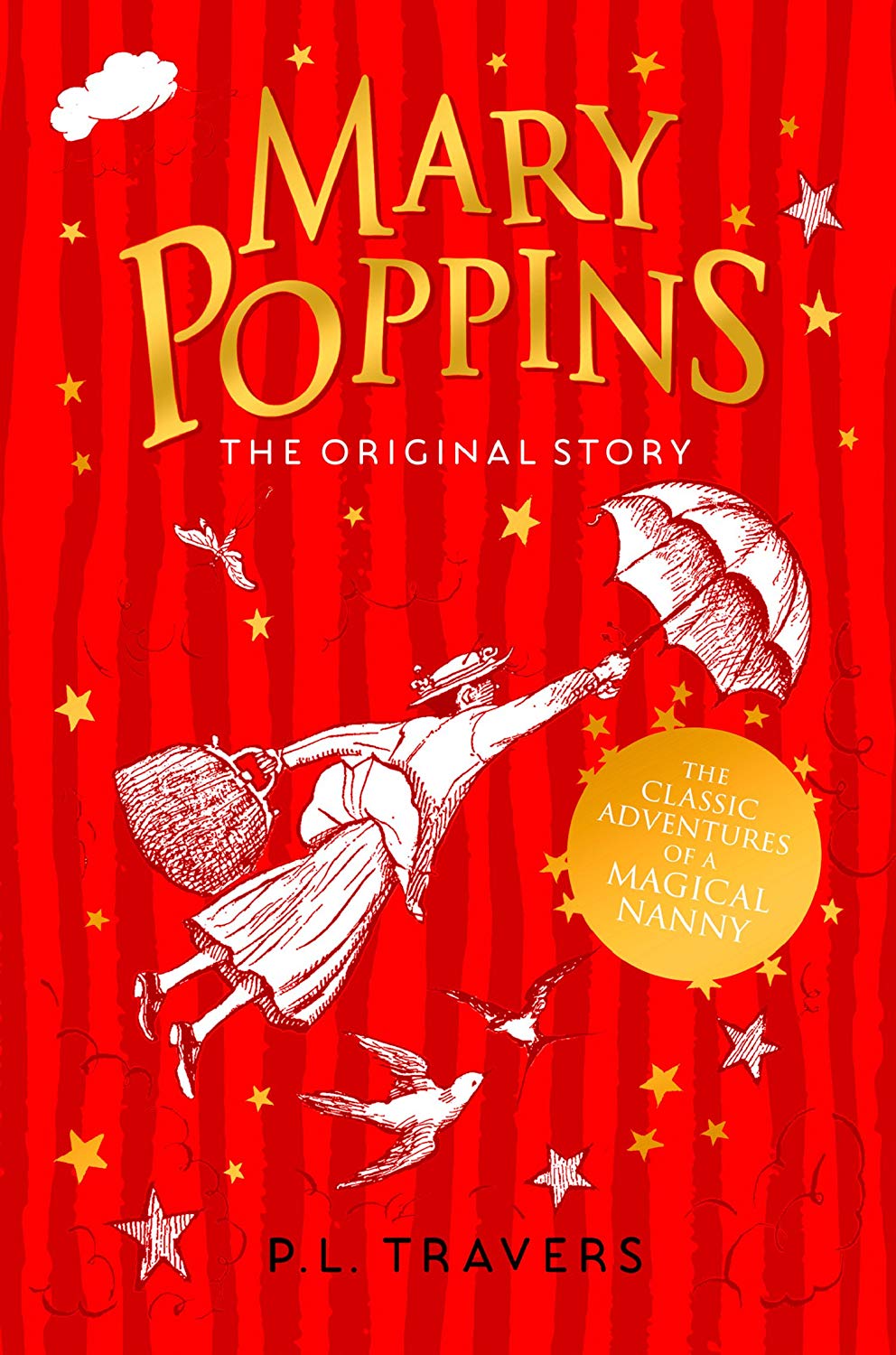
If you like Blyton: Mary Poppins by P.L. Travers

The character of Mary Poppins is no stranger to me, but I admit that I am primarily familiar with the film version, as played by the wonderful Julie Andrews. I have also seen the Emily Blunt version, but only once. The books (there are eight of them!) have been on my list of things to read for quite a while now, but I had never got around to reading them. Ideally I wanted to magically find a nice early hardback that didn’t cost very much, but that didn’t happen, and so I found myself borrowing an eBook from the library via Libby.


The Mary Poppins Series

As I said above, there are eight books written by P.L. Travers. I have only read the first so far, so anything I say about the remaining 7 is based on what I’ve read online.

The titles are:

Mary Poppins (1934)
Mary Poppins Comes Back (1935)
Mary Poppins Opens the Door (1943)
Mary Poppins in the Park (1952)
Mary Poppins from A to Z (1962)
Mary Poppins in the Kitchen (1975)
Mary Poppins in Cherry Tree Lane (1982)
Mary Poppins and the House Next Door (1988)


Though some lists give a different order for the series, putting the A-Z and In the Kitchen in the last two places. Another has 7 books in the series with the A-Z an extra.

Having read the descriptions of these, I would imagine as it is because these are not novels as such. The A-Z has 26 vignettes, each telling a new tale about the characters of the books and using various words starting with the featured letter. In the Kitchen has Mary Poppins teaching the children to cook, and includes recipes.

What’s also interesting is that chronologically the events of In the Park, In Cherry Tree Lane and House Next Door all take place during the first three books.


Updates to Travers’ Books

There have been many updates to Blyton’s books over the years so I was interested to read about updates to the first Mary Poppins book, as from what I can gather they were made by the author herself.

In one chapter she and the children use a magic compass to travel the globe. They visit China, Alaska and the contiguous United States, plus Africa (though there is an argument that the visit south could have been to Australia), and meet the native peoples of those countries. Due to criticisms of the language, stereotypes and dialogue used Travers updated the text in the early 1970s.

In 1981 she revised the book again, and replaced the people with animals from the regions. Mary Mary Shepherd (the original illustrator) also replaced the illustrations to match.

The copy I read has the animals, but I would be interested to read both the earlier versions. I understand the reasoning for the updates, but I think it’s a shame that the end solution was to remove the human characters altogether rather than to more subtly amend the language and the illustrations.

I find this particularly interesting as the first update was carried out shortly before Blyton died. Travers was born in 1899, so she was only two years younger than Blyton, in fact less than two years by two days. The two women grew up at the same time, their school years and early adulthood would have overlapped heavily, and both began writing careers in the 1920s. One difference is that Travers was born and raised in Australia, coming to England in 1924, and moving to America for periods starting in 1940. Another is that aside from the eight Mary Poppins books above, Travers wrote just five other novels and a few Mary Poppins short stories (it’s not immediately clear to me if those short stories were taken from the novels or are fresh pieces). And the last one is that Travers passed away in 1996, and was still writing Mary Poppins books at 89.

Had Blyton’s health and mental facilities not begun to decline in the early 1960s I would not have been at all surprised if she had taken a similar stance and made some edits to her books, though of course this would have been hampered by the sheer vastness of her output.

Travers’ reasoning seems to have been two-fold. The reason for the first edit was seemingly her wish to not offend,

P.L. Travers decided to alter the descriptions and dialogues in this section of the story because “if even one Black child were troubled, or she (Dr. Francelia Butler) were troubled, I would have to alter it.”

Lina Slavova from The Mary Poppins Effect

Though she has also made statements that imply she didn’t believe that the work was offensive;

What I find strange is that, while my critics claim to have children’s best interests in mind, children themselves have never objected to the book. In fact, they love it. That was certainly the case when I was asked to speak to an affectionate crowd of children at a library in Port of Spain in Trinidad. On another occasion, when a white teacher friend of mine explained how she felt uncomfortable reading the pickaninny dialect to her young students, I asked her, “And are the black children affronted?” “Not at all,” she replied, “it appeared they loved it.”

Paris Review 1982 (though this portion is behind a pay wall)

However the second time was because the San Francisco Public Library had removed her book due to the ‘negative stereotyping’. Despite being annoyed at her publisher for not defending her more strongly, she decided to make the heavier edits to protect her book from further banning. The original text and the 1980s text are compared in this article.

Nonetheless, I have rewritten the offending chapter, and in the revised edition I have substituted a panda, dolphin, polar bear, and macaw. I have done so not as an apology for anything I have written. The reason is much more simple: I do not wish to see Mary Poppins tucked away in the closet.

Paris Review 1982 (though this portion is behind a pay wall)

Minus the cinema-screen technique Travers’ writing style sounds not dissimilar to Blytons’. (Blytons’ non-fiction work, aside, of course).

P.L. Travers did not use researched information for the portrayal of her characters. She simply pulled them out of the mixture of her childhood memories, readings and musings. Facts were never of a great concern for P.L. Travers.

Lina Slavova from The Mary Poppins Effect


The cast of Mary Poppins

Those of you who have seen the film will be familiar with the inhabitants of number 17 Cherry Tree Lane – Mary Poppins herself, Jane and Michael, Mr and Mrs Banks, maid Ellen and cook Mrs Brill.

These screen characters are largely representative of those in the books with a few alterations. Mrs Banks is not a suffragette, and Mr Banks makes money – by literally cutting out coins – rather than working in banking.

The film, perhaps to give more momentum and a neat ending to the plot has Mrs Banks engrossed in the suffragette movement and Mr Banks an over-worked and cross father. This allows Mary Poppins (and Bert) to show Mr Banks the error of ignoring his family and bring them all together at the end with the kite-flying. The book, being a more episodic series of adventures has no such overarching theme, but of course the Banks’ family story runs through the whole series.

I found the Mary Poppins of the book less likeable than on screen. In both she is firm and no-nonsense, but book Mary has a larger streak of vanity and can be much more snappish and cross. Film Mary may not admit that they’ve just had a magical adventure, but it is done with a knowing wink. Book Mary will snap at the children as if she has taken offense at their suggestion that they’ve just done something magical, which makes for quite confusing reading. As below, someone’s already expressed this much more clearly:

While they are similar by nature, they are completely different in personality: Julie Andrews’s Mary Poppins is never cross, but the Mary Poppins in the books is not only usually cross but reads as bitter, unloving, and grumpy. She also comes across as playing with the children’s minds, manipulating and belittling them while claiming that their magical adventures never happened.

– Jeffrey Davies of Book Riot.

Aside from that there are also two more children in the book – baby twins John and Barbara. As they are under year to begin with they do not have a great deal of page time, with the exception of one chapter where they are able to communicate quite clearly with birds (and presumably other creatures) an ability all children lose when they become one. It’s quite funny to see the twins adamant that they will always have that skill and never forget it. But of course Mary Poppins knows best and the twins turn one and become just babbling babies.

There is also a very lazy (but likeable) gardener called Robertson Ay, who for some reason, is also responsible for polishing shoes.

Outside of the house there is Admiral Boom with his nautical-inspired house (but no earthquake-inducing cannon fire), Miss Lark next door with her overly pampered dog, and of course, Bert.

Bert’s role is expanded for the film, in the book he is a street artist and friend of Mary who accompanies her (but not the children) into one of his paintings for an adventure. He also appears later, selling matches.


The adventures

Again, film-watchers will recognise the tea-party on the ceiling, feeding the birds for tuppence a bag, the trip inside the chalk painting and various other details from the screen.

However, being a book, there is room for many more adventures than made it into the adaptation.

There is the story about the pampered dog next door who makes friends with a common mutt, their adventure with the compass to meet people or animals depending on your edition, a visit to the zoo at midnight where people are in cages and the animals are the viewers, a trip to the shops which ends with a visit to a special sweet-shop, and a Christmas shopping expedition where they meet a star come to buy presents for her sister stars.

To be honest any of these could have been adapted for screen as they all have the same whimsical feeling to them – I particularly enjoyed the back-to-front visit to the zoo, which was not quite as fraught with danger as you might imagine with lions and other predators roaming free.


Although book Mary is less likeable than the Julie Andrews version I enjoyed the book and plan to read more of them as I am intrigued by just who, or what, Mary Poppins is, and to see what she and the children get up to next.


Posted in Book reviews, Other Authors, Reading Recommendations | Tagged , , | Leave a comment

Enid Blyton references in other works of fiction

For quite a long time I have been keeping a list of all the times I’ve found references to Enid Blyton in other things I have been reading. I think I now have enough to write a post now, though it has taken me some scrambling around to try to identify some of the books as all I had in some cases was a photo of a single page!


The Little Wartime Library – Kate Thompson

“I’ve made a list of fifty classic children’s books.”

“Such as?”

“Alice in Wonderland, Little Women, The Jungle Book. We’re down to our last Treasure Island, so that had to go on, various Enid Blytons…”

“Enid Blyton? Why’s she on here? She’s appallingly formulaic.”

“She’s one of the library’s most popular authors,” Clara protested. “One of our patrons, little Babs Clark, must have read The Faraway Tree at least a dozen times.”

“Poor child,” he said witheringly.

This is the most recent one I’ve found. Based on real events, The Little Wartime Library is set during the Blitz, where on the first day a bomb landed on Bethnal Green Public Library. After that a little library was set up over the tracks of the Bethnal Green Tube station, which had been requisitioned to accommodate thousands of East End Londoners.

The scene above comes as Mr Pinkerton-Smythe (chair of the Library Committee) launches another attack on Clara (Bethnal Green children’s librarian, turned head librarian) on the grounds that she lets children into the library, allows women to read popular fiction and is putting foolish ideas into women’s heads about leaving abusive husbands, to name but a few of her supposed misdemeanours.

Don’t worry, though, Mr PS gets his comeuppance later, which is exactly what he deserves.


Shopaholic and Baby (Shopaholic #5) – Sophie Kinsella

P.S. Do you still have a copy of In The Fifth at Malory Towers? There is a rather large fine on it.

In the fifth (aptly enough) novel of the Shopaholic series about Becky Brandon (nee Bloomwood), Becky’s school librarian replies to a letter and adds this little post script. Becky never reveals if she still has the book, though!


The Wartime Midwives – Daisy Styles

“Just one more chapter, then I have to go and cook Daddy’s supper,” she said with an indulgent smile.

Robin giggled happily and snuggled up closer to his mother. “What happens next in The Enchanted Wood?” he whispered.

Once again Gloria opened Enid Blyton’s popular book and continued reading until Robin’s long, silky eyelashes drooped and he finally fell asleep.

Forcing herself to stay balanced in the midst of a highly emotional storm, Gloria gathered her son into her arms and comforted him.

“Shirley’s just gone home for a little holiday,” she murmured. “When she’s back, we’ll read The Enchanted Wood together, just like we always have.”

This is another WWII book, this time set in a(n unmarried) mother and baby home on the Lancashire coast. Gloria has been evacuated there, though she is married, and continues reading The Enchanted Wood to her son, Robin, and also one of the young mothers.

There’s also this reference, which may or not be related to Blyton:

Big Ears – that’s the donkey’s name by the way.


Bookshop of the broken hearted – Richard Hillman

Fair-goers wandered across to Hannah’s Bookshop in a mood to spend something on literature perhaps. And a  few of the ferret people from Fisher Reserve, when they could tear themselves away. Books were sold: Enid Blyton more than most; a number of Noddys, Famous Fives, Secret Sevens.

Blyton is fairly popular in Australia, I believe, so its’s not all that surprising to see her pop up here. This one is about a woman who survived Auschwitz and later came to Australia to set up a second-hand bookshop.

the bookshop of the broken hearted robert hillman


The Little Bookshop of Lonely Hearts – Annie Darling

In the back office, one of the walls was covered with the signatures of visiting authors, everyone from Nancy Mitford and Truman Capote to Salman Rushdie and Enid Blyton.

It was in Bookends that Posy had met some of her best friends. Pauline, Petrova and Posy (whom she was named from) Fossil from Ballet Shoes, her mother’s favourite book. Not to mention Milly-Molly-Mandy and little-friend-Susan, the girls of St Clare’s and Malory Towers and the Chalet School.

As all the people milled about the courtyard, it was a faint glimmer of what the future might hold, Posy thought as she sent two little girls back to their parents with a complete set of Enid Blyton’s Malory Towers series.

This is a very different book to the previous one, despite the similar titles. Posy is my kind of girl when it comes to her feelings about books. Blyton was well-known for signing books and autographs but this is the first I’ve heard of her writing on walls. (It’s possible that Posy means signatures on bits of paper pinned to the wall, but she is lamenting the possible loss of her bookshop and all its memories; pieces of paper could be removed and saved while signatures on the wall itself couldn’t).


Why Mummy Swears (Why Mummy #2) – Gill Sims

I have one week till the summer holidays begin. I can’t help but feel awfully jealous of the Famous Five’s parents – not only did Julian, Dick and Anne’s mama and papa simply bung them off on Aunt Fanny and Uncle Quentin at the slightest excuse, but Aunt Fanny was always sending them off to island and moors and coves FULL OF CRIMINALS AND WRECKERS AND SMUGGLERS so that Uncle Quentin could work in peace at his inventing. I have frequently wondered if I could do similar… if only I could just send the children to live outdoors and go feral for the summer. As I recall, Uncle Quentin’s inventions never even made any money, which was why he and Aunt Fanny ere poor and had to look after the beastly cousins, which makes it doubly unfair that it is now so frowned upon to hand your children and bicycle and a packet of sandwiches on the first day of the holidays, and tell them not to come home till it’s time to go back to school.

Jane is eleven now, you see, and more than of an age for Famous Fiving. I did once wistfully suggest this to her, when we were in the middle of one of our frequent rows abut why she is not allowed an Instagram account yet, and she pointed out the many illegalities with this plan and threatened to call Childline if I ever broached it again.

I am feeling particularly bitter about the expenditure the the summer holidays necessitate, because I have been reading the Famous Five books with Peter though somewhat against his will, as he informs each night that he would much rather watch DanTDM than endure another chapter of marvellous Blyton-y japes, frolics and foiling of beastly common-criminal types

Peter, however, has not quite succeeded in breaking my spirit to the same extent as Jane, and so I am still forcing him to sit with me and roam Kirrin Island.

Were it not for the fact that I am just as adept as the next person at lying on social media, I would be convinced that every other child in the country spends the entire summer holidays in some sort of sun-drenched, golden Enid Blyton world.

The extensive quotes above make up almost the whole first two pages of this book, about Ellen and her struggles with her two children, useless husband and Judgy, their well-named dog. Give me another five or so years and I may be writing a similar rant about my own precious moppet (as Ellen calls her kids, entirely ironically, I assure you).


No Through Road (East End Murders #3) – Anne Cassidy

I don’t have the full quote for this one (yet, but I will once I’ve dug the book out of my wardrobe [Two years later I have finally done it!]).

Patsy Kelly (a teenage amateur detective) is looking into a murder and visits the dead teenager’s bedroom.

I noticed a small bookcase on the other side of the bed. Some of the titles were familiar – The Lion, the Witch and the Wardrobe, Treasure Island, The Diary of Adrian Mole, some Terry Pratchett books, even a copy of a enid Blyton book, Five on an Island.

This is the reference that started the list, which is why I didn’t take care to quote more than just the book title. I literally just had a note on my phone which said Five on an Island, No Through Road. This was before I had started the blog, though, so I’m not sure what I had intended to do with that bit of information way back then, other than wanting to note it especially as Cassidy got the book title wrong.


Double Act – Jacqueline Wilson

Garnet likes old books too – stuff like Little Women and What Katy Did and all those E. Nesbit books. And she reads twin books too. Books like The Twins at St Clare’s. And all the Sweet Valley Twins. I read them too, because you can read them nice and quickly.

WANTED: GIRL TWINS

Sunnylea Productions are going to turn Enid Blyton’s much loved Twins at St Clare’s books into a children’s television serial. Auditions start on Monday for the plum parts, the twins themselves, so any likely lively outgoing twins girls aged 10-14 with showbiz ambitions can show up at 10 Newlake Street, London, W1, at nine o’clock.

I can’t go to an audition in London! I can’t say a lot of stuff with everyone watching. It’ll be even worse than being a sheep. Why won’t Ruby understand? She won’t listen to me.
She’s riffling through The Twins at St Clare’s right this minute, trying to choose which bit we’ll act out.

The talented gems of stage and screen, identical twins Ruby and Garnet Barker, who first sprang to stardom in the acclaimed television serial, ‘The Twins at St Clare’s’

And I’ve been thinking – we’ll have to inject a little ooomph into our act to make us stand out in front of all these others. So we’ll still do the scene with the twins having a battle with Mam’ zelle, but we’ll act Mam’ zelle too. Don’t look so scared,
I’ll do her. I am good at doing zee French accent, ma cherie, oh la la, très bon.’

‘We’ve got our audition piece all prepared,’ Ruby said brightly, trying to show them we were dead professional. ‘I’m Pat and she’s Isabel and I’m also Mam’ zelle and at the end I’m Janet as well.’

It’s not surprising that Jaqueline Wilson chose an Enid Blyton book as she has said before that she was a big fan growing up. It’s a shame that this St Clare’s TV series is made, up though! From my limited knowledge of the St Clare’s books (I’ve only read them once), the references all look accurate though at first I misread battle as bath for some reason which confused me greatly.


Do Not Disturb – Claire Douglas

In the distance I can see the ring of mountains that forms part of the Brecons, their tops disappearing into cloud. Evie jokes that there’s another world up there, as though the mountains are like the Faraway Tree in her favourite Enid Blyton story.

I haven’t read this book, but it was posted by a member of an Enid Blyton Facebook group. So thank you to Lisa Babs Brûlée for this one. (I admit, though that I read the full page from the photo and spent quite a while thinking about how I did not recall any of the characters. Luckily I noticed that I had saved the photo with the book title as the file name or I would have been completely baffled.)


Folly (Alex Duggins #1) – Stella Cameron

“We took in a few Enid Blytons yesterday. You might like to look at them,” said the bookshop owner.

“I’ll do that,” Alex said.

She collected children’s books. On her library shelves were beautiful classical books, but she also gathered in childhood favourites – even if the condition was less than fine. She loved the charming illustrations, especially the line drawings in some of them.

She saw how torn the top book’s cover was. Torn and taped together. But she also saw it was an original cover on a copy of The Circus of Adventure and swept it up. This was the only one missing from the books she already had in that series.

This is another one I haven’t read but I didn’t note who or where I found the quote. So apologies for not giving credit to whoever deserves it here.


The Secret Diary of Adrian Mole Aged 13 3/4 – Sue Townsend

Sunday May 24th

I have decided to paint my room black; it is a colour I like. I can’t live a moment longer with Noddy wallpaper. At my age it is positively indecent to wake up to Big Ears and all the rest of the Toyland idiots running around the walls. My father says I can use any colour I like so long as I buy the paint and do it myself.

Monday May 25th

Bought two tins of black vinyl silk-finish paint and a half-inch brush. Started painting as soon as I got home from the DIY centre. Noddy keeps showing through the black paint. Looks like it’ll need two coats. Just my luck!

Tuesday May 26th

Now put on two coats of black paint. Noddy still showing through!

Wednesday May 27th

Third coat. Slight improvement, only Noddy’s hat showing through now.

Thursday May 28th

Went over Noddy’s hat with kid’s paintbrush and last of black paint, but [the] hat bells are still showing through!

Friday May 29th

Went over hat bells with black felt-tip pen, did sixty-nine tonight, only a hundred and twenty-four to go.

Saturday May 30th

Finished last bell at 11.25 p.m… The paint is dry but it must have been faulty because it is all streaky, and here and there you can see Gollywog’s striped trousers and Mr Plod’s nose.

I would have been embarrassed by Noddy wallpaper at that age too, though strangely I wouldn’t be now as an adult! I am impressed, though, that he painted a whole room at least three times over with a half-inch paintbrush. Must have taken all day!


The Well of Lost Plots (Thursday Next #3) – Jasper Fforde

“I think I’ve found an assignment that should test your mettle. It’s an Internal Plot Adjustment order from the Council of Genres.”

Despite my natural feelings of caution, I was also, to my shame, excited by a practical test of my abilities. Dickens? Hardy? Perhaps even Shakespeare.

“Shadow the Sheepdog,” announced the Bellman, “by Enid Blyton. It needs to have a happy ending.”

“Shadow… the Sheepdog,” I repeated slowly, hoping my disappointment didn’t show. “Okay. What do you want me to do?”

“Simple. As it stands, Shadow is blinded by the barbed wire, so he can’t be sold to the American Film Producer. Up ending because he isn’t sold, down ending because he is blinded and useless. All we need to do is to have him miraculously regain his sight the next time he goes to the vet on page…” he consulted his clipboard. “…two thirty-two.”

Later there is a whole chapter dedicated to Thursday’s time inside Shadow the Sheepdog, and I plan to write a whole post about it. Just as soon as I’ve read Shadow the Sheepdog myself, that is.

To explain, slightly, Thurday Next is training to be a Jurisfiction Agent, Agents being people who can jump in and out of books to fix plots, chase out characters who don’t belong and much more. Her visit to Shadow the Sheepdog, is her practical test to become a fully-fledged Jurisfiction agent, and the plan given to her by the Bellman is to swap Shadow for another collie.


How many Blyton references have you spotted in your fiction reads?

Posted in General bookishness, Other Authors | Tagged , , , , , , , , , , , , | 1 Comment

Monday #470

A bit late in the day, but I was drawing a blank on what to write about! I’ve finally come up with something, though.

PS, yes, Friday’s post was an April Fool’s. Sadly Stephen King has no plans to write a Famous Five book (at least, not that I know of).

Enid Blyton references in other fiction

and

If you like Blyton: Mary Poppins by P.L. Travers

Peter considered. “We can’t go chasing over the countryside looking for all the scarecrows in the fields!”

“Yes, we can,” said Colin. “Quite easily. All we’ve got to do is to separate, and bike all over the place, and whenever we see a scarecrow, get off and see if anyone has been disturbing the ground by it. I bet whatever is hidden is well dug-in beside a scarecrow.”

Oh yes, of course, Colin. I’m sure it will be extremely easy to bike miles around the countryside and that the very scarecrow you want will be visible from the road, and not in a field behind some trees or a small hill. Or indeed, behind a farm-house.

As it happens they do find the scarecrow, but only because they hear from Peter and Janet’s mother that a scarecrow on their own farm – which they can see from their windows – has had someone walking over the crops around it.

Posted in Blog talk | Tagged , , , | Leave a comment

March 2022 round up

Phew, it’s the first of April already. I hope you enjoyed this morning’s post!

We had a brief warm spell in March where we could sit outside in short sleeves, but by the end of the week it was snowing. Just your typical Scottish spring, then. But still, it’s April now and the schools are about to come off for the Easter holidays so lots of fun to be had I hope.


What I have read

I have managed to keep on track for my reading challenge so far, but I should probably aim to get a bit further ahead just in case! Deciding to just read some of my favourite Nancy Drew books instead of starting at the beginning of the series has helped.

What I have read is:

  • Sleeps Like a Baby – Aurora Teagarden #10) – Charlaine Harris
  • The Man Who Died Twice (Thursday Murder Club #2) – Richard Osman
  • New Class at Malory Towers – Various authors, reviews are here
  • Why Mummy’s Sloshed (Why Mummy #4) – Gill Sims
  • Let Darkness Bury the Dead (Detective Murdoch #8) – Maureen Jennings
  • The Big Alfie Out of Doors Book – Shirley Hughes, recommended here
  • Trouble in Tahiti (Nancy Drew Files #31) – Carolyn Keene
  • Stories by Firelight – Shirley Hughes, recommended here
  • A Little Princess – Frances Hodgson Burnett (reviewed here)
  • High Marks for Malice (Nancy Drew Files #32) – Carolyn Keene
  • The Essential Guide to Beachcombing and the Strandline – Steve Trewhella and Julie Hatcher
  • Danger in Disguise (Nancy Drew Files #33) – Carolyn Keene
  • The Southern Book Club’s Guide to Slaying Vampires – Grady Hendrix
  • The Conference of Birds (Miss Peregrine’s Peculiar Children #5) – Ransom Riggs
  • Vanishing Act – (Nancy Drew Files #34) – Carolyn Keene
  • Bad Medicine (Nancy Drew Files #35) – Carolyn Keene

And I’m still working on:

  • Hidden Figures: The Untold Story of the African American Women Who Helped Win the Space Race – Margot Lee Shetterly
  • Margaritas and Murder (Murder, She Wrote #24) – Jessica Fletcher & Donald Bain
  • Mary Poppins (Mary Poppins #1) – P.L. Travers

I started Hidden Figures in October and it hasn’t appeared on my reading list since November so I thought it was time I picked it back up and tried to finish it!


What I have watched

  • The usual suspects Hollyoaks and House of Games
  • In the end, after finishing Charmed, I ended up rewatching The Home Edit on Netflix (the new season starts in April!), and then all three series of Your Home Made Perfect. I then started on Sparking Joy with Marie Kondo, but got derailed by Is it Cake?
  • Ewan and I have been watching Good Omens, he’s read the book but I haven’t, and have started Outlander season six (I’ve read the books but he hasn’t.) We’ve also tried The Witchfinder from BBC2.
  • We’ve also watched The Da Vinci Code (I’ve read the book but he hasn’t), and Angels and Demons (we’ve both read it).
  • Tuesday nights were the Sex and the City reboot, And Just Like That – and I’m finally starting to remember the name now that we’ve finished it. We also watched Misbehaviour, starring Keira Knightley, which is about the real-life events of the women’s liberation movement disrupting the 1970 Miss World competition.

What I have done

  • Found a few new places for walks
  • Explored more beaches (and collected more glass and pottery as well as doing some litter picking)
  • Played miniature (table-top) curling
  • Visited the transport museum for camper van day
  • Spent time in the garden while the weather was good


What did your March look like?

Posted in Personal Experiences | Tagged , , , , , | 1 Comment

Stephen King vs Enid Blyton

I’m being a little bit pre-emptive, here. There is not, to my knowledge any drama going on yet, but I’m sure that there will be soon. Though, as with Jacqueline Wilson Vs Enid Blyton, what really happened was Blyton fans went a bit mad, just like they did against English Heritage.

Jacqueline Wilson’s ‘crime’ was to write her own Faraway Tree story set in the modern day, while English Heritage dared to update their Enid Blyton page (admittedly not very well) to mention accusations of racism and sexism.

And now Stephen King’s about to find himself facing down the Blyton fans as apparently he has plans to rewrite the Famous Five to make them more scary.


The Fearsome Five?

So what plans does Stephen King have for our beloved Famous Five? Well, in an interview he said;

I enjoyed the Five books I read as a kid, they were exciting but I always thought they could be scarier.

I mean the Five were always afraid that the sea would burst into the underground tunnels they were in and drown them, but what if there was a bigger threat out there? I started imagining George, pluckily rowing over to Kirrin Island and coming face-to-face, or should that be face-to-tentacle, with a malevolent giant squid.

Then I started thinking about all those bad guys the Five came up against. Mr Roland, Block and Tiger Dan. I mean, what if Tiger Dan was actually part-tiger? What if Block really was deaf, but he could read minds? That really would take the Five down a vey different path. A much scarier path.


Stephen King – children’s author?

This isn’t as far-fetched as it might sound. I mean, we all know Stephen King for his many often gruesome horror books, such as Carrie, Misery, Pet Sematary, It, The Shining and many, many more.

But he has also written a children’s book – under an assumed name. Charlie the Choo Choo, a slightly darker tale for children was published under the pen name Beryl Evans. It is actually a tiny part of his Dark Tower series, but it works as a stand-alone for children.

There are also some other novels, mostly stand-alone parts of the Dark Tower series that older children may enjoy, as recommended here.


Most Blyton continuations have been pretty poor but I do love a reimagination of an old classic, so I will reserve judgement until I’ve had a chance to read this. What about you? Would you read a scary Famous Five book?

Posted in Blyton in the media, Other Authors | Tagged | 3 Comments

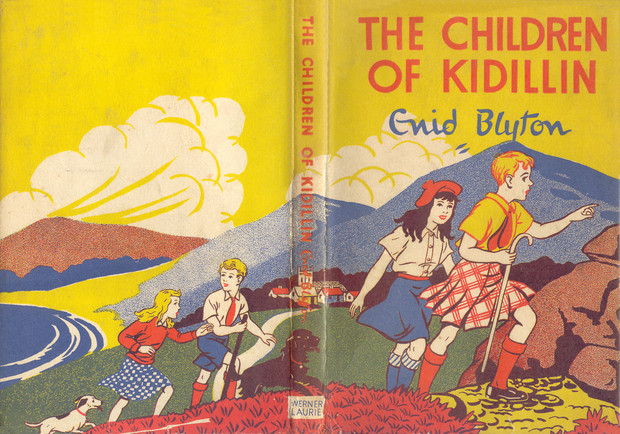
The Six Cousins covers through the years

It has been a while since I have looked at book covers, but I was looking for something reasonably quick and easy to write this week and the Six Cousins seemed to fit the bill. There are only two books in the series, and six editions of each, so that is only 12 books to comment on!


First editions

Although there are only two books, the first edition dustjackets (and internal illustrations) were done by different artists.

The Six Cousins at Mistletoe Farm was by Peter Beigel. This appears to be his only Blyton work if you click his name in the Cave of Books but I know that shows only first editions. It’s possibly that he has done work for later editions of other books, but his name is not familiar to me.

1948, Evans Brothers

Likewise, Maurice Tulloch’s only Blyton work appears to be Six Cousins Again.

1950, Evans Brothers

Both books have lovely wrap-around artwork on the covers, depicting life on a farm. I’m not sure the two really ‘go’ together as a series, though. The two artists have slightly different styles, with Tulloch using brighter, bolder colours. The first book looks very autumnal with the reddish-browns of the farmhouse and the yellows of the straw-filled yard, while the second is more spring or summer with the lush green of the grass and the blue of the sky.

I like them both but I’m more drawn to the brighter colours of the second book. There’s something a bit Find-Outerish about the back of the cover. It looks rather like Goon interrogating Old Nosey in The Mystery of the Spiteful Letters. (In the book we only see Fatty visiting Old Nosey, but Goon might have as well). The first book, although attractive for its now-vintage appeal, doesn’t really convey anything about the story other than it being set on a farm. The second at least hints at some intrigue with the police and gypsies.


The Armadas

Armada had quite a monopoly on Blyton books in the 1960s, publishing the first paperback copies for a lot of series and stand alone titles. For the Six Cousins, Armada produced four different sets of paperbacks.

The first set, from 1967, are by an uncredited artist, or possibly uncredited artists. I would guess that these two were by the same person, but I couldn’t say for sure. The first has the more typical Armada font – the one that has just a hint of Wild West saloon about it – and off-set title placement. The way the characters are drawn is loosely similar to those in the Secret Series – particularly the black outlines – so perhaps a suggested style by Armada, or just the same illustrator?

Both are quite dynamic with the cast about to run off the cover, it’s interesting how both have the foreground characters leaning at the same sort of angle!

Both Armada, 1967

The second set are also by an uncredited artist. Again, I’d say the same artist did both, but it’s not the same one from the previous set as these have much softer colours, and no outlines. I think the second book here, although the font is very different, has a more Armada-like feel to it. It’s possibly the single-colour background which is very common on Armadas. The other would probably look more like the iconic Armadas if the title was off to the left like in the one above.

If it wasn’t for the somehow sinister looking trio in the background of the first book it might have been quite a full cover – though the three in the front are managing to convey a lot of joy in horse riding. The second has a little more intrigue, suggesting the two children are doing a little bit of spying.

Armada, 1971 / Armada 1972

The third Armadas move away from the typical 60s style altogether. Coming out in 1980, these also have an uncredited artist. My guess would be that these, again, had the same new illustrator.

I know that the differing title lengths would mean the box might not be the same size on both books, but it baffles me when they don’t make books in a series as similar as possible. It may be that the second one has merely faded, if not, why choose a different shade of yellow? And why have the Enid Blyton signature above the title on one, and below on the other?

The clothes have also been updated in these to have the children in jeans (despite Jane in particular always wearing jodhpurs).  They also aren’t very interesting covers, showing more farm chores than anything else.

Both Armada, 1980

And then our final Armadas are probably the worst of the bunch. The titles with the exaggerated capitals and the ears of corn make them look like cosy picture books. The first isn’t terrible, though there are definitely some odd fashion choices (and still no jodhpurs). The second book… well. Every time I see it I think I’m looking at A Christmas Carol. Despite the flaming pudding it’s so dark, and looks right out of the 1840s, not the 1940s.

Both Armada, 1987

No award for Award

Well, if I had to give an award it would be for blandness. These are the most recent reprints and are from way back in 1992 – I was about to say that’s twenty years ago but I’ve rechecked my maths and it is THIRTY years ago now.

They both look like Ladybird books for young children, about children playing on a farm and learning to ride or perhaps competing in a show. Both are scenes from the books, but the jolly events combined with the soft colourings definitely don’t do the stories justice.

Both Award, 1992

I didn’t actually have either Six Cousins books as a child, I only discovered them as a grown up and now have two dust jacketless hardbacks.

I will probably always choose first edition just jackets as my favourite – the only exception normally is if there has been a second set of dustjackets done as with the Adventure series and the Famous Five. I can appreciate some of the early Armadas, probably a nostalgia thing as they often do have a similar style to ones I had as a child, but after that it’s generally all downhill.

Posted in Illustrations and artwork | Tagged , , , , , , , , | 2 Comments

Monday #469

It is the last Monday of March and the clocks have just changed, meaning the evenings are much lighter all of a sudden. We’ve also had some lovely spring weather – almost summer weather, though it’s due to be minus 4 by the end of the week so it’s short lived, as the best weather in Scotland usually is.

The Six Cousins covers through the years

and

March round up

Breaking from the tradition of sticking to book characters, this week I’m having a TV character. North Tower Matron is, of course, in the books. We see her at the start of term checking for health certificates, and at intervals after that as Gwen darns navy shorts with red wool (or some similar crime), or Gwen claims she’s unwell (so mostly when Gwen’s causing trouble). TV Matron, however, has a much bigger role. As there are few other staff at the school, much of the ‘parenting’ of the girls lands on Matron, as well as the nursing, done in the book by the Sister in the san.

Played by Ashley MacGuire on TV, Matron becomes unintentionally very funny. Her indignant outbursts, witty one-liners and impromptu chair naps bring some extra levity to the episodes. In the first series she is not entirely likeable as she is harder on the girls, and particularly bad when she ignores Sally’s symptoms of appendicitis. In series two she is a bit more even-handed and fair, and also shows real compassion for Ellen.

Posted in Blog talk | Tagged , , , , | Leave a comment

Malory Towers on TV series two – Episodes seven and eight

I have been assured by a couple of different readers that this series improves as it goes on, and having watched episodes seven and eight now I can see some glimmers of hope. Not that this series has been particularly terrible, it just hasn’t seemed as good somehow.


Episode seven: The Play

The slightly random play that they have inserted into the series finally becomes important to the plot, sort of.

The play is being put on in a marquee in the grounds. This is possibly due to Covid and airflow, or due to them not wanting to build a theatre-type set indoors. As many of the scenes around it take place in the grounds which are filmed in England it’s also possible that they didn’t want to fly the various additional actors to Canada to film the indoor scenes there. So far Mrs Lacey, The Riverses and other parents have only been seen outdoors, even in series one.

Anyway, Mr and Mrs Rivers are unable to come when the play is on for the open day, and so Darrell has been asked to give a tour of the school to some people. Were the actors for Darrell’s parents not available, was it Covid restrictions or a deliberate choice I wonder?

Come the day of the play there are actually other pupils seen in the marquee – not many but still a pleasant surprise. We also are graced with Mrs Lacey who is marvellous again, Mr Thomas, Georgina’s father, Mary-Lou’s granny and a surprise tag-along of Felicity Rivers.

Conspicuously absent is Mr Lacey – leaving us still wondering what’s going on there. Mrs Lacey does make a comment about Daddy being terribly busy at the company, and with Gwen making it clear that Darrell and Mary-Lou are not to speak to Mrs Lacey about Mr Lacey I am leaning more heavily on the side of Gwen is lying. There’s also the small matter of Gwen being punished for her performance last term – it seems that her father has stopped her pocket money.

They carry out their final rehearsal – a dress one, on the stage, after the parents have begun to arrive which seems a bit too late!

Meanwhile Matron has found out that the school is in financial trouble, and immediately starts looking for a new job. Like a rat deserting a sinking ship, I said to Stef. Soon after Ellen said the same thing. Ellen is rather distraught at the thought of Matron leaving. I suppose she missed the worst of her behaviour in the previous form and has spent a lot of time in the San where Matron seems to have been reasonably kind to her. Ellen also thinks that Matron could save the school somehow, which seems unlikely given her ineptitude.

Back to the play, or rather the tour Darrell is conducting, which was meant to be for Mr Thomas alone – as he is considering putting money into the school – but Mrs Lacey, Mary-Lou, Granny Margo and Felicity all tag along too.

Felicity puts her foot in it, mentioning the leak in the dorm, and pointing out how cloudy the stream is, and Mary-Lou’s granny has put her foot in it with Mrs Lacey by talking about poor ill Mr Lacey.

Then finally Mrs Lacey puts her feet – literally – in it as she storms off into a great muddy quagmire.

Mr Thomas and Darrell have just rescued her as Felicity then knocks Mr Thomas over into the mud. And naturally he is dressed in a white suit and panama hat as if he’s exploring in an arid climate.

This quagmire is important for a few reasons.

  1. It has possibly just been raining heavily, but it’s an unexpectedly deep muddy road past what looks like old farm buildings. Is the drainage around there blocked, and will this be relevant with the treasure hunting later? (Probably not).
  2. It is near the stream which is an unusual colour. At first I thought it was just to make it unattractive and thus give Mr Thomas a bad impression but quickly Stef and I discussed the possibility that there are minerals or something else valuable in the area.
  3. Mr Thomas getting covered in mud is not really conducive to him coming away with a positive opinion of the school, or investing in it.
  4. Mrs Lacey loses her brooch in the fuss, which Gwen finds later but does not return.

After all that – Mrs Lacey giving Gwen a good telling off – Gwen runs off and leaves the play short on actors. It seems as if there is only her and Georgina in it anyway – so they are 50% down.

Although Sally has been reading the lines to Gwen as a prompt it is Darrell who is pressed into being the highwayman, with the hat and cloak thrown over her uniform for an absurd look.

Matron has risen admirable to the occasion however and has procured one of Mr Parker’s suits for Mr Thomas to wear, (thus almost justifying having Mr Parker at all), and despite the drama Mr Thomas agrees to invest in the school.

Overall this was a stronger episode, probably down to having a few different faces. I enjoyed the scenes with Mrs Lacey, though I thought Darrell’s sister was an unnecessary addition. It was nice to see her again, but she didn’t really add much to the episode and her behaviour seemed out of character from book Felicity. (Talking about the leak and the cloudy water I can just about understand as she’s young and doesn’t know just how important the tour is, but calling Gwen a cowardly-custard right in front of her mother is just rude.)

Mary-Lou’s granny is a new character and I liked her, particularly her modern way of wearing trousers and driving her own car, when contrasted with Mrs Lacey’s fussy feminine clothing and chauffeur.

I still much prefer the original Miss Grayling as I felt she had much more gravitas, but this  one at least gets some fitting lines, for example Only if you trust people can they live up to your faith in them. 

Mr Parker was not around for most of the episode but he did get to make a wonderful face of shock when he saw Mr Thomas wearing his suit.

I did say there were more people in the episode but the audience for the play was still rather small. Mam’zelle Rougier is absent, and there are only perhaps ten other girls and three or four adults beyond the named cast. But still, it’s better than I was expecting!

One silly point is that Mrs Lacey rushes up to Georgina and calls her Gwendoline. She has only seen her from behind, but as Georgina has hair several shades darker, and several inches shorter than Gwen, it seems an unlikely mistake!


Episode eight: The Measles

If you think of the measles and Malory Towers you will think of Alicia getting the measles in the fourth form and being unable to sit her school cert, thus learning a tiny bit of humility as she experiences what it could be like if she didn’t have her quick brain.

Moving the measles to the second form (at this rate will there be any plots left for the fourth-sixth form? Are they only intending to do three forms so might as well use up the plots? Or will they just have another play/pantomime and another measles outbreak in a few years time?) means changing the whole storyline.

It’s Georgina who gets the measles, and thus is straight into the San. This means Ellen is booted out as measles has to be isolated.

Mr Parker is also feeling unwell and is put in the San, though he gets Matron’s bed as obviously he can’t be put beside one of the pupils. Gwen also ends up in the San for a while as she has been around Georgina, and Matron can’t read her health certificate to see if she has had it already. But as the San is so small Gwen is put in the bed beside Georgina, where she is just going to increase her chances of catching measles. If she hasn’t had them, then she will have to quarantine for a time but surely that should be separate to Georgina to minimise the risk?

The whole set up is purely so Gwen can overhear Georgina and her father talking. Even though Georgina has measles she’s allowed out into the newly invented San garden (I think that’s where Matron’s summer house might be) to meet him.

Turns out Stef and I were right and – spoilers – there’s a seam of Kaolin china clay running under the school (hence the water colour). Mr Thomas wants to invest in the school so he has enough ownership to demolish it and mine the valuable clay. It seems rather risky to pay out all that money – to invest, and to demolish, when you can’t tell how big the seam is beforehand. It could turn out that it hardly extends under the building at all. All I can think is that there is evidence of a seam before the school was built – but then why doesn’t Miss Grayling or anyone else know about it already?

Mr Parker being ill means they are short a teacher (I mean, there are only the two of them as Miss Potts seems to have disappeared). Mam’zelle Dupont asks Sally to teach her second form class while she goes off to manage the fifth form. Surely this is absolutely the wrong way around? The fifth form should be asked to study quietly (not that they can always be trusted, but more so than a bunch of second formers) while Mam’zelle stays with the second form.

But obviously they wanted to have some tension, because of course Sally does her best to manage the class Alicia immediately starts testing her authority. She wants them to rush through the work then go out and have fun. She then fakes measles spots but Sally catches her out.

Still, Alicia manages to persuade pretty much the whole class to abandon their lesson. It seems a bit out of character for them all to do it, as they know they’ll be in trouble if they’re caught!

Mam’zelle is bizarrely genial about it – Sally attempts to cover for them by saying she let them go as a reward for hard work, but it’s clear Mam’zelle knows this isn’t true. But as the girls say she’s a good sport about it, which is not Mam’zelle Rougier’s style at all!

Gwen meanwhile has behaved in a quite un-Gwen-like way. Georgina attempted to buy her silence by inviting Gwen and her mother to one of their big summer balls, something that Gwen would obviously love to go to. Instead she writes a note to the other girls to say she’s found out something terrible. Of course she could have just written what she knew, but that wouldn’t have drawn the story out so much.

The girls visit the San and Gwen scribbles a second note with more detail and shows them through the glass in the door while Matron snoozes in her chair.

Stupidly, they then go running through the school to talk to Miss Grayling. They are not allowed to run in the school, and so when Mam’zelle sees them, she stops them. If they has just walked she wouldn’t have stopped them. As she did stop them, she hears the news first and tells them that she will speak to Miss Grayling. But she doesn’t, as it has come from Gwen she assumes it’s a lie.

Lastly, Gwen carries on her strange behaviour by stealing Georgina’s pocket mirror. The shilling I wasn’t sure about – it looked like she might have kept it but didn’t, but I should have twigged. As there’s no Daphne they are making Gwen the thief. I thought she had kept her mother’s brooch purely out of spite, but it’s part of a pattern.

I’m not at all sure about this. It was one thing for Daphne, who had stolen at previous schools, who clearly had a problem with lying about her family and how wealthy they are, to steal, but Gwen? Isn’t Gwen mean and unlikeable enough without being a thief? Daphne they forgave and she turned into a nice person. If they forgive Gwen, she’s not suddenly going to reform into a nice person is she?

I assume they’ll make it about Gwen not having pocket money, and being used to having nice things, but I’m not sure that’s enough. Gwen’s not stupid – she knows she can’t swan around with someone else’s compact or a real emerald brooch without drawing attention to herself.

Somehow they are managing to make Gwen a more sympathetic character this series, despite a few classically nasty moments. Her mother is pretty awful to her in episode 7, and you can see Gwen’s scrambling around trying to win her approval. Then she decides to save the school over furthering her social climbing, so maybe there’s hope for her yet.

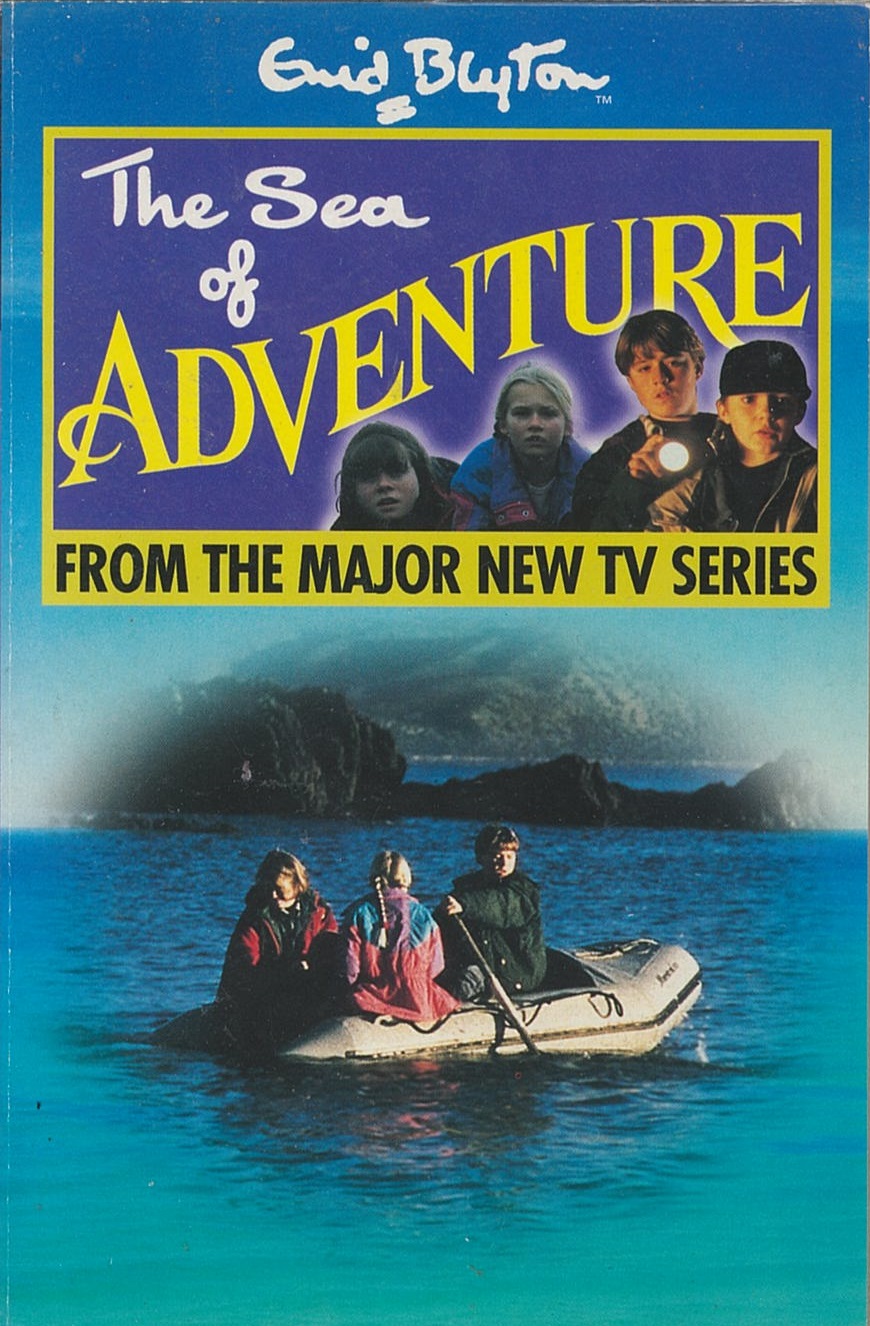
A couple of other niggles – in the San Matron gives Mr Parker a play she’s written. It turns out to be about a school matron (I wonder who could possibly have been her inspiration?) but it turns out to be not very good. This is quite funny but left me wondering. In The Sea of Adventure the Mannering-Trents had measles and needed a break after to recover. Dinah in particular is to do no school work as she ignored the doctors’ orders and read while she was ill, leaving her with watery and light-sensitive eyes (which miraculously recover by the time they’re out on the boat in the sun). A common symptom of measles is red, sore and sensitive eyes, so following on from the above I’ve always assumed that the advice in the 40s and 50s was to avoid reading. But was that only in cases where the person’s eyes were already sore? Does anyone have any personal experience of measles in the 1940s or 50s and recall the advice given?

Aside from that the San set up is sorely lacking, I assume due to budgetary reasons. In the book each tower had a matron who was responsible for the girls’ day to day cleanliness, health and behaviour. She made sure they darned their socks and kept their rooms tidy and so on. I think we can assume that the TV school also has four matrons and four towers, even if we never see the others. The San, however, was a much larger place than shown on TV, with a Sister running it. That way she could give 24 hour care to any sick girls, while the matrons managed the rest of the girls. The San on TV is not exactly designed for isolating any sick girls, should one be contagious and another be there for something else.


I can see now that they are setting up a second urgent need to find Lady Jane’s treasure, not just to stop the school from closing, but to stop it from being demolished! There will also be a reveal of Gwen the thief, which I hope will have a convincing story behind it. I’m not clear what role Ellen will play in everything as it seems as if her story has already been resolved, but we will see.


Posted in Blyton on TV | Tagged , , , | 11 Comments

If you like Blyton: A Little Princess by Frances Hodgson Burnett

I was convinced that I had read this as a child, and in fact I did have a copy of the book – one of those Parragon Children’s Classics with no illustrations. However I was certain I’d read it at school. I know that I’ve seen the 1 film, so the rough story was familiar but when I read the book last week I realised that I definitely hadn’t read it before. I can only think that I had read a very abridged read-it-yourself version, or I was just confusing myself having seen the film.

First published in 1905, this is an expanded version of an 1888 short story titled Sara Crewe; Or, What Happened at Miss Minchin’s. When first published the full title of A Little Princess was A Little Princess: Being the Whole Story of Sara Crewe Now Being Told for the First Time. 

Anyway, there was more to the story than I expected in some respects, and less in others.


Who is the Little Princess?

The Little Princess is not, in fact, a princess at all. Sara Crew is a very wealthy little girl, however. The story begins with her being brought to a select girls’ school in London, where she is to be given every comfort. The girls are all from well-off families but Sara is the only one to have her own maid, and a suite of luxurious rooms. Not only that but her father has kitted her out with the best dresses and furs, as many books as she can read, and a new doll with custom-made clothing as fine as any for a real child.

And yet, Sara is not at all spoiled. She knows that she has more than most people and never looks down on anyone. She is the only girl at the school to acknowledge the new young maid and talk to her as an equal (something strictly forbidden by the upper society’s rules).

This is a stroke of luck, as Sara’s father dies without a penny to his name, leaving Sara equally penniless. She is allowed to stay on at the school, but as staff, not a pupil. She swaps her warm, comfortable suite for a cold, bare attic room, and her lessons for the daily drudge of a servant’s life.

She makes the best of this new situation by continuing to pretend. She has always enjoyed pretending, weaving stories for herself and the other children at the school, but also play-acting roles for herself and her doll. So, in the attic she pretends to be a prisoner in the Bastille, or on occasion that food brought by her one remaining friend at the school is part of a sumptuous banquet. She also makes up stories about the families in the neighbouring houses, whose lives she glimpses through the windows as she passes.

It is one of these families which is key to a happier ending for Sara, as although her father is truly dead (I had wondered if he would make a miraculous appearance at the end, see parallels below) it turns out her neighbour is a friend of her father’s and has been able to save her fortune.


Parallels

Reading this I was struck by how many parallels I noted with other books I have read.

Firstly, you could compare (and contrast) it with Burnett’s work of a few years later – The Secret Garden. Both feature rich young girls who become orphans in the early chapters of the book and are brought to England from India to live in a large house.

Mary’s parents die in the first few pages – we never see them alive, in fact, while Sara’s father is present in the first chapter, and dies a little later. Both Mary and Sara form friendships with the servants, though for Mary it is encouraged and for Sara it is not.
I also thought there were some similarities between Sara and Pollyanna, from the 1913 book by Eleanor H Porter. Pollyanna is another young orphan, taken in by a stern aunt. Pollyanna has an unfailingly optimistic outlook on life and plays what she calls The Glad Game. The game involves finding something to be glad about in every situation, no matter how bad. She teaches others around her to play this game, and generally makes them happier people. This is similar to the games that Sara plays; although she is not specifically looking for ways to be grateful she does look for ways to make bad situations more bearable and she encourages Becky, the other maid, and Ermengard, a much-teased pupil, to do the same.

The 1962 book The Wolves of Willoughby Chase by Joan Aiken follows a similar plot, although against a very different backdrop. Bonnie (supposedly orphaned during the book) and cousin Sylvia (already an orphan) find that Bonnie’s house has been taken over by their distant relative who was supposed to be taking care of them. They are forced into an orphanage where they have to work for a living. This book ends with Bonnie’s parents reappearing. I think I confused the plot of this with A Little Princess somewhat, as there are several attempts from the girls to escape and I kept half-expecting Sara to do the same, or for her father to not really be dead.

Another parallel could probably be drawn to The Secret Island (1938) with the Arnold children being left with relatives who are supposed to take care of them, only for the death of the parents to lead to them being turned into servants. The Secret Island, of course involves the children running away while Sara stays put, and ends with the parents turning up alive, but Sara does at least get rescued by the family friend.


More or less?

As above, I was half-expecting an attempt at escape to be made (but without the wolves), or Sara’s father to reappear.

Instead, what I was not expecting, was Sara’s unusual character, stories and imaginings. Even from seeing the film I had no recollection of that side of the story. I also did not expect that the neighbour would have his manservant sneak food, books, soft furnishings and actual furniture across the roof into Sara’s attic room as a bit of a ‘game’ as he felt sorry for her, of course having no clue that she is the girl he has been searching for.

The end is therefore fairly unbelievable in its coincidences, that the man searching for Sara Crew moves in next door by complete accident (he had believed she was most likely to be in Paris) but is it any more or less believable than dead parents miraculously reappearing?

Still, I enjoyed the story and as we, the reader, know the neighbour’s identity and motive there is a certain sense of anticipation as we wait for the inevitable reveal of he to Sara, and Sara to he.


Posted in Book reviews, Other Authors, Reading Recommendations | Tagged , , , , , , , , | 2 Comments

Monday #468

Last week rather got away from me – somehow it took all week to write about Shirley Hughes, leaving no time for Malory Towers. I did read A Little Princess, though, which gives me something to write about this week.

P.S. It is officially spring in the UK now. It’s even been sunny this weekend, believe it or not.

If you like Blyton: A Little Princess by Frances Hodgson Burnett

and

Malory Towers on TV series two: Episodes seven and eight

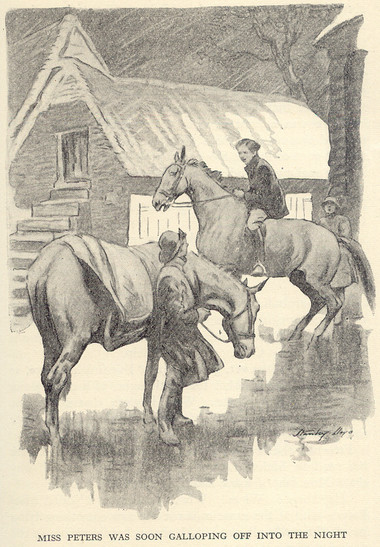
“But you are not at home now, you are at school, and you have to do as the others do, and keep their rules. We can’t have one rule for you and one rule for them.”

“I don’t see why not,” said Bill, obstinately. She often sounded rude, because she was so much in earnest, and Miss Peters sometimes lost patience with her.

“Well, you are not running this school, fortunately,” said Miss Peters. “You must do as you are told. And, Wilhelmina, if you insist on being silly about these things, I shall forbid you to see Thunder for two or three days.”

In Third Year at Malory Towers, Miss Peters and Bill go tête-à-tête over Bill wanting to go riding alone, which is against the rules.

Posted in Blog talk | Tagged , , , , | Leave a comment

If you like Blyton: Shirley Hughes

Usually the title of my if you like Blyton posts contain either a book title or a series by an author, but seeing as I’ve loved everything I’ve read by Shirley Hughes I’m just going to recommend her entire output.

As you may have heard, Shirley Hughes sadly died recently, aged 94. This made me want to revisit some of my favourites by her, so when I was at my parents’ house I picked out The Big Alfie Out of Doors book to read.

I had been thinking fondly of the first story, where Alfie and Annie Rose set up a little shop in their garden, selling leaves and acorns and using seeds for money. But of course that is also the book which has the story about Bonting in it. Bonting is a rock Alfie found in the garden one day. Alfie grew so fond of the rock that he gave it a name and it ‘slept’ by his bed in a little box. Alfie’s mum even made some little clothes – and a bathing suit! – for Bonting.

I was so taken by the story of Bonting that I chose my own – a grey stone with a large but smooth v-shaped nick on the top. I don’t actually remember when or where I found my Bonting but I know I kept him for years. He lived in a little basket made out of plastic cross-stitch canvas, it was stitched over in purple wool and I think it had yellow flowers on the side. I never did manage to persuade my mum to make him any clothes, though.

I don’t know what happened to my Bonting in the end. I know I still had him tucked in his basket in a drawer in my early teenage years. I must have thrown him away at some point – something I very much regret now!

But that was the magic of Shirley Hughes. Not just her stories, but also her illustrations, as she did both for her children’s books. I think that they really capture the imaginations of children.


My favourite Shirley Hughes books

It’s hard to choose so I’m just going to name my favourites without putting them into any sort of order.

As I’ve mentioned Alfie above, my other favourites about him (and his sister Annie-Rose) are

  • Alfie Gets in First where he shuts the door on mum when they come back from the shops, and he gets locked inside. Mum tries to talk him through opening the door, Mrs McNally and her Maureen come along to add advice, someone goes for the window cleaner to get his ladder… and then Alfie manages to open the door by himself. I read this to Brodie recently and he got a little bit upset, I think he was worried the longer Alfie was trapped inside.
  • An Evening at Alfie’s where Mrs McNally’s Maureen is baby-sitting and a pipe bursts in the ceiling. Mr McNally comes to the rescue, but not before Alfie and Maureen have been running about with buckets and basins.
  • Alfie’s Feet where Alfie puts his new yellow wellies on the wrong feet.
  • Alfie Gives a Hand where Alfie goes to a friend’s birthday party and ends up looking after a little girl who is feeling very shy.
  • The Big Alfie Out of Doors Book where Alfie makes a shop in the garden, finds (and briefly loses!) Bonting, follows a lost sheep with his Gran and camps in a field with his Dad only to be disturbed in the night by a large, pink, snorting animal.

Another fabulous compendium is Stories by Firelight which contains stories and poems. These are aimed at children a little older than the Alfie books are. Some of my favourites are:

  • Sea Singing which is a rather haunting story about selkies. Selkies are seal-people who can remove their seal-coats and walk on land as humans, but always long to return to the sea. This selkie was trapped on land by a fisherman who took her seal-skin from her. She had children with him, but eventually did leave them to go back to the sea where she already had a seal-husband and children. After that every year on their birthdays presents would be left on a rock by the shore. Presents very like some of the items seen in Morag’s house in the illustrations…

  • A Midwinter Night’s Dream – this story has no words at all, but is presented in a comic-book layout, where you see a boy get out of bed in the night, and then enter strange passageways full of odd creatures.

  • Burning the Tree. I misremembered this as an Alfie story, but it is about a boy called William and his grandpa. William spends a lot of time in Grandpa’s room, hearing stories about his youth, but there’s a mysterious box that Grandpa has never shown him. One day William sneaks a look inside and is disappointed to find it’s just old letters. He feels guilty for snooping, though. When it is time to burn the old Christmas Tree Grandpa throws on the letters too, which surprises William. He admits to having taken a look and Grandpa doesn’t mind, he just says that his memories are in his head and the letters themselves aren’t important.

  • And my sister’s least favourite, both on paper and on tape – Mrs Toomly Stones. This is a poem about an empty house in a neighbourhood, one with an overgrown garden and neglected façade. The children fear the house and believe it to be inhabited by Mrs Toomly Stones.

Other people say it’s empty
By the gate it says ‘to let’
But somewhere on the darkened landing
Or in the hallway (you can bet)
Lurks Mrs Toomly Stones…

I say those are my favourites, but apart from a few other (lovely) poems that’s the whole book!

Hughes’ most famous book is probably Dogger – another of my favourites – about David, who loses his toy dog at a school fete. He spies Dogger on a sale table, and he’s been priced at 5p! (Which aside from the clothes in the illustrations, very much dates this book to the 70s.) You really feel his anguish when he can’t make the lady understand that Dogger belongs to him, and he doesn’t have enough money to buy him back. By the time David has found his older sister Dogger has been bought by a little girl, and his sister has to make a generous offer to get Dogger safely back.

Then there’s Helpers, about three little children who are being looked after by George, a teenaged baby-sitter. This is a simple but amusing story about what the children get up to while George looks after them. They try to be helpful – in the way that only small children can – play games, go to the park, watch some TV… poor George looks quite worn out by the end!


You may also know Shirley Hughes from…

Apart from all her own books, Shirley Hughes also provided ilustrations for a whole raft of other books, including reprints of any famous titles. Some examples include books by Margaret Mahy and Noel Streafeild, The Secret Garden, The Railway Children and the My Naughty Little Sister books.


Why do I recommended Shirley Hughes?

Although she was writing  a few decades later than Blyton, there is still a vintage nostalgia to her works.

The Alfie books (and her others for young children) are full of cosy kitchens and rainy adventures, the simple games that captivate children’s attention and the trials and tribulations of being four years old. Nothing wildly out of the ordinary happens, but Shirley Hughes knew that children can find delight and intrigue in just about everything that goes on around them.

Her stories for older children can still be cosy at times, but bring in more creepy or haunting elements in a really fascinating way. I’ve never read Enchantment in the Garden but having seen it for the first time while researching this post I really want to!

Her illustrations are full of detail, yet you can take them in at a glance and know what’s going on and how it would feel to be in that scene.

Posted in Book reviews, Reading Recommendations | Tagged , , , , , , , , | Leave a comment

Monday #467

Thankfully this is the last week of winter, as spring officially begins on Sunday. I know that the weather doesn’t always take not of this fact, but we can always hope.

It could also be the last week of legal covid restrictions in Scotland, but we won’t know until tomorrow exactly what that means, or if it is happening.

If you like Blyton: Shirley Hughes

and

Malory Towers on TV series two – Episodes seven and eight

Spring is coming! With promising patches
Of blue; and sunlight suddenly catches
A gleaming rooftop, where sparrows in batches
Flirt and flutter and pipe up snatches
Of hopeful song

And windows are opened on stuffy rooms,
There’s a shaking of mats and a flurry of brooms
And it’s light in the longer afternoons,
And boys on bikes whistle cheerful tunes
It won’t be long!

Not a Blyton poem this time, but a Shirley Hughes on seeing as I’ll be writing about her this week.


Posted in Blog talk | Tagged , , | Leave a comment

New Class at Malory Towers: The Show Must Go On by Rebecca Westcott

We have now reached the final story in the book!


The plot of The Show Must Go On

From the title I had already guessed that this would be about the girls putting on some sort of show, which is generally not my favourite kind of plot – though I do enjoy their fifth form panto.

What they are putting on is a showcase, something to show off what life at Malory Towers is like. It’s the fourth form that are doing it, with each house supposedly doing a thirty minute show, but only the North Towers is ever mentioned, with the exception of a rumour that the West Tower has been practicing during the hols.

A few ideas are lifted from the fifth form panto. There one girl suggests a ballet because she is a ballet dancer, but the other girls say no as they can’t dance. Here Alicia wants to do a juggling, tumbling sort of routine (as she would go on to do in the panto), Irene wants an opera, Belinda an art work exhibition.

In the end they have to come up with something that everyone can be involved in.

The new girl isn’t mentioned until a few pages in – with the girls remarking that it’s unusual for a new girl to arrive into the term. Except that happened in the previous story, didn’t it.

All we know at first is her name is Margaret and there’s some sad tale involved as the teachers have called her a poor little mite. Then Alicia reveals that Margaret already has a cousin at Malory Towers, and tries to build a little suspense before telling the girls who it is. But that’s rather spoiled by the fact that the Amazon/Waterstone’s etc blurb reveals that she’s Gwen’s cousin. (Oddly Mary-Lou panics that it might her her mean cousin, though it’s not clear if her cousin is also called Margaret.)

It’s obvious from the start that Gwen and Margaret do not get on. Gwen is absolutely poisonous about Margaret, in fact I was surprised at just how vitriolic she was, despite some of the others things she has done. Perhaps it is because Margaret is her family, or because Margaret has just lost her father… but Gwen is really awful.

Most of it is based on class and appearance;

My mother married up and your mother married down and that is why I am who I am and you are, well, you.

But Gwen really sticks the knife in about Margaret’s wish to be known as Maggie, and her father’s death.

Mother and Miss Winters said it was foolish of your father to shorten your name like that and that maybe now he’s dead the silly nickname can die too.

Margaret has Gwen’s old uniforms which don’t fit her well, hardly surprising as Margaret is described as very tall, while Gwen is short (and plump). She also wears tatty boots as that’s all she has. Miss Potts eventually provides her with the correct sort of shoes (but not nearly soon enough, in my opinion, and after giving her order-marks over it), but by then Margaret doesn’t want to wear them.

She is bitter about being at Malory Towers, and doesn’t want to be like the other girls. She sees them as ungrateful for what they have.

You all think that you’re something special just because you go to school here. You think that this is normal but it isn’t. It isn’t normal to spend your afternoons swimming in a pool next to the sea. It isn’t normal to have all your meals cooked for you and your clothes washed for you while you swan around the place, riding your ponies and sketching in art books.

She has a point – the girls at Malory Towers are very privileged and some of them probably don’t realise it, or think about it very often. Naturally Darrell is a bit offended by this attack, though, as she and the others have been welcoming to Margaret.

It’s hard to overlook Gwen, though, who absolutely does not realise how lucky she is to have what she has. In fact she’s so spoiled that most of her attitude towards her cousin is jealousy. She is jealous that her parents have been paying attention to, and looking after Margaret instead of her. She doesn’t have the emotional maturity to understand that her cousin has just experiences a bereavement, and that the shift of attention is temporary.

I know that Gwen’s father is a sensible fellow, and it’s not altogether surprising that he has paid for Margaret to attend Malory Towers (despite she and her mother not wanting her to go!). But it seems like they’ve done a lot for Margaret, having her to stay, and even drive her to school for her first day, though Gwen’s mother hadn’t been resist making equally tone-deaf comments;

Mother and Miss Winter say that [the name Maggie] really is very common, and that people like them should make more of an effort to pull themselves up by their bootstraps.

By marrying a man of better social standing, I suppose?

Anyway the story progresses with little rows between Gwen and Margaret, interspersed with the girls making plans for the showcase. The title suggests that the showcase is somehow threatened, but it isn’t really. They are supposed to include all of the North Tower Lower Fourth (so, just the ten of them in Darrell’s dorm?) and it just seems difficult to find a place for Gwen, and to get Margaret to take part.

However Margaret discovers an aptitude for dance that she never knew she had – in the gym she just starts dancing beautifully with no instruction or experience.

Gwen is then challenged by the other girls and that’s when she reveals about her jealous and Margaret’s father, and goes from being incredibly spiteful and awful to very apologetic and subdued in the space of one page.

don’t want her to be here. Nobody asked me whether I was happy for her to come to my school and be given my clothes! Mother and father spent days talking about poor Margaret and what was to be done, but nobody asked my opinion, not once!…

I would have said yes if only they’d asked.

That seems rather unlikely, but Gwen suddenly realises she’s been awful.

I suppose I felt a bit pushed out. I know I’ve been horrible to her.

Margaret’s epiphany comes when Alicia and Darrell rescue her from drowning. Another unlikely scenario as they say that Alicia nearly drowned herself there, due to the tides, yet the two of them can drag a non-swimmer back? Margaret sees the girls in a new light after that, and both she and Gwen take part in the Showcase.

Despite there being at least the West Tower girls doing one as well, it isn’t mentioned at all, and somehow Irene is commanding the whole school orchestra for theirs.

Margaret and Gwen do a dance to end the showcase, despite Gwen not being able to dance at all, and not having rehearsed somehow she does well just being led by her cousin.


How does it compare to the originals?

As with the other stories I will look at four key points:

  • Does it fit with the continuity of the series?
  • Are the characterisations consistent?
  • Does the author attempt to adopt Blyton’s writing style, and if so is that successful?

The setting and updates

As with the other stories this is set in the 40s. My/your people is used quite a few times, which gives us a sense of the era, and the gramophone is mentioned a few times.

The class issues – marrying up, being common, and so on are also very accurate for the time.

Series continuity

This is set in the never before mentioned lower fourth, and I still can’t work out if the girls do two years in the fourth, or move up half way or whatever, but that’s not really a fault with this story.

Mam’zelle has suddenly picked up a Cockney accent it seems, and is dropping her Hs.

you ‘ave all returned from the ‘olidays like a bunch of young – ‘ow do you say? ‘oodlums!

Stop it you ‘orrible girl. You will be bringing Miss Pots in ‘ere… and I do not want ‘er…

I know that the French don’t generally pronounce their Hs but Mam’zelle has never spoken like that before.

Characterisation

The characterisation is a bit hit-and-miss. Gwen and Alicia have a nice little disagreement at the beginning, that fits their characters. Gwen then goes massively nasty, while Alicia becomes dependable and fair.

The girls begin well with teasing Mam’zelle Dupont, asking what an Oodlum is, (the dropping of the H in the text may be purely to facilitate this joke, whereas I feel that Blyton would simply have explained that due to Mam’zelles accent, hoodlum became oodlum), but it gets a bit OTT when they start making animal noises.

Miss Grayling gives a very apt speech to Darrell and Alicia after they rescue Margaret;

There are some people in the world who run away from a crisis and others who run towards it, looking for ways that they can help. You are both fine examples of the latter.

However I find it hard to believe that she would have let Margaret walk around school in brown boots, getting order-marks from Miss Potts, when she didn’t have any other shoes to put on. Mind you, it also doesn’t make sense that Mr Lacey would pay for Margaret’s school fees and not buy her a pair of shoes (or a few new uniforms…).

I know it’s a short story but Gwen’s about-face comes on very quickly, and next thing she’s buying Margaret new dance shoes. Gwen wasn’t just cruel once, it was on multiple occasions, deliberately and calculatingly, and there’s no way she hadn’t realised or understood what she was doing. Gwen’s the type to double down, anyway, or grudgingly apologise, so this turn-around seems out of character.

The style

Apart from my people the girls’ language is fairly time-neutral. It’s certainly not written in Blyton’s style, as it has quite a lot of run on sentences with many ands in them.


The book as a whole

Overall this isn’t a bad collection of stories. I think the stories are better than the full novel continuations that I have read so far, but it is unfortunate that the style and characterisations vary a bit between stories as it makes for odd reading sometimes.

The Secret Princess, I felt, was the closest to what Blyton would have written, if a little convoluted. I also enjoyed the library scenes in Bookworms, but the other stories I could take or leave.

Posted in Blog talk | Tagged , , , , | 2 Comments

If you like Blyton: Nancy Drew by Carolyn Keene

My if-you-like-Blyton post usually suggest books that are slightly less well-known, either newish authors or books that might have been forgotten over time. Whereas Nancy Drew is very much a household name, having been around since the 1930s in various incarnations. Still, I very much love her and I think that Blyton fan that might not have considered her already would enjoy her.


Who is Nancy Drew?

For anyone who has somehow not heard of her, Nancy Drew is an 18 year old amateur sleuth from the fictional town of River Heights (a fictional place) in Illinois.

She has solved baffling mysteries in well over 500 books (and that’s not including cross overs with the Hardy Boys or the recent graphic novels) but I will touch on the different series she appears in a little later.
Titian-haired Nancy lives with her father, Carson Drew, who is described as a famous (or sometimes prominent) lawyer. He often asks Nancy for help when he is working on a case (confidentiality be damned) and likewise she frequently consults him for advice on her cases. They are quite wealthy, living in a large house with a sweeping drive, and a live-in housekeeper. Nancy has her own car (a Mustang) and is regularly travelling both in the US and abroad for either fun or a mystery, though a mystery always turns up on her holidays too.

The housekeeper is Hannah Gruen, generally described as motherly or kind-hearted, and very close to Nancy since the untimely (or sudden) death of Mrs Drew when Nancy was three. (The bits in italics are things I can quote from memory as they are repeated in just about every book in the early chapters as they introduce the characters – just like the Famous Five each book is a complete story in itself and you needn’t have read any others let alone read them in order).

Nancy is often aided by her friends the cousins George Fayne and Bess Martin. George is actually a little like George Kirrin, described as tomboyish, slender and athletic, with short dark hair. She isn’t determined to be a boy but she is sporty and less prone to girlishness. Bess is the opposite of her cousin, blonde and often described as slightly plump. Although Bess is blonde I always picture her as Rosie O’Donnell as she looks in the Flintstones movie as Betty Rubble – without the cavewoman outfits, though.)

The main cast is rounded off by the love interests of the girls. Ned Nickerson has dated Nancy since high school, while his friends Burt Eddleton and Dave Evans date George and Bess respectively. One of them is tall and rangy, the other shorter and stockier but I can’t remember which way around it is!

Ned is generally considered a serious boyfriend to Nancy, while Burt and Dave are more casual dates of the other girls. Useful for local dances and events, but not a deep emotional connection. Ned and his friends are students at Emerson college (in one series anyway).

Those relationships don’t necessarily apply to all books. Dave and Burt didn’t appear until the 1950s, for example, and were then written out again in the late 1980s. Nancy and Ned have broken up a time or two in the 1980s on, in the Files books at any rate.


The different series

Nancy Drew Mysteries

The classic Nancy Drew Mysteries ran from 1930-2003, with 175 books. There are a few confusing points to highlight, though. Firstly, the UK did not publish the books in the same order as the US did, and so the series numbering is very different. The numbers below refer to the US publishing order as listed here, though the books are in a different order on my shelves.

The first 34 books were later rewritten – some with entirely new plots, though I believe all were shortened to meet a specific length, leading to some not making quite as much sense as they should.

There are different sections to the series, the first 34 which as above were rewritten, then books 35-56 which were written continuing on with the changes made to the earlier books (such as Nancy being only 16, and her mother dying when she was three, and not ten).

The books then moved to a different publisher (from Grosset & Dunlap to Simon & Schuster) and moved to paperback, with books 57-78 more or less following on with the same style and characters as the previous books, but adopting slightly more contemporary artwork. This is where my familiarity with the series ends – though this only takes us to 1985 which is before I was born. I suspect the quality of the later books meant lower sales and less reprints which is why I’ve not come across many.

Books 79-159 are from the S&S Minstrel imprint and began to add more contemporary technology and so on – which unsurprisingly has led to them being criticised for dating very quickly. Whereas books 1-78 do show the movement of time in slight changes to social customs and so on, they are fairly timeless.

And lastly books 160-175 are from the S&S Aladdin imprint. The criticisms of these are mostly that the continuity is poor, with the characters looks and jobs/education details being changed at random.

I would personally recommend books 35-78 as the best part of the series, closely followed by the first 34. I suspect that the first 34 would have been better in their original form, but of course Nancy being 16 and so on might make for a jarring change.

A last note is that Nancy never ages in the books. She is perpetually 18. I am sure she has several dozen summers over that time, and with mysteries that generally span at least a week if not two or more, then she would have aged at least 6 or 7 years in reality.

The Nancy Drew Files

Concurrent with the Minstrel books are the Nancy Drew Files. Several of these are amongst my favourite Nancy Drew books, despite being quite different to the originals.

These are set at the time they were written, the late 80s and early 90s, so will appear dated today – but then again the lack of any technology dates the originals. I think the difference is accepting a book will generally be dated to the time it was written and trying to update an old series to make it modern, despite modern not lasting very long.

These are perhaps for a slightly older audience as Nancy begins investigating more serious crimes such as murder. These are less cosy than the originals, which feature a lot of Scooby-Doo style fake hauntings (notable for straying from that trope is The Kachina Doll Mystery which has an actual ghost). There is peril in the original books, certainly, with Nancy locked in rooms in old houses while the criminals clear out, often tied up, but the Files does take this further with more serious threats to her life. The originals generally take the same line as with the Famous Five – with the baddies tying the children up and leaving them to be found later once they’ve finished with their activities.

Her relationship with Ned is also more grown up in the Files, with themes such as jealousy, long-distance relationships and so on explored, though they never go any further than affectionate hugs and brief kisses. As above they also break up and date other people but inevitably come back together in the end.

There are 124 of these, and I only have 41, mostly from books 1-74. It appears from the titles that from 70 on, and certainly from 98 on the books take a plunge into greater amounts of romance and the few I have from that time are not great.

I have a few absolute favourites:

  • Trouble in Tahiti (historic murder and scuba diving)
  • Danger in Disguise (political campaign and blackmail)
  • Vanishing Act (rock star disappears mid-concert and is presumed dead)
  • Bad Medicine (cheating scandal at a university leading to attempts on students’ lives)
  • Over the Edge (suspicious accidents at an outdoor sports centre)

There are also a few series from the 2000s, but they all seem pretty terrible. There’s at least one aimed at younger readers, and diaries from Nancy’s perspective.


Carolyn Keene

For anyone who doesn’t know, Carolyn Keene doesn’t exist. As a child I think I eventually realised that one woman probably hadn’t written all the books, not when they started in 1930 and were still going in the 90s. I think I thought that Keene was real, though, and the later books were ghost written to continue the series, much like with the Baby-Sitters Club by Ann M Martin. Though I didn’t know about the BSC back then, I actually assumed that Martin had written them all.

The books have had various authors over the years, but started with Mildred Wirt (later known as Mildred Wirt Benson), and with many early titles by Harriet Stratmeyer Adams.

Stratmeyer is an important name as the series was created by Edward Stratmeyer of the Stratmeyer Syndicate which had created the Hardy Boys four years earlier. (Franklin W Dixon is also a pseudonym.) Edward Stratmeyer wrote the outlines for the first three books, and edited them, before handing over much of those processes to his daughter, Harriet until 1981, which is the year before she died.

Despite all the different authors the series is very strong continuity-wise (excluding the impossible timeline). They stick to a tried-and-tested style, down to particular words and phrases being used from book to book, and this makes each one seem like an old friend. Nancy always behaves exactly as Nancy would, and so do her friends (even if on occasion this means they made the same sort of mistake more than once).


The mystery solving

When it comes to mysteries Nancy is a methodical sleuth. She works rather like Fatty of the Five-Find Outers, but with a car. She looks at the means, motives and opportunities, questions witnesses and suspects, finds a lot of secret passages and strange devices.

She has, however, got the back up of Chief McGinnis, head of police in River Heights who is always willing to vouch for her should she get into trouble, at home or elsewhere.

Nancy isn’t afraid of a bit of dressing up or false identities either. She even enlists her friends to go places she can’t, if she’s already been seen by the suspects for example. They do work together as a team but Nancy is definitely in charge, and often goes it alone. Her father does prefer it if she takes Ned, or at least her cousins with her, though.

Some of her mysteries just fall into her lap. Either an old friend (she must have hundreds of these) phones her for help, or she bumps into them looking distressed in a public place. Sometimes she bumps into distressed strangers and then embroils herself in their difficulties. Other times she is called or written to by friends, or friends of friends and asked to look into a mystery for them. Inevitably there are various red herrings along the way, and sometimes a secondary mystery. Often someone tries to prevent Nancy from setting off to where she needs to be or tries to deter her from investigating with various threats.


I don’t think this post has really done the books justice, but I do know that now I have a real hankering to re-read them. I have over 130 of them, and my instinct is to read them all in order (even though they can all stand alone)… but maybe I could break that rule so I can read my favourites first?


Posted in Other Authors, Reading Recommendations | Tagged , , | 6 Comments

Monday #466

We had some actual warm sunshine this week which was nice, it definitely feels like spring is on the way now. (I’m probably tempting fate by saying that and there’ll be heavy snow this week, but at least Brodie would be happy as he could finally go sledging!)

If you like Blyton: The Nancy Drew books by Carolyn Keene

and

New Class at Malory Towers part 4

Five on a Treasure Island, but as you haven’t seen it before. Unless of course you’re French, as this is a translation of a graphic novel that was published in French already.

I am not usually the biggest fan of graphic novels as I find them hard to follow, but I’d be willing to give these a go. Unsurprisingly the different format will have meant various changes made to the original story but I’m sure it will still be similar enough that I can still understand it.

Posted in Blog talk | Tagged , , | Leave a comment

New Class at Malory Towers: The Secret Princess by Narinder Dhami

I have reviewed the first two stories – A Bob and a Weave and Bookworms, and now for story three. I have been told that this is the best story in terms of characterisation, so I am wondering if I will agree.


The plot of The Secret Princess

Sunita has turned up five weeks into the term which is apparently unusual enough for the girls to question her. She tells them that her mother was ill and that delayed their travel but the girls are having none of it.

Alicia jumps rather far to the conclusion that she is a princess in disguise. Sunita then stalks in, acting every part the spoiled princess and carries it off well enough that even I wondered if Alicia had seen something before that evidenced the truth. But no – Sunita’s just a joker and had overheard Alicia’s conversation.

Alicia then notices that Gwen is eavesdropping and carries on the charade.

This is one of those plots that requires everything to align perfectly or it all falls apart. Firstly, Gwen has to have missed Sunita saying she is not a princess just a minute before, and then she has to keep it a secret that she knows as Alicia doesn’t tell the rest of the girls – or Sunita herself – until the next morning.

Sunita is naturally disappointed that Gwen only wants to be her friend because she thinks she’s a princess, but she agrees to carry on the joke for a while. She has another joke up her sleeve as well, a small vial of chemicals which produce violet smoke when mixed with water. This sounds exactly like the sort of tricks Blyton came up with herself, and coloured smoke appears in several mystery/adventure books as well.
All this makes Gwen wonder if Sunita is really a princess and so she manages to get Irene – distracted by composing – to admit it is a trick. It all becomes a bit Friends now – but they don’t know that we know that they know – as Gwen pretends not to know the truth.

For revenge she plays the smoke trick herself – after the girls decide to wait until after half-term – and uses far too much of the crystals as she did not overhear the warning that they only need a little.

Miss Grayling witnesses the smoke and quickly sees that Sunita is not guilty – while the girls argue amongst themselves as to whether it was Sunita or someone else, but who? Gwen is found out as Irene actually remembered their conversation and is punished with French prep during the hols, but what’s worse is that Sunita’s parents arrive in a swanky limousine as it turns out her father is a famous scientist. So poor Gwen misses out again.


How does it compare to the originals?

As with the review of A Bob and a Weave I will look at four key points:

  • Is it set in the same time, and is it updated in any way?
  • Does it fit with the continuity of the series?
  • Are the characterisations consistent?
  • Does the author attempt to adopt Blyton’s writing style, and if so is that successful?

The setting and updates

As with the previous two stories this is set at the same time, though it isn’t always hugely apparent. There are no gramophones or anything that heavily dates the book like pre decimal currency. They do earn order marks, though, which if something I always feel is quite of the time.

Series continuity

Malory Towers reopened five weeks before this story, after the summer holidays, so that would place this near the start of their third year. This is backed up by the girls saying remember when we were in the second form and that Sunita is best at science in the third form.

Third Year at Malory Towers begins in January, so after the events of this book, but of course Sunita doesn’t appear.

There are teachers mentioned that don’t exist in the original books – Miss Myers who teaches science, Mr Conway for maths. The science is of relevance to the plot but the maths is not.

Characterisation

Alicia is better written in this book, and her motivations are more realistic. She makes a great comment to Gwen;

Fish is good brain food, Gwendoline Mary. And if anyone needs brain food, it’s you.

Incidentally that had me wondering how far back the idea that fish is good for brain development goes. I know it has been a ‘thing’ for the past twenty years or so, but does it go back as far as the 1940s? I’ve had a look at some 1940s adverts for fish cakes, fish fingers and so on and although some of them are promoting themselves as being good for you, there’s no mention of the benefits to the brain.

Irene is described as tall with untidy fair hair which is not how I picture her, but I’m not sure if her looks are ever described in the books. Regardless, Irene is well written, there’s a few lines about her having lost an essay that is due in, and her preoccupation with music too.

Mam’zelle is also well written. Having worked herself into a panic over the smoke she declares We must fly for our lives. She does work out it’s a trick, though and declares that I, Mam’zelle Dupont, will discover the origin of this so-purple smoke. And if it is a terrible treek then you shall all be punished most severely which is so Mam’zelle.

The style

I would say that this is written in a style fairly close to Blyton’s but it doesn’t seek to mimic her exactly. There isn’t really the ‘frightfully golly gosh’ language of the last story, but the girls’ conversations are still well written.


Posted in Book reviews, Other Authors | Tagged , , , , | 2 Comments

February 2022 round up

February has passed by pretty pretty quickly, even for the shortest month of the year. We are now into March, when the days definitely start to get longer, a little warmer, and hopefully a lot less windy! March is also the month that the Scottish Government plan to drop the legal Covid restrictions, but I think we are all still waiting to see what that actually means for our lives.


What I have read

I started off the year badly in terms of reading, and for a long time was behind on my Goodreads goal. I am glad to say that in February I have caught up!

What I have read is:

  • Dundee, But Not as We Know It – Susan McMullan
  • Cookie – Jacqueline Wilson
  • The Borrow a Bookshop Holiday – Kiley Dunbar
  • A Batchelor Establishment – Isabella Barclay (aka Jodi Taylor)
  • Library of Souls (Miss Peregrine’s Peculiar Children #3) – Ransom Riggs
  • Night’s Child (Detective Murdoch #5) – Maureen Jennings
  • All The Little Liars (Aurora Teagarden #9) – Charlaine Harris
  • The Village Green Bookshop (Little Maudley #2) – Rachel Lucas
  • A Map of Days (Miss Peregrine’s Peculiar Children #4) – Ransom Riggs
  • Getting Started With 3D Printing – Liza Walloch Kloski and Nick Kloski
  • The Bookshop of Forgotten Dreams – Emily Blaine
  • The Road Trip – Beth O’Leary

And I’m still working on:

  • New Class at Malory Towers – Various authors, stories one and two have reviews
  • Clanlands Almanac: Seasonal Stories from Scotland – Sam Heughan and Graham McTavish
  • Sleeps Like a Baby – Aurora Teagarden #10) – Charlaine Harris


What I have watched

  • The usual suspects Hollyoaks and House of Games
  • Season seven and eight of Charmed (with much crying at the end of the final episode, as always). I need to decide now what my next watch will be – I could go back and finish off True Blood or Murder She Wrote, or maybe start from the beginning of Desperate Housewives?
  • I watched Call the Midwife which is now finished, the next episode will be the Christmas special!
  • I introduced Brodie to the first two Shrek films, which he loved, and decided that Princess Fiona was me as we have the same name… only when she turns into an Ogre her ears are apparently too small for her to still be me.
  • Tuesday nights have been dedicated to the Sex and the City reboot, And Just Like That – though every week I forget the name and think it’s And That Was That or something similar.
  • We watched the new BBC comedy drama This Is Going to Hurt – the comedy was very dark!

What I have done

  • I’ve gotten back into doing jigsaws a bit more regularly now, so after finishing the one I did with Ewan I borrowed a couple from my mum and sister. Between the three of us we have a decent library of jigsaws.
  • I’ve been learning about 3d printing at work and playing around with some of the design software.
  • I had a very fancy afternoon tea at the V&A – the kind where someone has to talk you through the menu and what it all represents.
  • We’ve been to our local zoo, and the transport museum.
  • I’ve been beachcombing once, but the tide was almost all the way in so I didn’t find much.


What I have bought

Writing up my guide to Enid Blyton biographies reminded me of a few that I didn’t have so I treated myself.

I got a copy of Gillian Baverstock Remembers Enid Blyton, and Enid Blyton and the Mystery of Children’s Literature by David Rudd. I’ve already reviewed Gillian’s book, but the David Rudd one joins a growing pile of ones on my to do list.


What did your February look like?

Posted in Personal Experiences | Tagged , , , , , | 1 Comment

Monday #465

It is almost March now which means the clocks will be going forward, and spring starts! February seems to have gone by very quickly, even for the shortest month of the year.

But beyond that, I hope that March brings better news for the people of Ukraine who are undergoing unbearable hardships right now. I don’t normally talk international politics and events but as with many Brits right now, I’m sure, the situation in Ukraine is on my mind.
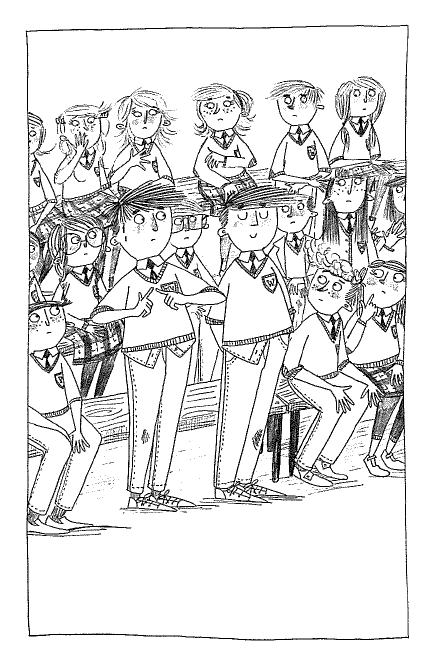
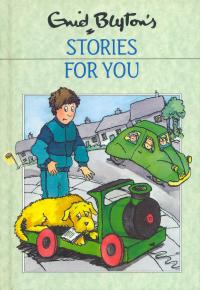
February round up

and

New Class at Malory Towers part 3

A new (and probably occasional) Monday topic. Now and again I get comments asking questions I have no way of answering.

This week I had a comment from Jade:

When I was a child, somewhere in the early 2000’s I purchased a paperback Magic Faraway Tree book that was 3-in-1. It may have included the Wishing Chair books too. It was thick. I live in Australia and I am searching for an exact copy of that book. The cover was cream with a picture in the middle in an oval. I have scoured the internet for it and I can’t find it anywhere!

Does anyone recognise this book description?

Obviously not the right edition

Posted in Blog talk | Tagged , | Leave a comment