Monday #501

Two weeks ago I marked ten years of the blog. Then I came down with tonsillitis (very florid tonsillitis according to my doctor…) and wasn’t up to doing much of anything for a week. Not a great start to my 11th year of blogging, but never mind. After a course of antibiotics I’m back on my feet and writing again.

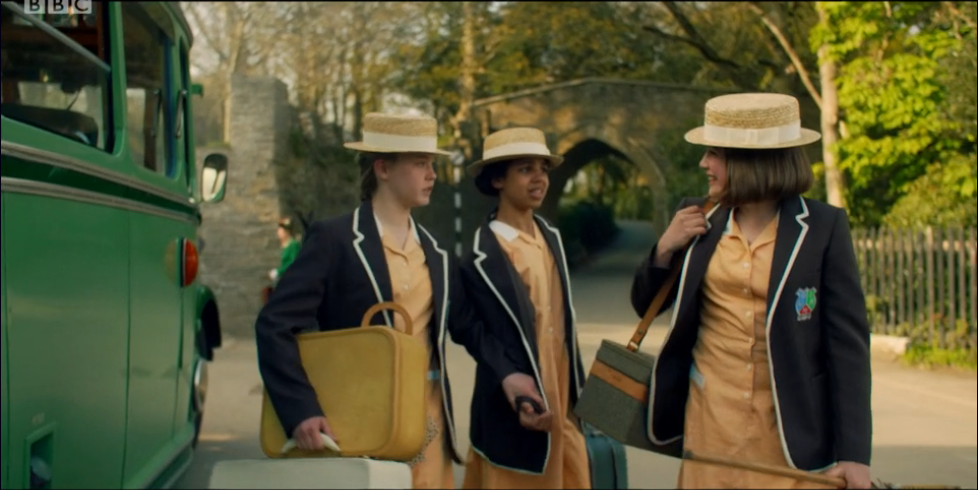
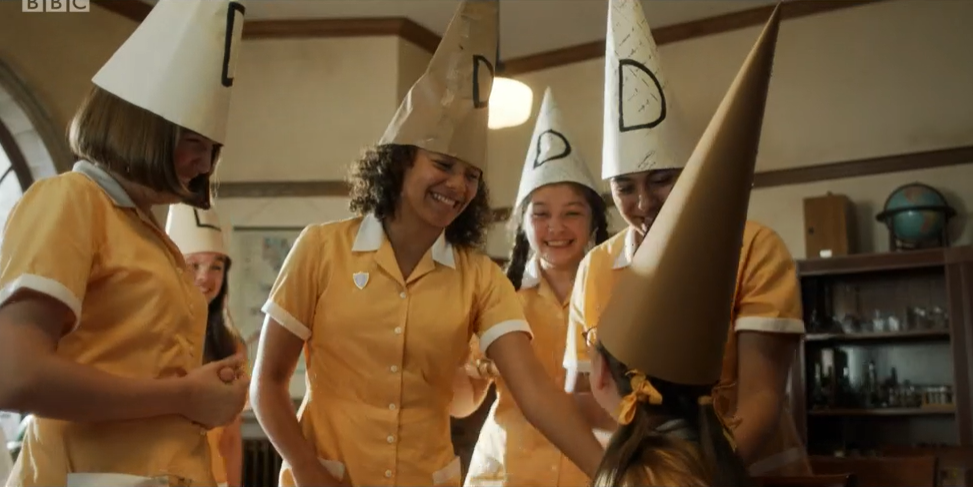
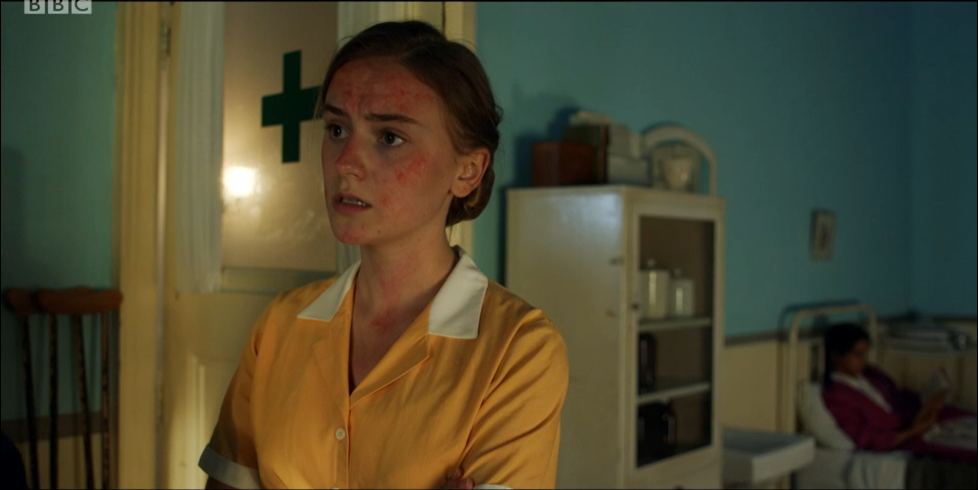
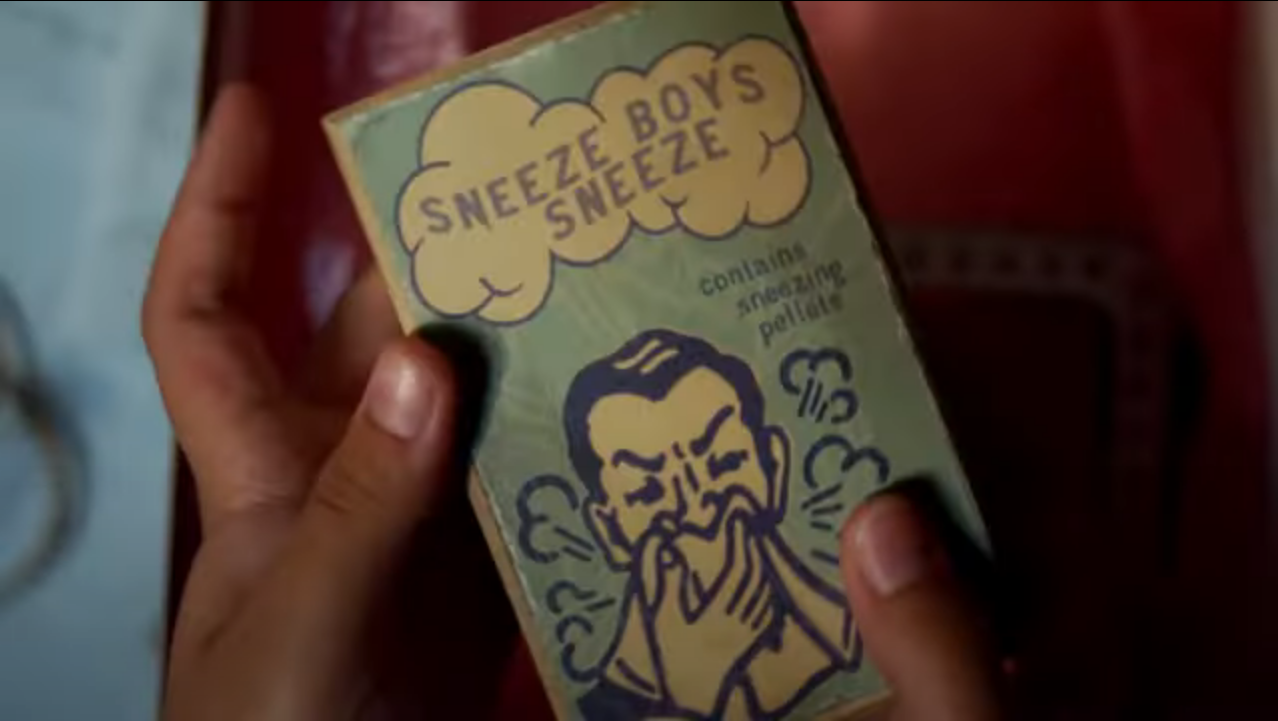
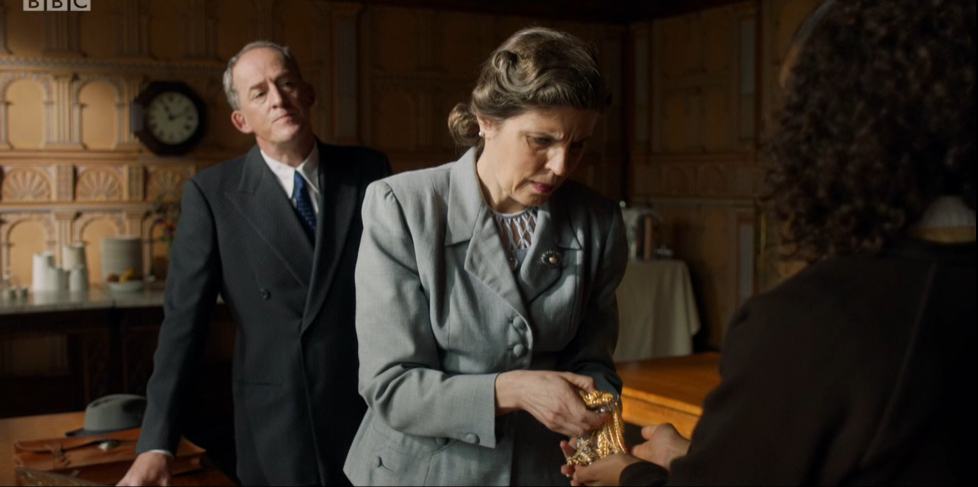
Malory Towers on TV series two, episode 13

and

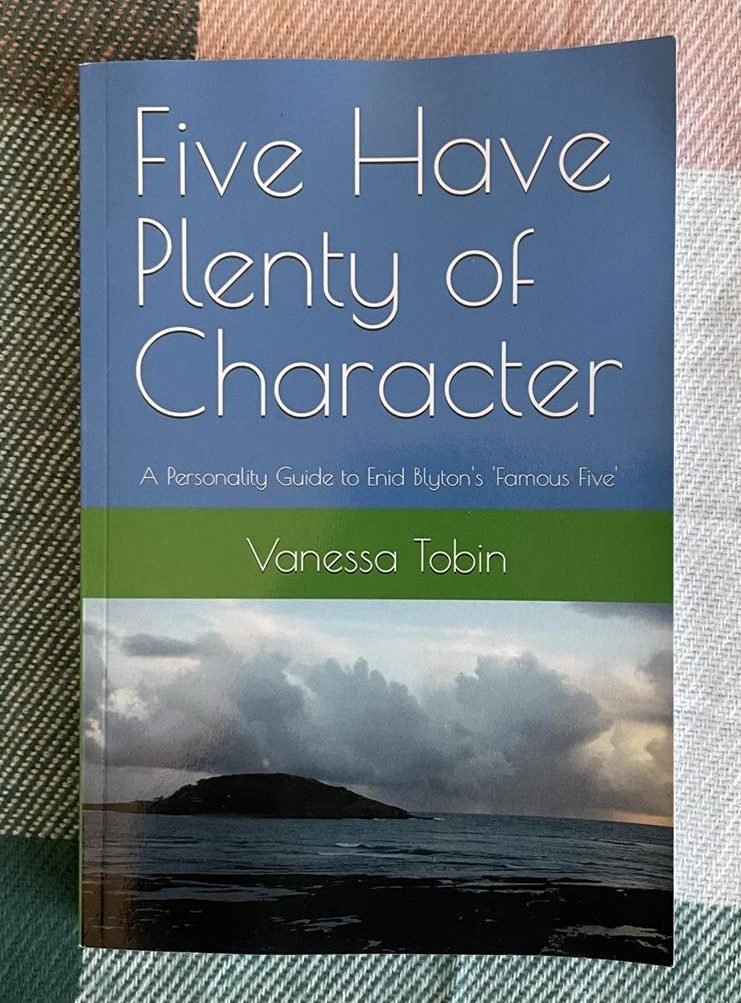
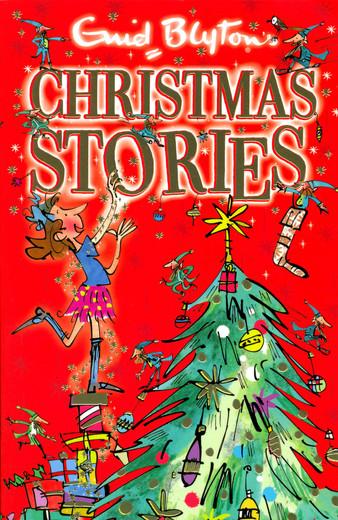
2022 Christmas gift guide

I telephoned Imogen Smallwood and discussed my hopes with her. Imogen gave me Barbara [Stoney]’s address and suggested I write to her.

Normal Wright remembers how he organised the first Enid Blyton Day in the Enid Blyton Society Journal #79. I envy the casualness in the way he says he telephoned Enid’s daughter!


Posted in Blog talk | Tagged , , , , | 4 Comments

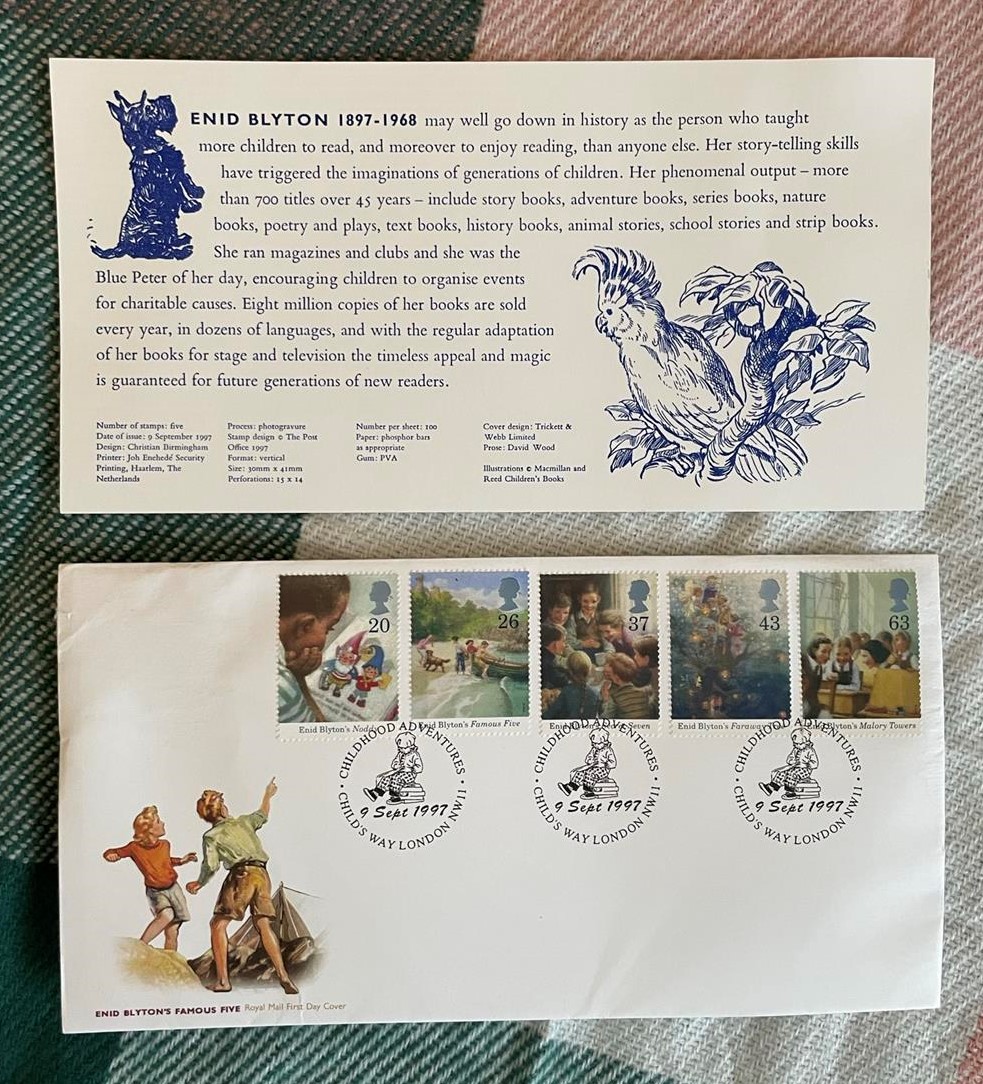
Ten years of World of Blyton

I find it hard to believe but World of Blyton was born ten years ago today! I remember Stef and I sitting in my bedroom at my parents’ house brainstorming ideas, and then blog names and writing our first post. It’s funny to think that the kids that first suggested a newsletter or blog of some kind and inspired us to start this are now all grown ups!

There have been some changes along the way – the biggest being that in 2018 Stef stepped away from the blog and I’ve carried it on by myself. In that time I upgraded to a proper domain (so WordPress isn’t in the web address any more) and have added more storage for all the photos I add.

The last few years have seen a big increase in visitors. I’d like to think that’s down to me learning and getting better as I go on but in reality if you look at the visitor stats they almost doubled between April 2020 and June 2020. And what happened then? Significant parts of the world went into lockdown so people were bored at home and perhaps feeling nostalgic. But in saying that – people are still coming back so I must be doing something right.


Some stats

I haven’t been checking the stats page as frequently as I used to – so I was glad yesterday that I could see that visits are still increasing. I also realised for the first time that the blog’s had over a million hits!

I’m terrible at maths but I reckon the average post must be about 1,000 words (Monday posts are only a few hundred at most but I balance that out by going on for 2-3,000 words at other times…) so the blog is roughly 1.7 million words at this point.

With the average adult novel being between 70,000 and 120,000 words that means this blog is between 14 and 24 novels long. Perhaps I should have gone into book writing…

Posted in Blog talk | Tagged , | 16 Comments

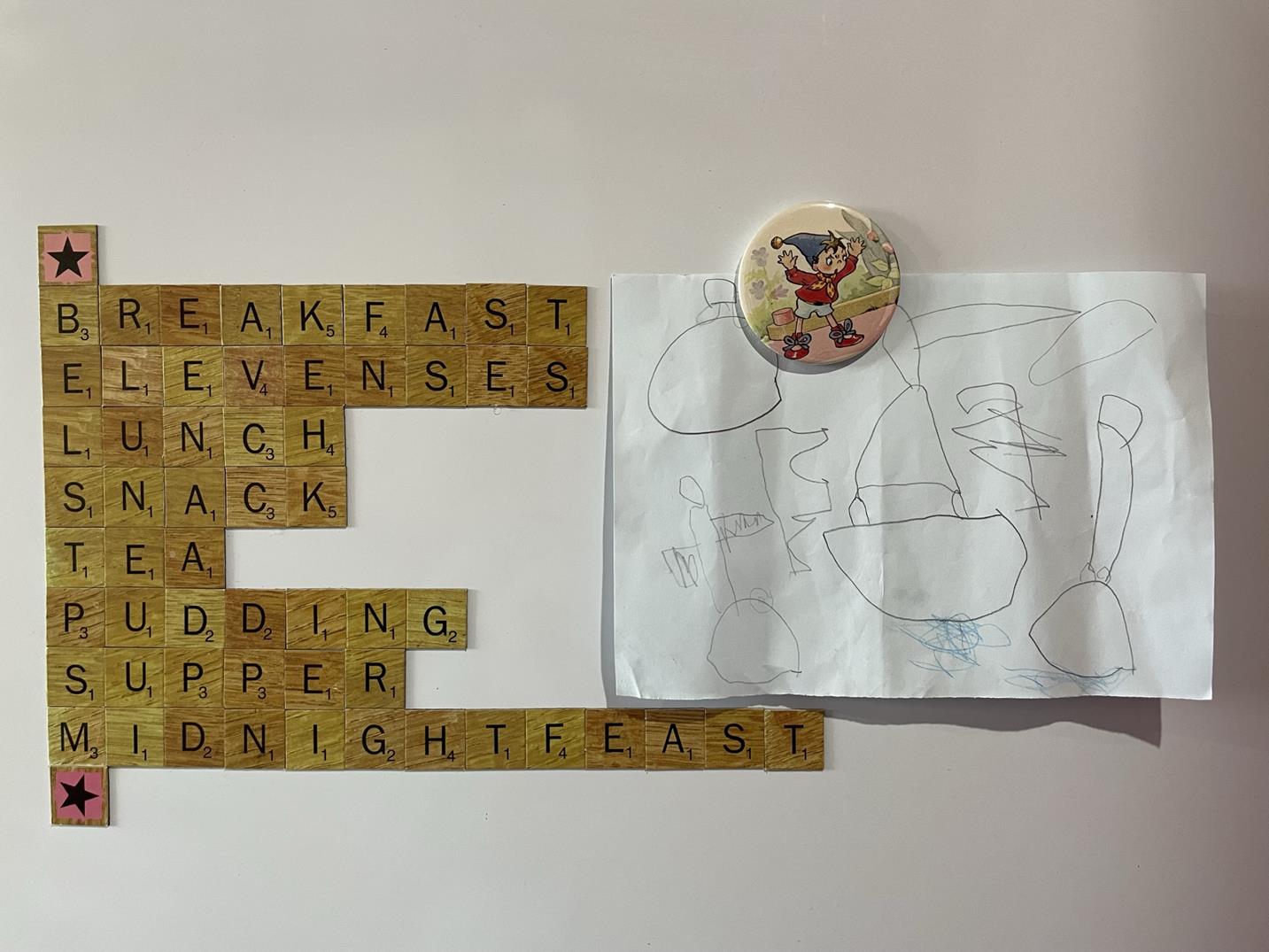
October 2022 round up


What I have read

I reached 100 books in September but of course I kept on reading. I haven’t updated my goal yet, but I may still do. Currently I’m at 109/100.

What I have read:

  • Charlie and the Great Glass Elevator – Roald Dahl
  • Lessons (Maggie Adair #3) – Jenny Colgan
  • Gunner Girls and Fighter Boys – Mary Gibson
  • The Light Years (Cazalet Chronicles #1) – Elizabeth Jane Howard
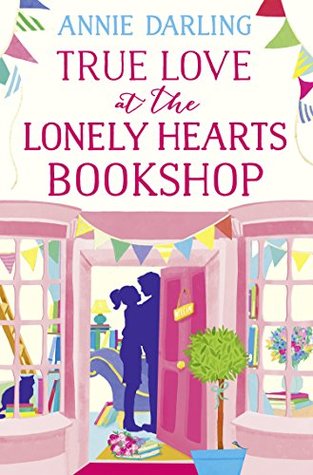
  • True Love at the Lonely Hearts Bookshop (Lonely Hears Bookshop #2) – Annie Darling
  • Balancing ACT: The Authorised Biography of Angela Lansbury – Martin Gottfried
  • Matilda – Roald Dahl

And I’m still working on:

  • The Dead Girls’ Dance (Morganville Vampires #2) – Rachel Caine
  • Little Women – Louisa May Alcott
  • The Witches – Roald Dahl
  • Monarchy – David Starkey

What I have watched

  • I finished up The Crown earlier this month – only a week or so to go until the next series is out! I also finished Red Dwarf -including the most recent stuff which I’ve only seen once before. As there are about ten series of George Clarke’s Amazing Spaces I’m still working my way through that.
  • I finally finished Malory Towers series 2 and reviewed episodes 11&12.
  • We also finished Rings of Power and She-Hulk
  • Only Connect and Taskmaster have been on weekly and House of Games several times a week.
  • On Tuesday nights I watched Hocus Pocus 1 & 2 and 17 Again with my sister.
  • With Brodie it was Ghostbusters 3, as he’d already seen it he was desperate to tell me what was happening and what was going to happen. We also watched Avengers Assemble, which was his first time seeing it. When he wasn’t well at the start of the holidays I persuaded him to watch the Wallace and Grommet short films – A Grand Day Out, A Close Shave and The Wrong Trousers.
  • Having finished so many TV series I’ve been sticking on a film before bed most nights and have watched He’s All That, plus the original She’s All That, the remake of Footloose and Bedknobs and Broomsticks.

What I have done

  • We started off the month with our walk to the lighthouses and one of our favourite beaches
  • We visited the Transport Museum for Military Vehicle Day (and to see the James Bond Land Rover), and again the day after for a Lego Car racing workshop.
  • Brodie and I had a woodland walk in Perthshire with my parents and we found several geocaches
  • In the holidays we visited Fife Zoo where Brodie got up close with the lemurs, got mugged by swans at the reservoir next door to the zoo, visited the Science Centre, did the Halloween trail at a country park (and fed hoards of ducks), went to the Deer Centre where we picked our pumpkin and went to the local wildlife park.
  • We decorated for Halloween including repurposing a rather soft gingerbread house which had been sitting in the kitchen since December as a haunted house.
  • I borrowed a few more jigsaws from my mum and started with the sweet shop.

What I have bought

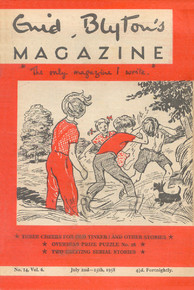
I added three magazines to my collection, so I’ve only got 8 more to find.

Also, and totally un-related to Blyton I treated myself to a new phone. It’s not the latest model (in fact it’s two models behind!) but it means I’m not having to charge it all the time and it has various new (to me) features.

How was your November?

Posted in Personal Experiences | Tagged , , , , , | 2 Comments

Monday #499

It’s the last Monday, and the last day, of October. That means firstly it’s Halloween today, and that the clocks went back yesterday morning. I’m writing this rather later than usual – at half past five – and it’s already pitch black outside.

October round up

and

Ten years of World of Blyton

I’ve already used this in my review of the latest episodes of Malory Towers on TV but it’s so good I thought it bore repeating.

May the best man win.
Shame you’re just a boy, then.

I love Darrell’s come back against the over confident boys’ team captain. As they walked in they were muttering to each other how this was going to be easy seeing as it was against girls. It would have been nice if the girls had been strong opponents from the start instead of waiting for halfway through to stage a comeback, but they won in the end which is what’s important.


Posted in Blog talk, Blyton on Screen | Tagged , , | Leave a comment

Malory Towers on TV series two – Episodes eleven and twelve

I think it’s obvious that I haven’t gotten as into this series as I did the first – hence the sporadic posts with lengthy gaps between. I did sit down and watch the final three episodes of the series earlier this week, though. I had only planned to watch two but found myself wanting to see what came next, a first for this series I think.


Episode eleven – the quiz

My memory is hazy as it’s been a while since I watched episode 10, but I seem to recall Mr Parker being absent for a while. He’s back now, and scolds Ellen for being late to the class – yet half the class is missing anyway. He wants to pick a captain for a quiz team as they are to compete against a nearby boys’ school – Thackerton College.

Naturally Darrell is captain with the other members being Alicia, Jean and Ellen. Gwen is in the background and it’s funny watching her face as she honestly looks as if she’s expecting to get picked.

Ellen is keen to start studying and revising for the quiz right away but as Alicia asks how do you practice a quiz? Darrell suggests they revise capital cities and highest mountains etc. Irene brings up Gregorian chants and surprises them all by talking about them in knowledgeable detail. At this point I made a bet to myself that Gregorian chants would come up in the quiz and either the girls would lament not having Irene on the team or would have remembered something she told them before they cut her off.

Alicia then heaps more difficulties on Ellen – telling the others that she thinks Ellen is the thief. This does happen in the book as well. Strangely, Darrell thinks her diary can provide evidence for or against. Apparently she writes down everything she has done every day, along with everyone else who was there and what they were doing. At the time one of the things was stolen she has recorded that they went swimming and Ellen came late, only putting her feet in. I find that all a bit far-fetched. I know Darrell is a writer (her word-blindness having apparently resolved itself after first year as it has never been mentioned again) and would write a lot, but she’s got other hobbies and interests beyond recording the whereabouts of her entire dorm every minute of the day. They actually have no evidence against Ellen – other than her being poorer than the other girls and often going off on her own. At least book Ellen had been seen looking in drawers (for exam papers).

Ellen doesn’t get know about the accusation so she is more concerned with the quiz. She begs Mr Parker to let her off the team, but he refuses as he has a personal grudge and wants them to thrash the Thackerton team.

Sally forbids Alicia from doing anything about Ellen until she herself as looked into it. I thought it odd that Alicia just accepted that so easily, but then suspected she was just appeasing Sally. I was spot on as Alicia then accuses Ellen to her face later.

I was sorry that Darrell didn’t do a better job of defending Ellen, she just said a few things about her being innocent until proved guilty, and she was part of the team for now implying she expected Ellen to be proven guilty soon.

Ellen goes straight to Miss Grayling (who seems rather more accessible than in the books – I doubt any of the book girls would go banging on her door unexpectedly) but only asks to get out of being on the quiz team. Miss Grayling – not knowing the whole story – asks Ellen to sleep on it.

Returning to something that actually resembles the book again, Ellen sneaks off in the night and Darrell (lying unnaturally flat on her back) wakes up and follows her. She finds her looking in Mr Parker’s drawer and accuses her of being a thief. She demands Ellen turn herself in to Miss Grayling or Darrell will do it herself.

There’s no physical fight as in the book, nor does Darrell discover that it’s answers Ellen is after. Ellen’s headaches are also not part of the plot now. Book Ellen goes to bed but then to the San because of her headache. TV Ellen goes to Miss Grayling’s study, but bumps into Mr Parker who I assume is returning from an evening out as he’s all dressed up (it’s the middle of the night according to him, though!) and he packs Ellen off to Matron as clearly a crying girl must be dealt with by a woman.

The quiz goes ahead without Ellen – to everyone’s surprise Irene gets her place instead. Mr Parker (in a swish set of teaching robes) reads the questions. The Thackerton boys call him Old Nosey Parker – a nod to the girls’ name for the original Miss Parker.

The lead of the boys’ team is arrogant enough to say may the best man win to Darrell who responds excellently with shame you’re just a boy then. Unfortunately the girls are atrocious. I didn’t expect them to know every answer but very quickly they are 14-0 down. Not only do they not know the answers most of the time but are incapable of the simple task of ringing their bell before answering. If they do answer the fail to ring the bell (thus awarding a penalty point to the opposition) and the one time Darrel rings first, she rings two words into the question – how many – so has no chance of getting it right. They are definitely rattled by what has happened with Ellen – they think she’s been expelled as she has disappeared from the dorm so I suppose they should get some leeway but it’s really embarrassing.

We skip a lot of the quiz, but we see Darrell finally answering one right, then Irene messing up a question. The score jumps to 38-19 without us seeing them get more than one right, so heaven knows how they managed to pull that off.

They take a half-time break and Darrell tells the team that only she will ring the bell after they have conferred on each answer (ala University Challenge). Is that going to be enough? Apparently yes as suddenly they seem to know every single answer.

The score then is 63 all. There’s one more question (127 questions seems a random number though). It’s about… Gregorian chants! I was awaiting Irene getting a moment of glory but she goes all vague and forgetful, thankfully the others did listen to her before and are able to come up with the answer, giving them the win.

There isn’t a lot of Gwen in this episode but she does become relevant towards the end of the episode. Of course she knows as well as the audience that she in fact is the thief and not Ellen. You can see she is clearly relieved that someone else is taking the blame for what she’s done and she just sits back and keeps her mouth shut – this is possibly some of the worst Gwen behaviour we’ve ever seen. Her performance in the first book/series trying to get Darrell in trouble for smashing a pen etc is awful, but imagine letting a girl get expelled because she’s been accused of your crimes?

I have to say Ellen’s storyline doesn’t make a whole lot of sense. We began with the overworked girl, afraid of falling behind, being snappy and so on, like the book, then most of that got forgotten after she spent a few days in the San. Then it has been resurrected in the form of the quiz storyline which lacks the same sense of fear and urgency of the original. Book Ellen is terrified of getting bad grades and losing her scholarship. TV Ellen is worried about doing badly in a quiz, a ‘fun’ event which has no bearing on her end of year results or scholarship – though it might mean the other girls giving her a hard time. Stealing the quiz answers seems a step too far even for Ellen, but in trying to make her storyline last 12 episodes they’ve had to stretch it out and add padding. I think it would have worked better to have the quiz in the first half of the series, with her being stressed about it and perhaps ending up in the San, then that way she could have still tried to steal the exam results in this episode.


Episode twelve – the heroine

We begin with the aftermath of what the girl’s think is Ellen’s expulsion. Sally wants to search Ellen’s trunk which is still at the end of her bed (a clue that Ellen is still in the building and isn’t being considered a thief, surely!).

Sally is unusually insensitive and wonders why Ellen’s taken all her stuff, Jean tells her she hasn’t taken anything, what’s in her trunk is all she has. I was actually relieved that Gwen hadn’t put the stolen items in Ellen’s trunk as I could totally see her doing that.

Instead she’s sticking with the book and trying to put the stuff into an envelope which is clearly far too small leading to it bursting. We all know where this is going. On their way to class she asks Mary-Lou for paper and string, asking her to leave them on her bed. She will need to borrow some money for postage, so she goes off somewhere that isn’t class.

In the next scene (after the opening credits) Matron is shown collecting for an orphanage, and Gwen is looking at the collection with a total there’s my solution expression on her face. The others from her class are there too, but it feels like this scene should have gone before the previous one, with Gwen then sneaking off to try to steal some of the charity money – Matron finds a ten shilling note missing later.

Mary-Lou is desperate to help Gwen throughout – this seems rather less likely than it did in the book with the charming (and non-spiteful) Daphne. It leads to her addressing the parcel to Gwen’s mother – a supposed birthday present to her – and going off along the cliff path to post it as Gwen has a ‘report’ with Mam’zelle. Mam’zelle actually comes to the dorm to collect her which seems very unlikely. Surely Mam’zelle would just send one of the girls to fetch her? In another odd moment Matron tells Sally there’s a thief and asks her to hunt her out – not at all professional even for Matron.

Instead of a blustery late afternoon with impending darkness, this is a warm summer’s day so it is already less dramatic. In the book we don’t see what happens to Mary-Lou on her walk, we only find her halfway down the cliff when Daphne goes looking for her. On TV we get to see her trip over nothing, sending the package flying over the edge, and Mary-Lou then leaning over the edge to see it. The actual fall isn’t shown.

Gwen goes after her and finds her about three feet down the cliff, holding on to the package and they have a nice chat before Mary-Lou tries to hand her the parcel. It’s a bit Indiana Jones and the Last Crusade when Elsa’s in the cracked floor and trying to get the grail, and the parcel goes the way of the grail tumbling down. They have another little chat about that before Gwen puts her hand down for Mary-Lou. The dialogue rather spoils what would otherwise be fairly tense – surely I can’t have been the only one shouting stop talking and start rescuing at the TV?

They’re about two or three inches too far apart, and only now does Mary-Lou appear truly frightened. (This is sort of akin to the Titanic where you are half-convinced Jack could get on the door with Rose, it feels like they could just put a little bit more effort in and reach each other).  Instead Gwen runs for the seemingly superfluous rope on a nearby gate. Giving them the benefit of the doubt we can say the latch on the gate is broken – but the rope there is about ten times the length needed to hold it closed, and is more the length needed to rescue someone from a cliff… Mind you I noticed the rope earlier and thought it weird, not thinking at all that without her mackintosh on Gwen would need something for the rescue.

In the book it’s all very dramatic and dangerous. Daphne wraps her legs around a gorse bush and lowers her mackintosh belt tied to her tunic belt and just has to hold on as she can’t pull Mary-Lou up.

Gwen has a handy warning sign to tie her heavy-duty rope to, and then lets that down for Mary-Lou. It even has a nice loop at the end to hold on to, but as Mary-Lou only uses one hand to grab it, she doesn’t have the grip to get pulled up (though Gwen isn’t strong enough to lift her anyway). When Darrell arrives she takes hold of the rope too – Gwen is anxious as her hands are slipping even though the rope’s tied around the sign too. After that Matron and Mr Parker arrive (still in broad daylight) and get Mary-Lou up. Though they also pause for several lines of dialogue before doing anything, which although amusing spoils the tension that’s built up.

I can understand how modern safety rules combined with a limited budget for special effects would mean the original cliff rescue might not be possible, but they could at least have had Mary-Lou a bit further down the cliff. Then it’s back to her dorm – not even the San, though I suppose she’s not cold and wet like Daphne was.

Talking of the San that’s where Ellen is, having had a visit from Miss Grayling. Her illness is being put down to attacks of the nerves or what we’d call panic attacks. This adds some more realistic reasoning behind Ellen’s behaviours but it’s a pity it wasn’t more obvious at the time.

Miss Grayling is understandably quite hard on her but I came away from it thinking that cheating at a quiz is not the same as cheating at tests or exams. Cheating at a quiz is definitely wrong, but there was no reward or prize for winning. Cheating at an exam would have meant an undeserved mark and all the ongoing benefits of having passed the exam.

We end on it being the last day of term and my guess is the girls go to retrieve the fallen package and it reveals the true thief (as in the book), but also find the treasure as the cliff was the same bit where the cross had once stood.

Posted in Blyton on Screen | Tagged , , , | 9 Comments

Letters to Enid 25: From volume 2 issue 13

Previous letters pages can be found here.


         Letters page from Volume 2, issue 13.          June 23rd – July 6, 1954.

OUR

LETTER PAGE

 A letter from the “Famous Five,” c/o Jennifer Cloy, Station House, Glenluce, Wigtownshire.
Dear Miss Blyton,
At our Sale we sold candy, lemonade and cake, and a lot of our old toys, books and games. All the children from our classes at school came to buy things. There are five of us and so we call ourselves “The Famous Five”. We arranged the Sale and sold all the things ourselves. We hope to have a Fete in the summer too, for the Sunshine Homes.
Yours sincerely
Jennifer Cloy.

(Splendid, Famous Five! Julian, Dick, Anne George and Timmy couldn’t have done better!)

A letter from Jose Greenwood, Kingsthorpe, Victoria Road, Stamford.
Dear Enid Blyton,
In the summer Mummy bought me a clock golf set, and I set it out on the lawn. I invited all my friends and I charged them 1/2d a round. We called it the “Kingsthorpe Golf Club” and I made two shillings which I am sending to you for your Blind Children. We are soon going to open the Club again.
Yours sincerely,
Jose Greenwood
(Sunbeam)

(What a marvellous idea, Jose! I shall come and have a 1/2d round if ever I am in Stamford!)

A letter from Jeanette Blyth, 49 Dene Lane, Fulwell, Sunderland
Dear Enid Blyton,
The other day my Mummy put a mat out on the lawn. It had only been there a few minutes when a lot of little sparrows came down. I watched, very still – then they all began to pull at the mat and got little fluffy bits of wool. You would have laughed to see them pulling and pulling at the mat. Then they flew away with the bits of wool to make their nests.
Love from
Jeanette Blyth

(A most interesting letter, Jeanette. What fun you must have had!)


So this week the top two letters are money-raising ones. I’ve mentioned my cynicism before and continue to wonder if those sorts of letters were frequently chosen in order to encourage more children to fundraise.

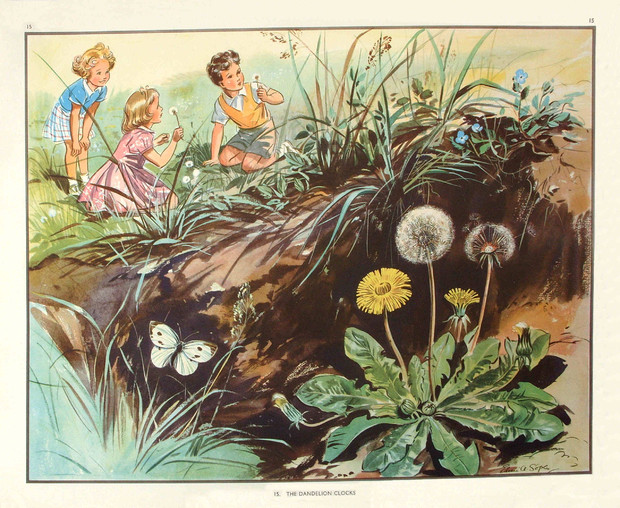
We also have a letter from a boy – which continues to be uncommon. I had to Google ‘clock golf’ which turns out to be a putting game where players putt a golf ball from each in turn of 12 numbered points arranged in a circle to a single hole placed within the circle. You can add obstacles and the hole can be placed anywhere in the circle, it doesn’t have to be dead centre.

I admit I do like Jeanette’s letter – it perfectly encompasses the way that children were so keen to share often trivial stories with Blyton. Of course Blyton was interested in nature and probably enjoyed the letter but it’s one of those little occurrences that isn’t normally worth the price of a stamp!


Posted in Magazines | Tagged , , | 1 Comment

Monday #498

Every week I have to check what number of Monday I am on. This week, it struck me that almost 500 Mondays, divided by 52 makes nearly 10 years. Checking the earliest post on the blog confirmed the maths – it will be ten years on November 11.

The mathematicians amongst you may be thinking that ten years with 52 Mondays a year is 520 Monday posts. I did try to start numbering the Mondays (at #189 I think) to match the number of weeks the blog had been running, and then to always keep that number consistent even if I missed posting on Monday… but something somewhere (or several somewheres) has gone a bit wrong and I appear to be about 18 out.

But whether or not I’ve counted all the Mondays correctly, they have still passed and the blog will be ten years old soon. I’ll have to think about how to mark that!

Letters to Enid #25

and

Malory Towers on TV series 2, episodes 11 and 12

Topping & Company – a lovely bookstore in St Andrews which not only has rolling ladders, hundreds and hundreds of books, free hot drinks while you browse but also a decent selection of Enid Blytons. There are Topping & Co shops in Edinburgh, Bath and Cambridge, too. I don’t often buy anything in there as I generally don’t buy many brand-new books, but I do like to look!


Posted in Blog talk | Tagged , , | Leave a comment

Blyton for grown-ups: Rules and Lessons by Jenny Colgan

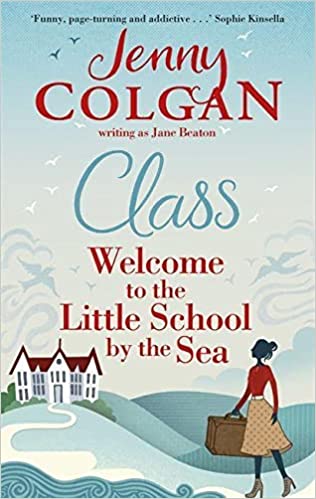
I recommended the first in this series – Class – recently, and having read the other two in the series I thought I’d just write a little bit about those as well.


Class

A quick reminder of Class – Maggie Adair, a Glaswegian teacher, takes a job at Downey House which very much resembles Malory Towers. She has to contend with the posh girls she teaches, her crush on the English teacher at the nearby boys’ school and trying to keep her relationship with Stan (who’s still in Glasgow) going.


Rules

Each book in the series covers a full school year so Rules begins at the start of the autumn term with the girls from book one moving into the next form. (This is one thing that’s less Blyton-ish, but it’s also much less confusing!)

With the thief having left the at the summer holidays, there’s an empty space in Alice, Felicity and Simone’s dorm. This is quickly filled by Zelda Towrell, an American girl. Zelda is possibly even ‘cooler’ than Alice, being American. She rather looks down on the quaint English boarding school, in fact. If she sounds a bit familiar, then that’s no surprise as she’s very like Zerelda Brass from Third Year at Malory Towers. Zelda doesn’t quite stand out the way Zerelda does, as the Downey girls do wear makeup and style their hair but she is still a bit different from the others, a little more OTT perhaps.

She has more sway over her dorm-mates than Zerelda does too, and encourages them to get into trouble leading to Alice being moved to another dorm.

Felicity has her own problems through the year, while Simone begins an awkward relationship with a boy from Downey Boys.

Maggie and Stan are set to get married, even though we the readers can see that this isn’t what she really wants and isn’t what’s right for her, and it isn’t until the very end of the book that David throws himself under the bus (or rather, at a train) and declares his love for her…


Lessons

Perhaps not surprisingly as the series is supposed to be six books long we do not see Maggie and David together at the start of the new term.

In fact, they are further apart than ever. David ends up at a rough comprehensive – mirroring Maggie’s original background, while Maggie is still at Downey Girls. The two are banned from seeing, calling or emailing each other. Despite being two educated professionals they don’t find the loophole in that until near the end of the book when it doesn’t really matter anyway.

With Zelda having left already that means there is space in the dorm for another new girl (and Alice is back). Our new girl this time (I wonder if every year will have a different fourth girl) is another scholarship girl, but one that doesn’t particularly like the school.

She brings a storyline reminiscent of the poison pen letters in Malory Towers, only with this being the 21st century it is online trolling. Just like in Malory Towers the guilty party is really rather unexpected. I thought I had worked it out but nope, it wasn’t who I thought it was!

A word of warning – this book ends of a cliff hanger and as yet there doesn’t seem to be any sign of book #4 in the series!


I noted a few Blyton-like inconsistencies with the numbers last time, and this book goes some way to fixing that. There are other teachers mentioned – Rules adds History and Geography, and Lessons IT, so it’s not inconceivable that there are even more which aren’t mentioned yet. If there wasn’t it makes class sizes problematic and also pastoral care groups – Maggie only has four in hers!

Anyway, these are two more enjoyable entries in the series, both continuing to follow the various threads of the plots established in the first book. I really hope books 4-6 do get written!

Posted in Book reviews, Other Authors | Tagged , | Leave a comment

Letters to Enid 24: From volume 2 issue 12

Previous letters pages can be found here. I had been hoping to find the next few issues before I ran out but it’s a year and a half since my last post and I still haven’t managed to get them. I have added a few magazines to my collection since then, and in fact just bought three today, but the missing ones from volume two (#14 and 15) still elude me…


Letters page from Volume 2, issue 12.    9th – 22nd June, 1954.

OUR

LETTER PAGE

 A letter from Jennifer Dibbens, 60 Park Road, Ryde, Isle of Wight
Dear Enid Blyton,
I read the letter from the robin, in your magazine, and I put a net bag in my garden, full of feathers from the chickens, and bits of wool. Once morning I aw sparrows on it, pecking out the feathers, In three days the bag was empty and I have had to fill it twice since, I am pleased to help the birds as I am a Busy Bee.
Yours truly,
Jennifer Dibbens

(I am glad you tried the “Lucky Bag” idea with such success, Jennifer!)

A letter from Robert Stallard, Beldevere, Connington, Somerset.
Dear Enid Blyton,
Every day my sister and I did small jobs for Mummy. We dusted the rooms tidied up and went to the farm to get eggs. We did other things as well. We have collected 6s. for the Blind Children. This morning we both had our Sunbeam badges. I am going to shine brightly for you.
Lots of love from,
Robert Stallard

(You are very kind, Robert. I liked your letter very much.)

A letter from June Hunt, 10 Mile End Avenue, Hatfield, Doncaster.
Dear Enid Blyton,
I enjoy your magazine more than anything in the world. At school we have finished “Five Go Off to Camp,” and we liked it very much. We have just started “Five Get Into Trouble.” I know I shall enjoy it because I have read it many times before. I haven’t any more to say except to thank you for our wonderful magazine, and God bless you.
Yours sincerely,
June Hunt

(What a nice little letter, June. I am glad you like our magazine.)


Good to see another letter from a boy – and one who dusts and tidies no less.

I wish I’d had more teachers like June’s. I don’t think any of my teachers so much as uttered Enid Blyton’s name at school!

Posted in Magazines | Tagged , , | 3 Comments

Monday #497

We are over half-way through October already so we are starting to think about Halloween in our house. Brodie wants to go ‘trick or treating’ for ‘candy’ and has been told it’s guising and sweets here (and he can only go to visit people we know!).

Letters to Enid #24

and

Blyton for grown-ups: Rules and Lessons by Jenny Colgan

How, then, do they know their way half across the world?

We do not know. Birds have a great sense of direction, excellent eyesight, and a wonderful memory for landmarks, but these things cannot alone account for the wonders of migration. The wind helps a good deal, because, in the springtime a south-west breeze blows, and in the autumn a north-east wind. Birds starting out on their long journey fly straight upwards until they reach a strong current in the upper atmosphere, and then fly steadily onwards.

It is a brave, venturesome thing, this long flight to far countries.

We are starting to see those wonderful arrow-head formations of geese flying overhead as they migrate to warmer places. Accompanied, of course, by a chorus of honking.


Posted in Blog talk | Tagged , , , , | Leave a comment

Five Go to Demon’s Rocks part 4

Phew, my fourth – and hopefully last review for Demon’s Rocks. I’ve never written a 4 part review for a Famous Five book until now and I didn’t really expect it.


George as a boy

George’s desire to be seen as a boy definitely diminishes through the series. Possibly she comes up against less resistance as those around become used to it, but by these last few books in the series there’s just a couple of references to it and she doesn’t act out at all.

When they go to the garage to order a car the mechanic calls George Master George. Being Kirrin he probably knows she’s a girl but doesn’t mind playing along.

George was pleased to be called Master George. It was nice to be thought a boy.

Later, though, the policeman isn’t fooled and calls her Miss, nobody attempts to correct him.

She barely argues when both Julian and Dick insist on rowing as they are stronger than her. Of course in the first book George is the expert rower, going across to her island regularly. By this point, all of them being that bit older, and George not spending all year at home, it’s not unreasonable that the boys would be stronger rowers. Still, George’s response is pretty mild.

There were two pairs of oars. Julian took one pair, and George was going to take the other, when Dick quietly took them himself, grinning at George’s angry face. ‘Sorry—there’s a good old swell on the sea, and we’ve to row through some pretty good waves. I’m just a bit stronger than you, George!’

‘I row just as well as you do,’ said George.

Like at Finniston Farm George and Anne do the dishes – without much complaint.

George does tell Tinker she hates doing dishes and wishes she wasn’t a girl. Tinker means well with his response but it doesn’t go down well.

‘Oh don’t wash up—just give the things a quick wipe-over!’ said Tinker. ‘Like this!’

‘Oh no!’ said Anne. ‘That’s just like a boy! You’d better leave this side of things to me. I like doing jobs like this, see?’

‘Just like a girl!’ said Tinker, with a grin.

‘No, it isn’t,’ said George. ‘I hate doing them, and I’m a girl—though I wish I wasn’t!’

‘Never mind—you look like a boy, and you’re often as rude as a boy, and you haven’t an awful lot of manners,’ said Tinker, quite thinking that he was comforting George.

‘I’ve more manners than you,’ said George, and stalked off in a huff.

Julian has one moment of gender-specific chivalry as they make their plans to explore the undersea tunnel –

‘Toss for it!’ said Dick, at once. ‘There’s no reason why I shouldn’t go, is there? Or what about us both going, in case the other gets into trouble, and needs help?’

‘Not a bad idea,’ said Julian. ‘Except that there won’t be anyone to look after the girls and Tinker.’

Tinker, although male, clearly isn’t considered old enough or sensible enough to be in charge of the girls (thankfully).

George doesn’t argue about going herself, she has definitely developed a bit in regards to consideration for others, but it’s a shame she’s the only one to do that. The boys still just go off and expect her to keep Anne company.

‘I don’t think I’ll come,’ said Anne, who really didn’t like dark, smelly tunnels and caves. ‘I’ll do the packing.’

‘Timmy and I will help you,’ said George, who knew that Anne wouldn’t like to be left alone in the light-house.

And a brief note on Tinker and his family –

Although presented in the narrative it’s suggested that the Five are thinking along the same lines about Tinker after he reveals his mother died,

‘I’m very, very sorry, Tinker,’ said Anne, shocked. The others were sorry too. No wonder Tinker hadn’t very good manners, and was all on his own. No mother to teach him anything! Poor Tinker! Anne felt as if she wanted to buy him every bun in the shop!

I’d like to think that they mean with no mother AND Prof Hayling as a father it’s no wonder… but equally it could mean that just having no mother was the cause. Which is not very fair!


The food

There are a few meals at Kirrin cottage but the most notable thing about those is which of the scientists actually turns up. (Plus of course Quentin putting coffee over his porridge).

The interest begins when the Five become responsible for their own meals.

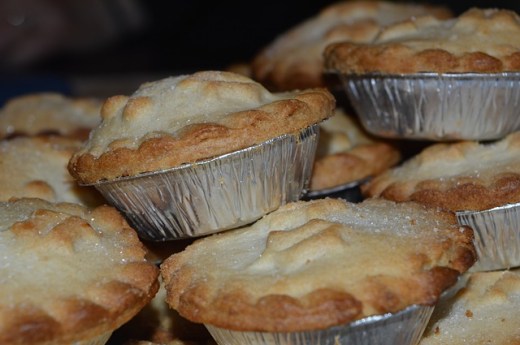
Their first night in the light house they have a tea-sup. This is a mixture of tea and supper, consisting of boiled eggs, bread and butter, Joan’s mince pies, cherry buns, macaroons and ginger-beer. I’m not sure which bits were tea and which were supper but it’s not a bad sounding meal.

After that they still manage a snack before bed, even though Dick says

We had such an enormous tea-sup that I feel I can’t manage another meal.

He suggests a chocolate biscuit or two, but Anne brings lemonade, large slices of cake made by Joan and a chocolate biscuit each.

Their first breakfast is eggs, bread and butter with apples after. Not very exciting considering they went to the shops to stock up on food before they travelled.

They do stop for coffee and buns, and then more buns and ice cream in the village though. Anne’s immediate concern (she and I obviously think alike) is to go shopping – and get more eggs, fresh bread and milk. This is followed by a tea of buns with butter and jam and cups of tea. I can’t keep up with the meals, really. Was that an afternoon tea-type snack and Blyton just didn’t write in their main evening meal?

Their next breakfast is better, fried bacon, eggs, buttered toast and marmalade with coffee.

Then there is a terrible issue that they are RUNNING OUT OF FOOD as they are locked in the light house. Thankfully they resolve that fairly quickly as the Five are hungry characters at the best of times.


Talking to the characters

I find those little, occasional moments where Blyton speaks directly to the reader so interesting. They come really at random, usually at the end of a chapter but some books have none and others have several. And sometimes she talks to the characters as well!

She talks to the characters on five separate occasions in this book.

Ah—you wait and see, Tinker! You don’t know the Five! If there’s any adventure about, they’re bound to be right in the middle of it!

The second time she seems to be speaking to us, the readers, as well as she has moved to present tense.

And there they all are in the light-house, playing cards with shouts and laughter, Timmy and Mischief watching. You do have fun together, Five, don’t you

She speaks to the reader again with the villains,

Ebby and Jacob disappeared that night! It wasn’t Constable Sharp they feared—it was the people of the village! They slipped away in the dark and the rain, and were gone. But you’ll be caught, Ebby, you’ll be caught, Jacob! And no one will be sorry for you. No one at all!

And the Five again,

Oh yes they will, Julian—especially when they hear the exciting story you have to tell! You’ll have some fun showing round a gold coin or two. Timmy is to have one hung on his collar, as a reward for guarding you so well—how proud he will be!

Well, good-bye to you all! Good-bye, Julian, and Dick, and a good journey home! Good-bye, Anne and George—and Tinker too, and Mischief, you funny little monkey!

And good-bye, dear old Timmy, best of friends. How we wish we had a dog like you! See you all again some day!

I can’t think of any book with as many examples in it as this one.


Miscellaneous points

  • The Five bike to Kirrin so they live much closer now than they did at the start of the series
  • Fanny talks about George’s aunt and uncle, rather than saying to Quentin your/my brother. Perhaps Blyton knew she had created an inconsistency by this point and didn’t want to add to it. I thought that whichever the siblings are they still can’t talk much if they don’t know where the others are going on a cruise.
  • Interestingly it is chapter two before we see any of the Five. There are books where we don’t have all the Five together straight away but it’s unusual to have a whole chapter without them.
  • I was slightly sad to read about them making plans to visit Kirrin Island when we know they won’t (ever again!) but there’s few better alternatives than a lighthouse!
  • This book is set at the beginning of April. I’m not sure if Finniston Farm specifies when it’s set – I didn’t note that in my review – but it’s very hot so it must be summer, therefore this is the following year.
  • It’s funny how everyone is so disbelieving about the lighthouse. George owns an island with a castle (and a wreck) but Tinker having a lighthouse is so wild to them. Julian is likewise surprised that the tunnels go under the sea, forgetting all about Kirrin’s undersea tunnels?
  • Also funny is the way George Jackson plays a trick on Tinker by putting the electric windows up and down in the car.
  • Julian and Dick pay for the food for going away – I’d have thought that Uncle Quentin could have coughed up a bit of cash for their food seeing as he’s kicking them out.

  • Julian’s poshness becomes obvious (apart from the fact he wears a tie throughout the adventure) when the policeman is so deferential to him. He asks him if he has any suspects in the theft and calls him sir throughout. The locksmith also calls him sir.
  • Thankfully Tinker stops doing his car impressions once they arrive at Demon’s Rocks. It’s possible Blyton rather forgot about them – though Julian does remark later on that Tinker must be growing up as he isn’t making the car noises.
  • Julian’s parents shut up the house before they go away, which isn’t a thing any more now, is it? I mean if you’re going away for a few weeks you might unplug various appliances and tell a neighbour but you don’t call it shutting up the house. I’m not even sure quite what it entails though I always imagine them draping white cloths over everything to keep the dust off. Also interesting is that they leave and have a neighbour lock up. Why when they could have just locked up themselves and handed the keys in?
  • I actually read a modern ebook this time and noted a few updates – the tobacco costs 20p instead of three shillings, and the Loomers get 5p tips rather than one shilling (surely the tobacco should be 15p in that case? Of course it’s sweets in other editions). Yet Julian still only has £1 to buy all the food for going away. They also wear jeans instead of shorts.
  • Tom the tobacconist mentions the Loomers having two children (which brother isn’t clear) but we never see them or the wife or wives.
  • There are quite a lot of similarities to Five Go Down to the Sea. Both have an old man telling tales of wreckers moving lights, and secret tunnels, but there are a lot of differences too.
  • I haven’t mentioned it in these reviews yet but the boys trying to ring the bell (risking life and limb to do so) is one of my absolute Five moments.


Nitpicks

The first is the problem of where they are going to sleep.

George and Anne always sleep in George’s room, there’s two beds in there. The boys normally sleep in a room with two beds in it, too.

Mrs Kirrin then refers to a guest room where she asks Joan to make up a bed there on the couch. This is presumably the room Mr Roland had in Five Go Adventuring Again. Yet Berta slept on a folding bed in the girls’ room when she arrived.

In this book there is apparently not enough bedrooms for eight people, despite there being enough for seven with Mr Roland.

I’ve no idea where Joan is sleeping now, as the boys are offered the loft which is dusty and drafty – previously this has been a perfectly comfortable bedroom for Joan!

It’s rather like a house in a soap whereby a family of four take in two or three waifs and strays and somehow have never seen bedrooms for them. Except only when it suits the story!

  • Joan says that Prof Hayling telephoned to say he was coming this week, but he didn’t, he wrote, (ensuring they wouldn’t have time to stop him). Is this a character error or an author error?
  • Dick is horrified by Tinker describing wreckers, but they know all about wreckers from Tremannon.
  • I had entirely forgotten the little throw-away remarks from George Jackson about the wreckers breaking into the old lighthouse, grabbing the keeper and putting out the light causing another wreck. Yet Jeremiah Boogle implies that the Wreckers were all jailed – for a long time – before the lighthouse was built.
  • With the key lost they block the lighthouse door with some wood and say that nobody could get in, at least not without making a lot of noise. But the police manage to get in quietly!
  • They leave a (paper) note half out under the door to ask for help from the postman or milkman but there is a storm so surely it would just get soaking and be unreadable?
  • Lastly, a nitpick I have to credit to Dale Vincero. Tinker says the lighthouse is about ten miles along this coast. Yet they take around six hours (plus lunch) to get there. Even allowing for the ten miles to be an underestimate, and imagining the road is a generous 50% longer than the ‘as the crow flies’ distance due to winding away from the coast to cross rivers etc, it still can’t be much more than twenty miles by road. At a sedate twenty miles an hour that’s still only an hours’ drive!


Sadly I only have my two least favourites of the series to go now. Will a critical re-reading improve or reduce their standing in my eyes?

Posted in Book reviews, Food and recipes | Tagged , | 5 Comments

Monday #496

It feels like I was just writing my last (and lighthouse themed) Monday post but it was in fact a week ago. I haven’t visited any exciting places since then, but it’s the first of two weeks school holidays now, so maybe I’ll go somewhere interesting soon.

Five Go to Demon’s Rocks part four

and

Blyton for grown-ups – Rules and Lessons by Jenny Colgan

“Oh, Saucepan, I’d so like a frock!” said Bessie.

Well, Saucepan thought she said “clock,” and off he went to find the biggest one in the Land. He managed to get one at last, and put it on his back. It was a grandfather clock and so large that it quite bent him in two with its weight. Everyone stared in surprise as old Saucepan came up with it.

“Here you are, Bessie dear—here’s your clock,” said Saucepan, beaming at her.

“Saucepan, I said FROCK, not a clock,” said Bessie, trying not to laugh. “A FROCK!”

Poor Saucepan. He simply didn’t know what to do with the clock after that, and in the end he left it in a field, striking all by itself very solemnly.

The perils of surrounding yourself with pots and kettles and pans which go clattering and jangling all day means you never quite hear anyone right, and here – in the Land of Presents – the Saucepan Man’s mis-hearings cause a lot of amusement.


Posted in Blog talk | Tagged , , | 1 Comment

Five Go to Demon’s Rocks part 3 – Fanny, Quentin and Professor Hayling

In part one I looked at Demon’s Rocks as a location and in part two I looked at Jeremiah Boogle and the wreckers. Now, in part three I want to look at the endlessly amusing triangle of Uncle Quentin, Professor Hayling and Aunt Fanny.


Unexpected guests

Poor Aunt Fanny, honestly you have to feel for her in the opening chapters of the book. Uncle Quentin is being, well, his usual short-tempered and unreasonable self.

He begins by shouting the house down to get her attention. Fanny responds with;

Don’t shout like that. I’m not deaf, you know.

Is she irritated, or just resigned? I personally see her as resigned. Quentin isn’t bothered either way, he has important news for her. He has a letter from Professor Hayling who Fanny describes as the man who came to stay a few years ago, and kept forgetting to come in for meals. Someone who sounds like a right pair with Uncle Quentin, then. As Fanny says, her husband could could forget breakfast, dinner and supper for a whole year, and then wonder why he felt hungry!

Also like Uncle Quentin, Prof Hayling seems to have no regard for anyone else’s time or convenience. Instead of coming to stay at Kirrin Cottage next week, his letter announces that he is to arrive that very day.

To briefly return to the Airbnb analogy I can see Prof Hayling giving Kirrin Cottage a bad review for not being ready a week early, while the Kirrins would undoubtedly respond with an equally negative review for the quest who shows up a week early with barely any notice. Not only that but bringing an unexpected child AND monkey.

Initially Quentin demands that the children should just cancel their visit – there not being enough space at Kirrin Cottage for them all apparently. Fanny talks a bit of (temporary) sense into him but he’s too late to delay Professor Hayling who is already on his way. Clearly the letter was an announcement, not a request for permission!

Quentin reverts to demanding that the children not come – ordering his wife to tell George not to come. Aunt Fanny has a lot more sense, though, she hasn’t forgotten that Julian’s parents are going off on a cruise and are shutting up their house.

Having made his order Quentin hardly listens to her. All he cares about are if the children are quiet when they arrive (which is rather unlikely!). Prof Hayling is rather short-tempered according to Uncle Quentin – it’s almost funny the way he says that as if it’s not something that applies equally to him.

Fanny gets a few digs in herself with I’m beginning to feel rather short-tempered too and I’ve a good mind to make up a bed for you in the coal house! so she isn’t taking all this nonsense lying down, which is good.


A perfectly suited pair

Prof Hayling doesn’t disappoint when he arrives. He is just as bad as Uncle Quentin, perhaps worse in fact as he doesn’t have a wife keeping him in check. (Fanny would never let her husband arrive a week early at someone’s house). Prof Hayling claims to have forgotten his son’s name, hence him being called Tinker. Even Tinker himself never mentions his real name. It makes you wonder what Tinker’s home life is like. We at least see that there’s a kindly housekeeper when he returns in the final book, but as fathers go Prof Hayling seems to be fairly ineffectual. At least we know they spend time together, as they went to Demon’s Rocks together, Prof Hayling didn’t just go off to work alone as Quentin might have.

He has, however, remembered to sound-proof his workroom in his garden at home. I hope your workroom is sound-proof too? he says as if this is perfectly normal. It’s also worth pointing out that he has visited before and should know that Quentin’s study is not sound-proofed, but seeing as he can’t remember to come to meals or his only son’s name, I think we can put this down to character error and not necessarily author error.

Poor Fanny is now being subjected to two angry professors (though I don’t recall Quentin ever being referred to as Prof Kirrin), the Five and a mischievous monkey.

The professors are not in a good mood as they are frequently interrupted by noise. WHAT’S ALL THIS NOISE? CAN’T WE HAVE A MOMENT’S PEACE?

Tinker making bell noises and George laughing is absolutely the last straw… I won’t have them in the house, disturbing us when we are doing such important work. Do you hear? SEND THEM AWAY! And that’s my LAST word! 

It would be nice if Quentin thought of taking himself and Prof Hayling away to a nice quiet cottage where they could work undisturbed, but they’d definitely need a housekeeper/cook of they’d likely starve to death.


Tinker and Mischief live up to their names

Tinker, being really very annoying gets the brunt of people’s frustrations. Joan is her usual firm self I don’t feed cars. I have no petrol. Go away, and Fanny’s patience seems to be wearing a little thin at times Stop crying, Tinker, and take your monkey away before Timmy eats him. Quentin as always is the crossest. What is it! If it’s you, George, go away and keep away. And if it’s Tinker, tell him to go to the garage and park himself there. I suppose it’s he who has been making all that row this morning!

Fanny at least does keep her head. That will do, George. You ought to understand your father better than you seem to. You are both exactly the same—impatient, short-tempered, bangers-of-doors, and yet both so kind too! Now—let’s see if we can find a way out.

It’s really Quentin that’s the problem, here, though. George’s visit – she’s only home a few weeks a year as it is – was organised well in advance. His guests just turned up!

It’s not all doom and gloom, however. There is a very funny scene where Joan tries to throw a cup of water at Mischief and ends up also hitting Uncle Quentin’s head. A little come-uppance if you will.

A further come-uppance comes as Mischief starts firing raisins at people.

‘What’s that little fathead of a monkey throwing!’ said Mr Kirrin, fiercely, and at once knew when a raisin hit him smartly on the nose. ‘Get rid of him! Put him in the dustbin! Why have I to put up with monkeys that throw things and boys that chug about the house like cars gone mad? I tell you Fanny, I will have it!’

With that being the finals straw, it seems, Fanny gets in one last dig at her husband;

They’re [the children] a nuisance to you—and to be quite honest, you’re a nuisance to them!

Out of desperation Uncle Quentin approves the lighthouse plan.

Go to the light-house—go to the Tower of London—go and live at the Zoo, if you like! The monkeys will welcome that mischievous little creature, sitting grinning up there on the cupboard! But go!


The calm before the storm

With a plan in place the tension in the house is broken, and the next day or so is a bit calmer. The Five tease Tinker about his father with George saying I suppose your father just hands out money whenever you ask him. He’s so vague he wouldn’t know if he paid you three times a day!. Tinker retorts that Yours seems pretty vague too. He poured the coffee over his porridge this morning, instead of the milk. I saw him. And what’s more, he ate it without even noticing it was coffee!’

Despite chastising the others for telling tales on their parents, Julian bets that the Professor won’t be down till about eleven, and forget all about his bacon and eggs, going on to wonder if he ever eats a meal hot as he always seems to wander in late and not know which meal he’s missed.

His bet is pretty much right, though, as Prof Hayling walks in after breakfast is finished. he was woken early in the morning by Tinker, or maybe the monkey, he thinks they look alike in the morning.

As it turns out, Uncle Quentin has also missed breakfast. When George goes to summon him he says he’s had a Very nice couple of boiled eggs, which were actually yesterday’s breakfast! He also has no clue what they’re talking about when they say they’re leaving for the light-house.

Light-house—what light-house?’ said Mr Kirrin, in tones of great astonishment. 

When the car arrives to take them off, Mr Kirrin is startled by the horn and starts accusing Tinker of making the noise. Tinker must be a fantastic mimic if Quentin thinks a real horn as a small boy! He then intends to go and have words with the driver, asking What’s he come here for, anyway? 

Our time with the adults ends with Uncle Quentin saying

Well, good-bye, good-bye! Have a good time, and don’t forget to dry yourselves well after a bathe.

A little bit late, but a little attempt at parenting there from him! It’s not exactly the brief warmth we saw from him in Smuggler’s Top, or Kirrin Island Again, but it’s something.


I promise next time I’ll get to the nitpicks and other comments!

Posted in Book reviews | Tagged , , , , | Leave a comment

September 2022 round up

September is over and with it went the last dregs of summer. We are now into October and autumn, but here’s what I got up to in September.


What I have read

I reached 100 books this month, which was my goal for the year. Now I need to decide if I want to up it by another 15 or 20 books, or just leave it. It’s not like I’ll stop reading either way.

What I have read:

  • The BFG – Roald Dahl
  • A Mother’s Love (Wartime Midwives #4) – Daisy Styles
  • The House in the Cerulean Sea – TJ Klune
  • The Primrose Railway Children – Jacqueline Wilson
  • Charlie and the Chocolate Factory – Roald Dahl
  • The Story of Our Queen – reviewed here
  • The Little Bookshop on the Seine (Little Paris #1) – Rebecca Raisin
  • Nice Girls Don’t Have Fangs (Jane Jamieson #1) – Molly Harper
  • Five Go to Demon’s Rocks – reviewed here and here
  • The Library – Bella Osborne
  • Nice Girls Don’t Date Dead Men (Jane Jamieson #2) – Molly Harper
  • Class (Maggie Adair #1) – Jane Beaton, recommended here
  • Rules (Maggie Adair #2) – Jane Beaton
  • The Single Mum’s Book Club – Victoria Cooke

And I’m still working on:

  • The Light Years (Cazalet Chronicles #1) – Elizabeth Jane Howard
  • Charlie and the Great Glass Elevator – Roald Dahl
  • Gunner Girls and Fighter Boys – Mary Gibson

What I have watched

  • I’ve continued with House of Games and George Clarke’s Amazing Spaces.
  • Despite a fair few bad reviews we’ve been enjoying Rings of Power
  • I watched Willy Wonka and the Chocolate Factory with Brodie now he’s read the book
  • The Queen’s cortege as it passed through Dundee, and then most of the funeral coverage (minus the actual services).
  • I went back and watched the first two series of The Crown and I’m now on series three which I’ve not watched before.
  • My sister has introduced me to Pretty Woman and 13 going on 30 on our Tuesday movie nights.
  • At the weekends we have watched The Shape of Water (worst film I’ve ever seen!)
  • Thor Love and Thunder and Dangerous Minds

What I have done

  • I took a trip into town with Brodie and my sister to visit the museum and treated ourselves to fancy ice cream sundaes
  • We made use of our membership to go to bus day at the Transport Museum, which included a free shuttle bus on vintage buses there and back, and we had lunch out after at a pizza place. Brodie even had his photo taken driving a bus which ended up on the front cover of the local paper.
  •  I visited my favourite place – St Andrews – with my parents and sister while Brodie was at school, we had lunch and a walk around as well as visiting some of the shops
  • We went to Blair Dummond Safari for my nephews’ birthdays
  • We turned an ordinary walk in the woods into a mushroom hunt and must have found at least a dozen different varieties

What I have bought

The Story of Our Queen, which I wrote about recently. I bought a copy the day after the Queen died, but then ended up reading a pdf copy a friend put online. It is still a lovely book to have, though.

How was your September?

Posted in Personal Experiences | Tagged , , , , , | 1 Comment

Monday #495

My weekend seemed to go past at whirlwind speed and I completely forgot about writing a Monday post on Sunday evening.

I have at last remembered that today is Monday, though.

September round up

and

Five Go to Demon’s Rocks part three

This week’s location isn’t from the books, or even inspiration for the books. But it is one of my favourite places and having gone on about lighthouses rather a lot over the past weeks, I thought why not have some more? Stef and I used to put up photos every Monday so it will be nice to revisit that even if it’s just for today.

The lighthouse nearest the camera is the Tayport Low lighthouse, formerly used to guide ships into the River Tay. The Tayport High (or West) lighthouse is still operational, and is just a few minutes’ walk along the river bank. The Low lighthouse was replaced by the Tayport Pile lighthouse (a strange boxy thing on legs in the river) which is also not operational any more.

We like visiting this bit of stony beach on our walk. Brodie loves to go ‘rock climbing’ and digging with his vehicles.

As for me, I love it as it’s a great place to find sea-glass and pottery as well as being very beautiful. The lighthouse is in the garden of a house on the low cliff, and I’m very jealous. I’d love to live there with my own lighthouse, and have my own back gate right onto the beach.


Posted in Blog talk | Tagged , , | 2 Comments

Blyton for Grown-Ups: Class by Jenny Colgan

This is my first Blyton for Grown-Ups post – all the rest were written by Stef.

To preface – I am always looking for books set in bookshops and libraries. I recently found The Bookshop on the Corner by Jenny Colgan which fitted the bill. It’s about a woman who, after losing her library job, moves from Birmingham to a tiny (fictional) village on the banks of Loch Ness where she opens a mobile bookshop and slowly brings the locals around to the idea. There are two more books in the series which focus on other newcomers to the village, but the bookshop is always in the background.

I liked the writing but didn’t particularly fancy any of her other titles which mostly fall into the category of woman opens (or returns to her families’) teashop/bakery/café after going through some sort of personal upheaval, and then falls in love with a local man who is either bad-tempered, secretive or who appears to already be in a relationship. Sometimes all three. I don’t mind those sort of stories but I prefer them when they have at least have the added interest of a bookish theme.

And then I spotted Class, which she originally wrote under another name and which unfortunately meant it wasn’t as popular as her other books.

It’s not set in a bookshop or library but it is set in a girls’ boarding school…


Promises fulfilled

How often have you been lured by the promise ‘perfect for fans of…’ printed on a books’ cover? Thankfully I’m pretty cynical and don’t often fall for it. Sometimes, of course, the book is wonderful, oftentimes, it’s not.

Class – and its two sequels Rules and Lessons – promise quite a lot.

Just like Malory Towers for grown-ups
Sophie Kinsella

If you were a fan of Malory Towers or St Clare’s books in your – ahem – youth, you’ll love this
Closer

These are the endorsements that I’m often suspicious of. But I do love Sophie Kinsella’s books and I knew I already like Jenny Colgan’s writing.

Colgan herself doesn’t doesn’t mention Blyton in her note to readers at the beginning of Class or Rules, but there’s also an introduction for some reason in Rules,

When I was growing up… I was obsessed with boarding school books… Malory Towers, St Clare’s…

Unfortunately she also had to follow that with a swipe at Blyton –

As a voracious adult reader, I realised a couple of years ago that I still missed those books. The prose of Enid Blyton jars a little these days (and they do horribly gang up on and bully Gwendoline for the sole sin of crying when her parents drop her off).

I had already finished the first book before I read that, and having thoroughly enjoyed it was too invested to let that put me off. Perhaps she was just being trendy, who knows. She does have her main character mention Noddy, and the Bookshop series in based in Kirrinfief so I think she still likes Blyton, really.

As Colgan lists several boarding school series as childhood favourites it is impossible to say that any parts of her own series are directly influenced by Blyton. There are several things I picked up on, though, that I feel I recognise.


The story

Descriptions I had read of the first couple of books suggested that there would be a strong romance element to the stories, but in fact that plays quite a small part. The story being planned to stretch over six books perhaps accounts for that. Usually the best part of romance novels is the will-they-won’t-they part anyway.

Maggie Adair is our main adult character, and the series begins with her applying for a job at Downey House, a girls’ boarding school on the coast in Cornwall. Her boyfriend, Stan, isn’t happy. He thinks she should stay at her inner city Glasgow school, the school they went to as teenagers themselves.

Nonetheless she goes for the interview and gets the job. Her parts of the book are about her adjusting to the world of rich girls, a stark contrast to the deprivation she witnessed in Glasgow, trying to keep her relationship with the unsupportive Stan going and ignoring the fact she rather likes her ‘opposite number’ – the English teacher at Downey Boys boarding school just along the coast.

We also see quite a lot of Veronica Deveral, a headmistress with a long-kept secret, and Mam’selle Crozier, a young a fun-loving French mistress who is having man troubles of her own.

Significant parts of the story are actually about the girls themselves, focussing on a few of the girls in Maggie’s first year guidance class.

There’s new girl Felicity who’s determined she’s going to hate boarding school life
Also new is Simone, a scholarship girl who struggles to fit in
And Alice who’s cool and cutting and encourages Felicity to behave even more badly than she already is.


The Blytonisms

Downey house is very like Malory Towers. The girls arrive by train or car, up the sweeping drive to the castle-like building with four towers. The girls are divided into the four towers, but they are entitled Tudors, Plantagenets, York and Wessex, rather than compass points. There’s even an outdoor swimming pool, though we don’t see them using it.

The school is led by the very competent Miss Deveral who has a Miss Grayling-worthy speech to give to her new girls.

I want you to take advantage of everything we can offer you. Downey House isn’t just about books and exams, although those are part of it. It’s about becoming a confident, rounded young woman. It’s about being able to take on the world. So I don’t want you to chain yourself to the library. I want you to get out there; to enjoy the fresh air; to make good friendships with the other girls; to participate in as many sports and societies as you can, and to throw yourself into everything with as much enthusiasm as you’ve thrown yourself into getting in here.

You’ll get a lot out of Downey House—as long as you give a lot back

Felicity’s determination she doesn’t want to go to boarding school is rather like Elizabeth Allen in The Naughtiest Girl. She doesn’t act out at every opportunity, however. Instead she just doesn’t put effort into her work, has a slight attitude in English class as she particularly dislikes Miss Adair, and allows herself to be led astray by Alice (somewhat like Darrell and Alicia in their first form). She makes one grand gesture at the Christmas concert which backfires rather badly on her, and she is offered the choice to go back to a regular high school if she stays until the end of her first year. Of course, by then she has learned she rather likes the school…

There is a plot about thefts in the school, with the culprit revealing she has been kicked out of a few schools for theft before. Unlike Daphne she doesn’t get a second chance. The thefts also prompt a dramatic night-time rescue of a girl from the snow covered wilderness that surrounds the school.

There’s a big prank played by the girls which – as it’s played outside of class doesn’t garner too much of a punishment even though the main culprit owns up as she wants the credit!

There’s even the same element of Blyton’s dodgy maths when you compare the number of pupils to the number and teachers. There are just over 350 pupils, with the girls only beginning at year three, and going on to sixth form. That makes 80-90 students a year, yet there are only two English teachers, one French, Physics, Maths, PE, Music and Drama. The only way it could work would be if each year was split into two classes of 40-45 pupils (very unlikely at a prestigious private school) as that would give eight classes between eight teachers. The classes we witness (always Maggie’s) seem significantly smaller than that.

Of course it isn’t a carbon-copy of Malory Towers. Apart from the adults’ storylines it’s also set in the 2000s. Mobile phone use is quite restricted but the girls are a bit more worldly and certainly a lot more interested in boys than any of Blyton’s pupils were. But then this is a book for adults.


I had a little confusion trying to identify all the books in the series. Colgan says she wants to write six but it seems she has only done three so far, the third being titled Lessons.

The first book – Class is often subtitled as Welcome to the Little School by the Sea so the series is sometimes known as Little School (or just School) by the Sea. It’s also called The Maggie Adair series, and for some inexplicable reason Fantastic Fiction, usually a pretty reliable source, has it as the Maggie series (2 books), Maggie Adair series (4 books, all Lessons as this was published in 3 parts as well as in one volume), and Little School by the Sea (3 books). Some sites also call it The Muir Island series which must be a mistake that keeps getting copied.

Regardless of what anyone’s calling it the first book is an enjoyable read, which for me, was particularly fun because of all the Blytonian elements.

Posted in Book reviews, Other Authors, Reading Recommendations | Tagged , | 1 Comment

Five Go to Demon’s Rocks part 2 – Jeremiah Boogle and the Wreckers

Last time I focussed on Demon’s Rocks and the lighthouse. This time it’s going to be all about Jeremiah Boogle and the wreckers.


All about Jeremiah Boogle

Jeremiah Boogle is one of a few similar characters Blyton gives us. The sort of very old man who loves to sit and tell stories about times long past. Often they get past and present muddled up. Sometimes they are very crotchety and have little time for the youth of the day, but of course the Five are so polite and well-mannered that they are exempt from this scorn.

jeremiah boogle demon's rocks

We first hear of JB as I will call him from his great grandson George Jackson, who drives the Five plus Tinker and Mischief to Demon’s Rocks.

I was born at Demon’s Rocks. My old great-grandad is still in the same cottage where I was born. My word—the stories he used to tell me of that old light-house…

You ought to look up my old great-grandad, and get him to tell you his tales…

Ask for Jeremiah Boogle. You’ll find him sitting some where on the quay, smoking a long pipe, and scowling at anyone that comes nigh him. But he likes children, so don’t you be afraid of his scowl. He’ll tell you a few tales, will my old great-grandad!

The Five find JB, sitting at the docks with his pipe just as described. JB is not so complementary about his great grandson, however. George seems a perfectly friendly and capable young man until you hear JB talk about him.

That’s more than that silly young great-grandson of mine can! He don’t know nothing, nothing at all—except about cars. Well, who wants cars, nasty, smelly noisy things? Pah! That young George Jackson is a ninny.


However he quickly gets on to his stories of wreckers and regales them with some fine tales – see below for more on that. From what Tom the Tobacconist says, it would appear that the locals think that JB is a bit of a fantasist. They are probably too young to remember or have witnessed the wreckings, and the fact that he holds a grudge against the wreckers’ descendants is probably a source of amusement to them. Still, he seems well-respected and liked.

I did a some maths to work out JB’s age (and the timeframe for the wreckings) based on the information we are given throughout the book. There’s a propensity for children to think anyone over the age of about thirty is ancient, but Blyton’s old men are usually genuinely very old.

I began with the assumption that the story is set around 1961 – the year of publication. Tom the tobacconist says that JB never forgets anything, even if it happened 80 or more years ago, so we can assume he is at least 83, putting his birth around the late 1870s. Tom also says that the wrecking business occurred nearly 70 years ago, so in the 1890s. JB told the children that he was not much older than Tinker at the time, so around 10-12 perhaps. This ties in, as in the early 1890s, a 12 year old would have been born in the late 1870s. None of the dates are exact – there are lots of ‘nigh ons’ and JB is estimating Tinker’s age so it could be a few years either way.

Anyway – he’s clearly sprightly for his age as he gives the children a tour of the underground caves, breaks down the lighthouse door with his shoulder (alongside a policeman) and is even nimble enough to avoid being rushed at by one of his arch enemies.


All about the Three Wreckers

The present-day bad-uns of Demon’s Rocks, who the Five have some run-ins with, aren’t wreckers, but they are descendants of the wreckers.

Jacob and Ebeneezer Loomer (this is the first time I’ve actually noticed they have a surname!) give tours of the wreckers’s caves at Demon’s Rocks and boost their income with a little petty theft from time to time. (Though the policeman says that Jacob is a fool as well as a rogue and might have given the things stolen from the Five away…)

I think I’ve always thought the tours were their job – these two fellows he spits at have the job of showing people round the caves here—especially the Wreckers’ Cave (Tom the Tobacconist is a font of local knowledge). But later Julian asks JB is they have to pay to go in the caves, and he answers No. People give Ebenezer a tip – a shilling or so—if he shows them round—or Jacob, when he’s there. That makes it sound a bit less organised or official than a job. The Five also find out that Jacob and Ebeneezer have dressed up the main wrecker’s cave with some old boxes and so on, pretending they are genuine. They also only take the visitors so far in as they are afraid to go too far into the caves.

Anyway, they are descendants from the Three Wreckers – One-Ear Bill, and his son Nosey and nephew Bart. One-Ear’s name reportedly came from his ear being chewed off by a monkey. All three were hated and fears in the Demon’s Rocks community.

JB tells them that back in his day there was no lighthouse at Demon’s Rocks, but instead a warning light would be lit on the cliffs to tell ships to stay out to sea and avoid the dangerous rocks. In a similar plot to Five Go Down to the Sea – but with more personality as the wreckers have names and identities – the wreckers move the light to force shipwrecks which they can then plunder. At first the wreckers just took from any ships that happened to crash but then they got greedy and began to cause them. I don’t know why but that somehow just makes it all worse.

They went to prison in the end – thanks to JB telling the police about them – but their treasures were never found. One-Ear Bill had hidden them – somewhere that not even Nosey or Bart could find them, and then One-Ear Bill died in prison. JB has hunted for the treasure (even though he doubts anything was ever hidden there), as did Bart and Nosey along with hundreds or maybe thousands of tourists but not a single thing has ever been found. Until the Five show up, naturally.


Next time – all about Uncle Quentin and Professor Hayling

Posted in Blog talk | Tagged , , | 2 Comments

Monday #494

It is now the last week of September, meaning we passed the autumn equinox a few days ago. It is definitely feeling more autumnal now, much cooler weather and darker evenings. My thick cardigans have come out and I am (as every year) on the hunt for a decent pair of boots to see me through the winter. Maybe I should give up and just buy a pair of galoshes to go over my normal shoes!

Five Go to Demon’s Rocks part 2

and

If you like Blyton for grown-ups: Class by Jenny Colgan

Belinda had wandered off to look for her night-case. Whilst the others were still putting out their things, she sauntered back, a brown suit-case in her hand. She opened it and shook out a pair of pyjamas. She stared at them in surprise.

“Golly! I didn’t know I had pyjamas like this,” she said. “And what posh bedroom slippers Mother has put in for me. For a surprise, I suppose!”

Darrell looked over her shoulder. Then she grinned. “You’ll get into trouble if you unpack any more of those things,” she said. “They belong to Georgina Thomas! She’ll be jolly wild if she finds out you’ve got her night-case! She’s probably hunting all over the place for it now. Can’t you read, Belinda?”

Belinda adds to the chaos of the first day of term in Second Form at Malory Towers by losing her case then taking the wrong one.

Posted in Blog talk | Tagged , , , , | 1 Comment

Enid Blyton and Queen Elizabeth II – The Story of Our Queen

I have found myself a bit emotional at times in the past weeks, since the announcement was made that the Queen had died . She had been monarch for my entire life – my parents’ entire lives – forever, or so it felt. She was a constant presence even for those who never met her. And although I have never met any of the remaining royal family members, I nonetheless was moved by their obvious grief.

Although I am not an ardent royalist (there is certainly room for reform in the system) I have always been quite fascinated by the royal family – a lot of people are. It’s a life very far removed from anything most of us can imagine.

I have enjoyed seeing stories recently about how the Queen terrified a Saudi Prince by driving him around in her Land Rover, or the time she pretended not to be the Queen to a couple of American tourists who didn’t recognise her as she strode around the Scottish Highlands.

It struck me, some time on the Friday, the day after the Queen died, that there was an Enid Blyton book about her that I didn’t own and had never read. Needless to say I swiftly remedied that.


The Story of Our Queen – fact or fiction?

This is a non-fiction book, though, unusually it is told rather in the style of fiction. It begins:

Once upon a time, not so very long ago, a little Princess was born. She lay in her beautiful cot, a small golden-haired baby, her big blue eyes watching the sunbeams that shone through the window.

This, and various other little moments, particularly dialogue are most likely fictionalised – as with The Crown, we know of major events and often have rough ideas of what sort of conversations went on but the exact wording and so on has to be imagined.

It doesn’t shy away from the major events of the young princess’s life – beginning with the birth of her younger sister, Princess Margaret. In a chapter titled An Important Little Girl the death of her grandfather, King George V – or Grandpa King as she called him, and the abdication of her Uncle Edward.

The word abdication isn’t actually used, perhaps Blyton wanted the book to remain accessible to even the youngest of readers, and of course there is no mention of the Wallis Simpson or divorce. She explains that he

…did not wish to reign, and gave up his rights as king ; and so his brother George, Elizabeth’s father, became King instead…

It does touch on what an impact that must have had on the young princess, though.

Elizabeth knew that she herself was next in line—she would be Queen of England when her father died! It must have been a solemn and frightening thought—but even at that time the little girl was determined to serve her people well . . . and how she must have hoped that it would be very many years before she was called to the throne.

It was several years, but not very many as of course we know that King George VI died  aged 56 in 1952 when Elizabeth was just 25.

Her father’s coronation is mentioned, reminding us that although those of us reading it today have only seen one coronation, Blyton was alive during the time of three coronations, though the first was when she was only around three-and-a-half.

I found these lines – about the old grand customs and age-old ceremonies interesting. As it has been so long for most of us since a coronation was held, the customs perhaps seem very much of the early to mid 1900s era. It hadn’t really occurred to me that they would have seemed ‘old’ during Blyton’s time. But of course various royal traditions must go back hundreds of years.

And now, in this present year, 1953, all the old grand customs and rites are taking place once again, at Elizabeth’s own coronation. Once more she carries history on her shoulders and is part of the long long centuries that have seen our kings and queens come and go…

You will remember the day of King George’s funeral, when once more age-old ceremonies and rites brought our magnificent history to life —and we saw the pomp and grandeur of long-past days unrolling before our eyes.

WWII is also mentioned – a rarity for Blyton, though difficult to avoid in a non-fiction book covering that time.

But now a black shadow was over the country—the shadow of war with Germany. Like many other children the two princesses were sent out of London because of the fear of bombing….

It was decided that they must be brought from Balmoral to somewhere near London… Few people knew that their beloved little princesses were living safely during those war years within the great stone walls of stately Windsor Castle.

It also covers the war contributions of the princesses.

they knitted a great deal, they collected war salvage, they had parties for London children who had been sent into the country, they did stirrup-pump practice in case of fire, and they helped in many war concerts. There was always something to do.

Along with my favourite information as somehow it seems incongruous (despite the story about her and the Saudi Prince)

Princess Elizabeth joined the A.T.S., drove army trucks and lorries, even in the black-out at nights, she oiled and greased trucks, took down engines, changed wheels, and did anything she was told. It was her own wish to do this and the nation was proud of her.

The death of her father is softened somewhat – there is no mention of his his prolonged illness beforehand (or the fact that the princess had taken on an increasing amount of royal duties due to his poor health).

The King, her father, was dead. When his servant had gone to
awaken him that February morning, he was in too deep a sleep ever to wake again—his soul had slipped away with his dreams.

The book ends with Blyton and the reader looking forward to Elizabeth’s coronation.


General comments

This is a lovely book. It is a very simple version of the Queen’s life, as it is aimed at young children, but it is still full of interesting information about her life. Although it omits precise and darker details of what went on in the royal household it doesn’t completely ignore the facts of the abdication or the losses of King George V and VI.

I would have loved to have had another volume, chronicling the early years of her reign and on, but of course Blyton died in 1968, and her poor health prevented her from writing for a few years before that.

The illustrations are charming, and the likenesses to the royals are very good. I have seen a suggestion that they were copied (with a few alterations) from photographs from the time, which seems fairly likely.


Posted in Book reviews | Tagged , , , | Leave a comment

Five Go to Demon’s Rocks

I have now reached book #19 of 21. A lot of Blyton fans seem to feel that the latter books in the series are the weakest. I would certainly say that books 20 and 21 – Five Have a Mystery to Solve and Five Are Together Again – are the weakest of the series, but I don’t think that Demon’s Rocks is weak in any way at all.

In fact it is my sixth favourite Famous Five title, coming in above a lot of the earlier books which many fans would class as the best ones.

It is Demon’s Rocks that has given me a life-long association between Enid Blyton and lighthouses. With that in mind my first post is going to be light on plot and heavy on location.


The location of the lighthouse

I’ll begin this section by sharing that – on paying closer attention to the finer details of this book – I realised that my mental picture of Demon’s Rocks isn’t at all accurate.

In my mind, if you were out to sea, you would look landward and see Demon’s Rocks village on the left with the harbour out front. Then to the right of that the land rising to cliffs, a rocky ‘beach’ in front, running from near the harbour all the way along the cliffs. I therefore pictured the lighthouse sitting on those rocks, close-ish to the cliffs. The boat, in my mind, was needed as parts of the rocks were submerged at high tide, with enough sea between between the rocks and the harbour to necessitate a boat at high tide.

My mental picture also has the front door facing out to sea. This is entirely wrong for a few reasons. Firstly that would mean the waves were directly battering it and the stairs (which is foolish), secondly the dust jacket clearly shows the door on the opposite side to the sea.

Now, the left-to-right layout is never contradicted nor proven in the book, so we can picture it that way or as a mirror image. I suspect the Five heading towards the lighthouse on their right contributes to my left-to-right image, though with the sea behind the lighthouse that doesn’t mean anything. We don’t know if they are coming from their boat here or heading back after exploring.

Anyway – the true layout, now that I have paid attention, is that the lighthouse actually stands on a rocky bit of land out to sea. (I am imaging most of my readers saying ‘well DUH’ at this point.). At low tide enough rock is uncovered to enable people to walk out to the lighthouse.

The car swept down almost to the edge of the sea. The light-house was now plainly to be seen, a good way out from the shore… ‘These are the rocks that we can walk over when the tide’s out,’ said Tinker.

Clearly the young me didn’t pay enough attention to the very clear description here, and the older me also didn’t pay enough attention and just relied on my childish imagination.

I think this time, reading for a review plus having recently read about a similar lighthouse – the Bell Rock Lighthouse, which isn’t all that far from where I live – finally hammered the correct details into my head.


The real Demon’s Rocks?

You can’t walk to the Bell Rock Lighthouse though, as it’s several miles off the coast. I still wondered for a brief moment if that one had inspired Blyton. It is, after all, the oldest sea-washed lighthouse still in operation now, and she may well have heard the story of the HMS Argyll running aground on the Bell Rock during WWI.

However, I thought it was possibly more likely that her inspiration had come from closer to home. It’s also entirely possible that she was inspired by something she had read in a book, or in a postcard from abroad. But still, I fell down a several hour-long rabbit-hole on Wikipedia and other sites, looking for sea-washed lighthouses around England that may have been inspiration for Tinker’s lighthouse.

There are a few offshore lighthouses off the coast of England – but the key phrase there is off the coast, anywhere from 1.25-30 or more, so definitely not a walkable distance! Most of them are, like the Bell Rock, well off the coast. There are a couple that are positioned like Demon’s Rocks.

Beachy Head lighthouse (my top contender) is at the rocky base of the cliffs in East Sussex, and is in fact, a replacement for an older lighthouse which had been built up on the cliffs but suffered from its light being obscured by fog. (In Demon’s Rocks it’s the other way around, but this is still a little bit of a parallel that I think lends credence to my theory.)

Here you can see it at high tide – cut off from land, and again at low tide.

Photos by Mike B on Pexels and Jaleel Akbash on Unsplash

You can walk to Beachy Head Lighthouse at the lower end of low tides, across the rocks. It doesn’t look very much like Demon’s Rocks lighthouse, but then Soper’s illustrations aren’t exactly gospel (they even sometimes directly contradict the text). Plus, of the few lighthouses that can be walked to at low tide Beachy Head is one that looks like the traditional image of a lighthouse. The others are very short and squat, or boxes on legs.

New Brighton Lighthouse perhaps looks a little more like Soper’s illustration, and it can be walked to, but the beach surrounding it is sandy and it lacks cliffs.

Photos by David Hughes from Pixabay and Marius Cern on Unsplash

Soper’s illustration probably most resembles lighthouses like Flamborough Head – but without the buildings at  its base, Heugh Lighthouse in Hartlepool, Hurst Point in Hampshire or Trevose Head, Cornwall. It’s not unreasonable to suggest, though, that Soper’s inspiration could have come from an entirely different place from Blyton’s, as Blyton doesn’t describe the outside in great detail, other than the balcony and it being tall.

Flamborough Head by James Kemp on Unsplash and Trevose Point by Wirestock on Freepik

 ‘That one’s made of stone. It’s wave-swept so it has to be fairly tall, or the shining of the lamp would have been hidden by the spray falling on the windows.’ – Jackson, the driver.

As a child (and as an adult even) I didn’t realise that wave-swept (or sea-washed) meant more than it being close enough to the water to be wetted, it actually meant out to sea.

Anne gazed at it. It was sturdily built and seemed very tall to her. Its base was firmly embedded in the rocks below it…. A gallery, rather like a verandah, ran round the top, just below the windows through which the light-house lamp once shone.

Mind you, Soper didn’t draw a very tall lighthouse on the cover. It looks rather squatter than I’d expect given the four floors beneath the lamp room and all the references to it being tall. Then again, any taller and it wouldn’t have fitted on the cover!

Inside the ground floor has the trap-door which will become important in the latter parts of the story. Then there’s a store room, an oil room, a room used as a bedroom and then the sitting room/kitchen and the lamp room at the very top. No mention of a bathroom at all – not even for washing up or brushing teeth!

I had forgotten that there is one of those little bits of tragic history that Blyton likes to throw in behind the lighthouse.

It’s an odd little light-house, really—built by a rich man years and years ago. His daughter was drowned in a ship that was wrecked on these rocks—so he built a light-house, partly as a memorial to the girl, and partly to prevent other ship-wrecks.


The practicalities

I have to say the Five had me quite stressed at times. They rightfully point out that if they leave the boat at the lighthouse they have to be back in time to walk across the rocks before the tide turns.

Nowadays of course you’d just google tide times, but they don’t have that luxury. There may have been a tide times chart up at the harbour – because of course it changes daily – but the Five are never shown to consult such a thing nor mention any specific times.

When they cross rocks by Kirrin Island (to get to the wreck/newly discovered cave) it is very slippery, but they are lucky that the path to the lighthouse aren’t too bad. They are described as wicked rocks – with sharp edges and points that would hole a ship at once.


The lighthouse of old

The chapters where they are trapped in the lighthouse are probably some of my favourite parts of this book, and they give us a glimpse of the lighthouse when it was working.

The bell they find was cast in 1896 – which sounds pretty old to us, but it’s younger than Jeremiah Boogle (my maths on his age will be in the next post). It hadn’t been heard for 40 years, (around 1921) he says, when it suddenly rings out in the middle of a dark and stormy night.

‘A bell! A bell I’ve not heard for nigh on forty years!’ said old Jeremiah, standing up, hardly able to believe his ears. ‘No—it can’t be the light-house bell. That’s been gone for many a day!’

The light also won’t have been seen for forty years so it’s not surprising that Jeremiah Boogle is astounded and wonders if he isn’t imagining it all.


Part two will be all about Jeremiah Boogle and the Wreckers.

Posted in Book reviews, Locations | Tagged , , | 3 Comments