Last Monday of April

We’ve had some glorious weather lately, for the most part. At times it feels like summer has come early and then all of a sudden there’s a sudden shower of hail! Or at least that’s how it’s been in Scotland.

We’re having a swap around of days again this week and you can see the schedule below (I decided to do it a little differently this week!).

Schedule for 27 April - 3 May

Schedule for 27 April – 3 May

I think that’s fairy self explanatory! I just need to knuckle down and listen to the CD before Saturday night. Easier said than done!

I’ve been out for masses of walks lately (thanks to the weather and my new Fitbit) so there are rather a lot of photos as well.


Posted in Blog talk | Tagged , | 1 Comment

The Island of Adventure – How has Blyton’s original text fared in a modern edition? part 8

Yet again I didn’t get a chance to listen to an audio drama for the blog. So we’re back to looking at the changes to The Island of Adventure. Chapters fifteen and sixteen this time, taking us just beyond the half-way point in the book. Earlier posts are here: parts one, two, three, four, five, six and seven.

My own copy of the book is an 8th impression from 1955 (my mum’s before it was mine) and the modern copy I’m comparing it to is a Macmillan one from 2001 (borrowed from Stef).


CHAPTER FIFTEEN: A QUEER HAPPENING AND A FINE TRIP

As noted in the first post this chapter title has had queer replaced with peculiar.

There are some very substantial changes made to this chapter – with entire lines being cut so I will start with the minor alterations first.

There are three instances of Jo-Jo being called a black man originally. Two are replaced with just man and one with handyman. 

The only queer becomes strange, and Joe says lord knows instead of lordy knows. He also says making a disturbance, rather than a-making a disturbance. So many of his strange phrases and pidgin English are left in so it’s a bit odd when bits are cut. Originally Jo-Jo also says ‘less you tell me, the apostrophe indicating that the un has been missed from unless. In the new copy he just he just says less you tell me. That’s not really an accepted shortening, as far as I know – not like telephone became ‘phone then just phone.

Bill’s wireless set is now his radio set, though  both copies call it a radio the second time – providing the perfect context for children to learn what a wireless was.

Instead of being safely out of reach of Jo-Jo, Jack is just safely out of reach. Also the idea of locking Jo-Jo up is no longer distinctly pleasing, it is amusing. 

I’m not sure whether or not this is supposed to be a correction, rather than an alteration as I can’t decide if the original line is ‘wrong’. Jack originally asks Lucy-Ann Why can’t you be like Dinah, and not worry me when I want to do something? That makes sense enough to me, if you take worry to mean bother. It has been changed to not worry about me. So it’s either an update to make Jack seem kinder, or the editor felt there was a word missing and ‘corrected’ it.

Now on to the first of the large alterations which occurs when the boys are planning their trip in Jo-Jo’s boat. Jack originally says I don’t mind risking myself – but I won’t risk anything with the girls. You can come of course, Philip. This becomes – but I won’t risk everyone. I’d better take you, Philip. I can see they’re trying to do away with the apparent sexism there, but it rather fails. By everyone he still clearly means the girls, as he still says he will take Philip and not them! If he didn’t want to risk everyone he could have taken Dinah or Lucy-Ann and left Philip and one girl as lookouts.

The next seven sentences get cut altogether, which has to be the biggest butchering I’ve come across in any book so far.

“I’m coming too,” said Lucy-Ann at once. She was not going to have Jack going off on a risky adventure without her by his side.

“Well you can’t come, so that’s that,” said Jack decidedly. “Don’t be an ass, Lucy-Ann. You’d spoil everything is you came. We’d have to be too careful if you or Dinah were on board. We wouldn’t dare to take any risks at all.”

The next line is Lucy-Ann tearfully saying that she doesn’t want Jack to take risks which at least makes sense whether or not the above paragraphs are included but it annoys me that so much text has just been snipped out. We lose Lucy-Ann’s bravery and strength when she stands up to Jack and demands to go.

While they are practising in Bill’s boat another piece of dialogue is cut. Jack tells Dinah to take the tiller, and when she doesn’t he orders her about.

“I’ll help old Tufty. Dinah! Did you hear me? Take the tiller and let me help Philip.”

For some reason he’s not allowed to repeat himself when he’s ignored now, and Dinah simply goes straight to rescuing Philip.

Lastly there are several edits to the children’s conversation with Bill when they’re discussing Jo-Jo. Philip had said Oh, he’s just a bit mad, and hates children, but he’s very stupid – and I don’t think he’d dare to do us much harm. This has become Oh, he’s just a bit grumpy, and hates children and their games, but I don’t think he’d really do us much harm.

So he’s no longer mad or stupid, but grumpy instead. I’m not sure why dare has been removed as well. Adding and their games is a bit strange as well. Philip then adds that we’ve had him for years. That’s possibly too servant-y so it becomes he’s been with us for years. That means Bill’s question have you really? had to become just really? 

Two things that haven’t been removed are the idea that Jo-Jo will half kill the boys, or the rope-end that he threatens Jack with. The rope-end has been edited out in earlier chapters, however.


CHAPTER SIXTEEN: STRANGE DISCOVERIES

There are five instances of queer in this chapter. We get one each of odd, strange and peculiar as replacements, and two queers are left alone (presumably by mistake). Another mistake has crept in whereby trees are now tress. Landing-place is now landing place, also.

Instead of having Jo-Jo’s black face turned suspiciously towards them we have his sharp eyes watching them suspiciously. I seem to recall his face being described as lined earlier, so we could have had the original sentence with that instead of black. I don’t see why they had to rewrite it.

Kiki no longer says god save the king, she says queen instead. I know that post 1953 the original texts read queen and also later reprints of earlier books were updated too, so this alteration probably crept in quite early. It makes me wonder what will happen when Charles or William become king. Will the books revert back?

Another line gets cut in this chapter, though at least it is just the one. Philip tells Jo-Jo that It will be pleasant without you for a change when he is heading off into town. He doesn’t say this in the newer copy, though, or anything else instead. It’s established that the children dislike Jo-Jo/Joe so I don’t see why they can’t be a bit rude to him.

It is recognised now that Blyton got a few facts wrong about copper mining. There was a bit of a discussion on the Enid Blyton Society Forums so I’d been keen to get this far and see what this copy had in it.

The stream is no longer coppery-red but bright bluey-green. Likewise the rocks are green, not reddish. Lastly the rocks also look like sandstone instead of granite. As far as we non-experts can ascertain you can find copper in areas of granite.

As Anita pointed out in the above discussion the rocks were a curious red colour back in chapter 14. From her post we can also see that the alterations to the colourings of copper appeared back as early as 1988.


It’s difficult to know how to tally this lot up. Great chunks of text have been removed, but is that one change, or a change for every sentence? I’ve gone with counting it as one change per sentence removed, as I feel that they are too substantial to not be added to the tally. There are twenty-four in chapter 15 in that case, and another seven in chapter 16. That’s thirty-one altogether, adding up to a total of ninety-two!

Posted in Updating Blyton's Books | Tagged , , | 2 Comments

Famous Five 90s Style: Five Go Off in a Caravan

Five go off in a Caravan

Five go off in a Caravan

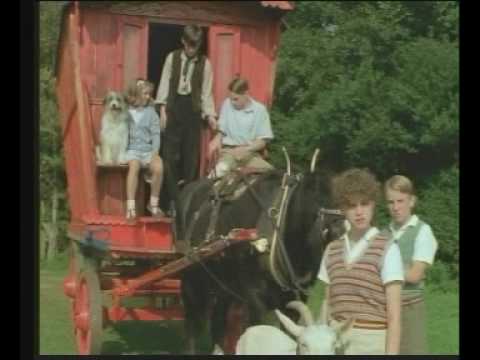
In my humble opinion the 90s TV adaptation of Five Go Off in a Caravan is probably one of the worst one given that in our first glimpsed of the Five, we can clearly see that Julian is hobbling along on crutches.

Now if you were to watch this episode in the order in which it had been aired you would know that this broken leg had been worked into the story of Five Have a Wonderful  Time. In real life Marco Williamson did actually break his leg, playing football. I am reliably informed that the producers were not happy with him for this, as both boys had been told not to play football when they were home from filming.  This meant that certain episodes had to be altered to allow for the crutches to be incorporated into the story.

In some respects this gives the others, Dick (Paul Child), George (Jemima Rooper), Anne (Laura Petela) and many supporting members of the cast to flourish but at the same time, causes friction within the Five that goes beyond the three episodes that were changed to accommodate Williamson’s broken leg. The shift in dynamic does allow for the talent of the other actors to come out. Needless to say Jemima Rooper shines through as she brings a more mellow side to George Kirrin.

Given that the broken leg causes so many story issues can it be really surprising that there isn’t a lot about Caravan that still remains faithful to the book? Nobby is a lot older than he is in the book, possibly because they probably needed another older boy to take the lead. However Ben Brazier who plays Nobby is a very successful stand-in lead. He does throw himself into the adventure with the Five and gives a very emotional performance when the dog Barker is supposed to be poisoned.

Anyway I can’t come this far into the post without mentioning our villains, who are two of Blyton’s best and nastiest crooks. Lou the acrobat and Tiger Dan the clown. These two are parodies of themselves; they’re much too clumsy and stupid to be such skilled burglars. Lou is really slow and stupid which makes the whole thing farcical.

Once again the 25 minutes allowed for the episode don’t really let you get into the story, things aren’t explained. Plot points like the caravans being moved and the children going into town to clear the way for Tiger Dan and Lou stay the same, but many others become unrecognisable. Most importantly the chimpanzee, Pongo, in the book is replaced by a goat, Gertie. You can’t get two more different animals! Pongo is the saving grace in the book, coming to help the children and being a good friend to them, and even though the goat is a way for Nobby to join up with the children, it’s not the same.

This had the potential to be a really good episode, but unfortunately one broken leg, scuppered things. There is a nice little scene at the very end, the only thought towards violence perhaps, where Julian’s crutches come in handy as he and Dick use them to trip up the bad guys and then, Dick (you assume because the screen blacks out) wallops them over the head with one of the crutches to incapacitate them. Now that definitely isn’t in the book!

This has to be one of the worst episodes of the bunch and purely because so much had to be rewritten because of Williamson’s leg. It’s a shame because this is one of my favourite books. The notable points of the episode are mostly down to the skill of the actors Ben Brazier and our favourite Jemima Rooper. That broken leg had a lot to answer for, I’ll tell you that for free!

Posted in Blyton on Screen | Tagged , , , , , , , , , | 2 Comments

The Adventures of the Wishing Chair by Laura

I loved that Adventures of the Wishing Chair (published in 1937) was one of Enid Blyton’s books when I was younger; the idea of a magical chair that grew wings and took you off on amazing adventures was very appealing. It’s also another book that I was recently able to replace – turns out my husband had a copy when he was a kid, which now lives on my shelves – so I’ve been enjoying it all over again.

Adventures of the Wishing Chair

The story starts when Mollie and Peter go into a strange antiques shop looking for a birthday present for their mother. They’ve spotted a little vase with swans around the base in the window, but the strange little man behind the counter can’t find any paper to wrap it in and keeps letting peculiar things, like green smoke, a large black cat or butterflies, out of the boxes instead.

The children become frightened as they locked in while the strange man and the wizard who owns the shop try to recapture everything, but help comes when they sit down on a chair and it grows wings. “Go on, wishing chair, take us home!”

It always seemed funny to me that the chair just stayed with them after this – didn’t the wizard want it back? To be fair, Mollie and Peter do at least make an attempt to return the chair to the shop once it flies them home, but its wings have conveniently vanished.

These wings regrow again at random intervals, which means they have to keep a look out to make sure they can go on an adventure and don’t lose the chair out the door or the window! They also disappear at odd times, sometimes landing the children in a lot of trouble.

Their next flight takes them to a giant’s castle, where they meet and rescue the pixie Chinky from doing sums for the giant who lives there. Chinky decides to live in their playroom, which is conveniently located at the bottom of the garden so the grown-ups don’t notice anything strange going on. This means he can let them know if the chair grows its wings and goes with them on their adventures.

Most of their earlier adventures, such as visiting the nasty Grabbit Gnomes, helping Chinky’s cousin Gobo get the wizard Ho-ho out of his village and attending a party given by a magician, are over in just a chapter or two. There’s even a quick visit to the Land of Dreams, which featured in one of the Faraway Tree books and is still as bizarre as ever. Where else would the chair turn into a dog, a duck and then icecream, while Mollie and Chinky become balloons?

As the book goes on there are a few more serious ones that run over several chapters. Mollie and Peter also spend four (!) chapters trying to find and rescue Chinky after they have a fight and he is kidnapped, and get their mother’s ring back from Big Ears the Goblin and the ridiculous-looking Snoogle over the last three chapters.

Unlike the mother in the Faraway Tree books, Mollie and Peter’s mother never realises her children are having strange adventures and seems to think they’re in their playroom while they’re really going off on a flying chair to visit witches, enchanters and talking mice. This actually leads to a couple of adventures, when she tries to sell the chair to Mr Twisty. After the children and Chinky foil this idea, she then decides she’s glad it wasn’t sold and brings it up to the house!

The stories are very similar to those in the Faraway Tree, with the strange lands, the charming (or horrible!) people they meet on their travels and the sometimes-surprising solutions to their problems. There’s a lot more emphasis on keeping their strange friends and adventures secret, but if you like the Faraway Tree books, I’d definitely recommend reading this.

Next post: The Wishing Chair Again

Posted in Book reviews | Tagged , , | 3 Comments

Mix Up Monday

Here’s a tricky week for you, Fiona and I are having a planned change around this week, instead of our unplanned one last week!

I shall be providing you something interesting for our Friday post, and Fiona will be hopefully reviewing the audio book of Five Get Into Trouble for us. As Trouble is one of my favourites I hope that the outcome is good.

Our contributor this week is the lovely Laura with a review of The Adventures of the Wishing Chair for us. Looking forward to reading that!

In other news, we’ve reached 111,000 views on the blog this week. I can’t believe now this blog continues to go from strength to strength. So here’s to everyone who visits us, and thank you to all of you for your support and our lovely contributors!

This week I shall leave you with some of my spring shots from recent walks. Hope you’ve all been enjoying the sunshine too!

Posted in Blog talk | Tagged , | 2 Comments

My fourteenth Noddy book: Be Brave, Little Noddy

My fourteenth Noddy book is the thirteenth in the series (that isn’t confusing at all) and it’s one I only have in paperback. I’m not sure of dating it but I’m guessing around the 70s or 80s as it is priced at 35p.

The cover of the paperback

The cover of the paperback


THE STORY

This story starts with Noddy having had a very successful morning ferrying the residents of Toy Village around. He has earned a pocketful of sixpences and is feeling very happy with himself until disaster strikes. Someone’s parked their car much too close to a corner (in direct violation of the highway code) and he’s gone right into the back of the vehicle. He ends up in Sid Golly’s fruit barrow and his little car is badly damaged. So much so it reverts to saying poooooop, like it did after getting soaked at the beach, instead of its usual parp parp. 

DSCN2183

The driver of the other car is a wooden man who’s bigger than Noddy. He’s called Mr Honk and is from Toy-Car Town. Despite the fact Mr Honk’s car isn’t damaged at all (being much bigger and tougher than Noddy’s little car) he’s very angry at Noddy.

Mr Plod is a bit useless when he turns up as despite Mr Honk being in the wrong he tells Noddy off. It isn’t until Miss Fluffy Cat interjects that the policeman concludes that Mr Honk may have some blame for the incident. Mr Honk, realising he may well get into trouble, slyly backs down and tows Noddy’s car to Mr Golly’s garage for repairs then speeds off, laughing unkindly.

The whole scene there is probably has the most realism of any Noddy storyline I can think of. These things happen in real life. People park badly and sometimes the wrong person gets blamed for a car accident. Of course there’s no car insurance in Toyland (maybe there should be though!).

Anyway, poor Noddy has to do without his car for a while as it’s being repaired. He doesn’t feel at all brave about this but Big Ears makes him buck himself up with one of those songs that I tend to skip over when reading.

DSCN2184

Ever resourceful, Noddy borrows Big Ear’s bike to run errands and earn some more money. He’s quite happy with this until he sees Mr Honk ferrying his usual passengers about in his big car. He can take more passengers than Noddy can (though apparently  Noddy can squeeze two toys in his car at a time, which is shown later) so Noddy worries that he’ll have no business left when his car is running again.

DSCN2186

The toys of Toy Town are with Noddy, though, and say they will go back to him when his car is fixed. Mr Honk is apparently rather rude and doesn’t carry their luggage. On the first day of having his car back Noddy has a job lined up to collect Mr Tubby Bear’s brother from the train station. When he arrives, however, Mr Honk has beaten him to it. Mr Honk gloats after he drops off his passenger at the Tubby Bear house and Big Ears comes up with a unusually immoral plan. He steals the wind-up key for Mr Honk’s car and says he will hold it to ransom until Mr Honk agrees to leave Toy Village.

Mr Honk is rude and unkind but he isn’t doing anything wrong in working as a driver in Toy Village. If the toys exercised their right not to choose him as a driver because of his bad service that’s one thing, but I’m not sure I can justify Big Ears stealing from him to force him out of town. We don’t even get that full resolution from the tale as it ends when they see Mr Honk’s car has run down on his way back from dropping Mr Tubby Bear’s brother off.


MY THOUGHTS

All in all it’s a slightly disappointing ending. I think it would have been more pleasant had the Toy Village residents kept their dislike of Mr Honk to themselves until after Noddy had his car back and showed him their solidarity in choosing him over Mr Honk, forcing the bigger toy to admit defeat.

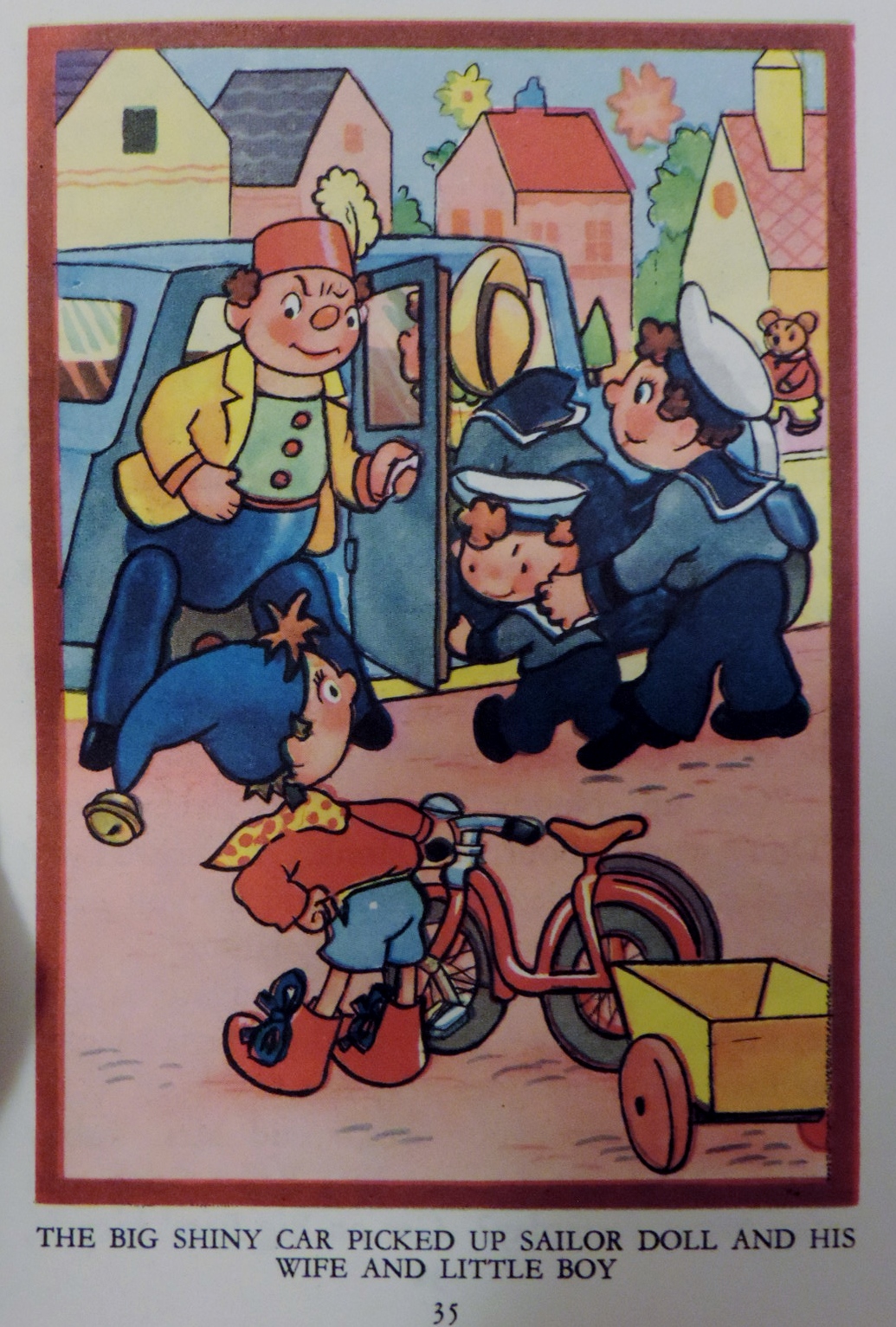
Noddy overloading his car

Noddy overloading his car

Posted in Book reviews | Tagged , | 2 Comments

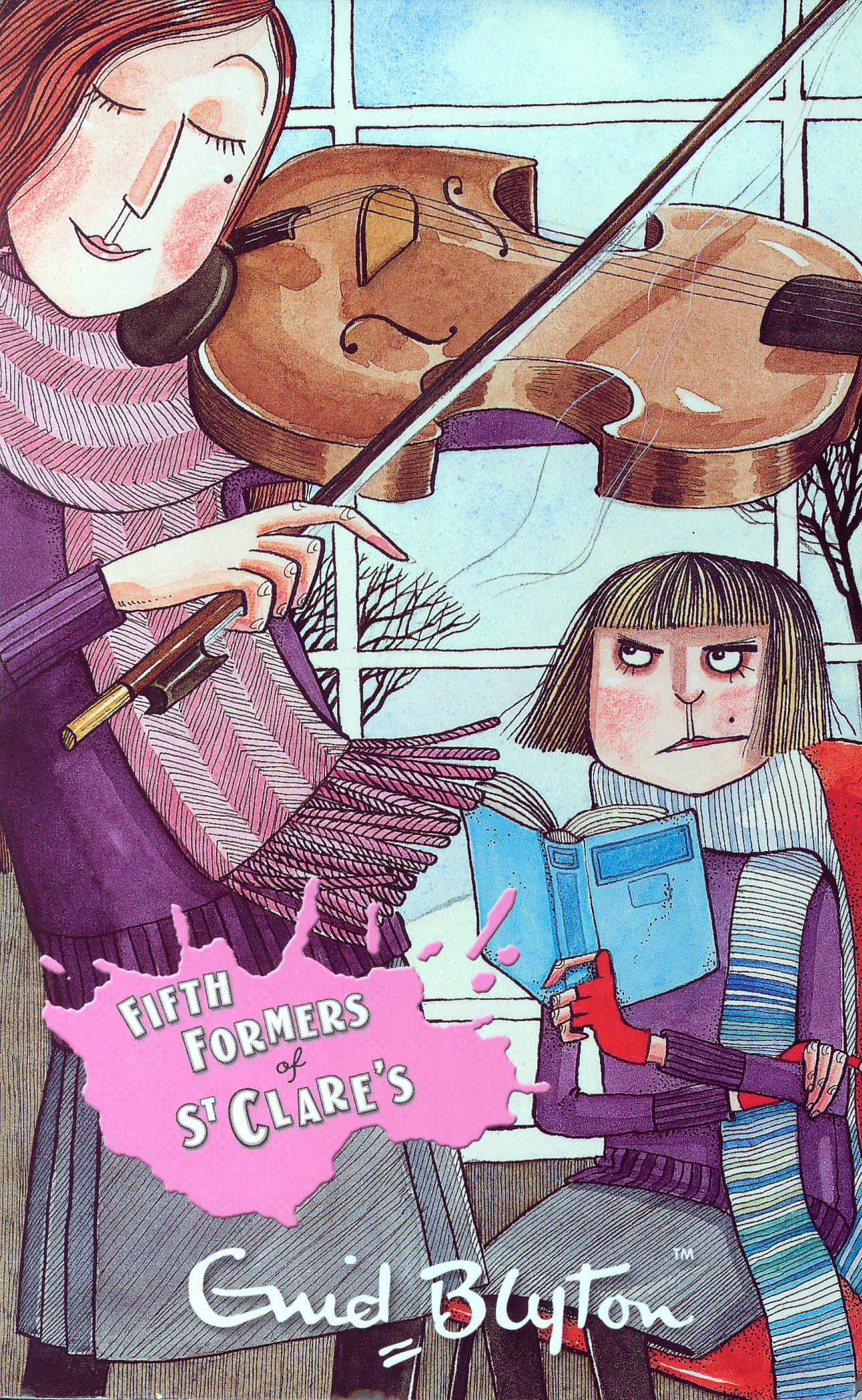
Fifth Formers of St Clare’s

Fifth Form at St Clare's, Egmont cover

Fifth Formers of St Clare’s, Egmont cover

Fifth Formers of St Clare’s is the final Blyton-written instalment of the series. Pamela Cox subsequently wrote three more books for the series. Third Form at St Clare’s Kitty at St Clare’s [also set in the third form] and Sixth form at St Clare’s to fill in the ‘gaps’. Blyton herself never returned to St Clare’s after the Fifth Form.

After 1941 St Clare’s was not part of her on going writing possibly because the second world war was in full swing and even Enid with her many different publishers had to ration her paper use. Or it’s possible that she moved onto bigger and better things, different series. The ending in the Fifth does make it seem like there will be another book, especially after the build up of who is going to be the head girl!

So anyway we start this term with more new characters, dropping some ones once more from the previous book. We also gain two old characters, Gladys and Mirabel  to be part of the Fifth form with the twins, Janet, Bobbie, Hillary, Carlotta and Claudine as well as Alison and the Honourable Angela.

Mirabel is made sports captain for the whole school and Gladys becomes her deputy. However the power goes to Mirabel’s head somewhat and she starts expecting the lower school to take as great an interest in games as she does, and begins to rub everyone up the wrong way. Meek little Gladys cannot seem to rein her in and eventually resigns her post in the process for a short while.

The new girls are Felicity Ray, up from the fourth form, Anne-Marie Longden and an old sixth former, Alma Pudden. I must say that the girls seem to chop and change forms a bit, I don’t really understand this whole thing of girls being left behind or moved up and down in the St Clare’s and Malory Towers novels. Its possibly because things were different in the school system back then to the way things are now? Can anyone shed any light on this for me?

Anyway, we don’t have a very happy bunch of girls really this year, but then the St Clare’s girls don’t usually seem to be very settled. Anne-Marie is supposed to be a gifted poet, at least she believes she is and is very put out when the other girls and then new English mistress don’t agree. Her poems are described as very dull and sad because she believes poems are supposed to be sad and moping.

Anne-Marie has to share a study with the musically gifted Felicity Ray as well, and she doesn’t like it. Felicity practices all the time and disturbs Anne-Marie’s concentration, and Anne-Marie feels hard done by. She also dislikes that Felicity’s genius with music gets recognised and goes about planning a way to get her own  thought of genius recognised and gives Mam’zelle a fright in the process.

Another big part of the fifth form is that Claudine’s little sister Antoinette joins the school and  becomes a bit of central character.She causes mischief such as setting off the fire bell during a games meeting, causing the Honourable Angela some distress as well as a good dose of her own medicine and helping her form organise a midnight feast which is discovered by Alma who cannot stop eating.

Overall this book in the series feels weaker than the rest. There are too many new characters to keep in mind as the plots weave in and out of each other. Too many factors to consider and none of the familiar faces to lighten the load. In fact Pat and Isabel, possibly considered the series protagonists, are barely seen. There are no jokes from Bobby or Janet and no interaction outside these new characters.

I must say that I am certainly not a fan of this book, or actually, of the series. Unlike the Malory Towers books which centre largely around Darrell, and characters you’ve grown to love, St Clare’s doesn’t even have the twins by the third book as the focus shifts. Could this possibly be why there was no sixth book? Did the publishers think that they weren’t working? I don’t know, and I wish I did just because I would have liked to see how Blyton finished her series. However if you are a fan of the series, don’t fret! Pamela Cox has written the final term for the O’Sullivan Twins.

I think that the St Clare’s series would be a good starting point for any parents who are looking to introduce their children to the Blyton world as they would be able to read a chapter a night as a bedtime story and the child wouldn’t feel cheated as the events in one chapter rarely carry over to the next. But I’m afraid, I don’t think I shall be reading St Clare’s again. I’ll stick with Malory Towers if no one minds!

Posted in Book reviews | Tagged , , , , | 8 Comments

Five Go Adventuring Again reviewed by Chris

This is the second of the Famous Five series, and makes it into my personal top three along with Five on Finniston Farm and Five Go Down to the Sea. I’ll come back to what might connect these three preferences. Five Go Adventuring Again was first published in 1943 by Hodder & Stoughton and I have the tenth impression of this edition, published in 1956. It is one of the red hardbacks, sadly with dustjacket missing. Illustrations are by the ever-excellent Eileen A. Soper. The cover shown here is that of the 1943 first edition and same illustration appears as a colour frontispiece in my volume so I would assume that this was also the dustjacket image. For other reviews, see Nigel Rowe’s on EnidBlyton.net and Terry Gustafson’s on The Enid Blyton Society. See also Fiona’s synopsis on this blog.
Five go adventuring again

First edition cover by Eileen A. Soper.


It is the Christmas hols and as so often things begin with misfortune when Anne, Julian and Dick’s mother gets scarlet fever and their father is in quarantine. Never mind, because the children are to stay at Kirrin with their cousin George, and of course Timmy, in Uncle Quentin and Aunt Fanny’s cottage. On the other hand there are to be lessons with a private tutor since Julian and Dick have had influenza twice in the term and have fallen behind with their work. It does strike me that there is an awful lot of illness in this family, and two bouts of flu in one term seems excessive. Their mother is even more unlucky as scarlet fever is rare in adults and, in the pre-antibiotic days when the book was first published, it could be fatal. By the way, at the time, there was what proved to be an ineffective vaccine, interestingly called the Dick vaccine (thanks, Wikipedia). By the way again, this blog has already covered the many illnesses that feature in Blyton including flu and scarlet fever.

Anyway, the stage is set for some winter fun and, who knows, an adventure (our hopes are high given the book’s title). The girls arrive first (it always seems to happen in Blyton that girls’ schools break up before boys’) and are met by Aunt Fanny who tells them that Uncle Quentin is working on a secret theory which will be used for the good of the country but she cannot tell them what it is since, of course, it is secret even from her. Next day, they meet Dick and Julian at the train station, beautifully illustrated by Soper, with Julian looking especially dashing and alarmingly mature, and enjoy a splendid welcoming tea at Kirrin Cottage. Uncle Quentin announces that he has hired a tutor – a late but superbly qualified applicant for the post, which begins to arouse our suspicions – by the name of Mr Roland. Apart from his qualities as a tutor it seems he is knowledgeable about Uncle Quentin and his work, which might also make us suspicious since this work is supposed to be secret, isn’t it? We are not alone in wondering if Mr Roland is too good to be true when he arrives. Timmy refuses to ‘shake hands’ with him, and even turns his back on the tutor, and for his part Mr Roland professes a dislike of dogs. This of course sets George against him from the outset.

five go adventuring again train

Meeting Julian and Dick by Eileen A. Soper.

Now the other main plot element is introduced. The children visit Kirrin Farm and meet Mr and Mrs Sanders, the old couple who live there, who mention that they will have tenants over Christmas: two artists “from London Town” no less. More suspicions form in the reader’s mind. Bohemian types and Londoners, eh? They need to have an eye kept on them. But they have yet to arrive and in the meantime the children learn that the farmhouse has a secret compartment behind a panel, and a cupboard with a false back. Exploring the compartment, Dick finds an old book of recipes and home remedies which he gives to Mrs Sanders, an old tobacco pouch which Mr Sanders keeps, and a curious old linen rag, with Latin writing on it and a strange diagram, which the children are allowed to take. The writing includes the words ‘via occulta’ which Julian translates as ‘secret way’. The cupboard’s false back appears to be a dead end, but more of that later.

In the run up to Christmas lessons begin, but they are overshadowed by the worsening relationship between Mr Roland on the one hand and George and Timmy on the other. The other children get on well with their tutor, however – despite his bristling black beard which only partly disguises his thin and cruel lips, and piercing eyes, which taken together might have given them pause for thought I can’t help feeling – opening up a rift with their cousin. Matters get worse when Timmy nips Mr Roland’s ankle and as a result is excluded from the lesson room. But it is not all lessons. There are jolly Christmas preparations to make, including decorating the house with the exception of Uncle Quentin’s study because it is full of the equipment he is using to discover a “secret formula” (Blyton needed to brush up on her science here – is it a secret theory or a secret formula that Uncle Quentin is working on? They’re not the same). Mr Roland plays a full part in the preparations leading the children to show him, to George’s disgust, the mysterious linen document. He is able to decipher from the Latin text that the diagram refers to eight wooden panels in a room with a stone floor and facing east, giving entrance to a secret way.

Christmas Day is a wonderful time for all, with splendid presents: a toy station, a doll with eyes that shut, books about dogs and aeroplanes a pocket knife with three blades and more. Add to that Christmas lunch, the tree, ornaments, candles, sweets and no lessons and it is no surprise that the children go to bed happy. But in the night things begin to go very wrong for George. Woken by Timmy’s growling, she goes downstairs to investigate and hears a noise that might be a burglar, only to find Mr Roland poking about in Uncle Quentin’s study. Timmy attacks him but he claims that he too had heard a noise and was investigating in case it was a thief. Uncle Quentin banishes Timmy to live outside.

On Boxing Day the children decide to search for the secret way which they assume is to be found at Kirrin Farm, but George refuses to accompany them because Mr Roland is also going, although first he goes alone to the village. At the farmhouse the children fail to find the secret way, but they do meet the two artists, Mr Wilton* and Mr Thomas (described, in their absence, as “queer folk” by Mrs Sanders, but whether this is because they are artists, Londoners or baddies is not clear). Later, Mr Roland arrives and is introduced to them, and responds as if they are complete strangers to him. But then there is a crucial plot turn because when the children meet up with George again it emerges that she had seen Mr Roland in the village talking to the artists, and was clearly well-acquainted with them. Why, then, had he pretended not to know them when he met them at the farm? From this point onwards all our suspicions about Mr Roland are confirmed, and what’s more we’re beginning to have doubts about those townie artists.

Poor old Timmy is still banned from the house by Uncle Quentin, with Mr Roland’s encouragement, and the cold weather makes him develop a cough. George smuggles him into the house at night and rubs liniment into his chest in front of the fire in Uncle Quentin’s study. But the next day it is discovered that some test tubes have been broken and some pages of the book Uncle Quentin is writing are missing. Another oddity is that a bottle of “camphorated oil” is found in the study, and of course it comes out that George had been in there with Timmy. She admits this, but assures her father that she had nothing to do with the broken test tubes and missing pages, and – in a rather touching scene – he knows that she is telling the truth. However, he refuses to believe her when she accuses Mr Roland of having stolen the pages.

After the encounter with her father, George remains in the study and notices that it has a stone floor, faces east and has eight wooden panels. Could this be the entrance to the secret way? George thinks so and so do we. But she is sent to bed in punishment for having brought Timmy into the house. Meanwhile, snow has begun to fall very heavily. George tells the other children of her suspicion that Mr Roland is a thief and suddenly the children realise that they have fallen into – yes – a “Big Adventure”. Now events start moving very quickly. Mr Roland goes out for a walk in the snow. Julian follows him and sees him hand over a sheaf of papers to the two artists. The stolen book pages? Who would doubt it? Mr Roland’s villainy is obvious, but the children realise that they will never be believed without more proof. By now Kirrin Cottage and farm are completely snowed up and in the night the children follow up on George’s theory about the secret way. They find a handle behind one of the panels which opens a flagstone which in turn gives access to a passage – the ‘via occulta’ itself!

The next day Mr Roland is in bed with what one can’t help but feel is a well-deserved cold (which prompts the questions as to why it’s never the baddies who succumb to scarlet fever, influenza and the like), and Uncle Quentin is clearing the snow. This allows the children to explore the secret passage, and when they do they find that it leads to Kirrin Farmhouse and emerges in the cupboard with the false back, which is in one of the artists’ bedrooms. The children know they are in danger but they also realise that Uncle Quentin’s work is of national importance. They lock the bedroom door and search for the stolen papers, but the artists force the door and the children have to return to the secret passage. As they go through the cupboard, George finds some papers in the pocket of a coat hanging there. Hearing the noise of the children, the artists pursue them down the passage but George sets Timmy on the men who retreat to the farmhouse. The children are able to get back safely to Uncle Quentin’s study and give him the papers which, of course, turn out to be the missing pages of his book. They tell the full story and Uncle Quentin feels very guilty for his treatment of George and Timmy, as well he might, although his daughter immediately forgives him.

All that remains is to catch the baddies. The snow means that they cannot escape and, for good measure, Mr Roland is locked in his bedroom whilst the family enjoy a cosy fireside lunch. At some point (it is not quite clear when: he seems remarkably blasé about it) Uncle Quentin calls the police but the snow means that there is no prospect of their arrival. In the meantime is anticipated that the artists will explore the secret passage and indeed they do, emerging in Uncle Quentin’s study in the middle of the night to be met by Timmy and locked in with Mr Roland. The next day the police arrive on skis (why couldn’t they have done this the day before?) and decide that for now the three villains can be left locked up until the snow melts. This happens two days later and the police return and take them away to meet, one hopes, justice.

In all, then, a superb adventure. The main negative is that it is predictable almost from the beginning that Mr Roland is a bad egg. So there is very little suspense, although the chase at the end is quite dramatic. The main appeal for me is the prominent role of secret panels and passages and it is this which links Five Go Adventuring Again with my other favourite Famous Fives, although of course it is not confined to these three. All three, though again not uniquely, feature farms. I particularly like the wealth of incidental detail, especially about Christmas preparations, and the atmosphere created by the snow. This isn’t the commonest season for a Five, although Five Get into a Fix comes to mind, and I think is the only time we are at Kirrin for Christmas. I’d like a bit more detail on the Christmas meal though, about which we are told only that the table is “loaded” and features “an enormous turkey”, which Mr Roland, rather presumptuously I felt, carves. It’s a missed opportunity to tell us about the roast potatoes, bread sauce, sprouts and stuffing which I feel sure that Joanna the cook prepared. Other than that, all the classic elements are present except for one, which is my least favourite anyway, namely the presence of a child-outsider to be patronised by the Five. I am thinking of, for example, Sniffer in Five Go to Mystery Moor or Aily in Fix. Plus there is a juicy role for Timmy, a lesson in humility for Uncle Quentin, a lesson in skiing for the Kirrin constabulary, and a lesson in Latin for the rest of us. Truly, something for everyone.

*In Fiona’s synopsis he is called ‘Mr Wilson’ but in my edition he is ‘Mr Wilton’. [Not any more as I’ve just gone and corrected my error – Fiona]

Posted in Book reviews | Tagged , , | 9 Comments

Monday

Spring is definitely here in Scotland – we’ve had sunshine most of the week and the daffodils and other spring flowers are out in force.

Some of our wonderful contributors have also come out of hibernation and that means we have some posts for this Wednesday and the next, too. This week we have Chris who has reviewed Five Go Adventuring Again.

I’m going to review my next Noddy which is Be Brave, Little Noddy. I was down for an audio review but given my track record with those lately and the fact I have the 4-8 shift at work on Thursday, I thought a Noddy was a safer bet.

Stef will probably have her latest St Clare’s review for you by Sunday (she’s been away staying with friends this weekend which was why she didn’t have it ready this week).

There has been some lovely news from our favourite George – Jemima Rooper – this Sunday evening.

Jemima Rooper at the Olivier Awards


Doesn’t she look wonderful? Huge congratulations to Jemima and her partner Ben. (And of course, she meant that it’s not a ginger-beer belly I’m sure.)

I’ll leave you with the evidence of spring in Scotland – Carnoustie in particular as that’s where I was walking on Sunday.


Posted in Blog talk | Tagged , , | 2 Comments

Fiona’s Blyton wishlist

I’ve got a lot of books, and a lot of those are Blytons. There are a great number I don’t have, though and I thought I would pull together a list of those for you this weekend. I couldn’t possibly list them all so I will stick to those I have as a ‘top priority’. Those would be titles I have in red in my spreadsheet, most of which are required to complete a series as otherwise I’d end up with more books from more series and collections than I could handle! Though, sometimes, when I see a bargain I end up starting a new series…

I’ve got complete collections of:

  • The Adventurous Four (2)
  • The Adventure Series (8)
  • Amelia Jane (3)
  • Barney Mysteries (6)
  • Enid Blyton’s Magazine Annuals (4)
  • Evan’s Days Stories (2)
  • The Famous Five (21)
  • The Farm Series  (3)
  • Five Find-Outers (15)
  • Hodder ‘Party’ Books (2)
  • Hodder Story Books (8)
  • Josie, Click and Bun (5)
  • Malory Towers (6)
  • Methuen ‘Colour’ Story Books (4)
  • Methuen Naughty Children (2)
  • Mr Galliano’s Circus (3)
  • Mr Meddle (3)
  • Mr Pink Whistle (3)
  • Mr Twiddle (3)
  • The Naughtiest Girl (3)
  • The Secret Series (6)
  • The Secret Seven (15)
  • Six Cousins (2)
  • St Clares (6)
  • Werner Laurie ‘Tales After’ Story Books (2)
  • The Wishing Chair (2)

So I think that covers a fair chunk of Blyton’s output! You might have noticed a few big omissions though so I’ll start with them first.


I only started collecting Noddy books in the past year and I don’t quite have them all yet. I’m missing two titles from the series of twenty-four – numbers 11 and 12 – Noddy Meets Father Christmas and Noddy and Tessie Bear. I’m still working my way through the series (and reviewing them as I go) so those two won’t be a pressing need until I’ve read the nine that remain.

Something else I’ve only started collecting more recently are the Famous Five Adventure Games from the 1980s. I still need four of the eight, though I found the others fairly cheaply in charity and second hand shops.

The other major series I haven’t completed is The Faraway Tree Series. I have the three primary works (The Enchanted Wood, The Magic Faraway Tree and The Folk of the Faraway Tree) and the ‘prequel’ The Queer Adventure (originally known as The Yellow Fairy Book) but I’m missing Up the Faraway Tree which is a picture-strip book. I must confess, though, that I haven’t ready any of those books yet!

The earliest edition and the one I'm least likely to be able to find.

The earliest edition and the one I’m least likely to be able to find.

I bought my first Brer Rabbit book late last year (My Brer Rabbit Book 4) and I haven’t even gotten around to logging a list of the rest of them, so I don’t know what I’m missing there. Maybe that’s best.

I don’t hold out hope of completing the Happy House Children Series as Benjy and the Others (the third title) is something I’ve never seen for sale even at an unaffordable price.

I’m lacking two of the Holiday Books (namely numbers 1 and 3). These are particularly hefty books so often the postage is quite high on top of the price of the book itself. I’m sure I’ll get them at some point,though.

Another problem with trying to complete a series (for me anyway) is when you have say, four of the eight (like I do with the Foyle Flower Story Books) but one’s a later edition lacking much of the original content. I can’t really count that book so I’m still looking for Daffodil, Poppy, Snowdrop, Water-Lily and Foxglove.

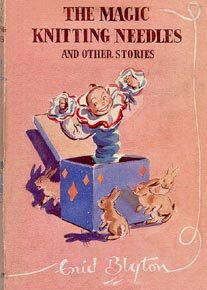
I need one Macmillan Story Reader The Magic Knitting Needles and Other Stories to go with the other seven I have. I don’t think I’ve seen this on eBay and it annoys me to be so close to having all the books but not being able to find the last one.

the-magic-knitting-needles-and-other-stories

Similarly I have three of the five Macmillan Nature Readers. I still need The Rabbit’s Party and Other Stories and Susan and the Birds and Other Stories to finish the series. I’ve seen Susan and the Birds for sale a fair few times but for some reason it’s always priced a lot higher than what I paid for the other titles I have. It’s not even a series I’ve read so I’m not keen to spend £15 or so on one more book.

I also have the first two Treasure Trove Readers which means I need three more.

I’ve also got several series where I’ve only got one title (see opening comment about bargains…). Those would be Twenty Minute Tales from the Methuen Minute Books (I have three more to get), the third My Enid Blyton Book from the Marks and Spencers BooksSanta Claus Gets Busy from the six Wheaton Musical Plays, Nature Reader Five (only 35 Enid Blyton Nature Readers to go!), The Magic Snow-Bird from the Pitkin Pleasure Series (13 to go but I’ve only seen one or two in poor condition at high prices) and finally Trouble for the Twins of the 18 Brockhampton Little Books Series.

Some (I think five of six) of the titles from those Brockhampton Little Books Series are also in the Brockhampton Picture Books Series. I have 4 of the 12 picture books and I’m really not sure whether I’ll aim to collect all 12 plus all 18 from the other series.

I don’t have any of the O’Clock Tales books actually. Not an intentional decision, but just by chance I haven’t spotted any bargains in that series to start me off.

Oh, and I can’t forget about the Enid Blyton Society Journals. I have 40 of 56 so far. I’m needing 1-3, 5-6, 8, 11, 14-18 23 and 27.

There are some stand-alone titles I’m missing too. The Birthday Kitten, The Adventures of Scamp, The Land of Far-Beyond and Tales of Green Hedges are the ones I’ve singled out to have on my list but I imagine there are others I’ve missed.

So a reasonably long shopping list there, but not an exhaustive one by any means. There are strip books like Bom, Clicky, and Mary Mouse, modern annuals and reprints, continuations, plays, song books and so so much more. I’ve also got a Pinterest board which has other titles on it (hopeless dreams, some of them.) It’s an impossible life-time’s work!

It would be interesting to know what you feel is missing from your collection, as I’m sure none of us realistically aim to collect everything with that familiar signature on it. If you did you’d end up with a lot of duplicated content (I’m sure I already have some stories multiple times across various collections) and you’d need a mansion not to mention a millionaire’s budget, so where do you draw the line?

Posted in Personal Experiences | Tagged , | 7 Comments

The Island of Adventure – How has Blyton’s original text fared in a modern edition? part 7

It’s been a little while since I last did a post on this. There was meant to be one roughly every four weeks but I chopped and changed a few weeks on the schedule so it didn’t work out that way. Never mind, I got to it eventually. This week is chapters 13 and 14 so we’re nearly half-way through the book. Previous parts are one, two, three, four, five and six.

A reminder: my copy of the book is an 8th impression from 1955 (handed down from my mum) and the modern copy I’m comparing it to is a Macmillan one from 2001 (borrowed from Stef).


CHAPTER THIRTEEN: JO-JO IS TRICKED AGAIN

This chapter starts and continues with the annoying trend of removing Joe’s name from the text. They ruin a nicely repetitive piece If they went down to the shore, Jo-Jo would be there, collecting driftwood. If they stayed in the house, Jo-Jo stayed too. If they went up on the cliff, Jo-Jo followed by changing the first two names to he and the last being left as Joe. On three further occasions the name is omitted and replaced with him/he. I really don’t know why as there aren’t any instances of this happening to any of the other characters, and their names don’t seem to appear any more frequently than Jo-Jo’s.

There’s two instances of the black man in the chapter which are both made to the man. (I’m remembering that I’m trying to keep a tally of how many times Blyton referred to Jo-Jo’s colour which is why I’m making a note of these repeatedly.)

There’s an attempt to make the girls seem less… girly? later on, too. When they go down the secret passage it’s noted that neither girl is keen, and they hate it. But then when they found that in one part it was difficult to breathe, they were afraid. Or as it’s updated they stopped instead of being afraid. I think stopping implies a certain fear, or at the very least reluctance anyway.

The boys attempt to get her moving again and Jack (I think) says Get on Dinah, and don’t be an idiot. This is changed to Get on Dinah, we’ll be out soon. This might be kinder and more encouraging but it’s out of character for either boy, and they throw idiot around as a friendly insult at other points in the book.

As with previous chapters dear Jo-Jo is not dear Joe, he’s just Joe.

More hyphens are removed (though not from every phrase) but from heat-haze which ends up as two words.

Next Bill’s words are played with. Originally he says he [Jo-Jo] mustn’t see you sailing off in my boat. The off is removed in the updated text, so it’s just see you sailing in my boat. The original makes more sense as they know Jo-Jo is on the beach, and could possibly see the boat heading off out to sea. He’s not going to be out at sea, so he’s not going to see them after they’ve sailed off. And even if he did, Bill’s line is perfectly fine!
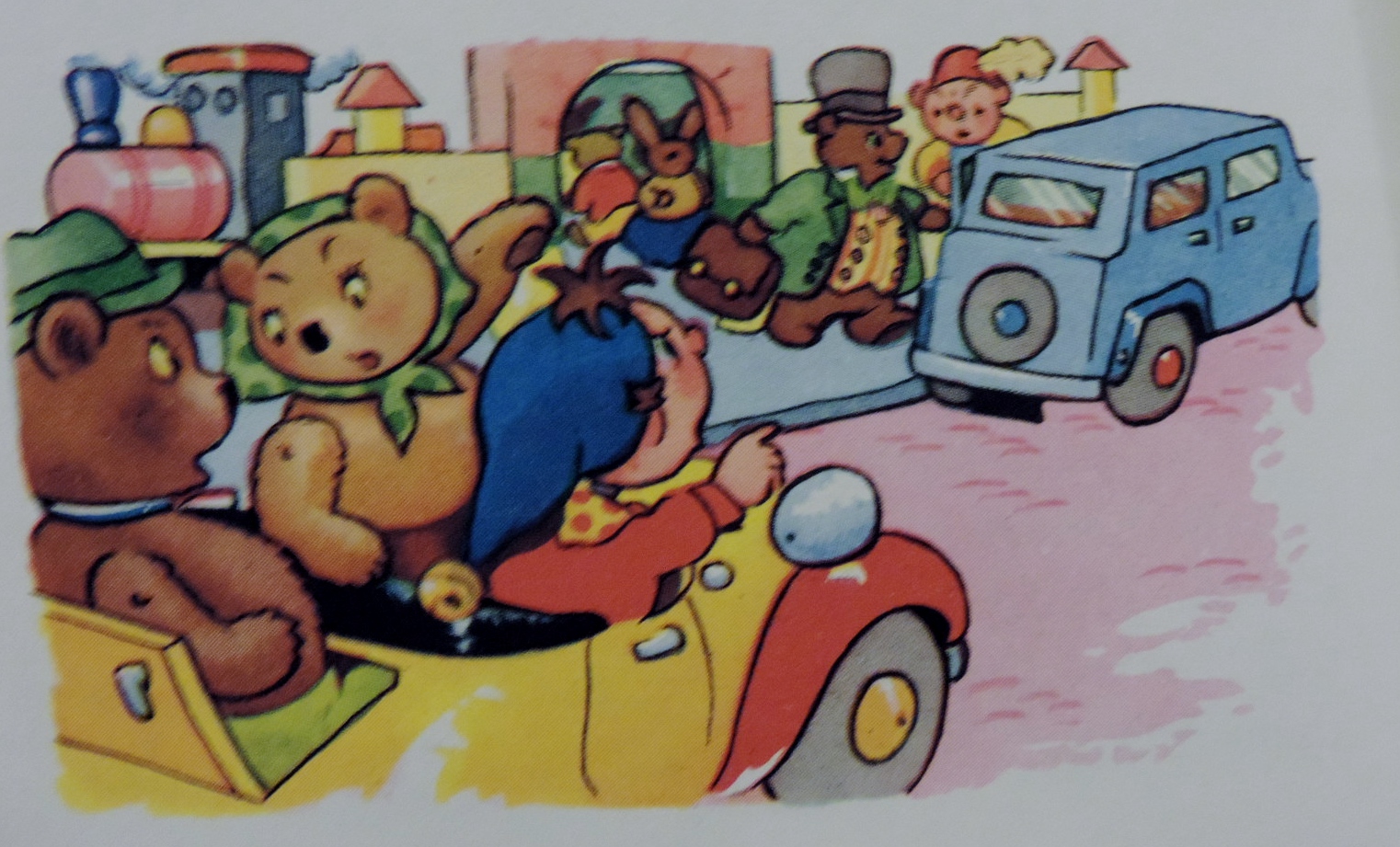
Last, but not least, Aunt Polly’s speech gets butchered. She is telling Jo-Jo off for shirking his jobs. Don’t just stand there looking like a stuffed dummy. You make me very angry, are her original words. These become don’t just stand there. Get on with some of your work. I’m not sure why that needed altering as I can’t see that as being offensive, suggesting slavery or something not easily understood by modern children. If there’s a connotation to stuffed dummy that I’ve missed, please do enlighten me.

An added note – there is still a lot of pidgin English coming from Joe in both versions, the best example being him saying I seed [saw] them.


CHAPTER FOURTEEN: A GLIMPSE OF THE ISLE OF GLOOM

Thankfully for my blood pressure there’s a little less changed in this chapter.

Sea-sickness becomes sea sickness, dear is missed out in dear Jo-Jo and Jo-Jo is again replaced with him but at least it’s only once.

The only substantial change comes to some of Aunt Polly’s words. Of Jo-Jo she says He’s really getting impossible – so uncivil and lazy. Most of this is cut so that she just calls him lazy. 

I had a moment of triumph when I noticed the modern edition missed altering a queer – when Jack and Dinah look at the map in Uncle Jocelyn’s study and note the shape of the island. Also unaltered is the way the boys handle the boat and then pull it in, while the girls sit back.


Although a lot has been changed, much of it isn’t anything new so there’s only six countable alterations that I can see. That makes sixty-one altogether.

Posted in Updating Blyton's Books | Tagged , , | 2 Comments

First April Monday

I hope you all had a nice Easter. Did you see the April and Easter poems I posted yesterday? Make sure you check them out if you didn’t see them!

This week we have no contributor again, but Fiona will do another chapter analysis of the updates to The Island of Adventure and I will… well… I have a number of options to do this week. One is get on with the episode analysis that I skipped out on yesterday, the other is review The Fifth Form at St Clare’s, the other is look at some more of Blyton’s twins, and the last (if I could read it in time) is review the next Adventure series book which would be Ship of Adventure.

As I can’t really be more specific than that I can get onto blog news, of which there isn’t much but I’m going to put out another plea for some contributors! Please please please! As you may have noticed we’ve used up all our lovely contributors’ blogs and are in desperate need of some more. Please check our Want to Write for World of Blyton Page? for details on how to get in touch and what sort of things we’re looking for!

Anyway I shall leave you with some of my pictures from Oxford that I took last week, and I hope you enjoy them, and give serious consideration to writing for us! You can see some more, and some of my other pictures on my Flickr here.

Posted in Blog talk | Tagged , , | Leave a comment

A Happy Easter – A poem by Enid Blyton

I’ve got a wonderful April and equally thrilling Easter Poem for you all today from The Enid Blyton Poetry Book.

A happy Easter, birds and bees,
A happy Easter, laughing trees,
A  happy Easter, daffodils,
Whose golden cups the sunshine fills.
A happy Easter, lambkins white,
And little rabbits, skipping light,
A happy Easter, skylark gay,
And Cuckoo speeding on your way.
A happy Easter, one and all,
Whether you are big or small,
Little snail or mighty tree,
A happy Eastertide from me!

Isn’t that nice? I shall leave you with some spring flower pictures by Fiona and myself. And hopefully without being too cliché;

Happy Easter!


Posted in Poetry | Tagged , , | 2 Comments

What I nearly bought this week…

A blog staple these days seems to be a “haul” post, often by video, showing off the blogger’s latest purchases – mostly of clothes and make-up though I’ve seen supermarket ones and baby things ones as well. Any hauls on this site will be book related, naturally, and will be mostly typed with a few photos!

Anyway, this isn’t even a haul. As the title says this is what I nearly bought this week. A virtual haul, if you will.


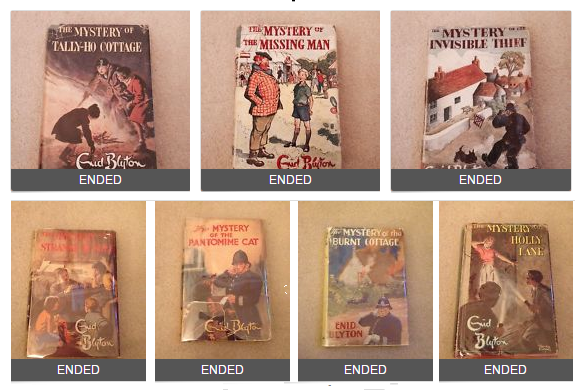
Firstly, I had my eye on a selection of Five-Find Outers titles on eBay – all first editions with dust jackets which started at a very enticing 99p each. I put them all in my watch list and checked back on them a few times, seeing them start to creep up as the week went on. Even The Mystery of the Invisible Theif  was being bid on. Several went past my (admittedly cheapskatey) budget of £5-10 for a book, and of course, I already HAVE all of these titles in later impressions without the jackets. (I don’t buy books I already have unless it’s a serious improvement on what I already have. Even then I usually still don’t as I can’t justify the spend.)

I pretty much knew by then that I wasn’t going to be bidding but I steadfastly watched them as some titles hit the £20 mark and others approached £10. On the last day of the auction I thought to have a look at my Excel chart of books (yes, I have a chart that denotes which titles I have, their edition, illustrator, publisher and the price I paid if I knew it…) and it turned out I had most of those on offer in a first edition anyway.

The Find-Outers on eBay

The Find-Outers on eBay

Long story short – I didn’t bid, I didn’t win, and they all went for quite a lot of money in the end.


Putting that behind me was easy as I wasn’t all that disappointed to have missed out, and later in the week I ended up on the Green Meadow Books site, following a link from the Enid Blyton Society forums. I went through all 20 pages of Blytons and mostly marvelled at the rare and expensive items but I also spotted a few reasonably priced items that are missing from my collection.

Firstly I picked out the first and second in the My Enid Blyton Book set from the Marks and Spencer’s trio. (Yes Marks and Spencers aka M&S, Marks, Marks and Sparks or if you’re in Scotland Markies, published books once upon a time under the St Michaels name.) Those were just £5 each and would have gone nicely with the third book which I already have.

Then there were the Enid Blyton Society Journals. There have been 56 to date, and I started subscribing back in the mid 30s I think. I bought what back editions were available then and have sourced more from eBay and other forumites but still lack 14 of them. Green Meadows had four I didn’t have but at £6.50 each they were twice the price they originally were. Add those to the two other books and my casual browse was starting to get expensive.

Journals 14, 15, 17 and 18

Journals 14, 15, 17 and 18

I also rather wanted the first Holiday Book (sans dust jacket) which was priced at £10, as I have all but the first and third of the twelve.

The Enid Blyton Holiday Book

The Enid Blyton Holiday Book

Forty-six pounds though, all in one go? I couldn’t justify it and hurriedly closed the tabs and stopped myself doing anything silly like ordering the whole lot. I hadn’t even checked to see what postage would have been on top so it could easily have been more than £50.

So that was what I nearly bought this week. Perhaps not as exciting as if I had actually bought something, but much better for my purse. Perhaps I’ll allow a small bargain at some point soon to reward myself for being so good. We’ll see!

Does anyone else fill a real or virtual basket with goodies only to back out when they see the cost? And does anyone else struggle to justify buying up so many books? (Clearly I justify it sometimes as I have… a LOT of books but still, I’d have way more if I didn’t stop myself.)

Posted in Personal Experiences | Tagged , , , , , | 2 Comments

Last Monday in March

Well March has flown by! We’ve had the odd sight of nice weather – brief spells of sunshine – so I’m hoping to see more of that once we get into April.

Wednesday is shaping up to be contributorless again unfortunately (I’m considering contacting Mr Barling to see if he can smuggle me some blogs, or better, some bloggers that I can lock up in an underground dungeon and force to write. Don’t worry – I’ll feed them well!) so it may be a reblog from some place – we shall have to see what I can come up with on Tuesday night.

I’m intending to listen to another audio this week – Five Get Into Trouble – and then review it so again we’ll see if that happens! And then Stef is going to watch and review another 90s series episode. Five Go to Smuggler’s Top if she can find it and something else if she can’t.

I’ve actually made it out and about lately thanks to the nicer weather and on one of my walks I spotted the remainders from some sort of children’s book event. No Blytons though!

It was lovely to see all those activities still sitting there on a Sunday afternoon – there was also a hammock and a tub of chalk. I’m sure the children had a ball!

Posted in Blog talk | Tagged , , , , , , , | 1 Comment

The Twinniest Twins: Connie and Ruth Batten from Malory Towers

A few weeks ago I decided to bring you a look at two controversial characters from Blyton’s writing, The Harries, looking into their mysterious identical-ness and how they act around the Five.

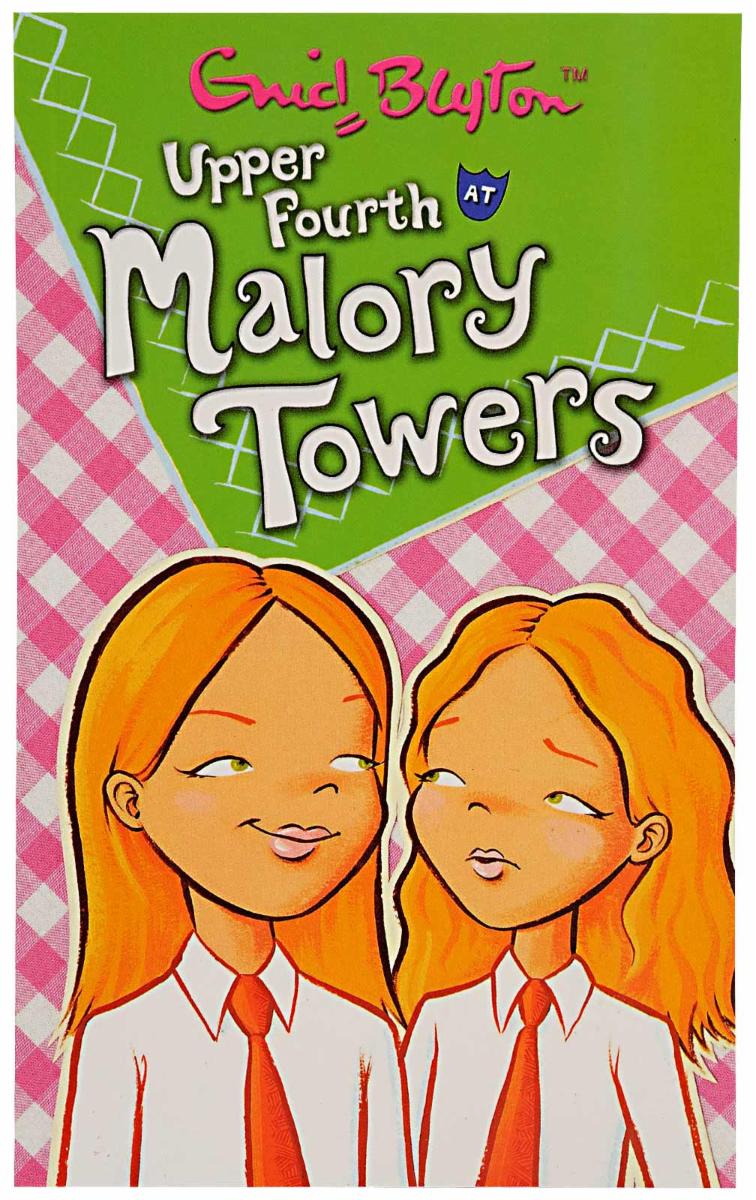
Connie and Ruth on the 2006 Egmont, not illustrated, cover by Nicola Slater.

Connie and Ruth on the 2006 Egmont, not illustrated, cover by Nicola Slater.

Today I’m going to look at a pair of Blyton’s twins who are most likely the exact opposite to the Harries. The Batten twins, Ruth and Connie, from Upper Fourth at Malory Towers.

Fiona summed up my next set of twins to analyse with this thought provoking piece:

The Philpots are a boy and girl who realistically shouldn’t be all that alike, but they are alike in speech and mannerisms and even speak at the same time. They’re happiest as just the two of them. Whereas Ruth and Connie go against what you expect of twins – they’re unalike in physical shape and looks as well as temperament and attitude. To the point that Ruth almost hates Connie for a time.

The reason I’m quoting Fiona is that I think it sums up the diversity between Blyton’s twins. Now I haven’t read absolutely everything she had ever written but the twins I am aware of are all very different. Either in their genetic make up, or their attitudes and personalities.

With that said I think we now need to take a look at the Batten twins, Ruth and Connie and I’ll let you make up your own minds whether they are the opposite to the much loved Harries.

Ruth and Connie are two new girls at the start of the term in Upper Fourth at Malory Towers. Darrell thinks it is a shame that they are not alike as that the girls could have had some fun with them if they were. I always liked the idea of twins being so identical that they could confuse the teachers or their peers. There is something completely magical about twins, they always fascinate me, and I think that could possibly be true of Blyton as well as she uses them so often in her work.

The description of the twins leaves us in no doubt that they are completely different.

“Connie was bigger, fatter, sturdier and bolder-looking than Ruth, who was a good deal smaller, and rather shy-looking. Connie smiled broadly and nodded to everyone. Ruth hardly raised her head to look around, and as soon as she could she stood a little way behind her sister.” (Upper Fourth at Malory Towers)

From this description I think its safe to say that we’re expecting Connie to be the nice twin, and Ruth the one who’s perhaps a bit sly and manipulative, but that’s not how things turn out. Ruth’s shyness and timidity come from Connie being overbearing and overprotective of her older twin. This may stem from Connie’s fears at being left behind by Ruth if she steps out of her shadow, an issue that becomes apparent towards the end of the book.

At first the girls don’t really feature in the story, but their role to play in the upper fourth soon makes itself known. The girls get very tired of Connie not letting her twin speak or do anything for herself and try to buck Ruth up a bit, but her twin doesn’t let her shine. From this point on, the friendly Connie we thought we might get fades away and we clearly see the manipulative, domineering Connie who doesn’t let her own sister do anything for herself.

Connie becomes almost an older sister to Ruth, who is naturally the older one, and babies her, making all the decisions for her. Connie dictates what they do, who they should talk to and almost tries to take her life away from her it seems. Ruth finally declares to Darrell that all this is because Connie loves her too much and is trying to protect her. Darrell thinks it’s more than that, something that could be very sinister and dangerous in later life (a point added to by Miss Williams when Darrell goes to talk to her about it).

We then see a series of unfortunate and nasty ‘tricks’ played on Connie and they turn out to be by her sister. Mostly due to feeling stifled by Connie, but also because she demanded Ruth fail her School Certificate so they could both stay in the upper fourth. Luckily things work themselves out and the twins will finally be in separate forms.

The Batten twins are probably Blyton’s most different twins, in the fact that the dynamic between them is so different and varied from any other of the twinny characters I’ve read. The fact that these twins are more like proper sisters than the Harries, for example who you would expect not to be similar at all. The rivalry between Ruth and Connie is far more noticeable and pronounced in the book, and things turn quite sour rather quickly.

I suppose now, I can see what Fiona meant by Ruth and Connie being the opposite to the Harries. The Harries are a brother and sister who want to be a like, share the same clothes and mannerisms, but the Batten twins are the same sex and are poles apart but without meaning to. I think it’s a nice dynamic that worked well with the twin theme that each set of twins is slightly different. When I come to write my next piece most likely about the Lawdler Twins from Five On a Secret Trail, I think again you’ll be able to see quite how different these twins are from either Ruth and Connie and the Harries.

So what do you think about the twins in Blyton’s books, do you agree that they’re all different? And will you look differently on Connie and Ruth next time you read Upper Fourth? I know I will!

Read about more Twinniest Twins here.

Posted in Characters | Tagged , , , , , , , , | 1 Comment

The Amelia Jane Bumper Book

I was intending to review one of my audio dramas  this week but I wasn’t in a mood to listen to one last night. On the plus side I did actually find all my audio CDs while tidying up so I’m all set for another week!


I love Amelia Jane. Those short story books were amongst some of my first real books and I’ve read the tales of her bad behaviour again and again. So, naturally, when I saw the Amelia Jane Bumper Book on Amazon it went straight on my wish-list. I got it as a gift for Christmas and as yet haven’t looked inside.

the-amelia-jane-bumper-book

I really don’t know what to expect. Details in the Amazon listing were sketchy at best and there was no internal preview. The cover doesn’t fill me with hope – it’s so very pink and modern. I’m hoping it’s more like the Famous Five annuals of late but we shall see!

Join Amelia Jane and the toys in this fantastic bumper book! This book includes stories, mazes, colouring pages, quizzes and more!

– Amazon listing


The first story in the book is Now Then, Amelia Jane. It turns out this will be the third copy I have of this story as I have More About Amelia Jane (Newnes 1954), and Happy Day Stories (Evans 1960).

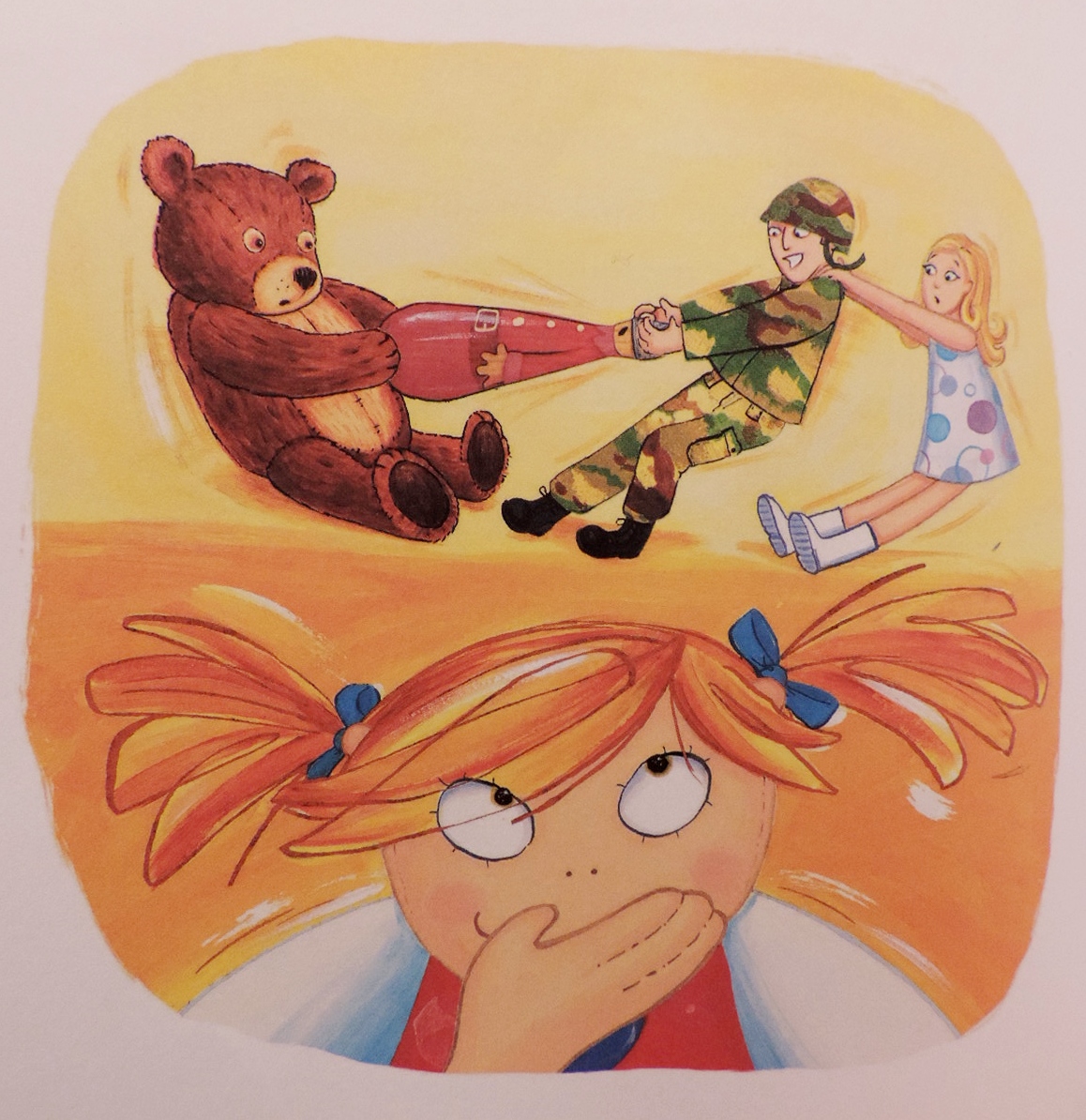
I honestly can’t remember having read this one before (though this post proves that I have!). The illustrations are… well, modern to say the least. They are full of colour and movement but the toy soldier appears to be a plastic Action Man style doll and Amelia Jane is depicted with straight blonde hair. She also has magic hair that can go across her eye, and yet, you can still see her eye through it!

DSCN1455

Amelia Jane and her magic see-through hair

After the story are several pages of puzzles and colouring pages relating to it. First is three  easy questions about what happened (I’m reminding myself this book is probably aimed at 5 year olds…) then a word search, match the names to the characters, a maze, missing puzzle pieces and fill in the words.

The puzzles do relate to the story, for example the maze is threads and you are to find Amelia Jane’s needle and thread.

The next story is Amelia Jane Has a Good Idea. This is also from More About Amelia Jane, but at least it’s only going to be the second copy I have. I’ve just checked the publishing details and it appears that all the stories included will come from that collection in fact.

The rest of the book takes the same pattern with a story then several related puzzles. There are only four stories included though, the final two being Amelia Jane Goes Up the Tree and Goodbye Amelia Jane. 


I think young children will really like this book, and after all that’s who it’s aimed at. It’s full of bright, vibrant illustrations which I actually do like despite feeling they’re not right for Blyton. They’re the kind I would enjoy if they were in a modern children’s book. My only other gripe would be that they don’t always quite match the text. In Amelia Jane Goes Up the Tree for example, the story tells us that it is getting cold and dark while she is stuck in the tree. The accompanying illustration shows her climbing in the window in broad daylight.

The puzzles and colouring pages are a nice addition too, (I would prefer more stories and a few less personally, but it’s marketed as an activity book), and I’m sure children will enjoy doing them. I hope though, that it would encourage children to read the full books if they haven’t already done so as these are all in print from Egmont at the moment (with matching illustrations).

From what I can tell the text hasn’t been altered or updated much. Things like to-morrow have been modernised to tomorrow and the golliwog has been replaced with Tom the soldier doll, but I didn’t spot anything else, which is nice.


Posted in Book reviews | Tagged , | 1 Comment

Reblog: A Postcard From Enid Blyton by Roger Thiedeman

Unfortunately things didn’t work out with our potential blogger this week, but never mind. Instead here’s a post from over at the March House Books Blog which is run by the lovely Barbara. March House Books is an online second-hand book shop which specialises in vintage and rare children’s books and Barbara writes about her bookish finds (including Blytons) in her blog.

This story, about a postcard from Enid Blyton is from back in 2011.

During the school holidays in 1958, along with my younger brother, cousins, and a few neighbourhood playmates, I staged a Noddy play for the benefit of our parents and neighbours. I was playwright, casting director, producer, stage designer, and, of course, principal actor. My mother went to a lot of trouble to make me an authentic Noddy costume, even borrowing the bell from our cat’s collar to fix atop my pointy blue hat.

From all accounts, the play was a roaring success – well, as much of a success as a kids’ play that uses a bedroom for a stage can be! So much so that I decided to write to Enid Blyton and tell her all about it.

To my utter delight, I received in reply a post card purportedly from Enid Blyton.

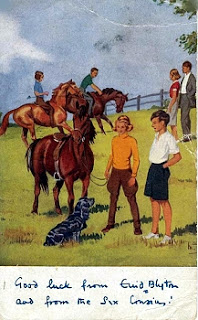
The postcard, featuring the Six Cousins.

The postcard, featuring the Six Cousins.

How thrilling! To read more of Roger’s account and see the message on the back of the postcard, do head on over to the March House Books Blog.


Posted in Enid Blyton, Personal Experiences | Tagged , , | 2 Comments

Monday Muddles

Its Monday again and we have a bit of a problem this week blog wise. That problem being that we do not have a contributor for Wednesday. We have an offer from someone to write something, but we can’t guarantee that.

We shall scour the internet to see if there is anything we can bring you in the meantime, but we ask you to remain patient with us. Or you could always write something for us to go on the blog? We’re always happy to get contributions!

Anyway on to what else we have this week; Fiona is reviewing the Five Get into Trouble audio book. She must be nearing the end of her collection now– we better find her some more to listen to quick!

I shall be attempting another character analysis for Sunday, maybe taking a look into some of the favoured companions of the Famous Five to start off with.

I shall leave you with some pictures I took yesterday when I went for a walk with my friend in Henley Upon Thames. We walked along the riverside mostly, up to the lock and back into town and then a little way along the river in the opposite direction. I do love river walks they always supply different things to take photos of! I hope you like them!

Posted in Blog talk | Tagged , , | 7 Comments

My thirteenth Noddy book: Noddy and the Magic Rubber

This is one of my tattier Noddys as it’s missing its spine completely. It’s just about still in one piece though.

natmr


THE STORY

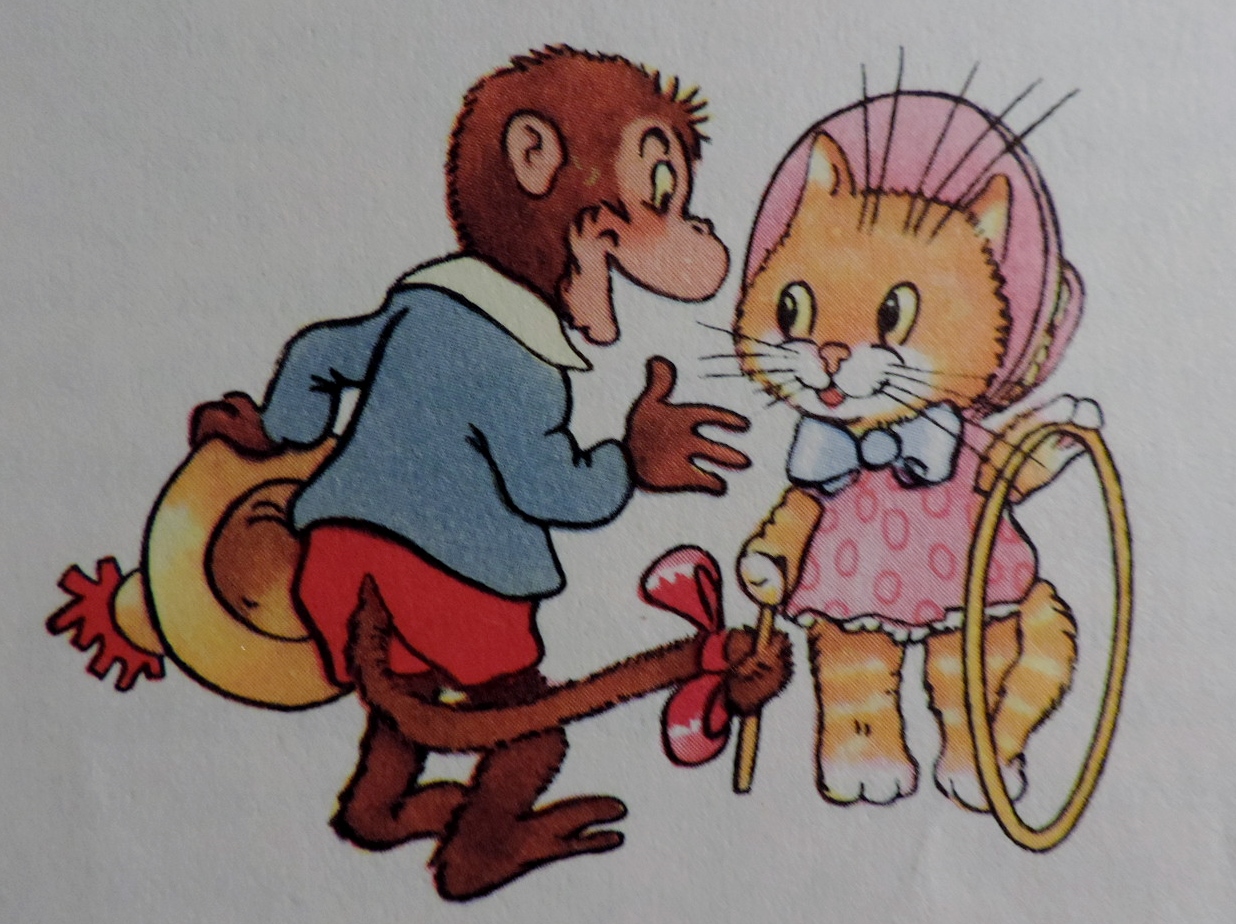
I’ve noticed that most of the stories start at breakfast, but there’s no visit from the milkman this time. Instead Bert Monkey turns up and Noddy’s really quite rude to him. It turns out Bert Monkey is a bit troublesome, or at least his tail is, but Noddy is almost uncharacteristically judgemental and horrible to him.

Bert has a tale of woe (of his own doing) whereby his grandma gave him a pencil case full of pencils and things but no rubber. His tail (which seems to have a life of its own but it’s never clear how much control Bert really has of it) then stole a nice big rubber to go with the set.

Now his grandma is mad because it’s a magic rubber. It has the power to rub out anything at all, not just drawings. She’s going to spank Bert for a month if he doesn’t return it to her and he wants Noddy’s help to do that.

He needs Noddy’s help because after stealing the rubber he decided he didn’t want it or the paintbox and sold it to Sam Skittle from Skittle Town. He gives Noddy a lot of money – way more than his usual sixpence – to drive him there.

Reluctantly Noddy agrees and takes him there, noting that he doesn’t have to beep his horn or drive carefully as skittles love to be knocked over. Nothing in Toy Town is simple though and when they go to see Sam Skittle he’s given the rubber away to Miss Harriet Kitten who loves in Toy-Cat Village.

DSCN1426

The skittles of Skittle Town

Miss Harriet Kitten seems very nice and sweet and Noddy is very taken with her but she refuses to give the rubber back, even in return for an ice cream. She does however agree to give it back if Noddy gives her a ride in his car. Unfortunately the rubber has rubbed a hole in her pocket and gotten lost at some point. Bert Monkey thinks she knew that all along but Noddy, who’s fallen for her feminine charms it would seem, stand up for her.

Miss Harriet Kitten

Noddy’s clever enough to make a sign offering a reward to whoever returns the rubber – I’m surprised any number of people with large rubbers didn’t turn up. I suppose it would have been easy enough to test if it was the right one by rubbing it on a table or chair! Only one person comes though and tells them it has been picked up by one of the Mr Noahs (apparently there are many of them) from Noah’s Ark Town, specifically Mr Nat Noah.

Or arriving in Noah’s Ark Town there are lots of Arks of different sizes and lots of Mr Noahs who all look identical. One of six matching Mr Noahs gives them directions to Mr Nat Noah (I bet all the Noahs have N names just like all the Skittles probably have S names!) and it transpires that his son Shem has traded it to Mr Tubby bear for an ice-cream.

A nattering of Noahs

A nattering of Noahs

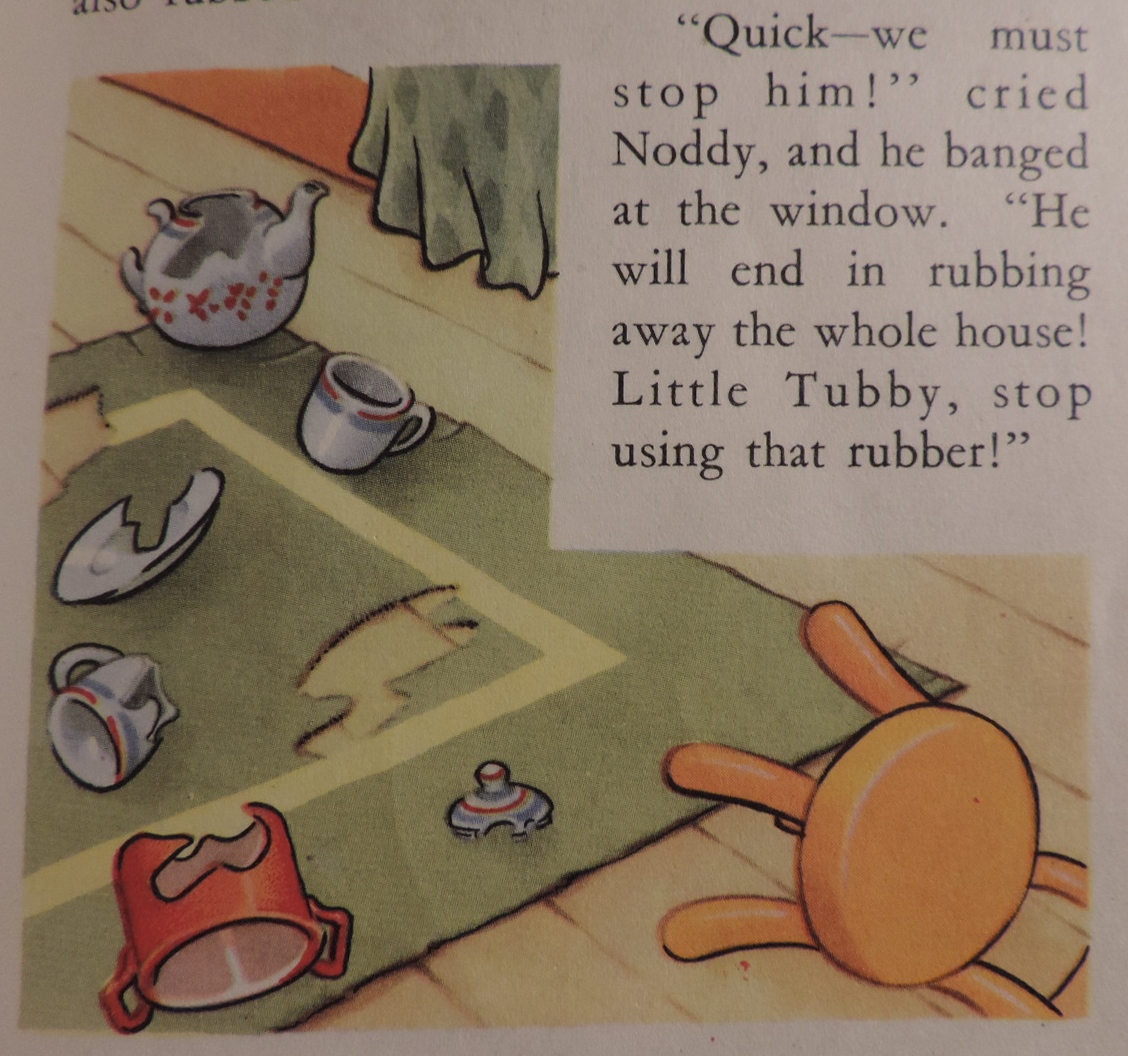
Phew, so after all that the rubber has ended up right back next door to Noddy’s house. They rush back as apparently Mr Tubby Bear is going away – and when they arrive the baker says they’ve already gone. Noddy and Bert plan a little breaking and entering to try to find the rubber but through the window they see Little Tubby Bear is at home – and he’s rubbing out bits of everything!

It seems Mr and Mrs Tubby Bear have left Little Tubby in the care of one of Mr Nat Noah’s wooden dogs. They could well live to regret that if Little Tubby has his way – he’ll have rubbed out their whole house by the time they come back.

Nothing has escaped the magic rubber

Nothing has escaped the magic rubber

Noddy and Bert are left to tackle him and after a bit of a scuffle Noddy gets his hands on the magic rubber. Little Tubby flees to his room before his nose or mouth can be rubbed out but it’s too late for Bert as during the fight the tip of his tail got erased.

Noddy doesn’t hand it over quite yet though, he wants to remove a shelf from his cupboard and a stain from his carpet. He goes a bit further too and, while Bert sleeps, he rubs out his  whole naughty tail!

He doesn’t even notice when he gets up to take the rubber back to his grandma, he thinks it’s still safely tucked in his pocket.


MY THOUGHTS

This was an amusing story I thought, with just enough instances of the rubber being passed on to be interesting without it going on too long.

Noddy and the Magic Rubber is the first title to be illustrated by Peter Wienk and Robert Tyndall (Mary Brooks did #8 Noddy Gets Into Trouble and the first seven were by Harmsen Van der Beek) and they do a flawless job of continuing the series. I don’t think any child would have noticed any difference as the new books came out. They also do a great job of showing the effects of the rubber – where bits of cushions have gone in the middle and parts of chairs and so on.

Noddy is very naughty

Noddy is very naughty

Posted in Book reviews | Tagged , , , | 3 Comments