Monday #294

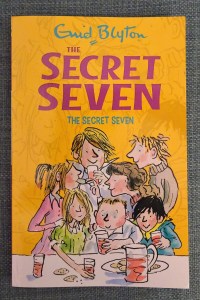
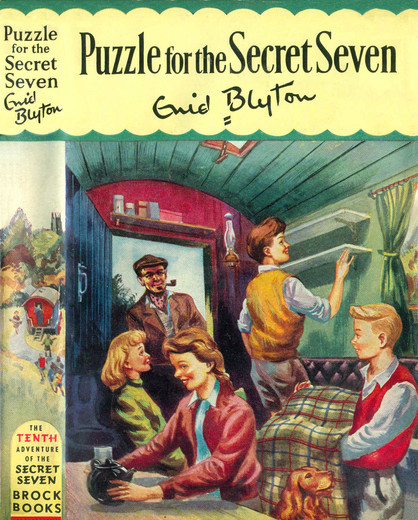
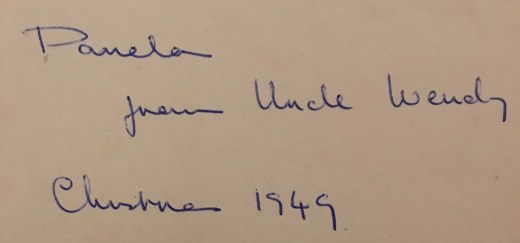
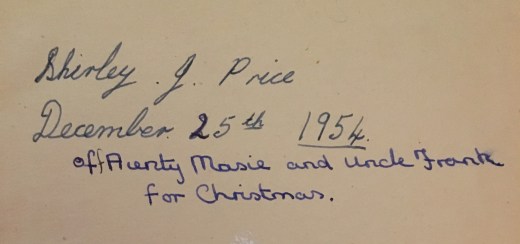
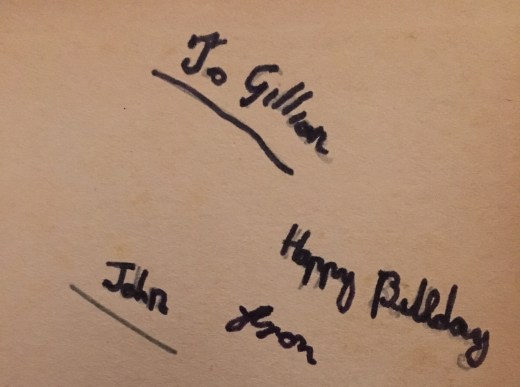
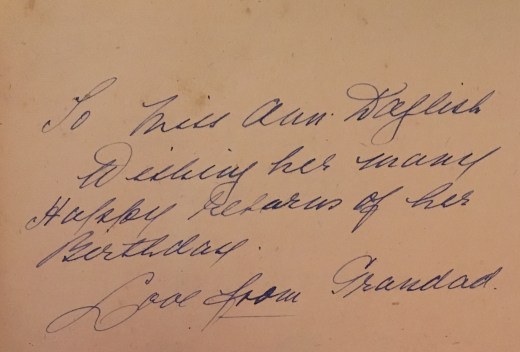
Inscriptions in books: this book belongs to

and

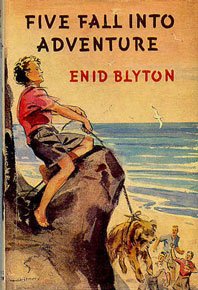
Five Go to Smuggler’s Top

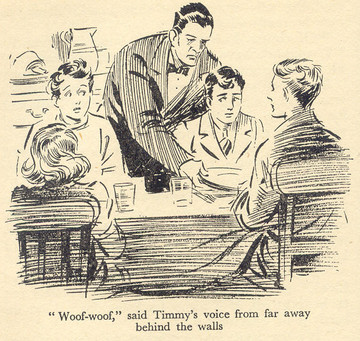
Dick Kirrin on seagulls:

If they can mew like cats, there’s no reason why they shouldn’t bark like dogs.

– Five Go to Smuggler’s Top (seeing as I had it to hand!)

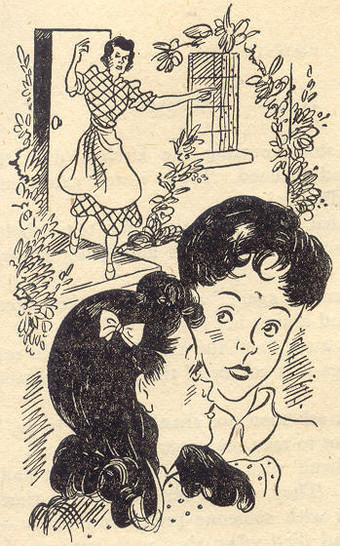
Mam’zelle Rougier is one of two French mistresses at Malory Towers. Her job role is the only thing she shares with her colleague, however. While the other Mam’zelle (Mam’zelle Dupont) is short, fat and jolly, Mam’zelle Rougier is tall, skinny and sharp. The girls always hope for Mam’zelle Dupont for their French lessons, though Mam’zelle Rougier does show a well-hidden sense of humour after Belinda draws cartoons of the two Mam’zelles at war with each other.

Posted in Blog talk | Tagged , , , , | Leave a comment

Inscriptions in books 1: Introduction and prize giving labels

Inscriptions in books are a divisive topic, or so I’ve found.

Some people absolutely hate them, to the point of refusing to buy an otherwise perfect and affordable copy of a cherished title just because it says ‘Mary Smith’ inside the front cover. Some say it just ‘wrecks’ a book to write anything in it at all, and they can’t understand why anyone would do such a thing.

On the other hand, there are other people who positively love them.

I’m far closer to the second camp. I wouldn’t say that I love inscriptions but I do like them quite a lot. Of course, some inscriptions are nicer than others. The best kind are neat ones on otherwise blank pages. Some terrible people write on picture end-papers, though, or over title page text and others scribble over everything! The worst kind of people are the ones that colour in thin paperback pages with felt tips, though.

Related post⇒ My childhood books, part 2

I think it’s so interesting to see who has owned a book before, especially if the child has written their age and location – I’ve seen someone say they put the location into Google maps to see where that book was enjoyed for the first time, and I admit I have ended up doing that while trying to check spellings of some of the addresses given. It was just too tempting!

I particularly like when there’s a message saying who the book was given by, and for what special occasion. Those ones can also make me feel a little sad, though. It’s not so bad when you can assume the child is long grown up and has therefore parted with their books, but when I find a one or two year old book in a charity shop with a loving message inside I do feel bad. But then I’m very sentimental and I hate giving away anything I’ve been given as a gift.

When I read very old inscriptions I always wonder what happened to the child that had once written their name inside their book. Did they give away their books once they outgrew them as a teenager? Or did they keep them and pass them on to their children and grandchildren? How many other owners have come in between them and me? I sometimes see new owners have viciously scored out the previous one’s name – ‘it’s not YOUR book any more, it’s MINE!’ – and that makes me laugh.

Anyway, I thought I would have a look at the books I have with inscriptions in them, to see what they say.

As it turns out I had no idea I had so many books with inscriptions. I probably have more with than without and so this took way longer than I expected it to. I’m also terrible at reading handwriting and agonised over trying to work out names in particular. Some I just couldn’t fathom so I will include photos and see if anyone else can enlighten me.

There are so many inscriptions (and  I just couldn’t pick and choose and leave any out) that I will have to split this into a series of posts.


Prize giving labels

Some children were awarded books by their school or church, and these books have those nice ‘awarded to’ labels inside and often lots of detail.

I’ve shared this before but The Rockingdown Mystery has one of those labels, made out to my aunt, Elizabeth. The book was later claimed by my mum, though, and also has her name written in the front.


Related posts⇒ My childhood books, part 4


Smuggler Ben was awarded by Donington Methodist to Richard Drinkall in Nov 1956.

Secret Seven Win Through was awarded to John Todd for attendance – 52 weeks out of 52 in 1960. This was from another Methodist church, this time Barton – Le – Willows Methodist Sunday School.

And a third Methodist one – The Further Adventures of Josie, Click and Bun was awarded to Ruth Addington by Methodist Sunday School, Cardington on February 8th 1953.

Yet another Methodist label (those Methodists really love their books!) Mischief at St  Rollo’s was awarded to David Holliday as a ‘first prize’ by Tadcaster High Street Methodist Sunday School in February 1955.


The Teddy Bear’s Party was from Wendron Church and presented to Helen Maclaren for Epiphany 1946.

St James’ Church Sunday School gave Hollow Tree House to Pauline Swan for Advent 1949.

A few non-Blytons now, The Harveys See it Through (a 1969 book by Phyllis Gegan) was presented to Helen Sang for 2nd prize 1971/72. This is interesting to me as it was from Strathmartine Parish, the same name as the church I was christened in and went to Sunday School at. It would be an awful coincidence if it was the same church but Google doesn’t bring up any others with the same name!

My other Phyllis Gegan book is A Mystery for Ninepence and that was presented by Dunlop Primary School to Jimmy Stephenson for Attendance in 1964.

Torridon’s Surprise (1961) by Marie Muir was presented to Grant Begg, 4th in ‘Pr V’ – which I take to mean primary five! That was from session 1967-68 at Auchmore School and signed by Mary S. MacIntosh the headmistress.

Katesgrove Junior School, Reading filled out a very detailed label in Three Cheers Secret Seven

This Prize is awarded to
Shirley Buckingham
for
Best Girl
in Class 2
Class Teacher: F. J .P. Harvey
Head Teacher: P. N. Bailey
Date: July 1958

I don’t remember if I was ever awarded a book from either my Sunday school or regular school. It would have been my dream, though. Books are the perfect award, prize or gift.

I would have had a couple more to share but at least two books have just the edges of these pretty labels, the rest having been torn out! Below is an example from a book by Angela Brazil. It looks like it was the same pattern as the Wendron Church one above.

IMG_8934


My next post is on ‘this book belongs to’ inscriptions, where children have vehemently declared their ownership in varying levels of neatness.

P.S. Brodie really wanted to get involved in this project as he just loves books! Here he is desperately trying to flick through A Mystery For Ninepence and getting in the way of my photo! Just as well he’s cute ♥.

Posted in Personal Experiences, Purchases | Tagged , , | 2 Comments

Jack Arnold, part 2

Previously I looked at Jack’s origins and all his clever ideas for running away.


Jack the captain

Being the oldest and most responsible Jack is quickly declared captain of the little group. The children obey him without question and, in good nature but without mockery, salute and say aye aye, sir when he issues orders.

The Arnolds’ father is actually called Captain John Arnold, so it is almost as if Jack (especially with Jack being a common nickname for John) is considered a father figure to the other children.

As above he has lots of clever ideas to help them survive and he instructs the other children in how to build willow house, how to best take care of the hens, how to skin fish and so on.

He chivvies them on when the other children, particularly Nora, are being lazy and can be hard on them when he needs to be. He comes down hard on Nora when she doesn’t check the hen-yard properly and allows the hens to escape, as he knows she just hasn’t done her job properly.

“Nora, what do you mean by doing your job as badly as that? Didn’t I tell you this morning that you were to look carefully round the fence each time the hens were fed to make sure it was safe? And now, the very first time, you let the hens escape! I’m ashamed of you!”

“I shall talk to you how I like. I’m the captain here, and you’ve got to do as you’re told. If one of us is careless we all suffer, and I won’t have that! Stop crying, I tell you, and help to look for the hens.”

Mike suggests that Nora be relieved of that duty if she cannot be trusted but Jack disagrees, and says that Nora will have learnt her lesson now and will be extra conscientious in future. And he is right.

“Had I better see to the hens each day, do you think, instead of Nora?” Mike asked Jack. But Jack shook his head.

“No,” he said. “That’s Nora’s job – and you’ll see, she’ll do it splendidly now.”

Jack is the wisest of the group, I always think. He is a little older than the others of course and has clearly been self-sufficient for a while.

Although it’s quite sad, one of my favourite things Jack says is that the Arnolds have suffered much more than he has as he has never know better but they remember the wonderful life they had with their parents.

“You are much worse off than I am. I have never had anything nice, so I don’t miss it. But you have had everything you wanted, and now it is all taken away from you.”

I always think that Jack is very brave in the end to tell the Arnolds where the children are. Of course it’s the right thing to do, he cares for the other children and knows how much they miss their parents. He also knows that the island life is hard on them in the winter. However, he must also know that by reuniting the Arnold parents with their children that their time on the island will end. He never so much as considers not doing the right thing, though. He never thinks about the consequences for himself, despite not knowing that he will be taken in by the Arnolds.

I don’t know if anything else would happen to him; there are of course people searching for the children but it seems to be mostly the Arnold children. Obviously by the end of the book we know it is because their parents have returned, but before then we and the children assume it is because Aunt Harriet and Uncle Henry have reported them missing. I don’t think anyone is looking for Jack on his own, but because he is with the others or knows where they are. He could reasonably be worried about getting into trouble from the police for running away and evading capture/arrest etc.


Jack in the later books

From The Secret of Spiggy Holes onwards Jack is a part of the Arnold family and attends the same boarding school as Mike. A very short summary of the previous book includes the information that Jack has been taken in by the Arnolds, and having lived with the children for months he fits in perfectly with them. I do wonder how well he does at school, though, as he probably hadn’t been in a very long time!

The Arnold parents are absent of the majority of the remaining four books of the series, necessary for the children to have their adventures, but from what we can see Jack is treated the same as the other children.

He is shown hugging Mrs Arnold twice in The Secret Mountain. Once when they all kiss and hug before the adults fly off at the start of the book, and then when they are reunited in the mountain. His backstory isn’t mentioned at the beginning of the book but it comes up at the time of the second hug.

Mike, Peggy and Nora were Mrs Arnold’s own children, though she counted Jack as hers too, because he had once helped the other when they were in great trouble. Jack stared at Captain and Mrs Arnold in joy. He flung his arms round Mrs Arnold, for he was very fond of her.

Jack remains the children’s captain when embroiled in adventures but he and Mike are on more of an even footing as the boys of the family, and of course both have to listen to Ranni and Pilescu. Jack takes charge a little more than Mike but he’s no longer having to provide for everyone or ensure their survival.

Jack is at his most interesting in the first book, in later books he blends in more. In fact, by The Secret Mountain you could be forgiven for forgetting his origins, though as above they are briefly mentioned and a sentence or two reminds us of this fact at the beginning of both The Secret of Killimooin and The Secret of Moon Castle. Prince Paul is the newest addition to the group in that book and Jack is just a regular member of the Arnold family. Below E.H. Davie’s The Secret of Spiggy Holes illustrations show him dressed in the same clothes as Mike.


And that, in a very large and lengthy nutshell, is Jack Arnold.

Posted in Characters | Tagged , , , , , , | 1 Comment

Monday #293

Jack Arnold, part 2

and

Inscriptions in books

“Gosh,” said Irene again, with a comical air of dismay.”I’m nuts! I go and interrupt my own bit of composing, and rush off to do a job I’m not supposed to do till nest week.”

Irene at her forgetful best in In the Fifth Form at Malory Towers.

Enid Blyton’s Nature Lovers’ Book is a nice, big volume containing 24 ‘nature walks’ where John, Janet and Pat accompany their ‘Uncle Merry’ (really their next door neighbour whose name is Mr Meredith) on rambles where he teaches them all sorts of things about plants and animals. Then there are a dozen poems, six interesting things to do, a long detailed list of common flowers, trees and birds, some famous nature related poems including ones by Keats and Wordsworth, and finally, five short nature stories.

As well as many illustrations of the plans and animals that feature in the stories the book has 16 lovely colour plates by Noel Hopking.

Enid Blyton's Nature Lover's Book


Posted in Blog talk | Tagged , , , , | 1 Comment

Noddy and the Case of the Amazing Eyebrows

Another very un-Bytonian episode title from Noddy, Toyland Detective. I have previously reviewed episode #1 The Case of the Broken Crystal Memory Game and episode #29, The Case of the Toyland Mischief Maker. Mischief makers are not unexpected in the original Toyland at least, even if crystal memory games and amazing eyebrows are not. I am almost expecting fashion dolls with ‘on fleek’ eyebrows (yes that’s a thing apparently… I don’t belong to the same world as people who have five or more products just for eyebrow grooming, though, so I’m not entirely sure what it’s all about.) Anyway, it’s more likely to be about false eyebrows being stuck around Toyland or something, but I’d better watch and find out.


What’s the amazing eyebrow story?

In short, this is a straightforward tale of stolen goods. Fuse (the robot) is to be awarded a prize for most helpful toy. Pat-Pat (the panda) gives him some eyebrows she’s made so he can look smart, and suggests everyone dresses up for the ceremony.

But the eyebrows get stolen, as does the prize ceremony banner and then the award itself. Each time a bell like Noddy’s is heard and the mayor more or less accuses him of the thefts. So Noddy has to investigate to clear his name.


OK, so these eyebrows.

I feel disingenuous calling them eyebrows as that suggests two pieces of facial adornment. It’s not, it’s a monobrow. Definitely not on fleek, no matter how on trend thick and heavy  eyebrows are at the moment!

Also, what a weird present. Maybe robots are hard to buy for, but eyebrows? The little label on them (with a panda logo) is a nice touch, though, and I thought it was great attention to detail. The label actually becomes important later on, as we will look at in a bit.


Noddy’s investigation

Noddy starts by visiting the scene of the crimes, that’s when the third one occurs, making it look even worse for himself.

Luckily he trips over a jingle bell, the bell that must have come from the thief. It has a little panda label on it, just like the eyebrows. That leads him to Pat-Pat, and from Pat-Pat to the Naughticorns we met in The Case of the Toyland Mischief Maker.

The Naughticorns have the eyebrows, the banner and the award and Noddy tells them they must return them.


The dodgy morals of the Naughticorns

The Naughticorns are naughty by name and naughty by nature. Blyton wrote about naughty children and creatures, but normally they either get their comeuppance or turn over a new leaf. The Naughticorns do neither and yet are still treated the same pleasant way as all other toys.


Related post⇒ Naughty Amelia Jane


When Noddy catches them they explain that Hoof wanted to be a winner and therefore they took the three things so he could be one. He does acknowledge that it’s not as much fun when you’re just pretending, but doesn’t recognise how much he’s upset the toys he stole from.

He is quite happy for Noddy to continue taking the blame, he won’t get into much trouble if they return the items. He only grudgingly agrees to tell the truth when Noddy argues about it.

Then to top it all off Hoof gets a special award at the ceremony for truth telling!!

Maybe I’m over invested in this but the Naughticorns have no redeeming features and Hoof doesn’t deserve an award.


Other random thoughts

I wondered why everyone thought Noddy was guilty. I know the bell would make them think of him but they surely know Noddy is a good and honest toy. He gets accused of a few things in the books he is far more trouble-making in the books compared to the TV series. To be fair the Clockwork Mouse, the Mayor, did the investigating/accusing in absence of any police toys, clearly she’s better suite to mayor duties rather than policing.


Related post⇒Noddy Gets Into Trouble


Despite the moral/logical failures of the series, there are some good things as well. The animation is generally very good, a lot of the toys look very real and solid, almost like models at times. There are also nice little touches like the jigsaw background for the song.


The problem with Netflix

Initially I was pleased this had come to Netflix as it would have made it easier for me to watch it.

The first problem is that Netflix groups two episodes together so I had to fast forward or skip through until I found the start of the second episode. There’s no theme song that way so it feels less of a complete episode for reviewing purposes.

The second thing is that they are showing the American version, despite it being UK Netflix. The British version has a British voice cast including Andy Serkis’ son as Noddy. The American version has, unsurprisingly an American voice cast (though Big-Ears is British in both and Fuse seems to have the same voice, but more robotic for the British one). Maybe I’m just used to Louis Ashbourne Serkis’ voice but I found the alternative one a bit annoying.

Some of the wording is different between the two versions as well. They are fancy eyebrows in America and dress up eyebrows in Britain. Then there’s award ceremony vs prize giving, extra smart and ultra smart, and fabulous instead of incredible. Those are just the few I noticed in a couple of minutes of comparing the two, there are probably more. I could understand if it was sidewalk and pavement or mail and post, but those seem pointless alternatives.


Posted in Blyton on Screen | Tagged , , | Leave a comment

Jack Arnold

I had initially intended to just feature Jack Arnold as my character of the week a few Mondays ago (and in fact I did) but I wrote so much for what should have been a 2-3 hundred word paragraph that I realised I could and should write a whole post about him.


Which Jack is this?

There are many Jacks in Enid Blyton books. The Secret Seven, The Adventure Series and The Secret Series all boast Jacks as a main character, and there are other Jacks to be found in other books, too.

Jack Arnold is the Jack from The Secret Series (though when we first meet him he is just “Jack”. No last name is given, and I wonder if he even knows what it should have been.)


related post⇒ A completely un-confusing guide to names in Blyton’s books


Jack (far right) with the Arnold children at the start of The Secret Island


Jack’s origins

We actually don’t know very much about Jack when we meet him. We don’t know, for example, how old he is. Jack himself does not know that. We know he lives on a farm with his old grandfather. We don’t meet this grandfather, but Jack mentions him once or twice.

“I must go now, or Granpa will be angry with me, and perhaps lock me into my room so that I can’t get out of again to-day.”

Jack and his grandfather must be poor as their farm is described as ‘tumble-down’ and Jack has no shoes and only tattered clothing. After running away with the Arnold children, from whom he will get his surname later, he returns to the farm for his belongings. The farmhouse, we discover then, has only two rooms. His ragged collection of clothing amounts to three shirts, a few vests, an odd pair of trousers, an overcoat, a pair of old shoes and a blanket. (If you’ve not read The Secret Island before we have various posts about it here but if you want a review then you’d be better off here or here as we haven’t reviewed the book ourselves).

Jack illustrated by E.H. Davie wearing a ragged shirt and trousers, and no shoes.

There is no love lost between Jack and his grandfather, despite the old man taking Jack in. Jack says that he doesn’t remember anyone but his grandfather, so he must have been taken in at a young age. I had assumed Jack’s parents were dead but perhaps they had gone to prison.

I have seen a suggestion that his grandfather is struggling with dementia by the time the events of The Secret Island take place.

The inference here is that the grandfather is suffering the onset of dementia, an irony when you consider what happened to Enid and it is the aunt who is unconcerned for Jack, as she has no extra room for him along with his grandfather and considers him, in keeping with those times, old enough to look after himself

– From a review by David Cook.

I imagine you could ascribe the state of Jack and the farm to his grandfather’s mental decline, though there are a few things that don’t add up for me with that theory. It is entirely possible that being elderly Jack’s grandfather is not physically up to running a farm any longer and is happy to move in with his daughter in order to be cooked for and have someone do the cleaning and so on.

Jack states that he isn’t bothered by a lack of material goods or family as he has never had those things to miss, whereas the other children had good lives until a year or two before and struggle to adapt to their new miserable existence. To me, this says that his grandfather has never provided well for him and he has always had to look out for himself. It is said that Jack ‘worked as hard as a man’ on the farm, and his skills in fishing, rabbit catching etc imply that he has been supplementing his and his grandfather’s diet over the years and earning his keep.

He knew how to catch rabbits. He knew how to catch fish in the river. He knew where the best nuts and blackberries were to be found. In fact, he knew everything, the children thought, even the names of all the birds that flew about the hedges, and the difference between a grass snake and an adder, and things like that.

The only kind or generous thing his grandfather seems to have done is ‘give’ Jack a cow and some hens of his own. However it is easy to tell a child that one cow of a herd and a few chickens of a coop are ‘his’ without any real generosity – it could have been a ploy to get him to do the milking and egg collecting. If it had come to selling off the dairy herd I bet he would have sold Daisy with the others, just as Quentin Kirrin intended to sell Kirrin Island despite his wife ‘giving’ it to George.

The other thing is that Jack’s aunt has clearly never cared about him either. She won’t take him in now as she has no room and thinks him old enough to live on his own (implying he must be around 14 or 15) but she doesn’t care that he will have nowhere to live or money to live off of. But what about when Jack was young? It is surprising that an aunt would not have taken him, or helped out with him. I think this could hint to a family feud way back when, that was never resolved as Jack’s parents died. (It puts me in mind of the Potters vs the Dursleys before Harry is orphaned in the Harry Potter series.)

But Blyton doesn’t consider any of that important: Jack is an orphan, his grandfather is moving away and he has friends that also want to escape a bad home. That’s all we need to know, and that gives them more than enough impetus to run away to the island without needing any detailed backstory.


Jack’s ideas

Although only one qaurter of the cast Jack is the catalyst for most of the first book of the series. It is Jack’s idea to run away to the Secret Island. He is the one who knows of its existence and has visited it before, and it is he who sees its potential as a secret place to live.

Once on the island (having used Jack’s boat to get there), it is Jack who guides the setting up of their homestead. Obviously knowing the island already he is best placed to suggest a spot for their bedroom and where to keep their stores.

Jack is responsible for the bulk of their food; that is anything that didn’t come with them from their homes when they first ran away.

His ideas for sustenance include:

♦ Planting beans and peas in small discreet patches
♦ Bringing over his cow and hens for milk and eggs (and keeping the milk cool by keeping the pail by the spring)
♦ Catching fish and rabbits (he sets the lines and traps and mostly prepares the meat).

It is also Jack’s idea to gather various berries, nuts and mushrooms to sell in villages on the mainland, in order to buy things they cannot scavenge or grow themselves. It is he who does the selling, although Mike accompanies him as far as the edge of the lake. Jack keeps a count of the days so he can go selling on market day to increase his profits, and he is responsible for keeping a mental shopping list and coming back with the things they need, all without getting caught.

Jack’s other great idea is the building of willow house, and he teaches the children how to construct a house that will keep them warm and dry.


Related post ⇒Blyton’s homeliest homes


With the arrival of trippers on the island it’s mostly Jack’s plans they put in place to hide themselves, and he instigates their larger-scale plans for hiding should anyone search the island. He comes up with the idea of luring Daisy (the cow) through the caves with a turnip to make sure she goes easily and he makes the others do drills to practice their hiding plans.


And I will stop there for today.

In Jack Arnold, part two, I will look at Jack’s role as captain on the island and what happens to him in the subsequent books in the series.

Posted in Characters | Tagged , , | 2 Comments

Monday #292

It’s bonfire night, tonight. Don’t forget to have a look at our post on Blyton’s Bonfires, Guys and Fireworks, it’s perfect for today.

Jack Arnold

and

Noddy, Toyland Detective

“That’s what I was afraid of. I thought you would pick up all sorts of horrid ways from those Taggerty children. If only your father hadn’t found out that Mr Taggerty was his old school friend!”

– Mrs Carleton, Those Dreadful Children

What Mrs Carleton doesn’t consider is that her children have some unpleasant ways themselves, and that actually they could learn quite a bit from the Taggertys.

This week we have the Bunkey. What’s a Bunkey, you ask? Why it’s part monkey and part bunny, of course.

The Bunkey is a mischievous creature whom Noddy meets in book #19, aptly named Noddy and the Bunkey. The Bunkey gets into all sorts of trouble while trying to be good and helpful to Noddy and his friends.

Noddy and the Bunkey

Posted in Blog talk | Tagged , , , , | Leave a comment

October 2018 round up

WHAT I HAVE READ

I only have two more books to reach my Goodreads target of 80 books!

  • The Day the Crayons Quit – Drew Daywalt
  • A Trail Through Time (A Chronicles of St Mary’s #4) – Jodi Taylor
  • Red Dwarf: Better than Life – Grant Naylor
  • An Ice Cold Grave (Harper Connelly #3) – Charlaine Harris
  • Five Run Away Together – reviewed here, and here
  • Jolly Good Food – Allegra McEvedy, reviewed here
  • Christmas Present (A Chronicles of St Mary’s #4.5) – Jodi Taylor
  • Grave Secret (Harper Connelly #4) – Charlaine Harris
  • Dead Ever After (Sookie Stackhouse #13) – Charlaine Harris

And I’ve still to finish:

  • Drums of Autumn (Outlander #4) – Diana Gabaldon
  • The Diary of a Bookseller – Shaun Bythell
  • No Time Like the Past (A Chronicles of St Mary’s #5) – Jodi Taylor
  • A is For Alibi (Kinsey Millhone #1) – Sue Grafton

WHAT I HAVE WATCHED

  • Hollyoaks
  • Hey Duggee and Paw Patrol (the theme song gets stuck in your head on that one)
  • More of Outlander series 3 (I finished the book it is based on before the TV series)
  • More of Taskmaster
  • Making a Murderer series 2
  • Only Connect which just started back on BBC2

WHAT I HAVE DONE

  • Visited lots of playparks
  • Taken Brodie swimming
  • Gotten involved in a new project at work. I am unearthing the contents of old boxes of books and shelving them. I’ve found some fascinating stuff so far.
  • Visited the aquarium in St Andrews (Brodie preferred to run in his staggering way around the place instead of looking at the displays!)
  • Visited Edzell and the little folk museum just past it
  • Spent time with my new nephew who is a month old now and my four-year-old niece
  • Started the Organised Mum method of housekeeping. Wish me luck!


Posted in Personal Experiences | Tagged , , , , , | 1 Comment

Malory Towers, continued

If you ask me, a Blyton purist, how many books there are in the Malory Towers series I would instantly tell you there are six.

If you asked a modern reader they might well say twelve. Twelve?? That’s double!

This is because in the late 2000s Pamela Cox was commissioned to write six more books in the series. Published in 2009 they pick up where Malory Towers left off, with Felicity in the third form and end when she’s in her sixth year.


Six whole books about Malory Towers that I haven’t read before, amazing!


Half of me is quite excited to sit down and read these. That’s would be the childish half which is saying

Oh wow, more Malory Towers books! I can’t wait to find out what Felicity gets up to after Darrell leaves. Supposedly Gwen reappears too, I wonder what happens to her? Six whole books about Malory Towers that I haven’t read before, amazing!

And then there’s the rational (well, most of the time) grown-up part of me. That is the half that is saying

Well these are likely to be a disappointment, aren’t they? I bet they’re all modern and it just won’t be the same. Do they even count if they’re not written by Blyton? Are we really finding out what happens to Felicity if it’s just someone some random person wrote?

Sadly I think the adult thoughts are most accurate! I have my concerns about how well these books will fit into the established Malory Towers world. Will the characterisations be the same? Will the modernisation be mild enough that you can ignore it (like the updated versions of the original texts)? I mean, I assume it won’t be all mobile phones and internet! Will I like what happens to the girls I know from previous books? Will the newly created characters work?


The six new books

  • New Term at Malory Towers
  • Summer Term at Malory Towers
  • Winter Term at Malory Towers
  • Fun and Games at Malory Towers
  • Secrets at Malory Towers
  • Goodbye Malory Towers

While Darrell and her friends moved up a form each book (more or less, some start at the last term of the year etc) that format wouldn’t have worked for the continuation books.

Felicity had already done the first and second form (in In the Fifth at Malory Towers and Last Term at Malory Towers respectively). I assume they wanted six more books, though, rather than four to match the original books. And so, from what I can gather we get two books based on the third form, one each for the fourth and fifth and then two for the sixth. That makes more sense than what Blyton herself did with St Clare’s with several books for one form and none for others!

I’m certainly intrigued by some of the plots hinted to in the books’ blurbs.

Felicity is head of the third form in New Term at Malory Towers and the other girls are determined to cause trouble. Will Freddie and June ever stop playing tricks? And what’s Amy’s strange family secret?

Now the tricks and a girl with a secret sound like good old Malory Towers story-lines, I’m not sure I can say the same for the names Freddie and Amy!

In Summer Term at Malory Towers someone has stolen Julie’s horse. And there’s money missing too. Can Felicity and the girls find out who would do such a terrible thing? I hope there’s more to the book than just the girls acting as detectives. As much a I love a Blytonian whodunnit, that’s not what Malory Towers is supposed to be about.

Again, Winter Term at Malory Towers looks like it’s going to take a step away from typical boarding-school stories. Susan’s in charge of the winter concert, but new teacher, Miss Tallant, won’t let her make any decisions. When Miss interferes in a midnight feast, the girls realise that there’s a spy in their midst. Susan having a hard time asserting any authority over a school play sounds like a reasonable plot point, but not enough to carry very much of a book you would think. The fifth year’s pantomime from the original books carried almost a whole novel but there were lots of elements and some hefty side-plots too. Anyway, a midnight feast must take up some of the story, that’s a nice Malory Towers tradition – but spies aren’t!

Fun and Games at Malory Towers takes us back to thieves (things begin disappearing. Is there a thief in fifth form?) and presumably stolen goods. I hope it isn’t a rehash of Summer Term. Neither book could do thievery as well as Blyton did with Daphne Hope in Second Form at Malory Towers. June and a new girl are apparently also arguing over what’s more important – a music concert or a tennis tournament – and it’s nice that June’s involvement sports is continued. I would like to see how or if she knuckles down!

Secrets at Malory Towers is billed as a ‘mystery’. What’s with all the secrets? How did Daffy pull off her latest prank? What did Mam’zelle find in her handbag? And why is the new form-mate so strangely familiar? What’s with all the secrets, indeed. It sounds like a strange mish-mash of ‘mysteries’. It’s a boarding school story not a Secret Seven book!

And finally in Goodbye Malory Towers the sixth form girls are to attend finishing school before they’re sent out into the world. They are to learn deportment, etiquette and obedience. That could be interesting as many of them are quite untidy, outspoken and not very lady-like at all. The most interesting part is that it is Gwendoline Mary Lacey that is to be the teacher. I hope she isn’t just shoe-horned in like a famous name making a film cameo. Apparently Darrell also makes an appearance and I really hope she is written well.


I have all six books on my Kindle, just waiting to be read. I plan to read them soon so that I can find out if they’re any good or not – and how Gwendoline does as a teacher!

Next post: New Term at Malory Towers by Pamela Cox

Posted in Book reviews | Tagged , , , , , , , , | 3 Comments

Monday #291

It’s a busy time in the UK at the moment, we have Halloween on October 31st and then Guy Fawkes Night on the 5th of November.

If you need some Blyton to get you in the mood for either occasion, we have the goods for you.

Halloween Tricks in St Andrews, a two-part Halloween fan fiction about Julian Kirrin, David Morton, Sally Hope and Darrell Rivers.

Blyton’s Bonfires, Guys and Fireworks, a post looking at what Blyton wrote about the 5th of November including some of her poems on the subject.

October round up

and

Malory Towers, continued

I’d like a good big birthday cake with fifteen candles on. I know candles are childish when you’re fifteen, but I can’t help it. I think a cake looks so pretty when they are all lighted. And, if we have the party at night, we can let the cake-candles light us!

– Carlotta Brown, The Second Form at St Clare’s

Surely you are never too old for birthday candles!

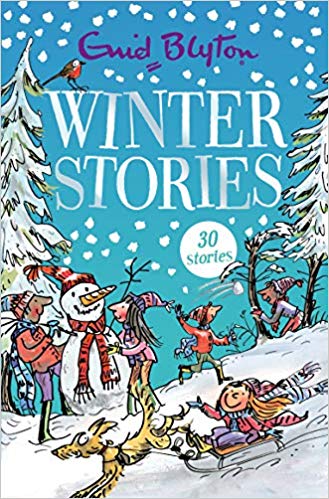
Magic and Mischief is the latest short story collection to come from Hachette. It contains 30 stories about pixies, witches and all sorts of other magical things and is released in time for Halloween even though Blyton never wrote specifically about that holiday.


Posted in Blog talk | Tagged , , , , , , , | Leave a comment

Putting the Five Find-Outers books in order, part 3

I’ve covered my top Find-Outer books and my middling Find-Outer books so now it’s time for my least favourites. As I put in the first post least favourite doesn’t mean books I dislike. It just means I like them a bit less than the others in the series. I don’t think Blyton ever wrote a bad book!


11. The Mystery of the Missing Necklace

This is another one I didn’t read as a child (there’s a recurring theme here!). This one has the Find-Outers ‘on the case’ before anything has actually happened, as Peterswood might be next to have a jewel burglary. Fatty (now his voice has broken) does some good disguise work – and is particularly funny when the old man he is dressed as spots him – though the disguising takes up a lot of the book. I also like them investigating the bike horns as it’s clever but also amusing. It tickles me that Goon gets in on the disguising act as well, though it has disastrous consequences for poor Fatty.


12. The Mystery of  Tally-Ho Cottage

I’m fairly sure this is one book that I did read as a child.  I think a lot of people class this as one of the best mysteries, but I can’t say I agree. I think I found this one too confusing what with all the disguises – both Fatty and Mr Lorenzo disguise themselves as Mr Larkin – plus the unfathomable journey of the stolen painting. It also features a lot of Ern, who is not one of my favourite characters, Ern’s awful ‘pomes’ and Fatty’s awful Ern-inspired ‘pomes’, plus some of Ern’s extended family who I like even less.


13. The Mystery of the Hidden House

I had a hardback of this when I was younger but I never read it. The grey boards clearly weren’t as interesting as the Armada paperback covers (and I think I mistook the magnifying glass for a tennis racket…) Anyway, I have read it as an adult and it’s another one with a fake mystery, but this one takes up at least half the book. When we do get down to the real mystery it’s good, but confusing as it merges with the fake one. There’s a ton of Ern as well (this is his first book) and lord he doesn’t half drone on and on.


14. The Mystery of the Vanished Prince

I didn’t read this one as child, and I think I was a bit disappointed when I read it as an adult. The start is quite silly with the Find-Outers dressing themselves as royalty from a fictional country and people falling for it. Ern and his two brothers also appear in this one, Sid and Perce are really quite irritating characters with their baby obsession and constant eating of sticky toffee. The denouement is also disappointing as the phoney prince admits everything including where the real one is! So their decent detective work up to that point is a waste.


15. The Mystery of the Secret Room

Unsurprisingly this is also one of the books I didn’t read as a child. In it’s favour though, it doesn’t have Ern in it. Every time I read this, or even think about it, all I can think is that a furnished room in an otherwise empty house is not so insanely weird that it must be a serious mystery that needs immediate solving. Anyway, most of this book is adventure-y rather than mystery and that’s ok – the invisible ink and other tricks Fatty deploys are good – but for me the actual mystery is a bit naff.


And there we are, that’s my ordering complete. I had put these in order before I wrote the full post and I actually ended up reordering them. Mostly because I had to do some research to remind myself of the plots and rediscovered some moments I liked in these books. I think remembering as a lot to do with how much I like books. Looking forward to a favourite moment, anticipating the big reveal. If I only have a vague recollection of a book it’s harder to feel excited about it – unless I remember that I really liked it, despite not remembering the details.

So books I haven’t read multiple times end up lower down my lists (despite their apparent strengths meaning they top everyone else’s lists) but I also seem to not like Ern’s books very much either. I don’t condone the way the Five Find-Outers treat him, they can be rather snobnish and unkind at times (though only behave as children of their class would be expected to for the time) but honestly I find Ern really tiresome.

Don’t forget to let me know what your least favourite books in the series are, and don’t hate on me too much for putting your favourites at the bottom, eh?

Posted in Personal Experiences, Reading Recommendations | Tagged , , , , , , , | 5 Comments

Five Run Away Together, part 2

Part one of my review can be found here.

five run away together


The Mystery of the Black Trunk

While on the wreck they find a curious thing – a little black trunk, well locked. They guess it has something to do with smugglers, and are ready to investigate. There are other signs that someone has been on George’s precious island – rocks have been piled over the dungeon entrance and a fire has been lit. Someone visits the wreck in the night and the locker then contains tins, crockery and blankets. Very strange things to smuggle! When they get their hands on the trunk later, it contains girls’ clothing and some teddies and dolls.


The Five Vs The Sticks

Next the Sticks appear on the island bringing with them half the contents of Kirrin Cottage, so they clearly haven’t come looking for the Five.

Now begins a funny few chapters, almost farce-like in tone. The Five know the Sticks are there, but the Sticks don’t know about the Five.

The children sneak into the dungeons and terrify the Sticks with animal noises (who knew George made such a good horse?). They Sticks hunt around the island but find no-one, not even the boat. While Ma and Pa are on the wreck the Five scare off Edgar with cow noises and by throwing clumps of earth, then gather up all the things stolen from the cottage and take them to the cave.

Edgar foolishly embellishes this story to include hundreds of cows with antlers like reindeer, all a-mooing and throwing clods of earth at him. The Sticks go hunting for the Five again and Edgar finds them entirely accidentally by falling through their cave skylight, and becomes their hostage.


The solving of the mystery

It’s Anne that puts two and two (a girl’s scream in the night and the contents of the trunk) together and comes up with what the Sticks have done.

Ma Stick is terrible worried about her little lamb Edgar so she and Pa Stick row off to Kirrin to look for him. This gives the Five time to head into the dungeons to rescue Jennifer, the red-haired kidnap victim (I don’t think I’ve ever noticed that detail before actually) and swap her for Edgar.

I actually feel sorry for Edgar here. Yes he’s irritating, badly behaved and foolish but he’s not had much of a chance thanks to his parents. From what we can gather he knows very little about what his parents have been doing and certainly hasn’t taken any part in the kidnapping.

They take Jennifer to the police, of course, and run into Quentin. He’s come back as nobody answered the phone at Kirrin Cottage and has found it ransacked and empty.

The policeman is shocked silly when the child the whole country has been looking for just wanders in casually, and is even more amazed that the children say they can provide them with the kidnappers too. This is done by Julian telling Pa Stick where to find Edgar when he sees the man skulking around Kirrin Cottage. It’s just a matter of the police following them over to the island and arresting them.


My usual nitpicks, questions and observations

The first time Timmy enters the cave he jumps down into it and George is worried he might hurt himself. There’s no further mention of him entering the cave and not a single mention of how he gets from the cave back up onto the cliff!

Also, George does a piercing whistle that Timmy always obeys to call him back from Tinker on the island – why doesn’t she do this when they’re fighting in the garden instead of jumping in and gabbing them with her bare hands?

Sticking with Timmy, we start the book with Timothy then he is Tim, and then Timmy for a while, back to Timothy then it chops and changes. As I noted he was Timothy for the entire first book. It’s both the children and Blyton as the narrator who use all three names. Not that it’s a mistake or anything – just interesting to see the change as I believe he is more or less exclusively Timmy later on.

Continuity detail-wise; we have Alf the fisherboy (not yet renamed James), Joanna is still Joanna and not Joan. The only whole room in Kirrin Castle has fallen in (it will reappear whole-ish in Five On Kirrin Island Again, I believe). The draping the boat with seaweed will appear again in Five Fall Into Adventure (and is also used in The Adventurous Four).

George mentions Kirrin getting snowed in – explaining why Aunt Fanny has a cupboard full of tins and says it has happened once or twice, you know. Yes, of course they know. It happened at Christmas when they were there!

Interestingly Julian, Dick and Anne were also at Kirrin for Easter, so presumably have barely seen their parents in a year! I always find that strange. Fair enough if there’s a 6 or 8 week summer holiday a week or so out of that isn’t much but to be away more or less every holiday when they don’t see them at all during term time?

What’s more shocking is Jennifer’s parents. They’ve been besides themselves since their daughter was kidnapped and yet let her stay the night at Kirrin Cottage while they stay in a hotel, and then they let her spend a few days and nights on Kirrin Island with the other children. Your daughter has literally just been saved from kidnappers and you instantly let her spend time away from you, with some children you’ve never met before!?

Meanwhile Uncle Quentin shows his more human side. He’s terribly worried about his wife, showing loves her a great deal. He tries to make a few jokes at the dinner table as he actually notices the children are looking a bit glum and doesn’t like to see that. He also worries enough about the children to phone them daily to keep them updated, and to return home when nobody answers the phone (more on that in a moment). In order not to worry George unduly, he keeps information from her. He says a few times that they won’t know anything about George’s mother’s prognosis for a day or two, and then later tells George her mother has had an operation. I suspect he knew all along that there would be an operation but didn’t want George worrying about it.

I do wonder where Quentin is most of the time, though. Hospitals in those days were even more restrictive in visiting than they are now. He might have been allowed an hour in the afternoon or evening, maybe both if he was lucky. Was he sitting in a waiting room 24/7 for several days?

So, back to the phone calls. There’s a flaw in the children’s plans, there. They are on the island, but want the Sticks to believe they have gone to Julian’s house. Surely if Quentin called and spoke to Mrs Stick, she would relay that information, and he would call his brother’s house to either inform George of the latest, or more likely, rage at her for disobeying orders. He would then find out that they weren’t there and get worried.

What else? Oh yes. George is supposedly the only one who can land on her island, and there’s only one landing spot. But the Sticks row up and land elsewhere without bother. (I know Pa Stick is a sailor, but still.)

I know I’ve gone on for ages now but bear with me, we’re almost there. There’s a typo in this copy – his clear boice when it’s meant to be voice. At one point ‘teens is used, what’s the apostrophe for? I’m familiar with ‘phone etc with the apostrophe signifying omitted letters but teens isn’t short for anything, surely?

Also the illustration on page 160 (of Jennifer being rescued from the dungeons) is a bit of a spoiler considering that doesn’t happen until page 171. Unfortunately my copy turns out to be missing a couple of pages, including the illustration of George slapping Edgar.

Finally, I noticed in this book particularly how weird some of their meals are. I know they ran away with what they could gather but still. One is  cold ham, bread, pickles and marmalade. Surely not together? Not even Dick would eat that. Another is tongue, tinned peaches, bread and butter golden syrup and ginger beer, and also tinned salmon, peaches, milk, bread and butter and cocoa.


One last point about the Sticks

The Sticks are absolutely godawful. As above, Edgar can’t entirely help it so I’ll let him off the hook. As Blyton says, perhaps he will stand a chance if he is kept away from them and set a good example instead of a bad one.

Mr and Mrs Stick are happy to kidnap a small girl, much younger than Edgar, and lock her in a dungeon. They probably mean her no real harm, and would return her once a ransom is paid but it’s still an abhorrent thing to do for money. The worst part is that they just can’t see how awful they are and how hypocritical they are. Mrs Stick is fearful and Mr Stick angry when Edgar goes missing – knowing fine well they’ve got a kidnapped child in their dubious care.

And when they find Edgar in the exact dungeon room Jennifer had been in:

“Who put you here?” demanded Mrs Stick. “You tell your Pa and he’ll knock their heads off, won’t you Pa? Putting a poor frightened child into a dark cave like this. It’s a wicked thing to do!”

She is so spectacularly unaware of her hypocrisy there. As the policeman tells her, Edgar knew he wouldn’t come to any harm, he just had to wait for his parents to come back.

I despise people like this. The ones who can’t see past their own lives to see what effect they are having on others. People that allow their children to bully others/steal their possessions/throw rocks at buses, but would be violent in their anger should anyone say so much as a bad word about their precious child.


Last thoughts

I have made a lot of criticisms but honestly I do like this book! It’s my seventh favourite, in fact. The Sticks are marvellously bad villains. Although they are rather stupid at times they are also sinister in how they take over Kirrin Cottage and leave the Five almost prisoners in their own home. Any time spent on Kirrin Island is good time, in my opinion, and there’s plenty of that here.

Next post: Five Go to Smuggler’s Top

We also have another review of Five Run Away Together

Posted in Book reviews | Tagged , , | 3 Comments

Monday #290

Five Run Away Together, continued

and

Putting the Five-Find Outers in order part 3

Lacking an adventure or mystery in Go Ahead Secret Seven, the seven set to practising their skills of shadowing, observing and spying. This gets George into a spot of bother – and means he has to leave the Secret Seven temporarily. The coincidence is that the man he got into trouble for following leads the others straight into a mystery involving missing dogs!

Jack is one of the most important characters in The Secret Series to begin with as it’s all his idea to run away. Being the oldest he takes charge admirably and it’s mostly down to is good ideas that the children survive as well as they do. And of course he is the one to reunite the children with their parents. He is rewarded for looking after the Arnold children by being welcomed into their family and having a family and warm, loving home for the first time. He becomes more of an equal in the later books as they are no longer entirely fending for themselves but he doesn’t let the role of captain entirely slip away from him.

Posted in Blog talk | Tagged , , , , , | Leave a comment

Jolly Good Food by Allegra McEvedy

Allegra McEvedy is a Blyton fan. I hate reading that when about to read or watch a work based on Blyton’s books. I hate it because it always gives me hope that this one will be good, and inevitably it just increases my disappointment. But anyway, Allegra McEvedy loved the Famous Five and Secret Seven but her favourite was the Naughtiest Girl.


Some questions

As is the case with many non-fiction books this one has a contents list. I always read this to give me an idea of what’s to come, to whet the appetite. But often, like today, it just leaves me with a lot of questions…

When did any Blyton character ever eat fluffy puffy cheesy pillows or triply cheesy straws? Do you remember garlic mushrooms or rainbow veggie skewers? When did they drink fruity smoothies? What version of The Secret Island has them eating strawberry, mint and spinach salad? What on earth is a sticky piglet?

I think most of the answers will be along the lines of nothing even remotely resembling those dishes ever appeared in a Blyton book. 

I was expecting this as any Blyton fan I know who has perused this has said it was nice but half of it wasn’t very Blytonian. I suppose they wanted a certain length of book and had to pad it out but surely they could have found some less anomalous dishes?

There are some genuinely Blyton sounding recipes amongst the strange ones, though. No Blyton cookbook would be complete without a recipe for ginger beer, jam tarts, google buns and pop-cakes and this one has all those. It also has ones for lemonade, gingerbread, soft-boiled (or indeed ‘dippy’) eggs, macaroons, porridge and cherry loaf; all suitable Blyton-fare. I can also understand the drop scones, scrambled eggs (without the aforementioned garlic mushrooms!), bloomer loaf (you’ve got to have something to make your sandwiches out of after all), meringues, quiches and peppermint creams.

Not so much the kedgeree, melon boats and honey-onion sausage rolls!


Some strange ingredients

Having read through the recipes I’ve noticed a lot of ingredients that I suspect wouldn’t have been used in Blyton’s writing heyday. I’ve had to research some of them though, as it’s hard to always know what’s accurate. Blyton wrote a lot of her books in the days of rationing, so much of the food featured in her books were either unavailable or in short supply such as sugar, cheese, meats, sweets and so on. Foods like bananas were available before the war, and again after yet they rarely appear in her books (for example they only appear once in the Famous Five books as the favourite food of Charlie the Chimp in Five Are Together Again) so it’s hard to tell based just on her books what was actually available and what she included because she was familiar with it. She included lots of delicious things as she knew what her readers would be longing for, so perhaps anything too exotic wouldn’t have elicited the same response from them. Many children would have been too young to remember or know what bananas were.

Correct me if I’m wrong but I suspect the below examples are unlikely to have been commonly available in 1940s and 50s Britain:

  • Maple bacon appears in the recipe for dippy eggs, and again in one of the porridge recipes.
  • Bananas are also suggested as a porridge topping, though by the late 50s and early 60s this might have been more usual.
  • Yoghurt for the fruit smoothies – yoghurt was first available in 1963 from the Ski brand.
  • Courgettes are just small marrows, but I don’t recall them ever mentioned in anything from that time period, nor bell peppers.
  • Balsamic vinegar (for the skewers) and Parmesan for the quiche seem unlikely as they would have to be imported specially.
  • Ready rolled pastry was possibly available but I can’t see Aunt Fanny or Joanna ‘cheating’ like that!
  • Broccoli was not known, apparently, though I’m basing that on one reminiscence I read.
  • The kedgeree contains turmeric and curry powder which weren’t commonly available again until after rationing ended, and it wasn’t until the late 60s that people could buy the Vesta curries that were so many people’s introductions to Indian cuisine. As a side note I like kedgeree without the peas and cream. It still doesn’t strike me as very Blyton, though!

Some random points

The ‘fluffly puffy cheesy pillows’ turn out to be potato things, not pastry as I initially thought.

The mackerel pate recipe makes enough for ‘a small bowlful, enough for a round of sarnies each for the Famous Five, and Timmy can lick the bowl.’ Since when did any of the Five eat one round of sandwiches on a picnic?

Jack’s trout is served with almonds and lemon-butter sauce, disappointingly inauthentic to Secret Island cooking.

Sticky piglets turn out to be cocktail sausages with a 1/4 date and 1/2 a slice of streaky bacon wrapped around them. Yuck!


A brief review

I wanted to love this book. I don’t.

It has some good bits. The best bit is the Faraway Tree recipes. I (and I’m sure lots of others) would love to make google buns and pop cakes (though the books have pop biscuits in actual fact – thank you to Ilsa for reminding me of this).

The google buns are little scone-like things (I’m no baking expert!) while the pop cakes have a honey and white chocolate filling.

The toffee is also a fitting inclusion and makes sense compared to a lot of the other recipes. I won’t be trying to make it though as MOLTEN TOFFEE IS AS HOT AS LAVA AND VERY DANGEROUS! 

I also liked the fact that the gingerbread recipe is to make a gingerbread shed for the Secret Seven. That nicely ties together a common foodstuff and a Blytonian icon.

There are actually six sections to the book, each with recipes that are supposed to be themed to the series. As above the Faraway Tree section is quite good. The other are for The Naughtiest Girl (breakfast foods), The Secret Seven (elevenses), The Famous Five (picnics), The Secret Island (suppers) and Malory Towers (midnight feasts). Each has a few recipes that to me fit in with a Blyton theme, but also several (examples at the top of this post) that don’t fit with the specific series let alone her greater works.

There is a short extract from each series at the start of each section, each focusing on a foody moment. It would have been nice, though, to also have a brief quote or reference to when a recipe was or might have been eaten by Blyton’s characters.

Instead the bulk of the recipes don’t mention Blyton, her books or her characters. They could be any old recipes. For example the midnight feasts at Malory Towers has some things that would have been impossible for them to eat. While muffins and biscuits would have appeared in their tuck boxes they would not have been oven-cooking sticky piglets or chopping melon to make melon boats.

Illustrations are similarly awkward. If you look closely the Naughtiest Girl recipes have children in school uniforms (but Mark Beech’s ragged looking illustrations make them look like urchins rather than boarding school kids), and the Malory Towers girls are in similarly ragged pyjamas. The Secret Seven shed appears on one recipe, and some children who may be the Famous Five are there too (though only properly recognisable when all together), and a fairy that’s probably Silky is featured as well. A lot of pages have random kids bouncing and climbing over photos of the food, though.

So in short; nice idea, poor execution. Not enough Blytonian recipes and not enough links between the recipes and her influence and inspiration.

If I ever try the Faraway Tree recipes, I’ll let you know.

Posted in Book reviews, Food and recipes | Tagged , | 6 Comments

Miss Grayling’s Girls 5 – the successes

So far I have introduced Miss Grayling and the role she plays at Malory Towers, looked at some failures, experiments and girls who almost messed up their schooling. Now I’m going to have a look at the girls who can call themselves Malory Towers’ successes.

Darrell Rivers

Well, you can’t write a post about Malory Towers’ successes without mentioning the heroine of the series, can you!

Darrell isn’t consistently a success, however. She has quite a lot of ups and downs. In her first year she slaps Gwendoline for ducking Mary-Lou and has a blazing row with Sally that culminates with Darrell pushing her over. She is always contrite moments after these outbursts and knows it is something she has to work on, and she learns to control her temper over her years at Malory Towers. Although she improves it is a slow and steady process, and she is not rewarded with the position of head of form until her fourth year. She then manages to lose it part way through the year by shaking June Johns in a temper.

After that Darrell does still become games captain in the fifth form – as well as penning the entire script for a pantomime – and is even head girl in the sixth form.

In her final year she takes the new girls to Miss Grayling in order to hear her inspiring speech again (quoted here) and after, Miss Grayling speaks to her. She adds something to her speech though;

Six years ago I said those words to Darrell. She is one who has got a great deal out of her time here – and there is no one who has given more back than Darrell has.

The after the awed new girls leave she speaks to Darrell in private.

You are one of our successes, Darrell. One of our biggest successes. Sally is another, and so is Mary-Lou.

She adds that there is only one true failure, Gwendoline Mary (who I discussed at length before) and asks Darrell to try to influence Gwen to heal the rift with her father. Although Darrell is ultimately unsuccessful in that endeavour she does do what she can to help Gwen when she leaves Malory Towers unexpectedly.

After Malory Towers she plans to head to St Andrews University (and if you read some of our fan fiction you can see what she gets up to there).

Below; Darrell comes out at the end of the pantomime.

Sally Hope

Sally spends most of her first year being secretive and sullen, but we discover that she is feeling pushed aside by a new sibling. After she mends her relationship with her mother and becomes best friends with Darrell she settles into being steady and dependable – so much so that she is head of the second form the next year.

She is excellent at tennis and swimming, and becomes head of games in her sixth year. She spends her time in the upper school working very hard in supporting the younger girls to excel at sports. As above she is called one of Malory Towers biggest successes by Miss Grayling, and she heads to St Andrews with Darrell when she leaves.

Below; Sally is pushed over by Darrell

Irene

Irene is lovable and all the girls are fond of her, finding her forgetfulness very amusing. She is a genius at both maths and music, but it is music that dominates her time at Malory Towers. She is always humming ditties and tapping rhythms, sometimes getting herself into trouble for doing so. She writes all the music for the fifth years’ pantomime and leaves Malory Towers to pursue a career in music at Guildhall.

Below; Irene almost takes out Belinda’s eye with a hairbrush

Belinda Morris

Belinda is similar to Irene in the gifted but hopeless category. She, like Irene is a popular girl though her passion is art. She is marvellous at drawing and painting. She designs and paints all the scenery for the fifth form pantomime and after Malory Towers she attends a school of art.

Below; Belinda adds a scowl to her sketchbook

Mary-Lou

Throughout her time at Malory Towers Mary-Lou is described as timid and quiet. She is, however, also fiercely loyal and a good friend. She is kind-hearted and never has a bad word to say about anyone. Mary-Lou goes on to train as a children’s nurse at Great Ormond Street Hospital after she leaves school.

Below; in a moment of bravery Mary-Lou investigates who the real culprit is

Felicity Rivers

Although we don’t see Felicity completing her time at Malory Towers (at least not in the canonical Blyton books which to me are the only ones which count!) I feel she was destined to be a success.

She follows in Darrell’s footsteps in intelligence and sporting prowess but she doesn’t have her sister’s temper, which makes life easier for her. She can be a little too easily led at times, and follows June a bit too long, but she realises that sensible Susan is a better friend than devil-may-care June and settles down.

Darrell has thoroughly impressed upon her the importance of doing well at Malory Towers and carrying on the tradition she has set, and so I’m sure Felicity does very well.

Other girls

There are, of course, other girls who are well-liked and leave on good terms. Clarissa and Bill open a riding school, Janet trains as a dress designer and so on. Most of the girls who almost messed it up end up successful – Mavis leaves to train as a singer and Amanda stays on to coach younger girls before attempting to continue her Olympic career for example. There must also be hundreds of girls from other forms and other towers who do well, but Blyton naturally chose to focus on a select number of them.

Next post: Miss Grayling’s Girls part 6: Her best teachers

Posted in Characters | Tagged , , , , , , , , , , | 3 Comments

Monday #289

Miss Grayling’s Girls – the successes

and

Jolly Good Food, the Enid Blyton Children’s Cookbook

What is the good of a pretty face if there is a spiteful heart beneath it? Has Prudence any real friends, dear? She knows the meaning of riches and good food, a car, servants and things of that kind, but does she know the meaning of kindness, loyalty, humility and charity?

In The Family at Red Roofs Mrs Jackson talks to her daughter Molly about a school friend that Molly is envious of.

Bumpy dog appears in many Noddy books and adaptations. He is an extremely boisterous animal, always knocking people over and bouncing around – hence his name. Noddy first meets him in book #14, Noddy and the Bumpy Dog after he has been injured by a sailor doll on a bike. He likes him very much but finds him much too bumpy to keep, so Bumpy Dog ends up going to live with Tessie Bear, and visiting Noddy frequently.

Posted in Blog talk | Tagged , , | Leave a comment

Five Run Away Together

I’m not doing all that well at reading through the Famous Fives am I! Once upon a time I could devour the 21 books in a matter of weeks, now I’m lucky to get through one a month. But here I am reviewing the third one, so I should reach Five Are Together Again by 2020!

five run away together


At Kirrin Again

This is our third Famous Five adventure and they are yet to venture further than the idyllic Kirrin – and why would they? Summer or winter it has everything they need for a smashing adventure. We are back to summer for this story, so a whole year has passed since the events of Five On a Treasure Island. Not much has changed, though. The children state they are a year older (naturally), and this time George is lonely and missing her cousins and fits right in with them as soon as they arrive. They haven’t been to Kirrin Island together since the previous summer, they visited at Easter and the weather was too bad. The island is the same as ever – only the wreck has moved a little, battered by winter storms, and the last remaining whole room in the castle has fallen in.

The only change at Kirrin Cottage is a new cook. The fat, panting Joanna is gone and the sour-faced Mrs Stick is in her place. I had to remind myself that it’s only those of us who have read the whole series (perhaps over and over) that will see this as a major thing. For the children and first-time readers Joanna has only served one book, so her absence is less of a wrench.


Another three-parter?

If you try hard enough you can probably divide any book into three parts. I mean every book is supposed to have a beginning, a middle and an end, though I always assume the beginning and end to be short while the middle encompasses the main story line. The Famous Five books can, so far, be broken into three chunks of varying length.

For Five Run Away Together the three parts can probably be identified thus:

  1. The first page through to Aunt Fanny and Uncle Quentin leaving Kirrin – three chapters
  2. The Five having to live with the Sticks alone and then planning to leave – six chapters
  3. On the island and the  adventure – thirteen chapters

The Five vs the Sticks

There’s not a huge amount to say about the first part of the book – the children arrive at Kirrin and enjoy bathing and swimming, a trip to the island and so on, but with a background of worry as Aunt Fanny isn’t feeling well.

The story kicks off when, on returning from the island, George’s parents are gone – her mother has been taken into hospital and they are alone with the Sticks.

So let me backtrack – who are the Sticks?

Mrs Stick is a wonderful cook but she is short tempered and does not like the fact she now has four children to cook for and the lady of the house is not well enough to assist. She has a ratty little dog too, who mostly stays in the kitchen lest he fight with Timmy.

She has brought her son, Edgar, with her and he’s a spotty-faced lad of about 13 or 14. That makes him ages with, or a little older than Julian. I always think of him as a bit younger than that, probably because he is so immature. He taunts George by singing Georgie Porgie pudding and pie at her for example, and does a lot of crying near the end of the book. He is awful to George when she can’t find her parents – he knows what has happened but sits smugly in an armchair and refuses to say anything until she loses her temper and slaps him.

So now they are ‘under the thumb’ of the Sticks as Julian puts it and they have a few rather unpleasant days. Mrs Stick stops cooking for them and they are stuck with stale sandwiches for lunch. Julian is then forced to tackle them on a few occasions – in order for them to get a decent supper.

This is when they discover Mr Stick, a small, grubby man who needs a shave, sleeping on the kitchen sofa. He claims his ship is docked nearby and Uncle Quentin said he could stay but this is a dubious tale. The Five can’t do much about it though!

julian mr stick five run away together

Julian is, in my opinion, fabulous in his confrontations with the Sticks. I have given a few examples in a post about my favourite Blyton quotes. In short, he is quick tongued while Mr Stick keeps repeating now look ‘ere. Julian doesn’t want to look, and says so, all while maintaining a polite tone. I love the moment where he accidentally drops a sticky jam tart on the sleeping Mr Stick’s face and yet still waltzes off with a good supper.

He does tell the Sticks a few home truths, however, about Tinker needing a bath and that they haven’t raised Edgar very well and that makes things worse. Usually Julian is too smart to exacerbate a bad situation but the Sticks are so infuriating I can understand why he couldn’t hold back.

The two boys show off their typical roles around this time – Julian takes charge, tackles the Sticks and is described as grave and grown-up. Meanwhile Dick supports him but also tries to lighten the mood with humour.

Things become untenable when the Sticks try to poison Timmy – an idea Blyton will revisit in Five Go Off in a Caravan – and George starts getting awkward. She has a secret plan and wants the others to go back to their home. Of course they stick (sorry, bad pun) it out, and finally Julian catches her trying to run away to her island. George is quite stupid to think the others wouldn’t go with her, because of course, they agree to do exactly that.


The Secret Kirrin island

At this point the story evolves into something a bit different. We are suddenly in a Secret Island or Hollow Tree House sort of book. The children gather lots of supplies, and buy a few things too. Amongst other things they take secret island – tinned food, candles, kettle, saucepan, cutlery, big tins of water, a last-minute tin-opener and a huge bone for Timmy. It’s a wonder George’s boat can hold it all.

They are not in as dire a situation as the Arnolds and Jack, or Susan and Peter Frost. They are capable of standing up to the Sticks and not starving but life is rather unpleasant for them. Plus there’s the worry that the Sticks will poison Timmy – so they are better off on the island, and after all George had, earlier in the book, wished that her mother would let them camp on the island for a few days. A case of be careful what you wish for I think!

So they have supplies and made a few clever plans. They leave out a train timetable with a train to Julian’s home underlined, and set off in that direction to fool the Sticks. A smarter family might have realised they were being led down the garden path but the Sticks take it at face value. They also arrange for Alf to sail near the island with a flag when George’s parents return so that they can return too.

Once on the island they have to find somewhere to live. The remaining room is no good (though I seem to recall it recovers for Five on Kirrin Island Again), the dungeons are too dark and dank, and the wreck is too wet and smelly. There’s no willow trees to create a house and there are no handle cave… wait, yes there is! There’s a cave George has never found before with a soft sandy floor, a shelf for their supplies and a nice skylight/alternative entrance in the roof.

five run away together

The Five getting cosy on the Island by Eileen Soper


I’m going to stop there as the adventure proper starts in the next chapter and I’ve already written tons and run out of time too!

Next post: Five Run Away Together part 2

Posted in Book reviews | Tagged , , , | 2 Comments

Putting the Five Find-Outers books in order, part 2

Recently I started putting these books in order of favourites, and I did my top five from the series. Now I’m going to have a look at the five books I am putting in the middle. My middling favourites, if you will.


My middling five Five Find-Outer books


6. The Mystery of Holly Lane

This is one I didn’t read as a child. As an adult I thought the mystery was satisfying enough but I found it quite forgettable (but I’m someone who can read the same book twice in four years and still not remember whodunit. From what I do remember it had a good final solution and some interesting characters. What I found the most memorable is the foreign chap at the start with who is looking for Grintriss, thus accidentally showing the Find-Outers the area their next mystery will be in.


7. The Mystery of the Pantomime Cat

This book benefits from the introduction of a new police-man, PC Pippin, and the Find-Outers revel in giving him a false mystery to solve. Fatty does some of his red-headed boy shenanigans, but the main mystery is a serious one. You feel sorry for Boysie and Zoe as they’re clearly good people – but there are plenty of suspects who may not be so nice. The ending is a bit rushed as we suddenly get given a new piece of information that solves the mystery. If we’d had it before it would have been solved much earlier.


8. The Mystery of the Disappearing Cat

On the whole this is a decent mystery, almost an impossible one given that the cat’s there one minute and gone the next. Miss Trimble (who will pop up again later) is perhaps one-dimensional but her dimension is at least an amusing one, while Tupping is someone you enjoy hating. Proving Luke’s innocence (and Tupping’s guilt) gives the story an edge of tension, though the majority of it plays out between the Hilton’s garden and the one next door so it can feel a bit insular and restrictive at times.


9. The Mystery of the Strange Bundle

This is another story where Goon violently thrusts the clues at the Find-Outers, in this case tiny, soaking clothing down Fatty’s back. If you can get over that stupidity, you can appreciate how strange the mystery is. Why has someone thrown a bag of tiny clothes into the river? Who is Eurycles? How do those things tie in with the burglary at Mr Fellows’ house? The Find Find-Outers find out all these things between funny interludes where Fatty practices his new skill of ventriloquism and drives Goon mad.


10. The Mystery of Banshee Towers

This is the worst of the series according to most people, perhaps one of Blyton’s worst books over all. I’m inclined to agree that it is not one of the strongest mysteries, as it relies a bit too much on a phoney banshee which the Find-Outers should be smart enough not to believe in – plus the various errors in continuity. Saying that I have a certain amount of fondness for this book, which is mostly nostalgia combined with the memory of how long and hard I hunted for my hardback. I can’t dislike a book I worked so hard to get!


I think Banshee Towers is probably my most controversial choice this time around, particularly after the comments on my previous post. I’d be interested to know just how far down other people’s lists it would appear.

five find outers in order 2

Posted in Personal Experiences, Reading Recommendations | Tagged , , , , , , , | 7 Comments

Monday #288

Putting the Find-Outers in Order

and

Five Run Away Together

Mr Galliano’s Circus is more of a thing than a place but I think it can count for location of the week as wherever the circus folk set it up it becomes a bustling village of brightly painted caravans and cages. Some of the caravans change over time as performers come and go but the over-all air of cheerful hustle and bustle and hard work remains. While each individual caravan is a home to a person or a family the whole field or green becomes a home to the people of the circus as they light campfires to cook on and sit around.

Let’s get one thing clear, character of the week or not, Aunt Harriet and Uncle Henry are not good people. In fact they are absolutely awful people. They take in their two nieces and nephew while their parents are away working as pioneering aviators, and when those parents disappear they turn against the children. They prevent them attending school in order that they can work the farm (Mike) and do all the cooking and cleaning and laundry (Peggy and Nora). They get slapped, shaken and scolded for the smallest of errors and sent to bed without eating despite being exceptionally hardworking. They are so bad that the children would rather fend for themselves on an island than live with them.

What’s perhaps the worst part is that these children have known happier times, and then lose their beloved parents only for their last living relatives to turn on them and punish them for being otherwise alone in the world.

They’re so awful they don’t even get illustrated!

Posted in Blog talk | Tagged , , , , | 3 Comments

September 2018 round up

WHAT I HAVE READ

Not a bad month though most of the novels are ones I’ve read before. I haven’t read the latest few of the St Mary’s books so I thought I should re-read from the start to refresh my memory before I read the new ones. I’m almost finished my re-read (well, listen) of the Sookie Stackhouse books, but I was waiting for my next Audible credit to get the next one so I started rereading the Harper Connelly series which I was able to borrow from my library on audiobook.

  • The Very First Damned Thing (A Chronicles of St Mary’s #0.5) – Jodi Taylor
  • When a Child is Born (A Chronicles of St Mary’s #2.5) – Jodi Taylor
  • Books Make a Home – Damian Thompson
  • The Smart Approach to Bath Design* – Susan Maney
  • Deadlocked (Sookie Stackhouse #12) – Charlaine Harris
  • Voyager (Outlander #3)
  • A Second Chance (A Chronicles of St Mary’s #3) – Jodi Taylor
  • Grave Sight (Harper Connelly #1) – Charlaine Harris
  • Roman Holiday (A Chronicles of St Mary’s #3.5) – Jodi Taylor
  • Grave Surprise (Harper Connelly #2) – Charlaine Harris

And I’ve still to finish:

  • Red Dwarf: Better than Life – Grant Naylor

WHAT I HAVE WATCHED

  • Hollyoaks
  • Hey Duggee, Pocoyo and Ben and Holly’s Little Kingdom, alternated to avoid complete boredom.
  • Outlander series 3 (which follows the plot of Voyager, which I was reading at the same time).
  • The O series of QI as it’s the latest to be on Netflix
  • Another new series of Taskmaster

WHAT I HAVE DONE

  • A first aid course so that I can act as a first aider at work
  • Took part in Dundee’s first Pride march
  • Become an auntie for the second time, with a new nephew
  • A lot of boring work to change over direct debits and card details (some companies just don’t make it easy when you get a new bank account!)
  • Run after Brodie even more than usual as he has now learned to walk.
  • Taken Brodie to Auchingarrich, soft play, and lots of play parks.

*If you have a bathroom the size of an average living room and a load of money. Both of which I lack.

Posted in Personal Experiences | Tagged , , , , , | Leave a comment