Miss Grayling’s Girls 4 – the ones who almost messed it up

Not every girl fits neatly into ‘success’ or ‘failure’. Some are distinctly one or the other by the end, some change back and forth through the years and some are a grey area all the way through.

Some of these girls come out of Malory Towers looking like successes – Miss Grayling doesn’t have a chart she ticks or crosses, or at least she doesn’t share it with the reader – but have had some serious hiccups along the way. A few I imagine Miss Grayling wouldn’t consider true successes based on her speech, but they get through without being expelled or leaving in disgrace.


Alicia Johns

Alicia is clever, capable and popular. She excels at school work, has lots of friends, does well at sports and can be very amusing when she wants to be. On paper she is a Malory Towers success. Unfortunately she is also very spiteful and sharp-tongued. She isn’t universally popular as a lot of girls have been on the receiving end of some very cruel remarks from her. She isn’t an outright bully (in my opinion) as she never wages a campaign against anyone in particular, she just can’t keep her mouth shut when she thinks someone’s being stupid, lazy or annoying.

Alicia does learn a powerful lesson when she fails her school certificate exam by coming down with measles. She suddenly realises what is must be like to have to work hard at school – before she’s never had to make much effort as essays and maths and everything has always just come easily to her. She is a trifle more humble after that and is grateful to be allowed to move up into the fifth form and pass the exam later.

Below; Alicia in her Demon King costume for the pantomime

June Johns

June is Alicia’s cousin and similar in many ways. She is clever, funny and amusing but also unkind, underhand and untrustworthy. She is also very wild and gets into trouble in ways Alicia doesn’t. June is almost expelled towards the end of her second year at Malory Towers when she is revealed to be the person sending poison-pen letters to Moira and Felicity. It is not her actions that save her, though, it’s Moira seeing that she had wronged June and coming to ask Miss Grayling to give her another chance. The next year June has knuckled down a bit but still finds authority hard to deal with. She shows how brave she is, though, by saving Amanda’s life when she almost drowns. By the end of the series June is definitely a better person and has a promising future at Malory Towers.

Below; June rows out to rescue Amanda

Amanda Chartelow

Amanda is a great swimmer and sports person, having gone to Trenigan Towers, a school known for its emphasis on sports. She is only at Malory Towers because her school burned down (prompting my question of where all the 0ther Trenigan girls are, presumably they are wherever all the Mazely Manor girls went.) Like Maureen, Amanda looks down on Malory Towers, though she does it in a more deliberate way. The tennis courts are not to her standard. The swimming pool isn’t as big. They don’t focus on games as much as she would like. She is very aware of her abilities and boasts that she ought to win at least two events in the next Olympic games, and she is not popular due to her boasting and rude remarks.

Not one for shirking Amanda nearly messes up her time at Malory Towers in the most extreme way. She almost gets herself killed by ignoring all the warnings that the coast is not safe for sea-swimming. What do they know? So she goes for a swim and gets into trouble in the strong currents, and only survives because June (who she has aggressively coached just to prove a point) rows out and saves her.

She is a bit more humble after that, and throws herself into coaching all the girls who want it – instead of just the ones she deems ‘worthy’ – and integrates much more with the school.

Below; Amanda shows off her diving prowess.

Moira Linton

Moira is bossy, domineering and unpopular. Being young for her form she is kept back in the fifth instead of moving up to the sixth. It is suggested by some of the new fifth formers that she has been left behind as she is so unpopular with the other girls. I can’t see that being the reason, the other girls wouldn’t get to make that decision and I don’t think Miss Grayling would make an important decision based on popularity. I can, however, imagine Miss Grayling thinking Moira needs more time to emotionally mature in order to move up the school.

Anyway, being an old hand at the fifth form, Moira is naturally made joint-head of the form. None of the new fifth-formers take to her, and Alicia particularly clashes with her on many occasions. She is unable to understand that not all girls are strong and bolshy like she is, and she is too proud to ever admit if she is wrong or someone else’s idea is better than hers.

It’s probably not surprising that she ends up getting poison-pen letters, as she seems to unfairly exert her power over the lower school if ever one of them cheeks her. She made an entire form learn Kubla Kahn once, because one of them wrote a poem (presumably not a kind one) about her and wouldn’t own up.

She must see she isn’t blameless in it all, as at the end she speaks to Miss Grayling and asks that June not be expelled for the letters. The fifth-formers see her in a better light after that, and although she is still somewhat domineering in Last Term at Malory Towers she is better tolerated.

Below; Moira chairs the first meeting of the pantomime committee

Catherine Gray

Catherine is also left down from the sixth form, and she is the joint-head with Moira. She is more or less the opposite of Moira, though. She is endlessly patient, kind and ingratiating. In fact she’s so helpful she’s an absolute pain in the behind. Nobody can move without Catherine simpering over them and offering to do all their jobs for them – only lazy Gwen generally accepts the help. She’s nicknamed Saint Catherine by the other girls and finally she stops offering help as she gets tired of the snarky replies she gets.

I almost feel sorry for Catherine but you’d think she’d learn after so many year at Malory Towers. She isn’t likeably helpful. Mary-Lou is kind, considerate and helpful without being pushy and ‘holier than thou’ about it. Catherine seems to enjoy ‘rescuing’ people and sticking her nose in where it isn’t wanted or needed. She leaves without ever going into sixth form, to stay and home and look after her mother who thinks herself rather an invalid. I suppose that would suit her!

The Batten Twins

As written about by Stef when looking at the twinniest twins, the Batten twins don’t do very well at first. Connie is bigger and ever so slightly older than Ruth, and she’s much more confident and forceful even though Ruth is the smarter of the two. Connie ends up speaking for her twin and doing all sorts of things for her. Ruth is left as a sort of shadow to her twin. Ruth passes the ‘school cert’ and moves up into the fifth form while Connie fails it and remains in the fourth. Neither sister is happy at first but Ruth is then able to be herself and look after herself, and Connie presumably settles too.

Below; Connie comes to the fifth-form dormitory to check on Ruth and is sent away.

Mavis

Mavis is an excellent singer but she nearly scuppers her planned opera career by disobeying orders and going to sing in a talent contest at night. She misses the bus back and tries to walk but ends up soaked in a ditch. She is very ill afterwards and for a time it seems she may never sing again. By the end of the series she is getting her voice back and has learned that there is more to her than just a voice.

Below; Mavis is found soaking wet in the night.

mavis malory towers

Deirdre

Deirdre, as discussed in a previous post is a weak little thing. This is her only real ‘crime’. She was foolish enough to follow Jo and run away from Malory Towers. You can understand why, though. She has no mother and her father is at sea a great deal of the time. Her only other relative is a great-aunt who doesn’t send Deirdre any pocket-money or biscuits at school. She must feel quite lonely and left out so when faced with Jo’s wealth and generosity she is easily swayed.

Miss Grayling does have some quite serious words with her after she is returned to Malory Towers, and Deirdre realises she needs to buck herself up. Without Jo’s influence I hope she settles better into Malory Towers.

Below; Deirdre sneaks after Jo

stanley lloyd


We don’t really know what happens to all these girls after their moment(s) in the spotlight. Some of them we see more of; like Alicia, and know they finish their sixth year. Others fade into the background (like Connie) or we never see again (like Deirdre). I’d like to think that they all use their experiences to improve upon themselves and go on to do well. I would like to know if Amanda ever made it to the Olympic Games and if she ever won a medal, and to know how June turns out in the end.

Next post: Miss Grayling’s Girls part 5: The successes

Posted in Characters | Tagged , , , , , , , , | Leave a comment

Monday #287

It’s October already! How did that happen?

September Round Up

and

Miss Grayling’s girls part 4

“Nobody’s ever nervous! We’ve lived all our lives in the circus. Most of us were born in one. Why should we be nervous? Hallo – it’s my time to go on.”

Willie answers Fenella’s question about performing in Come to the Circus.

Favourite Enid Blyton Stories comes out on October 4, and contains stories chosen by such famous people as Jaqueline Wilson and Michael Morpugo. So far the contents have been kept secret, so I look forward to seeing what was chosen when the book comes out.

Posted in Blog talk | Tagged , , , | Leave a comment

Putting the Five Find-Outers books in order

Last year I ordered the books in some of Blyton’s biggest series into favourites. I did The Famous Five, The Adventure Series, The Secret Series, Malory Towers and The Barney Mysteries. I have now realised that I missed the Five Find-Outers. I probably chose to skip this one at the time because I am not quite so familiar with this series, and being a longer one that makes it even harder but I’m ready to have a go at it now!


For ease I have split them into three groups (and posts) – top, middling, and bottom. That doesn’t mean I don’t like the ones at the bottom, it just means I like them less than the ones at the top. Interestingly, but perhaps not surprisingly out of the seven books I didn’t read as a child four are in the bottom group, one is in the middle and one in the top. But which ones are those? You’ll have to read on to find out.


My top Five Find-Outers books


1. The Mystery of the Invisible Thief

What can I say, I just love this one. I love the obsession the Find-Outers suddenly develop with large shoes, to the point of prostrating themselves on the ground to check the shoe’s soles while they’re being worn. The mystery is baffling – who has such large hands and feet, and WHY on earth are they leaving mucky prints everywhere? There is also the joy of Goon attempting to disguise himself (hard with those eyes and that figure!) and the enjoyable accidental solving of the mystery thanks to Pip’s joke.


2. The Mystery of the Spiteful Letters

I know that this isn’t on most people’s favourites list, but I really like it. I enjoy a good whodunit. This is the first book where Fatty does his red-headed boys routine and it’s so funny to see Goon perplexed and angry at the telegraph boy and butcher’s boy when it’s all Fatty. I think they do some great detective work in this book with collecting handwriting samples etc. Yes there’s luck in their supposition about the person taking the bus to Sheepsale but it’s not a wild guess and they do examine their several suspects in great detail.


3. The Mystery of the Burnt Cottagethe-mystery-of-the-burnt-cottage

This, oddly enough, is one of the ones I didn’t read as a child. I say odd as it’s unusual for me to start part-way through a series. Anyway, usually the first book in a series is one of the strongest maybe it has something to do with introducing a cast of characters and the world they live in? Anyway, this is a strong book as it has a solid mystery, it has good suspects (including ones you just have to dislike – who’s nastier, Mr Hicks or Mr Smellie?) and good detective work about the trains and aeroplanes.


4. The Mystery of the Missing Man

This is, perhaps, not the strongest of the mysteries. It’s not a weak one, having said that. It is exciting as there’s a dangerous escaped criminal on the loose, who is a master of disguise and could be anyone. The reveal of who he is isn’t amazing but reasonably surprising. However, I particularly enjoy the book as there’s so much humour to be found in Eunice bothering Fatty to the point that he takes up jogging to avoid her. I also like the flea-circus and coleopterist  settings as they’re a bit different.


5. The Mystery of the Strange Messages

I like this one as the messages are truly strange. Turn him out of the Ivies (what or where is the Ivies?), ask Smith what his real name is. Better go and see Smith. Just who is Smith? Mr Goon is at his foolish best as he assumes these messages are a joke from Fatty and co, and angrily gives them ‘back’ to the Find-Outers. That gives them lots of investigating to do with not a lot to go on. Unfortunately Goon also works enough out to go and give Smith an undeserved hard time, and the story moves from a mystery to the Find-Outers trying to help the Smiths.


So there are my top five. Some controversial choices, perhaps. What would your top five look like?

five find outers in order 1

Posted in Personal Experiences, Reading Recommendations | Tagged , , , , , , , | 10 Comments

If you like Blyton: The Lone Pine Series by Malcolm Saville

I will start with an honest admission – I didn’t like this series the first time I tried it. I had heard that Malcolm Saville was like Enid Blyton and if I like the Famous Five etc then I would like the Lone Pine books. I dutifully borrowed the first one from the library and I gave up after about one chapter. I gave up so early that I didn’t even recall the start of the book when I came to try again as an adult.

I feel it’s important for me to stress that as an adult I very much like them, and if I had given them a proper chance as a child I probably would have ended up devouring the series. (Side note: I didn’t like Harry Potter when it first came out. I read the first chapter or so of the second book and abandoned it again quickly. Then years later I saw the first films, read the whole series and now I’ve read them dozens of times. I was a harsh and hard to please reader sometimes!)

I’ve only read sixteen of the Lone Pine books so far, as I had trouble getting the 17th for a long time.


The Lone Pine Books

There are 20 Lone Pine books in total, as well as one hard-to-get-hold-of short story (The Flower-Show Hat (1950).

  • Mystery at Witchend (1943)
  • Seven White Gates (1944)
  • The Gay Dolphin Adventure (1945)
  • The Secret of Grey Walls (1947)
  • Lone Pine Five (1949)
  • The Elusive Grasshopper (1951)
  • The Neglected Mountain (1953)
  • Saucers Over The Moor (1955)
  • Wings Over Witchend (1956)
  • Lone Pine London (1957)
  • The Secret of the Gorge (1958)
  • Mystery Mine (1959)
  • Sea Witch Comes Home (1960)
  • Not Scarlet But Gold (1962)
  • Treasure at Amorys (1964)
  • Man With Three Fingers (1966)
  • Rye Royal (1969)
  • Strangers at Witchend (1970)
  • Where’s My Girl? (1972)
  • Home to Witchend (1978)

The books feature a group of children who have formed a club called the Lone Pine Club – named for the solitary pine tree which guards their den/club house in Shropshire.

Interestingly (to me anyway) Saville clearly liked to vary his titles – he didn’t use the same format or even include Lone Pine in more than a couple of titles.

malcolm saville


The Lone Piners

There are nine human members of the Lone Pine Club plus the obligatory dog. However, it is rare for all nine members to appear in the same story (this only happens in the final book, in fact). This is mostly because they don’t all live in the same place(s) and so some adventures only involve local members.

The core of the club, and in every book, are David Morton (the Captain) and David’s younger twin siblings, Dickie and Mary plus Mackie, (short for Macbeth) the Mortons’ Scottish Terrier.

David and the twins move to Witchend – a house in the Shropshire hills – as evacuees from the Second World War in Mystery at Witchend. They meet Peter, who lives with her father on the Long Mynd where her father is in charge of the reservoir. The other founding member is Tom Ingles from the Ingles Farm down the lane from Witchend. Peter and Tom feature in most of the Shropshire-based stories but don’t often travel to the other locations.

Jenny Harman first appears in the second book, she lives near Peter’s aunt and uncle by the Stiperstones (not too far from the Mynd).

Cousins Jonathan and Penny Warrender join in the third book, when the Mortons visit Rye.

Harriet Sparrow is the last member to join, in the tenth book, when Jonathan meets her in London.


Lone Pine Locations

Several of the books are set in Shropshire, many featuring the Long Mynd and the Stiperstones (Mystery at Witchend, Seven White Gates, The Secret of Grey Walls, Lone Pine Five, The Neglected Mountain, Wings Over Witchend, The Secret of the Gorge, Not Scarlet But Gold, The Man With Three Fingers, Strangers at Witchend and Home to Witchend) as that is where the Mortons, Peter, Tom and Jenny live.

They also visit Sussex several times, in particular Rye (The Gay Dolphin Adventure and Rye Royal), and the Romney Marshes (The Elusive Grasshopper and Treasure at Amorys).

Also visited is Dartmoor (Saucers over the Moor and Where’s My Girl), London (Lone Pine London), Yorkshire (Mystery Mine) and Suffolk (Sea Witch Comes Home).

Blyton used some real places in her books, others were very loosely based on real places and most were just made up, but I think all of Lone Pine Locations are real (bar individuals’ homes/farms etc). Saville really brings his locations to life with rich (and accurate) descriptions of each place, and many of them can be visited today and immediately recognised.

The best part (in my humble opinion) is that each book has a map of where the story is set, highlighting all the important landmarks and locations.


Why would you like these just because you like Blyton? 

There are a lot of familiar ideas between Blyton and Saville. Both authors’ books have a group or groups of children who camp out, solve mysteries and catch criminals. They are both of the same period (at least the start of the Lone Pine books are contemporaneous to Blyton’s works, but Saville continued writing into the 1970s) where boys take care of girls and children can run rather wild without parental influence.

The Lone Piners as a group are like a mixture of the Famous Five, The Adventure Series lot, the Five Find-Outers and the Secret Seven. They are an organised club with rules, passwords etc like the Secret Seven, and they often ‘formally’ investigate mysteries like the Five Find-Outers. Yet they also accidentally fall into adventures while camping, holidaying and travelling like the Famous Five or Adventure Series children do.

Saying that, they are not so similar that you would confuse one for the other. Blyton’s writing and Saville’s are somewhat different. Blyton, in my mind, is a more straight-forward writer. She generally writes what she means and her characters are similarly straight-forward. She does of course feature secrets, liars and plot twists but for the main part people come out and say what they mean and say it clearly. Saville prefers to make allusions, uses more metaphors and his characters do more ‘beating around the bush’. I find that a bit frustrating sometimes, actually, that instead of just saying something, a Saville character will keep quiet and we will waste time going in the wrong direction until they decide to speak up.

As I’ve said above the Lone Pine books don’t feature the same characters each time, unlike Blyton’s major mystery/adventure series which have the same line up each time. Saville’s children also grow up more obviously. The Famous Five do age, but not greatly. They mature a little, it is mentioned they are older and more responsible. The Lone Piners go through more development as they age – for example they begin romantic entanglements (David and Peter, Tom and Jenny in particular) and tire of their rural home life and long for a more cosmopolitan existence (Tom). Saville also moves with the times – his 1940s books are set in the 40s, and his 1960s books definitely have a nod to 60s vehicles, fashion and ways of life. It’s quite bizarre actually, as the Lone Piners are perhaps one year older but life has moved on by a decade!

Both Blyton’s children and Saville’s age a lot less than they should, the Famous Five age a few years over 21 adventures / 20 years, and the Lone Piners age around the same over 20 adventures / 35 years.


So there you have it. I would have liked to go into more details about the plots of each book but a) that would have made this post far too long and b) it’s been ages since I read them and I wouldn’t be able to do them justice. I will need to re-read them some day and perhaps review them too.

Let me know if you are a Malcolm Saville fan too!

Posted in Reading Recommendations | Tagged , , , , | 11 Comments

Monday #286

If you like Blyton: The Lone Pine books by Malcolm Saville

and

Putting the Five Find-Outers in order

“And remember what I’ve said – there is NO BOY HERE!”

– The Dragon

This is from The Boy Next Door, and so The Dragon is not a mythical beast, merely a fierce woman. Her words are clearly lies, as Lucy and Robin have just met the boy that doesn’t exist.

Mister Meddle reminds me of Mr Twiddle in that neither of them are very capable when it comes to doing every day tasks. Mr Twiddle is likeable despite being forgetful and foolish while Mister Meddle is plain incompetent. The strange thing about Mister Meddle is that he is from a fantasy world full of goblins and magic spells and I’m fairly sure he’s not human. He lives with his Aunt Jemima who asks – well, demands – that he runs errands and makes himself useful but he is guaranteed to mess up the easiest of tasks. Usually it’s because he’s decided it would be easier to clean the house with a spell instead of a broom, and being daft it all goes very wrong.


Posted in Blog talk | Tagged , , , | Leave a comment

Miss Grayling’s Girls 3 – the experiments

Not every girl fits neatly into ‘success’ or ‘failure’. Some are distinctly one or the other by the end, some change back and forth through the years and some are a grey area all the way through.

A few girls are taken on as ‘experiments’ to see how they do. Jo was an experiment who failed, but here are some who made a success of things after a fashion.


DAPHNE MILLICENT TURNER

Daphne starts Malory Towers in the second form, and is immediately befriended by Gwendoline. Partly because Gwen has no ‘special friend’ of her own, but also because Gwen is a sucker for anyone she thinks matches her social status. Daphne is charming, attractive and tells wonderful tales of yachting with princes and staying up to champagne dinners.

All is not what it seems, however. Mary-Lou is also very taken with Daphne and when Daphne is upset that she cannot post a parcel, Mary-Lou goes out in a storm to do it for her. In possibly the most exciting chapter in any of the Malory Towers books Daphne ends up saving Mary-Lou from falling off a cliff. Initially lauded as a hero, we swiftly discover that Daphne is in fact a thief. The parcel she wanted to send was full of empty purses and jewellery belonging to the other girls, and she needed to send it away to dispose of the evidence of her theft.

Miss Grayling reminds Daphne’s that she has been expelled for theft from other schools already. What’s interesting is that neither school told her parents, just asked them to remove her. It makes me wonder what reason Daphne gave and how her parents reacted. Miss Grayling then says she will give Daphne another chance, but only if the second formers agree, and Daphne must tell them what she’s done herself.

The girls are surprised that a girl like Daphne would steal and Gwen immediately casts her aside, furious that she has been taken for a fool. The other girls are more understanding, and give Daphne a second (well, third at least) chance and she settles into Malory Towers quietly after that.

Daphne is an interesting character. At times she seems very nice and good, and yet she is a liar and a thief. She doesn’t seem to steal just for the sake of having nice things for herself, she steals them to try to make herself fit in with the wealthy girls around her. This allows her to be very generous with ‘her’ money, thus making her seem more kind and good than she is.

I have to think she’s also quite stupid, though. Miss Grayling knows her past as do the teachers. Even if she thinks that Malory Towers doesn’t know, seeing as nobody told her parents, she does the same thing at a third school. If you’re caught stealing and expelled twice why would you be daft enough to do it a third time

Thankfully the Malory Towers girls forgiving her seems to make her see sense, that her value doesn’t come from imaginary (or real) wealth and gives her a better chance at starting over.

Below; Daphne wraps her feet around a gorse bush and takes Mary-Lou’s weight on her coat’s belt to stop her sliding down the cliff.

ZERELDA BRASS

Zerelda is an American girl who arrives in Third Year at Malory Towers. She is very beautiful and cares greatly for her appearance. She styles herself so glamorously, with make-up and a fancy hairstyle that she is mistaken for a new mistress at first.

Like Maureen, Zerelda thinks herself a wonderful actress. In fact, she thinks she’s quite wonderful all-round and gets a bit of an unwelcome shock when her acting is  completely torn apart by Miss Hibbert and school-work is poor enough that she is put in a class with girls a year younger than she is.

However Zerelda is also quite likeable, as she is cheerful and friendly. Once she realises her future does not lie in acting, she throws herself into trying to be as much like the other girls at Malory Towers as she can. She also gets moved back up the school once she knuckles down to her work.

Below; Zerelda and her ‘Lossie Laxton’ hairstyle.

ELLEN WILSON

Ellen is a scholarship girl, joining the second form. She is quickly disliked by everyone as she is snappy and irritable and pushes away any offers of friendship. What the other girls don’t know is that she is terribly stressed about maintaining her results in order to stay at the school, and she is making herself ill through overwork. It all comes to a head when she ends up in the san for over a week, and by her perception is so behind on her work that the only answer is to cheat by looking at the exam papers.

Having been sneaking around looking for the papers she is then accused (by Alicia mostly) of being the thief (when as above, it is in fact Daphne). She ends up back with Matron while the other girls think she has been expelled but after a long talk with Miss Grayling Ellen is encouraged to stay and ends up moving a form ahead within a year.

I feel for Ellen. She had to work so hard to get to Malory Towers, and her family spent a lot of money on uniforms etc for her. She worked herself to exhaustion to pass the scholarship exam, then studied all through the holidays before she arrived at school. Then she’s run down and ill, and we all know how hard it is to write an essay or even answer a quiz when you’re like that. Then she gets accused of being a thief on top of it all.

Below; Ellen hides in a cupboard to avoid being caught snooping at exam papers, but Darrell finds her.

I just want to add that I know scholarship pupils aren’t experiments, they are every bit as bright if not brighter than those who are fortunate enough to be able to pay for a top class education.

I just included Ellen here as Malory Towers doesn’t have many scholarship pupils – in fact Ellen is the only one I know of. In that sense she could be a bit of a ‘trial’, to see if she fitted in with the richer girls.

MAUREEN LITTLE

Maureen is not a particularly unpleasant person, though she has a lot in common with Gwendoline Mary. She is quite full of herself, thinking she is marvellous at singing, acting, sewing, drawing and so on. Actually she’s quite average, so unlike someone genuinely skilled like Mavis she can’t get away with so much boasting. Even when she isn’t boasting she’s still talking about herself and her old school. She does also show a slightly nasty side at times, though. When she goes out for half-term with Gwen and the Laceys, she makes out that she never would have expected to be Cinderella (a lie) and that Gwen is in the huff as she wasn’t chosen (only partly true). She continues this charade back at school, winding Gwen up with constant references to how disappointed Gwen is and how she [Maureen] would never expect a part in the play.

What Maureen fails to realise is that while there is initially sympathy for her school having closed down, it’s very irritating for her to constantly talk about her old school – especially when she goes on about how much better it was than Malory Towers. Nothing wrong with her being very fond of her school, but a bit of a social faux pas to inadvertently slag off her new school while she’s at it.

The Malory Towers girls get tired of her very quickly and decide to ‘take her down a peg or two’. They suddenly pretend to see how marvellous she is at all the things she brags about, and ask her to do some things for the pantomime. Then when she presents them with drawings and musical compositions they laugh and pretend she’s deliberately done them awfully for comic effect. I feel bad for Maureen here as she is genuinely very hurt – but unfortunately a lot of it is of her own making as she is spectacularly unaware of her own limitations.

Maureen rather fades into the background after that – apart from needling Gwen. I think the other girls think they deserve each other and leave them to it!

Below; Maureen fancies herself as Cinderella for the school play.

stanley lloyd

Maureen is also not quite an experiment. She is, however, taken on at very short notice as her own school has closed down. I suspect Miss Grayling perhaps lowered the entry qualifications given the situation, or didn’t have time to fully assess Maureen.

(I wonder where all the other Mazely Manor girls went, actually. Maureen says it’s a very select school so it could have had quite a small roll, but you’d think more than one might end up at Malory Towers)


This post was meant to be titled ‘in-betweeners’ and originally included eight more girls, ones who finished well, but nearly fell at various hurdles along the way. That took me to over 2,000 words though so I am saving those girls for another week!

Next post: Miss Grayling’s Girls part 4: The ones who almost messed it up

Posted in Characters | Tagged , , , , , | 1 Comment

The Valley of Adventure Travel Brochure from Travel Blyton

If Demon’s Rocks isn’t the holiday destination for you, why not try The Valley of Adventure. Adventurous by name and adventurous by nature!


The rocky mountain pass which previously kept the valley secluded and secretive has been recently reopened. Now visitors can enjoy a scenic drive and enter the valley by tour bus, or, if purchasing premium passes they can arrive by aeroplane*.

*Seats are allocated, please do not try to hide at the back, also be careful to board the correct plane.

Those in good health can take a well-signposted walk via the ruined village, cow shed, false treasure-cave entrance, fern cave and waterfall all the way to the treasure caves (stout shoes are recommended). The young, elderly, or infirm may prefer to travel on the newly installed cable-car, hop on and off points are available at each notable location.

The treasure caves have been re-filled with authentic-to-the-period statues, art works and jewellery and are equipped with a state of the art burglar alarm system. There is full disabled access via a lift, though care must be taken in the ‘stars’ cave as lighting is minimal to preserve the effect of the phosphorescence.

On dry days the sun-ledge will open to allow visitors to enjoy the sunshine.

The hut-tearoom by the airstrip has been extended to contain a luxury cafe serving light lunches, snacks and all-day refreshments. The hut is also home to the History of the Valley exhibition which contains maps and photographs of the secret passages which run between the caves.


Posted in Locations | Tagged , , , , | 4 Comments

Monday #285


The Valley of Adventure Holidays, 2018

and

Miss Grayling’s Girls part 3 – the in-betweeners

After writing a travel brochure for it recently, this week’s location has to be Demon’s Rocks.

Demon’s Rocks is around the coast from Kirrin, close enough to drive the distance in one day. While Kirrin is a sleepy fishing village, Demon’s Rocks has a proper harbour and a lighthouse. The lighthouse is there to try to keep ships of the wicked rocks that give the place it’s name, and it’s the history of wreckers who would use the dangerous rocks to their advantage there that makes the location so interesting. That and lots of underground tunnels and caves! The underground part is double interesting though, due to the rumours of lost gold belonging to the wreckers.

By the time the Five visit the lighthouse is no longer in use – it has been replaced by a bigger, brighter one along the coast. Demon’s Rocks harbour also seems quieter, but that’s not a bad thing for a nice holiday. The lighthouse would be an exciting place to stay, I think, but then I like historical buildings.

Bert Monkey is a troublesome chap who comes to Noddy in Noddy and the Magic Rubber. His tail, which he seems to have no control over at all, has stolen a magic rubber from his grandmother and he would like Noddy’s help to get it back. The two trail all over Toyland while Bert’s tail does everything it can to cause trouble. It honks Noddy’s car’s horn, it tickles people, trips up, pokes them in the eye and more. Perhaps his tail alone should have been the character for the week!

Posted in Blog talk | Tagged , , , , , | Leave a comment

Autumn Reads

The days are starting to get a little shorter and colder now, after a glorious summer. Soon the leaves will be turning and falling, and it will be perfect curl-up-with-a-book season, so I thought I would put together a list of Blyton’s autumnal reads (some easier to get a hold of than others).


Five On a Hike Together takes place at October half-term, and it’s cool enough that the children choose to stay in farmhouses instead of sleeping outdoors – of course until they end up at Two Trees and set up camp in the cellar.

The orange colour for the end-papers must have been chosen to give them an autumnal feel, just as blue end-papers often depict seaside scenes or night-time ones.

Autumn Days is a book of songs for children, first published in 1926. It would appear to also have the musical scores for the six songs (music written by Cecil Sharman).

The Secret
I Do Like
The Little Smoker
The Very Tall Daisies
The Magic Key
The Little Red Leaves

I don’t have any further information however, not even a picture of the cover. This seems like quite a rare little book, so if you come across one think yourself lucky!

Secret Seven on the Trail is set in a foggy time of autumn while the Seven are busy competing with the rival group the ‘Famous Five’ (not that Five, but Susie’s group of friends) and also unravelling a mystery involving half-heard messages and a railway line.

Secret Seven Fireworks is (naturally) set in November, and focuses on the children trying to solve a burglary. They still have time to make a guy to burn and procure a number of fireworks for their own fireworks party. There’s an extract in our post about Bonfires Guys and Fireworks and also other bonfire night tales, so I won’t repeat them all here even though they are autumnal.

The Hidey-Hole is Enid Blyton’s last full-length novel, though it’s a short one. It is primarily about three children who go blackberry picking and also find some stolen goods while they’re at it.

Round the Year Autumn as the title suggests is a whole book about autumn. It is a non-fiction book with eleven chapters covering all sorts of interesting things about the season.

In our cornfields
The birds fly south
All about shadows
Bulbs for the classroom
Spiders and their ways
The rain and what it does
Our tiny ploughman, the worm
How seeds seek their fortunes
The clouds we see
Our cats and dogs
The cheeky house-sparrow


There are plenty of short stories which are set in autumn – and this is in no way an exhaustive list. I’ve picked out ones I knew to be autumnal and added anything I could find by searching for autumnal keywords too.

Rambles with Uncle Nat – a fictional story full of factual information – has seven stories (each story is a chapter) covering autumnal themes like acorns, leaves and squirrels.

The Bee Postman
Away Go the Seeds
Conkers and Acorns
The Brilliant Leaves
The Busy Squirrel
The Ivy Feast
The Wonder Working Worm


Into The Heart of the Wood is from The Enid Blyton Holiday Book. I have every holiday book except the first and third, but I know that this one had a lovely autumnal colour plate by Grace Lodge to go with it.

the enid blyton holiday book grace lodge

Blackberry Pie and The Squirrels and the Nuts are from The Enid Blyton Book of the Year (a large volume with stories, songs, plays, poems and more for every month).

Blackberry Pie is a very short tale about a boy called Jeffery who is disappointing when he can’t go blackberry picking because his mother wants him to do some errands for her. He does it with good grace after a minor grumble and is rewarded with a huge blackberry bush to pick to his hearts content at the house he goes to on his errands.

The Squirrels and the Nuts is no longer, and is about two red squirrels who get into an argument when they can’t agree which stored nuts belong to which squirrel. By the time they’ve stopped fighting the other woodland animals have helped themselves to all the nuts.

And in The Nature Lover’s Book you will find Autumn Days and An Exciting Ramble. The Nature Lover’s Book is about three children, Pat, Janet and John, who go on walks with their Uncle Merry. He uses each walk to teach them about the countryside they pass through.

Autumn Days has Uncle Merry teaching them about spiders and their webs, why the leaves change colour, about hedgehogs hibernating, flowers of autumn and swallows migrating.

In An Exciting Ramble they collect hazel nuts, acorns, blackberries, elderberries, seeds of all kinds and anything else that could be planted to grow the next year.


We have already shared a couple of Enid Blyton’s autumnal poems – A Passing of Summer and Dead Leaves.

There are many more, though! There’s the aptly named Autumn from Enid Blyton’s Calendar of 1943, and Happy Days which can be read here on the Enid Blyton Society’s webpage.

I love how with Blyton you never know what you’re going to get from a poem. It might  be an education trip through a plant’s growth (Blackberries) or the migration of birds (Off to the South), or it might be an imaginative tale including pixies (Hazel Nuts).

Off to the South (From Enid Blyton’s Book of the Year)

WHERE ARE the Cuckoos? One by one
They gathered together and then were gone.
And the Swifts that darted high and low
Cried “Summer is over and we must go!”
The Nightingale no longer sings,
South he’s gone on his russet-wings,
And the Willow-wren and the Chiff-chaff, too,
Have flown to a land where the skies are blue.
The Fly-catcher’s gone, for his larder’s bare,
And the Blackcap’s flown where there’s food to spare,
The Martins are off and the Swallows sing
“Good-bye! Good-bye! We’ll be back in the spring!”

We’re sad when the twittering migrants go,
But they’ll be back when the daffodils blow!

Hazel Nuts (Enid Blyton’s Book of the Year)

THERE ARE NUTS on the hazel-tree, pointed and brown,
And the pixies are waiting until they fall down!

Now what are they waiting for? Pixies don’t feast
On hard hazel nuts they don’t like in the least!

Oh, they’re waiting until the nuts fall from the bough,
Then up they fly – see them, they’re fluttering up now!

And each little pixie pulls of the green case
That holds the brown hazel nut neatly in place.

They turn them the other way up – and behold,
They were hats, snugly fitting, to keep out the cold!

The hazel-tree’s generous – it grows nuts for you,
And hats for the pixies in winter-time, too!

Blackberries (Enid Blyton’s Book of the Year)

THE BLACKBERRY FLOWERS, small and shy,
Shone in August when we passed by.

The petals fell to the ditch below,
And little green knobs began to grow.

We watched them eagerly till one day
We saw them redden on every spray.

They turned to purple, they grew and grew
And the sun shone down on them all day through.

And now they are black and juicy and sweet
Ready for children (and birds!) to eat.

So let’s take our baskets and run down the lane,
For it’s blackberry, blackberry time again!

October (Enid Blyton’s Book of the Year)

I GIVE you nuts in cloaks of green
I give you berries, black and red,
Conkers, polished bright and clean,
Dropping down from overhead.
In the fields for you I grow
Mushrooms at the dawn of day,
And on the hedged high and low,
Old Man’s beard, soft and grey.
I give you leaves of red and gold,
I bid the ivy spread its honey,
And though my nights are long and cold,
My autumn days are sweet and sunny.

The Last Feast of Autumn (Enid Blyton’s Book of the Year)

ON MY WALL the ivy grows,
And now, when other flowers are dead,
A thousand buds of green it shows,
And soon a honeyed feast is spread
For starving flies and drowsy bees,
For hungry wasps and beetles bright,
Who dip as often as they please
Into nectar with delight.
The peacock butterflies are there,
Red Admirals spread their gaudy wings,
And blustering blue bottles share
The feast that ivy blossom brings.

Drink and be glad, you creatures small,
For soon Jack Frost, with fingers white,
Will creep along the ivied wall,
And nip you cruelly in the night!

Autumn Fruits is also from Enid Blyton’s Book of the Year but unfortunately my copy is a slightly later edition and it is abridged so doesn’t contain this poem. There are possibly some other autumn-themed poems in it, too.


Some other stuff

A while back Stef visited Bourne End in Autumn and wrote about it – Bourne End in the Autumn.

Enid Blyton’s Book of the Year contains more than just poems and stories, it also has nature notes for each month, detailing trees, fruits, flowers, birds, animals and more. The autumnal notes discuss the turning and falling of leaves, the migration of birds and so on.

There are also plays (Goodbye Swallows) and songs (Goodbye Song and The Wind’s Broom).


Happy reading!​

Posted in Poetry, Reading Recommendations | Tagged , , , , , , , , | 5 Comments

Search terms, the 7th edition

I may have decided to do this a bit prematurely, I haven’t collected as many search terms as I usually do before I write a post. But never mind, let’s see what Google has to offer us this time!


We have had some good questions/searches lately.

Why’s he called Deltoid Noddy toy? I suspect he is named after the deltoid muscles in the shoulders – he is a pretty hulking guy after all!

noddy toyland detective

Was Daphne Russell a character in Enid blyton books? I couldn’t say for sure, but I don’t think so. There’s a Daphne at Malory Towers – but she’s Daphne Millicent Turner, and Sally’s little sister is Daphne Hope. I can’t think of any other Daphnes.

Malory Towers spelling Is correct. Malory. One L. Never Mallory!

Famous Five favourite farm lunch – there are so many to choose from!

Wherever we go only the brave will follow. Together we stand, that’s what friends are for. Forever we try, we know the final sacrifice. Whatever the price, and when the night falls – don’t be afraid. But whisper that forever you’ll stay, whatever the danger you gotta be strong so trust in your heart you can’t go wrong, be true I’ll always stand by you x 2 I’ll always be true I’ll always stand by you. Ahh the super super catchy theme song from The Adventure Series (probably better than the actual episodes, now I think of it). This dedicated searcher has typed in the whole song!

island of adventure tv

Famous Five Julian’s girlfriend. Julian was far too buys with school and adventures to have a girlfriend across the 21 books, but after, when he ends up at the University of St Andrews  he dates Sally Hope. (In our fan fiction, anyway).

Author’z purpose of writing the children at green meadows. Apart from the strange use of a z in author’s, this is a good question. I think her main aim was to raise awareness of the Busy Bees club and promote animal welfare.


We’ve also had some pretty strange ones.

Enid Blyton type creature. Well, Blyton wrote about various creatures from real animals to goblins and fairies, but this one makes me think of a strange, stooped creature which vaguely resembles Enid Blyton.

Notions oddities doodads and delights of yesterday. This is a strange but charming turn of phrase, and it took me a minute or two to work out what it refers to. Look at the first letter of each word – Noddy! It must relate to the Canadian TV series set in a shop called The Noddy Shop.

17-noddy-shopEnid Blyton secret mkv index. Now this one is intriguing. What’s MKV? Secret codes were certainly a feature of several books!

Enid Blyton Five make television. I’m having visions of the Five industriously making a TV set, a nice old fashioned one with wooden panelling of course. Or perhaps the searcher means making a TV programme? There is of course The Famous Five Go on Television, a follow on novel by Claude Voilier, translated from French into English by Anthea Bell. I think they just appear though, they don’t ‘make’ TV.


There were some people I’m sure were not in the right place

Knock off costumes american company, unless it was knock-off Enid Blyton costumes? But I feel that I am clutching at straws here.

“Pyramids by the sea . . . “ song, sounds interesting but I can’t think of any Enid Blyton songs about pyramids! All I can hear in my head now, though, is Pyramids by the sea to the tune of Somewhere beyond the sea…


They call her Enod, they call her Boyton, that’s not her name, that’s not her name!*

Enod Blyton birthday, Enid’s birthday is November 11, I don’t know what Enod’s is.

Dogs om emd blytp. That’s definitely not her name! But well done Google for directing that search to an Enid Blyton site.

*I really hate that song so I apologise for using it here even in parody!

And the usual suspects…

We had the usual requests for read free online and what’s becoming usual, long strings of gibberish. Plenty of searches were made for poems, particularly If I Knew. Jemima Rooper and Jennifer Thanisch were also popular.

Posted in Blog talk | Tagged , , , , , , , | 1 Comment

Monday #284

Poor Brodie has chicken pox so this is a shorter Monday post than usual (done in a rush on my phone at ten to nine!)

Autumn reads

and

More search terms

I now resign from the Secret Seven. Thank you for letting me belong. I’m very, very sorry to go – but my father said I must.

In Go Ahead Secret Seven George is forced to quit the Secret Seven when someone complains about being followed by him. Thankfully it’s only temporary!

Posted in Blog talk | Tagged , , , | Leave a comment

August 2018 round up

WHAT I HAVE READ

Ten books means I’ve gone well over my target for the year, so I’ve increased it from 52 to 80!

  • Poor Stainless (The Borrowers 4.5) – Mary Norton
  • Dragonfly in Amber (Outlander #2) – Diana Gabaldon
  • Five Go Adventuring Againreviewed here
  • Cops and Robbers – Janet and Allan Ahlberg
  • Dead in the Family (Sookie Stackhouse #10) – Charlaine Harris
  • Cream Buns and Crime (A Murder Most Unladylike collection) – Robin Stevens (reviewed here)
  • Immortal Nights (Argeneau Vampires #24) – Lynsay Sands
  • A Touch of Dead (Sookie Stackhouse Short Stories) – Charlaine Harris
  • The Secret Island – Audiobook, reviewed here
  • Just One Damned Thing After Another (The Chronicles of St Mary’s #1) – Jodi Taylor

And I’ve still to finish:

  • No Waste Like Home – Penney Poyzer
  • Bundle of Trouble (Maternal Instincts #1) – Diana Orgain
  • A Symphony of Echoes (The Chronicles of St Mary’s #2) – Jodi Taylor

WHAT I HAVE WATCHED

  • Hollyoaks
  • Far too much of Brodie’s new favourite, Hey Duggee, plus some Pocoyo.
  • Older episodes of QI on Netflix
  • The rest of Picnic at Hanging Rock
  • More of season two of Outlander, and the start of season 3. Now I’ve read the second book it’s interesting to watch it with a better understanding of what’s to come.
  • A little bit of Disenchantment, a Netflix original made by Matt Groening of The Simpsons.
  • Series two (I think) of The Great British Menu and some of Celebrity Masterchef (though the latter is on so many nights a week it’s hard to keep up!)

WHAT I HAVE DONE

  • Celebrated Brodie’s first birthday and thrown him a birthday party.
  • Assembled a toy kitchen that needed 98 (!) screws.
  • Enjoyed a week off work with day trips to Craigtoun Park, lunches out and a visit to family further afield.
  • Found a few more penguin statues
  • Taken Brodie swimming

Posted in Personal Experiences | Tagged , , , , , | 1 Comment

Modern Noddy in Fuzzy Felt Toyland

A while back I did a post about the vintage Noddy Fuzzy Felt set I had bought. Well, I’ve just bought another Noddy Fuzzy Felt set, but this one is quite a bit more recent. The first one is from the mid 1960s, and the newer set is from the early 2000s. So not exactly brand new, around 15-18 years old, but it seems very shiny and new in comparison.


THE SET

I got it on eBay and it was a bargain at £8 as I know the seller through the Enid Blyton Society Forums and he did a nice half price sale for Enid Blyton’s birthday.


THE CHARACTERS

This set has a slightly different cast to the first. Noddy is still there, of course, and in fact there are two different Noddy felts, plus Noddy in his car.

There are also Big-Ears, Mr Plod and Bumpy-Dog.

Instead of cats, dolls and teddies there is Tessie Bear, the Milkman who says milko and nods Noddy’s head every morning, and a strange little pea-like creature I don’t recognise, and of course the golly has been replaced with a goblin. There’s also a felt of Noddy’s car by itself.

Oh and there is also Jumbo the elephant who I somehow missed when I first took the photos.


TOYLAND

Toyland is represented by a few background object. There are two sets of houses, a tree, the sun, a kite, a hot-air balloon (just like the one on the endpapers of the books) and a toyland train carrying Mr Wobbly-Man, Mr Sparks and a monkey.


It’s a very nice set, bright and clean. The listing said it had never been played with by children as it had belonged to an adult collector. I think that’s a bit of a shame actually, and I plan to let Brodie play with this one (but probably not the older one) when he’s a bit bigger.

Posted in Purchases, Toys and Games | Tagged , , | 2 Comments

Monday #283

August round up

and

Noddy fuzzy felts

Mr King is a tutor who is employed by the Lyntons to teach Dinah, Roger and Snubby on holiday in The Rockingdown Mystery. He arrives in Rockingdown and begins to teach, but the children also catch him sneaking around Rockingdown Manor after dark and not always being honest about his whereabouts. They begin to suspect that he is part of the strange noises and goings-on at Rockingdown but it turns out he has more in common with Bill Smugs than Mr Roland.

The Secret of Spiggy Holes is the second book of the Secret Series. The children – Jack included as part of the family – go to stay with Miss Dimmity at her strange little home called Peep-Hole. It is near the beach and some old smuggler’s caves which provide plenty of interest and excitement, but the children still find time to explore an empty house nearby. The house is suddenly inhabited, though, and the children are warned off. They are rather put-out but that turns to suspicion when a boy is seen at the tower window and he signals a strange message to them.


Posted in Blog talk | Tagged , , , , | Leave a comment

The Secret Island – an audio review

A while back I noticed that Audible were now doing both The Secret Series and The Adventure Series in audiobook. I’m a member and get one book a month for about £8, so I got both The Secret Island and The Island of Adventure to try them out.

I checked which I had read most recently and that happened to be The Island of Adventure, so I decided to listen to The Secret Island. It has been four years since I last read it and when I did, it was for my text comparison for updates.


THE SECRET ISLAND IN SHORT

It’s difficult to review an audiobook purely on the sound of it, as it turns out to be a very short review that way! So I will recap the story here for anyone who isn’t familiar with it.

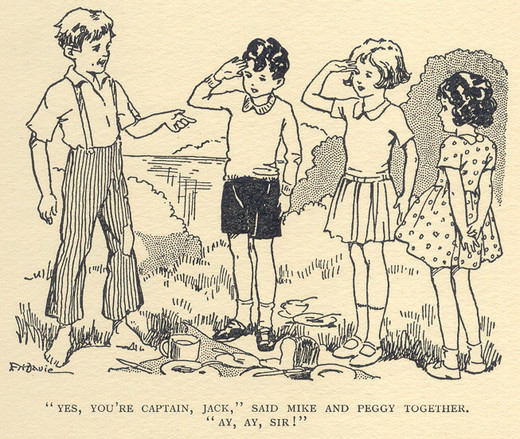
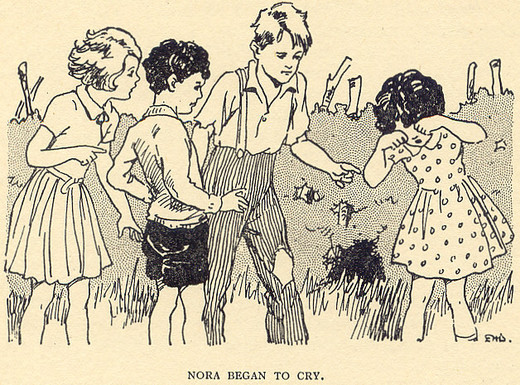
Twins Mike and Nora, and their older sister Peggy, live with a cruel aunt and uncle as their parents have been lost in a plane crash. Nearby Jack lives with his old granddad. All the children work hard around their homes, and are treated very badly.

They decide to run away, to an island on a lake. They pack up as many supplies as they can and go off together.

On the island they make a house out of willow, start a little farm with chickens and a cow, grow some crops and become pretty self-sufficient.

There are a few scares, trippers come to the island, and then some men looking for the children. Jack is almost caught on the mainland when he goes to sell berries to the buy some other goods.

Then, just before Christmas he goes to a town to get some gifts for the other children and hears something that makes him abandon his shopping and rush to the nearest hotel. From there he brings two rather special and important people over to the island…


THE LISTENING PARTS

The Secret Island is narrated by Joshua Higgot. His voice seemed really familiar to me, but the only things I can find on him is that he’s narrated some other Enid Blyton books on Audible, and I’ve never listened to them. He must just have one of those voices that sounds like someone else. You can listen to a short sample here, if you do, and you can think of who Joshua Higgot sounds like them please tell me!

His narrating of the main text is good, he has a pleasant voice that is easy to listen to. Some narrators read so slowly that I end up listening on 1.25 speed otherwise I get bored and irritated waiting for   them     to     finish     a     sentence, but Higgot has a good pace. I did end up switching to 1.25 speed halfway through though, but only to listen faster for this review (though the book is only just over four hours long).

Higgot does a good job of creating tension when the men are searching the island, and he does differentiate between the different characters by putting on different voices – he gives Jack a good bossy tone especially. He gamely attempts to do some bird sounds as Blyton is fond of describing owls twit-twooing and yellow hammers saying little-bit-of-bread-and-no-cheese, and generally does well at doing voices when the person is yawning or laughing.

The only ‘problem’ is that his female voices are a bit rubbish. I know it’s not always easy for a man to do the voice of a female, especially a child, but I’ve spend hundreds of hours listening to Stephen Fry voice Hermione, Professor McGonagall, Molly Weasley, Tonks and other women with skill. They aren’t the girliest of voices but they sound natural. Higgot is OK if the girl or woman is talking calmly but as soon as they get upset or angry their voices become quite silly and overdone which makes it hard to take them seriously.


A NOTE ON THE SCRIPT

As far as I can tell the version they are using is the same as the Award impression from 2009. Most of the references to slapping have been removed and replaced with yelling and so on, but Mike is still shaken so hard he can’t stand up.

It’s harder with listening to work out what’s changed, I think. With a book you can pause and think much more easily. The updates probably have less effect in audio form for that reason. It’s different listening to an unfamiliar voice instead of the little voice inside your own head that you heard when you read, and that can distract from all the little details.

I did notice that they hoped for £1 per basket sold, though. I mentioned in in part 5 of my text comparison that updating the currency but not the technology seemed silly. On my way to work while listening this morning I had a new thought. Perhaps today’s children don’t realise that by selling the baskets for £1 they are placing the books in more recent times. I don’t just mean post-decimalisation, of course you could gets pounds well before then but only in note form. £1 for a punnet of strawberries would be ridiculous before 1971, and probably long after too! In the mid 70s you could get a pint of milk for 7p while today it’s around 50p.

Before ramble any further – my point is that making a box of strawberries worth £1 but having the books set in a time where batteries, torches and compulsory schooling were uncommon suggests children don’t have a clue that prices have changed over time or that before 1970 we used a different system. To them it may not seem anomalous to have modern(ish) pricing and an otherwise 1940s setting, and that’s sad.

My second thought was about Jack selling 27 baskets for £27. Then buying scores of candles, matches, black cotton, wool, corn for the hens, a bar of soap, three books, two pencils, a rubber, a drawing book, a kettle, two enamel plates, two bars of chocolate, a bag of sugar, flour, rice, cocoa, nails and two blankets plus whatever else brought his list up to 21 items.

Even if you allow for things being a bit cheaper in around 2010, you would struggle to get all that for £27. Even if a lot of it came from a pound store you would struggle to get any decent quantities of flour, rice, corn and so on as well as a kettle and a blanket. In the original they plan to sell the baskets for sixpence, so they’d have 13 shillings and sixpence. I really don’t know how much that would have bought but I’ve done a little research… you could get 1.5 kilos of flour for just 3p (though that equals £1.85 today, about 3x what it actually costs) and 1 kilo of sugar for 2p, so their 13 shillings and sixpence (162p) looks like it would go quite far.


I won’t bore you with the rates of inflation or any further financial things now.

I’ll just say it was nice to listen to a familiar story but I think I enjoy my old hardback with illustrations better.

Posted in Audio Books and Audio Dramatisations | Tagged , | 4 Comments

Demon’s Rocks holiday brochure, 2018 from Travel Blyton

Imagine if Blyton’s most famous locations were real, still existed and you could visit them today! This is how I think some adverts might look…


Visit Demon’s Rocks and discover a thrilling history of wreckers at the renowned Jeremiah Boogle museum. Tickets are available at Demon’s Rocks Tourist Information for Demon’s Rock’s lighthouse where you can climb all 224 steps to the fabulous viewing gallery with stunning sea views. Then, if you dare*, descend below sea level and into the treasure caves. Can you find any of One-Ear Bill’s gold coins?

Jeremiah Boogle Museum £7.50 adults, £5.00 children and concessions, £20 family ticket.
Demon’s Rocks Lighthouse £5.00 adults, £2.50 children and concessions, £10 family ticket.
Day ticket to both attractions £10 adults, £6.25 children and concessions, £25 family ticket.
*Visitors must be aware of the tides when underground and neither the Demon’s Rocks Tourist Information  nor the Jeremiah Boogle Museum take any responsibility for loss of belongings or life.


Visit the Jeremiah Boogle museum and discover all of Jeremiah Boogle’s thrilling tales of One-Ear Bill, Nosey and Bart and their dastardly wreckings. Wander through the Famous Five gallery to find out how four children and their dog discovered the relics of One-Ear Bill’s last treasure, deep under Demon’s Rocks’ Lighthouse. Have a bite to eat in Joan’s cafe, where sandwiches, scones, cakes and lashings of gingerbeer are served all day. 


Posted in Locations | Tagged , , , , | 5 Comments

Monday #282

The Secret Island audio review

and

Demon’s Rocks holidays, 2018

The Enchanted Wood is the first book in the Faraway Tree series, featuring Jo, Fanny and Bessie. The children move to a cottage near a mysterous wood, and in it discover a tree which reaches up to the clouds. It is inhabited by curious creatures like Silky the elf, Moon-Face, The Angry Pixie, a talking squirrel and many more. The top of the tree affords access to weird and wonderful lands, though you don’t often know what’s going to be up there until you’ve climbed the ladder.

The children visit such lands as The Land of Ice and Snow, The Land of Take What You Want and The Land of Birthdays, and get into various scrapes as well as having lots of fun.

Patrick, Pat, Taggerty is the eldest of the four Taggerty children, and is the ringleader of many fun games and also the trouble they get into. He is tall and strong, and thinks he is brave, but thinks nothing of lying to get out of trouble. He doesn’t work hard at school as he doesn’t like appeasing authority figures. Like his siblings, he doesn’t appreciate his mother until she is injured by a car. After that he tries to shape up and works harder at school, at being honest and taking care of his family.

Posted in Blog talk | Tagged , , , , | Leave a comment

Blyton’s strangest homes, part 2

Most of these are less strange than houses filled with secret passages, and castles with apparent ghosts, but they’re not exactly normal-every-day home for most people, either.


CARAVANS

A lot of Blyton’s characters live in caravans at one point or another.

The various circus and fair folk live in traditional ‘gypsy’ style wooden caravans, for example in Mr Galliano’s Circus, Three Boys and a Circus, Come to the Circus, Five Go Off in a Caravan, The Mystery of the Missing Man, The Caravan Family, Five Have a Wonderful Time, Five Have Plenty of Fun, The Rilloby Fair Mystery, and probably quite a few others as well.

The Five themselves stay in old-fashioned caravans while at Faynight’s castle in Five Have a Wonderful Time, and in more ‘modern’ ones in Five Go Off in a Caravan.

The caravans stood on high wheels. There was a window on each side. The door was at the front, and so were the steps, of course. Gay curtains hung at the windows, and a line of bold carving ran around the edges of the out-jutting roof.

“They are old gypsy caravans painted and made really up to date. They’re jolly comfortable inside too, bunks that fold down against the walls in the day-time – a little sink for washing-up, though we usually use the stream, because it’s such a fag to fetch water – a small larder and shelves – cork carpet on the floor with warm rugs so no draught comes through… 

– Julian describes the caravans in Five Have a Wonderful Time

Most of the gypsy caravans are beautifully painted in bright colours (red with black and yellow for the boys, and blue with black and yellow for the girls in Five Have a Wonderful Time) and full of carefully-fitted in furniture, beds and little cupboards. Most cooking is done outside, on camp fires, though Mrs Brown (Jimmy’s mother, Mr Galliano’s Circus) has a proper stove in hers. The Browns’ caravan started out as a grubby old thing that had been used for storage, all soot-blackened inside from a broken chimney, but they do it up.

By the end of the second week you wouldn’t have known Jimmy’s caravan. It was painted a nice bright green outside, and the wheels were green too, but the spokes were yellow. The window-sills were yellow and so were the chimney. Jimmy’s father had enough money left to buy some cream-coloured paint for the inside of the caravan.

The inside of the caravan was very different to when it was finished – so light and airy, and it looked twice as big! Jimmy’s father put new glass into the windows, too, and Jimmy slipped off to the town and bought some green and yellow stuff for curtains. 


The Caravan Family, unsurprisingly, are a family who normally live in a  pair of caravans, too. Theirs are old-fashioned wooden ones, but they are a bit more simple than the elaborate gypsy ones (at least in the original illustrations). One has three bunks for the children and the other a bed for their parents, and each has a door that opens in two parts. One caravan even has a stove and running water. The Caravan family, like the Browns, also have to do theirs up as they have been unused and unloved for a while.

They had once been painted a gay yellow and blue, but now the paint was dull and cracked. 

The men let Mummy choose the colours and she chose a ladybird red, deep and clear. She chose a creamy yellow.

Then the men began the painting. They painted the caravans yellow, with red around the windows, and a red edge to the roof. The chimneys were red and yellow and the spokes and rims of the wheels were painted red. The door was yellow, and the shafts were blue.

Men came the next day and put a fine little kitchen-range in Mummy’s caravan, one that would both cook the meals and arm the caravan. But in the children’s caravan was put a closed stove, for heating only.

A red cork carpet is put down, and up the bottoms edges of the walls to keep draughts out, and brightly coloured rugs on top. There is a water tank under the caravans, which they have to pump up to the top tank for the water to come out of the taps. The bedding is blue and yellow, and there are shelves up for the children’s books, too.

The Five’s modern caravans are of shiny metal, and are full of mod-cons like proper bunks (that don’t fold up into the wall) as well as a sink with running water – with a gadget for heating it no less – and a stove, though as the children are too young to drive they are hitched up to horses.  Roger, Dinah, Miss Pepper and Mrs Lynton also have a modern caravan for their holiday at the start of The Ragamuffin Mystery, theirs is pulled by the Lyntons’ car.

They certainly were very nice ones, quite modern and streamlined, well built and comfortable.

“They almost reach the ground. And look at the wheels, set so neatly into the side of the vans. I do like the red one, bags I the red one.”

Each van had a little chimney, long narrow windows down the two sides, and tiny ones in front by the driver’s seat. There was a broad door at the back and two steps down. Pretty curtains flutteres at the open windows.

“Red for the green caravan, and green for the red caravan!”

Anne examines the caravans in Five Go Off in a Caravan

Caravans are not the strangest places to live, though I imagine they could get quite cramped if it’s for more than a holiday.

One of the caravans that featured in the 70s Famous Five TV series is now on a farm as a holiday home if you wanted to try it out yourself!


A BOAT

Talking of cramped, a house-boat would be quite tight for space for a family. That doesn’t stop the Caravan Family (two adults and three children) from spending a summer holiday in one, however.

Being an old boat, it’s one that is pulled by horses from the tow-path rather than having an engine.

[It had] red geraniums and blue lobelias planted in pots and baskets all round the sitting-space on the roof. Down in the cabin-part there were two bedrooms and a small living-room. There was even a tiny kitchen, very clean and neat, with just room to take about two steps in! In one room there was no bed, though Auntie Mollie said it was a bedroom. In the other bedroom there were bunks for beds, just as there were in the caravan – two on one side of the wall, and a third that could be folded up.

Of course the room with ‘no bed’ has a bed that pulls out of the wall.


A LIGHT-HOUSE

One of the strangest places to live, unless you are a light-house keeper, is a lighthouse. The Famous Five go to stay in one in Five Go to Demon’s Rocks as their friend, Tinker, owns one. (Well, his father does, but as he has no use for it anymore he has ‘given’ it to his son). The lighthouse is no longer used, as there’s a new, bigger one further up the coast. The only way to it is by boat and at high tide the water’s right up to the front steps. In storms, the whole building is buffeted and soaked with waves, right up to the top.

Inside are curious circular rooms and a lot of steps in a spiral stair-case connecting them all. This particular lighthouse has an even more peculiar feature, however. The lighthouse builders used an existing hole in the rocks when erecting the building as like most lighthouses it needed a deep set of foundations down into the rock, to make it steady. It just so happens at the bottom of this shaft is a little tunnel that leads into a mass of undersea tunnels and caves. It is quite dangerous to get from the lighthouse to these caves as if the tide comes in, they fill up with water!


AND A BUILDING-BLOCK HOUSE FOR ONE

I’ve stuck with ‘real’ world buildings so far, but I have to include just one fantasy one. Noddy’s house-for-one is one of my favourite homes. He buys it from warehouse, and it comes in a nice box with pictures on, like a Lego or Duplo set. He and Big-Ears put it together (they do not, incidentally, start with the roof in case it rains, as Noddy suggests), brick by brick.


Posted in Locations | Tagged , , , , , , , , , , , | 3 Comments

Miss Grayling’s Girls 2 – the failures

As I said in my previous post not every girl at Malory Towers is a success, though there have only been two real failures.


GWENDOLINE MARY LACY

Gwen is Malory Towers longest-lasting non-success and unfortunately she doesn’t turn things around before she leaves.

She is not good academically and she comes up with excuses as to why she hasn’t done well in tests and is bottom of the form (often blaming her governess for not teaching her better when she was younger), instead of knuckling down and studying. She is even worse at sports and does not endear herself by moaning constantly about even the least strenuous forms of exercise.

Gwen scowling at Belinda Malory Towers

On top of that she is not a pleasant person to be around. She believes herself to be quite wonderful, and stuffs up her parents with tall tales of being the most popular and the best at tennis and swimming (her mother laps it all up and makes it all ten times worse of course).

She manages to carry on like this for almost the entire series. I think one of her worst pieces of behaviour is when she fakes heart palpitations in order to get out of sports. She doesn’t just have one funny turn during a run, she deliberately feigns a several little moments of a fluttering heart and feeling ill – only when sympathetic adults or pupils are around of course – and worries her family sick.

Her second-worst is probably from her first year where she secretly bullied Mary-Lou by damaging and stealing her belongings, so that Mary-Lou would come to her for consolation and support, with the added bonus that she could blame girls like Darrell for it.

Gwen does eventually turn herself around a bit, but too late for most purposes including being thought of well at Malory Towers. She starts her final year without the usual histrionics at being parted from the family, in fact she is very cold towards her father. This is because he tried to stop her from going to a Swiss finishing school and instead has told her a few hard truths about herself, telling her she should get a job when she finishes school. This had led to a blazing row where by all accounts Gwen and her mother were horrible to her father, and in the end he gave in.

It was true that Gwen had said some very cruel things to her father during the last holidays, backed up by her mother. Mrs Lacy had been so set on sending Gwen to a finishing school where she could make ‘nice friends’, that she had used every single means in her power to back Gwen up. Tears and more tears,  Reproaches. Sulks. Cruel words. Mrs Lacy had brought them all out, and Gwen added to them…

“I said to my father, ‘aren’t I your only daughter? Do you grudge me one more year’s happiness? You don’t love me. You never did! If you did, you would let me have this one small thing I want – that mother wants too.’ I went on till I got my way. I stayed in bed one whole day and Mother told him I’d be really ill if I went on like that.”

Miss Winter is a voice of reason, reminding Gwen that her father is tired and has felt ill for some time, but neither Gwen nor Mrs Lacy listen. Gwen goes on and on about this back at school, telling everyone everything that was said and how unkind her father is. Darrell has words with her (as asked by Miss Grayling) and Gwen refuses to believe that her father might have been telling the truth about not being able to afford a finishing school. She insists he was just being cruel, and she is glad she had made him miserable.

She is glad when he doesn’t come at half-term, and dismisses Miss Winter’s report that her father is unwell by saying you can’t always tell whether Daddy isn’t well, or is just bad-tempered.

Then the worst happens, her father is taken seriously ill. He is so ill he may not survive, and Gwen is devastated. All of a sudden her world is crumbling, and a point in her favour is that she doesn’t think of Switzerland once – she is consumed by the guilt of how she left things with her father, that she didn’t write to him all term.

Miss Grayling is tactful, but impresses on Gwen one thing: you haven’t always been all that you should be. Now is your chance to show that there is something more in you than we guess.  In private Miss Grayling thinks that people reap what they sow, and also says to Darrell that this could be the making of Gwen.

Gwen’s father does survive his illness, but he is to be an invalid for life. Gwendoline is forced to leave Malory Towers to take a job, with him an invalid there is no money for schooling of any kind.

She writes to Darrell to tell her the news, and is stoic about her change of circumstance. She adds that she finds her mother’s weakness and weeping intolerable, and I suppose I can only say it is a positive about Gwen that she seems to roll her sleeves up at this point and do her best.

I think she had a real shock, after the huge row with her father, the idea that she might lose him without ever having been able to make up with him must have been awful.

She admits her self that she might have turned out like her mother had she not had such a great shock. She seems to have grown up a great deal and realises she has a fresh chance now.


JOSEPHINE JONES

Josephine, usually known as Jo, in second year in the final Malory Towers book. Immediately Darrell and Felicity tell us how awful she is, loud and bad mannered. Her father then almost forces them off the road with his terrible driving. As he drops her off he shows off that he is quite an idiot:

Well, good-bye, Jo. Mind you’re bottom of the form. I always was! And don’t you stand any nonsense from the mistresses, ha ha! You do what you like and have a good time.

Jo’s problems mostly seem to stem from her parents. Her father’s attitude is clear from the quote above, and we the readers are also privy to a telephone conversation between Mr Jones and Miss Grayling where he demands that Jo doesn’t take swimming lessons because she doesn’t like swimming, and his say so should be enough. Miss Grayling doesn’t allow him, or Jo, to have his way.

Jo also gets sent a lot of money and food, and doesn’t seem to understand that she can’t buy the other girls’ friendship with fancy cakes and chocolates. She seems to think that she is better, more generous, as she has more to share. She doesn’t stop to think that a poorer girl who only gets one small cake and still shares it is more generous than one who gets more than she could possibly eat.

Felicity puzzles over this contradiction.

It was puzzling that some parents backed up their children properly, and some didn’t. Surely if you loved your children you did try to bring them up to be decent in every way? And yet Jo’s father seemed to love her. If he really did love her, how could he encourage her to break rules, to be lazy, to do all the wrong things? How could he laugh when he read disapproving remarks on Jo’s reports?

Jo said he clapped her on the back and roared with laughter when he read what Miss Parker had written at the bottom of her report last term. What was it she wrote now? ‘Jo has not yet learned the first lesson of all – the difference between plain right and wrong. She will not get very far until she faces up to this lesson.’

At one point she has five pounds in her knicker-elastic, sent by an aunt. The younger girls are supposed to hand over any money to matron so she can distribute it as pocket money, but Jo refuses hence keeping it in her knickers. She takes out the notes so often to show them off that the elastic breaks and the notes drop out. Matron finds them (realising they are Jo’s) and puts up a sign asking the owner to collect them. Jo is too afraid to admit that they are hers – she is sure she will get into trouble and have the money doled out a shilling or two at a time so she doesn’t admit it.

At half term we see more of her parents and her father in particular doesn’t come across at all well (but we are not surprised). He is very loud and interrupts both Miss Parker’s and Miss Grayling’s conversations with other parents He ‘regales’ them both with what he thinks of as amusing anecdotes about how he was called Cheeky Charlie and school and was always getting into trouble.

Miss Grayling then – in what seems a rather unprofessional moment – says to another parent that it was an experiment taking on Jo, and it isn’t working out well. She adds that they have taken on other experiments, taking girls who don’t fit in but who always learn to fit in later, but Jo hasn’t as any good the school does, her father undoes. I know that there weren’t so many laws about privacy and confidentiality in the 1940s (unless we are talking about war efforts) but it still seems inappropriate and I can only imagine Blyton includes it so that the readers are privy to this information.

Anyway, Jo and Mrs Jones are starting to become aware by this point that Mr Jones is quite embarrassing but Jo dismisses it as unimportant as he is still her father and she loves him.

She can’t admit to her parents that she’s lost her aunt’s money so after half-term she sneaks into matron’s office and snatches up her money. She accidentally takes too much, however, and comes away with nine pounds. She knows her father will pay it back so she keeps it “borrows it” as she says, and spends it on running away with a first former called Deirdre. She also won’t admit to being the one who has taken a first-former into the town against the rules, and her whole form is punished for it.

So Jo has committed quite a lot of crimes by now. Firstly, she breaks the rules on having pocket money. Then she takes her money back from matron in secret, and not only takes other money but keeps it too. She won’t own up to breaking a rule and gets her whole form punished, then she persuades a much weaker girl to run away with her, potentially putting them both in danger.

Miss Grayling takes this all very seriously, so seriously that she calls Mr Jones to see her as soon as Jo is returned to the school. Mr Jones doesn’t take it at all seriously. He thinks is has all been a great laugh, all a bit of fun. His Jo, she’s a high spirited girl. He is only shocked when Miss Grayling tells him Jo has stolen money. He offers to pay it back, to double it, anything so that Jo doesn’t get expelled. But get expelled she does, as she’s a bad influence.

She doesn’t ask Jo for any explanations or apologies, but she does point out that Jo had a great chance at Malory Towers but didn’t take it, and that her parents are partly to blame.

Jo realises she is right:

You said it didn’t matter if I was bottom of the form – YOU always were! You said I needn’t bother about rules, I could break them all if I liked. You said so long as I had a good time, that was the only thing that mattered. And it wasn’t, it wasn’t.

It’s quite heart-breaking as she realises her father isn’t the hero she thinks he is and that he has let her down very badly. Mr Jones realises the same, and has a brief moment of dignity as he takes Jo home.

Like Gwen, she writes a letter later, her is to Deirdre. In it she says that her father is trying to find her another school but it won’t be as good as Malory Towers. She adds that her father is ‘awfully cut up’ and keeps blaming himself but her mother is fed up and says that Jo has let down the family name.

She apologises for letting the second form take a punishment and admits that Malory Towers is a splendid school, and I think she has learned a lot and grown as a result of being expelled. I actually hope she does well somewhere else because, despite her faults, she didn’t have the best chance before.


Jo and Gwen are similar in a lot of ways. They both hate swimming, for a start! Neither are popular at school, or do well in lessons. They are lazy, boastful and manipulative. They come from privileged homes though they lack support from their parents.

They both leave the school under a dark cloud, and although they both ‘failed’ at Malory Towers, their great shocks mean they both dramatically adjust their attitudes and have a good chance at succeeding elsewhere.

Posted in Characters | Tagged , , , , | 13 Comments

Monday #281

Blyton’s strangest homes, part 2

and

Miss Greyling’s Girls, the failures

The Caravan Family starts an exciting life for Belinda, Mike and Ann, when their parents buy to caravans for the family to live in. They do them up nicely with fresh paint and cosy bedding and enjoy cooking over open fires and living almost out-of-doors.

Gustavus Barmilevo is soon christened as Fussy Gussy by Kiki. He is under Bill’s care and foisted upon the Mannering/Trents, in The Circus of Adventure, and quickly irritates them with his haughty mannerisms and demands. As it turns out though, he is actually Prince Aloysius Gramondie Racemolie Torquinel of Tauri-Hessia. Hence the haughtiness! Once you know he’s a prince he seems a bit less annoying, or at least, you understand why he is the way he is.


Posted in Blog talk | Tagged , , , , | Leave a comment