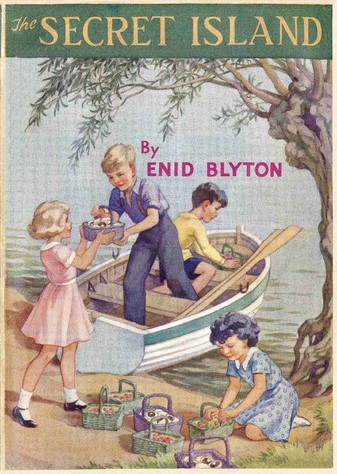
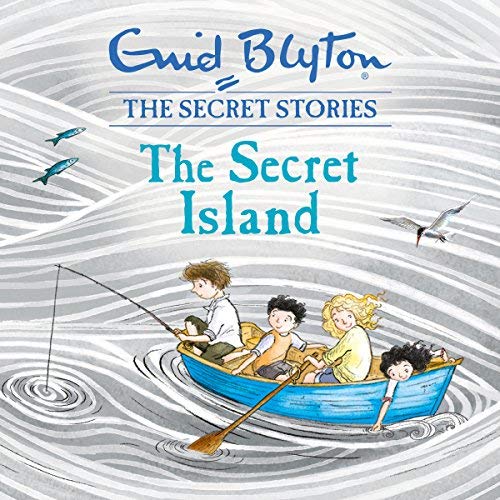
The Secret Island – an audio review

A while back I noticed that Audible were now doing both The Secret Series and The Adventure Series in audiobook. I’m a member and get one book a month for about £8, so I got both The Secret Island and The Island of Adventure to try them out.

I checked which I had read most recently and that happened to be The Island of Adventure, so I decided to listen to The Secret Island. It has been four years since I last read it and when I did, it was for my text comparison for updates.


THE SECRET ISLAND IN SHORT

It’s difficult to review an audiobook purely on the sound of it, as it turns out to be a very short review that way! So I will recap the story here for anyone who isn’t familiar with it.

Twins Mike and Nora, and their older sister Peggy, live with a cruel aunt and uncle as their parents have been lost in a plane crash. Nearby Jack lives with his old granddad. All the children work hard around their homes, and are treated very badly.

They decide to run away, to an island on a lake. They pack up as many supplies as they can and go off together.

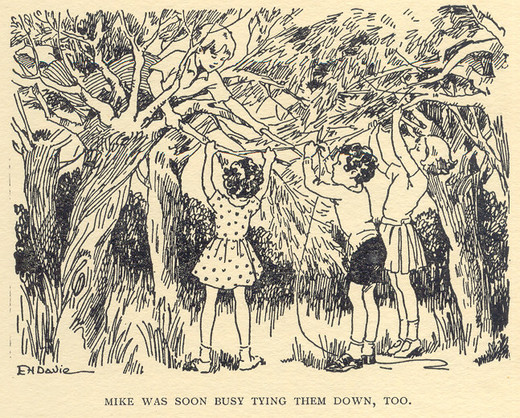
On the island they make a house out of willow, start a little farm with chickens and a cow, grow some crops and become pretty self-sufficient.

There are a few scares, trippers come to the island, and then some men looking for the children. Jack is almost caught on the mainland when he goes to sell berries to the buy some other goods.

Then, just before Christmas he goes to a town to get some gifts for the other children and hears something that makes him abandon his shopping and rush to the nearest hotel. From there he brings two rather special and important people over to the island…


THE LISTENING PARTS

The Secret Island is narrated by Joshua Higgot. His voice seemed really familiar to me, but the only things I can find on him is that he’s narrated some other Enid Blyton books on Audible, and I’ve never listened to them. He must just have one of those voices that sounds like someone else. You can listen to a short sample here, if you do, and you can think of who Joshua Higgot sounds like them please tell me!

His narrating of the main text is good, he has a pleasant voice that is easy to listen to. Some narrators read so slowly that I end up listening on 1.25 speed otherwise I get bored and irritated waiting for   them     to     finish     a     sentence, but Higgot has a good pace. I did end up switching to 1.25 speed halfway through though, but only to listen faster for this review (though the book is only just over four hours long).

Higgot does a good job of creating tension when the men are searching the island, and he does differentiate between the different characters by putting on different voices – he gives Jack a good bossy tone especially. He gamely attempts to do some bird sounds as Blyton is fond of describing owls twit-twooing and yellow hammers saying little-bit-of-bread-and-no-cheese, and generally does well at doing voices when the person is yawning or laughing.

The only ‘problem’ is that his female voices are a bit rubbish. I know it’s not always easy for a man to do the voice of a female, especially a child, but I’ve spend hundreds of hours listening to Stephen Fry voice Hermione, Professor McGonagall, Molly Weasley, Tonks and other women with skill. They aren’t the girliest of voices but they sound natural. Higgot is OK if the girl or woman is talking calmly but as soon as they get upset or angry their voices become quite silly and overdone which makes it hard to take them seriously.


A NOTE ON THE SCRIPT

As far as I can tell the version they are using is the same as the Award impression from 2009. Most of the references to slapping have been removed and replaced with yelling and so on, but Mike is still shaken so hard he can’t stand up.

It’s harder with listening to work out what’s changed, I think. With a book you can pause and think much more easily. The updates probably have less effect in audio form for that reason. It’s different listening to an unfamiliar voice instead of the little voice inside your own head that you heard when you read, and that can distract from all the little details.

I did notice that they hoped for £1 per basket sold, though. I mentioned in in part 5 of my text comparison that updating the currency but not the technology seemed silly. On my way to work while listening this morning I had a new thought. Perhaps today’s children don’t realise that by selling the baskets for £1 they are placing the books in more recent times. I don’t just mean post-decimalisation, of course you could gets pounds well before then but only in note form. £1 for a punnet of strawberries would be ridiculous before 1971, and probably long after too! In the mid 70s you could get a pint of milk for 7p while today it’s around 50p.

Before ramble any further – my point is that making a box of strawberries worth £1 but having the books set in a time where batteries, torches and compulsory schooling were uncommon suggests children don’t have a clue that prices have changed over time or that before 1970 we used a different system. To them it may not seem anomalous to have modern(ish) pricing and an otherwise 1940s setting, and that’s sad.

My second thought was about Jack selling 27 baskets for £27. Then buying scores of candles, matches, black cotton, wool, corn for the hens, a bar of soap, three books, two pencils, a rubber, a drawing book, a kettle, two enamel plates, two bars of chocolate, a bag of sugar, flour, rice, cocoa, nails and two blankets plus whatever else brought his list up to 21 items.

Even if you allow for things being a bit cheaper in around 2010, you would struggle to get all that for £27. Even if a lot of it came from a pound store you would struggle to get any decent quantities of flour, rice, corn and so on as well as a kettle and a blanket. In the original they plan to sell the baskets for sixpence, so they’d have 13 shillings and sixpence. I really don’t know how much that would have bought but I’ve done a little research… you could get 1.5 kilos of flour for just 3p (though that equals £1.85 today, about 3x what it actually costs) and 1 kilo of sugar for 2p, so their 13 shillings and sixpence (162p) looks like it would go quite far.


I won’t bore you with the rates of inflation or any further financial things now.

I’ll just say it was nice to listen to a familiar story but I think I enjoy my old hardback with illustrations better.

Posted in Audio Books and Audio Dramatisations | Tagged , | 4 Comments

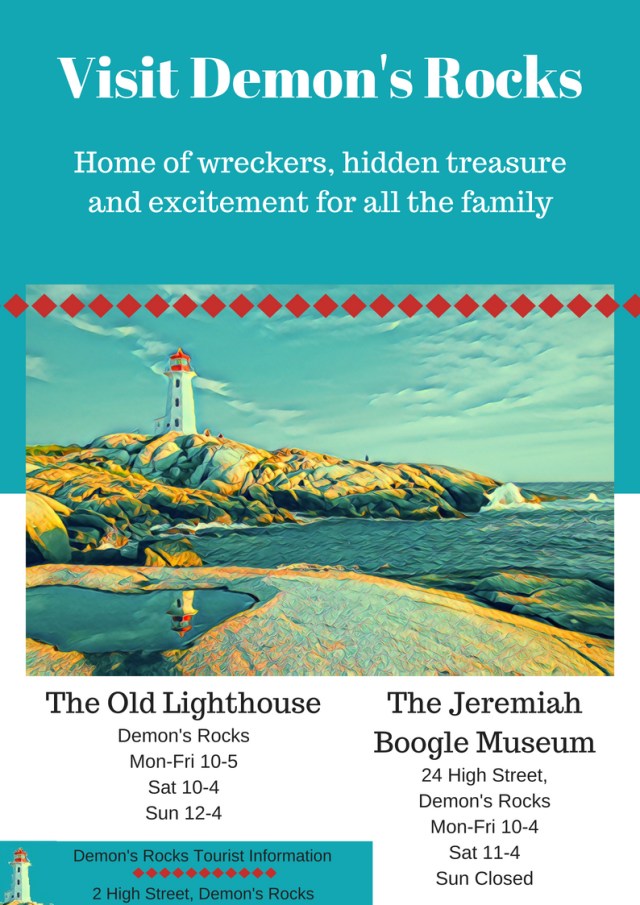
Demon’s Rocks holiday brochure, 2018 from Travel Blyton

Imagine if Blyton’s most famous locations were real, still existed and you could visit them today! This is how I think some adverts might look…


Visit Demon’s Rocks and discover a thrilling history of wreckers at the renowned Jeremiah Boogle museum. Tickets are available at Demon’s Rocks Tourist Information for Demon’s Rock’s lighthouse where you can climb all 224 steps to the fabulous viewing gallery with stunning sea views. Then, if you dare*, descend below sea level and into the treasure caves. Can you find any of One-Ear Bill’s gold coins?

Jeremiah Boogle Museum £7.50 adults, £5.00 children and concessions, £20 family ticket.
Demon’s Rocks Lighthouse £5.00 adults, £2.50 children and concessions, £10 family ticket.
Day ticket to both attractions £10 adults, £6.25 children and concessions, £25 family ticket.
*Visitors must be aware of the tides when underground and neither the Demon’s Rocks Tourist Information  nor the Jeremiah Boogle Museum take any responsibility for loss of belongings or life.


Visit the Jeremiah Boogle museum and discover all of Jeremiah Boogle’s thrilling tales of One-Ear Bill, Nosey and Bart and their dastardly wreckings. Wander through the Famous Five gallery to find out how four children and their dog discovered the relics of One-Ear Bill’s last treasure, deep under Demon’s Rocks’ Lighthouse. Have a bite to eat in Joan’s cafe, where sandwiches, scones, cakes and lashings of gingerbeer are served all day. 


Posted in Locations | Tagged , , , , | 5 Comments

Monday #282

The Secret Island audio review

and

Demon’s Rocks holidays, 2018

The Enchanted Wood is the first book in the Faraway Tree series, featuring Jo, Fanny and Bessie. The children move to a cottage near a mysterous wood, and in it discover a tree which reaches up to the clouds. It is inhabited by curious creatures like Silky the elf, Moon-Face, The Angry Pixie, a talking squirrel and many more. The top of the tree affords access to weird and wonderful lands, though you don’t often know what’s going to be up there until you’ve climbed the ladder.

The children visit such lands as The Land of Ice and Snow, The Land of Take What You Want and The Land of Birthdays, and get into various scrapes as well as having lots of fun.

Patrick, Pat, Taggerty is the eldest of the four Taggerty children, and is the ringleader of many fun games and also the trouble they get into. He is tall and strong, and thinks he is brave, but thinks nothing of lying to get out of trouble. He doesn’t work hard at school as he doesn’t like appeasing authority figures. Like his siblings, he doesn’t appreciate his mother until she is injured by a car. After that he tries to shape up and works harder at school, at being honest and taking care of his family.

Posted in Blog talk | Tagged , , , , | Leave a comment

Blyton’s strangest homes, part 2

Most of these are less strange than houses filled with secret passages, and castles with apparent ghosts, but they’re not exactly normal-every-day home for most people, either.


CARAVANS

A lot of Blyton’s characters live in caravans at one point or another.

The various circus and fair folk live in traditional ‘gypsy’ style wooden caravans, for example in Mr Galliano’s Circus, Three Boys and a Circus, Come to the Circus, Five Go Off in a Caravan, The Mystery of the Missing Man, The Caravan Family, Five Have a Wonderful Time, Five Have Plenty of Fun, The Rilloby Fair Mystery, and probably quite a few others as well.

The Five themselves stay in old-fashioned caravans while at Faynight’s castle in Five Have a Wonderful Time, and in more ‘modern’ ones in Five Go Off in a Caravan.

The caravans stood on high wheels. There was a window on each side. The door was at the front, and so were the steps, of course. Gay curtains hung at the windows, and a line of bold carving ran around the edges of the out-jutting roof.

“They are old gypsy caravans painted and made really up to date. They’re jolly comfortable inside too, bunks that fold down against the walls in the day-time – a little sink for washing-up, though we usually use the stream, because it’s such a fag to fetch water – a small larder and shelves – cork carpet on the floor with warm rugs so no draught comes through… 

– Julian describes the caravans in Five Have a Wonderful Time

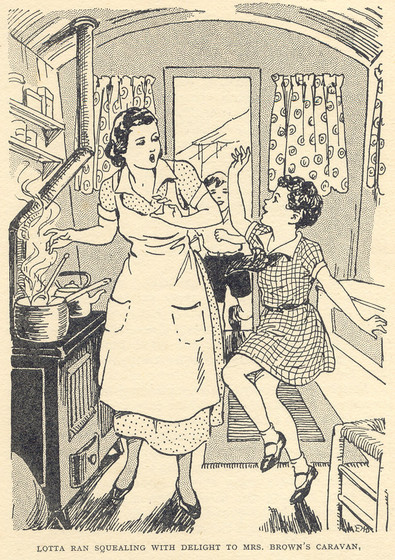
Most of the gypsy caravans are beautifully painted in bright colours (red with black and yellow for the boys, and blue with black and yellow for the girls in Five Have a Wonderful Time) and full of carefully-fitted in furniture, beds and little cupboards. Most cooking is done outside, on camp fires, though Mrs Brown (Jimmy’s mother, Mr Galliano’s Circus) has a proper stove in hers. The Browns’ caravan started out as a grubby old thing that had been used for storage, all soot-blackened inside from a broken chimney, but they do it up.

By the end of the second week you wouldn’t have known Jimmy’s caravan. It was painted a nice bright green outside, and the wheels were green too, but the spokes were yellow. The window-sills were yellow and so were the chimney. Jimmy’s father had enough money left to buy some cream-coloured paint for the inside of the caravan.

The inside of the caravan was very different to when it was finished – so light and airy, and it looked twice as big! Jimmy’s father put new glass into the windows, too, and Jimmy slipped off to the town and bought some green and yellow stuff for curtains. 


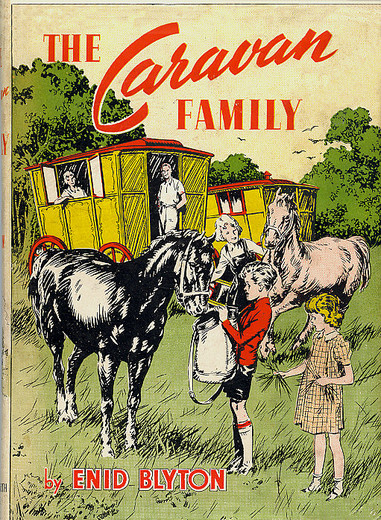
The Caravan Family, unsurprisingly, are a family who normally live in a  pair of caravans, too. Theirs are old-fashioned wooden ones, but they are a bit more simple than the elaborate gypsy ones (at least in the original illustrations). One has three bunks for the children and the other a bed for their parents, and each has a door that opens in two parts. One caravan even has a stove and running water. The Caravan family, like the Browns, also have to do theirs up as they have been unused and unloved for a while.

They had once been painted a gay yellow and blue, but now the paint was dull and cracked. 

The men let Mummy choose the colours and she chose a ladybird red, deep and clear. She chose a creamy yellow.

Then the men began the painting. They painted the caravans yellow, with red around the windows, and a red edge to the roof. The chimneys were red and yellow and the spokes and rims of the wheels were painted red. The door was yellow, and the shafts were blue.

Men came the next day and put a fine little kitchen-range in Mummy’s caravan, one that would both cook the meals and arm the caravan. But in the children’s caravan was put a closed stove, for heating only.

A red cork carpet is put down, and up the bottoms edges of the walls to keep draughts out, and brightly coloured rugs on top. There is a water tank under the caravans, which they have to pump up to the top tank for the water to come out of the taps. The bedding is blue and yellow, and there are shelves up for the children’s books, too.

The Five’s modern caravans are of shiny metal, and are full of mod-cons like proper bunks (that don’t fold up into the wall) as well as a sink with running water – with a gadget for heating it no less – and a stove, though as the children are too young to drive they are hitched up to horses.  Roger, Dinah, Miss Pepper and Mrs Lynton also have a modern caravan for their holiday at the start of The Ragamuffin Mystery, theirs is pulled by the Lyntons’ car.

They certainly were very nice ones, quite modern and streamlined, well built and comfortable.

“They almost reach the ground. And look at the wheels, set so neatly into the side of the vans. I do like the red one, bags I the red one.”

Each van had a little chimney, long narrow windows down the two sides, and tiny ones in front by the driver’s seat. There was a broad door at the back and two steps down. Pretty curtains flutteres at the open windows.

“Red for the green caravan, and green for the red caravan!”

Anne examines the caravans in Five Go Off in a Caravan

Caravans are not the strangest places to live, though I imagine they could get quite cramped if it’s for more than a holiday.

One of the caravans that featured in the 70s Famous Five TV series is now on a farm as a holiday home if you wanted to try it out yourself!


A BOAT

Talking of cramped, a house-boat would be quite tight for space for a family. That doesn’t stop the Caravan Family (two adults and three children) from spending a summer holiday in one, however.

Being an old boat, it’s one that is pulled by horses from the tow-path rather than having an engine.

[It had] red geraniums and blue lobelias planted in pots and baskets all round the sitting-space on the roof. Down in the cabin-part there were two bedrooms and a small living-room. There was even a tiny kitchen, very clean and neat, with just room to take about two steps in! In one room there was no bed, though Auntie Mollie said it was a bedroom. In the other bedroom there were bunks for beds, just as there were in the caravan – two on one side of the wall, and a third that could be folded up.

Of course the room with ‘no bed’ has a bed that pulls out of the wall.


A LIGHT-HOUSE

One of the strangest places to live, unless you are a light-house keeper, is a lighthouse. The Famous Five go to stay in one in Five Go to Demon’s Rocks as their friend, Tinker, owns one. (Well, his father does, but as he has no use for it anymore he has ‘given’ it to his son). The lighthouse is no longer used, as there’s a new, bigger one further up the coast. The only way to it is by boat and at high tide the water’s right up to the front steps. In storms, the whole building is buffeted and soaked with waves, right up to the top.

Inside are curious circular rooms and a lot of steps in a spiral stair-case connecting them all. This particular lighthouse has an even more peculiar feature, however. The lighthouse builders used an existing hole in the rocks when erecting the building as like most lighthouses it needed a deep set of foundations down into the rock, to make it steady. It just so happens at the bottom of this shaft is a little tunnel that leads into a mass of undersea tunnels and caves. It is quite dangerous to get from the lighthouse to these caves as if the tide comes in, they fill up with water!


AND A BUILDING-BLOCK HOUSE FOR ONE

I’ve stuck with ‘real’ world buildings so far, but I have to include just one fantasy one. Noddy’s house-for-one is one of my favourite homes. He buys it from warehouse, and it comes in a nice box with pictures on, like a Lego or Duplo set. He and Big-Ears put it together (they do not, incidentally, start with the roof in case it rains, as Noddy suggests), brick by brick.


Posted in Locations | Tagged , , , , , , , , , , , | 3 Comments

Miss Grayling’s Girls 2 – the failures

As I said in my previous post not every girl at Malory Towers is a success, though there have only been two real failures.


GWENDOLINE MARY LACY

Gwen is Malory Towers longest-lasting non-success and unfortunately she doesn’t turn things around before she leaves.

She is not good academically and she comes up with excuses as to why she hasn’t done well in tests and is bottom of the form (often blaming her governess for not teaching her better when she was younger), instead of knuckling down and studying. She is even worse at sports and does not endear herself by moaning constantly about even the least strenuous forms of exercise.

Gwen scowling at Belinda Malory Towers

On top of that she is not a pleasant person to be around. She believes herself to be quite wonderful, and stuffs up her parents with tall tales of being the most popular and the best at tennis and swimming (her mother laps it all up and makes it all ten times worse of course).

She manages to carry on like this for almost the entire series. I think one of her worst pieces of behaviour is when she fakes heart palpitations in order to get out of sports. She doesn’t just have one funny turn during a run, she deliberately feigns a several little moments of a fluttering heart and feeling ill – only when sympathetic adults or pupils are around of course – and worries her family sick.

Her second-worst is probably from her first year where she secretly bullied Mary-Lou by damaging and stealing her belongings, so that Mary-Lou would come to her for consolation and support, with the added bonus that she could blame girls like Darrell for it.

Gwen does eventually turn herself around a bit, but too late for most purposes including being thought of well at Malory Towers. She starts her final year without the usual histrionics at being parted from the family, in fact she is very cold towards her father. This is because he tried to stop her from going to a Swiss finishing school and instead has told her a few hard truths about herself, telling her she should get a job when she finishes school. This had led to a blazing row where by all accounts Gwen and her mother were horrible to her father, and in the end he gave in.

It was true that Gwen had said some very cruel things to her father during the last holidays, backed up by her mother. Mrs Lacy had been so set on sending Gwen to a finishing school where she could make ‘nice friends’, that she had used every single means in her power to back Gwen up. Tears and more tears,  Reproaches. Sulks. Cruel words. Mrs Lacy had brought them all out, and Gwen added to them…

“I said to my father, ‘aren’t I your only daughter? Do you grudge me one more year’s happiness? You don’t love me. You never did! If you did, you would let me have this one small thing I want – that mother wants too.’ I went on till I got my way. I stayed in bed one whole day and Mother told him I’d be really ill if I went on like that.”

Miss Winter is a voice of reason, reminding Gwen that her father is tired and has felt ill for some time, but neither Gwen nor Mrs Lacy listen. Gwen goes on and on about this back at school, telling everyone everything that was said and how unkind her father is. Darrell has words with her (as asked by Miss Grayling) and Gwen refuses to believe that her father might have been telling the truth about not being able to afford a finishing school. She insists he was just being cruel, and she is glad she had made him miserable.

She is glad when he doesn’t come at half-term, and dismisses Miss Winter’s report that her father is unwell by saying you can’t always tell whether Daddy isn’t well, or is just bad-tempered.

Then the worst happens, her father is taken seriously ill. He is so ill he may not survive, and Gwen is devastated. All of a sudden her world is crumbling, and a point in her favour is that she doesn’t think of Switzerland once – she is consumed by the guilt of how she left things with her father, that she didn’t write to him all term.

Miss Grayling is tactful, but impresses on Gwen one thing: you haven’t always been all that you should be. Now is your chance to show that there is something more in you than we guess.  In private Miss Grayling thinks that people reap what they sow, and also says to Darrell that this could be the making of Gwen.

Gwen’s father does survive his illness, but he is to be an invalid for life. Gwendoline is forced to leave Malory Towers to take a job, with him an invalid there is no money for schooling of any kind.

She writes to Darrell to tell her the news, and is stoic about her change of circumstance. She adds that she finds her mother’s weakness and weeping intolerable, and I suppose I can only say it is a positive about Gwen that she seems to roll her sleeves up at this point and do her best.

I think she had a real shock, after the huge row with her father, the idea that she might lose him without ever having been able to make up with him must have been awful.

She admits her self that she might have turned out like her mother had she not had such a great shock. She seems to have grown up a great deal and realises she has a fresh chance now.


JOSEPHINE JONES

Josephine, usually known as Jo, in second year in the final Malory Towers book. Immediately Darrell and Felicity tell us how awful she is, loud and bad mannered. Her father then almost forces them off the road with his terrible driving. As he drops her off he shows off that he is quite an idiot:

Well, good-bye, Jo. Mind you’re bottom of the form. I always was! And don’t you stand any nonsense from the mistresses, ha ha! You do what you like and have a good time.

Jo’s problems mostly seem to stem from her parents. Her father’s attitude is clear from the quote above, and we the readers are also privy to a telephone conversation between Mr Jones and Miss Grayling where he demands that Jo doesn’t take swimming lessons because she doesn’t like swimming, and his say so should be enough. Miss Grayling doesn’t allow him, or Jo, to have his way.

Jo also gets sent a lot of money and food, and doesn’t seem to understand that she can’t buy the other girls’ friendship with fancy cakes and chocolates. She seems to think that she is better, more generous, as she has more to share. She doesn’t stop to think that a poorer girl who only gets one small cake and still shares it is more generous than one who gets more than she could possibly eat.

Felicity puzzles over this contradiction.

It was puzzling that some parents backed up their children properly, and some didn’t. Surely if you loved your children you did try to bring them up to be decent in every way? And yet Jo’s father seemed to love her. If he really did love her, how could he encourage her to break rules, to be lazy, to do all the wrong things? How could he laugh when he read disapproving remarks on Jo’s reports?

Jo said he clapped her on the back and roared with laughter when he read what Miss Parker had written at the bottom of her report last term. What was it she wrote now? ‘Jo has not yet learned the first lesson of all – the difference between plain right and wrong. She will not get very far until she faces up to this lesson.’

At one point she has five pounds in her knicker-elastic, sent by an aunt. The younger girls are supposed to hand over any money to matron so she can distribute it as pocket money, but Jo refuses hence keeping it in her knickers. She takes out the notes so often to show them off that the elastic breaks and the notes drop out. Matron finds them (realising they are Jo’s) and puts up a sign asking the owner to collect them. Jo is too afraid to admit that they are hers – she is sure she will get into trouble and have the money doled out a shilling or two at a time so she doesn’t admit it.

At half term we see more of her parents and her father in particular doesn’t come across at all well (but we are not surprised). He is very loud and interrupts both Miss Parker’s and Miss Grayling’s conversations with other parents He ‘regales’ them both with what he thinks of as amusing anecdotes about how he was called Cheeky Charlie and school and was always getting into trouble.

Miss Grayling then – in what seems a rather unprofessional moment – says to another parent that it was an experiment taking on Jo, and it isn’t working out well. She adds that they have taken on other experiments, taking girls who don’t fit in but who always learn to fit in later, but Jo hasn’t as any good the school does, her father undoes. I know that there weren’t so many laws about privacy and confidentiality in the 1940s (unless we are talking about war efforts) but it still seems inappropriate and I can only imagine Blyton includes it so that the readers are privy to this information.

Anyway, Jo and Mrs Jones are starting to become aware by this point that Mr Jones is quite embarrassing but Jo dismisses it as unimportant as he is still her father and she loves him.

She can’t admit to her parents that she’s lost her aunt’s money so after half-term she sneaks into matron’s office and snatches up her money. She accidentally takes too much, however, and comes away with nine pounds. She knows her father will pay it back so she keeps it “borrows it” as she says, and spends it on running away with a first former called Deirdre. She also won’t admit to being the one who has taken a first-former into the town against the rules, and her whole form is punished for it.

So Jo has committed quite a lot of crimes by now. Firstly, she breaks the rules on having pocket money. Then she takes her money back from matron in secret, and not only takes other money but keeps it too. She won’t own up to breaking a rule and gets her whole form punished, then she persuades a much weaker girl to run away with her, potentially putting them both in danger.

Miss Grayling takes this all very seriously, so seriously that she calls Mr Jones to see her as soon as Jo is returned to the school. Mr Jones doesn’t take it at all seriously. He thinks is has all been a great laugh, all a bit of fun. His Jo, she’s a high spirited girl. He is only shocked when Miss Grayling tells him Jo has stolen money. He offers to pay it back, to double it, anything so that Jo doesn’t get expelled. But get expelled she does, as she’s a bad influence.

She doesn’t ask Jo for any explanations or apologies, but she does point out that Jo had a great chance at Malory Towers but didn’t take it, and that her parents are partly to blame.

Jo realises she is right:

You said it didn’t matter if I was bottom of the form – YOU always were! You said I needn’t bother about rules, I could break them all if I liked. You said so long as I had a good time, that was the only thing that mattered. And it wasn’t, it wasn’t.

It’s quite heart-breaking as she realises her father isn’t the hero she thinks he is and that he has let her down very badly. Mr Jones realises the same, and has a brief moment of dignity as he takes Jo home.

Like Gwen, she writes a letter later, her is to Deirdre. In it she says that her father is trying to find her another school but it won’t be as good as Malory Towers. She adds that her father is ‘awfully cut up’ and keeps blaming himself but her mother is fed up and says that Jo has let down the family name.

She apologises for letting the second form take a punishment and admits that Malory Towers is a splendid school, and I think she has learned a lot and grown as a result of being expelled. I actually hope she does well somewhere else because, despite her faults, she didn’t have the best chance before.


Jo and Gwen are similar in a lot of ways. They both hate swimming, for a start! Neither are popular at school, or do well in lessons. They are lazy, boastful and manipulative. They come from privileged homes though they lack support from their parents.

They both leave the school under a dark cloud, and although they both ‘failed’ at Malory Towers, their great shocks mean they both dramatically adjust their attitudes and have a good chance at succeeding elsewhere.

Posted in Characters | Tagged , , , , | 13 Comments

Monday #281

Blyton’s strangest homes, part 2

and

Miss Greyling’s Girls, the failures

The Caravan Family starts an exciting life for Belinda, Mike and Ann, when their parents buy to caravans for the family to live in. They do them up nicely with fresh paint and cosy bedding and enjoy cooking over open fires and living almost out-of-doors.

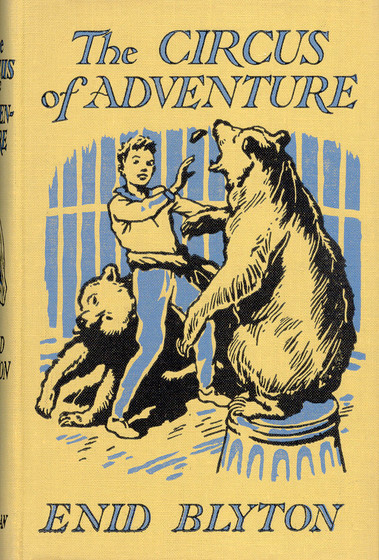
Gustavus Barmilevo is soon christened as Fussy Gussy by Kiki. He is under Bill’s care and foisted upon the Mannering/Trents, in The Circus of Adventure, and quickly irritates them with his haughty mannerisms and demands. As it turns out though, he is actually Prince Aloysius Gramondie Racemolie Torquinel of Tauri-Hessia. Hence the haughtiness! Once you know he’s a prince he seems a bit less annoying, or at least, you understand why he is the way he is.


Posted in Blog talk | Tagged , , , , | Leave a comment

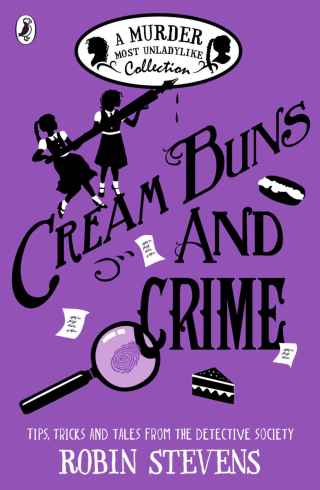
If you like Blyton: Cream Buns and Crime by Robin Stevens

Cream Buns and Crime is part of the Murder Most Unladylike series about two girls – Daisy Wells and Hazel Wong – who run their own detective agency at boarding school. We’ve already reviewed the first in the series, Murder Most Unladylike (well twice, actually) as well as the second, Arsenic for Tea.

Though part of a series, Cream Buns and Crime doesn’t slot in very easily with the reading order. It contains a few short stories which are labelled as 0.5 (a prequel, essentially), 3.5 and 4.5, which come between books 3 and 4, and 4 and 5 respectively. It also contains guides to various parts of detecting and having your own agency as well as information on other fictional detectives and real mysteries, and where the title comes from, some recipes for cakes and sweet treats.

murder most unladylike series


THE SHORT STORIES

The first story is The case of Lavinia’s missing tie and is the Wells and Wong Detective Agency’s very first case (#0.5). It is a simple affair and solved purely by identifying suspects and working out who could have, and would have, stolen the tie.

Then, story #3.5 is The Case of the Blue Violet. This one’s written up by Daisy (to prove she can do it just as well, no, better than Hazel) and is full of self-praise and exaggeration. This is a nice, baffling mystery, worthy of Sherlock Holmes. One of the older girls at school is ‘set up’ by her father to meet the son of a lord. She spends a lot of time with the young man, exchanging love notes and so on. When she returns to school she writes to him and he replies that he doesn’t know who she is. Totally baffling if you believe that no-one is crazy, but Daisy compares a love note to the denial note and is instantly off, as she has spotted something.

The third story is The Secret of Weston School (no number as it isn’t part of the main series) and it’s the Junior Pinkingtons’ first Mystery (Wells and Wong’s rival detectives). It starts with the post-boy being attacked and the post being rifled through, the library being broken into and one of the library monitors acting suspiciously. They unravel a whole smuggling plot to do with letters and library books before one of the suspects is found pushed down the stairs outside another suspects’ room. It is a very satisfying mystery with a few twists at the end.

Story #4.5 is The Case of the Deepdean Vampire, another written up by Daisy. Apparently Camilla Badescu (a fifth former) is a vampire. She has been seen scaling the school’s walls -upside down – at two a.m, and added to that, her dorm mate is looking pale and ill. Of course vampires aren’t real in this universe, and the truth is a very sad story related to the war.

The Mystery of the Missing Bunbreak is written by Beanie and occurs during the Christmas Holidays. Someone has stolen a scoop of trifle, but the main suspect doesn’t like trifle (who doesn’t like trifle!? that’s suspicious in its own right). Then a tin of gingerbread goes missing, and the cook declares no bunbreaks for a few days. Next its a braised ham that goes, and gingerbread crumbs are found in an outside shed. It’s not anyone inside the house, they’re fairly sure, and it’s not any of the poorer boys from down the street. The finding of a grubby doll is the catalyst to solving the mystery.


FORMING YOUR OWN DETECTIVE AGENCY

Daisy sets out the key things for setting up your own detective agency.

First, a notebook and biscuits. I suspect the Find-Outers would heartily agree and add macaroons to that, you can’t detect successfully on an empty stomach after all.

Daisy is adamant you ought to only have two members, though concedes that their assistant members are actually quite handy. Naturally, the Five Find-Outers and especially the Secret Seven would be on Hazel’s side here, as she favours teamwork.

You must come up with a good name for your society, and allocate roles. The Wells and Wong agency have a president and a vice-president, who also acts as a secretary so they are more organised than the FFos or Secret Seven who just have a leader. Perhaps the six other members of the Secret Seven wouldn’t have blended together into an unidentifiable group had they had special roles.

Peter of the Secret Seven would have liked the idea of making a pledge – as long as it stated that all members had to by loyal to him. The Wells and Wong pledge contains promises to logically detect crimes without involving adults (which both the FFO and Secret Seven would approve of) and also that you must obey every word of the president and vice-president.

Keeping a casebook is another important ‘rule’, where detectives ought to write down their clues and suspects so they may refer back to them. Fatty and the other FFOs did jot down lists of suspects from time to time but they never recorded every detail – perhaps because they didn’t have a secretary.

Like Fatty Wells and Wong like a detective kit, for fingerprinting, measuring things and disguising yourself. They also suggest you create a rivalry with another group but the Secret Seven would probably advise you against that, if the other group has the potential to be as annoying as Susie’s ‘Famous Five’.

And lastly, channeling J.K Rowling and Alastor ‘Mad Eye’ Moody more than Blyton, constant vigilance is required lest you want a dead detective on your hands. Deepdean is clearly a more dangerous place than Peterswood.


HOW TO DETECT

Daisy, who is so amazing and clever and not at all modest, also lays out the best way to be a detective.

She starts with the age-old notion of working out who, what, where, when and how, with examples from daring bun-theft perpetrated against herself. Then she covers drawing up a list of suspects and considering their motives and alibis, before examining the scene of the crime. While the FFOs were adept at gathering clues and evidence, they never had to consider the next bit of advice – studying a body. They did however do well at analysing footprints (and basket-bottom-prints!) and I think they even dabbled in finger-prints at some point, and Daisy sets out just how to gather finger-prints if you want to try it yourself.

Other vital skills are interviewing witnesses (which the FFO are very good at), eavesdropping, tracking (easier if Mr Goon isn’t getting in your way), recreating the crime and a la Murder She Wrote and Miss Marple – gathering together all interested parties and cleverly causing the guilty one to admit their guilt so the police can cart them away.

There is also a whole section later in the book on code-breaking with puzzles for the reader to solve (answers are included at the back of the book!).


A HISTORY OF DETECTIVES AND SPIES

​Somewhat surprisingly there is an interlude from Robin Stevens, who talks about the golden history of detective novels. I thought it was very interesting, as it’s not something I’ve read about before. Of course I know of Arthur Conan Doyle and Agatha Christie, but not Ronald Knox or quite how detectives as we know them today came about.

Following on from this, Hazel gives us a look at the ‘queens of crime’, Agatha Christie, Dorothy L. Sayers, Ngaio Marsh and Margery Allingham and Daisy does her top 10 detectives (she considered putting herself at #1 and only couldn’t because it was a list of fictional detectives…) and I am glad to see my favourite, Nancy Drew, features.

The spy chapter comes from Alexander of the Junior Pinkingtons, and his colleague George gives us a guide to some unsolved mysteries.


ROBIN STEVENS LIKES ENID BLYTON, AND OTHER THINGS

Robin Stevens also writes a chapter on the books that inspired her books, that way we get to read about some things published after the 1930s. She credits Enid Blyton (Malory Towers and the Famous Five) as well as Agatha Christie as the beginnings of her writing Murder Most Unladylike. She was also inspired by Jonathan Creek for First Class Murder, I love Jonathan Creek and I have watched all the episodes a dozen times so I look forward to reading First Class Murder one day. Another thing I love is Mean Girls and I’m intrigued to know that it was an inspiration for Jolly Foul Play – I’d better get reading more Robin Stevens! She reveals that the policeman in her books – Inspector Priestley – is at least a little inspired by the playwright J.B. Priestly, author of An Inspector Calls. I read that in high-school and still love it today.


I wish I’d read more in the series, and the two I have read I wish I had read more recently, before reading this. You don’t need to have read the other books as all the basics are explained but I think you always get more out of books if you have all the little details to mind.

Cream Buns and Crime is a good mix of stories, guides and non-fiction. Some of these ‘magazine’ type books use a few too many puzzles and bullet-lists as they are an easy way to pad out a book, but this one contains only a few of these things and the rest is good solid reading. I’m keen to read the rest of the series now, so I’ll be raiding the children’s department at work for them soon.

Posted in Book reviews, Other Authors, Reading Recommendations | Tagged , , , , , , , , | 1 Comment

Blyton’s strangest homes

Recently I looked at Blyton’s secret but homely homes, where children turned caves and trees into lovely cosy places to stay. That got me thinking about some of the other strange ‘homes’ Blyton wrote about, and so I thought I would have a look at them today. I think that some from the previous post would come under the heading of ‘strange’, hollow trees and willow houses aren’t exactly normal but as I’ve already written about them I plan to stick to (mostly) bricks and mortar dwellings that could at least pretend to be normal from the outside.


MOUNTAINS

Mountains, in and of themselves, are not a terrible unusual place to live. But most people would live on a mountain or by a mountain. Blyton has two lots of people who live inside their mountains, and that’s pretty strange!

The Secret Mountain (The Secret Mountain)

The Secret Mountain is a strange place to start with. Located in an unidentified part of Africa, it has a completely flat top. The natives are afraid of it because of its inhabitants – a cult of sun-worshippers with yellow skin and flaming red hair.

The mountain is entered by way of an enormous slab of rock with pivots and slides away if you press it in the right place. Inside is a warren of passages and rooms – and an underground river which bursts out of the side of the mountain to form an enormous waterfall. To top it off – literally – the flat mountain top has an alter used for the sun worshipping and ritual sacrifices!

Fang Mountain (The Mountain of Adventure)

Eight years later, another mountain with some very similar ideas featured in the Adventure Series. Fang Mountain, in Wales, also has a flat top, a series of passages and rooms, and a crowd of folk who more or less sacrifice unsuspecting people!

You enter Fang Mountain through a narrow gap in the rock, hidden by a trailing ivy. Inside you can’t seem to go any further as it’s just a small cave mostly filled by a still, dark pool. But if you know where to look, you’ll find a wheel which, when turned, reveals a rope-ladder and the way into the rest of the mountain. Like The Secret Mountain there’s a throne room and many other spaces (but no river) on the way up to the top.

Killimooin (The Secret of Killimooin)

The mysterious robbers of Killimooin don’t live inside a mountain, but they pass through one on their way into a forest which is entirely sealed off in a ring of mountains.

The little village is reasonably ‘normal’ if very old-fashioned, with wooden huts clustered amongst the trees. Getting there is decidedly not normal, though.

First you must find the secret button on a statue in a small ruined temple, and go underground into the mountain. There you’ll find a rushing river, and the best way down into the forest is by boat!


RAMBLING OLD HOUSES (AND CASTLES)

Blyton wrote about a lot of castles and big old houses, so I will try to stick to ones that were lived in (however temporarily) by the children she wrote about.

Craggy Tops (The Island of Adventure)

Craggy Tops is a very striking building, built right into the cliffs by the sea. It is continually sprayed with sea-water and shrieked at by sea-birds. It would have been a grand home when it was first built, but by the time the Mannerings live there a lack of money has caused it to fall into disrepair. It has no heating, electricity or even running water. The tower-room has no glass in the windows, and some parts of the house are even in ruins. Excitingly, down in the cellars, there is a secret passage leading to a cave on the beach, and another passage which starts down the well and heads under the sea to the Isle of Gloom.

Moon Castle (The Secret of Moon Castle)

Moon Castle is in better condition than Craggy Tops, but it’s probably a lot stranger. It seems perfectly normal for an old castle – though the tower-door is locked and hidden – until strange things happen. A portraits’ eyes glow, a music box plays itself, books throw themselves from shelves, the musical instruments go TWANG and DONG all by themselves, and there’s a secret passage halfway up the wall in Prince Paul’s room. It’s not magic or otherworldy things going on, though, the castle has been built with secret hiding and spying spaces which are utilised by the strange Brimmings to oust the Arnolds and Prince Paul.

Smuggler’s Top (Five Go to Smuggler’s Top)

Smuggler’s Top is a strange house in a strange place. It is built at the top of Castaway Hill, so-called because when the mist rises off the marsh it is cast-away from the mainland. It is only accessible by one road that winds through the marsh which takes you into the narrow, steep, cobbled streets within the walled village on the hill. If you navigate your way to the top, you’ll find Smuggler’s Top, a huge rambling house.

There are multiple secret passages in the house – entrances can be found just inside the front door, Mr Lenoir’s study, the dining-room, Marybelle’s bedroom and two in Sooty’s bedroom, though they seem to run all through the house and there may be even more entrances. Two of the bedroom ones drop straight down into the mass of catacombs that fill the hill – though the other passages also link up to those.

Rockingdown Manor (The Rockingdown Mystery)

Rockingdown Manor is, by most people’s standards a reasonably normal house. It’s very large, of course, being a manor, and the strangeness comes from three things. One, it’s abandoned with lends a creepy air and a lot of cobwebs to it. Two, it has a macabre back-story of a child falling to their death and another dying from scarlet fever. Three, it has a secret entrance in the cellar to an underground river.

Three Men and a Tub Inn (The Rubadub Mystery)

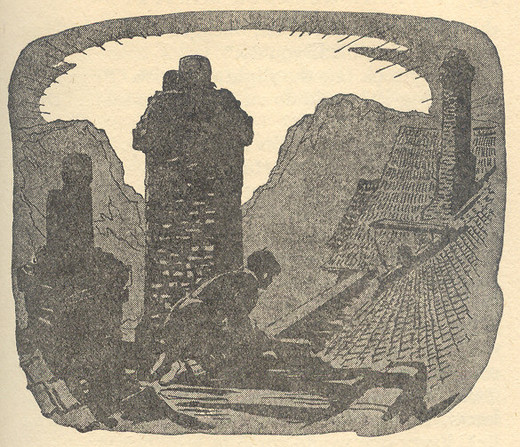
The name alone is unusual enough – it is named for the nearby whirlpool which has a scrubbing-board shaped rock beside it. The inn itself is old-fashioned even by 1950s standards with oak beams on the ceilings and diamond-paned windows. It also has a skylight in the hall on the top floor, accessed by some wooden steps. That’s not so terribly odd, though it just happens to line up perfectly with a gap in the cliffs – very handy for signalling out to sea! The whole roof is quite a curious place a large, uneven place with attic windows and chimneys here and there, if you are daring, or daft, enough you could wander from one window to another.

Old Towers (Five Get Into a Fix)

Old Towers, at first glance, could seem like a pretty normal if old and rambling house atop a hill. That effect is quickly destroyed if anyone happens to try to drive (or ride) up to it – the hill is essentially magnetic and would slow any metal vehicle to a crawl. Then, if anyone happened to look at the house at night then they might see a strange shimmering in a colour they’ve never seen before, and hear a strange rumbling too. In addition to all that weirdness, there’s a series of secret tunnels under the house containing an underground stream.

Peep-Hole (The Secret of Spiggy Holes)

Peep-Hole is a crooked old house with a tower, and is set in a dip in the cliff, so like the Three Men in a Tub Inn, it is perfectly located to signal out to sea and also to the tower of the other old house.

While a house without a secret passage is uncommon in Blyton’s books, secret passages are still uncommon enough in the real world. Peep Hole is another house with a secret passage, this one to be found half-way up a chimney in a tower bedroom. It leads down to the beach and from there also to another old house a little way inland.


And that’s where I will stop today, but I will be back with a few more strange homes another time! What’s your favourite strange or unusual home from a Blyton book?

Posted in Locations | Tagged , , , , , , , , , , , , , | 5 Comments

Monday #280

Blyton’s strangest homes

and

If you like Blyton: Cream Buns and Crime by Robin Stevens

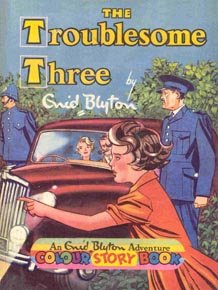
Here come Sam and Anne, ready for anything that Pete wants them to do. Their mothers look out of the window, shake their heads and say “Ah – there go the Troublesome Three!”

From The Troublesome Three.

Having just read Five Go Adventuring Again I feel compelled to have Mr Roland as the character of the week. Beware: spoilers!

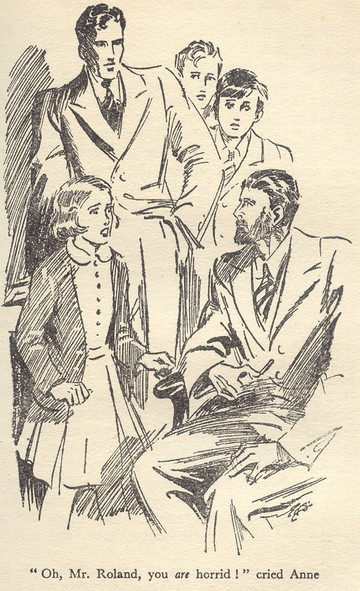
Mr Roland, a tutor, comes to Kirrin Cottage to do what tutors do, tutor. Unfortunately for Uncle Quentin, Mr Roland has an ulterior motive and he’s really there to steal some of his secret work. It’s also unfortunate for George as she’s the only one who sees Mr Roland for who he really is, and he makes life very hard for her as a result. She bases her dislike on two things: one, he doesn’t like Timmy (!) and two, he has thin lips which is a sign of cruelty.

Mr Roland is clever enough to orchestrate a reasonably clever plan, charm Uncle Quentin into hiring him and becoming his friend and also to drive a wedge between George and her cousins and father. He’s not clever enough to defeat the Famous Five, but then, who is?

Posted in Blog talk | Tagged , , , , | Leave a comment

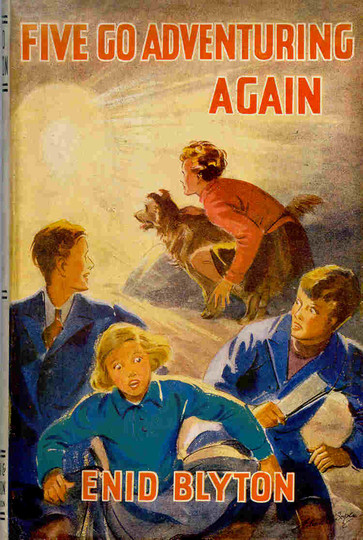
Five Go Adventuring Again

After finally reviewing Five on a Treasure Island it has taken me a while to get around to reading the next book, but I’ve done it now.

FOLLOWING IN BIG FOOTSTEPS

Five on a Treasure Island is such a strong start to this series that Five Go Adventuring Again has some big boots to fill. Perhaps it’s not surprising, then, that it is set in the midst of winter. The winter weather gives it a very different feeling to its predecessor, and allows it to stand on its own feet and have its own identity. The snow and the winter tides mean it’s impossible to row to Kirrin Island, and most of the story takes place indoors at Kirrin Cottage and the newly introduced Kirrin Farm instead. There is less ‘messing around’ and hilarity too, partly because of the weather but also because of the frosty relationship between George and the new tutor, Mr Roland.


THE NEW CHARACTERS

There are two new folk at Kirrin Cottage. One is Joanna, the cook, described as a fat, panting person. She is a wonderful cook and also very adept at keeping Timmy out of the kitchen. We assume that the Kirrins have been able to afford her thanks to the ingots found in the summer.

The second is the above-mentioned Mr Roland. He has been brought in by Quentin and his brother. Primarily he has been hired to tutor Julian and Dick who are behind in their lessons, thanks to two bouts of flu. However George is also behind – due to a lack of proper schooling (a point I will touch on later) – and Quentin agrees to pay a third of Mr Roland’s fees to help her catch up.
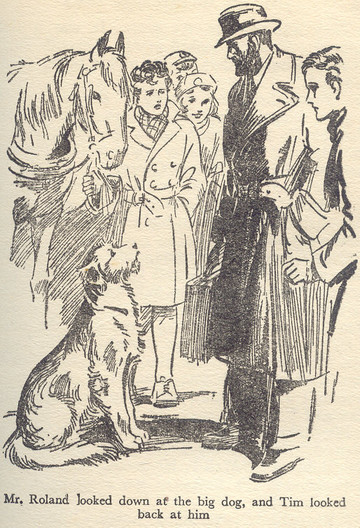
Then up at Kirrin Farm there are Mr and Mrs Sanders. Mr Sanders is a background figure who we don’t see much but Mrs Sanders provides the children with eatables and helps them discover the various secret niches and hidey-holes built into Kirrin Farm.


A THREE-PART STORY

Five on a Treasure Island could be split into three clearly defined parts, and so could this book. The first part concerns the return to Kirrin, the arrival of Mr Roland and the exploration of Kirrin Farm. It is not as adventurous a start as the previous book has, as we are not new to the location or main characters, but the secret hidey-holes (and their contents) at Kirrin Farm quite make up for that. The second part is a brief interlude when Christmas occurs, and most of the story is about the preparations and celebrations. Even the simmering tension between George and Mr Roland is at a careful, low ebb. Then once Christmas is over the hatred between George and Mr Roland increases dramatically, and the main adventure starts to pick up the pace.

Five Go Adventuring Again


GEORGE VS MR ROLAND

The hostilities between George and Mr Roland is the thread that ties the whole story together. They start as soon as she meets him, and he declares he doesn’t like dogs.

There had been a brief awkwardness when George and Anne were fist reunited with Julian and Dick but she warmed up quite quickly and went back to being comfortable with the boys. At first you might think that she will warm to Mr Roland; but she doesn’t. She remains her stubborn, difficult self.

Mr Roland isn’t much better. He can see George doesn’t like him, but he makes little effort to ease relations. He insists on calling her Georgina and makes little to no effort to make friends with Timmy – apart from throwing a few sticks for him to run after on a walk.

Knowing just what Mr Roland is up to (having read the books many times before) it would seem prudent for him to make as good friends with George and Timmy as possible, and only if that failed would it make sense for him to try to ostracise them. He goes straight for isolating George from her cousins and Timmy from the house, though, and making enemies of those two turns out to be his undoing. Firstly, they would have been at Kirrin Farm instead of seeing him meeting the two artists that he claims not to know, and secondly George wouldn’t have been suspicious enough to cotton on to his plan.

Anyway, George is in the same boat. If she had been able to swallow her dislike and been sensible about Timmy then she would have made life an awful lot easier for herself. Of course we know that she is right about him but it’s more luck than her truly knowing he is a baddie. She simply doesn’t like him, and that fuels her suspicions – she’s quite determined to catch him doing wrong, wrong of any kind.

Dick is the only other person to be not completely sure of Mr Roland. I still don’t like him awfully much sometimes, but I think he’s a sport, he says. Julian, Dick and Anne accept it is annoying to have a tutor, and worse for George as he calls her Georgina etc but they know there’s nothing they can do and make the best of it. Anne positively loves him, and in fact almost falls out with George. George is infuriated by them all ‘sucking up’ to Mr Roland and Anne accuses her of lying about him meeting the artists purely out of spite. George is incredibly honest, though, even when the truth gets her into trouble.

Quentin shows a lack of sense, just like in the last book. He is entirely taken in by the late arrival to tutor interviews, and hires Mr Roland because he’s older than the other applicants and has a knowledge of Quentin’s own work. He states that he partly hired him as it would be company for him, and he would enjoy having someone to discuss science with. He invites him into his study and shows him experiments and chats with him in the evenings, and takes his side at every turn instead of his own daughter’s. Thankfully, when it really matters, he believes that George (per Mr Roland’s accusation) wasn’t guilty of theft and damage, though he still doesn’t believe George that it was Mr Roland.

After Christmas things are even worse, Timmy gets sent outside to live and George isn’t allowed to see him at all. I can see why George gets punished, for skipping lessons and her rude attitude, but it seems unnecessary for them to put Timmy out into the garden in the middle of winter when he’s used to being indoors most of the time. Later (after a lot of snow) he’s allowed in as long as Joanna keeps him away from George, so why couldn’t they do that in the first place (well, because it would hinder the plot of Mr Roland sneaking into Uncle Quentin’s study to steal the papers…)

George tries to be good and manages a whole day of being polite, studious and almost pleasant to Mr Roland. He is pleased, but not pleased enough to let Timmy back in and this is where Julian, Dick and Anne finally turn against him to a degree. George immediately reverts back to her usual self, in the child’s logic of being nice to get what you want and when it doesn’t work behave even worse than before.

THE MAIN ADVENTURE

All the fighting between George and Mr Roland is leading somewhere – out into the snow and back into Uncle Quentin’s study.

George is the one in the study, getting into trouble, when she notices eight wooden panels on the wall. And the room faces east. AND when she checks under the carpet (wall to wall but not fitted) there’s a stone floor…

Julian’s the one out in the snow, wearing a white Mackintosh and following Mr Roland. He also has a dramatic discovery – the tutor hands some papers to the two artists.

It’s not until that night that they can investigate the possibility of a secret passage, but lo and behold it does turn out that the entrance to the secret way is in Kirrin Cottage all along. No good exploring in the middle of the night – too dark and cold apparently – so the next morning while Uncle Quentin is shovelling snow (purely to give them an opportunity, as the road and village are snowed in, what’s the other point of digging a path to nowhere?) they head into the secret passage.

It leads them to Kirrin Farm – and into a cupboard in one of the artists’ rooms. They of course use that opportunity to hunt for the stolen papers, but are discovered by the artists and flee back along the passage.

But the artists realise there’s a passage there and come creeping along it the next night (they’ve no choice if they want the papers back) and it’s down to Timmy to apprehend them.


INTERESTING POINTS

Reading this for a review I noticed a lot of things I’ve never thought a lot about before.

Julian  talks about “your [George’s] family” when it comes to Kirrin Island etc with no mention of any claim from his family.

Mrs Sanders is very blasé about all the secrets in her farmhouse. There’s a hidey hole by  the fireplace for small items, a cupboard with false back and a sliding panel in the hall. She’s heard of a secret way from the farmhouse but has never cared about these things so never looked for it or really listened to the stories. She seems like a nice lady but she baffles me!

Talking of the hiding place in the cupboard, I always imagined the “dent” the talk about being a man-shaped hollow (which would have made it really obvious that there was a hiding place) but it’s really a tiny dent where a release button is.

The hall panel hides a recipe book, a tobacco pouch and a map. I can see why you’d hide a map to a secret way but why the other things? And why is the entrance to the secret way upstairs? Wouldn’t it have been easier to have another sliding panel in a stone floor instead of a hollow column between rooms then going underground?

Mr Roland must have been thrilled that a secret way exists in his friends’ lodgings no matter where it was located. It would have been perfect for theft, escaping or hiding had he found it first.

Midnight explorations are usually done in holiday homes, or abandoned houses etc, rarely in someone’s own house (at least not for the first time).

At some point in this book Timothy aka Tim starts getting called Timmy. He was never Timmy in the first book though that’s probably his most famous name. By page 22 he gets Timmy but it’s rare, and grows more common as the book goes on. In contrast I think he’s mostly Timmy, occasionally Tim and rarely Timothy as the series progresses.

Anne actually annoys me quite a lot in this book. She is far too loyal to Mr Roland instead of George, then in the secret way she is rather pathetic. Yes she’s scared, yes she’s tired but you can’t sit and rest when your enemies are chasing you!


NITPICKINGS

There’s a reason why Blyton didn’t accept criticisms from the over 12s, and it’s probably because they over-think things and ruin the fun for everyone. I couldn’t help but notice a few things that didn’t make complete sense.

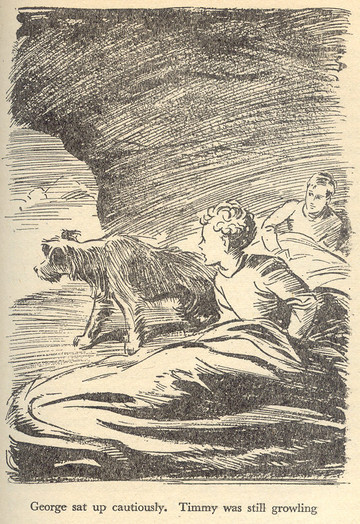
Timmy growls because someone’s moving around downstairs at night. Surely he can’t know it’s Mr Roland from all the way upstairs and it wouldn’t be impossible for Uncle Quentin to have gone down to scribble down a sudden idea, or Aunt Fanny to get something for a headache etc. Even if he knows it’s Mr Roland (smelled him passing the bedroom door, perhaps? and is smart enough to work out that the noise downstairs is connected)  he surely can’t identify sneaking from getting a snack or an aspirin.

George says that she’s never been to a proper school before (to which I assumed she meant she’s only gone to a small village school with one teacher or such like) but Aunt Fanny says George has never been to school.

The carpet in the study goes wall to wall (George doesn’t know if it’s a stone floor) yet they roll it and the hearth rug back to reveal the secret way without moving any furniture.

Why have a false back to a wardrobe in Kirrin Farm and then a door to the secret way behind that? If you wanted to hide you could just go into the secret way.


CRITICISMS ASIDE…

None of my nitpickings are serious. They can be put down to misrememberings, omitted details for speed of story-telling, the fancifulness of installers of secret passages (I mean are there companies in the Yellow Pages doing that sort of thing? Is there even a code of practice? Guidelines? Health and safety laws? I think not on all counts) and so on.

Five Go Adventuring Again is quite different from most of the other books in the series as it has probably the most involvement from adults. Most of that involvement is hindering, but they are a constant presence and that explains the majority of the book being adventure-free. The real adventure is done in a couple of chapters, but there is a good, long, tense build up to it. The winter setting also helps distance itself from the mostly warm adventures of spring, summer and autumn.

This is one of those books (you can find this in films TV shows and pantomimes too) where you’re shouting at the oblivious characters for crying out loud can’t you see he’s a bad guy? and open your eyes, he’s manipulating you and sometimes he’s behind you!! It’s quite satisfying when everyone realises George has been right all along but I always wish they grovelled and apologised a bit more because the poor girl deserves it after all she goes though.


Next post: Five Run Away Together

We also have two another reviews of Five Go Adventuring Again, one by Chris and one by Poppy.

Posted in Book reviews | Tagged , | 5 Comments

Fiona’s 10 facts about the Adventure Series and me

A way, way back when the blog was relatively new Stef and I both wrote 10 facts about the Famous Five and ourselves. I’m now going to do the same for the Adventure Series.


1. The Circus of Adventure is my favourite in the series, though it seems to be quite low down on most people’s favourite lists.


2. I had some hardbacks and some Armada paperbacks when I was younger, and I was mortified that my mum had used felt-pen to colour in several pictures in The Valley of Adventure.


3. My sister borrowed The River of Adventure from the school library and then dropped it down the toilet. We bought the school a new copy and kept the water-damaged one which my mum covered in blue-and-white floral wrapping paper as the cover was ruined.


4. While Dinah clearly over-reacts to Philip’s pets I have to admit I am often on her side. I would not like beetles or spiders crawling over me, but I wouldn’t mind a mouse or (pet) rat quite so much as long as it wasn’t living inside my clothes.


5. One of my all-time favourite Blyton moments is “don’t forget Bill Smugs”, at the end of The Mountain of Adventure.


6. Bill and Jack feature in the fan-fiction universe Stef and I have created, Anatoly works for Bill, and through that they meet Jack who is a professional photographer.


7. I only watched the TV series (both the full series and the series based on The Castle of Adventure) as an adult and I thought they were both quite poor, though the full series was by far the worst.


8. When I first read The Circus of Adventure I believed that Tauri-Hessia must have been a real place, and was quite disappointed later when I discovered it wasn’t. In fact I’m still mildly disappointed even now!


9. It took me a long while of reading before I realised it was Dinah (a name I’d never seen before) and not Diana, and even longer after that before I could read it without having to correct myself.


10. I really, really wanted Jack to find a Great Auk and I was irritated by Bill and the others being so negative about his chances (even though I know they were right).


So those are mine, what would yours be?

Posted in Personal Experiences | Tagged , , , , , , , , | 13 Comments

Monday #279

Ten facts about the Adventure Series and me

and

Five Go Adventuring Again

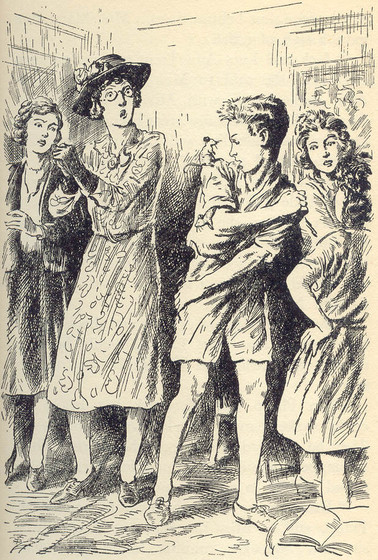
Amelia Jane had a lovely time all by herself. She snipped a hole in the curtains, and then she snipped another! Then she went to the hearth-rug and cut a whole corner off that! Then she found Nurse’s handkerchief on the floor, and do you know, she cut it into twenty-two tiny pieces. It was one of Nurse’s best hankies too, with a pretty lace edge. But Amelia Jane didn’t care about that! Then she went to the carpet and began to snip little bit of it here and there.

Amelia Jane is extremely naughty in the first story in Naughty Amelia Jane.

Toyland, where Noddy lives, is a whole world full of weird and wonderful towns and villages. There is Bouncing Ball Village where the bouncing balls live, Golliwog town where the Golliwogs live, Rocking-Horse Village is full of rocking horses, Humming-Top Village, Wooden-Engine Village, Dolls-house Town, Skittle Town, Clockwork Mouse Town, Toy-Cat Town, and countless more besides. Noddy stays in Toy Village where toys of all kinds live.

Posted in Blog talk | Tagged , , , , , | Leave a comment

Noddy and the Case of the Toyland Mischief Maker

A while back I watched an episode of this show Noddy and the Case of the Broken Crystal Memory Game and wrote a bit about the series in general. Then this week I happened to be browsing the children’s channels to find something for Brodie and Noddy happened to be on. So naturally I chose that, and we watched it. I thought I might as well review it too!


When Big Ears’ teapot goes missing, Noddy is surprised to find it hanging from a lamppost. And when Bumpy’s kennel goes missing too, it’s clear there’s a mischief-maker in Toyland. Noddy needs to investigate before Toyland descends into chaos.


This is episode 29 of the series but I don’t think I will have missed too many important plot points in skipping 27 episodes.

As Channel 5’s episode description says the episode starts with Big Ear’s losing his teapot. He and Noddy are baffled, and briefly distracted by some very annoyingly voiced unicorns (my little pony-like creatures) who want to play a game with them.

They decline and Noddy breaks out his binoculars and spots the teapot at the top of a lamppost. Big Ears in the books is a sensible and mature voice of reason against Noddy’s silly youthfulness so it’s jarring to hear him say ‘Huh, I don’t remember putting it there.” Of course you didn’t put your own teapot on the top of a lamppost and then forget about it!

They then notice that Bumpy Dog’s kennel has been moved on top of a playground roundabout.

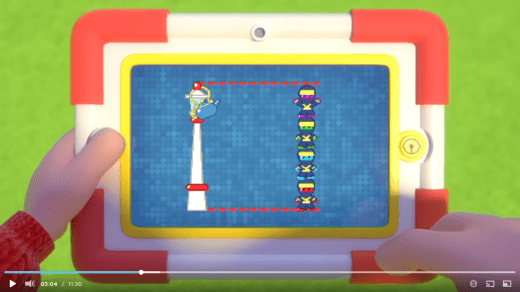
They ponder who could have put the hat on the lamppost; someone very tall, or perhaps very good at climbing. Noddy uses his tablet to examine and rule out a few possibilities before landing on the ninjas.

Yes, the nostalgic world of Toyland is now home to some ninjas. The ninjas, being ninjas, hear they are being talked about and turn up to deny they are the guilty party and retrieve the teapot and kennel.

Noddy then spots a builder’s hard hat on another lamppost and decides they are the next suspect. After that, his next suspect is Deltoid as his bike pedal is found beside the builder’s site, and a wall which has had bricks removed to form a smiley face.

Just like the ninjas and builders, Deltoid denies being the mischief maker.

Honking horns draw Noddy’s attention outside where the mother of all traffic jams has formed with hundreds of identical vehicles (apart from his own car and one driven by a cat). The mischief maker has ramped up his or her reign of terror. Dun dun dun.

The traffic lights have been covered by some sticky putty, sticky putty with hoof prints in it. Can you solve the mystery?

Noddy can – and actually he solves it when the Clockwork Mouse says Who would dare do such a thing? and Noddy remembers the unicorns saying something about a dare game earlier. But he still examines the putty with his magnifying glass and takes a photograph with his tablet, which analyses the shape of the print and matches it to the unicorns.

The unicorns have been playing The Dare Game. They are surprised and dismayed that they’ve upset anyone. Noddy ‘solves’ the problem by inviting everyone to join in the dare game with more sensible dares.

It turns out the unicorns are called Naughticorns which pretty much seals their fate as trouble makers! If I’d known their proper name (and had seen the first minute of the episode) I would probably have identified them as the mischief makers right away.


At least Brodie seemed to enjoy it!


Brodie sat and more or less watched the whole episode, unfortunately he wasn’t able to offer a better review than boof. If he had, it would probably have been along the lines of it had lots of bright colours and interesting sounds so I liked it.

Mummy, however, is a lot fussier.

I knew what to expect having seen an episode already, but I still get disappointed by the smooth, shiny computer animated nature of everything, and the inane stupidity of all the characters. I know it’s aimed at very young kids but there are programmes who manage not to infuriate me – Hey Duggee and Ben and Holly’s Little Kingdom for example.

Some parts of Toyland look good (I like Deltoid’s house in the first episode) and in this one we see ‘downtown’ Toyland with lots of building block buildings. However the cars are completely uninspiring and don’t even look like toys, they look like cheap computer animated cars.

Big Ears at least still has a toadstool house, but it’s not a real toadstool anymore.

The general story-line was fine, though, with a reasonable series of suspects each getting ruled out.

I think I will have to learn to love it if Brodie is going to like it – I’m keen to foster a love of Enid Blyton in him, even if that means watching lots of Noddy: Toyland Detective.


Posted in Blyton on TV | Tagged , , | Leave a comment

July 2018 round up


WHAT FIONA HAS READ

I read a lot this month, though there were quite a few short books. I checked out a load of Dr Seuss books from my work and read them for the first time – they didn’t have the best one, Green Eggs and Ham, though!

I only have four more to go to reach my goal of 52, maybe I should increase the target?

  • Outlander (Outlander #1) – Diana Gabaldon
  • All Together Dead (Sookie Stackhouse #7) – Charlaine Harris
  • Virgins (Outlander #0.5) – Diana Gabaldon
  • A Spell of Witches (The Belfry Witches #1) – Kate Saunders
  • Goodnight Moon – Margaret Wise Brown
  • Fox in Socks – Dr Seuss
  • Oh the Thinks We Can Think – Dr Seuss
  • Horton Hears a Who – Dr Seuss
  • The Foot Book – Dr Seuss
  • If I Ran the Circus – Dr Seuss
  • From Dead to Worse (Sookie Stackhouse #8) – Charlaine Harris
  • The Minpins – Roald Dahl
  • Dead and Gone (Sookie Stackhouse #9) – Charlaine Harris

I’m also still reading:

  • Five Go Adventuring Again – to be reviewed
  • Dragonfly in Amber – (Outlander #2) – Diana Gabaldon

WHAT FIONA HAS WATCHED

  • Some of the World Cup
  • Hollyoaks
  • Brodie’s new favourite, Hey Duggee
  • Older episodes of QI on Netflix
  • Some of the new series of The Highland Midwife
  • The first few episodes of Picnic at Hanging Rock

WHAT FIONA HAS DONE

  • Taken part in a penguin hunt in aid of Maggie’s I’ve visited 47 so far.
  • Started getting organised for Brodie’s first birthday (!!)
  • Borrowed more books from my library than I can reasonable expect to read
  • Taken Brodie to a deer centre
  • Had Stef up to stay and taken a few day trips with her, including St Andrews and the local wildlife park where they have baby wolves!


Posted in Personal Experiences | Tagged , , , , , | 1 Comment

Monday #278


Noddy and the Case of the Toyland Mischief Maker

and

July Round Up

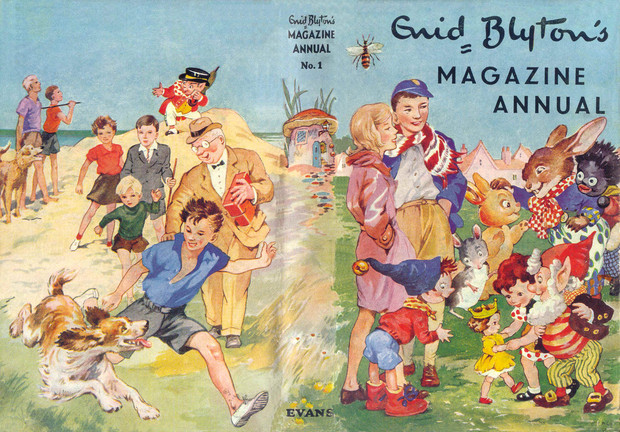
Enid Blyton’s Magazine Annual #1 has 15 stories and picture strips all specially written for the annual. It includes stories from famous series like the Famous Five (A Lazy Afternoon) and Noddy (Come Along, Little Noddy and Look Behind You, Little Noddy), plus Amelia Jane, Mr Meddle, Mr Twiddle, The Three Golliwogs, Brer Fox, Josie Click and Bun and The Secret Seven. There are also some riddles, puzzles and simple craft ideas scattered through the book, and the end papers feature a Famous Five board-game to keep you entertained after you’ve finished reading all the stories.

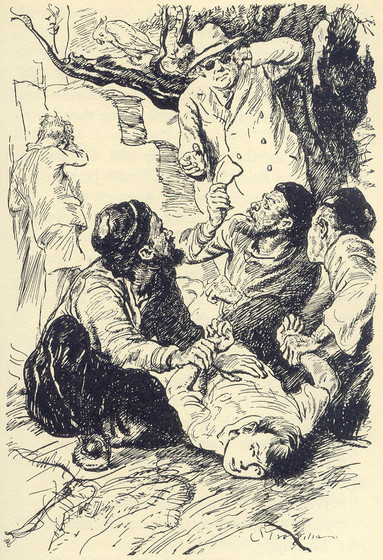
Mr Eppy is a curious fellow, with two different coloured eyes. He and his wife are taking a cruise in The Ship of Adventure with their nephew Lucian, and while he seems like a perfectly normal chap, the Mannering/Trent children have a bad feeling about him. Of course, it turns out that they are right and he is a cold, calculating man not above using his nephew as a spy and stealing a treasure map from four children. He is also evil enough to try to trap them underground so that he can be the one to recover the treasure.

Posted in Blog talk | Tagged , , , , | Leave a comment

Blyton’s homeliest secret homes

There are many sorts of homes in Blyton’s books. Many of them are perfectly average (for the times they were set) rural or village cottages, farms, suburban houses, boarding schools and so on. There are also the slightly more unusual – caravans, narrow-boats – and the very unusual such as castles, palaces and the insides of mountains. And then there are the places that in ordinary view would never be classed as a home, and yet are turned into wonderfully comfortable places to live when the need arises.

There are also lots of temporary lodgings and camp-sites such as the cellar below Two Trees (Five on a Hike Together), the rooms in various farm-houses, bed and breakfast type establishments and relative’s homes and tents galore, but I want to look at the semi-permanent cosy little homes created out of what would not normally be considered a reasonable place to live.


CAVE-DWELLING

Caves often come in handy in Blyton books – they are the perfect place for a secret smuggling tunnel (The Secret of Spiggy Holes, Smuggler Ben, The Island of Adventure, Five Go Down to the Sea to name but a few), storing stolen goods (Five Go Off in a Caravan) and they can be a good place to hang out, or explore (Secret Seven Win Through, Five Go to Demon’s Rocks). They’re not really designed for living in (not these days anyway), yet a few groups of Blyton children make some remarkably comfortable homes in caves…

Five Run Away Together

As the title suggests, in the third Famous Five book they run away – from the Sticks at Kirrin Cottage but it’s not the whys we are looking out, it’s the wheres.

Well, of course they head to Kirrin Island, but then they have to find somewhere to live for however long it takes Aunt Fanny to get out of the hospital. They consider and veto the dungeons (too cold and dark), the only room in the ruined castle (but the roof has now fallen in) and even the old wreck (too rotten, dark, slimy and smelly) and they are stumped for a bit. George is adamant there is nowhere else, she knows every inch of the island, and yet, they then spot a dark hole in the cliff behind the wreck that looks suspiciously like a cave.

And a cave it is! So secret, even George had never set foot in it before. It has all the mod-cons for a cave – a soft sandy floor, a rocky ledge which makes a good shelf for their cans and things and a hole in the roof which is part skylight, part chimney and part doorway. It lets in light and fresh air, it lets smoke from the fire escape and with a rope tied to a gorse bush it provides a quicker way in and out than clambering over the slippery rocks and low tide. Best of all – nobody is ever going to spot it!


The Valley of Adventure

There are two cave-homes in this book. The first we see is the smaller of the two, known as Fern Cave. Fern cave is cool and mossy, located near the waterfall which provides the children with fresh drinking water. The large overhanging fern at the entrance keeps out the noise of the waterfall, and the misty spray as well as hiding them from view. The floor is softly mossy and there’s a handy rocky shelf just like in the Kirrin Island cave.

It doesn’t have a skylight, but it does have some other nifty features. At the back is a narrow tunnel which leads to the Cave of Echoes, and then on to a ledge behind the waterfall. It also leads to the other cave(s), but that’s discovered from the other end much later.

The other cave(s) are inhabited by glowing stalagmites and stalactites, statues wearing fine jewellery, old paintings, old books and maps, fine golden treasures and then finally a little old couple and Martha the hen.

This set of caves is well hidden, with the entrance a hole halfway up a rocky wall. There are doors between some of the caves, the first being an enormous studded thing, and the last being the little door which leads to the old couple’s kitchen. They have a whole little house in the caves, and they never leave but when it is fine weather they can go out another hole onto a large, sunny ledge.

The old couple’s cave is certainly the best furnished of all the cave-homes as it has a proper bed and a kitchen table and so on, so it is probably the homeliest if a bit oppressive being stuck inside so much!

The Secret Island

The Arnold children and Jack have a few places to live on their secret island, but when winter comes it is the caves they turn to.

The first cave is a larger, open one which becomes the sitting room and bedroom, with a cheerful warming fire at the entrance. Then the little cave at the back, accessed through a narrow passage is the store-room and hiding-place should anyone come to the island. They make it comfortable by hanging a lantern from the roof and rigging up some wooden shelves for their books and games. Jack fashions wooden stools from bits of tree trunk and a wooden table too, while Peggy sews together rabbit skins to make a blanket they take turns having on their beds of bracken. They even bring up fine sand from the beach to spread on the floor.


TREE-DWELLING

Trees are mentioned in a few books as fun things to climb (Those Dreadful Children), useful for getting in windows (The Secret Room, The Secret of Cliff Castle) and as places to build a tree-house (Well Done Secret Seven). Some Blyton characters even live in trees.

The Secret Island

In addition to the caves, the children make their very own house out of some willow trees. They bend the trees over so they meet as a roof, then they plant cut pieces of willow into the ground for the walls. They stuff heather and bracken in the gaps to keep it weather-proof and even hang a door and make a partition wall in the middle. The best part of Willow House is that planted willow branches start growing again so the walls all sprout leaves!

Hollow Tree House

When Susan, Peter and Amanda found a huge and hollow tree in the middle of some woods, they visited it a lot to play as it was great to climb up into the branches and hide, pretending it was a ship etc. When Susan and Peter run away, though, they turn it into a little house. There’s a ridge in the trunk inside that forms a natural shelf for their clock and other small belongings, and it’s quite dry and warm inside. It gets a bit stuffy sometimes so they cut a hole in the most rotten part of the trunk to form a window, draping it with a curtain of leaves and moss.

The Enchanted Wood / The Magic Faraway Tree

Many people (none of them human, as far as I know!) live in the Faraway Tree. The Angry Pixie has a little house, as do Dame Washalot, Silky and Moonface to name a few. Moonface’s is one we see the most of, and is a round little house with the usual home comforts, and also a door leading to a slippery-slip which is a slide taking you right to the bottom of the tree very quickly. The children also visit Silky’s home quite often for google buns and pop biscuits.

The Little Tree-House (Josie, Click and Bun)

Josie (a doll), Click (a clockwork mouse) and Bun (a rabbit) live inside a tree too. It is a hollow oak tree in which they discover a door with a knocker which leads to a little hall.It has a round kitchen with a little window, and some tiny stairs leading to a round bedroom with another little window. They furnish it with furniture bought at a goblins’ market and Josie sews up curtains and bedding.


CELLAR-DWELLING

The six bad-boys of The Six Bad Boys initially use an old cellar as a meeting-place, and end up spending a lot of time there – escaping various unpleasant homes. Bob even ends up living there for a time when his mother goes away. Usually it is girls who spend time prettifying their surroundings in Blyton’s books but the boys do what they can to make it homely. They bring in candles and an oil-stove, and at Christmas there are decorations and food.


Posted in Locations | Tagged , , , , , , , , , , | Leave a comment

Miss Grayling’s Girls – an introduction

Miss Grayling is the headmistress at Malory Towers. She is ultimately responsible for all the girls at her school, down to accepting their applications to be pupils and expelling them if they cannot be kept on. She is quiet, dignified and well-respected amongst the girls and teachers and for the most part she is a background figure, seen only at the start of term to welcome new girls, and on the rare occasion a girl has done something bad enough to be sent to the headmistresses’ office. This doesn’t happen too often, most transgressions are handled by the class teacher or the form mistress, and little is escalated to the top. There is a slight horror at the idea of being sent to the headmistress, although she is not a monster nor a terrifying figure, the girls know it would be a very serious matter and they could be in real trouble.


ARRIVING AT MALORY TOWERS

Girls who arrive at Malory Towers at the start of term (whether they arrive for first form or higher up the school) all get taken to the headmistresses’ office for what seems to be her standard inspiring speech. Darrell gets it in her first year, and in her last she takes some new pupils to Miss Grayling and hears the speech again, as a nice bookend to her time at Malory Towers. She remembers being a quaking first-former hearing those words and hoping to do her best to fulfil them, and by the last book she is a strapping sixth-former who hopes she has done the school proud.

After a few words to each girl asking them their names and so on, she says to them all:

One day you will leave school and go out into the world as young women. You should take with you eager minds, kind hearts and a will to help. You should take with you a good understanding of many things, and a willingness to accept responsibility and show yourselves as women to be loved and trusted. All these things you will be able to learn at Malory Towers – if you will. I do not count as our successes those who have won scholarships and passed exams, though those things are good things to do. I count as our successes those who learn to be good-hearted and kind, sensible and trustable, good, sound women the world can lean on. Our failures are those who do not learn these things in the years they are here. It is easy for some of you to learn these things, and hard for others. But easy or hard, they must be learnt if you are to be happy, after you leave here, and if you are to bring happiness to others. You will get a tremendous lot out of your time at Malory Towers. See that you give a lot back.

miss grayling malory towers

The feminist in me is cringing a little as I read between the lines there about women being sensible and dependable home-makers as more important than them gaining qualifications, but I will leave that aside, she’s not encouraging them to be vapid airheads as long as they get a good husband after all. I think she means that not everyone will be an academic genius in every subject, but as long as they work hard they will learn skills that will stand them in good stead. The ability to work hard and try when something is difficult is sometimes just as important as actually learning a language or to play an instrument.

So Darrell and most of the other girls who start at Malory Towers get that speech, and Darrell immediately longs to be a Malory Towers’ success. She, of course, does become a success, along with Mary-Lou and Sally. In her sixth year she hears the exact same speech given to some new girls, and at the end Miss Grayling adds:

Six years ago I said those words to Darrell. She is one who has got a great deal out of her time here – and there is no one who has given more back than Darrell has.

Beyond this, it seems that Miss Grayling has some input into all the girl’s schooling. Most pass through without her having to make any big decisions or even speaking to her again but I think she follows them all carefully and is ready to step in if necessary.


A VARIETY OF GIRLS

Not every girl at Malory Towers is a Darrell (or a Mary-Lou or Sally). Others are successes in a more modest way, and some could only be described as disasters.

Being a private boarding school Malory Towers – and Miss Grayling – can be somewhat picky about its intake. Most girls, I assume, simply apply and are accepted based on their school records and a character reference or letter from their parents etc. There are some more special cases at Malory Towers, though, where Miss Grayling intimates she has taken on girls she otherwise wouldn’t have, to give them a chance at making something of themselves, to turn their life around, or because they have nowhere else to go.

Even out of the ‘normal girls’ not all of them want to be a Darrell, though. I’m sure some don’t care, and others already believe themselves so fabulous that they don’t think Malory Towers can offer them much. Either Miss Grayling couldn’t judge them fully based on their applications, or she decided to give these girls a change too.

I will look at some of Malory Towers successes, failures and the in-betweens in my next few posts.


Next post: Miss Grayling’s Girls part 2: the failures

Posted in Characters | Tagged , , , , , | 11 Comments

Monday #277

Miss Grayling’s Girls

and

Blyton’s homeliest secret homes

Just at that moment the old man came into the room again with a jug of water. How he stared! But, before he could do anything, the chest-of-drawers rose up in the air,  knocked the water out of his hand, almost pushed him over, and squeezed itself out of the door.

Just another normal day in the life of the Wishing Chair!


Five Go Down to the Sea is the 12th Famous Five adventure. It takes place around Tremmanon Farm in cornwall, where the Five are politely regarded as furriners. It has all the usual elements of a good mystery/adventure – a suspicious man sneaking around in the night, tales of old wreckers, a secret passage, travelling performers and a pantomime horse. Well, the last one might be specific to just this book, but old Clopper adds a lot of amusement, and is tied up in the solving of the mystery too.

Posted in Blog talk | Tagged , , , , | Leave a comment

If you like Blyton: The Borrowers by Mary Norton

There are five books about the Borrowers (and one short story) all written by Mary Norton between 1952 and 1982, but this post will focus mostly on the first in the series.

    • The Borrowers (1952)
    • The Borrowers Afield (1954)
    • The Borrowers Afloat (1959)
    • The Borrowers Aloft (1961)
    • Poor Stainless (short story, 1966)
    • The Borrowers Avenged (1982)

BORROWERS

Borrowers are creatures that look just like humans – if humans were only a few inches tall, that is. They live in human’s houses, under floorboards, behind walls. They ‘borrow’ all sorts of things from the ‘human beans’ (whose sole purpose is to provide for Borrowers’, in their minds) like blotting paper for their carpets and thimbles for their cups.

Borrowers are a rare breed by the time the first story starts. The Borrowers the books are about is the Clock family – so named because they live under the clock in the hall. There used to be a huge number of borrowers before that, though. The Overmantles who lived over the mantle in the morning-room (they left because the morning-room stopped being used and otherwise they would have gone cold and hungry), the Rain-Pipes from the stables, the Harpsicords (originally the Linen-Presses before they moved to the drawing room) and so on. But times had changed in the big house – less people, less parties, and less borrowings. Now only the Clocks are left, and even though it’s just the three of them, Pod, Homily and Arrietty, there’s still the risk of being seen, which is the worst thing that could ever happen to a Borrower.


WHAT HAPPENS WHEN A BORROWER IS SEEN?

When Uncle Hendreary was seen (on the drawing-room mantlepiece, by a maid) he and his family of Borrowers leave the big house for a badger-set across the field.

This is revealed to us near the start of the book when Homily and Pod are explaining more about ‘upstairs’ to Arrietty, who’s a teenage borrower and has never been out of their home. Pod, as it happens, has also been seen. There’s an unexpected boy upstairs, and he caught Pod one night as he went to fetch a cup from the dolls’ house in the nursery.

The Boy is a friendly sort, though, and he starts supplying the Clocks with all sorts of trinkets and dolls’ house items that they would never manage otherwise. Homily isn’t best impressed when he starts yanking up her ceilings but when she sees the treasures he brings, she accepts it.

Unfortunately, Mrs Driver, the formidable housekeeper, finds out what is going on and the Clocks have to flee the house, just like Uncle Hendreary’s lot.

There is at least one other Borrower out there – a wild teen by the name of Dreadful Spiller and he helps them navigate their first days out in the open.


LIKE BLYTON?

If you look closely it’s quite different to anything Blyton wrote but there are familiar elements. To the Borrowers The Boy is almost a mythical creature, as are Mrs Driver and Crampfurl the gardener. And to the human beans the Borrowers are equally fantastical characters, so in a way, it’s not that far off from The Adventures of the Wishing Chair or The Faraway Tree – though it’s more serious than whimsical. There’s a real fear for the Borrowers – given the tale of Cousin Eggletina who was presumably eaten by a cat, I’m not surprised. The grown ups are pretty scared of the Borrowers too, likening them to rats or mice and tearing up half the house to get at them.

The second likeness you could make is one of survival akin to something like The Secret Island or The Hollow Tree House. The Borrowers have to survive in secret without help, without getting caught. Everything has to be planned, all borrowing missions are done with the utmost care – like Jack and Mike fetching the cow and items from Jack’s granddad’s farm.

Although written in the early 50s, contemporary to much of Blyton’s most famous outputs, The Borrowers is set earlier. Uncle Hendreary was seen in eighteen-ninety-something, so it must be the turn of the century. Still, it is a sort of period novel in the way Blyton’s are too, a window to the times with the talk of drawing rooms, blotting paper, parquet floors, a world of big houses with housekeepers and gardeners.

I think, like Blyton, Mary Norton knew what children would like. And so she gives us a thrilling tale of the Borrowers’ survival under the floorboards and beyond the house. The could either imagine ourselves as the resourceful, if quirky, Borrowers or the lucky Boy who discovers them. Who hasn’t had an imaginary friend or creature as a child?

The Borrowers’ home is something out of many children’s dreams – a tiny wonderland of objects. Postage stamp portraits, miniature books, thimbles, safety pins, playing cards, little tins, all repurposed for tiny folk. I used to love making ‘pony houses*’ when I was little, shoe-boxes or photo-album boxes turned into tiny houses with all sorts of little objects forming furniture and belongings. The Borrowers are also very amusing creatures, it is said even their names are borrowed from the human beans. Arriety is probably from Harriet, but I’m not so sure about Pod, Homily or Eggletina!

The characterisation is good, we have three very different personalities amongst the Clocks – Pod is sensible but weary, Homily is frazzled and frightened and Arriety is brave, naive and a dreamer. Arriety’s determination to borrow and make friends with The Boy is a big part of their undoing, but you can understand why she would be beyond fed up of living life in the semi-darkness with only a grating to view the outside world from. She’s not like Homily who would be content to never feel grass under her feet or see anything but the same four walls for the rest of her life.


ADAPTATIONS

Like some of Blyton’s books, The Borrowers has been adapted for TV and Film. The BBC did a brilliant two season series in the 90s, featuring Ian Holm (Bilbo Baggins, The Lord of the Rings) as Pod. There has also been an Americanized film with Jim Broadbent as Pod, Tom Felton (Draco Malfoy, Harry Potter) as the added Pea-Green, Arriety’s little brother, and John Goodman as a crazed real estate developer Ocious P Potter. The film doesn’t capture the quaintness of the originals, but it has good acting and some very clever miniature ideas. The main idea of the story is also used for the Anime adaption, called The Secret World of Arrietty. That wouldn’t normally be my cup of tea but I have watched it and I quite liked it, despite it being quite different to the original.

*They were called pony houses because my first one was made for a My Little Pony. Later Cupcake/Jam Pot Dolls and Aladdin and Jasmine Figurines were lucky enough to get cardboard homes, but the name stuck.


Posted in Book reviews, Other Authors, Reading Recommendations | Tagged , , , , , | Leave a comment

Top 11 Famous Five moments

I’ve written plenty about the Famous Five, including putting the whole series into order from my most favourite to least favourite. And now I’ve decided to list my ten favourite moments from the series.

Being 21 books long I can’t mention something from every book, some great titles are strong throughout and I can’t pick out a single ‘moment’. Others are also great all the way through but have standout scenes that stick in my mind. Some are funny, some are frightening and others are simply thrilling. Here’s what I chose (and no I couldn’t narrow it down to 10, again!) Can you guess what I have put in first place?


11

Uncle Quentin can’t get Berta’s name right

Five Have Plenty of Fun

Quentin is often absent-minded and easily confused by anything that isn’t to do with his scientific research. When Berta comes to stay he manages that just fine. But then, due to the threat of kidnap, she changes her name to Leslie and dresses like a boy. This confuses Quentin rather a lot, even though he has been told about it and he continues to call her Berta-er-Leslie. Not long after that Leslie reverts back to being a girl and is then called Jane. Poor Quentin, trying his best, has remembered the name Leslie a bit too late and ends up still getting it wrong.


10

George and Timmy deal with Junior

Five On Finniston Farm

Junior Henning is a very annoying and rude American boy staying with the Philpots at Finniston Farm. He demands breakfast in bed and doesn’t lift a finger to clear up his own mess. Mrs Philpot is desperate for the money Junior’s father is paying so she can’t upset anyone, so George takes matters into her own hands. She and Timmy take up Junior’s breakfast one morning and lets Timmy drag him out of bed, meaning he comes down to the kitchen for his breakfast after that and saves Mrs Philpot at least one job. It’s always good when someone horrible gets their comeuppance, isn’t it?


9

Sooty pretends to have bitten Block

Five Go to Smuggler’s Top

Timmy isn’t allowed at Smuggler’s Top as Mr Lenoir hates dogs, but George just couldn’t leave him behind. This leads to him being smuggled around the big house, and when Block interferes, Timmy bites him. In order to continue the charade that there is no dog at Smuggler’s Top Sooty insists that he must have bitten Block, and that he has a rather nasty taste in his mouth. Sooty goes off to brush his teeth, while Block examines his leg and doubts that the marks were made by human teeth.


8

The Five line up the clues on Gloomy Water

Five on a Hike Together

Having received the mysterious message in the night, the Five of course have to puzzle out the meaning. On a raft, in the middle of Gloomy Water, they must try to align Tall Chimney, Steeple, Tock Hill and Standing Stone. Even with four of them it’s not easy (Timmy, useful as he is, isn’t designed for steering a raft or staring at distant landmarks). Unfortunately for the Five, Dirty Dick and Maggie are on the water too, in a rowing boat, also trying to line up the landmarks. With only two pairs of eyes it’s proving very difficult for them, and there’s a bit of an accidental-on-purpose crash between the two crafts as the Five are exactly where the other two want to be – they just figured out the clues and got there first!


7

A storm throws up the old wreck

Five on a Treasure Island

Against her better judgement George has taken her cousins to Kirrin Island for the first time, and as she had worried it might, a storm blows up. It is an incredible, fierce summer storm and the waves crashing on the island are enormous. In the midst of it Julian goes outside for a look, and the rest follow when he spots a ship lurching towards the rocks. They are horrified as it crashes onto the jagged rocks with a sound of splintering wood, but then as the storm clears and they can see better there’s something very odd about the ship. It’s George who works it out first, recognising the strange ship for what is is, her very own wreck.


6

Julian and Dick get stuck in Clopper

Five Go Down to the Sea

Clopper is the name of the pantomime horse that performs in the Barnies’ shows. Normally containing Mr Binks and Sid, the costume is in three parts and the head is guarded jealously on orders of the guv’nor (because it contains smuggled drugs). At the end of the Barnies’ stay at Tremannon Farm the costume is left unguarded and Julian and Dick decide to have a go. Hearing the Guv’nor returning, they realise they are stuck inside the costume and awkwardly stagger off to seek help. Much to everyone’s surprise, a somewhat unsteady Clopper peeps in at the window while everyone else is eating, and although hot and uncomfortable inside, Julian and Dick leg it when they realise everyone has seen them, with Mr Penruthlan in hot pursuit, thinking it’s a farm horse. Running is too difficult for them, however, and the collapse only to be rescued by a guffawing Mr Penruthlan. The farmer even gives them the costume at the end of the book – making a joke about his two friends who can wear the costume but the only thing they can’t do is work the zip.


5

Julian faces off against the Sticks

Five Run Away Together

In one of his best moments, Julian stands up to the awful Sticks who have invaded Kirrin Cottage. Mrs Stick is the cook (and a good one at that), while her husband is lazing about on leave from his ship. Despite cooking wonderful food, Mrs Stick isn’t feeding the Five well, so Julian goes down to sort it out. He helps himself to all the tastiest morsels from the fridge and flummoxes the tongue-tied Mr Stick with a few deft words. (I have included a few of those words in my post about favourite quotes.)

julian mr stick five run away together


4

 Julian and Dick ring the lighthouse bell

Five Go to Demon’s Rocks

Near the end of this book the Five plus Tinker and Mischief are trapped inside the lighthouse, and the weather is fairly terrible. They have no phone so in order to seek help Julian and Dick decide to try to get the lighthouse working again. The great lamp is lit and  they lift the heavy bell out onto the balcony -Julian nearly going over the railing in the process – and take turns at striking the bell. The whole village hears it, and are very surprised as it has been over 40 since the lighthouse has been in use, since it was replaced by a bigger, more modern one along the coast.


3

Morgan calls his dogs

Five Get Into a Fix

Morgan, the son of Mrs Jones at Magga Farm is rather dour and taciturn, and the Five even suspect he might be up to something. However, come the end of the book the Five, plus Aily and Morgan are trapped underground by the real baddies, and only Morgan’s tremendous voice can save them. He shouts on the dogs once, and Llewellyn Thomas mocks him, saying that the dogs couldn’t possibly hear him from so far underground. Morgan shouts again, giving it his all and his voice cracks at the end. Lewellyn Thomas is not smug for long though, as soon they can hear the sound of seven dogs coming to rescue their master.


2

 Dick gets a secret message in the middle of the night

Five on a Hike Together

Dick is sleeping in an old shed at what he thinks is Blue Pond Farmhouse (spoiler, it isn’t!) when he’s woken by a tapping at the window. A bullet-headed man whispers his name and a baffling message to him – repeating it to make sure he’s got it – and then disappears.

Two Trees. Gloomy Water. Saucy Jane. And Maggie knows too.

He knows it isn’t a dream as a little bit of paper is pushed through a crack in the window, bearing the same message. The fact that the man called Dick’s name makes this all the more puzzling.

dick five on a hike together


1

The ash tree falls on Kirrin Cottage

Five Go to Smuggler’s Top

This is my all-time favourite. There’s a terrible storm blowing around Kirrin Cottage and Julian hears some terrible creaking in the middle of the night – the enormous ash tree in the garden is about to come down. He then has to wake the household up, and they only just get downstairs in time before there is an almighty crash. The girls room is destroyed and they would most likely have been killed had Julian not acted.


What would your favourites be?

Posted in Personal Experiences | Tagged , , , , , , , , , , | 14 Comments