January 2022 round up

Somehow it is not only 2022 but it is the end of the first month of 2022.


What I have read

I haven’t started off very well towards my goal of 100 books in 2022, in fact all month the little counter on the Goodreads homepage has been telling me how many books I am behind by. Right now it’s at 3 books behind but at one point it was 4.

My excuses are that I spent the first week of the month not well and then I have mostly been reading one very long book since then!

What I have read is:

  • Last Scene Alive (Aurora Teagarden #7) – Charlaine Harris
  • Call the Midwife (Call the Midwife #1) – Jennifer Worth
  • Five Get Into a Fix – reviewed here
  • Poppy Done to Death (Aurora Teagarden #8) – Charlaine Harris
  • Go Tell the Bees That I Have Gone (Outlander #9) – Diana Gabaldon

And I’m still working on:

  • The Borrow a Bookshop Holiday – Kiley Dunbar
  • A Batchelor Establishment – Isabella Barclay (aka Jodi Taylor)
  • Cookie – Jacqueline Wilson

The Outlander book was the long one – coming in at 902 pages!


What I have watched

  • Hollyoaks
  • The last rounds of Only Connect, and more House of Games.
  • I’ve finished season five of Charmed and I’m nearly at the end of season six.
  • The Christmas special and what’s been shown so far of Call the Midwife series 11
  • We also watched Encanto as a family

What I have done

  • Completed the two jigsaws that I got for Christmas and started one with Ewan that I got him for his Christmas.
  • Went for walks in the Botanic Gardens, on the beach and in any bits of woodlands that are actually still open after all the storms, and found a few geocaches along the way. I also collected various more bits of sea glass and pottery, then organised them in a new box I bought.
  • Helped my mother in law build her Lego bookshop set, and installed a light set in it as well.
  • Celebrated Burns night twice – first at our house with potato and leek soup, veggie haggis pie, veg, yorkshire puddings and cranachan (plus Irn Bru jelly babies and tablet). Then a week later at my sister in law’s with veggie haggis tacos and cranachan.
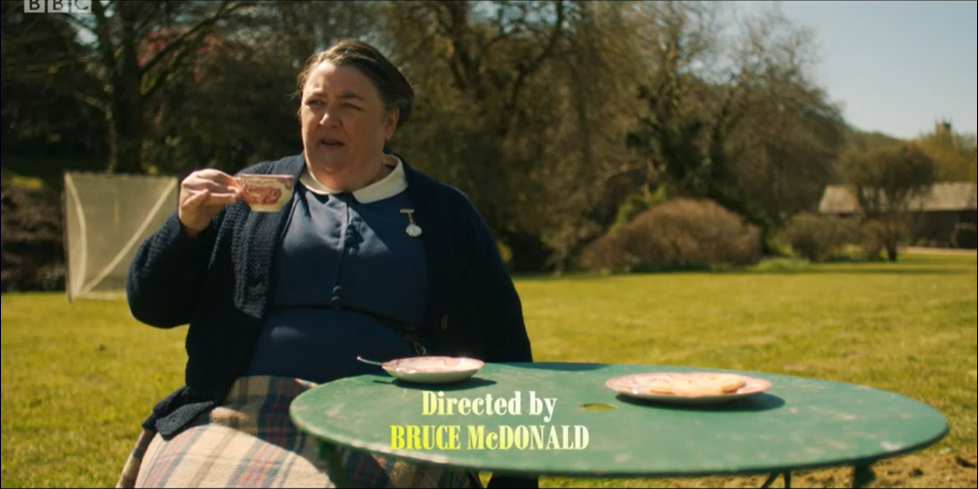
  • Had a fancy afternoon tea at a hotel for my mum’s 60th birthday

What did your January look like?

Posted in Personal Experiences | Tagged , , , , , | 2 Comments

Monday #461

With the first month of 2022 almost over already this week will be a very round one, by that I mean I am posting two round-ups, one rather overdue.

January round up

and

2021 birthday and Christmas present round up

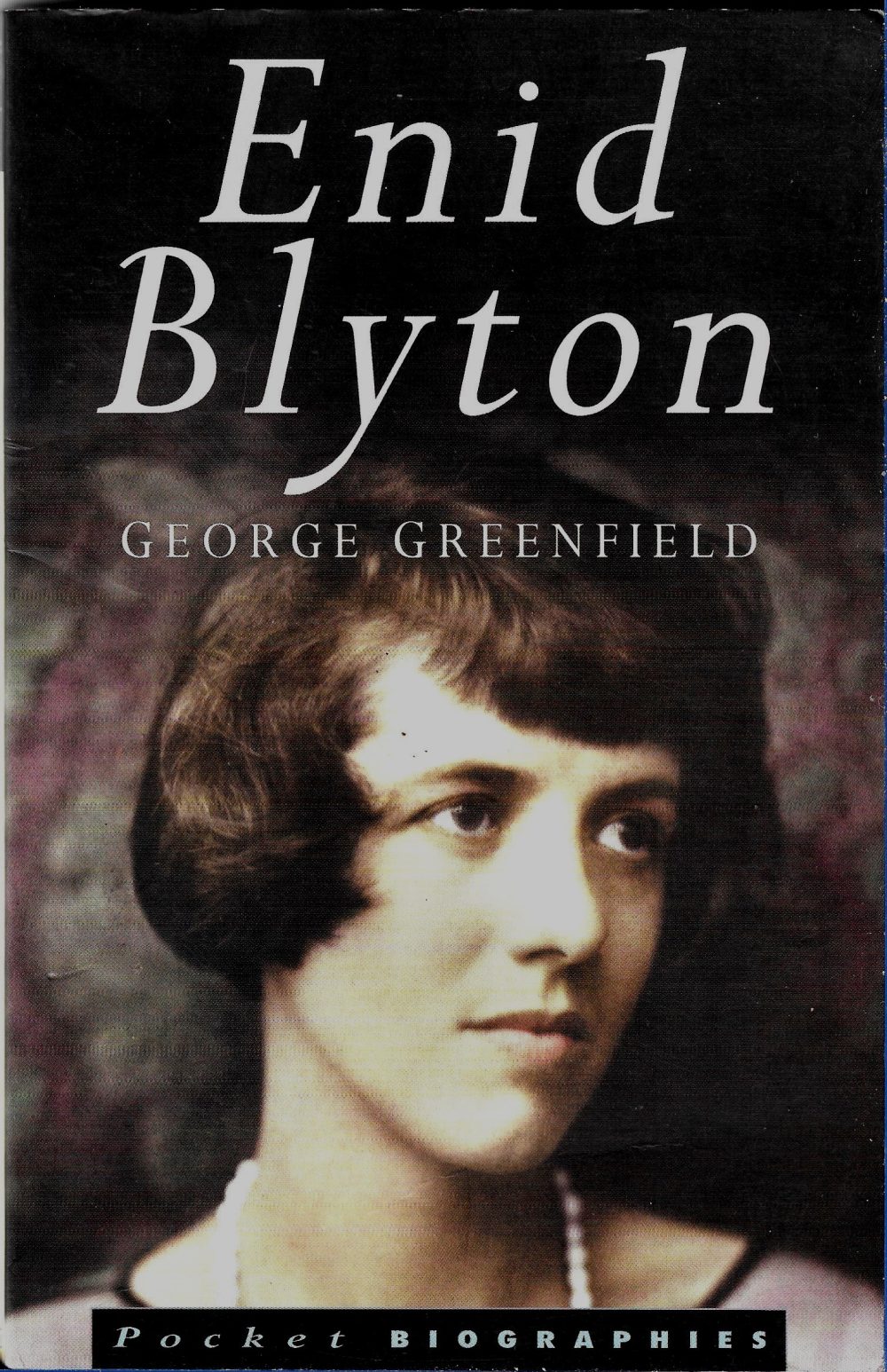
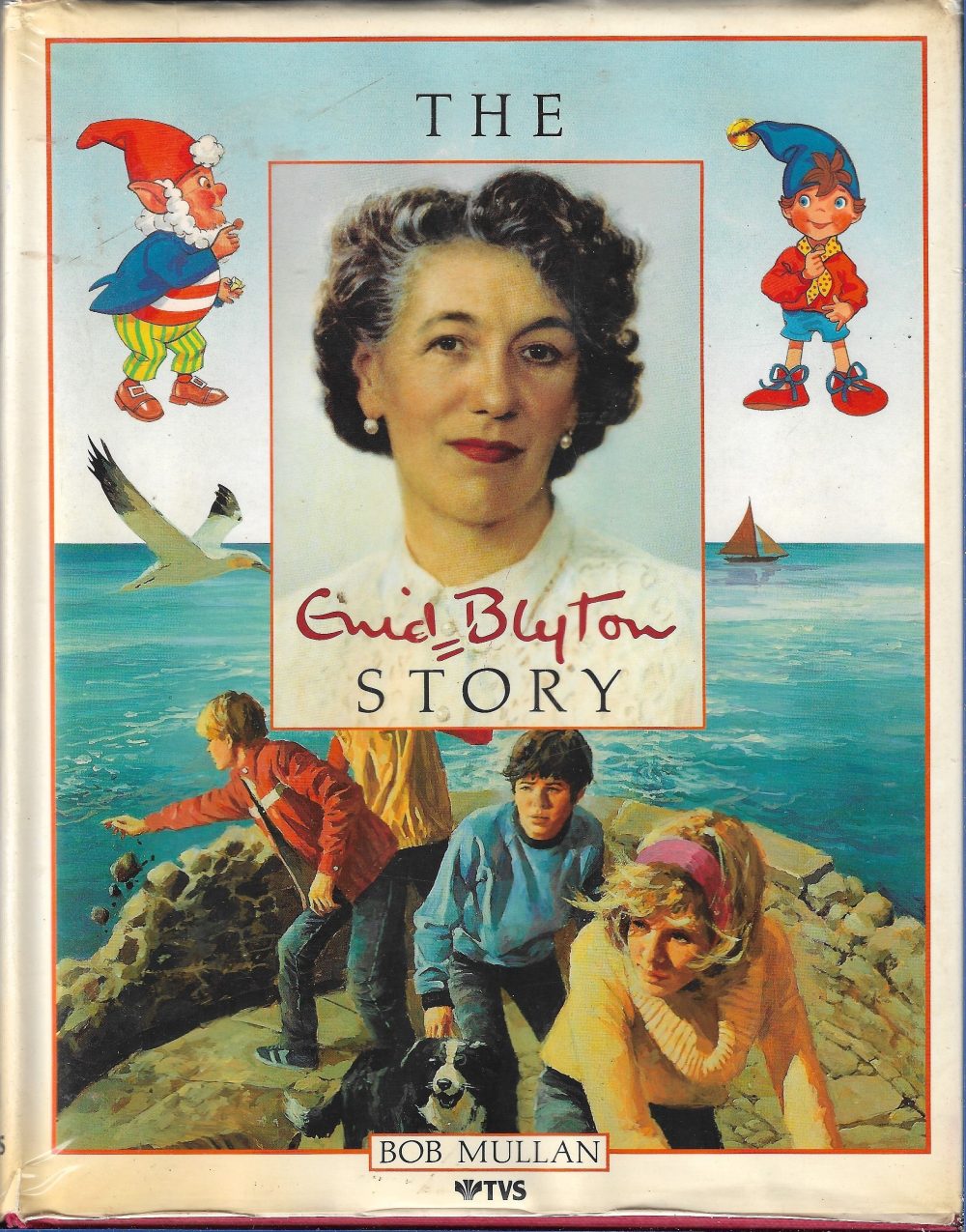
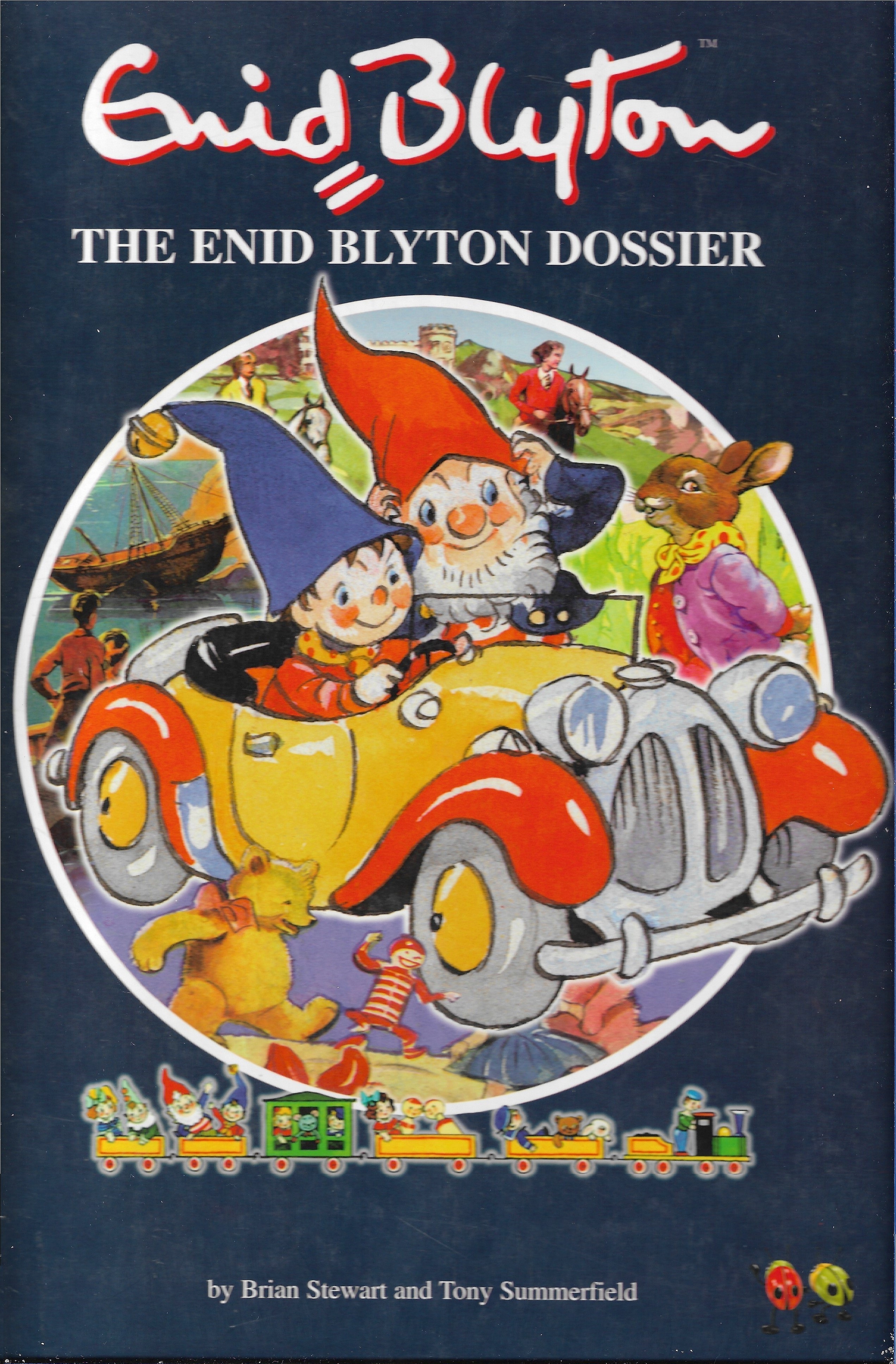
Enid Blyton –  A Literary Life by Andrew Maunder has finally made it into my hands (long story) so I think it deserves to be book of the week. I highlighted it in my Christmas gift guide for 2021 as it just came out at the start of December. I quoted from the blurb then and I’ll just do so again now:

This book is a study of the best-selling writer for children Enid Blyton (1897-1968) and provides a new account of her career. It draws on Blyton’s business correspondence to give a fresh account of a misunderstood figure who for forty years was one of Britain’s most successful and powerful authors. It examines Blyton’s rise to fame in the 1920s and considers the ways in which she managed her career as a storyteller, journalist and magazine editor.

Naturally I plan to read and review this when I get a chance!

Posted in Blog talk | Tagged , , , | Leave a comment

Five Get Into a Fix part 3

Having used up an entire post just to talk about Aily, here are my thoughts about the solution to the mystery, my various other comments and of course the nitpicks.


The solving of the mystery

I was actually mildly disappointed when I read the final chapters again, I had forgotten the Five’s various failures in solving the mystery. Naturally spoilers will occur here.

They did do well in that they worked out what was going on with Mrs Thomas and got into the house to her. It’s not their fault that she was unfit to escape with them.

They did not do well, however, as they made rather a lot of assumptions (more on that later) which just so happened to lead them right, but then foolishly got captured and jeopardised someone else’s investigation.

Their interest in the Old House really begins when they see the strange shimmerings that appear over it and night, and they feel the judderings that travel across the hills to their cabin.

They then hear from Aily that there is an old woman and many men in the house, even though the caretaker has shooed them off saying he is the only one there. Incidentally Julian’s investigative skills reach as far as asking did he sound like a caretaker? at this point. I’m not sure exactly what caretakers sound like, but George notes that he didn’t sound Welsh – and their assertation is that it would be odd for the owners not to hire a trustworthy local turns into them deciding that its all rather fishy.

They fail to imagine that the owners might have hired a non-Welshman for any number of reasons. Nobody suitable in the village, they hired a friend or relative… or he could have been born in Wales but raised elsewhere, or have only moved to Wales in the past few years and not yet developed an accent.

It’s actually a bit tiresome that the Five’s rubbish logic is so often right! Especially when all the other odd stuff isn’t worth looking into, but a non-Welsh caretaker is.

Anyway, they interrogate Aily and get hold of one of the notes and it does not say that Aily is a good girl.

“I want help. I am a prisoner here, in my own house, while terrible things go on. They have killed me son. Help me, help me! Bronwen Thomas.”

Something about the way the note is written is a bit off to me, it doesn’t read very naturally. But then again Mrs Thomas is probably very distressed. It’s also possible that she is ‘off her head’ as the rumours go – it would have made it easier for her to be misled and held prisoner.

The Five’s logic fails again when they discuss Mrs Thomas being ‘off her head’. That’s a horrible way to put it (but not by 1950s standards) and I’m only using it myself as it’s a direct  quote. They decide they must find out for themselves if that is the case. I know that social care has changed a lot in the past 70 years but surely the police would be in a better place to make that judgement? Either they go and find her held prisoner, or they go and find her mentally unwell and get a doctor to her. Or they find her mentally unwell, but well cared for, and the notes are just part of her delusions. I cared for many ladies with dementia as a student nurse and recall the way that one woman would swear blind that there had been a terrible ruckus in the night with screaming and shouting – and there had been no such thing. Another was convinced that everything we served her contained poison (and obviously it didn’t, even if hospital food isn’t always very appetising).

They also don’t consider speaking to Mrs Jones who may know about the woman’s situation.

But thankfully Julian sees sense and decides that they must speak to Morgan. I mean, obviously only a man could know what to do.

Unfortunately Morgan is not very helpful. He can’t be, otherwise the rest of the plot wouldn’t work. Instead of saying he is aware of the situation and it is in hand, but thank you for your concern, he rebuffs the boys and tells them not to stick their noses in.

Of course they them jump to the conclusion that he’s in on whatever’s going on – did they not learn from their debacle with Mr Penruthlan?

And so they have no other course of action other than to sneak into the house and find Mrs Thomas. Having ascertained that she is indeed a prisoner it all goes wrong as they try to leave.

First Fany the lamb goes the wrong way – towards the men working – and Aily goes after her. Then George sends Timmy, and after a time she then goes after him. (Reminds me of the local story of the Nine Maidens where one goes to get water and when she doesn’t come back her father sends another daughter, until all nine have gone and he goes to find them killed by a dragon by the well…) Julian who is normally well in charge of these things seems entirely unable to stop any of that four from just sauntering off, and then compounds it by deciding the rest of them should follow too. Really, he should have sent Dick and Anne back out. They could have tobogganed at least half way back to their hut and then gone down to the farm to fetch help.

They reach Aily, George and the animals fine, but then having seen Morgan and the shepherd Julian decides they should follow them.

It’s not very clear what happens next but I think that Morgan or the shepherd is spotted by the men and then their escape is complicated by the children. If it had just been the two men, then they might have got away, but as they used up time to hide the children, then stayed close to come to their rescue when they were found, well, they all end up caught. And it’s pretty much all Julian’s fault!

This is all just about eclipsed for me by Morgan shouting for his dogs as that’s one of my favourite Famous Five moments, but still, Julian has not come out of this very well.


General comments

  • The setting of this one is early January. Billycock Hill was Whitsun – so around Easter, so that makes this one nearly a year later.
  • Normally its the fathers desperate to get rid of their kids but in this Julian’s mother is looking forward to a rest – even with them having had colds she only has them a few weeks a year!
  • The Five are extremely lazy in this book and sleep in until ALMOST NINE O’CLOCK on TWO occasions. Oh the horror.
  • The card game they play while Aily is hiding from her father is reminiscent of the one in Five Fall Into Adventure. In both they are half-pretending to play as they know someone is looking in the window.

  • They use the ropes  from their toboggans to lower themselves into the tunnel to the Old House, if this had been the Adventure Series the boys would have had rope around their waists.
  • If only that kid Aily would help us. She’s really our only hope. As soon as I read that I was hearing Carrie Fisher’s voice. (Help me Obi-Wan Kenobi… You’re our only hope.)
  • The Five comment that the hillside air is very strong. I’m not entirely sure what that means. Do they simply mean it’s fresh?
  • As I noted on a recent Monday post Julian is bizarely excited by the mundane items kept in the cabin. He exclaims in delight: “Bedding! Towels! Crockery – and cutlery!”
  • Mrs Jones is not a modern woman – when asked by the Five if they can stay at the cabin she says I’ll leave it to Morgan to decide. Though she is impressive when she comes to Timmy’s rescue – running across the farm with her skirts hitched up like she was a young woman. I think that might just fall short of my 11 favourite moments but could easily be number 12.
  • The driver says You’re in clover here referring to the Five staying at Magga Farm. I had guessed it meant you’re in luck? but it turns out to mean living a life of ease and luxury – something to do with clover being used to fatten cattle.
  • I have to remind myself that Dai is pronounced dye not day as that’s how I read it as a child.
  • Aily’s mother’s speech – It’s a queer place now – with noises at night – and mists – and shimmerings could well be the inspiration for the similar ones done by Robbie Coltrane in the Comic Strip Presents shows.
  • I wonder if the rumblings and shimmerings only occur in winter. The shepherd and his wife talk of them as if they are a long-term thing, so not just having started over that winter. Yet if they were all year round surely the previous cabin guests would witness it and word would get out?

I also wondered if the book would have worked if they’d stayed at the farm house? I think it could have – if say, the Five’s bedrooms were the only ones to overlook the Old House, and the farmhouse slope led on to the slope of the other hill. Aily could sneak onto the farm and avoid Mrs Jones, and the Five could witness suspicious behaviour from Morgan. Saying that it would make the plot a bit too similar to Five Go Down to the Sea.

Having noted the Five’s rudeness in Five Go to Mystery Moor I feel compelled to note some more here.

First, while the shepherd is telling them his tale George interrupts with what does he mean by that? The man’s standing right there, why is she talking about him as if he isn’t?

And secondly although said by Blyton it’s clear that she’s echoing the children’s thoughts – What a strange and impressive old man – and yet he was only a shepherd. 


Another attempt at sci-fi?

Blyton rarely made forays into the science-fiction but when she did she often used the same sort of elements.

The Mountain of Adventure (1949), The Secret of Moon Castle (1953) and Five Get Into a Fix (1958) all feature:

  • Strange coloured smoke or mist. In Mountain it is crimson, in Moon Castle it is greenish-purple and in Fix it is an indefinable colour.
  • Indefinable colours also appear in Mountain – shining out of a pit inside the mountain, and in Moon Castle some material swept after a fire is a colour the boys cannot identify.
  • Strange effects from whatever is going on. In Mountain the rays make the children feel light enough to float off, in Moon Castle the boys develop terrible pins and needles and in Fix the hill makes anything metal very heavy.

Food

As always there are plenty of descriptions of food – but as it’s winter there isn’t any salad for a change.

  • Their first breakfast at Magga farm is described as only a big crusty loaf, butter and home made marmalade, with an enormous jug of cold creamy milk. Clearly that just won’t do. Thankfully Mrs Jones offers ham and eggs, home-made pork sausages, or meat patties to go with it and everyone chooses ham and eggs.
  • The next breakfast is a less extravagant eggs, bacon and sausages.
  • Julian and Dick have a snack of crackers and ham at the cabin on their first visit.
  • One lunch comprises pork pie (home made – of course), a cheese (enormous), home made bread, new-laid boiled eggs to start, apple pie and cream to end with and a pot of tea.


  • Their first evening they are tired enough to suggest having a big meal instead of a light tea and supper later.
  • When leaving the farm for the cabin they take six loaves of bread, a large cheese, three dozen eggs and a ham, plenty of butter, a large pot of cream, bones and dog biscuits. The shepherd will bring them milk when they need it.
  • Food is more simple at the cabin. Anne makes sandwiches for lunch and they take apples.
  • The first meal Anne makes at the cabin is boiled eggs to start, with cocoa and cream, cheese and bread and butter, and a jar of jam.
  • There’s no fridge at the cabin so they store their milk and cream in the snow. Makes you wonder what the summer guests do.

George as a boy

Mrs Jones is no forgetful Uncle Quentin-type but she refers to George as a boy

‘Why for did you let him loose, my boy?… You should have seen this boy here—the one the dog belongs to—he stood in front of his dog and fought off Tang, Bob and Dai!’

But she had arranged for two bedrooms with two beds in each, implying she was expecting two boys and two girls. I know George does look like a boy, but she’d be unlikely to confuse either Julian or Dick for a girl!

Julian couldn’t help smiling to hear George continually called a boy—but, standing there in snow-trousers and coat, a woollen cap on her short hair, she looked very like a sturdy boy.

I wondered if she somehow knew George preferred to be a boy, but she is then surprised to find out that George is a girl.

She! What, isn’t she a boy, then,’ said Mrs Jones, in surprise. ‘Is it a girl she is—as brave as that? Now there’s a fine thing, to be sure? What’ll Morgan say to that?

Within five minutes however, she has forgotten again:

‘I’ll fetch you the TCP, boy,’ said Mrs Jones, forgetting again that George was a girl.

George doesn’t do a lot of protesting about her gender in this book. It is said that

Anne loved [making beds], though George didn’t. She would much rather have carried in the things as the boys were doing.

but she does the beds anyway.

As she is afraid that Timmy might run into the farm dogs if they go down to the farm she stays with Anne at the hut, an easy way to allow the boys to attempt to interrogate Morgan by themselves.

Then near the end she is afraid men would strike her though she was a girl.


Nitpicks

The first nitpick I can hardly claim as my own – everyone knows that Julian’s mother is called Mrs Barnard at the start of this book, even though he and his siblings are known as the Kirrins at other times.

In another name swapper Mrs Jones is on one occasion called Mrs Morgan. The boys call Morgan Mr Morgan, out of respect, but why not just call him Mr Jones?

The Five make rather miraculous recoveries once they get to Wales. One day their legs don’t feel their own, the next their coughs are entirely gone and the boys make a two hour hike up a hill.

I have tried to puzzle out the physics of the car going up and down hill so heavily. Surely if it can barely crawl downhill (with the assistance of gravity) it wouldn’t be able to get up the hill at all? The driver said he thought the car made hard work of the climb, but not so much as to have commented on it at the time.

Not truly a nitpick as toilets are never mentioned but clearly there isn’t one at the cabin, so there must have been a lot of yellow snow around. It also isn’t clear how Timmy managed when George kept him inside the farm house for at least 24 hours.

Aily and her mother’s English language abilities are rather variable. Sometimes they need things repeated slowly for them, other times they seem to follow rapid conversations. They also sometime speak in broken English, while at other times it’s not so bad.

And lastly one illustration depicts Timmy and George facing a barn but the text describes Timmy as having been backed up to the barn.

Phew, another 2.5k words later, and Fix is done!

Posted in Book reviews | Tagged , , , , | 3 Comments

Enid Blyton greetings cards

It’s not too hard to find Blyton-themed birthday cards these days – there are the ones based on the Famous Five for grown-ups books by Bruno Vincent, there are some Noddy ones to be found on popular card websites, and people make their own and sell them on sites like Etsy. You might even be lucky enough to find a vintage card which was never written in.

Despite all that, now and again I experiment with making my own cards, so I thought I’d share the two I made this year.


Happy Birthday from the Famous Five

This one has a picture from the full-colour edition of Five Go to Mystery Moor. I can’t remember but I expect that the text behind is also from Mystery Moor. I know some people are absolutely against using books for crafts but I think that if it’s a) an old book that has fallen apart or is otherwise badly damaged or b) is newish and  mass produced then it’s probably OK. The ones I’ve used were surplus to requirement as I have better copies, and the colour illustrations were just too tempting not to use.

I used two pages of text for the background, the join hidden by some patterned tissue paper I bought a long time ago, so long I have no idea what the original purpose was supposed to be.

In an attempt to turn this towards a ‘how to’ post as those seem to be extremely popular, I will give a tip. When tearing paper it won’t tear the same in both directions. I wanted to remove the margins from all three pages, leaving a rough but not wildly lumpy edge, and so the horizontal and vertical margins needed different techniques to make a reasonably straight line. I’d advise experimenting with a spare piece first to work it out if it’s your first time!


Happy Christmas from the Five

I was pleased enough with the above card, which was for Stef’s birthday, that I decided to have a crack at making a Christmas one for her as well. I used to hand-make something for her birthdays and Christmases but that’s harder to do when you have a small child.

I didn’t have a copy of Five Go Adventuring Again with coloured illustrations, and it’s beyond even my morals to buy another book to tear up when I’ve got unfinished ones in the house, so I turned to another method.

Seeing as all the illustrations are in the cave I decided to print off the Christmas-tree scene and colour it myself. If I’d had the right paper (cream, textured) I’d have perhaps used that, but as it was I had to make do with regular printer paper.

After playing around a little with the size I think I got it more or less to scale. I then printed it in black and white, as the scans obviously maintain the cream colour of the original pages. In black and white that was reduced to a pale grey which was easy to colour over.

I used colouring pencils but added some detail on the tree with some glitter glue. The background is a bit of spare wrapping paper, and I had a couple of snowflakes left over from a previous Christmas (cut from shiny paper using a shaped craft punch).


Posted in Crafts | Tagged , , , , , | 6 Comments

Monday #460

After taking my sweet time to begin reviewing Five Get Into a Fix I then wrote about 2,000 words about Aily last week. I would say that this week’s post will be more succinct, but that’d be a lie.

Enid Blyton greetings cards

and

Five Get Into a Fix part 3

“Ooh yes – we’ve brought some exciting ones away with away with us,” said Bob, remembering. “I’ll get them. They are all abut seven children who make a Secret Society and have Adventures.”

He brought out three books and gave one to Ralph. “Here you are – ‘Secret Seven Adventure’.”

A little plug for Blyton’s own books in The Adventure of the Secret Necklace. I enjoy how the discreet mention of the seven children in a Secret Society wasn’t enough – she even name dropped one of the other titles right after.

Posted in Blog talk | Tagged , , | Leave a comment

Five Get Into a Fix part 2: All about Aily

Last week I finally posted the first part of my review, having been intending to do so for over a month. But we all know that time goes funny over the Christmas period and barely seems to count, so really, it was just a week or so. And it’s done now, and I’m keeping up by publishing part two, now!


Aily

Aily is one of those curious characters that only seem to exist in Blyton books. The kind who you may wonder is entirely human, sometimes.

Julian and Dick first meet her while they are at the chalet on the hill. They are not sure if she is a boy or a girl at first, only that they must be very cold.

It was a small girl coming alone, a wild-looking little creature with a mass of untidy curls, a face as brown as an oak-apple – and very few clothes! She wore a dirty pair of boy’s shorts, and a blue blouse – or it might have been a shirt. Her legs were bare, and she had old shoes on her feet. She was singing as she came, in a high sweet voice like a bird’s.

The illustration on the left is from the first edition, the one on the left is from the serialised story in Enid Blyton’s Magazine.

With her she has a little dog, and a lamb. All three are pretty wary of the two boys, though the dog is able to be tempted with a little ham. The lamb then wanders over and Dick, in a unusual move for him, takes hold of it and won’t let it go unless the girl comes to talk to them. He might do something like that in the midst of a mystery, when finding out a bit of information might be crucial, but otherwise it doesn’t seem very like Dick, even if he is very gentle with the creature.

Anyway, with the kidnap of her lamb and the bribing with biscuits, the girl is persuaded t talk to the boys. She does not speak much English and they have to talk slowly and clearly for her to understand them but she introduces herself as Aily, the dog as Dave and the lamb as Fany.

She also tells them (in a round-about way) that her father is a shepherd up on the hills, while she lives down the hill somewhere. With that she simply gets up and runs down the hill.

As Dick says:

What a funny little creature. Like a pixie of the hills, or an elf of the woods. I quite expected her to to disappear in smoke, or something. I should think she runs completely wild.

I see her as as a younger version of Tassie from The Castle of Adventure, I wouldn’t be surprised if she wandered about in the winter in just her dress and perhaps even no shoes.

Aily is also revealed to be even more Tassie-like when the boys ask Mrs Jones about her.

That mad little thing! She’s the shepherd’s daughter – a little  truant she is, runs off from school, and hides away in the hills with her dog and her lamb. She always has a lamb each year – it follows her about everywhere. They say there isn’t a rabbit hole of a blackberry bush or birds’ nest that child doesn’t know…

She’s as wild as a bird – there’s nothing to be done with her. If she’s scolded she goes off for weeks, no ne knows where. Don’t let her some round that hut now, when you’re there – she’ll maybe steal from you.

It’s not clear just how old Aily is, but old enough to supposed to be at school. Perhaps 7 or 8? Though in the illustrations she looks younger. Mrs Jones obviously has quite a low opinion of the girl, while the Five of course are much more taken with her.


Aily’s family

After moving up to the hut they meet Aily’s mother coming down the hill. It’s not clear if she has merely been to see her husband, delivering a meal perhaps, or if she has been looking for Aily. She has no better an opinion of her daughter than Mrs Jones does. She ask the Five to tell Aily, if they see her, to tell her not to stay out that night.

That child! She’s fey, I tell you… You tell here there’s a good whipping waiting for her at home if she doesn’t come back tonight. She’s like her father, she is, – likes to be alone all the time – talks to the lambs and the dogs like they were human – but never says a word to me!

It’s quite an information dump there, which takes the children aback, especially when added to all the gossip she has already imparted about the old lady at Old Towers (more on that later).

Julian is smart enough to know that a promise of a whipping is not a good enticement for a child to go home, and says as much, and the woman goes off muttering.

Aily’s father visits them the next morning, and he is much more like Aily than his wife. Aily’s mother spoke English fluently, whereas the shepherd is halting and needs things repeated just like Aily does. Presumably he spends most of his time with the sheep and dogs, and talks to them in Welsh. He doesn’t mention Aily, so perhaps she did go home after all – that or he just isn’t that worried about her!

The only view we get of the shepherd from the first edition, on the left, and an alternative scene on the right from Enid Blyton’s Magazine.

It’s interesting that later, in the end chapters, Aily sees her father while she and the Five are in a bit of a dangerous situation. She makes no move to go to him, or even make him aware of her presence. It could be because she’s afraid of Morgan, as he does go to her and pick her up later when he spots her, but perhaps despite being somewhat alike they don’t have a great relationship.

One last point is that we never learn Aily’s last name, she is always just Aily (except when she’s that child, of course.) Her father is just the shepherd or Aily’s father, though her mother is referred to as Maggy once.


Aily’s secrets

Aily herself turns up later that day, so she probably hadn’t gone home. I know it says that she runs off all the time, especially if she has been scolded, but I can imagine her mother would have locked her up – or at least tried to, to keep her home for a bit. Mind you, I wouldn’t put it past Aily to go climbing out of windows.

She is far less shy this time, as she probably knows there will be food on offer. If she’s off roaming the hills – especially in winter – I wonder how much food she is able to scavenge. I wonder if Mrs Jones suspects her from stealing from the farm – perhaps cheese or milk from the  dairy, as that would be more accessible than food from the kitchen.

Aily confirms that she did not go home last night (George must have assumed that as she asks where she slept last night), but instead slept in the hay at Magga Farm. She then tells them more about Old Towers and the old woman there – things that her mother clearly doesn’t know, if it’s true. During this little interrogation it’s revealed that Aily can’t read, something she is perhaps embarrassed by as she tries to hide it.

She reminds me of Brodie, as when asked what some notes means she makes up nonsense about them saying that Aily is a good girl and so on. This is exactly the sort of thing Brodie does – he insisted that one of our Christmas cards said Happy Birthday Brodie, there are lots of present for you. But Aily is presumably a bit older than four, otherwise they’d not have expected her to be able to read.

Clearly she misses so much school that she hasn’t learned – though I also wonder if it’s a Welsh/English thing. I assume her Welsh speaking is much better than her English but I don’t know if they were teaching both in schools in Wales in the 1950s. I know that there was a time that the Welsh language (and history) fell out of favour with schools, but whether or not that would have affected a tiny village school in the 50s, I don’t know. It’s possible that Aily might be able to read and write in Welsh, and the Five just didn’t consider that.

Anyway, her story, and her information that there’s a way into the grounds and the inside of Old Tower is of great interest to the Five (for reasons we will look at later). But before they can ask her anything more Aily’s mother passes, and spots her. Aily tries to hide but her mother grabs her and shakes her, dragging her home to be whipped.


Aily comes through

Aily obviously manages to escape, however, as the Five find her hiding in the oil-bunker of their chalet that evening. She doesn’t want to go inside with them, so she clearly hasn’t hidden there in the hope of them looking after her. Julian suspects she might sleep there, as it’s sheltered, on occasion.

This time she has run away from home as Morgan (Mrs Jones’ son) came calling, having heard her story about Old Towers from Julian and Dick. She’s a plucky soul, though, as despite being afraid of Morgan (and I suspect rather wary of the goings on at Old Towers) she readily agrees to lead the Five to the secret way in. This is mostly because she’s fallen for Julian who has protected her from Morgan and looked after her. Much like Jo took a liking to Dick, and Sniffer to George, Aily is now willing to do anything to please Julian.

So the next morning they set off – Aily deigning to wear a hat and scarf only because they are they same as Julian has on. It’s funny as she complains that tobogganing makes her nose cold, but as the others point out surely she’s cold all over already.

The above scene is only illustrated in the Enid Blyton’s Magazine version of the story.

Like Tassie, Aily is the kind of kid who never gets lost and is able to guide the Five to the right part of the hill in the middle of a heavy snow fall. She is goat-like in her ability to jump down into the deep pot-hole she reveals to them and goes off into a dark tunnel, so her night-vision must be good!

Inside the house she just hares off alone to check where the caretaker is – and then shows them the kitchen where she takes a bit of meat-pie and eats it. I guess that answers the question as to where she finds her food. She’s also smart enough to have locked the sleeping caretaken into his room. She won’t go any further than a corridor on the second floor, though, as she is too afraid of the rows of paintings that line the walls.

Later Blyton says that Aily has a  simple mind as she believes that the thunder and lightening comes from inside the hill as that’s where a great rumbling comes from. On one hand that sounds quite harsh, but on the other it might be quite true. Living where she does – and hardly attending school – means she probably lacks access to the knowledge of the wider world.

Anyway, it’s Aily – and her lamb – that lead to the final climactic scenes in the book. Fany, the lamb, skips off the wrong way underground and Aily plunges after her right away, with the Five following soon after. And that’s how they get caught up in everything that’s going on under the hill.


What happens to Aily?

I’d like to say that Aily has a happy ending but she doesn’t really get an ending at all. She returns to Magga Farm with the others to have a good meal and then isn’t mentioned again. Morgan returns later, but I’d have liked to have seen her father come and be reunited with her, perhaps with Aily realising that her wandering and adventuring is perhaps a little too dangerous and agreeing to go to school a little more. In return her father might promise to let her join him at the weekends and teach her what he knows about animals and nature.


I had no idea I’d be able to write over 2,000 words about Aily, but there you are. I think I’ve managed to cover a lot of the story as it relates to her, so next time I will look at the other story elements and then get to the usual nitpicks and observations.

Posted in Book reviews | Tagged , , | 6 Comments

Jacqueline Wilson Vs Enid Blyton

Six months ago, though it feels like less than that, I wrote about English Heritage vs Enid Blyton. The furore that time was over English Heritage updating their website to mention some criticisms of Blyton’s writing. I found the update poorly done, giving undue prominence to accusations of racism, sexism and so on, but defended their thought process in doing so. I was therefore pleased when they made a further update which added more positive information on Blyton, while retaining a slightly reworded paragraph on her controversies.

Although I have titled those posts English Heritage vs Enid Blyton, it would probably be more accurate to say it was English Heritage vs Enid Blyton’s fans, who on the whole took it very badly. There were some reasoned arguments both for and against, but also a great deal of ridiculous over-defensive nonsense.

And unfortunately we appear to be right back at that point with words and phrases like snowflake, PC brigade, woke, wokeism, (and for some absolutely inexplicable reason wokey cokeys), being thrown around by rather a lot of people who do not appear to know what they are talking about.


What on earth has Jacqueline Wilson done?

Jacqueline Wilson’s ‘crime’ is to have written a book. The book is The Magic Faraway Tree: A New Adventure. 

Primarily known for writing original children’s novels (my favourites include The Suitcase Kid, The Lottie Project and the Hetty Feather series) Wilson has, more recently, begun to write her own versions of classic stories.

The first, Four Children and It, came in 2012, and is a modern story based on Five Children and It by E Nesbit. I have read this and found it very enjoyable. It retained much of Wilson’s storytelling style but also the whimsical yet often troublesome nature of making a wish to a Psammead.

Then came Katy, in 2015, a modern retelling of What Katy Did by Susan Coolidge, and then another E Nesbit retelling, The Primrose Railway Children, in 2021. I have read and enjoyed both the originals of these stories, and I would like to read Wilson’s versions too, at some point.

And now, of course, it’s the Faraway Tree’s turn. There seems to be some confusion at the moment, as the book is not out yet. It is due out at the end of May, and so, naturally none of the foaming-at-the-mouth ranters on Facebook have actually read it.

What they have read, though, is the Daily Mail’s version of events. Judging by the Daily Mail’s article(s) they haven’t the foggiest clue what’s going on either.


When is a rewrite not a rewrite?

The Daily Mail doesn’t seem to know if this book is a rewrite or not. Hint: it’s categorically not. The clue is rather in the title of the book – The Magic Faraway Tree: A New Adventure.

In their sensationalist headline they call the book a woke rewrite, a phrase they use later in the article too.

But they also admit that Wilson has said the book is a follow on… rather than a rewrite. They also quote Wilson as saying I had such fun writing a brand new Faraway Tree book. 

They follow this (in their style of writing an article then adding related / contradictory / repeated content as captions to the photos used) with A beloved novel by Enid Blyton has been rewritten by Jacqueline Wilson to airbrush alleged sexist elements.

Then Mrs Wilson said: I would agree with you in that I’m not actually updating it, I’m following on.

They then quote the The Free Speech Union, Classic works of children’s literature should not be rewritten to make them more politically correct.

And claim that this new book is the second time the book has been changed. It was updated in the 1990s to change the children’s names from Dick and Fanny to Rick and Frannie.

And lastly: This year’s rewrite will also not be the first time Mrs Wilson has change other classic authors’ works.

So… is it a rewrite or not? Because the author (and the Editorial Director at Enid Blyton Entertainment) has clearly stated that this is a new book, yet the Daily Mail use the word rewrite (or a variation of) seven times, not to mention their uses of updated and changed. It’s almost as if they are trying to stir the pot by claiming that Wilson has done a rewrite of the original.

The Daily Express isn’t much better, though they stick to the rewrite story right until the end of their article, before extensively quoting Wilson saying that it isn’t a rewrite.

Enid Blyton ‘wouldn’t be thrilled’ with woke The Magic Faraway Tree rewrite..

ENID BLYTON’S The Magic Faraway Tree is being rewritten again for political correctness… undergoing a ‘woke’ gender-neutral rewrite…

After more than 70 years, Enid Blyton’s The Magic Faraway Tree series is being rewritten to appease the political correctness of today…

The original book, which was released in 1943, will also be tweaked…

After Jacqueline Wilson was confirmed to be making some significant changes to The Magic Faraway Tree…

They also try to accuse Wilson of making alternations to the book, before finally getting to the truth.


The backlash

The Facebook fans have either not read the article or have not read it properly because the majority of them are bemoaning a rewrite that doesn’t exist.

Some of the more ridiculous criticisms included accusing Jacqueline Wilson of using Enid Blyton’s name to make herself famous.

Jacqueline Wilson. Dame Jaqueline Wilson, awarded an OBE for services to literature in schools. Author of over 100 books, books which have sold over 10 million copies and been translated into over 30 languages. Dame Jaqueline Wilson, Children’s Laureate from 2005-2007, a holder of five honorary degrees from UK Universities…  I think she’s already pretty famous, don’t you?

Then, as usual, the cries of What next?? Shakespeare? Well, first, it’s not a rewrite, and secondly, Shakespeare’s ideas have been adapted, lampooned and rewritten many times over. (Also suggested have been Dickens and Austen, who I’m sure have both had their ideas reused, though probably less often than Shakespeare.)

Here are ten books based on Shakespeare’s plays just as an example. It’s not on that list but even Moby Dick was heavily inspired by Shakespeare. And of course, there are countless films, including many which take the original plot and characters and plant them in a different environment. William Shakespeare’s Romeo + Juliet (1996) for example. Or my favourite bizarreness, the film West Side Story (1957) which is also based on Romeo and Juliet, then has a cheerleader remake (Bring It On 5: In It to Win It) where two opposing teams (also called the Sharks and the Jets) compete. I know these are films and not books, but as Shakespeare’s works are plays, designed to be performed rather than read, I think they’re still relevant.

There were also the usual accusations of trying to ‘erase’ history, which is blatantly untrue, as this is a new story set in the present day.

And lastly, there seems to be a lot of ‘leave Blyton alone’ comments. This isn’t an attack on Blyton. This is an author who loved the books, read them over and over as a child, and is now writing her own story – an homage, if you will.


The truth

Buried amongst all the woke rewrite nonsense is a bit of information on what this new book is actually about.

Three kids, Milo, Mia and Birdy, are on a countryside holiday when they wander into an Enchanted Wood. Among the whispering leaves, there is a beautiful tree that stands high above the rest. The Magic Faraway Tree is home to remarkable creatures including a fairy called Silky, her best friend Moonface and more. Birdy is delighted to find that fairies are real. Even her older brother and sister are soon won over by the magic of the Faraway Tree and the extraordinary places they discover above it, including the Land of Unicorns. But not every land is so much fun. Danger looms in the Land of Dragons. Will Moonface’s magic work in time to save the children?

I really like the idea that the Faraway Tree is always there, and now and again, children discover it. Perhaps not that often, but maybe once in every hundred years the right group of children come along and befriend Moonface and Silky and the Saucepan Man, who are of course, immortal.

To be honest, I’d have been happy if she had plonked Jo, Fanny and Bess in the 21st century and have them visit more or less the same lands and have the same adventures, but against a modern backdrop, because that sort of thing fascinates me. I often wonder about how the Famous Five would have fared in the present day, and have even come up with a few stories in my head about them as grown ups today.

But then again I love fan fic, and all the what-ifs it offers. What if the Famous Five were from 2022? What if Philippa Mannering loved animals, and her brother David hated them? (I created that one on the spur of the moment but now I’m definitely intrigued and will probably spend too long thinking about it).

And to me, that’s what this is. It’s fan fic of the most epic kind. Wilson is in the privileged position of being a famous author who is able to have fan fiction published on a large scale with powerful advertising. Anyone could write a Katy novel or anything by E Nesbit as they are in the public domain, but not just anyone could get them professionally published on a large scale. Only a select few are given permission to write in the Blyton canon.

If you don’t like fan fiction, or films which wildly reimagined the classics then this might not be for you. You also might not like it if you aren’t a fan of Wilson’s, and that’s OK. But otherwise to dismiss it out of hand purely because it’s based in the now, and therefore reflects more modern attitudes is, in my opinion, just daft.

I will of course be reading it and reviewing it when it comes out, and I would be interested in the thoughts of anyone else who reads it too.

If you want to hear what Wilson said in full you can listen to the Radio 4 programme for another couple of weeks, the interview is at around 2 hours 45.


Posted in Blyton in the media, Other Authors | Tagged , , , , , | 5 Comments

Monday #459

Last week I managed to break out of my time loop and actually post the first part of my review of Five Get Into a Fix.

Jacqueline Wilson vs Enid Blyton

and

Five Get Into a Fix part 2

“I shall go all gloomy and glumpish if you scold me as soon as we get here,” complained Snubby. “I feel glumpish already.”

Diana gave a little squeal of laughter. “Oh, Snubby—that’s a lovely word. Much better than gloomy. Do you feel down in the glumps?”

Glumpish is a great word, modelled on the name of Mrs Glump, owner of the Three Men in a Tub Inn at Rubadub.

rubadub mystery


Posted in Blog talk | Tagged , , , , | Leave a comment

Five Get Into a Fix

I have been meaning to read and review this for a while, and having finally got around to it in the first week of January I realise that I am actually reading it at the time of year it is actually set. Which is quite nice, even if we have no snow.

As a side note, I am rather gobsmacked to realise that I haven’t read this book in over ten years. TEN YEARS. I know this as I started logging everything I read on Goodreads in early 2012, and I have not read it in that time. I knew it had been a while, but I hadn’t realised it was that long. The Fives are my favourite Blyton series, so I feel a bit guilty to have abandoned some of them for a decade!


A story in three parts

I didn’t divide the last book (Billycock Hill) into parts, mostly as I was too preoccupied with trying to work out why it’s my third least favourite Famous Five book. It was probably also because I didn’t have a good enough grasp of the storyline before reading it which is when I generally start this bit, fine-tuning it if my opinion changes after reading.

Anyway, Five Get Into a Fix is my 8th favourite book and so I have a much better recollection of the story.

I would therefore divide this one into:

  • The Five at home, and their first days at Magga Glen
  • The Five moving to the summer chalet on the hill and getting involved with Aily
  • The underground adventure and the ending

Off to Magga Glen

I had forgotten that the book started with a mention of Christmas. The Five are lamenting that they spent Christmas day in bed because of having a bad cold (seems a bit extreme to me, but from later descriptions it sounds as if they had a flu-like illness) and are still not feeling up to scratch.

As is often the case in Blyton’s books an illness means time to recuperate is needed, and doing that in your own home is only for the poor. If you have the money you go off for sea air, or mountain air, or as for the Five here a bit of both. I’m not sure that the actual air itself is of particular benefit (other than it being healthier than city smog) but a change of scenery, some exercise and so on is undoubtedly good for you.

The Five end up going to Magga Glen as fortuitously the gardener has overheard their plight and has an old aunt who lets farmhouse rooms in the Welsh mountains not too far from the sea.

All they need to do is pack copious amounts of clothing (more than they would if their mother/aunt wasn’t supervising I’m sure), plus skis and toboggans (doesn’t everyone had a shed full of these?) and they are off.


The first strange thing

Often nothing mysterious happens for a while, but we get one thing quite early on in this book. It seems like an isolated incident – nothing more than a wrong turn taking them to a locked gate guarded by an aggressive dog. Nothing too strange about that, lots of people have dogs and gates.

Even the when the car crawls heavily down the hill from the house, despite the accelerator being pushed down, it seems just a spot of engine trouble.

But then the tale of the strange magnetic hill reaches the Five’s ears. A hill that the postie can’t take his bike up as it becomes too heavy, a hill topped by a house inhabited by only an old lady who’s said to be off her head. 

Still, they’re not going to take a wrong turn again, and they certainly wouldn’t be going back up the hill to to the big old house for any reason.


When Welsh hospitality isn’t enough

The Five often camp out, or stay in caravans and so on, but sometimes they go to farmhouses or other homes (Five Go Down to the Sea, Five On Finniston Farm, Five Go to Smuggler’s Top). They don’t always stay the entire time – in Five Go to Mystery Moor the riding school is oversubscribed, so after a few weeks there for the girls they head off camping, and in Five Are Together Again they end up camping in field next to Tinker’s house, but this book takes the biscuit for short stays.

They stay just two nights, and if George had had her way it would have been even less. There’s nothing wrong with the house itself, or the hospitality. Mrs Jones is pleasant and tells them they can have the run of their part of the house, plus she provides them with ample food.

However George is silly enough to let Timmy off the lead where he runs into a few of the farm dogs, gets into a scuffle with them and sustains a small bite. George naturally thinks that this is the end of the world, and it’s just about the end of the holiday as she insists that she and Timmy need to leave for his safety.

Luckily there’s a solution. There just happens to be a summer cabin on the hill, all kitted out for small groups. And it just so happens to look across to the back of the hill that the old house is on…

Naturally Mrs Jones is sceptical. The house is designed for summer stays, not winter. There’ll be nobody to ‘do’ for them, and (probably) she has whole larder-full of food she had planned to feed them. But still, they are nothing if not persuasive and get their own way. Morgan, the enormous son of Mrs Jones lugs their stuff up on a sledge, and the Five are alone at last, and although they don’t know it yet, poised for another adventure.


In the next post: All about Aily, Noises and mists and shimmerings and something afoot at the old house.

Posted in Book reviews | Tagged , , , | 5 Comments

My 2021 in books and Blyton

Last year I did more in-depth round up of my year in books, so I think I’ll try to stick to the same format this year.

As I said last year (yes I’m being lazy and have copy and pasted this): Every year I set some reading goals. The main one is how many books – I generally start with a goal of 100 and if if I hit that early I’ll increase it, and I also have some looser goals that I don’t put actual numbers on.


Goal: read at least 100 books

Last year I aimed for 150 and read 166, but I was on furlough for 7 months last year, while this year I only had two months on furlough. So I aimed for 100 books and read 121, which I am more than happy with.


Goal: Read more new books than rereads

There’s absolutely nothing wrong with re-reading old favourites, I love revisiting childhood books as well as things I first read a few years ago and enjoyed. I am blessed with the sort of memory which means I can reread a murder mystery two or three years later and still not remember who did it, but some books are so good that even if I do remember it doesn’t matter, I’ll still enjoy it.

Having said that, I think anyone would miss out massively if they only ever re-read books. I know I would which is why I try to strike a good balance whereby I read at least as many new books as I do old ones. Last year I read 115 new to 51 old, which is a great result for me.

This year I read 27 that I had already read before and 94 that were new.

I am terrible at maths but the internet tells me that last year 70% of my books were new, this year 78% were. Obviously that doesn’t take into account the length of those books, but either way, I hit that goal!

The rereads

Most of my re-reads came from me re-reading the whole Anastasia Krupnik series by Lois Lowry. I’ve read the first five probably a dozen times, the last three I bought as a grown up so I’ve read them a little less often.

Another series I revisited is the Aurora Teagarden series by Charlaine Harris, about a librarian who solves murders. I’ve read these all at least once before, in print, this time I’m listening to the audiobooks. I listened to six of the ten books last year but the covers aren’t very inspiring so I’ll just show three.

My re-reading of all the Buffy novels didn’t really get very far as I only managed two, and though I did continue with the Kinsey Millhone books, I only read two of those as well.

Most, but not all, of my Blytons were re-reads as well, but I will get to them later.

The new

There are too many new ones to list, but a few things I ‘discovered’ were:

The Robert Langdon books by Dan Brown. ‘Where have you been?’ I hear you ask. ‘Those books were huge about fifteen years ago, and now everyone hates them.’

Well, I’m almost always late to a good reading party. I just never had the inclination to read them before, but as they’re always on those ‘must read’ lists, I thought I’d give them a go. And, I really liked them. They were clever, fast-paced and I just tore through them. They were ridiculous, like the biggest summer blockbusters on 500 pages, but great fun. I really must watch the films now.

I was also late to the Miss Peregrine’s Peculiar Children party. I have seen the film of that, though. I’ve been meaning to read the book – or as it turned out – books for a while, and now I’ve read the first two and I loved them. The fact all the photos inside are real vintage ones is just brilliant.

I was a little less late to the Thursday Murder Club party, I read that not long after the second book came out. I’m not sure I completely understood the hype – it was good, but only from about the half-way point on.


Goal: Read some books I’ve always meant to

My list of books to read is probably a mile long at this point, many of which have been there years yet I’ve never got around to them.

Lately I’ve tired to focus on reading one classic a year, reading some books that have inspired film or TV adaptations that I’ve enjoyed, and books that seem to appear on every ‘must read’ list.

The classics

This is the point that I rack my brain to recall if I did actually read any classics.

If we discount children’s ones (for the moment) then yes, I read Of Mice and Men by John Steinbeck – so chosen as I knew it was pretty short.

The children’s classics (all in audiobook format) were Alice in Wonderland (I could take it or leave it) The Secret Garden (I loved it), and The Phoenix and the Carpet (good, but not as good as the first book).

The books adapted for screen

As I’ve said before I love reading books that films were based on, and seeing films that were based on books, regardless of which order that happens in. I’ve already mentioned quite a few that have been adapted – a few of the Robert Landon ones, Miss Peregrine, and the above four classics. I also think that some of the Aurora Teagarden books have been made into TV movies though I haven’t seen any of them.

I can add to that Gone Girl by Gillian Flynn (seen), 84 Charing Cross Road by Helene Hanff (not seen) The Bookshop by Penelope Fitzgerald (seen) and The Book Thief by Marcus Zusak (not seen).

Books on all those ‘must read’ lists

I ticked off quite a few must read books this year though I think I’ve mentioned all of them already.

The Robert Langdons, Gone Girl, Of Mice and Men, The Book Thief and Alice in Wonderland certainly all appear on a lot of lists – though they do not necessarily all appear on the same lists.

One that appears on some perhaps more niche lists (lists of paranormal fiction, or books you will like if you like Jodi Taylor, Ben Aaronovitch and Jasper Fforde) was Soulless – the first Parasol Protectorate book by Gail Carriger. I liked it, but not as much as anything by the three names above, and so I’ve not picked up any more of the series yet. It may be one of those ones that takes time to really get into.


Goal: Find a good balance between books for children’s and books for grown ups

Again, there’s nothing wrong with loving children’s fiction – there have been so many amazing books published for children, and more come out every day. But it is easy for me to fall into reading too many children’s books as on the whole they are much easier than books for grown ups. I think it’s important to challenge myself as I usually end up loving the grown up books I do read.

Last year I read 104 grown up books to 56 for children, and 6 for teens/young adults.

This year I read 77 for grown ups,  36 for children and 8 for teens/young adults, so percentage-wise not too different.


Goal: Read more feministly

This was a new goal last year and I did reasonably well, but I have shirked a bit in 2021.

I read a short book We Are Feminist, which was all infographics, by Helen Pankhurst (the great granddaughter of Emmeline Pankhurst).

The only other one I could count is The Radium Girls by Kate Moore, which looks at the appalling treatment of women who worked in American dial painting factories in the 1920s. Although there were men affected by radium poisoning – it was sold as a health tonic! – the book focuses on a group of women, generally lowly paid and not listened to when their health began to fail in horrific ways. The book details their long fight to have recognition that their work was the cause of their illnesses, some of the women fighting until their deaths.

I got a couple of interesting feminist books for my Christmas so my 2022 can start off well for this goal.

I have added a new goal along with this one, though, which is to read more about Black history and rights. I would have said read more racistly, but that just sounds like the opposite to what I want to achieve.

For that I read Why I’m No Longer Talking to White People About Race by Reni Eddo-Lodge and How To Argue With a Racist by Adam Rutherford.


Read more non-fiction

Obviously the above books on feminism and race are non-fiction but I think reading some of those last year reminded me that I should be reading more non-fiction in general.

I didn’t do a fiction vs non fiction count last year, but this year it was 22 non fiction to 99 fiction, which isn’t bad at all. A few of the non fiction were short photo-histories with descriptive captions, but most were of a decent length.

A few of my favourites from this year were The Radium Girls from above, a book that has really, really stuck with me, but also The Butchering Art – the story of how Joseph Lister revolutionised surgery (after a whole lot of fighting back from other surgeons) by introducing asepsis.

I also enjoyed some books about books – The Book Lovers’ Miscellany and The Library Book.

I am not a huge memoir reader (with the exception of historical nurses/midwives) but now and again I like to read more recent ones. This year I enjoyed Wishful Drinking by Carrie Fisher and Best Foot Forward by Adam Hills.


How did the pandemic affect my reading?

Last year it affected me more, I think, in that it gave me more reading time, but deprived me of my usual source of books – the library.

This year I was busier, and had access to the library again, but I think I’ve just gotten very tired of the strain and stress of living in a pandemic and so I went through several phases of not even picking up a book because I couldn’t be bothered.

Last year I read 73 ebooks, 51 physical books and 42 audiobooks.

This year it was 27 ebooks, 66 physical books and 28 audiobooks. Audiobooks take a lot longer to get through than reading the equivalent in text so with less time this year it’s not surprising those have taken a big hit. I also read less ebooks as I was able to borrow from the library again.

(As an aside I don’t think that the format matters, they all count equally, I just like to see the numbers!)


And finally, my Blytons

Well, this is what you’re here for, isn’t it?

As with last year I read embarrassingly few Blytons for someone who blogs about her every single week.

I was carrying on my reviews of the Famous Five books of which I managed four:

Five Go to Mystery Moor
Five Have Plenty of Fun
Five on a Secret Trail 
Five Go to Billycock Hill

I also read two new (to me) Blytons:

The Big Noddy Book #6
Chimney Corner Stories

I did read some things that are Blyton-related, or Blyton-adjacent, if you like.

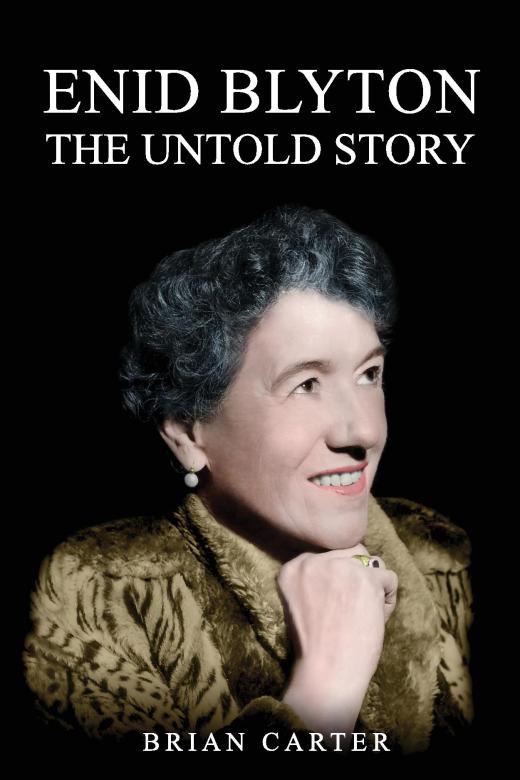
Such as the excellent biography of her writing career – Enid Blyton the Untold Story by Brian Carter.

I also read a couple of continuation books, though all from quite different perspectives.

Well Done the Naughtiest Girl by Anne Fine
Five Go Parenting by Bruno Vincent
Return to Kirrin by Neil and Suzy Howlett

The unofficial one – Return to Kirrin – is the only one worth reading out of those three by the way.

There was also the truly awful Island of Adventure based on the also terrible tv episode, but the less said about that the better.

And then there are few of the if you like Blyton type of books.

The Boxcar Children by Gertrude Chandler Warner
The Mystery of Tully Hall by Zoe Billings


Did you hit your reading goals last year?

Posted in Personal Experiences | Tagged , | 1 Comment

Monday #458

I feel like I’m stuck in a strange time loop where every week I say I’ll review Five Get Into a Fix and then something comes up that prevents me actually doing it. Maybe this will be my lucky week and I will actually manage to get it done.

My 2021 in books and in Blyton

and

Five Get Into a Fix

The boys were tired, but not too tired to examine the little hut thoroughly—though it really was more like a one-roomed house. It faced across the deep valley, and the sun shone straight into it. Julian opened cupboard after cupboard, exclaiming in delight.

‘Bedding! Towels! Crockery—and cutlery! And look at these tins of food—and bottles of orangeade and the rest! My word, people who come to stay at Magga Glen in the summer must have a fine time!’

I’m sure it’s a very nice little summer house but it amuses me just how excited Julian is by mundane necessities such as bedding, towels and crockery. Oh, and the cutlery!

Of course I have in no way chosen a quote from Five Get Into a Fix to prove that I have actually read some of it over the past week…

Posted in Blog talk | Tagged , , | Leave a comment

December 2021 round up

I’ve still to do my year in books for 2021, so for now (and slightly late as I entirely forgot about it*) I will look at what I got up to in December.

*It would have been slightly late when I wrote that, it then became really quite late after I caught one of those 48 hour bugs before I could finish the post.


What I have read

I didn’t read a lot in December as there was a lot of other things going on. I had already reached my target of 100 books in October, so in total I read 121 books which is not bad at all.

  • Twas the Nightshift Before Christmas – Adam Kay
  • The Switch – Beth O’Leary
  • Love and Lies at the Village Christmas Shop – Portia MacIntosh
  •  The Book Lovers’ Miscellany – Claire Cock-Starkey
  • The Land Girls at Christmas (Land Girls #1) – Jenny Holmes
  • The Toast of Time (The Chronicles of St Mary’s #12.5) – Jodi Taylor
  • Crash Test Girl – Kari Byron
  • Hollow City (Miss Peregrine’s Peculiar Children #2) – Ransom Riggs

As you can see I managed to squeeze in a few Christmas-themed books.

I didn’t quite finish:

  • Last Scene Alive (Aurora Teagarden #7) – Charlaine Harris

After someone else told me a year or two back, they didn’t like to end the year with any unfinished books I have tried to finish all my books by December 31st. I had two others unfinished this year as well, but I’ve been reading them on and off for a while.


What I have watched

  • Hollyoaks
  • Only ConnectTaskmaster and House of Games, the first two of which had some Christmas special episodes.
  • On Tuesday nights we watched some Christmas films – Godmothered, The Family Stone and The Holiday.
  • By myself I watched the third Christmas Prince film – A Royal Baby, which was just as silly as the others, but good festive fun.
  • We’ve finished Hawkeye, and I’m now on series five of Charmed
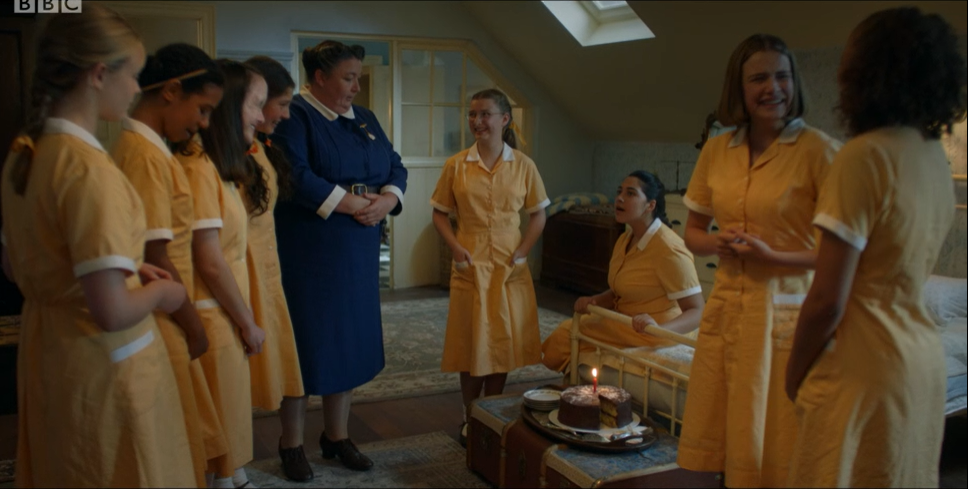
  • Episodes three and four of Malory Towers series two, which I have of course reviewed.
  • The Last Duel, which turned out to be rather different than I expected. I didn’t really pay a lot of attention to the first 1/3 but then got interested in the last 2/3.

What I have done

  • Finished my Christmas shopping, and got it all wrapped – even slightly before the last minute.
  • We met Santa at the Transport Museum
  • I finally started and then finished a jigsaw of a bookshop (it was harder than it looks!)
  • Collected more sea glass and pottery from a few different beaches
  • Drank a lot of hot chocolate in cafes and even on the beach
  • Had daily visits from the Elf on the Shelf
  • I had a quiet birthday, as we just took a walk on the beach and had a chilly picnic, then had tea at my parents’ at the weekend.
  • We also had fairly quiet Christmas and Hogmanay celebrations, just seeing our immediate families but that’s not too different from usual, and it was a whole lot better than in 2020. We ate a lot of food and played some games so it was all good.

What did your December look like?

Posted in Personal Experiences | Tagged , , , , , | 1 Comment

Monday #457

Happy New Year, everyone! I hope everyone who celebrates it had a good Christmas. We kept our celebrations small, though not really any smaller than usual, and were glad to be able to mix freely with our immediate families unlike last year.

We are now into 2022 a year which will hopefully be better than either of the previous two.

The weather has started out very mild – making the traditional loony dook perhaps a mite more attractive than it would have been for our intrepid university students back in 1951. Perhaps we will still get snow at some point, though, perhaps even before I finish Five Get Into a Fix which I have been promising for a few weeks.

December round up

and

Five Get Into a Fix

New things are lovely, but a New Year, a whole, brand-new year, is a glorious thing to have. And there’s a New Year for everyone, too… a new year for you, and one for me.

I usually get quite maudlin on Hogmanay, thinking of another year over, but not so the past two years. I’ve been quite glad to see the back of both 2020 and 2021. Perhaps the hope for 2021 was a bit misplaced, but surely 2022 cannot be anything but better than the past two years?

The above quote is from Blyton’s From My Window column  in The Teachers World, from December 31 1924. I wonder what 1925 brought Enid.

Posted in Blog talk | Tagged , | Leave a comment

The Book Lovers’ Miscellany +/- Enid Blyton

This is one of those posts that requires an explanation first, so buckle up.

As you all probably know, I love books. I also love books about books. So much so I have a whole virtual shelf of books about books on Goodreads. (I also have one titled books about bookshops and libraries.) I like books where people talk about their favourite books, or their experiences of loving books as they grew up. Or books full of bookish facts.

And so, when I got The Book Lovers’ Miscellany for my birthday last week I dove straight in. As with any book about books I always hope and/or expect to see the name Enid Blyton crop up. Sometimes she does, but never as often as I anticipate. Surely she should be on everyone’s favourite authors list?

That then brings me to this post. Reading the miscellany I found myself inserting Blyton into several different lists, and being pleased when she was already in some of the others. And so this post will include my imaginary insertions, plus the real ones.


The Book Lovers’ Miscellany

Written by Claire Cock-Starkey and published by the Bodleian Library (who get mentioned quite a few times inside) this is a short book full of facts all about books, authors, publishers, booksellers and more.

Ever wondered how ink is made? Or what is the bestselling book of all time? Or which are the oldest known books in the world? Highbrow to lowbrow, all aspects of the book are celebrated and explored in The Book Lovers’ Miscellany…

Between these pages you will discover the history of paper, binding, printing and dust jackets; which books have faced bans; which are the longest established literary families; and which bestsellers were initially rejected…

nonfictioness

Also in the ‘series’ are A Library Miscellany (which I also have, but am yet to read) and A Museum Miscellany. 


– Noms de plume

I’m not sure how many sections are in the book exactly, but I’d guess around 100. Even I couldn’t shoehorn Blyton into them all, but the very first one I could.

Quite a few examples are given, some I knew and some which I didn’t. I knew that the Bronte sisters wrote with men’s names but I didn’t know that Nicci French was actually Nicci Gerard and Sean French.

Absent was Enid Blyton writing as Mary Pollock*. There could even have been a footnote (there are many in the book) postulating the reason for the pen name, as I don’t think it’s ever been conclusively settled whether it was the war-time paper rations or Blyton wanting to see if her books still sold well without her name on them.

Personally I prefer reason number two. She was already getting around paper rations by having multiple publishers and had several books a year out without adding just six to the total.

She also wrote as Audrey Saint Lo and Becky Kent(short stories) plus Justin Geste (a play for grown ups).

*I couldn’t resist my own footnote to name the books written as Mary Pollock – The Children of Kidillin 1940, Three Boys and a Circus 1940, The Secret of Cliff Castle 1943, The Adventures of Scamp 1943, Smuggler Ben 1943 and Mischief at St Rollo’s 1943.


– Trilogies, tetralogies, pentalogies and so on

I now know (but will likely forget very soon) that a series with two books is a dilogy or duology, then it’s a trilogy, tetralogy or quartet, pentalogy or quintet, hexalogy or sextet and then heptalogy.

It was nice to see Lynne Reid Banks’ series The Indian in the Cupboard is a pentalogy or quintet, as although I knew it had five books I haven’t seen it so named – unlike, say, The Time Quintet (Madeline L’Engle) or the Millennium Trilogy (Steig Larsson).

Blyton could have been given as an example as she wrote some duologies (the Adventurous Four, The Wishing Chair), trilogies (Mr Galliano’s Circus, The Naughtiest Girl, The Faraway Tree), quintets (The Secret Series), sextets (St Clare’s, Malory Towers, The Barney Mysteries).

But what I need to know now is what do you call a series with eight books? Fifteen books? Twenty-one? Twenty-four? (The Adventure Series, The Secret Seven/The Five Find-Outers, The Famous Five and Noddy).


– Continuation novels

Listed are several famous examples but Blyton has dozens. Perhaps they weren’t mentioned as they are generally pretty rubbish!

The best I’ve read is probably the unofficial Return to Kirrin and the worst is a tie between any of the Naughtiest Girl ones.


+ Most prolific writers

I’m not surprised that of all the headings, Blyton also comes under this one, despite no exact number ever being settled on as to how many she wrote. (It’s hard to quantify as many of her works, even during her life time, contain partly or fully reprinted stories).

The number given here is ‘over 800’ though it is most often given as ‘over 700’, putting her in third place behind Corin Tellado (4,000!) and Kathleen Lindsay (904).


– Alternative book titles

I think everyone knows that Harry Potter and the Philosopher’s Stone became Harry Potter and the Sorcerer’s Stone in America, but who knew that Casino Royale was renamed You Asked for It?

Likewise who knows that The Island of Adventure was renamed Mystery Island?


– Publishing rejections

Everyone knows that J.K. Rowling was rejected for Harry Potter several times, and there are several other high profile names on this list like Beatrix Potter and James Patterson. Gone with the Wind was rejected an incredible 38 times! There must have been a lot of publishers kicking themselves over that.

Blyton’s biggest rejection was for her only (known) attempt at a novel for grown-ups, The Caravan Goes On, though some of her short stories for grown-ups were published in magazines and newspapers. A play for adults (The Summer Storm) as also rejected.


+ Most translated authors

I knew Blyton would have to be on this list.

She is in fourth place with 3,921 distinct translated editions, after Agatha Christie, Jules Verne and William Shakespeare.


– Lost books

So many tragedies of lost books like Shakespeare’s Cardenio, but it got me thinking of The Caravan Goes On – mentioned above in rejected books. The original story has never been published and the contents aren’t known but there are theories that it was reworked into one of her children’s books. Mr Galliano’s Circus is suggested, but a more likely candidate is probably Come to the Circus, which deals with slightly more grown-up themes.


– Most popular children’s books

How could Blyton not appear here, you ask. Well, I don’t know either, but she doesn’t. It has been done by sales, and although Blyton has sold over 600 million books worldwide, none of her books individually have sold over 20 million, the lowest of the fourteen books listed.

I suppose this is fair enough, as you can’t argue with numbers like that, but I wonder how far down the list we would have to go before a Blyton book showed up?


Lack of Blyton aside this is a very interesting little book. Unfortunately my memory is terrible and I will likely forget most if not all of the facts I have learned, but that just means I’ll have to read it again some time.

Posted in Other Authors | Tagged , , , , , | 2 Comments

Monday #455

For those of you who love Five Get Into a Fix and were eagerly awaiting my review (I like to at least pretend there are people out there that feel that way about my blog, OK?) I’m sorry it failed to materialise, it was just one of those weeks.

I’m going to try again this week – as in, at least get the book off the shelf and start reading it but I’m making no promises as there are only five days to Christmas and you know what that means. Wrapping, last-minute shopping, more wrapping, the big food shop, cleaning and tidying, trying to cram in at least a few wholesome Christmas activities for Brodie…

The Book Lovers’ Miscellany +/- Blyton

and

Five Get Into a Fix

I’ve shared this one before, but I love it. From The Christmas-Tree Party (Tricky the Goblin and Other Stories, 1950) this one shows Janey watching the goings on in the house across the street. Although that might sound slightly creepy (Rear Window, anyone?) it means she’s in place to spot the Christmas tree about to fall over onto the dining table which has been set for a party. Thanks to her warning the neighbours she is nicely rewarded.

But enough about the story! The illustration is very obviously Eileen Soper (I think Janey is the spit of a young Anne) and I love her patterned jumper, though with different colours added to different pages (she’s alternately in pink, red and black/white) it looks like Janey changes outfits every hour.


Posted in Blog talk | Tagged , , , | 1 Comment

Even more of Enid Blyton’s Christmas stories

Blyton wrote so many stories that it’s hardly surprising many of them were Christmas stories. 

I have, in the past, written a series of posts covering as much of her Christmas output as I could – covering 1920-1945, 1946-1950 and 1951-1962. After that I discovered I had more Christmas content – some just had unobvious titles and others I had only acquired more recently. That lead me to write Christmas bits from Enid Blyton’s magazines and More of Enid Blyton’s Christmas stories.

And now I’ve discovered three more Christmas-themed stories in my collection, so it’s time for another post!


A Hole In her Stocking

I missed this one before as I didn’t think to use ‘stocking’ as a search term. In case you were imagining me piling up my hundreds of Blyton books as I check the contents pages of the books that have them, and flick through the pages of books which don’t, I actually just search the Cave of Books. That’s not to say that you won’t ever see me surrounded by piles of books as I’m researching and writing, but in this case it was more efficient to type ‘ ‘Christmas’, Santa’, and ‘Reindeer’ and so on into the Cave search bar!

All that aside, this one is easy to miss as it doesn’t sound very Christmassy. It could be about a hole in an every-day-wear sort of stocking.

Found in The Sixth Holiday Book (but originally published in Sunny Stories #317), this one is about a girl called Mollie. I rather relate to Mollie who is described as lazy. I mean who doesn’t flick a duster around a room instead of getting into every corner? Or uses a safety pin to make do for a missing button? I’d draw the line at going around with a hole in my sock just because it didn’t show, but only because I’d not be able to put up with feeling it all day. Then again I tend to throw holy socks in the bin because I can afford new, I might feel differently if my only option was to darn them. 

Unfortunately Mollie chooses a stocking with a hole in the toe to serve as her Christmas stocking (so my assertation that the titular stocking could be a regular one wasn’t so far off the mark). 

Even more unfortunately for Mollie all the presents that go into her stocking are exactly the kind which would fall through a hole – a pencil, a shilling, a stick of barley sugar and so on. 

Naturally she’s upset to find an empty stocking in the morning – but it’s odd to me that she is upset that They don’t think I’m a nice little girl. No one has given me anything. I thought that usually Santa filled the stockings, but perhaps in Mollie’s house he leaves a gift under the tree and other people put the gifts in the stocking.

Anyway, her family point out the hole and she finds the gifts scattered across the bedroom floor and promises never to leave her stockings undarned again.

I had in my head that this is a familiar plot to another Blyton story. There is One Christmas Morning where Robert has a full stocking from Santa but an empty pillow case from his family, but the dog has bitten a hole in the pillow case and the presents have fallen down the side of the bed.


A Hole in Santa’s Sack

I only recently found the last book in the Macmillan Readers series (The Magic Knitting Needles and other Stories) and therefore this Christmas story. It continues the theme of holes in things nicely, though.

I haven’t read it yet but I’m going to guess that Santa flies around accidentally dropping presents from a hole in his sack, and some kind children gather them up for him. Often Blyton is a bit predictable in her short stories, but then again, sometimes she’s not!

As it turns out Blyton scores in the unpredictability stakes here. The hole in the sack is caused by goblins who have flown after Santa in their aeroplane to steal presents. They only get away with one – though it’s a big one – before Santa notices and safety-pins the sack together again. (Bet nobody would call Santa lazy for that!)

The story moves away from the Christmas theme then, with the Goblins ending up being frightened by the toy in the box, which is then adopted by a family of rabbits. I hope no child was left disappointed by their missing toy that Christmas morning!


In Santa Claus’ Castle 

This last one didn’t come up in the search as it’s the final chapter of a story which appears in Enid Blyton’s Omnibus. The story is just called The Faraway Tree, and is another instalment in the Magic Faraway Tree/Enchanted Wood series.

Chapters one to three cover the children plus their friends going to The Land of Toys where they inadvertently turn into toys, and then get on the wrong side of Mr Oom-Boom-Boom. It is in trying to outrun Mr Oom-Boom-Boom that they arrive in chapter four and are advised to try the Land of Santa Claus.

Santa, being used to dealing with toys might just be able to turn the group back to being human, elf, and whatever Moon-Face naturally is. 

I’m not sure how it all works but the ‘time-table’ says that the next land to come will be the Land of Squalls, but the train time-table has journeys to the Land of Santa Claus, so that’s how the friends travel there. 

They find a snowy land – as the porter says, it’s always snowy there as it wouldn’t be any good for sleighs otherwise. 

Having ridden a sleigh to Santa Claus’ Castle initially Santa believes them to be toys and wants to put Silky at the top of his tree.

The solution is convenient for the friends, but oddly meta for us. Much like the story about Noddy meets Father Christmas where Noddy and Big-Ears are both real ‘people’ but also characters in books, Santa here has heard of Moon-Face and the others as children keep asking him for their books. There are three of them, in fact. Imagine that!

He has also heard of the slippery-slip and is delighted to be offered unlimited rides on it. It’s a simple matter of flying in his sleigh back to the Faraway Tree, and just as simple for Santa to turn the friends back into their usual selves.


I have heard mention of a Christmas-themed Wishing Chair story, but it’s not in either of the main books or the story in the omnibus. It’s possible that it’s in More Wishing Chair Stories which I don’t have. There are some newer books a couple of which appear to be Christmas-themed. Some of the new ones are written by Narinder Dhami while others appear to be reprints of Blyton stories, but I can’t see where they originally came from.

If anyone knows the story I’m on about, please tell me! 


Posted in Seasonal | Tagged , , , , , | 1 Comment

Monday #454

We are creeping closer to Christmas now, so let’s just hope that the Omicron ‘no C(h)rimbo’ variant doesn’t spoil thing too much for anyone.

More Christmas bits and pieces

and

Five Get Into a Fix

The Great Big Snowman can be found in Enid Blyton’s Happy Story Book and is illustrated by Eileen Soper. There must have been quite a lot of snow to make such a big snowman. But not so much to allow little boys to wear trousers instead of shorts!

Posted in Blog talk | Tagged , | Leave a comment

The Island of Adventure: the 1980s film

There have been a few adaptations of the Adventure Series over the years, and this is (to my knowledge) the very first.

I have already reviewed the 1990 adaptation of The Castle of Adventure with Susan George, Gareth Hunt and Brian Blessed. This does not continue on from The Island of Adventure, as it introduces the characters to us again and has them meet for the first time as well. I expect that the rights to Island were still held by the 1980s film makers, else they just didn’t want to repeat the story so soon.

It was definitely a rights issue which meant that the 1996 adaptation of the full series couldn’t include Castle, but that doesn’t explain why their replacement for it (The Woods of Adventure) is so dire. Mind you, the whole series is pretty awful.

I’m getting off topic, though. This 1980s adaptation is the first (as far as I know). I’m not clear as to where it was released, though. I have referred to it as a TV movie before and it does very much watch like one, but I am happy to be corrected.

I am being deliberately vague when describing this as a 1980s film as there are two dates online for it. IMDb gives 1981, which the BFI gives 1982.

I watched this on the DVD that I got for Christmas last year. The quality is not brilliant but I expect that it isn’t really any worse than when it was first released. It also appears to be on YouTube in full.


A slightly different story

I was honestly not sure where to start with this review as I have very mixed feelings about this adaptation. So I will start with an overview of the story as told in the film, noting particularly where it deviates from the book.

Like in the 90s Adventure Series the film opens with a dramatic scene unrelated to the children. This time a man in an orange boiler suit gets shot, then an obvious dummy in an orange boiler suit plunges to its death from the top of a cliff. A Royal navy helicopter collects the body from the sea. A different man (a dry one) holds up a one hundred dollar bill for our inspection. Two more helicopters fly over a rocky coastline. A hand burns a hundred dollar bill.

All very dramatic, and rather dark for an Enid Blyton film. There are guns in her books and now and again they are fired, but the shots always go wild. I can’t recall anyone ever being shot or plunging to their death from a cliff!

Then we return to slightly more familiar territory. We see Philip who is sitting on a bench talking to a pet mouse, and he hears a strange voice who turns out to be Kiki up in a tree. So far, so good if you can ignore the fact that Philip looks about 20.

Jack and Lucy-Ann turn up a minute later, also looking about 20, and Jack has been styled to look like a stereotypical anorak.

Here is where we deviate again. Only Philip is at Mr Roy’s school, which seems larger than in the book, while Jack and Lucy-Ann just happen to live nearby. Presently Mrs Mannering comes to collect Philip from the school. She drives a rather flashy convertible, which suggests that money is not an issue. In the books Mrs Mannering slaves away in order to pay for their schooling.

Jack and Lucy-Ann turn up again and Philip asks her if the Trents can come to stay at Craggy Tops (an ambush if ever I saw one) and she says she’ll telephone Aunt Polly to ask.

There must be some time passing between these scenes as Philip meets the Trents, and they say he shouldn’t call their house as their Uncle wouldn’t like it, but they can call the school. The next thing they turn up as Philip’s leaving and he introduces them as ‘friends of mine’, yet to our knowledge they’ve spent about 2.5 minutes together. He then says he will call them with Aunt Polly’s answer (never mind their Uncle then) so he must have their phone number by now.

It’s all coming across as rather contrived and unlikely at this point, and nothing like the excitement of them running away from Mr Roy’s school.

Joe (formerly Jo-Jo) picks them up at the station, and as with the 90s adaptation he is now a white man, however he is still foreign.

They manage to add back in the Trents being unwelcome as Mrs Mannering spoke to Uncle Jocelyn who said the children could come, but didn’t tell Aunt Polly.

The scene at Craggy Tops is quite close to the books, Kiki inadvertently sucking up to Aunt Polly by saying poor Polly, and Uncle Jocelyn ranting about not keeping the children but keeping the parrot if she wants.

The boys are still sent to sleep in the tower room overlooking the Isle of Gloom – or just Gloom as they refer to it – and Joe warns them off the island.

There’s then a bit of a silly scene where Kiki flies into Jocelyn’s room and Jack goes to ask if he’s seen her. Well she’s sitting out in full view if either of them just looked around!

Exploring the cliffs Lucy-Ann spots an archway/tunnel and cries look! Apparently Philip and Dinah have never noticed it before even though they live there, and it’s through that onto the beach that they find Bill.

Of course this is in a more dramatic way than in the book. Philip finds a boat and climbs in, only for a man in a wetsuit to come up from the water behind and get him in a chokehold. It’s rather reminiscent of the beginning of The Sea of Adventure when Bill grabs Philip having mistaken him for a spy in the garden.

Lucy-Ann asks him to take them to Gloom 2 minutes after introductions. He asks them some questions and of course is particularly interested in Joe. The children are unable to tell him Joe’s last name, as apparently Aunt Polly doesn’t know it, or where he came from. He just sort of appeared. 

Thank goodness that Jack is there with his astute observations. I think he’s foreign. He’s got some sort of an accent.

Bill takes them out on the boat straight away. At least Philip is suspicious after Bill’s attack on him. They have a nice time sailing around the island and when they get back Dinah kisses Bill on the cheek. Lucy-Ann is so forward (compared to her book counterpart) that she says if Dinah can kiss you I don’t see why I can’t and kisses him too. Earlier Dinah said I like him, about Bill in an almost dreamy teenage romance kind of way, but now, in response to Philip’s teasing that she has a crush on Bill she says he’s the kid of person she’d like to have as a father.

Still, the fact that Bill asks them not to tell their aunt and uncle about him, and the way he puts his arms around the girls later does seem rather creepy. Obviously we know he’s a good guy but it all comes off as a bit inappropriate.

They then try to add more complexity to the story. Bill takes them into town and they are to meet him for lunch at the hotel. In the book Jo-Jo is hanging around so after they eat they slip out the back way. On screen Bill knows the woman working at the hotel and rushes the kids out before they’ve even eaten anything. I can’t work out who the hotel woman is. Has he been in for lunch so often that she knows his favourite sweet? He kisses her twice and they seem genuinely fond of each other but a bit flirtatious too. She warns another hotel staff member that she saw nothing and should say nothing to anyone about Bill.

He then drops them back at Craggy Tops, right outside the gate after, though. Very clever if he’s trying to keep a low profile!

The boys then steal one of Dinah’s few triumphs from the book. In the book she absconds with a book and map from Uncle Jocelyn’s study, having spotted it by accident and asked him a few questions. Instead the boys plan to go in and steal a map. Somehow they end up believing that Uncle Jocelyn is part of the mining operation and Bill is from a rival company.

Then at last they’re off to Gloom. Being the 80s it’s a Coke can they find on the island instead of empty food tins.

The underground portion plays out more or less as it does in the book with the children getting locked in a cave minus Jack who’s off looking for Kiki. Apart from all the men wearing orange boiler suits and blue hard hats. It looks a much more professional organisation, with Johnathon Rhys-Davies as the Bond-type villain (Smith) lording it over all his minions.

The children don’t play-act at bad air but break the lamp and escape leading to a few minutes of confusing running around in the dark (they’re using torches, but it is actually dark! Usually torches are unnecessary on TV as it’s bright enough to see).

Having escaped the island they try to phone the police but the phone doesn’t work. Bill finds his boat has been set on fire – much more dramatic than them finding it has a hole hacked in the bottom – and goes to Craggy Tops. Discovering no dial tone he just knows that the wires have been cut.

Then we’re back to following the book as Bill and Philip go down the well to Jack’s rescue and get caught.

Rhys-Davies continues to play the Bond villain, explaining his entire operation and plans to Bill because it won’t matter, he’s going to die.

So Mr Cunningham, we meet at last… I shall leave you now. We shall not meet again.

At least he stops short of No, Mr Cunningham, I expect you to die!

This is all delivered in what I think is supposed to be a Russian accent, but Rhys-Davies is  a bit like Sean Connery and does most things in his own accent.

I was disappointed that they just climb out of the well shaft in the end, but I suppose flooding it and floating up would have posed some filming challenges.

There’s a brief scene in the middle of that where we see the minions escaping on dinghies in the dark, then the sun has come up and a submarine emerges only to be blown up by a Navy ship.

For some reason Smith and Jake escape the mines AFTER Bill and the boys.

It then all gets rather dark (in the thematic sense) for a Blyton adaptation as Smith shoots Jake not once but twice. Once from a distance and then again as he lies on the jetty. Then it all gets rather silly and overblown as they throw in a high-speed boat chase where Bill is after Smith. Smith makes it to a harbour and makes for a beach buggy (was it just waiting there for him?) but is caught by other officers. He then breaks a tooth and kills himself with cyanide.

Joe tries to climb the well shaft by Craggy Tops (how did he even know about this?) and the girls brain him with the heavy well bucket and possibly kill him.

We end with Bill talking to his boss who tells him he’s off to Afghanistan. Bill says he is going to visit the children again before he goes, and that one of these days he will get married. He boards a train to Cornwall and just happens(?) to be sitting beside Mrs Mannering…


The setting

This is so 80s it almost hurts. Though when we first meet Dinah she’s going a good impersonation of a 1950s pin up. The rest of the film she’s wearing a pair of knee high white boots – not very practical for scrambling around islands but probably very on-trend.

Craggy Tops isn’t very impressive. Rather than being a large and rambling house built into the cliffs by the sea its a smallish building built into a rocky mound some way back from the sea. The fact it doesn’t have electricity or running water makes it seem all the more archaic, even more so than it would have been in the 1940s. In the book they’re just too rural/inaccessible to be hooked up. For the film it’s explained as Uncle Jocelyn refusing to have mains electric and thinking that the mains water is poisoned.

The Island is ok, not that we see much of the outside of it. The caves and tunnels are fairly dark but they seem convincing enough.


The cast

As I said earlier the children all looked too old. Having checked IMDb, they were 18 (Dinah), 20 (Jack) and 21 (Lucy-Ann). I couldn’t find a date of birth for the actor playing Philip but his first acting role was as a ‘youth’ in 1976, so he was at least 18 if not older.

To be honest at first I kept expecting them to break into rude jokes like the Comic Strip Presents episodes.

There were no bad actors in this, but given their ages the children weren’t brilliant. Philip in particular was a little flat at times. I enjoyed Uncle Jocelyn’s scenes and he got some funny lines – his disbelief when Jacks says he calls ‘her’ Kiki, (he’s talking about the parrot of course but Jocelyn thinks he means Aunt Polly) is very funny.

Bill was OK, though not how I imagine him and I’d say the same for Mrs Mannering. Bill did get some good lines though, like what did you expect, the Ritz? when Philip complains that the undersea tunnel is grotty.


Overall?

Overall I wasn’t terribly impressed. It stuck to the book in general (far more so than the 90s series did), but the added scenes with the Navy were unnecessary. They played out like stock footage from some other film as they were entirely unrelated to what was going on with the children. The various on-screen deaths were also a bizarre departure from the tone of the book.

A few changes (like the escape from the mines) I understand but why not have Jack and Lucy-Ann at the school to make their friendship more believable? And why did Mrs Mannering have to be shoe-horned in at the beginning?

Character-wise the children weren’t all that much like in the books. Philip’s pets were shown at the start but forgotten by the time they got to Craggy Tops. He and Dinah barely argued except over whether Bill was a good guy or not. Jack was introduced as bird-obsessed but did very little bird watching, and Lucy-Ann was much more confident than in the books.

They also missed one of my favourite parts – them discovering the secret passage from the beach to the house and then using it to trick Jo-Jo. Talking of which, Joe in the book is surly but not nearly as menacing as Jo-Jo.


Have you seen this? What did you think?

Posted in Blyton on Screen | Tagged , | 4 Comments

If you like Blyton: The Boxcar Children by Gertrude Chandler Warner

I have been meaning to try this series for quite a while. I’m sure I’ve ‘bought’ at least one of the books when it was free on Kindle, but I can’t seem to find it now. Anyway, turns out my library has the first one in their ebook collection so, I have now borrowed it and read it.


Gertrude Chandler Warner and The Boxcar Children

Gertrude Chandler Warner was born in 1890 and was a first-grade school teacher, beginning in 1918 as men in the United States were being called up to serve in the First World War.

Having written eight books as requested by a religious organisation, in 1924 Warner decided to write one for herself, and that was The Boxcar Children.

She wrote a further seventeen books in the series between 1949 and 1976. The long gap between books one and two is because she waited until she retired from teaching before continuing the series.

Starting in 1991 the series was then continued by other authors and there are 159 books and 21 special novels, the most recent two from 2021. The original books are largely set in the 1920s and 30s, whereas the newer books are set at the time they were written.

One thing that is interesting is that in 1942 Warner rewrote the first book in order to simplify the vocabulary and shorten the story. This was to make it suitable as a ‘school reader’. It now has a prescribed vocabulary of six hundred words and a text of about 15,000 words. This is quite obvious when reading, as the vocabulary is very simple and at times repetitive.

First edition cover by Dorothy Lake Gregory

The original 1924 text is available via Project Gutenberg as the book entered the public domain last year. I will need to at least skim-read it at some point to compare.


The Boxcar Children and The Secret Island

There is no evidence that Blyton ever read The Boxcar Children, and why should she have. Although she was a teacher herself by the time it was written, it would have been unlikely for her to have chosen an American school book for her pupils. Firstly we know that she didn’t have the highest regard for the American way of life, and secondly she wrote so much of her own teaching material that she wouldn’t have needed to look anywhere else.

Despite that, there are several similarities in the books – though the theme of children having to survive by themselves is not new, there are many books where children are orphaned, run away, or even pretend to be living alone for fun. Blyton used the plot more than once herself – there are quite a few similarities between The Secret Island and Hollow Tree House, not to mention the Five running away (temporarily) in Five Run Away Together, and of course Barney from the Barney Mysteries.

The Boxcar Children (Jessie, Henry, Violet and Benny) are orphans who are supposed to have been taken in by their grandfather after the death of their parents. However, he is their father’s father and he didn’t like our mother. So we don’t think he would like us. We are afraid he would be mean to us.

They actually haven’t met him before, as he has never visited, but they are now on the run, living like Barney, moving from place to place and doing odd-jobs for food, money and shelter.

We first meet them outside a bakery where they offer to wash the dishes in return for a night sleeping on benches in the shop. They overhear the baker’s wife saying she will keep the older three to work for her, and youngest (Benny) must go to a children’s home and so they sneak off, and evade the couple when they come after them.

It’s a bit of an odd opening, very abrupt, and reads rather like a fairy-tale story minus the magical creatures. We don’t know how long it has been since their parents died, what happened to them, any detail on how the children have been surviving… but that may be clearer in the original, unabridged version.

Despite the slightly different circumstances, then, in both The Secret Island and The Boxcar Children we have four children who are on the run from their relatives.

While the Arnold children find the very well-hidden island, the Alden children (named Cordyce in the original) find the eponymous Boxcar.

They are nearly as inventive as the Arnolds as they string up a washing line, build a fireplace outside, dam a stream to make a pool and generally make their boxcar as comfortable a place as possible to live. While Blyton’s characters generally made beds of heather and bracken (which makes sort of sense as it is springy) the Aldens made beds out of pine needles. I suppose that’s all they had to hand!

Illustration from the abridged version by L. Kate Deal

They don’t appear to have planned their running away like the Arnolds as they have very little with them to begin with, a few pieces of clothing, some soap, Violet’s workbag, and towels all kept in a large laundry bag. This means they scavenge at a dump for cracked crockery and rusty cutlery when setting up their home.

One of four illustrations from the first edition, by Dorothy Lake Gregory

While Jack goes off to market days to sell berries and mushrooms, Henry (not the oldest, I believe, but the oldest boy…) goes into town and finds work at a doctor’s home, picking cherries and mowing the lawn and so on. Jessie, as the oldest girl is the ‘housekeeper’, though she has to wait for Henry to come home to light a fire for her.

Just like in The Secret Island, suspicions develop over this boy who doesn’t seem to have  a home, especially when all four children help at the doctor’s home and then an advert appears in the newspaper looking for four missing children…

One thing that isn’t similar is the food. The Arnolds don’t eat as well as say, the Famous Five, but they do not badly. They have fresh eggs and milk, flour to bake rolls, plenty of berries and mushrooms, fresh fish from the lake, plus all the lettuces and vegetables they manage to grow themselves. The Aldens have to buy in all their food, though I imagine if they lived in the Boxcar longer then they might have started cultivating their own. Instead they eat a lot of bread and milk, some cheese and blueberries, and Henry also buys some meat and is able to take some vegetables home from the doctor’s garden to make a stew.

The sense of danger is more muted for the Aldens than the Arnolds. They are eager to avoid their grandfather but they have not the fear of being treated as cruelly as the Arnolds have already experienced. They do hear a noise one night outside the Boxcar, and the dog they have found growls, so there is a brief period of tension but that’s all. They are unaware that the grandfather has put an advert in the paper, and as he lives in another town he is quite a distant threat as compared to the Arnolds aunt and uncle, and the men who come to search the island.

Spoiler alert!

One last similarity is that both sets of children are being looked for by someone kind. For the Arnold children it is their parents who are hunting for them, not the aunt and uncle. For the Aldens it turns out that their grandfather is a kindly man who has made every effort to make his house comfortable for them.


My thoughts

I enjoyed the story although I feel that is is a real shame that the reprint has been so dumbed down. Having looked at the first page or two of the original it is much better.

The original begins with the children and their father moving to a new town, and their father is a drunk. He’s dead within a paragraph and their neighbour (the baker’s wife again) stays with them overnight and plans to send Benny to the children’s home. They run away that night – packing a bag with the things we see them with in the reprint. So although it is still quite abrupt it all makes a bit more sense, and the events are clearer.

Based on that, and the few other bits I stopped and read I would definitely recommend reading the original edition.

Although I like the style of the original illustrations there are only four and they make five year old Benny look like a toddler!

It’s interesting that Blyton has been heavily criticised for the simplicity of her language while Warner deliberately kept the vocabulary limited – far more limited than anything I’ve read of Blyton’s. Warner does talk to the reader at least once, though (The children would have more than milk and bread, as you will soon see) which Blyton did quite often.

I’d like to read a few more of these to see if the rest are overly simple, or if she went back to her original style. Of course I want to check out one or two new ones to compare, as well.

I’m interested to see how the story continues as – mild spoilers ahead – the Boxcar has been moved somewhere new and is to be just a playhouse for the children, so it will  no longer be a survival story. The rest of the novels are billed as mystery stories, much like the Secret Series which went from a survival story to mysteries.

Posted in Book reviews, Other Authors | Tagged , , | 1 Comment

Monday #453

Having just noticed that there was no Monday #452 published last week, I endeavoured to solve the mystery and investigated behind the scenes in WordPress. I could not find an unpublished draft, a post published with the wrong date or any evidence that such a post ever existed so I’m forced to conclude that what happed was I forgot to write one. Not exactly a mystery worthy of Fatty, then.

I’d like to blame the festive season but we all know that I make mistakes like that all year round! Talking of festive, I don’t actually have anything festive lined up this week. I have a few ideas but they need more work before they’d be ready.

If you like Blyton: The Boxcar Children by Gertrude Chandler Warner

and

The Island of Adventure: The 1980s TV movie

Christmas Eve at Kirrin Cottage—and the Five were all there together! They were up in the boys’ bedroom, wrapping Christmas presents in bright paper. Timmy was very excited, and nosed about the room, his long tail wagging in delight.

‘Don’t keep slapping my legs with your tail, Tim,’ said Anne. ‘Look out, George, he’s getting tangled up with your ball of string!’

‘Don’t look round, Anne, I’m wrapping up your present,’ said Dick. ‘There’ll be a lot to give out this Christmas, with all of us here—and everyone giving everyone else something!’

– Happy Christmas, Five!

Ignoring what happens later in this story (with presents being stolen in the night) this still sounds like a bit of a stressful Christmas to me. The Five not only wait until Christmas Eve to wrap their presents but they wrap them with the recipient(s) in the same room! Even I try to have my presents wrapped before Christmas Eve.


Posted in Blog talk | Tagged , , | Leave a comment