Noddy and the Case of the Hiding Pirates

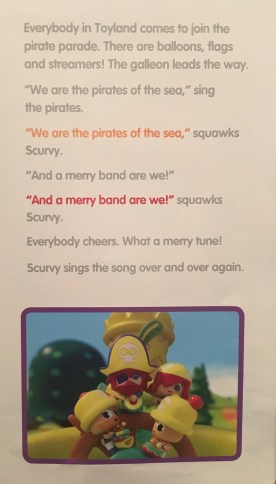
Noddy and the Case of the Hiding Pirates is a soft cover children’s book, based on the latest TV series. It was published by Hodder in 2017, and is the second Noddy tie-in book for that series, though it is based on episode #3 of the series. I haven’t watched that episode, but when I spotted the book in the children’s department of my library I ended up grabbing it. I actually put it on Brodie’s card, but I’m not sure he will be interested. His favourite books are mostly lift-the-flap or touchy-feely ones except for Hairy Maclary and Each Peach Pear Plum.


The book

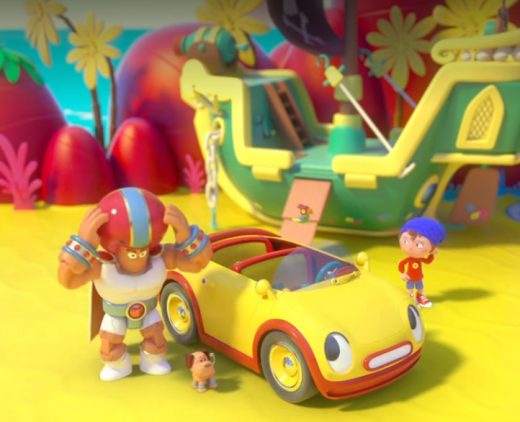
It’s a short book, but very attractive and brightly coloured. The characters and scenery actually look better in the book than in the show, perhaps because they aren’t moving you can see them better and they actually look a more like real objects rather than computer graphics.

The text is short and punchy, and there are a variety of page layouts. Some pages are entirely an image, other are a mix of text on white with inset images, and there are a couple of text on image pages too. Some of the words and phrases are in colour to add even more interest. The strange thing is that it’s told in first person from Noddy’s point of view. The TV series centres on him, but as there’s no ‘he said/she said’ as you would get in a book it’s then a surprise to read Noddy saying I did and I will etc. Especially if you’re used to reading the original Noddy books where Enid Blyton’s ‘voice’ is the narrative.

It’s a simple but effective story. There is to be a pirate parade, but the pirates are missing. As Toyland’s detective it’s up to Noddy to find them. With the help (and sometimes hindrance) of Scurvy, the pirates parrot, Noddy and Deltoid go searching. On the pirates’ ship they find and empty music case and a map of the DareDale caves. In the caves they hear faint singing, but Scurvy is so loud they can’t work out where it’s coming from. Deltoid takes Scurvy away and Noddy find the pirates who apologise – they just needed somewhere quiet to practice away from Scurvy. They have got their song down now, and so the parade goes ahead.

However there’s one further problem Noddy has to solve – the pirates have rather tired out their voices with all the practicing. Noddy has them sing the song one time, and then Scurvy makes himself useful and repeats it over and over for the parade.


The TV episode

Well, I had to see how they compared didn’t I? I looked for the episode on Channel 5’s catch up but they are on to series 2 now and so it doesn’t go back as far as episode 3. Luckily it’s still on Netflix (even if that does mean listening to the American voice acting).

I have to say that the book is pretty similar to the TV episode. Some of the dialogue is cut and some of it is simplified. For example instead of Deltoid saying I, Deltoid, am determined to aid in their discovery, he says I am determined to help. I assume this is because the book is aimed at young children, and while they can watch an 11 minute show and follow it, they might struggle with the same content in book form. Certainly for the purpose of reading it themselves, the book is more accessible than a full repeating of the TV script.

The mystery itself is simplified a bit and actually makes more sense in the book. In the episode the pirates can be seen hiding on the ship then heading for the caves as Noddy and Deltoid are looking for them (they’re barely seconds ahead of them). In the book it’s implied they’ve been hiding in the caves practicing all along. Also, in the book Noddy only properly discovers the reason for the pirates hiding when they tell him. In the episode he works out that they’re hiding from Scurvy before he finds them.

Some of the bits that are cut are a shame, for example the drive to the pirates ship and the one to the caves, partially as it adds more understanding to the sheer irritatingness of Scurvy but also because the scenery is so good. Though, perhaps, in book form the scenery would be hard to appreciate in full.


Posted in Blyton on TV, Book reviews | Tagged , , | Leave a comment

The Malory Towers covers through the years part 2

I’ve already looked at the covers from the first editions through to ones from 1990, and now it’s time for the rest of the 90s through to the present day.


Here comes the nineties

While we have had some modernisation to the covers previously, to me the 70s are still sufficiently vintage to appear old fashioned. The early 80s Methuens have an almost 1920s feel to them despite the flares, so they seem older too.

But here in the 90s the publishers have brought the books bang up to date, making them terribly dated in 2019.

First up are some Dean editions from 1994, with covers by Liz Roberts. The girls now wear much shorter skirts, sometimes with black blazers and eat picnics in caves (I suspect it’s meant to be beside the pool in reality) while wearing on-trend alice bands.

All Dean 1994

After that are editions from Mammoth in 1995, which have illustrations that are also used on 1998 Deans and cropped on the 2006 Deans. They also seem to appear on some 2014 editions but I can’t find full details for those. They may have been part of a box set, which often have different covers from the individual titles though I found them on a bookshop website, for sale individually. Anyway, the original image and the first two redesigns are attributed to Button Design Co. I did do some Google searching and couldn’t find that company, they may be defunct now.

Anyway, they are very 90s. The uniforms are now black instead of brown and orange, but the alice bands still appear.

Mammoth 1995 / Dean 1998 / Dean 2006 / unknown 2014

The First Term cover(s) definitely put me in mind of my late primary school/early high school years, but some of the later ones seem all over the world.

All Mammoth 1995

The oversized yellow t-shirt reminds me of Neighbours from the 90s. They also look like they’re on a cruise ship, while Amanda looks like she’s in front of the Alps on the last one. (I’m sure they’re white cliffs and not mountains, but the wooden boat house/chalet doesn’t help.)

What’s interesting is the yellow cover with the crest above is remarkably similar to the editions that came out in 2009, from Dean.

Dean 2009 / unknown 2014 / Dean 2009 / unknown 2014

The colours are slightly different, but the layout is the same. Obviously the image inside the crest is very different between the editions. The 2009 ones are uncredited but are very much more in-keeping with the 1940s setting of the books.


Taking a step back to 2000

There’s a set I haven’t shown yet, as we were jumping between repeating designs. The 2000 ones were by Mammoth with covers by Paul Catherall.

I think of these as ‘spotlight’ covers as the illustration appears in a circle that looks a little light a spotlight being shone, especially on the two-tone covers like the first one. Interestingly the placement of Enid Blyton changes between the covers. Four have it split above and below the circle, and two have it above. Incidentally I have seen a cover of First Term in this design but in navy blue.

All Mammoth 2000

The last set, but the first cartoons

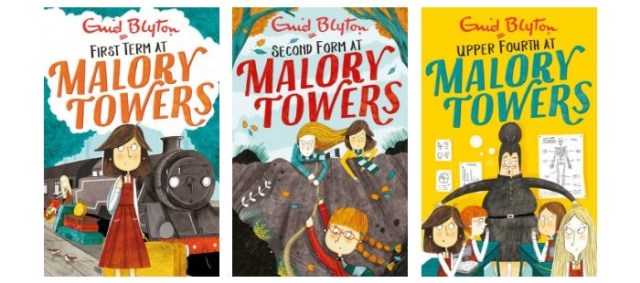
Up until now all the covers have featured realistic-looking girls. And then came the 2006 editions by Nicola Slater for Egmont. The same illustrations were then used in 2016 for Hodder editions, though one of them was flipped.

Egmont 2006 / Hodder 2016 / Egmont 2006 / Hodder 2016

Each cover seems to show a different girl or girls. First Term I assume is Darrell. Second, I have no idea. Third, Bill and Thunder? Upper Fourth is probably Ruth and Connie Batten. Fifth is either Gwen or Maureen, and Last Term is likely Amanda and June, but I’m not sure why they needed to include a fish.

Egmont 2006 / Hodder 2016 / Hodder 2016 / Egmont 2006

The funny thing about the second set of these covers (the ones with the white banner at the top) is that they change each book’s title. They should be in the format name of term/year at Malory Towers ie Upper Fourth at Malory Towers. These editions have it as Malory Towers Upper Fourth etc which is just not the name of the books!


One random one

As with several other series, the first book has an extra edition.

This one’s a 2015 Dean edition, and it’s random for more than just being a one-off.

2015 Dean

It looks like it’s aimed at five-year-olds with the coloured lettering. The girls also look very young, and it’s a mystery to me why they are dressing up as the only time they do that is for the fifth form pantomime.


Probably the best set since the originals?

I know I called the Nicola Slaters the ‘last set’ but these only came out in a box set and so aren’t included in the Cave of Books which I always refer to as the bible of Blyton’s editions.

Anyway, these are 2018 Hodder editions and I think they’re amazing. They are paperbacks but look as if they could be 1940s hardbacks. Not only that but they actually show scenes from the books instead of just random girls doing nothing.

All Hodder 2018

They were specially commissioned for The Book People, and come in a set of 12 with the Pamela Cox books. I believe the covers are by Ruth Palmer who did the Famous Five for Grown Ups but I don’t know if there are internal illustrations, nor can I find an image of Last Term. They are £17 for the set which is a great price (RRP is £83.88 which is just stupid for books specially done for The Book People!), but I can’t really justify it just to find out those bits of information. If I was going to buy Malory Towers paperbacks for a child today it would definitely be these editions, though, and there’s also a St Clare’s box set.
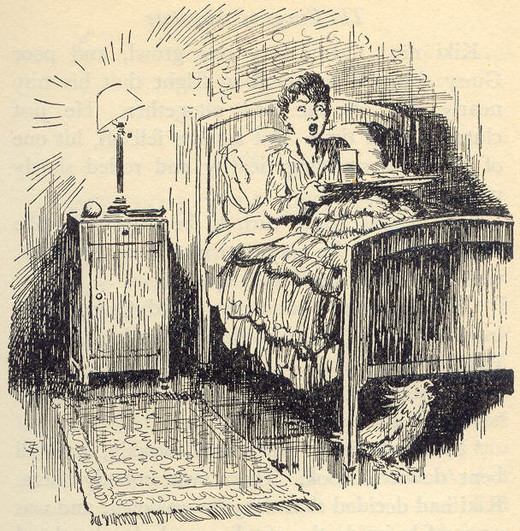
All Hodder 2018

If Hodder can do this for Malory Towers and St Clare’s why can’t all Enid Blyton’s books get new but equally lovely covers? The Famous Five are lucky enough to still get the Eileen Soper covers reused at least some of the time, but new vintage-style covers for other books would be brilliant. If they still appeal to children (and they must or these wouldn’t have been produced) then why bother with all the ugly cartoon covers?


And finally, a look into the future

Hodder are releasing a new set of 12 books with new covers at some point this year, with covers by Pippa Curnick. Despite being set in the 40s with steam trains these are still very modern and cartoony.

All unknown probably 2019

There you have it, Malory Towers covers from 1946 to the future. What were your favourites?

Posted in Illustrations and artwork | Tagged , , | 11 Comments

Monday #311

Malory Towers covers part 2

and

Noddy and the Pirates

Mystery Moor was once called Misty Moor, because of the terrible mists that crept across it from the sea. Then, one day, the Bartletts who ran a small train to and from their quarry disappeared in the mist, and never came back. After that it was known as Mystery Moor, and the Famous Five do indeed have to solve a misty mystery there, following the old train tracks in the sand and coming up against an unpleasant band of travellers.


Tassie appears in The Castle of Adventure. She is a wild girl, dirty, ragged and barefoot, and she cannot read or write despite being around the same age as the other children. She can – however – charm animals almost as well as Philip can, bringing him a pet fox-cub, and knows the area around the castle well. When she makes firm friends with the Mannering/Trent kids Mrs Mannering forces her to have a bath with carbolic soap and dresses her in one of Dinah’s old dresses. A few days later she’s back to looking grubby except for the new shoes which she wears around her neck instead of on her feet!

tassie and button the castle of adventure

Posted in Blog talk | Tagged , , , , , | Leave a comment

Short stories from Enid Blyton’s Happy Story Book

Recently I wrote a post about Enid Blyton’s short stories with the intention of then reviewing some of the stories. Well, being short stories I thought they would be quick to do and therefore kept putting it off, the end result being no stories being read or reviewed!

I picked Enid Blyton’s Happy Story Book as I know it has Eileen Soper illustrations, and it seemed a good a place to start as any. There are 16 stories in the book, and I intend to just review a few.

enid-blytons-happy-story-book

I have chosen The Girl Who Tore Her Books, Susy-Ann’s Clock and Ellen’s Adventure based on the titles sounding interesting!


Ellen’s Adventure

Ellen’s Adventure is the seventh story, originally published in Sunny Stories No.11 Apr 26, 1937.

It’s not really an adventure, but what can you expect in under 9 pages. Ellen is on her way back to afternoon school when she helps a lady whose car is stuck in a ditch. By cycling to the nearest garage to fetch help she is late back to school and gets scolded – until it turns out that the lady Ellen helped is the duchess who is visiting the school that very afternoon. What’s more, is the duchess is so grateful to Ellen that she buys the apron Ellen made for the sale of work – the apron Ellen thought was ruined because the strings didn’t match the rest.

Like most of Blyton’s short stories it’s very simple. Saying that, there are two ‘plots’ woven together. The first is how Ellen was careless in not leaving enough material to make matching apron strings, the second is how she was kind enough to put herself out in helping a stranger, who then comes to appreciate the mismatched apron. Of course, in Enid Blyton land the stranger you help will almost always turn out to be important and you will be rewarded for your selflessness and that’s exactly what happened to Ellen.


Susy-Ann’s Clock

Susy-Ann’s Clock is story number 11, originally published in Sunny Stories No.154 Dec 22, 1939.

While Ellen’s (admittedly minor) flaw was not planning well, Susy-Ann’s flaw is being late for everything, from school to meals to bed. She blames this on her clock rather than having the self-awareness to know it’s her own fault, so in true Blyton style I suspect that she will end up being punished for this. And so she is.

Her clock is not an ordinary clock, it has thoughts, feelings and the ability to run to whatever time it wants! Annoyed with Susy-Ann blaming it for her failings her clock starts to run fast, forcing her to rush around. What’s more is it gaslights her by then changing back to the right time when she goes back to check it. Rushing around as she does she forgets things, almost misses out on lunch and is most upset about it all. However she is a clever girl and figures out the clock is trying to wind her up, and she catches it red handed. She and the clock then strike a deal that they will both behave for as long as the other does. (Excuse all the clock related puns there, I couldn’t resist!)

This is a little longer at 11 pages, but still takes place in a single day. It has a clear moral – don’t blame anyone else for your own failings and also tries to warn children not to be lazy and slow.


The Girl Who Tore Her Books

The Girl Who Tore Her Books is the 14th story of the 16, originally published in Sunny Stories No.8 Mar 5, 1937.

This tale is about Anna who looks after her toys well, but loves to tear up books! Her mother tries to channel her tearing tendencies into ripping newspapers, but no, she just loves destroying books. I hope she learns a good lesson here! One evening she takes a big nursery-rhyme book down with the intention of tearing up the pages, but something very strange happens. Old Mother Hubbard’s and her giant shoe full of children grows out of the book and fills the nursery, while Anna shrinks to the thinness of a sheet of paper.

Mother Hubbard and the children know who she is – and what she does to books – and the children threaten to tear her up. They tear her dress and scare her into running off, but not before she promises never to rip up another book again. When she reappears in the real world her dress is really torn and her mother is cross.

This is like a tiny bit of science fiction. Anna couldn’t simply have been dreaming or her dress wouldn’t have been ripped! Blyton clearly felt the punishment should fit the crime here as so often is the case. I was confused by the nursery rhyme, though, as I thought Old Mother Hubbard went to the cupboard etc and the old lady who lived in a shoe didn’t have a name.


So there you are – three random short stories. Each has a clear moral, with one child getting rewarded for a good deed and two being punished for bad ones.

I like how Blyton short story collections jump from standard stories to stories in worlds where clocks are secretly alive and back. You never know what you’re going to get from a story.

These collections great for those of us who don’t have Sunny Stories, which can be hard to find. Being a magazine Sunny Stories is more fragile than a book and liable to be passed around from child to child until it fell apart.

Next post: Short stories from Rainy Day Stories

Posted in Book reviews | Tagged , | 5 Comments

Five Go Feasting

Five Go Feasting sounds like an average day in the Famous Fives’ world, but is in fact a new(ish) recipe book. It came out in 2018 published by Seven Dials, which is an imprint of Orion Publishing which, in turn, is a company owned by Hachette. Hachette also owns Hodder & Stoughton, Hodder Childrens’ Books and Enid Blyton Entertainment, so the connection is clear.

Anyway. This is an unusually small book for a cookery book. They are usually large hardbacks, but this is A5 in size. That makes it feel more of a book you can sit and read rather than just a collection of recipes. It is winning points from me for its cover alone – a Soperesque (really done by Ruth Palmer, who worked on the Famous Five for Grown Ups books) illustration of the Five having an enormous picnic.

The book itself is by Josh Sutton, a freelance writer and illustrator with a focus on food and travel. He is also a Famous Five aficionado, so I’m hoping he does the series justice!


Five Go Feasting

The last Blytonian recipe book I looked at was a bit of a disappointment in terms of traditional Blyton recipes.

The introduction touches on something I’ve pointed out before, that Blyton’s Famous Five menus are a strange mix of war-time food and also almost glorious excess. She doesn’t include exotic foods like bananas – because these weren’t available during the first half of the series, yet the children eat far in excess of what would be available on rations. Of course the Famous Five’s Britain was never at war – that would have hampered their free travel and seaside holidays!
Anyway, the introduction notes that wherever possible the recipes stick to authentic ingredients for the 1950s, giving me much hope!

This book divides them into five categories:

  • A jolly good breakfast
  • Perfect picnics
  • Scrumptious suppers
  • Cracking cakes and tasty treats
  • Lashings of delicious drinks

Jolly good breakfasts

I’m glad to see these are all gloriously authentic. It starts with porridge and cream, then goes through cooked breakfasts of eggy bread, bacon and eggs with tomato and fried bread, dippy egg and soldiers and sausage sandwiches, and then to sweet breakfasts of freshly made warm toasted crumpets, stewed rhubarb, strawberry jam and orange marmalade. Being, I suspect, aimed at adults, these are actually recipes to make jam not just how to spread jam on toast.

I love that they have even included boiled tongue, below the notation:

Possibly the least tempting dish on the entire menu throughout the series, boiled tongue nevertheless gets a mention in three of the stories and is usually devoured between slices of buttered white bread.

Boiled tongue is not something I would cook (though I actually like ox tongue with mustard!) but I love that it’s in the book, giving it a really authentic flavour (pun intended).


Some perfect picnics

It’s just as well this chapter is perfect picnics, plural, as if you tried to even have a bite of everything included you would explode.

There are recipes for a loaf of ‘new bread’, which can be made into sandwiches filled with anchovy paste, home-cooked ham, potted meat, eggs, ham and mustard, tuna, sardines or brawn (almost as unappetising as tongue sounds, but a grand inclusion all the same).

Then there are the salads, radish and spring onion (this isn’t authentic but they get away with it by saying as much in the note, and adding that the Five eat these two items separately, along with a quote proving it), cold meat salad, hard-boiled egg salad and a salad fit for a king. There’s even a recipe for your own home-made salad cream.

Phew, next up is pies, with a pork pie and a farmhouse pie and also sausage rolls (no honey this time!) and scotch eggs. Not forgetting the home-made pickles (cabbage, onion and beetroot) including making your own pickling liquid.

I’m not sure if coleslaw is true to the books but at this point I can’t bring myself to mind. I like coleslaw!

And finally; the picnic puddings: drop scones, Aunt Fanny’s best scones, ginger biscuits, lemon biscuits and the ubiquitous jam tarts.


related post⇒ Jam tarts from the Jolly Good Food Book


Truly scrumptious suppers

The Five eat a lot of picnic teas so this section perhaps takes a few liberties, but it ensures no-one will go hungry.

There’s Aunt Fanny’s tomato soup (made with real tomatoes, as Dick exclaims), pea and ham soup, chicken soup, roast chicken, chicken stew, rabbit stew, sausage, mash and onion gravy, veal and ham pie and meat pie. And also new potatoes with melted butter and parsley, poached fish with new potatoes and parsley sauce, fried plaice and chips, a famous (turkey) Christmas dinner, and an accompaniment of tiny boiled carrots and peas.

The only odd one out is stuffed tomatoes, which the book points out is ‘somewhat exotic’ for the Famous Five. It seems a strange one to include when there’s already pages and pages of great authentic recipes. There are 80 recipes, though, so maybe they needed that one to round up the 79 they already had.


Cracking cakes and tasty treats

Well, you can’t have supper (or lunch, dinner, tea, breakfast…) without dessert, not in the Famous Five’s world anyway!

Let’s start with the array of cakes. There’s fruit cake, ginger cake, Christmas cake and chocolate cake.

There’s tarts and pies; apple, cherry, plum, treacle plus custard and ice cream for on top.

And also jammy buns, ginger buns, doughnuts, gingerbread, shortbread, almond macaroons, trifle (one of my favourites), milk pudding and fresh fruit salad for the more health-conscious.

If that’s not enough there’s also recipes for mint humbugs and toffee for in between meals.


Lashings of ginger-beer (and other drinks)

Lastly, there’s a selection of drinks to wash down all that food.

Unsurprisingly there’s lemonade and ginger beer, but also orangeade and lime juice. There’s warming cups of cocoa, as well as raspberry syrup and elderflower syrup.


So what do I think?

I think this is a great little book. The recipes have been chosen extremely well. Most are exactly as you’d expect them to be in the books. A few are slightly anomalous – but leeway is given as this is always stated in the recipe description.

For example, the chicken stew contains paprika and chorizo instead of hare and hedgehog, that’s pretty reasonable, I think! The trifle contains bananas, which as above were not available in war-time and thus aren’t in the books, but again, this is explained. I think the book strikes a good balance between authentic recipes and modern readers’ palates.

What lifts the book above just a good collection of recipes is all the additional comments and quotes. Every recipe has some sort of comment on it, sometimes mentioning which book the food came from, the origin of the dish or an explanation of any changes to its authenticity. Lots of the recipes also have little quotations from the books mentioning those foodstuffs.

And lastly, there are decent illustrations too. The copyright page mentions original illustrations by Eileen Soper, but I couldn’t see any, I assume they mean that they were done by her not that they have been included. Instead we have illustrations by Emanuel Santos. They depict the Five and the food in a 1950s style which fits with the original books and the contents of this one. They remind me a bit of Eric Parker’s illustrations for the short stories, actually, but perhaps not so heavy on the lines.

I think you can tell that a lot of work has gone into this book. The author clearly is a Famous Five fan, and has put a lot of attention into the details of which food was eaten where and when and by who! There are some funny puns and jokes scattered throughout, and the icing on the cake is the paragraph that explains the Five never had lashings of ginger beer.

I definitely recommend this recipe book to anyone who wants to dabble in a bit of Blyton cookery, or to just reminisce about the best foody bits of the books.

Posted in Food and recipes | Tagged , , , | 3 Comments

Monday #310

Hopefully I will get things right this week after messing up the past two.

Five Go Feasting

and

Short Stories from Enid Blyton’s Happy Story Book

“Surely our ducks quack more loudly than any others? And need we keep that cock? He wakes me up regularly at dawn.”

Rose Longfield has a bit of trouble adjusting to life on a farm in Six Cousins Again.

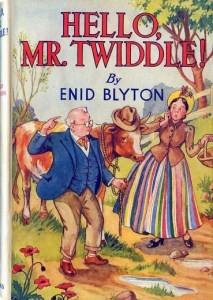
Well Really, Mr Twiddle is the third book all about the doings of Mr Twiddle. Mr Twiddle is a foolish old man, and in this book he does a lot of foolish things from making off with a bather’s clothing to posting his circus tickets instead of his christmas cards.


Posted in Blog talk | Tagged , , , , , | Leave a comment

February 2019 round up

Well, there has clearly been a mix-up behind the scenes here (and I can’t blame anyone but myself!). I’ve just discovered this post lurking in the drafts folder, when it was meant to be published on March 1. Whoops! Seeing as I haven’t made much progress yet with the short story reviews I promised for this week I’m going to publish this now, and save the short stories for next week.


What I have read

I’m still a bit behind schedule for my reading target. I’ve lacked motivation to pick up any of the books on my shelves or to-read pile. I’ve listened to some audiobooks, though, and read a few other things. I’ve found myself watching more TV (well, Netflix on my laptop anyway) as I’ve gotten into a few programmes and it’s nice to indulge sometimes!

What I have managed to read is:

  • Hetty Feather (Hetty Feather #1) – Jacqueline Wilson
  • The Fiery Cross (Outlander #5) – Diana Gabaldon
  • Too Much Information – Dave Gorman
  • Hairy Maclary’s Hat Tricks (Hairy Maclary) – Lynley Dodd
  • C is for Corpse (Kinsey Millhone #3) – Sue Grafton
  • Five Go Off in a Caravanreviewed here and here
  • D is for Deadbeat (Kinsey Millhone #4) – Sue Grafton

That means I’ve read 12 books, and I’m 4 behind target.

I’ve still to finish:

  • The Diary of a Bookseller – Shaun Bythell

I got through the epic 5th Outlander book, which at 1,400 pages is the equivalent of several (like 7 Famous Fives!) shorter books. I’m not letting myself borrow the next one until I have read something I already have sitting at home.


What I have watched

  • The rest of the Marie Kondo series on Netflix
  • Consumed which is another Netflix show about people who live with houses so cluttered they can’t use some of their rooms. It made me feel great about how tidy my house was in comparison!
  • Thanks to Netflix then showing related programmes as suggestions, I then watched a one-off documentary called World of Compulsive Hoarders. And after that I went on to Amazing Interiors, which is basically about homes with weird and wonderful things inside like enormous fish tanks or bespoke interiors on houseboats.
  • Only Connect
  • Hollyoaks
  • Call the Midwife, though I’ve fallen behind as I rarely find a whole hour to sit and watch what I’ve recorded!
  • A few more episodes of The Sinner

What I have done

  • More trips to the park
  • Continuing Organised Mum, Marie Kondo-ing and bullet journaling
  • Had my bathroom completely renovated, which wasn’t fun for the week but has been so worth it
  • Started playing Totem Tribe again
  • Unpacked some pretty great books from in storage at work, including a school atlas from 1853
  • Taken Brodie to Bookbug (aka rhyme time). I’m sad the library we use is closing for six months for refurbishment!


Posted in Personal Experiences | Tagged , , , , , , | Leave a comment

The Malory Towers covers through the years

Previously I have written about the Famous Five covers, the Adventure Series covers and the Secret Series covers. Now I’m going to look at the covers from Malory Towers, my favourite of the school series.


Inside and out with Stanley Lloyd

The original wrap-around dust jackets for the series were done by Stanley Lloyd, who also did the first internal illustrations. His internal illustrations are skilful and detailed but I sometimes think they are a bit washed out. I always get annoyed there are only six per book as well, so so many key scenes go unillustrated. Anyway, the covers are soft but less washed out as they are in colour.

Methuen 1946 / Methuen 1947 / Methuen 1948 / Methuen 1949 / Methuen 1950 / Methuen 1951

Seeing double?

Like the Adventure Series, Malory towers has two sets of wrap-around dustjackets. While Stuart Tresilian did both sets for the Adventure Series, the second set here were done by Lilian Buchanan (who also worked on the Five Find-Outers books).

All Methuen 1957

It’s interesting (to me) that while Last Form is extremely similar, and First Form reasonably similar, the others all show entirely different scenes. I really like Lilian Buchanan’s covers as they are that bit bolder and brighter.


Time for the Armada

Armada are yet again the first paperback edition for a series.

Armada 1963 / Armada 1963 / Armada 1963 / Armada 1963 / Armada 1964 / Armada 1964

Armada covers always look like Armada covers, despite all the different artists. These six have three different artists. First up is Dorothy Brook who did First Form and Upper Fourth, then Charles Stewart who did Second Form while the rest were done by Mary Gernat. Interestingly, there’s a variety within the internal illustrations, too. Dorothy Brook is inside First Form, but none of the others. Charles Stewart did Second Form, Third Year and Upper Fourth, and the last two books were by Dylan Roberts (I don’t think Mary Gernat did much, if  any, internal work.)


More Mary Gernat

Mary Gernat returned to do the next two covers for the series too. As is quite common it’s the same illustrations used two ways.

Alternating Dragon 1967 and Methuen 1970

The first are what I think of as an upside-down polaroid style, which Dragon books used a lot. Then as you can see the second are the same illustration but taking up the whole cover, though these are actually Methuen editions.

The next set are Dragons again, and using the upside-down polaroid too. Strangely, though, First Term is omitted. This time the covers were by Paul Wright. I have a certain fondness for all the polaroid-style Dragons as I had a few of them including Second Form with the Paul Wright cover.

All Dragon 1972

My era of Malory Towers books

Although I had one of the Dragon copies from 1972, that’s a bit before my time! I recognise more from the next four sets of books, even though some of them were still published before I could read. My local library had these editions, though, and that’s where I first read them.

First up are some nice hardbacks with very bold (and somewhat modernised) characters on them. These are 1981 Methuen editions. I remember Upper Fourth in particular and always marvelled at their fancy clothes, not realising it was their pyjamas!

The same illustrations were reused for the 1990 Dean editions, where I had In the Fifth. At least I recognised these clothes as pantomime costumes!

Alternating Methuen 1981 and Dean 1990

The two sets in between these editions are also ones which reuse illustrations. They are by Gwyneth Jones, the first being a straightforward scene and banner, and the second the scene is placed inside what looks like a school crest. I think it was these covers that made me realise quite how unattractive I find the Malory Towers uniforms! What’s interesting is these are Armada editions, they are so different from the classic 1960s ones.

Alternating Armada 1988 and Armada 1990

They show a strange amalgamation of scenes from the books, and yet I come away feeling I don’t know much about what goes on as it’s mostly quite generic. Last Term is about tennis, and girls carrying bags of rubbish?


Brodie was up for three hours in the middle of last night so I am going to stop there for now, and return another week with the rest of the books, which are all of the ‘very modern’ category!

Posted in Illustrations and artwork | Tagged , , , , , , | 3 Comments

Monday #309

Malory Towers covers through the years

and

Short stories from Enid Blyton’s Happy Story Book

“Oh? You’ve got some brains then? That’s good hearing, that is. But I’m busy now, and can’t stop to talk about your brains, Master Frederick. There’s Big Things going on, see, and I’ve got plenty to do without wasting my time talking to you.”

Mr Goon briefly lords it over Fatty at the start of The Mystery of The Missing Necklace.

You Funny Little Noddy! is the 10th book about the little nodding man. It’s raining heavily in Toy Village, meaning Noddy’s taxi service is busy. Unfortunately he has a few accidents and ends up slinking off out of town in shame. Being a Noddy story, though, of course it has a happy ending!

Posted in Blog talk | Tagged , , , , , , | Leave a comment

Enid Blyton’s short stories

Enid Blyton wrote a lot of short stories. I was planning to start reviewing some of them to encourage me to read more of them. But first, I thought I would just write a bit about her short stories in general. (Partly as a general introduction and partly because I haven’t gotten around to ready any yet.)


So how many is a lot?

A lot. So many there’s never been an accurate count done. It would be near impossible to do such a thing, because:

  • Many stories have appeared multiple times in different publications
  • Many others have appeared only once in collections by various authors; some of these under pen-names that are suspected to by Blyton’s but are by no means certain
  • Some stories have the same name as other stories but are entirely different; and some reprinted stories have had their titles changed!

So in order to get a precise (or even close) count you would have to be able to check every book and magazine she wrote or wrote for, and read at least the start of every story to make sure it wasn’t a repeat/retitled. It would be a gargantuan task, and certainly not one I would be willing to undertake. It would take forever and a lot of money just to source every short story collection and magazine with her name on it, without even considering the contributions she made to Teachers’ World, annuals, readers, books of verse and so on.


Types of short story

There are a few different types of short story Blyton wrote.

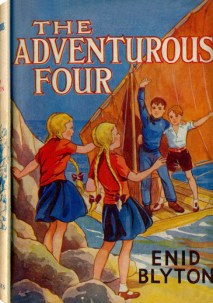
One would be short stories about a well-known character or characters. So the Amelia Jane, Mister Meddle, Mr Pink-Whistle, Mr Twiddle etc books would fit into this category; their books are a collection of short stories rather than a novel broken into chapters. Also, there are short stories about the Famous Five, Secret Seven Adventurous Four and other characters who have their own full-length novels.


Perhaps it’s strange but I rarely consider the Amelia Jane type stories as short stories. The Famous Five type definitely are, as they are very much shorter than the originals. Somehow the fact that the Amelia Jane type are published together in a single volume makes them feel like more of a ‘bitty’ or disjointed novel rather than a short story collection. For me this idea is compounded by the tiny details that do overlap, such as Amelia Jane promising to amend her ways at the end of one story, then it being remarked upon that, at the start of the next story, set not too long later she has forgotten her promise.

For that reason, as well as having already reviewed Amelia Jane and Famous Five short story books, I won’t review this type now. I might review Mr Meddle/Pinkwhistle/Twiddle etc but as whole books.

Anyway, the other type of short story (which I will review) is the standard tale about a one-off character or characters. These form probably the larger part of her output of short stories, and are the ones I have read far less of.


I find it’s harder to care when you’ve only been introduced to Pam/Sally/Belinda/Jane or John/Graham/Kenneth/Michael one page 1, faced with their triumph or tragedy by page 6 and they’ve gone never to be met again by the end of the story. Saying that, the general message of the story is often more important than the person it is about. Blyton used her general short stories to convey lots of good messages about kindness, honesty, hard-work and generosity. The good children are almost always rewarded and the bad children punished or later rewarded when they amend their ways.

There are also a few types of picture-book short stories, like the strip books and so on. These are perhaps short books as they are a single story per publication so I may (or may not) include them in this series of reviews.


What short stories do I have?

At one point I was making a note of all the short stories I had, adding them as I bought new collections. I quickly gave up, though, as it took forever.

I know what collections of short stories I have, though. Not including the Amelia Janes etc, I have around 70 short story collections and books which contain stories amongst other content.

My collection is made up of:

  • 20 (ish) miscellaneous story books
  • 10 Sampson Low Holiday books (I’m missing #1 and #3)
  • 8 Hodder Happy/Jolly etc books
  • 7 Macmillan Story Readers
  • 4 Enid Blyton Magazine Annuals
  • 4 Methuen Colour books
  • 3 Macmillan Nature Readers
  • 3 Foyle’s Flower books
  • 2 Hodder Party books
  • 2 Evans Day books
  • 2 Methuen Naughty Children books
  • 2 Werner Laurie books


As I said earlier I had, at one point, kept a note of the short stories within the books I had. I’ve just checked and there are about 850 listed across just 43 of my books. So if the average book has 20 stories and I have about 70, I probably have in the region of 1,400 stories though of course many will be duplicated. But maybe that gives you an idea of the scale we are dealing with when I said ‘lots’.

I definitely won’t be reviewing hundreds of short stories but I will probably dip in and out of various books and do whatever stories take my fancy!


What’s your favourite short story?

Next post: Short stories from Enid Blyton’s Happy Story Book

Posted in Enid Blyton | Tagged | 2 Comments

Monday #308

Enid Blyton’s short stories

and

February round up

“This is a real secret passage. A really proper one. Golly – isn’t it fun!”

Brock says what they’re all thinking in The Secret of Cliff Castle.

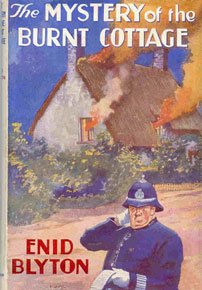
The Mystery of the Burnt Cottage is the first Five Find-Outers book. It’s not only their first mystery but the first time the group exists too. Fatty and Buster meets Larry, Daisy, Pip and Bets in the first chapter and although they don’t like each other much at first, they soon make friends and start detecting. This first mystery sees them trying to work out who set fire to Mr Hick’s workroom, and going up against Mr Goon the policeman for the first time.

Posted in Blog talk | Tagged , , , | 2 Comments

Five Go Off in a Caravan part 2

We left off on an almost literal cliffhanger at the end of my last post, with Julian and his caravan about to be pushed off the hill by Tiger Dan and Lou the acrobat. Shall we see what happens next? (And see all the nitpicks and ‘interesting’ points I can raise as well).


Well of course he doesn’t plunge to his death

I don’t think that’s really a spoiler, is it? There wouldn’t be sixteen more books if Julian had pegged it on (or rather off of) Merran Hill. I mean they could have brought in a distant cousin or a surprise sibling, but it’s Enid Blyton, not a soap opera.

Dan and Lou stop short of the edge of the hill, obviously their plan was not to destroy the caravan. But what is their plan? Why move a heavy caravan just to get at a heathery patch of ground exactly the same as the surrounding heathery ground? Well, Julian up on the caravan roof is just as intrigued, especially when they seem to disappear all of a sudden.

Julian falls asleep (poor show!) and wakes when they reappear with two sacks. He has no idea where they went, and neither will we, for a while.


Going deeper underground

Of course the Five investigate under the caravan, managing between them and Nobby and Pongo to move it.

“Look! Boards under the heather!”
“Laid neatly across and across. What for?”
“Pull them up!”

Well, there’s only a flipping secret tunnel smack-bang underneath the boys’ caravan! The first foray is a brief one – Julian and Nobby go down to retrieve Pongo but Julian’s torch gives out.

But the Five aren’t easily dissuaded, and gamely buy a new supply of torches. Underground it’s a simple matter of following a few dropped cigarette butts and matches to find a haul of stolen goods, and of one page worth’s discussion for them to work out the whole scheme Dan and Lou employ for stealing and hiding the stuff.

What’s not so simple is getting back above ground again…


Trapped!

In a chilling moment the Five and Nobby discover the hole has been covered over while they’ve been exploring. I blame George and her insistence at exploring a bit further instead of heading back to report everything to the police.

They spend an uncomfortable afternoon/evening in the caves, broken only by trying to escape down an underground stream and a visit from Pongo, before Dan and Lou come to collect the goods.

The children are herded along into a further cave while the men start removing the stolen items, and then it’s Dick’s turn to do the brave thing. While Pongo has the men distracted in a brawl Dick escapes the caves and tells the others to hide away. He closes the hole over as best he can and races off to the farm to summon help.


As a part of the series

So far we have had summer, winter and spring in Kirrin, and then a spring not-at-Kirrin. This is the first summer away from Kirrin. As much as I love Kirrin it is nice to have them explore new places – there’s only so many secret passages you can reasonably put in one place. Books one, two and four are set so that there are ‘safe’ adults around regularly, keeping the children from doing anything too wild or dangerous. The third book we lose the safe adults but they are still close to home. This is the first book they are off completely alone for any length of time.

It’s the first idyllic travelling/wandering book in the series; later they will go on bike rides, hikes and camps that will echo the pattern of warm days, lazy picnics, bathing in lakes and streams and exploration.

This story could be split into either three or four parts. Part one while they are at Julian’s home and their time travelling to Merran Lake (that could be divided into two as they are quite different), part two would be the initial camping and run ins with Dan and Lou and part three covering the underground portion and the resolution.


Signs of the times

All the Famous Five books are very ‘of their time’ when you think about it. Aunt Fanny picks the children up in a pony-trap from Kirrin Station, there are galoshes, cars with luggage-holes, and of course a lack of modern technology!

I did notice quite a few things in this book that very much marked its place in time, though.

The Five borrow a horse from the milkman to pull one of their caravans. Milk delivery is not that common in the UK today (though I think it’s making a come-back in some places, due to people wanting to use glass bottles instead of plastic) let alone milk delivered by a horse and cart. Likewise, the children then lend the horses to a farmer to help with the farm-work, and the police use a horse and cart to transport the stolen goods back to the station at the end of the story.

Julian’s father gives them a little book containing a list of farms which will sell eggs, milk and other supplies and allow people to camp on their land. If this was published today it would have to be a list of farm-shops and official camp sites, rather than a list of farmer’s wives selling goods in her kitchen and then pointing to a grassy field where there’s no charge for camping.

The children arrange for the nearest post office to Merran Lake to take in any post that arrives for them. I bet they didn’t have to fill in forms or pay for such a convenient service either.


George’s gender

George’s I’m as good as a boy attitude isn’t constantly in the forefront of all the stories, despite being an important facet of her character. It crops up now and again – mostly when people mistake her for a boy and she is pleased or when Julian tries to put her in her place as a girl and she is furious.

Five Go Off in a Caravan makes a few references to her perceived gender, though she doesn’t make a big deal about any of it, though it comes in useful near the end.

The text notes that she packs like a boy, as she says they’ll want to take nothing but night things.

She insists on driving caravan as it’s man’s job, (though Anne points out she’s a girl, not even a boy let alone a man). She doesn’t bother about washing dishes or other household chores, says Anne. George notes she does feel guilty about this especially when Anne says (she’s bragging really) about all she does for them in the caravans. George hasn’t even made her own bed.

Interestingly Nobby recognises George as a girl and calls her a lady when speaking to Pongo, and she doesn’t correct him. I noticed then that Timmy refers to her as mistress in his doggy thoughts, and has done all along.

Lou mistakes George for a boy and she is pleased, never mind the serious situation they’re in at the time! To be fair it muddies the water. They’re looking for two boys and two girls plus Nobby. They have what they think are two boys, one girl and Nobby. They’re not expecting a girl to have escaped or gone off alone. Though Dan and Lou have met the children a few times, and would have noticed there were apparently three boys and a girl. Anyway, at the end Lou demands an explanation from Nobby:

“So there was only one girl!” he said. “What did you want to tell me there were two boys and two girls for?” he said to Nobby.

“Because there were,” answered Nobby. He pointed to george. “She’s a girl, though she looks like a boy. And she’s as good as a boy any day.”


General questions, comments and nitpicks

This is the first time we ‘meet’ Julian’s mother. Father is mostly absent but he contributes the farm map/booklet ‘off’ screen’. Mother helps them plan/pack/organise their trip and would like to go along (a half-joke).

It takes them five days to reach Merran Lake, and presumably would take five days to get back as they didn’t laze around an awful lot at all. I assume it’s a long holiday, as if it was just a fortnight they’d spend less time at Merran Lake than one leg of the travel! I suppose the travelling is half the fun, camping up at a different place each night.

The children make a point of saying they would only take drinking water from a spring, not a stream. I’m not 100% sure of the difference between spring and a stream that appears from underground – or how you would definitely identify them! Similarly I struggle with the term hollow when not meaning a hollow tree or a hollow victory. It seems to be one of those words used in certain regions – there are plenty of camps and places with hollow in the name. I guess it’s a dip or depression creating a sheltered space but I find it hard to imagine.

Hollow or no hollow I end up picturing the camp set up totally wrongly. The books says At the front of the hollow was a rocky ledge, hung with heathery tufts. That clearly describes (as pictured below) a flat rocky ledge at the edge of the hillside, overlooking the lake. I imagined a rocky bench, complete with a back to lean against running alongside the caravans and it’s hard to shift that mental picture.

I wonder where Nobby’s boat comes from? Surely they don’t lug a boat around all year, or use it as a circus prop! I also thought it a bit far that Nobby recognises and remembers the Five from their brief meeting over a week before. Surely lots of children hung over gates to watch the circus go by and talked to him. I did like Nobby signalling a twist on the baddies doing it. He uses a white shirt for ‘everything’s ok’ and he and Pongo waving red things meaning double danger.

Anne eats shredded wheat for breakfast, the first time I’ve noticed a specific product mentioned. It’s not a trademark or anything (not like she ate Frosties) but it seemed odd, to name a mass-produced product from a box when normally it’s generic sausages, porridge, vegetables etc.

Barker’s almost instant reaction to eating poisoned meat seems a bit suspect. I know snake bits etc can be rapid but he’d have to eat the meat, let it travel to his stomach, start to digest it and have the poison enter his bloodstream. There are some things like bleach that would affect you very quickly if you ate it – but generally you would notice pretty quickly and stop eating!

Pongo is as good as (or maybe better than) Timmy in terms of defending the children. He is strong, can bite, and can throw stones with great accuracy.

George has broken her torch and Julian’s runs out two minutes into exploring underground – that’s a poor show for the Five!

I asked myself this time was Dick smart or foolish to trap the men underground? He prevents them getting away so the police can catch them but in doing so relies on the others hiding long enough to keep safe. We know Dan and Lou have dreadful tempers, and crucially, a gun! Imagine what they could have done to the children upon finding themselves trapped underground!

Saying that is is a pleasing sense of deja vu as the men find themselves trapped in the exact same way the children did earlier.

A last nitpick: the text in my (1959 11th impression) reads that Dick Woke up the Mackie’s. I wonder when that mistake crept in because I can’t imagine Enid Blyton making such a heinous mistake with an erroneous apostrophe.

There are also quite a few funny moments in the story.

Julian runs straight into Dobby’s side when he and Dapple disturb the girls by bumping into their caravan in the night, and then the echo of that when Dan and Lou walk right into the caravan a few nights later.

Pongo is hugely funny. He tries shaking hands with Timmy’s tail, he hides behind his hands pretending to be chastened, and steals sweets from pockets. His looking for the ‘light’ which has ‘dropped’ out of a broken torch is funny and yet so believable too.


This is in my top 10, it’s in fifth place if you want to be exact. It balances plenty of gentle fun and enjoyment with some very hairy moments. Dan and Lou are nasty baddies while Nobby and Pongo are good sidekicks.

How do you rate the book?

Next post: Five on Kirrin Island Again

Posted in Book reviews | Tagged , , , , , , | 3 Comments

My top Blyton locations

I had, initially, intended this to be a top ten. But knowing how they almost always turn into top elevens, example A (top Famous Five moments) and example B (Top Adventure Series moments), I missed the number out of the title. Which is just as well, as I came up with eleven locations in the end!


11. Malory Towers

While I’m not convinced I would love boarding school life (I like my privacy and being stuck in a dorm with a bully sounds like hell) if I did do boarding school I don’t think it could be in a better place. The building itself sounds pretty decent with a lovely sunny courtyard in the middle, but the real selling point is the coastal location. Overlooking cliffs and the sea, there must be amazing views. I also love the idea of the swimming pool filled by the sea as I love sea swimming.

10. Peterswood

Peterswood is a pretty normal 1940s village – a bakery, a butchers’ shop, post office, a police station/house, grocers’ boys on their delivery rounds, buses rumbling by on their way to market… but it’s a charming and wholesome place all the same. Full of interesting local characters and quaint old-fashioned stores – many with free daily deliveries – it’s a lovely slice of a time long past. The fact it was based closely on Bourne End is the icing on the cake as you can really walk along some of the paths taken by the Find Outers – or at least look at photos of them!

9. Craggy Tops

Lacking many comforts even by the 1940s standards, Craggy Tops isn’t my idea of the perfect home, and yet here it is on my list. There’s just something appealing about that old, imposing house built into the cliffs and being lashed with sea spray. Of course it has a tower room with occasional views of the elusive Isle of Gloom, a secret passage and a beach out front.

8. Finniston Farm

Finniston seems like an average working farm at first glance, but it’s the history that makes it more interesting. The long-lost site of a castle (which of course the Five find, because that’s what they do!), the old chapel-turned-grain-store, centuries old Oak-Tree Field, Hangman’s Copse, Tinkers Wood Field, Faraway Field… the place is steeped in history. There’s hidden treasure in the old castle dungeons as well, but even without that it’s a great place. I love the details like the old castle door now in the farmhouse kitchen leading to the yard.

7.  The Valley of Adventure

The valley doesn’t have a name, but what it does have are a lot of interesting caves and underground passages. The ruined and burnt out village is quite melancholy but the trees, flower-filled meadows and huge waterfall quite make up for it. Being entirely shut off from civilisation (apart from the odd aeroplane) it’s a very tranquil place, perfect for hiking and exploring.


related post⇒ The Valley of Adventure travel brochure


6. Puffin Island

Puffin Island is only the nickname the Mannering/Trents give the island from The Sea of Adventure, and it’s accurate as it is covered in puffins. I would love to visit a puffin island with my camera and capture all their antics.

5. Demon’s Rocks

The whole Demon’s Rocks area sounds so interesting. Like Finniston Farm it’s steeped in history – this time of wreckers. Caves and passages under the sea, a quaint village and an old lighthouse, what more could you ask for?


related post⇒ Demon’s Rocks holiday Brochure


4. The Secret Island

You’d be spoiled for choice on the secret island. Sleep in the heathery bedroom? The caves? Willow house? Explore and pick wild strawberries, paddle in the lake or take the boat out for a row? There are so many fresh foods to pick from, new-laid eggs, fresh creamy milk, runner beans, raspberries, you couldn’t go hungry either.

3. Old Thatch

This is the only real location I’ve included. There are a few other real places associated with Enid Blyton but either they don’t exist any more (like Green Hedges) or I haven’t yet visited (Corfe Castle, Poole Harbour etc). Old Thatch was her home in Bourne End and had beautiful gardens around it. I was lucky enough to visit it on a couple of occasions when it was open to the public and it was such a tranquil place.

2. Smuggler’s Top / Castaway Hill

A house full of secret passages, built on a hill full of secret passages. How could this not feature? The quaint old town with its great surrounding wall would be fascinating to explore, all those little old houses with the diamond-paned windows would be so picturesque. Then the big old house right at the top would have wonderful views especially from the tower. I’ve always wanted a house with a tower.

1. Kirrin

Ah, Kirrin. The most idyllic of idylls. Warm, welcoming Kirrin cottage just a stone’s throw from a glorious sandy beach. Moors out the back, ancient arrowheads in the old quarry… and that’s before we even mention the rugged island with it’s own castle, cave, dungeons, wrecked ship, sandy beach, rabbit population, jackdaws and undersea tunnel to the mainland. It’s the kind of place you could holiday in over and over, and the Five do exactly that.


Some of you may have noticed I have missed out locations from my favourite books. I considered a few and dismissed them, for various reasons. I love Five On a Hike Together, and Two Trees / Gloomy Water is an excellent setting but too – as the name suggests – gloomy and depressing what with the house being burned down. The Circus of Adventure doesn’t have a single amazing location, rather it’s a sum of several interesting ones. I suppose I could have chosen the titular circus but that’s more of a community than a place. Tremannon Farm (Five Go Down to the Sea) was also scored off a mental list as we don’t know much of the farm itself, the joy of the story comes from the wreckers’ cove and the visiting barnies.

What’s your favourite (real or fictional) Blyton location?

Posted in Locations | Tagged , , , , , , , , , , , , , | 6 Comments

Monday #307

My top Blyton locations

and

Five Go Off in a Caravan part 2

To his enormous astonishment he saw two Mr Larkins on the ground. Two faces with straggly beards and shaggy eyebrows and thick glasses looked up at him, blinking in the light of the lantern.

Mr Goon gets a bit of a shock in The Tally-Ho Mystery. It’s just as well that all three Mr Larkins weren’t running around in the night at the same time, I’m not sure he could have coped with that.

Faynights Castle features in Five Have a Wonderful Time. It is a bit like Kirrin Castle in that it is a ruin, with one remaining and inaccessible tower. The big difference is that there’s a turnstile and a charge to enter! The outer walls are eight feet thick, so it’s lucky there’s a missing brick that gives access to a secret passage in the middle – otherwise the Five couldn’t find their way up into the tower where they’ve spotted a mysterious face.


Posted in Blog talk | Tagged , , , , , | Leave a comment

The Secret Series covers through the years

I recently looked at the different covers used for the Famous Five books and The Adventure Series.


One series. Five books. Four cover artists.

The Secret Series is perhaps unusual due to how many different cover artists the series had. While the Famous Five’s first editions all had Soper covers, and The Adventure Series had ones by Stuart Tresilian, the Secret Series had four different cover artists – for just five books!

It’s not unheard of for a series to have different artists doing the covers, for example the Find-Outer books had three artists across fifteen books, but for only one artist to return must surely be an anomaly?

The artists in question were: EH Davie (Island external and internal and Spiggy Holes internal), Harry Rountree (Spiggy Holes external and Mountain internal and external) Eileen Soper (Killimooin internal and external) and Dorothy Hall (Moon Castle internal and external). This variety perhaps makes it harder for us to get a good mental image of the characters as they change from cover to cover cover, cover to insides, and insides to insides.

Anyway, let’s see how they all look.

Basil Blackwell 1938 / Basil Blackwell 1940 / Basil Blackwell 1941 / Basil Blackwell 1943 / Basil Blackwell 1953

I think the first and last are reasonably similar in style and colour palette, and the remaining three are somewhat alike too. Spiggy Holes probably stands out a bit with it’s very bold colours and I’ve seen several people mention the incongruity of the moonlit background and the sunny foreground!


Armada strikes again

As I said in a previous post (link) Armada published a lot of the first paperback editions of Enid Blyton books. In The Secret Series case, Armada did four runs of paperbacks, all in very different styles.

The first ones had covers by Mary Gernat and are what I think of as typical Armada covers. They tend to have the title in the top right or left corner, with one or two words per line so rather than all in a row. They also generally have a fairly solid background colour. Even though there are several different artists on these covers they still feel like they all belong together.

Armada 1965  / Armada 1965 / Armada 1965 / Armada 1965 / Armada 1966

Peter Archer then did two different runs of paperback covers.

The first ones are of a style also used for the Adventurous Four, Six Cousins, The Naughtiest Girl and probably many more besides. They have the book’s title in the middle, taking up two lines, Enid Blyton’s signature below and the Armada logo above.

All Armada 1971

I have no idea where the fancy ship comes from on Killimooin!

The second set remind me of the 1993 Award Famous Fives, though each one has a different colour border and only one is yellow.

All Armada 1978

The last Armada set is by an uncredited artist. These make me think of jigsaw puzzles or board game boxes, perhaps due to all the Secrets, or rather S ⋅ E ⋅ C ⋅ R ⋅ E ⋅ Ts that runs around the edge of the cover. These have a mode modern and cartoony look with the scenes being viewed from some unusual angles.

All Armada 1986

Award covers

Not covers that have won awards (that I know of) but rather covers on books by Award Publications.

After four lots of Armada paperbacks, there are four lots of Award ones. A nice neat split!

The first Award set have covers by Dudley Wynne (and internal illustrations too). These have a boxed illustration, and a coloured border which extends up behind the title.

All Award 1992

Spiggy Holes is red and Mountain yellow, so it strikes me as odd to have the three others so similar in colour. They also suffer from a lack of continuity with the titles. Secret should be small on them all (in my opinion!) as of is such a small word it doesn’t have a huge impact on the layout of the titles.

The next two have uncredited covers by the same artist. These are interesting as it is clearly the same illustrations used for both sets, but most have one or two small differences as well as being a close up. The book titles obviously change too, the first set being inconsistent with colour and layout, the second having added purple banners and a logo.


Top row all Award 2002
Bottom row all Award 2007

Take a look at the girl in pink on the cover of The Secret Island. The first time she has bare arms and the later cover her top has long sleeves. On the Spiggy Holes cover both the boys’ backpacks change colour. Mountain has Ranni’s (or is it Pilescu’s?) gun change into a walking stick. I can’t see any changes to Killimooin, but the moon has been moved on Moon Castle.

And the last Armada lot have covers by Val Biro, the author and illustrator of the Gumdrop the Vintage Car series. I used a copy of The Secret Island from this set to do the comparison against the original.

All Award 2009

These are quite nice covers, I think. They are not too modern or cartoony. The only flaw is this is when they renamed The Secret of Killimooin to The Secret Forest!


When five become four

The latest versions for the series are from 2016. They are by Hodder and have covers by Sarah Warburton. The obvious thing about this set is that there is one book missing! The Secret Mountain has not been republished, and probably won’t be again until Blyton’s work enters the public domain in 2038.

All Hodder 2016

While these are quite striking with their greyscale textured backgrounds I’m not sure they’re a great fit for the series. They make the books seem quite dark and depressing, which they are not. In addition, The Secret Island looks like an epic about children lost at sea, while Spiggy Holes could be mistaken for a sci-fi adventure about a wormhole.


Choice of scene

What I think is always interesting is looking to see if the covers feature the same scenes. On the whole, these do.

The Secret Series has 8/9 books with children in a boat, Spiggy Holes sees 6/9 covers of children shining torches up cave-stairs (and two of boys climbing ropes), and 8/9 Moon Castle books have the children outside with torches.

Mountain has a bit more variety, but 5/8 covers still have the children walking/climbing towards/up the mountain. Killimooin/Forest has 5/8 covers of the children on horses though on different parts of their journey so they look more unique.


So, what covers do you like? My favourites are, of course, the originals, (though it’s a pity there is such a variety of looks in just five books), yet I have a certain fondness for the first Armada set too.

Posted in Illustrations and artwork | Tagged , , , , , , , , , , | 2 Comments

Happy Valentine’s Day

Romance is rare in Enid Blyton’s books. I can’t think of many scenes or plots that lend themselves to romance or love. There are lots of married parents, of course, but few weddings.

Bill and Aunt Allie get married, of course, between The Ship of Adventure and The Circus of Adventure. Although seeing as Bill’s idea of a proposal is saying so what about it, Allie? when Lucy-Ann suggests they wed, I’m not sure we can call it a true romance. They are very fond of each other, though.

Mary Mouse has a brief courtship with a gardener mouse in Hallo, Little Mary Mouse.

Melisande and Jane appear to have a bit of a crush on a well-to-do local boy with a beautiful horse and Jane even goes to the bother of washing and dressing more neatly to impress him.

We’ve injected a bit of romance into our fan fiction covering what Julian Kirrin, Sally Hope and Darrell Rivers got up to after the events of the Famous Five and Malory Towers.

You can find part one here, and part two here.

Posted in Fan fiction | Tagged , , , , , , , , , , | Leave a comment

Noddy loses his clothes, artwork by Gina Parr

While searching for information on who steals Noddy’s clothes in one of the books (for the latest search terms post) I stumbled upon something a bit random and surprising. Now that’s not that uncommon with the amount of stuff on the internet, but I thought this was worth a post.


Noddy loses his clothes

Noddy loses his clothes is a painting by an abstract artist called Gina Parr.

The piece is from a series called Major New Dramas, and according to the Riseart website where I found it listed for sale, the series is partly inspired by Parr’s previous work as a designer for TV.

Noddy loses his clothes in particular is based on the a childhood memory of a Noddy story where he is left vulnerable and alone in the woods, having had his clothes stolen. Parr has said that those are feelings that commonly return to us all as adults, at some point in our lives.

The information above is only available on a cached version of the site found here (for how long, I don’t know.) The current Riseart page doesn’t explain the inspiration for the piece.


The specifics

The painting is acrylic on canvas and is 1.2 metres by 1.2 metres, so quite large. It’s actually from 2007 so it’s not even new, just a little bit obscure perhaps!

Here’s what it looks like:


What do I think?

It’s not what I expected from the title. I can see a tree in the middle, a great dark one with branches reaching up, and trees in the background. Beyond that, though, I’m not great at interpreting abstract works. It’s certainly dark and scary. It’s not a sunny warm woodland scene with flowers and cute animals. There are may be shadowy figures and faces hiding amongst the branches. The orange and white stripes sort of suggest a lot of movement? Like blurry creatures rushing around. On a second look maybe the orange is actually sunlight filtering through the trees? (This is why I’m not the biggest fan of abstract art – I like to know what I’m looking at!)

I can sort of see the inspiration from the Noddy scene (from Here Come Noddy Again), but it isn’t the sort of piece that has an instantly recognisable connection to Noddy let alone a specific book. If someone was asked to guess what the painting was of I wouldn’t be surprised if they said a nightmare in the woods, but I doubt they would ever get Noddy. There’s no (that I can see) suggestion of clothing, Noddy’s colours of red and blue, Toyland, Blyton…


Related link⇒ Here Comes Noddy Again – How has Blyton’s text fared in a modern edition?


But then art isn’t always about showing us what we recognise. This piece is clearly about an individual’s memory of that story and much more about the emotions of the story than what it actually looked like.

Below: the original artwork for the story, and the modern version with the gollies changed to goblins. Both feature dark trees in the background.

here comes noddy again

I love seeing anything inspired by Blyton because it shows how big an impact she had on the children that read her books.


One last thing

The price of the painting is £4,550. Ouch. Or you can rent it for £342 a month if you’d prefer.

What do you think of it?


Apologies for the brevity of the post but Brodie is full of the cold and gaining about six new teeth at the moment. Sleep is rather lacking, and with a new bathroom going in time is short.

Posted in Illustrations and artwork | Tagged , , , | 2 Comments

Monday #306

A piece of Noddy artwork

and

Secret Series covers

The Second Form at St Clare’s is not, as the title suggests, the second book in the St Clare’s series. Rather, it is the fourth. After three books focussing on the first form Pat and Isabel O’Sullivan have finally moved into the second form. There’s a new form mistress and a new drama teacher and, in a plot point that is echoed in Fifth Form at Malory Towers, two girls have been left down from the previous second form. These two, Elsie and Anna, become co-heads of the form and along with new girl Mirabel provide a starting point for arguments and bad feeling. Besides that there’s the usual tricks and jokes from Bobby and Carlotta, midnight feasts, a concert and lacrosse.

Well we’ve had Mr Twiddle, so how about poor old Mrs Twiddle? She’s the one who returns to a disaster in her home most days, and has to pick up the pieces from whatever mess her silly husband has gotten himself into. I feel sorry for her, but then again she’s clearly spent many decades enabling him to be so useless!


Posted in Blog talk | Tagged , , , , | Leave a comment

Five Go Off in a Caravan

Five Go Off in a Caravan is the fifth Famous Five book. The Five are a well-established group now and they had their first non-Kirrin adventure in the last book, Five Go to Smuggler’s Top. This time they go off in two caravans, not a caravan as the title suggests, and find themselves embroiled in another adventure (naturally).


Why caravans?

Well, why not caravans? I mean apart from the lack of space, the lack of amenities, the shaking every time someone walks around… (I actually loved [static] caravan holidays as a child – my parents don’t seem to look back so fondly, though).

The Five get the idea for a caravan holiday when a circus goes past – on its way for a short break between performances – and the brightly coloured caravans look an appealing way to travel.

It’s too hot for walking, Anne can’t cycle as fast as the others and a hotel would mean too many adults. George doesn’t want to go to Kirrin as she was home at half-term and Father was just beginning one of his experiments – and you know what that means. If we go there we’d have to walk about on tiptoe, and talk in whispers, and keep out of his way the whole time.

Anne adds that she likes Uncle Quentin but she’s afraid of him when he’s in a temper. This is more like the Uncle Quentin we normally expect, rather than the suddenly interested one we got at the start of Five Go to Smuggler’s Top.

So caravans it is! They are not quaint and brightly coloured circus-style caravans though. They are shiny modern, streamlined, ones which can be pulled by horse or car.

Each van had a little chimney, long, narrow windows down the two sides, and tiny ones in the front by the driver’s seat. There was a broad door at the back and two steps down. Pretty curtains fluttered at the open windows.

There are bunks along the side, a sink with running water, a proper stove and a gadget for heating water. Though, as we would expect, the Five spend most of their time cooking and washing outside anyway!

Their days in the caravans are a typical Blyton idyll, meandering down lanes in glorious weather stopping only to eat and camp for the night. They stop at farms along the way for supplies and to get permission to camp, and it’s after four or five days’ travel that they catch up with the circus.


The circus

Blyton loved her circuses and wrote them into several of her series as well as basing whole books on them.


Related post⇒ The Circus of Adventure


I love Blyton’s circuses as she paints a warm and loving community who all look after each other and live comfortable yet exciting lives. Ok so it’s probably a far cry from the reality of the situation, but not all fiction has to be gritty and realistic.

The caravans were set round in a wide circle. Tents had been put up here and there. The big elephant was tied by a thick rope to a stout tree. Dogs ran about everywhere, and a string of shining horses were being paraded round a large field nearby.

Most of the camp is jolly and friendly. There’s Nobby who they saw when the circus passed, his terriers Barker and Growler and Pongo the chimpanzee. Then there’s Larry and Old Lady the elephant who plays cricket, more terriers that play football and Rossy with his horses including Black Queen and Fury. Not to mention Lucilla and her troupe of monkeys.

But then, of course, there is the darker element of Tiger Dan and Lou.


Tiger Dan and Lou the acrobat

Dan is Nobby’s uncle (well, later Nobby reveals he’s just the man his parents had asked to look after him before they died). We first see him driving his caravan past the children at the start of the book. Nobby points him out and says he’s the chief clown.

The children stared at the chief clown, and thought that they had never seen anyone less like a clown. He was dressed in dirty grey flannel trousers and a dirty red shirt open at an equally dirty neck. He didn’t look as if he could make a single joke, or do anything in the least funny. In fact, he looked really bad tempered, the children thought, and he scowled so fiercely that Anne felt quite scared.

Later Anne says she just can’t imagine Dan as a clown because clowns are always so merry and gay and jolly. Dick points out that it’s just an act, and that a clown needn’t be the same out of the ring as he has to be when he’s in it. If you look at photographs of clowns when they’re just being ordinary men, they’ve got quite sad faces. I love Dick’s insight there. I wonder how Blyton would make of modern-day performers and celebrities who have to be ‘on’ all the time.

Dan is worse than just sad, however, according to Nobby:

He’s worse than a tiger when he’s in a temper. They call him Tiger Dan because of his rages.

Lou the acrobat isn’t much better.

Lou was a long-limbed, loose-jointed fellow with a ugly face, and a crop of black shining hair that curled tightly.

He too is bad-tempered, scowling and unfriendly. He sees the children and comes over to ask what they’re doing messing around. He calls them posh (as an insult!) and tries to kick Timmy before threatening that he has ways of dealing with bad dogs.


Related post⇒My top three baddies


Julian had already made up his mind to have as little to do with this pair as possible but Lou and Dan run into them – literally – that night.

They are chatting in the night (a distance from the circus – that’s a mark of suspicion against them already) and walk straight into the girls’ caravan in the dark.

They are not best pleased to find out the children are so close and tell them to clear out in quite a nasty stand-off.

Those who have read this book before will know that Lou and Dan are up to some illegal doings, which of course the Five get caught up in. They clearly hate anyone ‘snooping’ around their camp and thus want rid of them, but they should have been careful what they wished for…


Are they coming or going?

So Lou and Dan are keen for the children to clear out, and clear out they do. There’s no point in staying where they aren’t wanted and aggravating the situation.

They head up into the hills – though Lou and Dan expect them to be travelling on past the hills – and on the advice of the farmer they set up camp in a shady hollow which is complete with a burbling spring and a lovely view of the lake.

Incidentally, Julian had always planned to camp away from circus in case it was noisy or smelly.

After a hot and lazy day they decide to go down for a swim in the evening and lo and behold, bump into Lou and Dan half-way down the hill. The men enquire whereabouts they are camping and suggest it’s better back down at the bottom of the hill. How curious, considering how keen they were to get rid just the day before.

On their way back up – with Nobby – they discover Lou and Dan are hanging around their caravans. They two men are trying to be amiable – and warn them they want to exercise some animals in the area so the children would be better off moving. In fact, they even say they can come and camp back by the lake! What a change of attitude.

“Yes, you come,” said Tiger Dan to the children’s growing astonishment. “You come, see? You can bathe in the lake every day, then – and Nobby here can show you round the camp, and you can make friends with all the animals, see?”

Nobby has already told the children he was beaten for talking to strangers so he is just as shocked. When he expresses his amazement Dan roars at him to shut up before Lou reminds him with a nudge to be friendly.

Julian sees through this performance though and says You’ve got other reasons for making all those suggestions. George is adamant she’s not moving her caravan for anyone. And so, they stay.


Things start happening

The four children have a lovely day playing around the circus but discover than Tiger Dan often disappears at night (suspicious marker #2) and has a cart which is often full of secret things and is sometimes half-empty (suspicious marker #3).

Timmy, meanwhile, has been left to guard the caravans and is barking madly when they return that evening. Nobby, Barker, Growler and Pongo are with them, and Barker eats some raw meat that’s been left out. When he takes ill they realise the meat has been poisoned, which is why Timmy and Pongo wouldn’t go near it.

But who would try to poison Timmy? Could it be Dan and Lou who clearly want the children out of that hollow and were conveniently missing from the circus camp all day?

Highly suspicious of Dan and Lou, Julian comes up with a plan to find out why they are so interested in their camp. After shouting to Nobby that they’re all off to town for they day they board a bus. Julian gets off at the next stop and doubles back, hiding himself on top of one of the caravans.

After a time Dan and Lou show up and – for some unfathomable reason – go underneath the caravan Julian is on. Then they start pushing the caravan towards the edge of the hill.

Do they push it right over? Does Julian plummet to his tragic death?

Considering this is an Enid Blyton book and there are another seventeen books in the series the answers are most likely to be no, but it’s a tense moment all the same.

Come back next week to read the rest of my review!

Next post Five Go Off in a Caravan part 2

Posted in Book reviews | Tagged , , , , , | 2 Comments

January 2019 round up

What I have read

I have set a new target of 100 books for 2019. I haven’t started out very well, though. I got quite a few books for my Christmas but I haven’t started any of them yet. I’m doing that thing where I suddenly worry I won’t like them after all and so put off reading them. So I’ve read 5 when I should have read 8, putting me 3 books behind schedule!

What I have managed to read is:

  • The Drums of Autumn (Outlander #4) – Diana Gabaldon
  • The Undomestic Goddess – Sophie Kinsella
  • No Waste Like Home – Penney Poyzer
  • The Steam-Pump Jump (The Chronicles of St Mary’s #9.6) – Jodi Taylor
  • The Illustrated Mum – Jacqueline Wilson

And I’ve still to finish:

  • The Diary of a Bookseller – Shaun Bythell
  • The Fiery Cross (Outlander #5) – Diana Gabaldon
  • Hetty Feather (Hetty Feather #1) – Jacqueline Wilson

So you can see I have picked up another 1,400+ page Outlander (borrowed from the library) instead of tackling my to-read pile at home. I also borrowed Too Much Information by Dave Gorman as I love his Modern Life is Goodish but haven’t opened it yet. And I’ve been recommended the Thursday Next series by Jasper Fforde, but I’m refusing to even think about borrowing the first one until I’ve made headway on the pile by the sofa.


What I have watched

  • Hollyoaks
  • More Cbeebies
  • Only Connect
  • Call the Midwife‘s latest series
  • Back in Time for School
  • Sinner on Netflix
  • Tidying Up with Marie Kondo also on Netflix

What I have done

  • Finalized the details of my new bathroom
  • Started bullet journaling (we will see how that pans out…)
  • Made our usual visits to the park, our local zoo and rhyme time at the library
  • I’ve not mentioned this before but since November I’ve been following The Organised Mum Method for housework. Honestly, my house has never looked better.
  • Inspired by Marie Kondo I’ve also done a bit of clearing out. I’ve tackled my jewellery so far. I find it so hard though as I hate sending thing to landfill. I will give what I can to charity, but I still struggle with ‘wasting’ anything.

Posted in Personal Experiences | Tagged , , , , , , , | Leave a comment