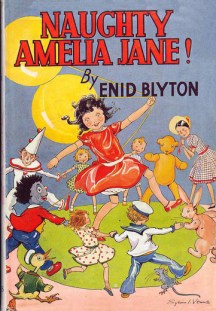
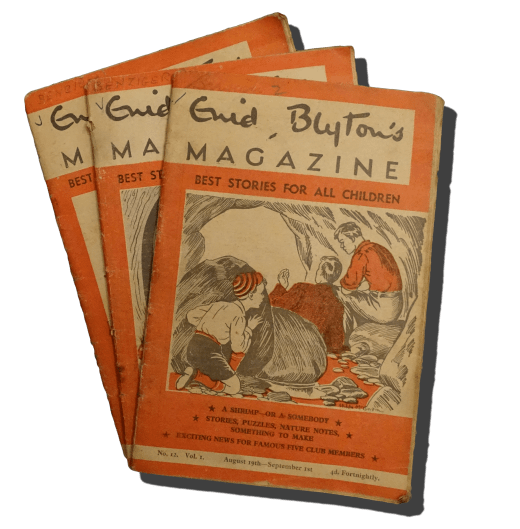
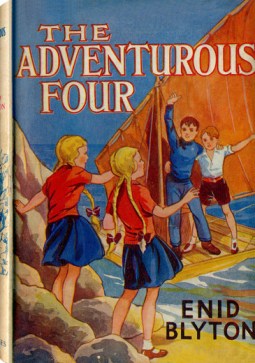
Monday #323

Letters to Enid volume 6

and

Five Go Off to Camp part 2

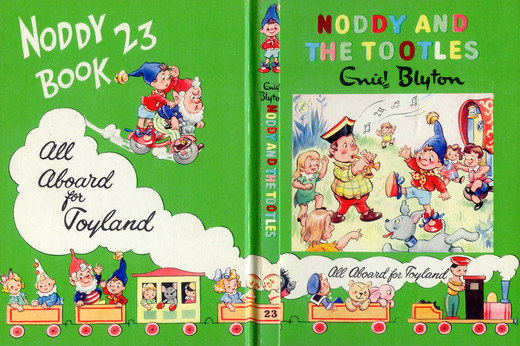
Noddy and the Tootles is the penultimate book in the series of 24 books about Noddy. The Tootles are a family of musical gypsies who camp by Noddy’s house, Mr Tootle, Mrs Tootle and their eight little Toots. At first they may seem like harmless and amusing neighbours but soon they are causing Noddy bother and he has to do some work to get things sorted again.

noddy and the tootles

Alison O’Sullivan is a cousin to the O’Sullivan twins, Pat and Isabel. She joins St Clare’s at the start of The O’Sullivan Twins, the second book about the boarding school. Pat describes her instantly as a bit stuck up (which is rich coming from her!) full of airs and graces and as having had her hair permed. This brief insight is quite accurate as when we meet Alison and follow her through a few years at St Clare’s she is certainly vain, feather-headed and really quite silly. She spends a lot of time idolizing and worshipping some older girl or school mistress, usually because they are pretty, or glamorous or wealthy, or sometimes all three though she does improve a little as the series goes on.

Posted in Blog talk | Tagged , , , , , | Leave a comment

Five Go Off to Camp

This is the seventh book in the series, a series which was only meant to run for six books! Children loved the Famous Five so much, however, that Blyton wrote another six. And another six. And then a final three.

My sister and I had this book on cassette tape and used to listen to it all the time so I find bits of the book playing in my head as I read it. Not everything as the cassette was highly abridged but many of the lines of dialogue stand out in my memory – Blow, I’ve sprained my ankle! – But you will let me come next time, won’t you, Julian? – That’s let the cat properly out of the bag – Aye, I’m a ninny – Cecil Dearlove! and loads more!


A story in three parts

Usually I split the stories into three bits – the start where nothing adventurous happens, but they arrive somewhere and settle in, the adventurous middle and an exciting conclusion.

This one I’ve split a bit differently:

  • The Five going off and setting up camp with Mr Luffy, and hearing the story of spook trains from Wooden-Leg Sam.
  • The Five meet Jock and begin to investigate the spook trains.
  • The drama in the Kilty Vale / Roker’s Vale tunnel.

Usually the first discovering of a mystery/adventure would start part two, but I feel it fits more into part one here. Once they meet Jock the dynamics of the group change a bit and the real adventures begin, starting from Mr Andrew’s OTT warnings to stay away from the spook trains.


All about Mr Luffy

Mr Luffy is one of Julian and Dick’s school teachers, and is also a friend of their parents/ Due to all their previous adventures their parents aren’t keen to let them go off on their own again, so they arrange for Mr Luffy to go with them to supervise.

Only Mr Luffy is more likely to need supervision! He is a bug enthusiast and is happy to disappear for hours on end, forgetting about meals and everything else, including friends he was out with.

Two chaps I know once went out in his car with him for a day’s run, and he came back without them in the evening. He’d forgotten he had them with him, and had left them wandering somewhere miles and miles away,” – Julian

On form, he arrives late to pick them up, and then drives too fast as he forgets he is pulling a trailer. The last time he took it he lost half the contents through bad driving! Later he almost drives off with the empty trailer still attached as he forgot about it – and says he’s always taking it without meaning to.

He’s almost like a very genial version of Uncle Quentin – though he seems to pay a bit more attention to the importance of regular meals.

Blyton describes him as an odd-looking fellow. He had very untidy shaggy eyebrows over kind and gentle brown eyes. He had a rather large nose with looked fiercer than it was because, unexpectedly, it had quite a forest of hairs growing out of the nostrils. He had an untidy moustache, and a round chin with a surprising dimple in the middle of it. His ears… were large and turned rather forward, and [he] could waggle the right one if he wanted to. To his great sorrow he had never been able to waggle the left one. His hair was thick and untidy, and his clothes always looked loose, comfortable and too big for him.

I just love the extra detail about the ear waggling, and especially his sorrow about not being able to waggle the other one. I almost know how he feels as I can raise one side of my upper lip in a marvellous sneer, but not the other!

Initially, when we’re told that the Five are going to have to put up with a supervising adult for their holiday you imagine that they’re not going to be very happy about it. As a reader we also are not that happy, unless we think they can be quickly disposed of with an emergency at home or something. But as soon as we hear about Mr Luffy I think we relax, and understand why the children are quite happy to go off with him. They like him, and also know that he’s not going to be bossy or cramp their style. It turns out he’s great fun anyway. He had wanted to camp near the children but was tactful enough to camp further away when he realised they would prefer that. He lets them do their own thing, but joins them for the odd card game and he’s also a great swimmer, even faster than Julian.

Still, imagine going to boarding school all year then going on holiday with your teacher as well! Not sure what modern safeguarding would make of it.

I love Soper’s artwork as always but she just doesn’t draw Mr Luffy like I imagine him. I picture him as having much bushier hair and stronger features. I think I also imagine him as quite a bit older than Blyton and Soper do. He looks around 40, maybe, but in my head he’s more like 60.

Mr Luffy comes through for the Five a couple of times in the book, proving they were right to go away with him. First he stands up to Mr Andrews and allows Jock to stay with them at camp, and then he reports the missing children to the police and escorts Anne on a rescue mission.


Jock, Mr Andrews and Mrs Andrews

Jock is an important sidekick in this book. Often the Five adventure perfectly well all by themselves, but it’s also nice when someone else is included (especially when he doesn’t make idiotic car noises all the time…).

Jock Robbins lives at Olly’s Farm with his mother and step-father. Mrs Andrews explains they have different names, rather apropos of nothing, as Jock was her first husband’s son. Maybe she thought they looked the judgemental type.

Olly’s farm is a smallish place where you would expect them to be scratching a living by working all hours. Surprisingly, though, it’s full of shiny new mod-cons, equipment, machinery, lorries. It doesn’t quite add up. Mr Andrews is no farmer, he hires men who are rubbish farm-hands.

It doesn’t add up from the perspective of a reader who knows what’s going on. Spoilers to follow!

So Mr Andrews is running a side operation in black-marketeering. I say side operation, it probably accounts for 95% of the income. So why pour so much money into an unprofitable farm? Anyone with half a brain could tell that farm couldn’t produce enough profit to sustain that sort of spending. I suspect a lot of it is just to please Mrs Andrews who seems like a lovely woman. I do wonder though how much she suspected and whether she was burying her head in the sand. She knows how to run a farm, surely she could tell the figures didn’t add up?

Also, I know he needed labourers for moving the stolen goods but why for goodness sake does he hire them as farm hands then let them skulk around doing very little? It’s all very stupid if you’re trying to pretend nothing out of the ordinary is going on. But then again maybe he’s just very stupid. His massive over-reaction to hearing the children talking about spook trains proves that. He rambles about Bad things. Accidents. – possibly the Comic Strips inspiration for the Robbie Coltrane speeches. He even insists that the spook trains are real – a sure fire way to make sure the boys go to investigate. His attempts to keep Jock from the children also seems heavy-handed and I’m surprised the children don’t see through that earlier and suspect him of being involved.

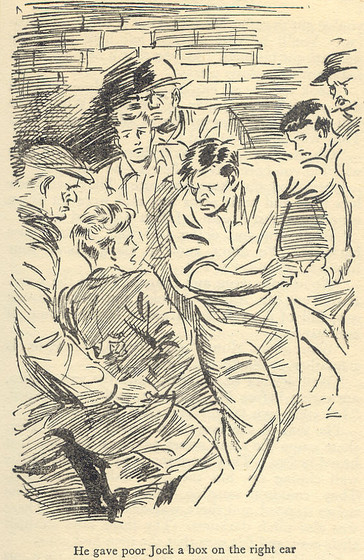
Anyway, the end is a bit strange too. Mr Andrews is arrested and Mrs Andrews is a bit upset but also very pragmatic about it. She blames his friend for persuading him into his criminal activities, saying her husband is very weak. He’s also a liar and a bully not to mention a member of a criminal gang. He doesn’t merely do a bit of black marketeering, he then kidnaps three children, hits one of them, ties them up… Not a nice man at all. Mr Luffy seems to think being arrested and perhaps jailed or fined for his crime will set him on the straight and narrow but I’m not so sure. Being the 1950s step fathers (and some fathers) were probably not expected to be particularly close with their children but he shows such little interest or regard for Jock that I think they’d be far better off without him.


I will stop there for the time being, next time I will go over the exciting spook train and tunnel events at the end of the book, and do all my questions, comments and nitpicks as well.

Next post: Five Go Off to Camp part 2

Posted in Book reviews | Tagged , , , , | 1 Comment

May 2019 round up

What I have read

After taking a bit of a break from the Outlander series in order to read some other things, I’ve gone through two more and I’m now on the eighth book. I’m almost halfway through my hundred books, which is good as it’s June now!

I’ve read:

  • The Wild Things – Dave Eggers
  • A Breath of Snow and Ashes (Outlander #6) – Diana Gabaldon
  • The Little Book of Going Green – Harriet Dyer
  • Hairy Maclary and Zachary Quack – Lynley Dodd
  • H is for Homicide (Kinsey Millhone #8) – Sue Grafton
  • Summer Term at Malory Towers – Pamela Cox, reviewed here
  • An Echo in the Bone (Outlander #7) Diana Gabaldon
  • I is for Innocent (Kinsey Millhone #9) – Sue Grafton
  • The Eyre Affair (Thursday Next #1) – Jasper Fforde

I’ve still to finish:

  • Can You Keep a Secret? – Sophie Kinsella

What I have watched

  • Hollyoaks
  • Murder She Wrote season 4
  • The latest series of Taskmaster
  • Reruns of Friends and The Simpsons

What I have done

  • Visited lots of play parks
  • Gone for walks in woods
  • Went to the beach and paddled
  • Bought a pair of sandals and inadvertently caused it to rain every day since
  • Started working on a board game library at work
  • Gone out for lunch and for cake
  • Took Brodie to the children’s library
  • Got Brodie’s hair cut finally


Posted in Personal Experiences | Tagged , , , , , | 2 Comments

Monday #322

Last week was a very busy one so not only did I not review Five Go Off to Camp, I didn’t even take it off the shelf. Oops! I will try harder this week.

May round up

and

Five Go Off to Camp

“Mad! Must be the hot weather! Wants to talk about my boots! Go away and lie down. You’re mad!”

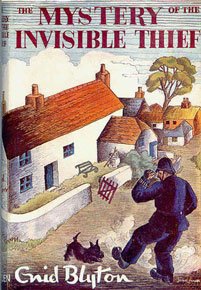
Goon fails to get anything useful from Colonel Cross in The Mystery of the Invisible Thief. 

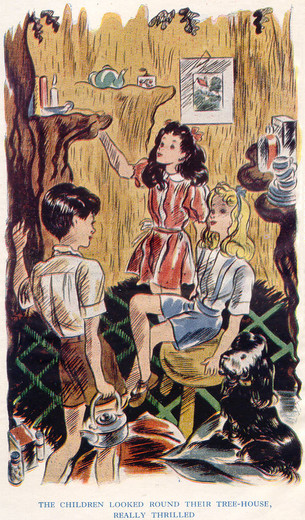
The hollow tree that Peter and Susan run away to in Hollow Tree House is simply enormous. It’s big enough for three children and a dog to sit in comfort inside, and for two children to lie down to sleep. It has a ridge inside which they use as a shelf, and the only improvement they need make to it is to cut a squarish hole in one side to form a window. It’s generally cosy and dry inside – although sometimes the rain gets in through the branches above. The only way in is by climbing up into the branches and then down into the hollow space – but all the better for keeping unwanted visitors out!


Posted in Blog talk | Tagged , , , , | 1 Comment

Letters to Enid 5: From volume 1 issue 14

Previous letters pages can be found here.


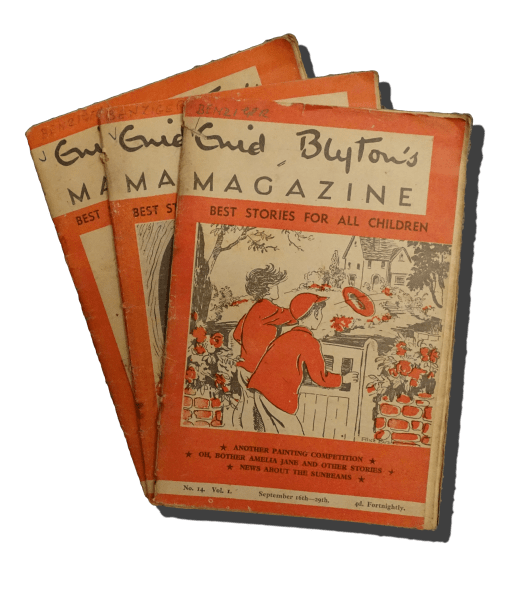
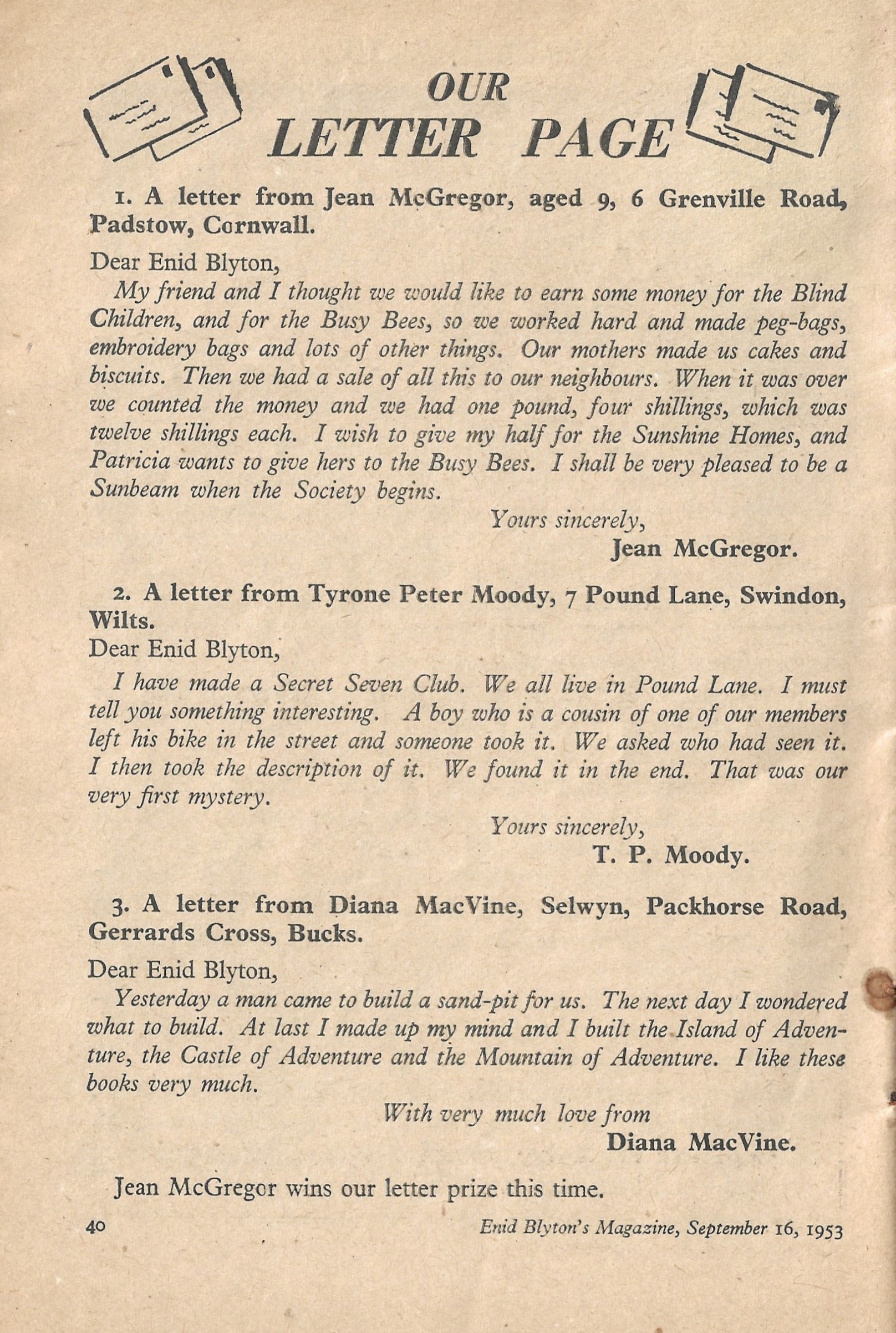
Letters page from Volume 1, issue 14. September 16th-29th 1953

OUR

LETTER PAGE

 1. A letter from Jean McGregor, aged 9, 6 Grenville Road, Padstow, Cornwall
Dear Enid Blyton,
My friend and I thought we should like to earn some money for the Blind Children, and for the Busy Bees, so we worked hard and made peg-bags, embroidery bags and lots of other things. Our mothers made us cakes and biscuits. Then we had a sale of all this to our neighbours. When it was over we counted the money and we had  one pound, four shillings, which was twelve shillings each. I wish to give my half for the Sunshine Homes, and Patricia wants to give hers to the Busy Bees. I shall be very pleased to be a Sunbeam when the Society begins.
Yours sincerely,
Jean McGregor.

2. A letter from Tyrone Peter Moody, 7 Pound Lane, Swindon, Wilts.
Dear Enid Blyton,
I have made a Secret Seven Club. We all live in Pound Lane. I must tell you something interesting. A boy who is a cousin of one of our members left in bike in the street and someone took it. We asked who had seen it. I then took the description of it. We found it in the end. That was our first mystery.
Yours sincerely,
T.P. Moody.

3. A letter from Diana MacVine, Selwyn, Packhorse Road, Gerrards Cross, Bucks.
Dear Enid Blyton,
Yesterday a man came to build a sand-pit for us. The next day I wondered what to build. At last I made up my mind and I built the Island of Adventure, the Castle of Adventure and the Mountain of Adventure. I liked these books very much.
With very much love from
Diana MacVine.


This is only the third letter from a boy so far. The first letters page had two boys’ letters, then there have been none until now.

It’s strange seeing children’s full names and addresses being published like this. Nowadays (apart from submissions being by email or social media) it would be first name and town or region only.

In the newsletter at the back of the magazine Enid says: Look on page 40 for some of the best letters out of my post-bag. The top one gets the prize. Don’t send in special letters for this, please, I prefer to choose out of the ordinary ones I get. I’ve seen similar messages in other volumes of the magazine – I assume some children wrote special letters in the hope of getting them published.

Posted in Magazines | Tagged , , | 1 Comment

Monday #321

Letters to Enid volume 5

and

Five Go Off to Camp

“Now, when I were a boy, a boy not much older than this here youngster, there wasn’t no light-house out there – but there was always them wicked rocks! And many’s a time in a stormy season when ships have been caught by their teeth, a-glittering there, waiting.”

A short but spine-tingle extract from Jeremiah Boogle’s tales of wreckers in Five Go to Demon’s Rocks.

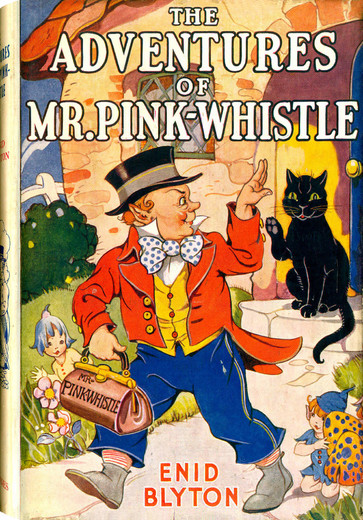
The Adventures of Mr Pink-Whistle, (sometimes known as Mr Pinkwhistle), is the first of three books about a half-man and half-brownie who goes around righting wrongs, going good deeds and showing naughty or unkind children the error of their ways. Each chapter has him appear in a new location to solve some sort of issue, by use of his magic brownie powers.

adventures of mr pink-whistle

Posted in Blog talk | Tagged , , , , , | Leave a comment

The Mr Galliano’s Circus covers through the years

Seeing as I like looking at all the different cover designs that Enid Blyton’s books have had over the years, I’ve decided it’s Mr Galliano’s Circus’ turn. I have already looked at The Famous Five, The Secret Series, The Adventure Series, The Barney Mysteries and Malory Towers.

There are three books in the series – Mr Galliano’s Circus, Hurrah for the Circus! and Circus Days Again.


The first editions

The first editions were published by Newnes in 1938, 1939 and 1941 respectively. They all had covers by E.H. Davie, who at it turns out, is probably a man and not a woman as I had always thought.

The three don’t really go together as a series, for me. The first two share bright colours, and the last two share a similar image of Lotta riding a horse but that’s about it. The first has a very 1930s look, the others are more timeless. I always have to look twice at the last one too, as it looks like a giant Lotta and horse are pulling the yellow caravan.

Mr Galliano’s Circus had two further hardbacks, in 1940 and 1942, both by Newnes and E.H. Davie. The 1940 one reuses the illustration from the first edition, cropped, with a white border and new text. The 1942 edition has a new cover entirely, which looks better alongside the first edition of Hurrah for the Circus.


Armada

Armada did the first paperback versions of the series in 1963, and another set in 1972.

The 1963 set have what I think of as the typical Armada look, and they use some fun, colourful fonts alongside illustration work by Dorothy Brook.

Again it’s a bit of a mismatched series. If the three books had different colours it might  have looked better than two yellows and one blue.

The 1972 set are more toned down, colour-wise, but also use an interesting font. The cover artist for these was not credited.


Merlin

Between the two Armada sets is a Merlin set from 1967/68 set from Merlin, with artwork by Clyde Pearson.

Pearson’s covers are the second to show the bear rescue on the cover of Circus Days Again rather than generic circus scenes. His internal work leaves something to be desired, but his covers are better, though the horse riders look very rigid and doll-like on the first one.


Dean

Dean did three sets. One in 1972/3, 1984 and 1987. The only cover to have a credited artist is Mr Galliano’s Circus from 1972, and that was by G. Robinson.

Hurrah for the Circus looks like it was probably done by the same artist, and it’s not beyond the realms of belief that the last book was too. I like the three colours chosen, and think they go together, but the different fonts make the books seem less of a series again.

The 1984 set is just weird! The first book looks like something out of Sgt. Pepper’s Lonely Heart Club Band. The second has an extremely strange montage where Jimmy, Lucky, Lotta and Sammy look like they are under attack from a terrifying trio of a tiger, clown and horse. As for the third book, we have a clown looking over his shoulder while winding up a car. It doesn’t exactly capture a sense of what happens in the book!

This last set, from 1987, and in hardback, have a well-recognised Dean layout (an upside down polaroid, if you use my mental label). The series looks like it could be about a boy who runs riot in a zoo. First he runs through the elephant enclosure, then he goes to pet the tigers, and when he miraculously survives that he goes off to chase the bears. Not a circus tent in sight!


Beaver

Beaver are the final publisher to look at, and they did three sets of books, plus a random extra one of Hurrah for the Circus.

I’m not sure this first one can classed as a set. David Barnett (cover artist for the 1994 Hodder Famous Fives) did the first and last book here in 1979, and in 1980 Miralles (whoever that may be, a person or a company I don’t know) did the middle one in a different style.

Barnett’s are garish in an attractive way, I suppose, while Miralles’ is quite bland except for the text. It looks more like they are at a ball (albeit with a horse) than in a circus tent.

Tony Morris did the next set in 1982, with the titles in a banner.


And finally, the last Beaver set from 1987. (I understand that in the past paperback licenses were separate from the hardback ones, so two publishers could be producing the same books in different formats at the same time).

I quite like the striped background of the second book, though it seems a little out of place beside the other two which have similar layouts and colours.

There’s also a random Beaver edition of Hurrah for the Circus from 1985, but none for the other two books.


Mr Galliano in the past thirty years?

Getting away from purely looking at the covers, I was surprised to see that the last time the Galliano’s Circus books were published in individual editions was in 1987 – when I was probably still under a year old. (They may have continued to print one or both of these runs for a while, but I think we can assume the series has been out of print for a long time).

I have found evidence of ones published in 2003, in Australia, by Hinkler Books.

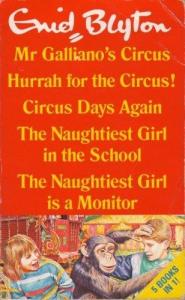
The books have been published in omnibus form more recently. I’ve found a book which contains the three Galliano’s Circus books, plus two of the Naughtiest Girls, which is a strange combination. From what I can tell it was from Cresset Press in 1992.

The tiny bit of image shown is from the 1987 Beaver edition of Circus Days Again, but flipped.

Another strange combo is this 2012 Egmont omnibus which claims to contain Mr Galliano’s Circus, Circus Days Again and Come to the Circus. Come to the Circus is a stand alone title, but there are four or five eBay listings at the moment which have “All four books in the Galliano’s Circus series” and include Come to the Circus. The cover seems to feature a wild circus which does its stunts on the outside of the tent. [A reader by the name of Brinly has recently let me know that their copy does just contain the three Galliano books – despite what Amazon’s, Waterstones’ and presumably other sales sites listings state!)

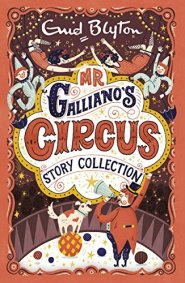
And the most recent edition is from Hodder in 2016, and described as a bumper short story collection. I know Hodder has released a lot of story collections which I assume are selling well, but it seems silly to market three novels in one as a story collection. It doesn’t contain 26 stories, it contains three books! The chapter flow one after the other, you can’t just read them in any order.

I couldn’t find any information of the cover artist, but the style looks familiar to me. I can’t think what book(s) I’ve seen it on, though!


Did you have any of these editions? (If you had the 1984 Dean of Hurrah for the Circus, I want to know if it still haunts your nightmares!)

Posted in Illustrations and artwork | Tagged , , , , , , , , , , , | 8 Comments

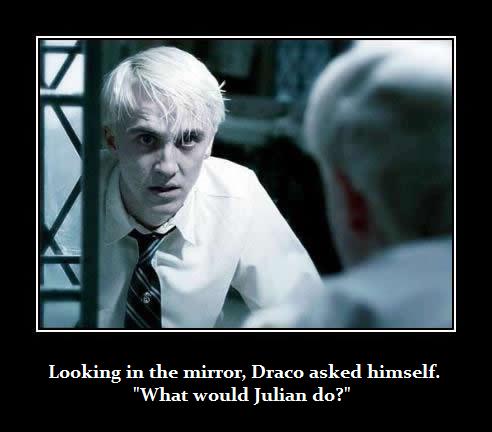
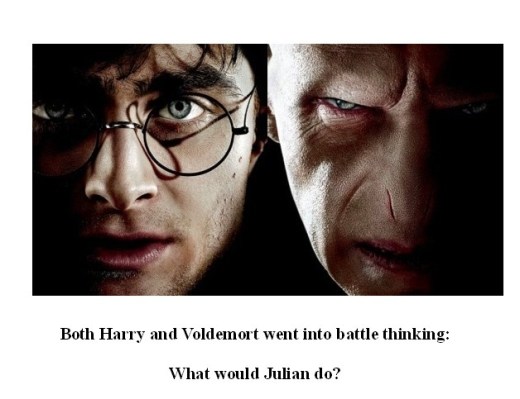
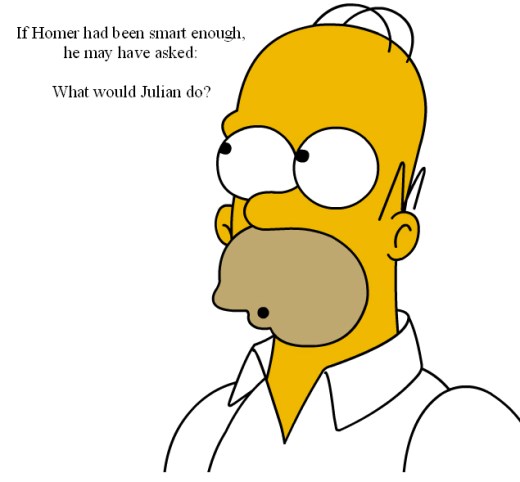
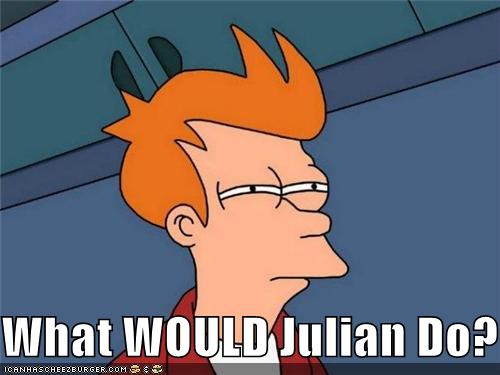
What Would Julian Do? The Religion of Julianity

I don’t even remember quite how this started, but in 2011 Stef and I created a Facebook page called Julianity. We’ve just scheduled it for deletion, actually, as it had been a very long time since we have posted anything on it. Despite that it had 1,002 people following it (due to Facebook’s lousy algorithms hardly any of those people saw anything we posted, believe me I tried publicizing the blog on it!).

Enid Blyton created the character of Julian Kirrin in 1942. He had 21 adventures with his brother Dick, sister Anne, cousin George and her dog Timmy. He always looked after anyone younger than him, and of course, girls. Some might consider him pompous and sexist, but we love him in all his incarnations. Disclaimer: We are NOT Julian Kirrin.

I think we had the brainwave of thinking what if the J in WWJD stood for Julian, and not Jesus?. I mean we do pretty much worship Julian and his quick brain.

We then made a lot of very of-their-time memes which may not even be funny now. I may well have to explain who some of the people in the memes are, and their relevance. Seeing as the Facebook page is soon to be no more I thought I would put the memes on here anyway, just so they don’t get forgotten.


Of their time current affair memes

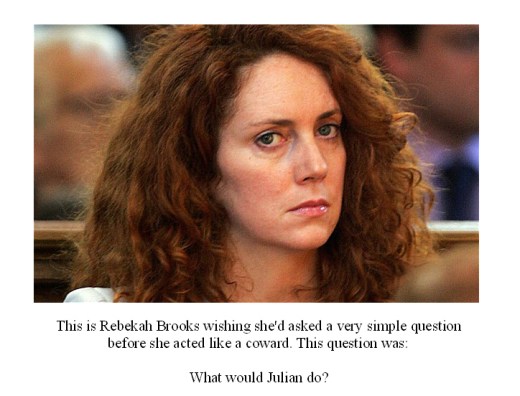
Yes those are David Cameron and Rebekah Brooks, placing us back in 2011/2012. If only all politicians and newspaper editors asked themselves What Would Julian Do? then the world would be a better place!


Harry Potter memes

Here Draco Malfoy, Harry Potter, Ron Weasley and Voldemort ask WWJD?


Random pop culture memes

D’oh! Homer Simpson could have done worse than consider what Julian would do.

Fry from Futurama.

Elpheba from Wicked.

Bella Swan from Twilight.

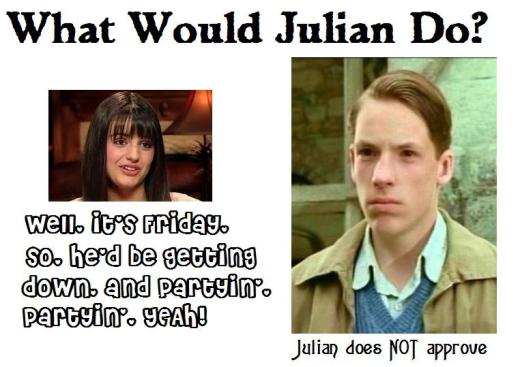
Rebecca Black, who sang Friday, giving the wrong answer.


Memebase memes

Memebase, as the name suggests, was a big meme site. It had a load of ‘characters’ which had expected behaviours and people would add their own text to images of those characters making new jokes on the same idea.

I fear that none of these are really funny unless you know the characters, and by explaining the joke then it’s still not funny, but here goes.

Misunderstood Mitch (the original caption was something about him turning up his collar -the implication being he looked idiotic – but he was really trying to protect his neck from sunburn).

Good Guy Grey, known for, well, being a good guy.

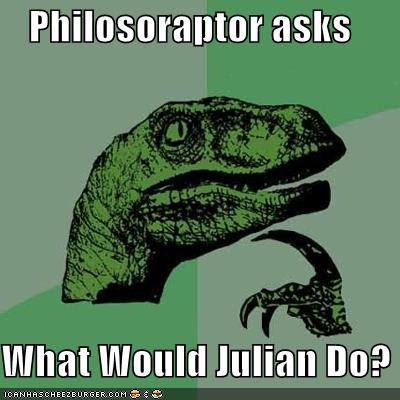
Philosoraptor – a philosopher/velociraptor hybrid who asks funny yet deep and meaningful questions.

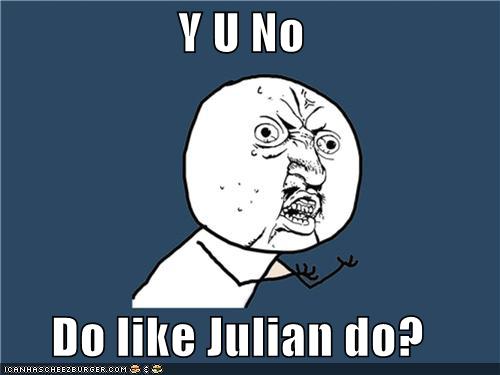
Y U No guy, who basically asked Y U No (why you not) do various things.

Staredad, a four panel ‘comic’ where a son rushes to tell his dad, or ask his dad something and the dad replies in a usually sinister fashion.


And finally some Blyton memes you might actually find funny


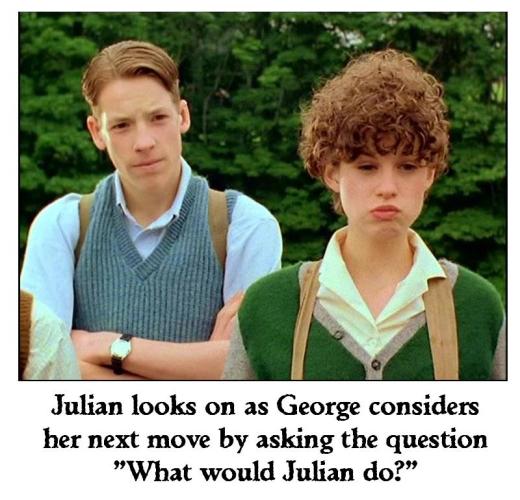
Dick (as played by Paul Child in the 90’s Famous Five series) asks the important question. Julian does not approve from the Rebecca Black meme above comes from the same screenshot. Also, Jemima Rooper who played George in the same series, asks herself the same question.

Another one from the 90s series, this time with bad punctuation!


So… yeah

Those memes more or less supported a whole Facebook page and gained 1,000 followers.

Oh we did mock up a few tshirt designs as well.

I think the rest of our content was just us uploading screencaps or random photos of Julian from the books.

Apart from the time I found a coke bottle with Julian on it, and noticed there’s an episode of Jessica Jones called WWJD. I’m pretty sure she wasn’t meaning Julian, though.

And that was more or less our most popular Facebook page. Goodness knows why!


Posted in Blog talk | Tagged , , , , | Leave a comment

Monday #320

What Would Julian Do? The religion of Julianity

and

Mr Galliano’s Circus covers through the years

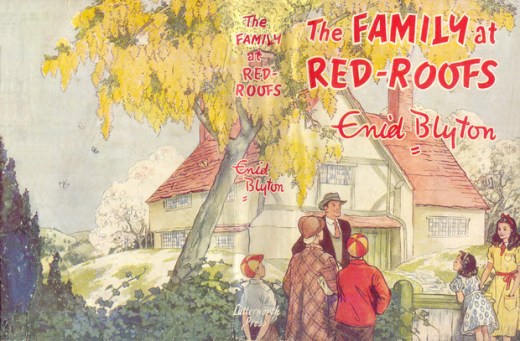
“What sauce to call me Jenny Wren at my age!” Miss Wren would say, but her gentle brown eyes would twinkle, and everyone would smile. Jenny Wren liked her new name, and her new family, and her new home, just as much as her new family liked her!

Jenny Wren settles in with The Family at Red Roofs.

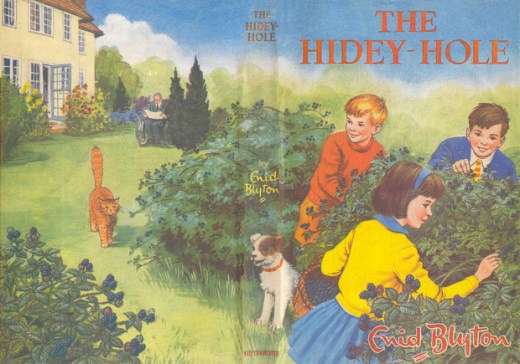
The Hidey-Hole was Enid Blyton’s last novel in 1964. It is about three children who are trying to raise money for a good cause by picking and selling blackberries. While doing this they find a secret hidey-hole to play in, which becomes important when the owner of the garden they have been blackberrying in is burgled.

The story was written while Enid was in declining health, and it doesn’t quite live up to most of her earlier books. The word blackberry or variations of it appear constantly, and the story might be classed as a little bit thin. Still, it’s a fun short read, and has a special place as her last book.

the hidey-hole


Posted in Blog talk | Tagged , , , , | 5 Comments

Summer Term at Malory Towers by Pamela Cox

A couple of months ago I read and reviewed the first of Pamela Cox’s Malory Towers books, New Term at Malory Towers. I wouldn’t say I loved it, though I thought it was a decent attempt at an Enid Blyton book.


The new girls

We meet Lucy first, a pleasant girl who has her own horse and has already palled up with horse-mad Julie. Then we meet Esme. Actually, Felicity and Susan saw her first, before we were introduced to Lucy, but it was just a glimpse of a tall willowy girl with beautifully arranged blonde curls. She was getting out of an American car, so my initial thought was that we have another Zerelda on our hands. Anyway, when the girls meet her properly it turns out she looks a lot like Lucy. So much so they are mistaken for twins, though Lucy is quite boyish while Esme is very feminine. Actually they are cousins, daughters of identical twins. So as well as Zerelda we have a bit of the two Harries there as well.

The identical cousins are very surprised to see each other, and the initially nice Lucy turns quite nasty.

Esme is a bit like Zerelda – without the wish to be an actress. She wears lipstick and mascara until Miss Peters instructs her to wash it all off. She puts in curlers before bed and is determined not to ever mess up her hair or get red-faced by doing any sort of exertion. She’s not actually American, she’s just lived there for the past four years. Despite spending her first nine or so years in England with a British mother (and an American father) she is just like Berta of Five Have Plenty of Fun in that she says twenny for twenty and wunnerful for wonderful.

Then there is a newer girl, Eleanor of the fifth form, who joined the school the previous term. She is disliked by most of the lower forms as she is cold and bossy. Eleanor pops  up now and again to antagonise the third formers, mostly June who she really doesn’t like, and she plays an important role in solving the mystery of who is stealing from Bill and Clarissa’s stables.

There is so much of the new girls that Felicity is barely mentioned in the first few chapters, beyond her arriving at the school, and she only pops up now and again through the rest of the book with a wise comment or order as head girl.


The main storylines

The storyline that features on the blurb of the book is that someone is stealing from Bill and Clarissa’s stables (Five Oaks) and doing other bits of mischief.
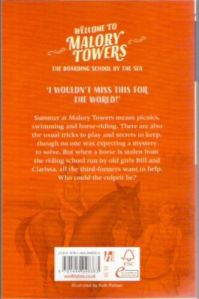
A cash box is stolen, and Merrylegs is let out. A fire is set (as a distraction) and Julie’s pony is stolen. Bill’s reins are cut so that she falls from Thunder and breaks her arm. Some of the third formers turn detective and nose around looking for clues, while others go to help out with the mucking out etc.

The detective work is pretty basic – just nosing around and asking obvious questions, but then it is a boarding school book and not a Find-Outers story. There is only one clue found – a blank note – which, once the significance is worked out, reveals more or less everything and it is left to the police.

I worked out who the culprits were from the outset – something I almost never did with the Find-Outers, even the ones I first read as an adult.

Let’s look at the facts (you might want to scroll past the bullet points if you don’t want to know whodunnit).

    • There’s a rival stables right next door.
    • The rival stable owner keeps coming by or sending his grooms by to ‘help’ as he is worried about Bill and Clarissa.
    • The rival stable owner’s niece is stabling her horse at Five Oaks as there is ‘no room’ at her uncle’s stables.
    • The niece is uncharacteristically nice to Julie after her horse goes missing, and speaks to her in a shaking voice.
    • An unnecessary extra clue is that Felicity doesn’t trust the rival as he’s always smiling and therefore seems sinister.

A large part of the book however is dedicated to girls not getting on, arguing, making up, and various deep insights into their plans.

In a very similar vein to last time, Amy and Bonnie are in a bit of a triangle, this time with Esme rather than Veronica. Bonnie likes Esme straight off, but Amy doesn’t. Bonnie encourages Esme to flatter Amy, which she does, and Amy ‘falls’ for it, allowing Esme into their little group. They then spend a lot of time trying to turn her into one of their sort of English school girls. They (Amy mostly) get her to bin all her makeup and brush out her curls (Amy’s motive is unclear here, is she genuinely trying to help her fit in, or is she jealous of her glamorous made-up look?), and try to teach her to pronounce things properly.

The mostly absent Felicity pops up with a wise comment:

‘I think it would be best if Esme didn’t copy anyone at all,’ said Felicity thoughtfully. ‘Her own personality is very pleasant and unique, and it would be a terrible pity if she lost her individuality through trying too hard to be something that she isn’t.’

And Esme must have picked up on it psychically as she does pull away from Amy’s influence a bit. She realises that she actually quite likes sports, and does well at tennis.

The Esme/Lucy thing gets a lot of pages too. There’s a whole long backstory why their families fell out. In short, their fathers bought a business, but were both strong-willed and couldn’t agree how to run it and they fell out. The mothers and daughters took their husbands’/fathers’ sides and thus they all fell out, and Esme’s lot moved to America. Esme’s telling of it goes on for four pages alone. Then the other girls talk about it. Lucy talks about it. The girls talk about how to get Lucy and Esme to make up. Lucy and Esme work out a way to get their respective parents to make up. That part is actually reasonably interesting, as it involves a fake drowning.

June forms the last plot element. She has a whole bit to herself as she goes off in the night as part of the plan to expose the stable culprit, and she learns the value of teamwork through solving the mystery (and spraining her ankle). She actually has a big attitude adjustment near the end of the book when she decides not to play in a tennis competition. She knew she wasn’t fit enough for it after spraining her ankle, but wanted to play anyway. Then she realised she was being selfish and it would have been better for another girl to play on behalf of the school. All very noble but she comes across rather pious almost, I think I prefer the don’t-care June better! I wonder if she will retain this persona in the rest of the books, or if she will struggle and misbehave a bit still. Maybe she will do an Amelia Jane and promise to be better and go back on it each time.

‘So, you see, June, we both played a part. It was teamwork!’ [said Bonnie].

‘So it was!’ said June, looking brighter.‘Well, I’m beginning to think that there’s rather a lot to be said for teamwork!’


Tricks and jokes

It wouldn’t be a Malory Towers book without some tricks. As usual June leads the trick planning, though she goes a bit overboard this time.

Reminiscent of the invisible chalk of Second Form at Malory Towers, June has got some, well, invisible chalk. Only this chalk is visible at first, then becomes invisible, whereas the previous stuff was invisible then became visible later. They use it to great effect on Mam’zelle Dupont, who takes it so well when Miss Potts rumbles the trick, that there is no telling off let alone a punishment.

The chalk is then seems to turn into invisible ink which is placed in someone’s bag as a trick, but it becomes important later when a ‘blank’ note is found at Five Oaks. (This ink can be read in the dark by torchlight… of course).

June (along with Freddie) also put insects in Bonnie’s pencil case, replaces Amy’s expensive talc with itching powder, spoil Susan and Felicity’s tennis practice with a trick ball, and put a frog in Esme’s bed. It’s not like June to pull a load of thoughtless tricks though. She might pull a prank on someone who has really annoyed her but this seems like indiscriminate nonsense.

She also jumps in the pool fully clothed on the first day, as a sort of dare. I’m not sure June’s daft enough to do that.

The silliest one is when she ties Eleanor’s shoe laces to the tennis court fence. Eleanor is so distracted by Freddie pointing at nothing that she doesn’t notice both sets of laces getting tied. She is also too stupid to slide her feet out of her shoes so she can go round the other side of the fence to untie them, instead of trying to do it through the tiny gaps. Amanda then has a go at her for distracting June’s tennis practice, and she storms off without even punishing them.


So what’s my issue?

I really want to like these books. I don’t dislike them, and they’re not awful. They just don’t live up to Blyton’s writing.

This one suffers from far too much ‘tell’ and not enough ‘show’. Several times we don’t see key action (like Bill’s fall from Thunder for example) as it is either described to us in conversation, or as an afterthought in the narrative, when again, it is quickly described. As another example, we know that Julie loves horses. Why? Because Pamela Cox describes her as horse-mad and her school friends talk about how much she loves her horse and talks about him all the time. We don’t see her acting horse mad very often, nor does she speak about her horse apart from once of twice.

There is also still an awful lot of internal thoughts of the various girls filling up the pages as well.

Some authors probably lean on the telling side more than others, I just find it’s more interesting to ‘see’ something happen rather than be told it happened. Blyton was skilled at showing us, often in fast, punchy narratives that sped us through a lot of action, so these new books struggle to compete.


Some random thoughts

As always when reading I pick up on lots of little things that don’t really fit into any neat headings.

It took several pages for me to confirm the girls are still in the third form, this is the end of the school year we were reading about in the previous book.

The girls’ ability to leave Malory Towers remains important, as it means they can go to the stables. It is revealed that the lower school must go out in twos or larger groups, though. We also find out that the girls have a summer uniform of orange and white checked sun dresses with white collars.

Five Oaks is said to be ‘only a few minutes away’, and there is another stables bordering their land. A third stables is also mentioned nearby. Malory Towers own stables are overflowing with school girls’ horses, which is why so many end up at Five Oaks. There didn’t seem to be that many horses in the original books.

Miss Grayling must not challenge Esme on her makeup when she comes to her for the new girl talk, though I now think that she obviously didn’t say anything to Zerelda either, as it is their respective form mistresses that give them a dressing down the first day of classes. Similarly Matron clearly twigs that June has not just sprained her ankle in the morning, as she claims (it’s far too bruised and swollen to be a brand new injury) but says nothing.

In a nice nod to the original books Mr Rivers has to wait for Felicity and Susan to get in the car, rather than Felicity and Darrell. Darrell is mentioned as being unable to come to half-term but her mother is going to send her some photos of Felicity’s diving performance.

We also learn something more of Bill’s family. Two of her brothers, Harry and John, have gone into the army and come to help her out.

There is a theory from some fans (and some non-fans) that Bill and Clarissa are in a relationship, but this book has them in separate bedrooms.

Language wise it still retains the old-fashioned flavour. I did notice that your/their/her people is used seven times, several of them in the same chapter which seemed a bit much. I also came across Bonnie interpolating a word here and there. From the context I understood it to mean the same as interjecting but I’m not sure it’s a word I’ve seen before, certainly not in a children’s book. Is it commonly used now?

It might just be my (slightly dodgily obtained) copy of the book but Bluebell Wood is referred to as Blueberry wood on one occasion. I’m not certain that’s a mistake made by the author or publisher as my copy has several formatting errors (quite a lot of missing spaces between punctuation etc).

In another un-June like moment, she makes a big deal about her hurt ankle. What seems to be several days (at least) after spraining it she declares her ankle will never stand a half hour walk to a picnic. I sprained my ankle (and tore ligaments) so badly at 35 weeks pregnant that I ended up with a highly stylish toe to knee boot from A&E. Less than a week later I was walking (in regular walking boots) around St Andrews, and a few days after that 20 minutes to my aqua aerobics class and back! Anyway, it’s probably only so that the girls can make a big deal of surprising her with a ride on Jack to the picnic.

When Julie’s pony is recovered it is said that The police found him stabled at [spoiler removed]. He has been well looked after, and not ill-treated in any way. It’s a children’s book and we don’t want a happy ending marred by a tortured horse but it’s a bit saccharine. The culprit is willing to set fires and endanger people and horses, but looks after a stolen horse perfectly? It would have looked more natural if he was found in a shed, but we are reassured that he did at least have food and water.


So there you have it, a mixed bag. Some interesting stuff, decent ideas, just poor execution?

Posted in Book reviews | Tagged , , , | 7 Comments

Letters to Enid 4: From volume 1 issue 13

Past letters pages can be found under the letters page tag.


Letters page from Volume 1, issue 13. September 2nd-15th 1953

OUR

LETTER PAGE

 1. A letter from Avril Archer, Lisheens, Carrickmines, Co. Dublin.
Dear Enid Blyton;
I have been getting your magazine ever since it came out, and I enjoy it very much. Sometimes I read the stories to my kitten and he sits very still while I read to him. I like best “Five Go Down to the Sea”. I found the flower that tells what the weather is going to be it will be very useful. Now I won’t have to carry an umbrella – I’ll use it for a sunshade!
From your friend,
Avril Archer.

2. A letter from Margaret Bride, 41 Shepherds Bush Green, London.
Dear Enid Blyton,
I am writing for my Brownie pack. At our parade last Sunday we collected a shilling, and we thought we would like to give it to the Sunbeam Club, so here is a postal order from the Brownies.
Yours sincerely,
Margaret.

3. A letter from Vanessa Bennett, 72 Bristol Road, Birmingham.
Dear Enid Blyton,
I have a very peculiar story to tell you. Once my little brother Lincoln was coming home from school on his scooter when a little brown and white dog ran across the road to him. Lincoln didn’t take any notice of him, but this little puppy followed him all the way home. He sat shivering on the door-step, whining to get in, and Mummy let him in. He sat by the fire, still shivering, and we called the vet. He said the puppy had distemper. When he was better the police said we could keep him. We call him Mischief and he is now as lively and happy as a king.
Lots of love, from
Vanessa

4. Extract from a letter from Jilly Peters, P.P. Box 202, Ndola, N. Rhodesia.
Dear Enid Blyton,
Can you work this out? Can you arrange two match sticks so that they make ten? I have tricked you! Put them in Roman figures, like this, X. Isn’t that clever?
Love from Jill.


I wish I knew that the first letter is referring to, there’s a flower that predicts the weather? At first I read it as a flower that could predict the weather AND could be carried as a sun-shade, but I suspect Avril means that she will use her umbrella as a sun-shade instead.

I looked it up and Ndola is now in Zambia. I know very little of the history of the countries that make up Africa and was interested to read a bit about Rhodesia which only existed for fourteen years.

I’ve noticed that so far most of the letters have been sent in by girls, and from my brief search through before I think that trend continues. I wonder if more girls wrote in, or Blyton picked more girls’ letters, or a mix of both.

Posted in Magazines | Tagged , , | 1 Comment

Monday #319

Letters to Enid volume 4

and

Summer Term at Malory Towers

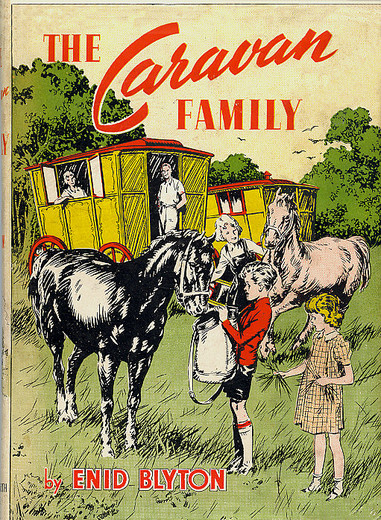
The Caravan Family is the first book in what’s sometimes known as the Caravan Family series. In it, Mike, Belinda, Ann and Mummy have been living with Granny while Daddy was away with some sort of war-work. Now that Daddy is back they are looking for a home, but can’t find a suitable one. What they do find are two caravans which, although unorthodox, end up being a perfect home for them. They do them up with new paintwork and flooring, new little bits of furniture and so on, and move into them. They acquire horses after a time and move around the country, ending up on Uncle Ned’s farm just in time to help with the haymaking.

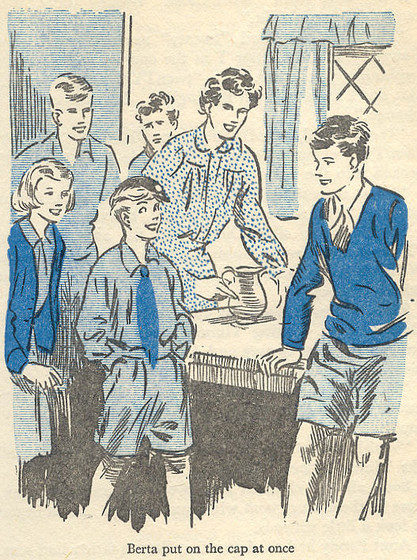
Berta Wright is the daughter of a famous scientist, she owns a dog and in Five Have Plenty of Fun she dresses as a boy. She’s not as like George as that sounds, though. Firstly, she’s forced to disguise herself as a boy to keep herself safe from her father’s enemies, and she actually rather likes being a girl. Her dog is a little poodle called Sally, and while Sally is loyal and loves her mistress she doesn’t have the same protective bulk that Timmy does.

Berta’s American and the Five tease her about not being able to say ‘twenty’ or ‘plenty’ properly, but they admire her pluck in dealing with being left with strangers while kidnappers are looking for her.

Posted in Blog talk | Tagged , , , | Leave a comment

Five on Kirrin Island Again part 2

I didn’t mention the Curtons at all in part one of my review, very remiss of me!


The Curtons

Martin and his father are staying in a cottage belonging to the coastguard. Martin, as seen through the eyes of the Five, is a slightly curious boy. He is quiet and rather sullen, difficult to get along with beyond polite small talk. He does, however, ask George a great deal of questions about George’s island and her father’s work there. Somewhat foolishly she tells him a fair amount, flattered by him mistaking her for a boy. Dick is not so easily taken in and has a couple of disagreements with George over Martin’s interest.

His father seems genial and jolly, inviting the Five to come and watch television with them – the first time George has ever seen a television – but when the Five are not there he displays a terrible temper and is unkind to Martin.

When Mr Curton reveals that he is newspaper journalist Dick relaxes, thinking that Martin was merely assisting his father with a story. But this is a clever red herring.


A bit more about Uncle Quentin

I looked at his relationship with George last time, but there are lots of other bits about Uncle Quentin, particularly his terrible memory and lack of attention when it comes to anything other than his work.

Apparently he has been terribly excited and so thrilled lately, so says Aunt Fanny. I wonder how he displayed that, I can’t quite picture him skipping around Kirrin Cottage no matter how excited he was. Perhaps she just meant he smiled a lot!

He does not look after himself at all well while staying on the island. He forgets that Fanny and the Five are coming to visit despite it being written in his diary. He wolfs down the picnic Aunt Fanny has brought – he clearly hasn’t been eating regular meals while working. Fanny had even left him soup, which he had forgotten about.

What’s more is he tries to eat the soup a few days later and has the cheek to complain that it was quite bad. Aunt Fanny had clearly anticipated this and already told him to throw the soup away, before it went bad.

Aunt Fanny also relates the brief story about the time Quentin was working in the Cheddar caves.

I remember once when he was doing some sort of work in the stalactite caves at Cheddar, he disappeared in them for over a week – but he wandered out all right when he finished his experiments.

There probably isn’t much more to the story than that but I find myself wanting to know more. Had he gotten lost? Did he just find a place to work that nobody thought to look? Did anyone even bother going looking for him? Anyway it pretty much sums up Uncle Quentin, totally absorbed in his work. I bet if a recue team had made effort to find him, and interrupted his work he would have been very angry!

I have to say though, that he is quite heroic in the end. He does everything he can to keep his work falling into the hands of the bad guys, and is willing to die in the process. His dash to his tower to destroy the power supply and therefore prevent the blowing up of the island is also impressive and exciting.


George/ina

George’s desire to be treated as a boy is often merely an interesting facet to her character, popping up now and again. But sometimes it becomes important to the storyline, for example when her ambiguous gender confuses adults and causes them to miscount the children (like at the end of Five Go Off in a Caravan).

This book has only the one important plot point regarding George being mistaken for a boy, by Martin, – and I’ve mentioned that above. The bad guys also mistake her for a boy towards the end, though it doesn’t have any impact on the story.

There are several instances where it was mentioned, though, and a couple of little things in relation that I picked up on.

Julian praises her for giving in gracefully, adding you’re more like a boy than ever when you act like that. Perhaps he just wanted to say something complimentary to her, or use that comment as a way to encourage her to sulk less, but Anne takes a bit of offense. Her reply is it isn’t only boys that can learn to give in decently… heaps of girls can. And she’s quite right.

George does seem to have some strange ideas about girls, mind you. She doesn’t want to be petty and catty and bear malice as so many girls did. Her ideas about boys aren’t always much better.

When Dick calls her out for spilling everything to Martin just because he mistakes her for a boy he says Jolly girlish-looking boy you are, knowing that will offend her more than most other insults. George’s reply is magnificently silly.

I’m not girlish-looking. I’ve got far more freckles than you have, for one thing, and better eyebrows. And I can make my voice go deep.

Dick is suitably disgusted with this logic, and ends with the accusation that Martin was just playing up to her, knowing how much you like playing at being what you aren’t. Ouch! George was being pretty daft but that was rather cruel a comment from the usually affable Dick.

Little things I noticed were James calling George Miss twice instead of master, and the fishermen doing the same.


The usual nitpicks, comments and observations

This is the first adventure for the Five since they went caravanning the previous summer, and it is also the first time the children have all been together since then, too.

There are two major(ish) continuity errors in this book. One is the already mentioned room in Kirrin Castle which has collapsed in Five Run Away Together but is perfectly fine now. The second is that Alf, the fisher boy, is now called James. It is definitely meant to be the same character as his relationship to George and Timmy is mentioned.

Aunt Fanny somewhat foreshadows the start of a later book when she says whoever heard of bathing in April? Do you want to be in bed for the rest of the holiday with a chill? Of course at the beginning of Five Have a Wonderful Time George is delayed from joining the others because she has been bathing in April and has caught a chill.

I have to adjust my mental pictures of the locations quite often when I’m reading and notice details or descriptions don’t match what’s in my mind. Kirrin Cottage is said to not overlook the island well, so George struggles to look for Timmy with field-glasses and they have to go upstairs to watch for Uncle Quentin’s signals. This somewhat contradicts the fact that in Five Run Away Together George asserts she has seen a light on her island. It also doesn’t match my mental picture of Kirrin Cottage being quite near the beach and looking directly over the island.

Talking of misunderstanding things, I tend to forget that Uncle Quentin prevented the explosion. I think I confuse it with the end of The Island of Adventure when the mines and undersea tunnels are blown up, and end up thinking that the same happened to Kirrin. I even went as far as drafting a Travel Blyton Kirrin post where I mentioned the former undersea tunnel.

I find it strange when both Joanna and Aunt Fanny keep calling Uncle Quentin The Master. I always think of Joanna as almost part of the family, rather than a servant. She’s obviously staff, but she’s not part of a large household where servants were supposed to sneak around the back stairs without ever being seen.

And lastly, when I first read this I had no idea what sou’westers were. I imagined them as a sort of jumper or sweater – mostly because sweater and sou’wester share a lot of letters, and is something you might wear on a cold, wet day.


Last thoughts

Despite enjoying the Kirrin setting and the neat addition of the undersea tunnel this book is only in 14th place in my series rankings. I think there are a few factors which lower my opinion of the book. One is that the enemy is revealed/met so late, and it’s only George and Uncle Quentin who feature in the bulk of the final scenes. Mr Curton is never a real threat to the children despite his involvement and Martin is neither horrible enough to be disliked or nice enough to garner my sympathy. I do like his little backstory and the stuff about the painting but it’s not really enough for me to feel like I know him as a character.

The other is the frustration of having a Kirrin adventure where the island is mostly off-limits. The same could be said for Five Go Adventuring Again, but the constant tension of Mr Roland at Kirrin Cottage and the exploring of Kirrin Farm make up for it.

I do like the introduction of the (never seen again) coastguard, and the quarry, but I feel like this book misses out on some of the things I like best about the Famous Five books. The glorious picnics, lazy days on the beach, exploring their location together, the Five alone facing their enemies.

It’s still an excellent book, just not as excellent as thirteen of the others!

Next post: Five Go Off to Camp

We also have an alternative review of Five on Kirrin Island Again by Corinna.

Posted in Book reviews | Tagged , | 8 Comments

Search terms, the whole nine yards

Ah the things people search for! I never fail to find something amusing when I look. Here are the best of the latest crop.


Misguided questions

Famous Five why do Georgina and Henrietta break up? I wasn’t aware that they were ever in a relationship! They didn’t get on because George didn’t like to see another girl pretending to be a boy – specifically one who looked more boyish due to the extremely masculine look of not having curly hair.

Mr Plod and Little Noddy story book beginning in short. Noddy books are only around 60 pages – that’s pretty short. The ‘beginning’ is probably only three or four pages, and this person wants that summarised even shorter??

Best part of Tinker Famous Five are Together Again. Erm, his knees? Is that what you’re after?

Anne Kirrin Famous Five “bottom”. I’m not even going there, this is a family site!

What are the qualities that have meet Julian in Famous Five? Well there was that time that humility, courage and helpfulness came wandering down the road and introduced themself to Julian… No, wait, that never happened. I’m not sure what this one’s about.

Famous Five story with pufgins. Even if we mentally correct pufgins (sea birds who enjoy a stiff drink?) to puffins, this one still fails at identifying a book that actually exists.

pufgins


That’s not the title, and that’s not her name

This week’s variations on Enid Blyton:

  • Enid Blighton
  • Edin Blyton
  • Enid Bkyton
  • Enud Blyton
  • Edith Blyton

That last one came from the gem noddy goes to toilet but edith blyton not a book one cost to buy. I’m not sure where to start. I mean Noddy doesn’t go to the toilet, because Enid/Edith Blyton’s characters never do such a common thing, and the rest just makes no sense.

Secret Severn Mystery of the Skull. Is this a secret river society, which just so happens to share a mystery with the Secret Seven as written by Pamela Butchart?

secret severn

www. old covers of maloray towers books.com. I’m absolutely certain that this is not a website. For one, you don’t get spaces in web addresses. Secondly, it’s Malory, but that at least makes a change from it being spelled Mallory – as in Miss Grayling Mallory Towers.


The rather too vague

Famous Five dvd about a tenner. Which Famous Five series – the CFF? The 70s Southern TV? The 90s Zenith North? The Disney one where it’s the Five’s children? Or do you not really care as long as it’s about ten quid?

Short dramatise story. Apparently it doesn’t even have to be by Enid Blyton.


Good questions

Where did Enid Blyton live? She had many homes. Starting in Beckenham where she lived in several different properties before she lived Bourne End in a house called Old Thatch. Her last home was Green Hedges in Beaconsfield.

Enid Blyton Adventure Series where is Craggy Tops locations? Craggy Tops’ location is never named. The 1982 film adaptation was filmed in Cornwall, which seems a reasonable real-life location.


New descriptions for old classics

The new tag line for The Secret Series should be Enid Blyton book about some kids and a foreign prince and his bodyguards.

Noddy story book What a Adventure no.17 what a chaise! moral. I can’t allow that bad grammar or spelling but I could see Noddy story #17, Noddy has an Adventure, being known as Noddy: What an Adventure! What a chase! The moral, incidentally, is probably to lock up your car lest someone borrow it to commit crimes.


The ones I can’t answer

Enid Blyton rhymes stinging nettles. I can’t see any poems with nettles in the title, but there may well be one or more mentions of nettles within poems, or in little verses in stories about nature.

The Ladybird Book written by Enid Blyton lady ladybird your are were neat. Searches for Enid Blyton and ladybird throw up some poems, and two books published by Ladybird.


Posted in Blog talk | Tagged , , , | Leave a comment

Monday #318

More Blyton search terms

and

Five on Kirrin Island Again part 2

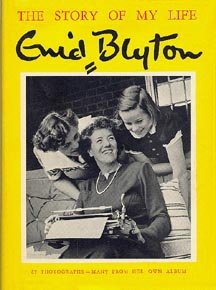
One of the questions you so often ask me is about my childhood. You are in the middle of yours. You quite naturally want to know what mine was like. Did I play the same games as you do? Did I like reading? What books did I read?

Enid Blyton introduces the chapter ‘About my childhood – the books I read’ in The Story of My Life, her autobiography.

Naughty Amelia Jane is the first book about Amelia Jane, a very naughty doll (based on one owned by Blyton’s daughter Gillian). Amelia Jane is home-made rather than shop-bought and therefore lacks the sort of good manners that purchased toys have. She bullies the other nursery toys and does wicked things like cutting up rugs and curtains. She learns her lesson many times over but it never lasts!


Posted in Blog talk | Tagged , , , , | Leave a comment

Letters to Enid 3: From volume 1 issue 12

Previous letters pages can be found under the letters page tag.


Letters page from Volume 1, issue 12. August 19th – September 1st 1953

OUR

LETTER PAGE

 1. A letter from Joan Richards, Warren Farm, Pyrford, Woking
Dear Enid Blyton;
It is so nice to be a Busy Bee. I am collecting milk-bottle tops and stamps. I try to stop anybody being cruel to animals. I hate to see animals suffering. I have sent for the Busy Bees News, and I have asked a girl to join, because she loves animals too.
Love from
Joan Richards.

2. A letter from Jean Lockyer, Silvermere, Verwood, Wimborne, Dorset.
Dear Enid Blyton,
I am sending you a snap of myself and my sister Audrey. I am dressed up as Big-Ears, and Audrey as Noddy. We won third prize in the 1953 Verwood Carnival. The children who were watching the Carnival procession were very excited when they saw us, and called after us. We are delighted with your new magazine and we love reading the Noddy books and all your adventure books.
Yours sincerely,
Jean Lockyer.

3. A letter from Irene Horbury, 3 Morton Street, Heaton Norris, Stockport.
Dear Enid Blyton,
I look forward to reading your magazine every fortnight, and I wonder if any other reader has a pet like mine. My budgie Tony never fails to read the magazine with me. He is only four months old, and he talks very well. If we are having a salad tea he always flies down to our plates and eats with us. He is a very lovable little bird. So that’s all for now.
Love from
Irene Horbury


I really wish they had included the snap of Jean and Audrey as Big-Ears and Noddy.

Posted in Magazines | Tagged , , | Leave a comment

April 2019 round up

What I have read

After a slow few months I’ve not only caught up to my target but I have exceeded it! As a reward I’ve allowed myself to borrow the next Outlander book.

I’ve finished:

  • The Nightingale Christmas Show (Nightingales #9) – Donna Douglas
  • District Nurse on Call (Steeple Street #2) – Donna Douglas
  • G is for Gumshoe – (Kinsey Millhone #7) – Sue Grafton
  • Poor Tom is Cold (Murdoch Mysteries #3) – Maureen Jennings
  • Mystery of the Skull – Pamela Butchart (reviewed here)
  • A Nightingale Christmas Promise (Nightingales #10) – Donna Douglas
  • The Diary of a Bookseller – Shaun Bythell
  • Let Loose the Dogs (Murdoch Mysteries #4) – Maureen Jennings
  • I’d Rather Be Reading – Anne Bogel
  • The Shipwreck Hunter – David L. Mearns
  • Ten Little Superheroes – Mike Brownlow
  • Hairy Maclary’s Bone – Lynley Dodd
  • Five on Kirrin Island Againreviewed here

I’ve still to finish:

  • The Wild Things – Dave Eggers
  • A Breath of Snow and Ashes (Outlander #6) – Diana Gabaldon

What I have watched

  • Hollyoaks
  • Some of The Chilling Adventures of Sabrina season 2
  • Murder She Wrote Season 3
  • The final stages of Only Connect

What I have done

  • Went to the cinema to see Avengers: Endgame, and only cried at the end.
  • Visited the Scottish Deer Park
  • Took Brodie to Lego Club at the library and he just ran riot!
  • Took Brodie to an outdoors messy play session in the park. He liked the earth the best.
  • Had lunch at a local pub restaurant which has a children’s play area, and then cake there the week after
  • Taken some walks in the countryside now that Brodie is able to walk further (though sometimes we take his trike to help!)
  • Went to an Easter barbecue at my aunt’s house and did an egg hunt for Brodie
  • Been able to play in the garden and use our nearby park even more often now that it’s occasionally warm and sunny
Posted in Personal Experiences | Tagged , , , , , | Leave a comment

Monday #317

April round up

and

More letters to Enid

The two boys held their breath. Good gracious! They were right in the middle of something very queer! Why were these men meeting at this tumbledown place? Who were they and what were they doing?

Jack and George stumble upon a mystery in Secret Seven on the Trail.

The Adventurous Four is set in Scotland and features Andy, a fisherboy, twins Mary and Jill and their always hungry brother, Tom. The four children take a sailing trip and get shipwrecked. If that’s not adventurous enough the island they land on is being used by some strange men with a nefarious purpose.

Posted in Blog talk | Tagged , , , | Leave a comment

Five on Kirrin Island Again

This is an important book, I always think. It was where Blyton originally intended to end the series, nicely bookending the series with two Kirrin Island adventures. There is a fair amount of character development from George and we get to see more of her relationship with her father too.

The first edition dustjacket on the left with the back-to-front telescope, and then the version I have, first published in 1951. I’ve never really looked at the second cover in great detail – but George looks very tall and masculine. I almost mistook her for Julian at first. It must be James pushing the boat off, I’d never realised he was on a cover before.


A story in three parts

In my first review I broke the story into parts, and for some reason this is what I think of when I pick up each subsequent book.

So for this story, we have:

  • The Five coming together again, and arriving in Kirrin
  • The Mystery of Uncle Quentin’s hidden workshop on the island, and the idea there might be someone else there with him
  • George’s trip to the island and the main drama at the end of the book

I had toyed with the idea that ‘part 3’ would begin when Uncle Quentin suspects he’s not alone, but I think tonally it fits more with the mystery of where he’s working than the high drama later.


Five on the Mainland Again

For a book about Five on Kirrin Island (again) they actually don’t spend a lot of time there. Uncle Quentin spends more time there than they do, because he is conducting some scientific experiments there. The Five visit for lunch twice, and are almost pushed into the boat afterwards, Quentin is so keen to be left alone. Timmy spends the most time there, from page 93, and George secretly returns to the island on page 128. Julian and Dick go back on page 168, and Anne joins them on page 173, for just five pages.

Most of the Five’s time is spend around Kirrin, at George’s home, and a two new locations, namely the Coastguard’s cottage and Kirrin Quarry.


Uncle Quentin’s two mysteries

The middle of the story concerns the two mysteries around Uncle Quentin’s stay on the island.

Firstly there is the puzzle of where he is working. The only whole room of the castle had fallen in before the events of Five Run Away Together, and it has magically repaired itself but Quentin isn’t using it. He’s not in the cave, nor in the dungeons as the stone hasn’t been lifted. He isn’t at the top of his new plastic tower, either. They don’t actually check the wreck but it’s hardly likely for Uncle Quentin to shin up a rope and slip around the deck.

Aunt Fanny isn’t particularly worried. She imagines there are many places on the island to hide. Considering the cave the Five found in their third adventure, I’d say it was possibly for there to be one or two secrets the island hasn’t yet revealed but the children are wild with not knowing. It’s a strange situation for the reader, too, as we are so used to children in Blyton’s books being smarter than any grown ups and running rings around them, even intelligent scientists.

Quentin could tell them but chooses not to – showing that he has a bit of a petty side, I think. He does say he needs water all around and above, which is a massive clue, though the children don’t seem to notice or take that through to its logical conclusion. If he isn’t in the dungeons, though, which as far as we know don’t extend beyond the island, where exactly is he?

The other mystery is a more dangerous one. On their second visit Uncle Quentin says he thinks there is someone else on the island. He has heard a cough and found a fresh cigarette butt. Because of this he asks for Timmy to be left to guard him.


George and her father

George and her father have a strained relationship at best. They are quite alike in their sudden tempers, yet don’t seem to understand each other very much.

In this book Quentin demands a lot of George. Firstly he takes her island – without even asking – and then he wants her beloved dog.

In Fanny’s letter to George, warning her about her father’s plans for the island, she says Father thinks you will be very pleased indeed to lend him Kirrin Island. What planet does he live on? If he had had the decency to ask George himself then I imagine she would have given grudging permission, along with a request for him not to take too long, but she could never have been described as pleased about the situation. When Quentin reveals later in the book why he has come to the island in relative secrecy his demand for the island seems a bit more reasonable, but not knowing that I can understand why George is furious. It’s a typical act from Quentin, to assume that he knows best and can just organise other people’s lives and belongings. He probably thinks that George should be pleased to lend him the island, that any nice daughter would, and from that convinces himself that she will. 

He does sort of ask to borrow Timmy, though again without any sort of acknowledgement on how hard it would be for George to be separated from him.

You and that dog – anyone would think he was worth a thousand pounds! 

Well, we know that he’s worth a lot more than that to George. I’m not much of a dog person but even I empathise greatly with George here. Timmy is her constant companion and probably her best friend.

It’s not all arguments, though.

George rushes to the island in the night to make sure Timmy is all right, and ends up rescuing him and her father. She admits she is ashamed of making such a fuss about the island and Timmy when she hears more about what her father is working on, and he doesn’t seem to remember about it anyway.

Although she is impatient to check on Timmy George listens to her father’s tale, and offers to fetch help even saying I’ll do anything you want me to, Father, anything! before demanding to know where Timmy is. She wants to check on him but as soon as she has she plans to head to the mainland for help.

They then have their most touching interaction to date:

“Good girl,” said her father, and gave her a hug. “Honestly, George, you do behave as bravely as any boy. I’m proud of you.”

Even George thinks that this is one of the nicest things her father has ever said to her.

He does clearly love her, despite not showing it very often.

“I can’t risk having you buried down here, George. I don’t mind for anything for myself – workers of my sort have to be ready to take risks all their lives – but it’s different now you’re here.”


I’ve jumped around a lot here in an attempt not to just summarise the book which is what I do when I review the story in the order it unfolds. Still to consider in part two of my review are the mysterious Curtons (not to be confused with curtains), the reveal of Uncle Quentin’s secret lair, and my usual nitpicks and wonderings.

Next post: Five on Kirrin Island Again part 2

Posted in Book reviews | Tagged , , , | 2 Comments

Short stories from Rainy Day Stories

Rainy Day Stories is the first of a two book series published by Evans Brothers, the second book being Happy Day Stories.

Despite it having been the best weather we’ve had all year this past weekend, I chose this book at random. I then chose three stories based on their titles sounding interesting.

This isn’t the first edition but I couldn’t resist using the Eileen Soper cover from the second edition. My edition has no dustjacket unfortunately.


The Vanishing Bananas

Story number ten in the collection makes a mockery of my previous assertions that bananas didn’t feature in Enid Blyton books. This story was originally published in Sunny Stories in 1932, so well before the WWII removed bananas from the diets of most people in Britain. As far as I’m aware they didn’t feature in any of her major series during or post war, though.

Anyway, the bananas in this story are bought by nurse for Eileen, Tommy and Mary. She buys seven at a time because they are seven for sixpence (around £1.14 now, so only marginally more expensive than today. An average banana at Tesco costs 14p, so you’d get seven for 96p, or around 8.5 for £1.14) and she buys them every other day.

But suddenly bananas aren’t lasting two days, as they are going missing in ones and twos from the bowl. The children deny taking any, and of course Blyton’s children never lie (or at least not the ‘nice’ ones with nurses and large banana budgets). It’s a mystery to them, but not really to the reader as there’s an illustration of a monkey holding a banana early in the story.

The children lie in wait for the banana thief and find the monkey belonging to the sailorman next door is sneaking in the window and helping himself to bananas whenever he likes. I’m amazed the monkey had the restraint to eat only a few and not just take the whole bowlful!


Old Mr Sticky-Bits

I had to read this one to find out what on earth it was about because it clearly cannot be about what it sounds like…

It’s about a gnome who repairs things with glue. He’s very cranky and always complains that the pixies and elves who use his service are very careless and shouldn’t break so many things. Clearly he doesn’t stop to consider he would be out of business without them breaking things! Though I do understand, I’ve often said that working in retail would be great if it wasn’t for the customers.

Anyway, in one of his cranky outbursts he accuses some of his customers of stealing his glue brush. He even calls in Mr Lockemup, the policeman (everyone has descriptive names it would seem), but eventually discovers the brush is stuck to the seat of his trousers because he has sat on it. He is suitably chastened by this and becomes a bit friendlier.


Mr Noodle’s Eggs

This appears to be based on a very old fable (I’ve read a version in Aesop’s fables but it seems to predate even that). The fable is The Milkmaid and Her Pail, whereby a milkmaid is so buys dreaming of the riches she will earn that she spills the milk and loses her chance to make any money. The moral being don’t count your chickens before they are hatched.

With Mr Noodle, he is planning to sell 50-odd eggs. Then he will buy a goose to sit on goose-eggs, then a goat for milk, and then a cow, and then a big house to look down upon everyone. He then falls in his eggs and smashes them. He has been boasting out loud the whole time too, so there’s a second moral in there about pride coming before a fall, I think.


Posted in Book reviews | Tagged , | 2 Comments